People

Constantine the Great

Constantine the Great was Roman emperor from 306 to 337 and the first emperor to openly support Christianity. He defeated Maxentius and Licinius, issued the Edict of Milan with Licinius, convened the Council of Nicaea, and founded Constantinople.

Born
272 CE
Died
337 CE
Role
First Roman emperor to convert to Christianity

First Roman emperor to convert to Christianity (272–337)

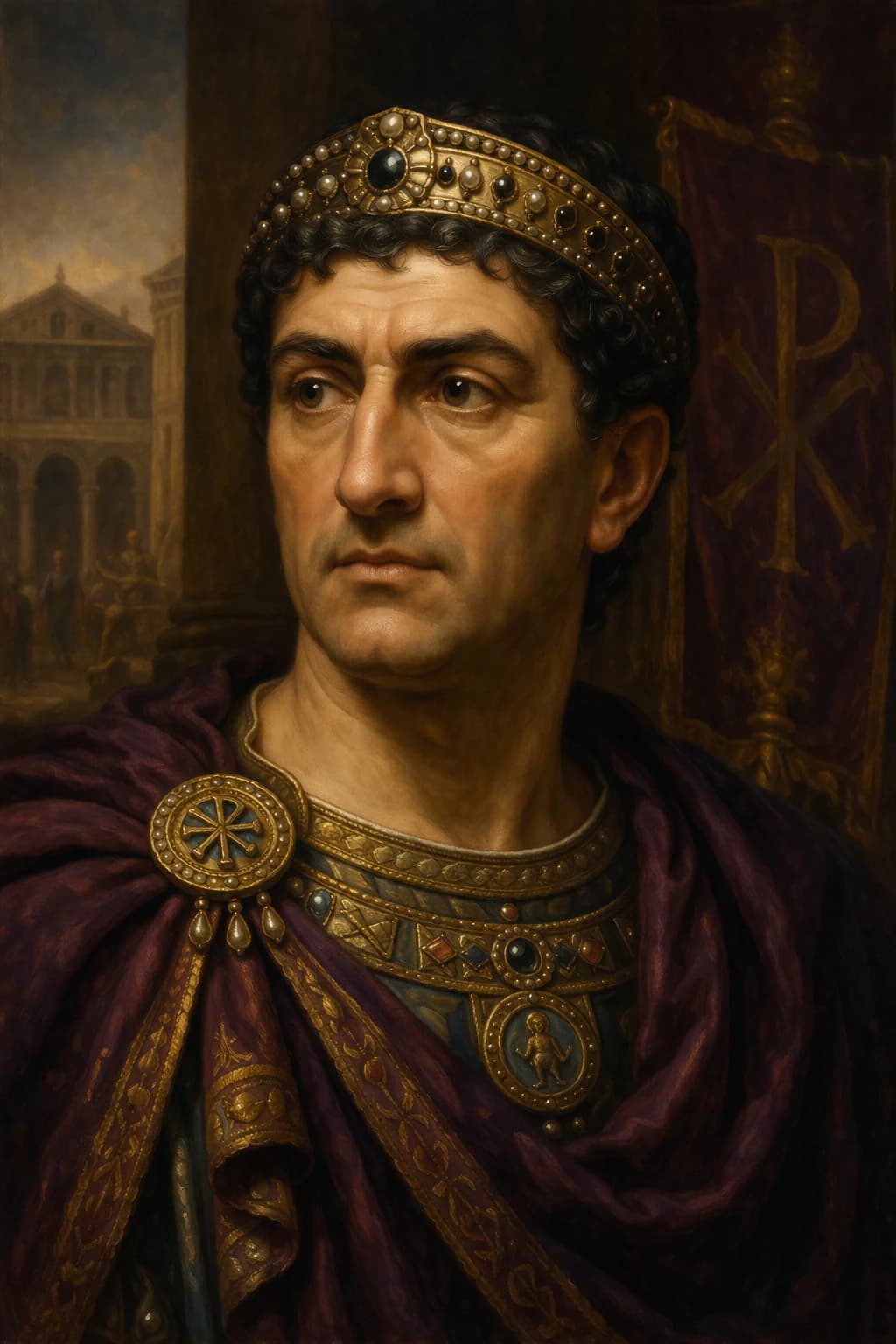
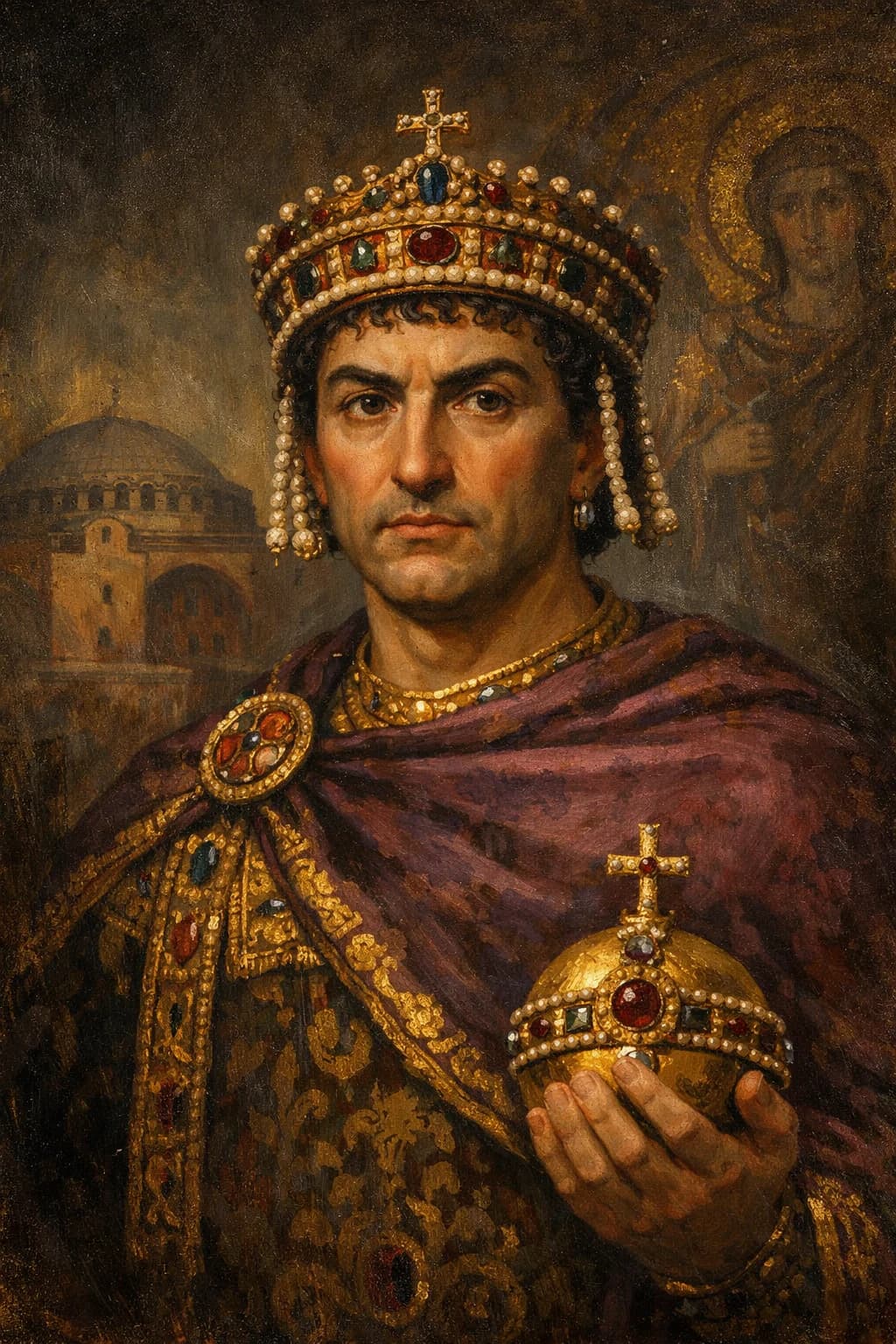
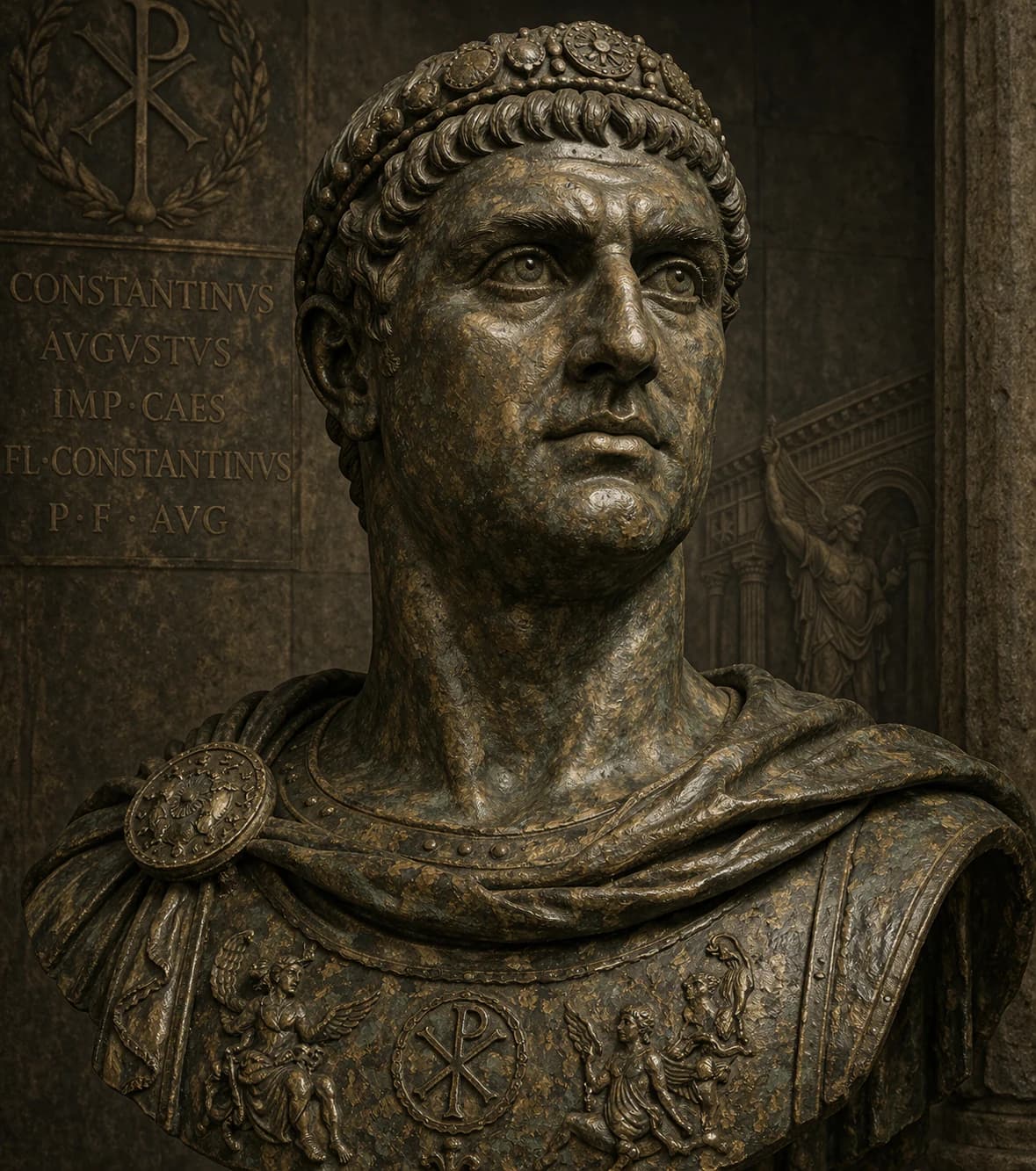
AI-generated portrait of Constantine the Great in Roman imperial armour
AI-assisted historical reconstruction

An illustrative reconstruction based on historical context. It is not a photograph or documentary likeness. Image policy

Quick answer

Constantine the Great was Roman emperor from 306 to 337 and the first emperor to openly support Christianity. He defeated Maxentius and Licinius, issued the Edict of Milan with Licinius, convened the Council of Nicaea, and founded Constantinople.

Born
272 CE
Died
337 CE
Role
First Roman emperor to convert to Christianity
Years
272-337 CE
Facts

Constantine the Great timeline facts

Selected specifics from this profile's life story.

272
Imperial beginnings

Born to a military family, Constantine grew up close to power, gaining early exposure to Roman politics and the expectations of leadership.

312
Battle of Milvian Bridge

Constantine defeated a major rival near Rome, linking his victory to a new religious vision that would shape his future decisions.

330
Founding Constantinople

He established a new capital in the east, creating a political and cultural center that would endure long after his reign.

337 and beyond
Enduring legacy

Constantine’s policies transformed religion and governance, influencing the future of Europe and the eastern empire for centuries.

Life Journey

Power, faith, and a reimagined empire

Follow the story in a more continuous narrative, with a reading mode that matches how much depth you want.

Complete chronology

272

Imperial beginnings

Constantine was born around 272 in Naissus, in the Balkans, a region that produced many hard military emperors during Rome’s age of crisis and recovery. His father, Constantius Chlorus, rose through the army to become Caesar and then Augustus in the western half of the Tetrarchy, Diocletian’s system of multiple emperors. His mother Helena came from a humbler background and later became central to Christian memory. Constantine grew up in a world where imperial power was no longer inherited smoothly in Rome but made through armies, courts, frontiers, and negotiated legitimacy. The empire had survived near-collapse in the third century by becoming more militarized and bureaucratic. Constantine’s youth taught him that power was both ceremonial and brutally practical: purple robes mattered, but so did loyal troops.
290s

Hostage at court

As a young man, Constantine spent time at the eastern courts of Diocletian and Galerius. He was treated as a prince of promise, but also as a guarantee of his father’s loyalty. The Tetrarchy was designed to prevent civil war by dividing authority among senior and junior emperors, yet it depended on trust among ambitious soldiers. Constantine watched the system from inside: ceremonies of unity, campaigns on the frontiers, persecutions of Christians under Diocletian, and rivalries that never fully disappeared. He gained military experience and learned the language of imperial legitimacy. The lesson was double-edged. The Tetrarchy could organize succession better than chaos, but it could not erase dynastic feeling or army loyalty. When opportunity came, Constantine would use both against the system that had trained him.

306

Claiming leadership

Constantius died at Eboracum, modern York, in 306 after campaigning in Britain. His troops proclaimed Constantine emperor, reviving the dynastic politics the Tetrarchy had tried to contain. Galerius recognized him only as Caesar, not full Augustus, but the claim had already been made in the most Roman way possible: by an army with a dead emperor’s son in front of it. Constantine moved carefully at first, consolidating Gaul, Britain, and Spain rather than rushing into reckless war. Across the empire, other claimants emerged, including Maxentius in Rome. The language of orderly succession collapsed into a familiar struggle for recognition. Constantine’s early rule shows his patience. He used coins, titles, marriages, military victories, and public restraint to make his claim appear inevitable before he made it universal.

312

Battle of Milvian Bridge

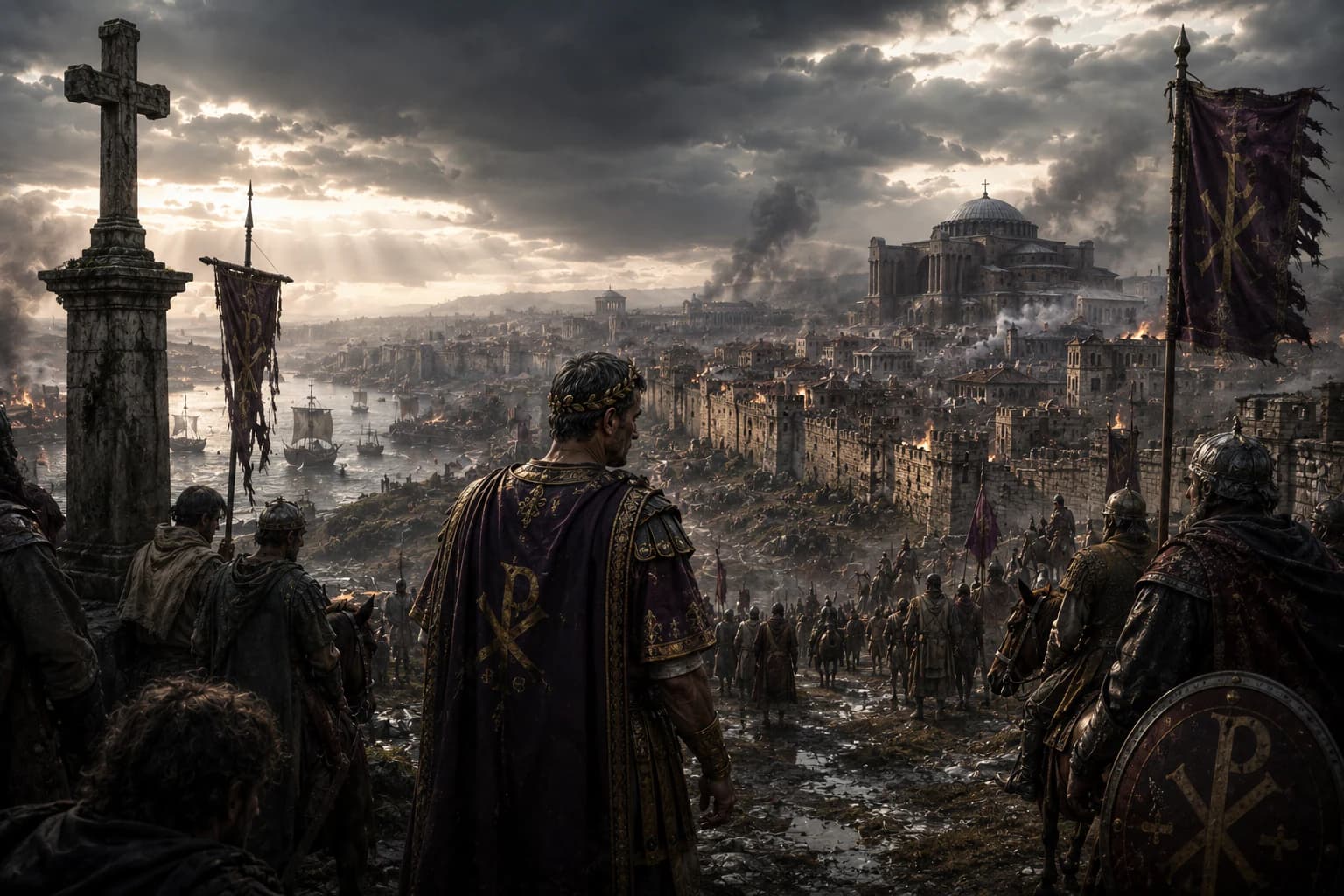
In 312 Constantine marched into Italy against Maxentius, who controlled Rome. Before the Battle of the Milvian Bridge, Christian sources report that Constantine received a divine sign promising victory. Lactantius describes a dream instructing him to mark shields with a heavenly symbol; Eusebius later gives the famous vision of a cross-like sign in the sky. The accounts differ, and historians debate exactly what Constantine experienced and when his Christian commitment became firm. The outcome is certain. Maxentius was defeated and drowned in the Tiber, and Constantine entered Rome as western ruler. He did not abolish traditional religion overnight, but he began publicly favoring the Christian God as the source of victory. Military success and religious meaning fused into a new imperial story.

313

Legalizing Christianity

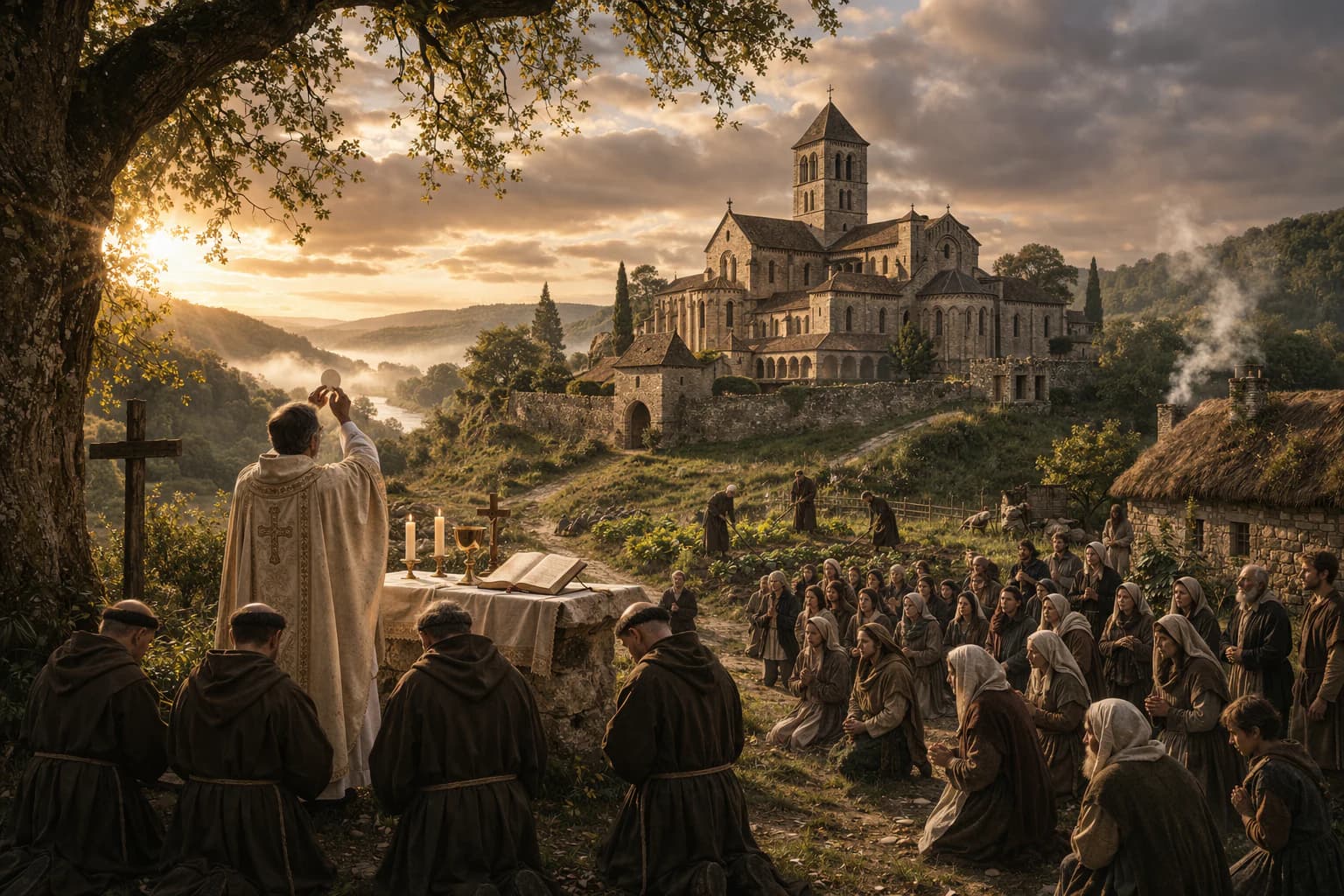
In 313 Constantine and Licinius agreed on a policy of religious toleration often called the Edict of Milan. It restored property confiscated from Christians and allowed worship without fear of official persecution. The change was enormous because the Great Persecution under Diocletian had tried to break the church through sacrifice orders, imprisonment, and destruction of scriptures. Constantine’s policy did not instantly make Christianity the empire’s official religion, and traditional cults continued. But imperial favor transformed Christian prospects. Bishops gained access to the court, churches received patronage, clergy received privileges, and Christian disputes became matters of public order. Constantine’s motives were probably layered: genuine devotion, gratitude for victory, desire for divine protection, and recognition that a unified church could help stabilize a divided empire. The result was a new relationship between throne and altar.

324

Defeating Licinius

Constantine’s partnership with Licinius deteriorated into civil war. Their rivalry was political, territorial, and increasingly religious in presentation, though it should not be reduced to a simple Christian-versus-pagan conflict. Licinius had also accepted toleration, but Constantine’s propaganda depicted him as a persecutor and himself as God’s chosen ruler. In 324 Constantine defeated Licinius at Adrianople and Chrysopolis, becoming sole emperor of the Roman world. Sole rule gave him the freedom to reshape imperial priorities. He continued administrative and military reforms rooted in the Tetrarchic system, strengthened court ceremony, managed frontier defense, and intervened more directly in Christian affairs. The victory also exposed a paradox. Constantine had ended the Tetrarchy’s shared rule in the name of unity, but the empire remained too vast and complex for one man’s personal authority to solve every division.

330

Founding Constantinople

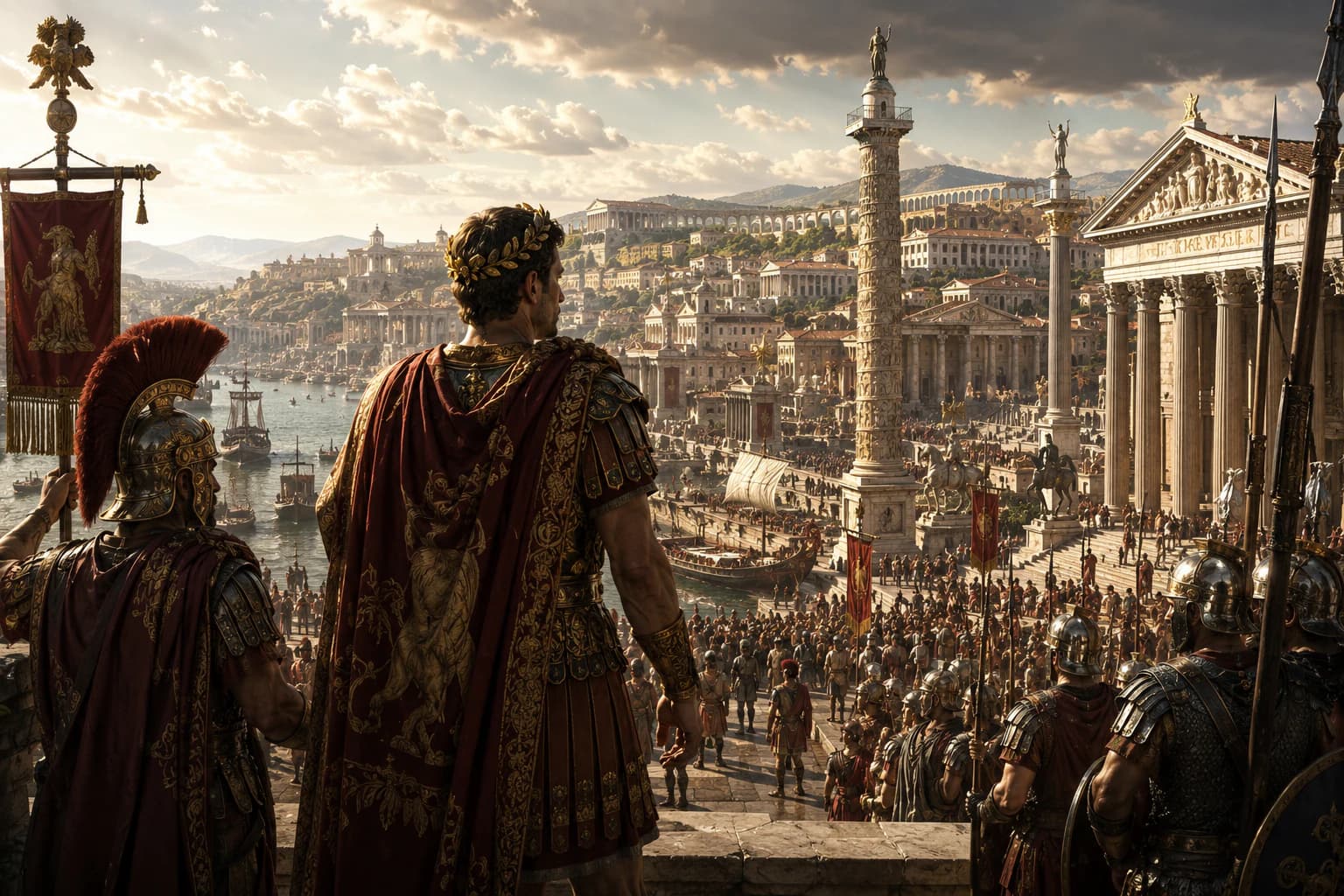
Constantine’s refounding of Byzantium as Constantinople in 330 was one of the most consequential urban decisions in history. Rome remained symbolically powerful, but the empire’s strategic weight had shifted eastward, where wealth, population, and threats clustered around the Balkans, Asia Minor, Syria, and the Danube frontier. Byzantium offered a superb location: defensible, maritime, commercially connected, and positioned between Europe and Asia. Constantine filled the new city with forums, palaces, churches, Senate institutions, monuments, and imported art that linked it to Rome while announcing a fresh center of power. Constantinople was not yet the fully Christian capital of later imagination, but it tilted imperial geography decisively. Long after the western empire fell, Constantine’s city would anchor the eastern Roman Empire for more than a thousand years.

330–337

Later rule and faith

Constantine’s Christian policy soon forced him into theological politics. The Arian controversy, centered on the relationship between the Son and the Father, threatened church unity and therefore imperial harmony. In 325 he convened the Council of Nicaea, where bishops produced a creed rejecting Arius’s teaching. Constantine did not personally resolve the theology; he pressured the church toward unity because division offended his vision of order. His later religious policy was not always consistent, and exiled figures sometimes returned. His family life was also shadowed by violence, including the executions of his son Crispus and his wife Fausta in circumstances that remain obscure. Constantine delayed baptism until near death in 337, a common enough practice among some Christians who feared post-baptismal sin. He died at Ancyrona near Nicomedia, leaving a Christianizing empire and a contested succession.

337 and beyond

Enduring legacy

Constantine’s legacy is vast because he changed the conditions under which both empire and Christianity developed. He did not single-handedly Christianize the Roman world, and pagan traditions remained strong for generations. He also did not create church doctrine by decree. What he did was make imperial power available to Christianity and make Christian unity a concern of imperial government. That altered patronage, law, public space, elite ambition, and religious imagination. Constantinople gave the Roman Empire a new eastern center whose survival reshaped medieval Europe, Byzantium, and the Islamic world that later confronted it. Admirers remember Constantine as the first Christian emperor and a protector of the church. Critics emphasize civil war, propaganda, dynastic violence, and the risks of binding faith to power. Both views are needed. Constantine matters because after him, Rome could no longer tell its story without Christianity, and Christianity could no longer pretend imperial power was someone else’s problem.

Continue in context

Connected stories

Move from the profile into the wider events and settings this figure belongs to.

Tertiary paths

Content note

This profile is written for educational use and connects to related Stories of History pages. The main portrait is an AI-assisted historical reconstruction, included as an illustrative aid rather than documentary evidence. Image policy

References

Sources & Further Reading

Reliable reference works, archives and reading paths connected to this profile.

Further reading

  1. Encyclopaedia Britannica, Search results for Constantine the Great,” accessed June 2026.Open source
  2. WorldCat, Books and library holdings for Constantine the Great,” accessed June 2026.Open source

Primary sources

  1. Library of Congress, Search results for Constantine the Great,” accessed June 2026.Open source

Reviewed claim sources

Loading reviewed claim sources...

A weekly route through history

Find out first about the latest published stories, feature notes and occasional Premium offers in one weekly email.