People

Clovis I

Clovis I was King of the Franks from about 481 to 511. He defeated Syagrius, the Alemanni and the Visigoths, converted to Catholic Christianity, allied Frankish power with the Gallo-Roman church, and laid foundations later associated with medieval France.

Born
466 CE
Died
511 CE
Role
King of the Franks

King of the Franks (c. 466–511)

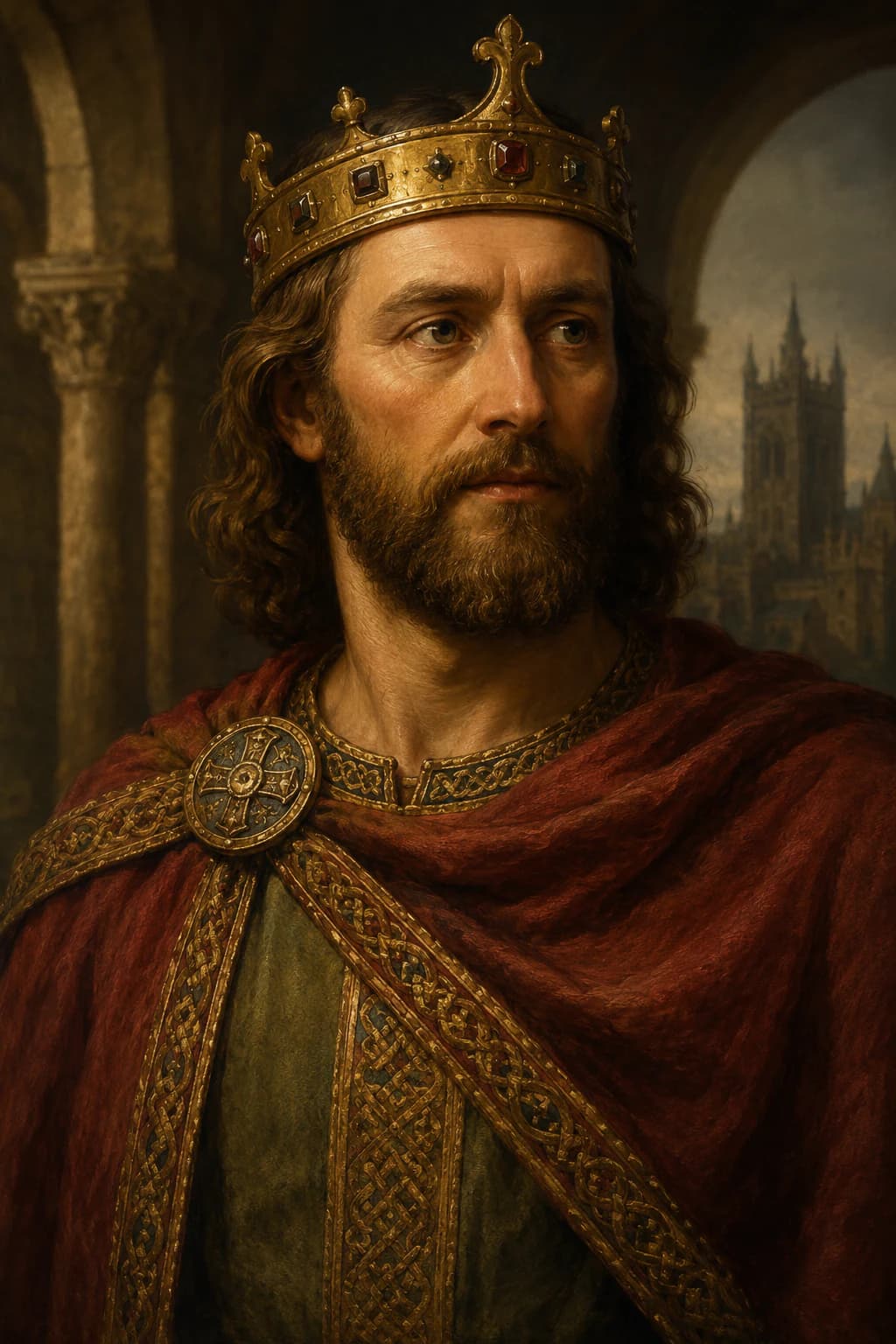
AI-generated portrait of Clovis I, King of the Franks
AI-assisted historical reconstruction

An illustrative reconstruction based on historical context. It is not a photograph or documentary likeness. Image policy

Quick answer

Clovis I was King of the Franks from about 481 to 511. He defeated Syagrius, the Alemanni and the Visigoths, converted to Catholic Christianity, allied Frankish power with the Gallo-Roman church, and laid foundations later associated with medieval France.

Born
466 CE
Died
511 CE
Role
King of the Franks
Years
466-511 CE
Quick facts

Profile details

Additional identity and tagging details that are not already covered in the introduction.

Also known as
Chlodovech, Chlodwig
Facts

Clovis I timeline facts

Selected specifics from this profile's life story.

c. 466–486
Young king of the Salian Franks

Clovis became king of the Salian Franks around the age of fifteen on the death of his father Childeric I, inheriting a kingdom in northern Gaul at a time of intense competition among Germanic leaders.

c. 496
Conversion to Christianity

Clovis converted to Catholic Christianity — not the Arian form followed by most other Germanic kings — a decision that proved politically transformative, aligning him with the Gallo-Roman population and the...

481–511
Alliance with the church

Throughout his reign, Clovis cultivated close relations with the Gallo-Roman bishops, using the church's administrative network and legitimising authority to reinforce his rule.

After 511
Founder of France

Clovis is traditionally regarded as the founder of France — the first Frankish king to unite the territory of modern France and the ancestor of the Carolingian and Capetian dynasties.

Life Journey

Unifier, conqueror, convert

Follow the story in a more continuous narrative, with a reading mode that matches how much depth you want.

Complete chronology

c. 466–486

Young king of the Salian Franks

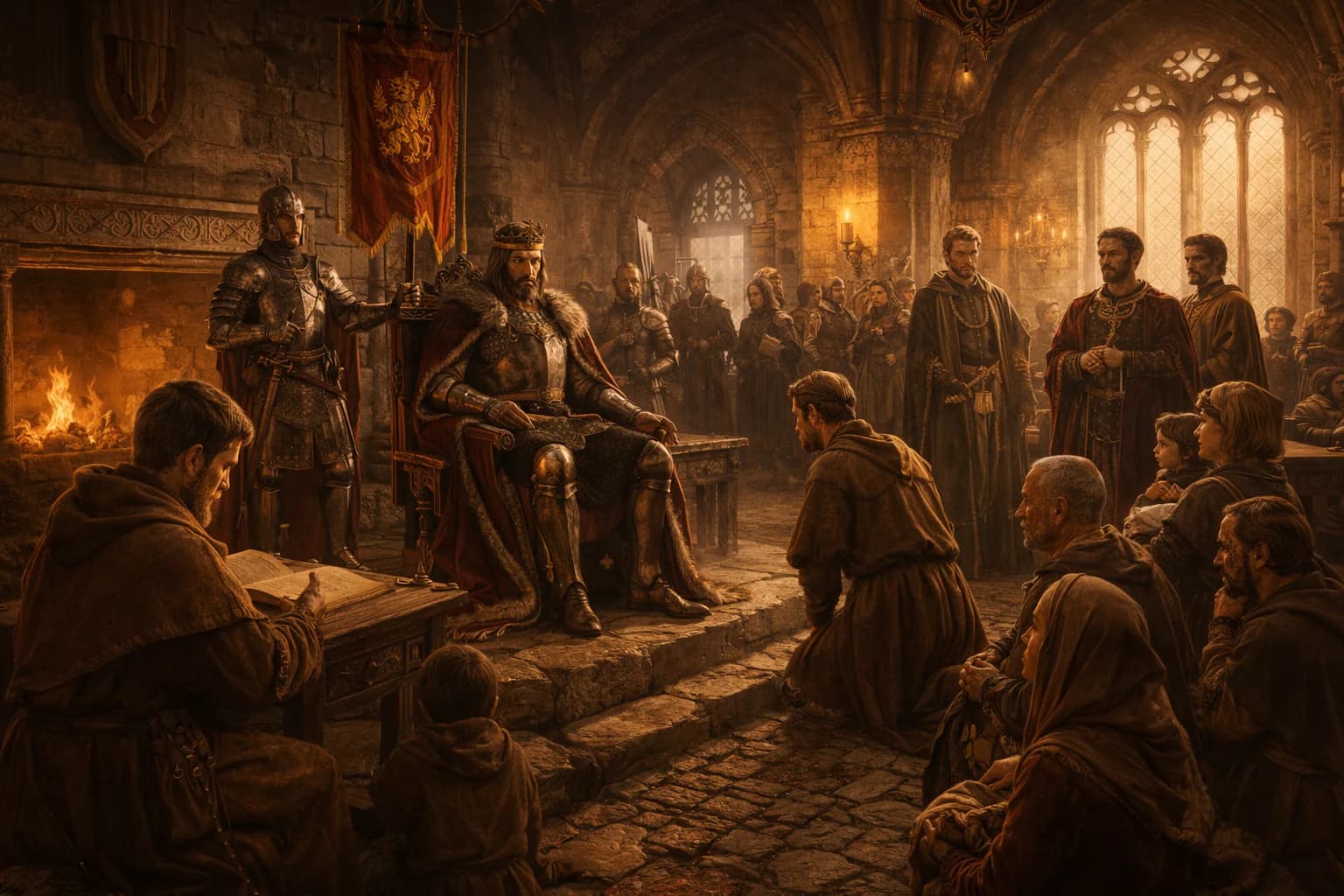
The Frankish world of the late fifth century was not a single kingdom but a cluster of related peoples under separate chieftains, all competing for land, prestige, tribute, and Roman inheritance in Gaul. Clovis inherited a Salian Frankish power base centred on Tournai after the death of his father Childeric I. He was young, probably still in his teens, and far from inevitable. Other Frankish kings held nearby territories, Visigoths dominated the southwest, Burgundians controlled the southeast, and Gallo-Roman bishops and landowners still possessed the habits and authority of the old imperial world. Clovis’s achievement began with seeing that military success alone was not enough. He needed to defeat outsiders, absorb Roman administrative culture, win church support, and remove rival Frankish leaders whose claims could divide the people he meant to rule.
486

Defeating the last Roman

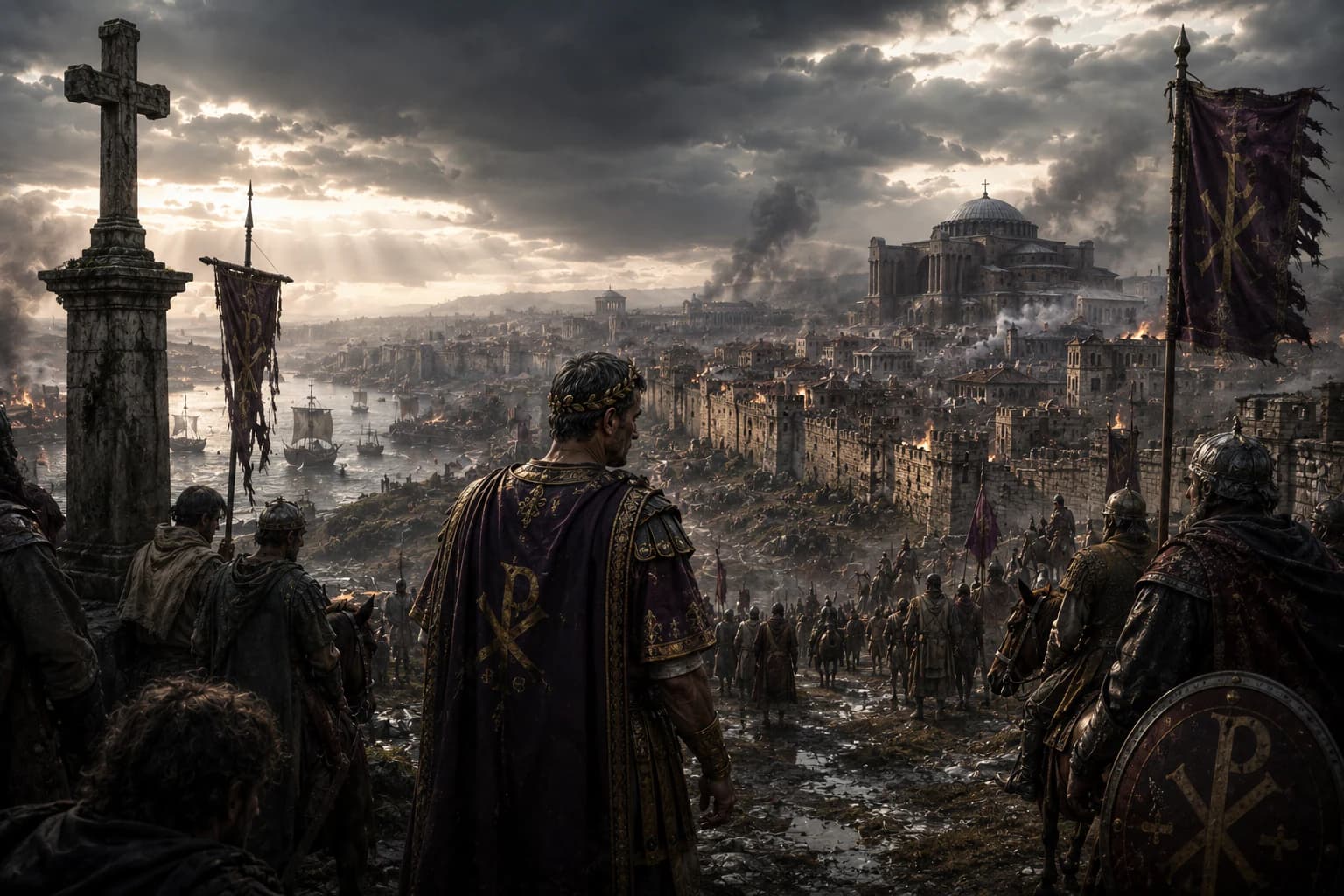
Syagrius ruled a surviving Roman-style enclave in northern Gaul after the deposition of the last western emperor in 476. Later historians often call it the Domain of Soissons, though the label is modern. Its importance was real: it preserved Roman military, fiscal, and social traditions in a region where imperial authority had otherwise dissolved. Clovis defeated Syagrius in 486 and forced a dramatic transfer of power. Syagrius fled to the Visigothic king Alaric II, but Clovis demanded his surrender and had him executed. The victory gave Clovis territory, cities, revenue, and a population accustomed to Roman forms of authority. It also brought him closer to the Gallo-Roman church, whose bishops would become essential partners. Conquest here was not destruction of Rome so much as the seizure of what remained useful from it.

486–506

Campaigns and conquests

Clovis built power on two fronts at once. Externally, he fought the Alemanni, Burgundians, Visigoths, and other rivals for control of Gaul. Internally, he absorbed or eliminated Frankish kings whose independence limited his authority. The Battle of Tolbiac, usually placed around 496 though the date is debated, became central to later memory because Gregory of Tours linked it to Clovis’s conversion. Gregory says Clovis appealed to the Christian God in battle after his own gods failed him. The story may preserve real tradition, Christian interpretation, or both. What is not doubtful is the violence of consolidation. Clovis reportedly removed rival relatives by intimidation, treachery, and killing, then cynically lamented that he had no kin left. The founder of Christian Frankish monarchy was also a hard, opportunistic warlord.

c. 496

Conversion to Christianity

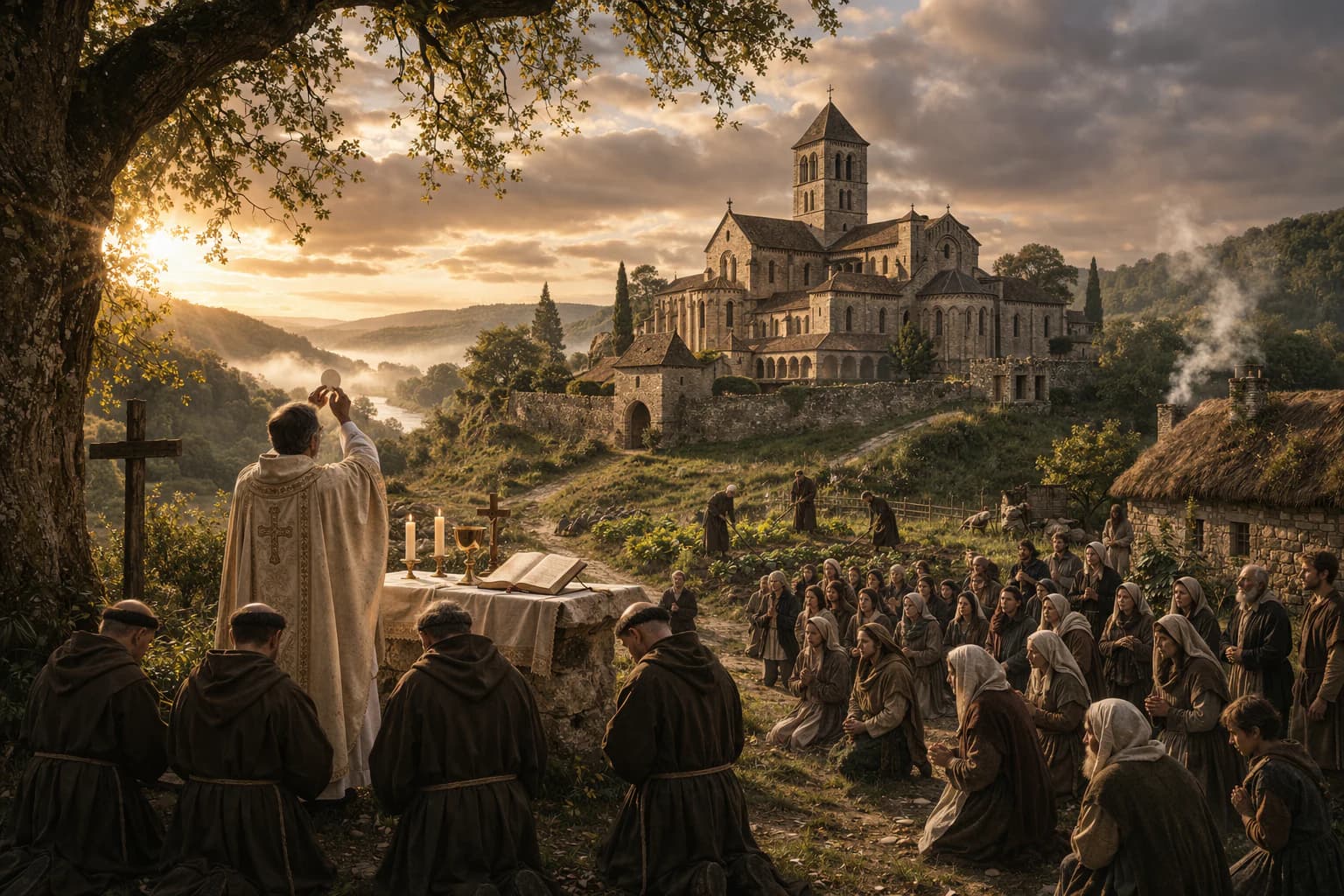
The conversion of Clovis is one of the great hinge moments of early medieval Europe, but it should not be flattened into either pure faith or pure calculation. His wife Clotilde, a Burgundian Catholic, may have influenced him; battlefield crisis may have mattered; the political advantages were unmistakable. Most major Germanic rulers in the western Mediterranean were Arian Christians, separated doctrinally from the Catholic bishops and Gallo-Roman majority over the nature of Christ. Clovis chose Catholic orthodoxy. That choice made him the natural ally of bishops who possessed literacy, networks, moral authority, and local administrative weight. It distinguished the Franks from Visigothic and Burgundian rivals and allowed conquest to be described as the advance of right belief. Baptism did not make Clovis gentle. It made his kingship more legitimate, more intelligible to Roman subjects, and more useful to the Church.

507

Defeat of the Visigoths

The Battle of Vouille in 507 made Clovis the dominant ruler in Gaul. His enemy, Alaric II of the Visigoths, ruled a large Arian kingdom stretching across Aquitaine into Spain. Gregory of Tours presents Clovis as eager to free Gaul from Arian rule, and while the speech he gives Clovis is literary, the religious politics were real. Catholic bishops had strong reasons to prefer a Catholic Frankish king to an Arian Visigothic one. Alaric was killed in the battle, perhaps by Clovis himself, and the Visigothic hold over most of Gaul collapsed. The Franks pushed south, but Ostrogothic intervention under Theodoric the Great preserved parts of the Mediterranean coast from Frankish control. Vouille mattered because it moved the Frankish kingdom from regional power to the principal successor state in post-Roman Gaul.

508–511

Paris as capital

The eastern emperor Anastasius's recognition of Clovis after Vouillé — sending him the titles of consul and patrician — was symbolically important even if it conveyed no real power over the Franks. For Clovis, it meant that the Frankish kingdom was accepted into the hierarchy of post-Roman polities as a legitimate successor state. He chose Paris as his capital, a city that was centrally located in his kingdom, historically significant as an administrative centre, and within reach of the most productive agricultural land in Gaul. The decision proved consequential: Paris would remain the capital of the Frankish kingdom and its successors for centuries.

481–511

Alliance with the church

The relationship between Clovis and the Gallo-Roman church was one of mutual benefit and genuine interdependence. The bishops controlled the administrative apparatus of the former Roman cities — the only literate administrators in a post-Roman society — and their endorsement gave Frankish rule a legitimacy it could not have achieved by military force alone. In return, Clovis protected the church's properties and authority, provided security for a population that had suffered from decades of instability, and used his military capacity to advance orthodoxy against Arian rivals. The Council of Orléans in 511, convened by Clovis, was the first major church council in Gaul — a demonstration that the Frankish king had assumed the role of protector and organiser of the church that Roman emperors had once played.

511

Death and succession

Clovis died in Paris in November 511, having reigned for thirty years. He was buried at the church he had founded on what is now the Montagne Sainte-Geneviève — later the site of the Panthéon. In accordance with Frankish inheritance custom, his kingdom was divided among his four sons, initiating a period of internal competition and occasional civil war among his heirs. The division was not the result of poor planning but of cultural expectation: the Franks, like most Germanic peoples, did not have a tradition of primogeniture. The fragmentation that followed did not undo the work Clovis had done in uniting the Frankish tribes and creating the institutional framework of a Christian Frankish kingdom, but it delayed the consolidation of that kingdom by several generations.

After 511

Founder of France

Calling Clovis the founder of France is a later construction, but not an empty one. He did not imagine France as a modern nation, and his kingdom was divided among his sons after his death. Yet he was the first Frankish ruler to dominate most of Roman Gaul, the first to bind Frankish kingship to Catholic Christianity, and the ancestor whose memory later Merovingian, Carolingian, and Capetian rulers could use. The alliance between crown and church that crystallized around his reign became one of medieval Europe’s defining patterns. French monarchy later looked back to his baptism as an origin story for France as the 'eldest daughter of the Church.' The myth simplified a violent and complex life, but it endured because Clovis really did alter the political direction of western Europe. He transformed the Franks from one people among many into the kingdom from which medieval France would emerge.

Continue in context

Connected stories

Move from the profile into the wider events and settings this figure belongs to.

Tertiary paths

Content note

This profile is written for educational use and connects to related Stories of History pages. The main portrait is an AI-assisted historical reconstruction, included as an illustrative aid rather than documentary evidence. Image policy

References

Sources & Further Reading

Reliable reference works, archives and reading paths connected to this profile.

Further reading

  1. Encyclopaedia Britannica, Search results for Clovis I,” accessed June 2026.Open source
  2. WorldCat, Books and library holdings for Clovis I,” accessed June 2026.Open source

Primary sources

  1. Library of Congress, Search results for Clovis I,” accessed June 2026.Open source

Reviewed claim sources

Loading reviewed claim sources...

A weekly route through history

Find out first about the latest published stories, feature notes and occasional Premium offers in one weekly email.