People

Che Guevara

Che Guevara, born Ernesto Guevara de la Serna, was an Argentine-Cuban revolutionary, Marxist theorist and guerrilla commander. He helped Fidel Castro overthrow Fulgencio Batista in Cuba, served in the revolutionary government, promoted armed anti-imperialist struggle, and died in Bolivia in 1967 while trying to ignite another revolution.

Born
1928 CE
Died
1967 CE
Role
Argentine-Cuban revolutionary and guerrilla theorist

Argentine-Cuban revolutionary and guerrilla theorist (1928-1967)

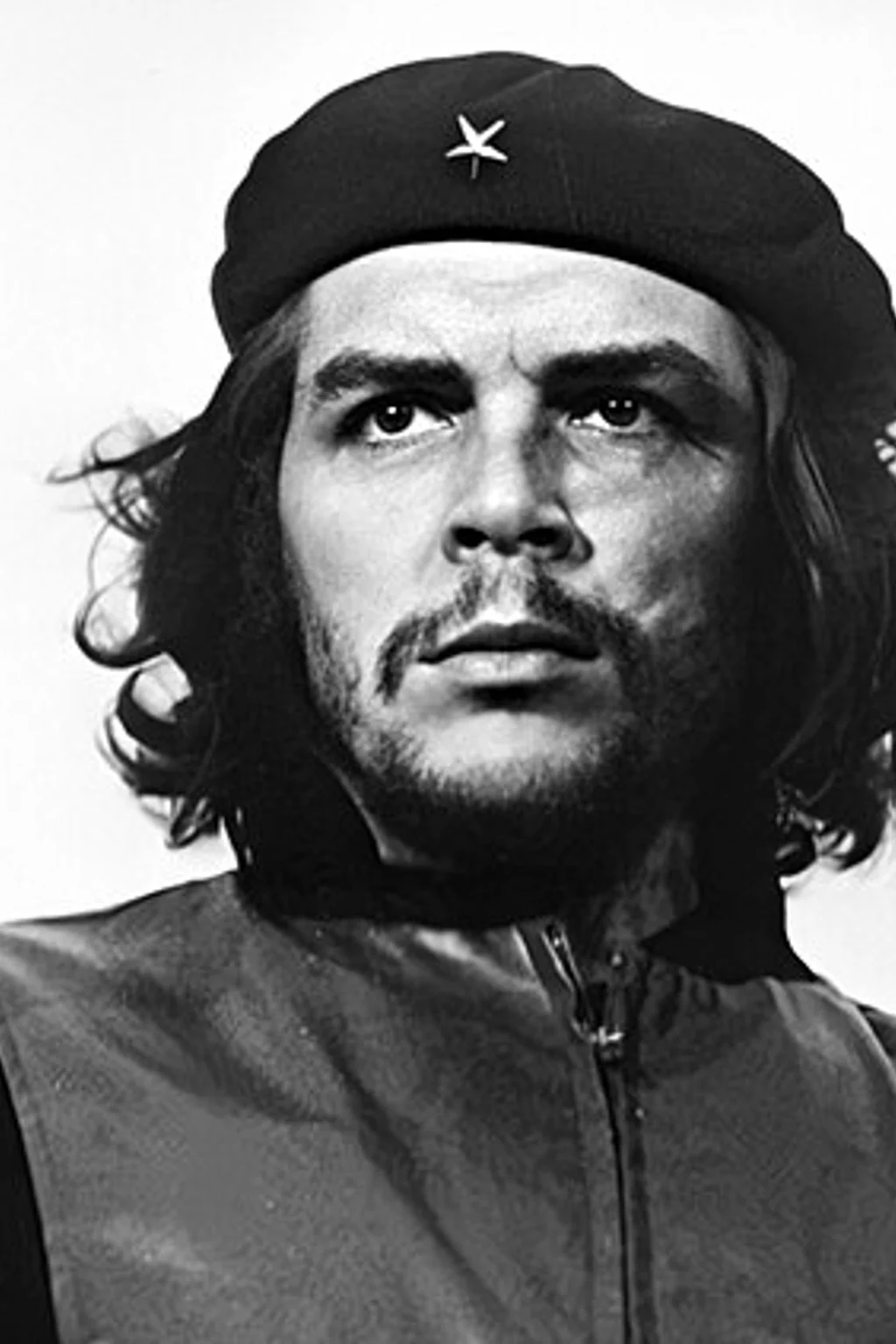
Portrait photograph of Che Guevara
Historical photograph

A real historical or editorial image is used here. Source, licence and transformation details are publicly recorded. Image policy Attribution

Quick answer

Che Guevara, born Ernesto Guevara de la Serna, was an Argentine-Cuban revolutionary, Marxist theorist and guerrilla commander. He helped Fidel Castro overthrow Fulgencio Batista in Cuba, served in the revolutionary government, promoted armed anti-imperialist struggle, and died in Bolivia in 1967 while trying to ignite another revolution.

Born
1928 CE
Died
1967 CE
Role
Argentine-Cuban revolutionary and guerrilla theorist
Years
1928-1967 CE
Quick facts

Profile details

Additional identity and tagging details that are not already covered in the introduction.

Full name
Ernesto Guevara de la Serna
Also known as
Ernesto Guevara, El Che
Facts

Che Guevara timeline facts

Selected specifics from this profile's life story.

1928
Rosario beginnings

Ernesto Guevara de la Serna was born in Rosario, Argentina, on June 14, 1928, into a middle-class family with left-leaning sympathies and a strong culture of reading and argument.

1953-1954
Guatemala and radicalisation

In Guatemala, Guevara watched the elected government of Jacobo Arbenz fall after U.S.-backed pressure and a CIA-supported coup.

1959-1965
Power after victory

After Batista fled, Guevara held senior posts in revolutionary Cuba, including at the National Bank and Ministry of Industries, while representing Cuba abroad.

After 1967
Icon and argument

Che Guevara became one of the most recognisable political images of the twentieth century, admired as an anti-imperialist martyr and condemned as a dogmatic revolutionary.

Life Journey

Revolution, myth and the price of purity

Follow the story in a more continuous narrative, with a reading mode that matches how much depth you want.

Complete chronology

1928

Rosario beginnings

Guevara's childhood did not predict a life of guerrilla war, but it did give him habits that mattered later: physical toughness despite asthma, intellectual seriousness and an early comfort with political debate. He was not born from the rural misery he later claimed to fight for. He chose revolution after encountering inequality, reading Marxist ideas and deciding that medicine alone could not treat the social diseases he believed he was seeing across Latin America.
1951-1953

A continent becomes political

The young medical student began to think less like an Argentine and more like a continental revolutionary. Travel turned abstract sympathy into political conviction. He saw poverty not as isolated misfortune but as a structure repeated across borders. Guevara moved toward a harsh conclusion: entrenched power would not yield without violence. That conviction became the moral engine of his life and the source of some of its darkest consequences.

1953-1954

Guatemala and radicalisation

Guatemala was one of Guevara's decisive political classrooms. Arbenz's land reform challenged the United Fruit Company and alarmed U.S. officials in the early Cold War. When the government collapsed, Guevara read the lesson in stark terms: legal reform was fragile, imperial power was ruthless, and revolution had to be armed. This sharpened his anti-imperialism but also encouraged a willingness to treat opponents as agents of a larger enemy.

1955-1956

Meeting Castro

Guevara entered Castro's movement as a doctor, but he quickly became more than a medical recruit. The Granma expedition in December 1956 was nearly destroyed after landing in Cuba, yet the survivors regrouped in the Sierra Maestra. There Guevara became a commander. His transformation from physician to fighter was central to his self-image: healing the continent, in his mind, now required violence against dictatorship, imperialism and class power.

1956-1959

Commander of revolution

Guevara's wartime reputation rested on courage, austerity and severity. He led columns, enforced discipline and took part in revolutionary justice, including executions of alleged traitors and informers. Admirers emphasise his bravery and commitment to social transformation. Critics point to his willingness to use lethal coercion as evidence of authoritarian instincts present from the beginning. Both elements belong to the historical figure.

1959-1965

Power after victory

Guevara's years in government tested whether revolutionary conviction could run an economy. He promoted moral incentives, voluntary labour and rapid industrialisation, often with more ideological force than practical success. He became one of Cuba's most visible international voices, attacking U.S. power and aligning the island with global anti-colonial struggle. Yet he grew uneasy with Soviet-style compromise and bureaucracy.

1966-1967

Bolivia and death

Bolivia proved fatal to Guevara's foco theory. The local Communist Party was divided, peasant support was limited and the army adapted quickly. Captured near La Higuera on October 8, 1967, he was executed the next day. His body was displayed in Vallegrande and secretly buried; remains identified as his were returned to Cuba in 1997. The manner of his death transformed a failed campaign into a global martyrdom.

After 1967

Icon and argument

Che's legacy is unusually divided because the symbol often overwhelms the man. To supporters, he represents courage, internationalism and refusal to accept a world organised by empire and inequality. To critics, he represents authoritarian certainty and revolutionary violence. Serious history has to hold both in view. Guevara mattered because he gave twentieth-century revolution a face, a theory and a myth, while showing how liberation politics could become inseparable from coercion.

Continue in context

Connected stories

Move from the profile into the wider events and settings this figure belongs to.

Tertiary paths

Content note

This profile is written for educational use and connects to related Stories of History pages. The main portrait uses a real historical or editorial image, with source and licence details recorded for attribution review. Image policy Image attribution

References

Sources & Further Reading

Reliable reference works, archives and reading paths connected to this profile.

Further reading

  1. Encyclopaedia Britannica, Search results for Che Guevara,” accessed June 2026.Open source
  2. WorldCat, Books and library holdings for Che Guevara,” accessed June 2026.Open source

Primary sources

  1. Library of Congress, Search results for Che Guevara,” accessed June 2026.Open source

Reviewed claim sources

Loading reviewed claim sources...

A weekly route through history

Find out first about the latest published stories, feature notes and occasional Premium offers in one weekly email.