People

Charles II

Charles II was the restored Stuart king of England, Scotland and Ireland who returned in 1660 after the Civil War, his father's execution and the republican Interregnum. Known as the Merry Monarch, he kept his throne through charm, caution and political pragmatism while navigating plague, fire, Dutch wars, religious division and the Exclusion Crisis.

Born
1630 CE
Died
1685 CE
Role
King of England, Scotland and Ireland

King of England, Scotland and Ireland (1630–1685)

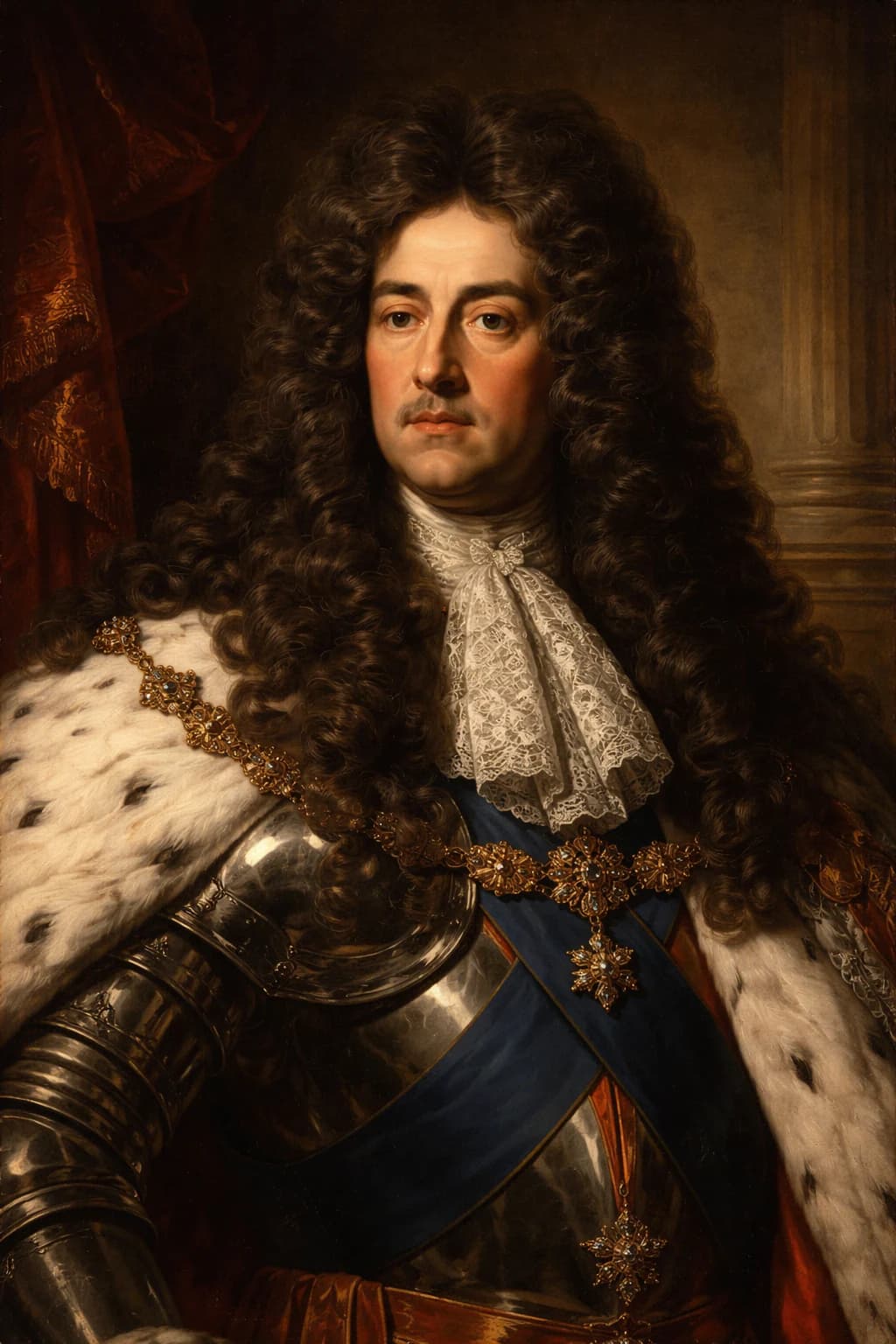
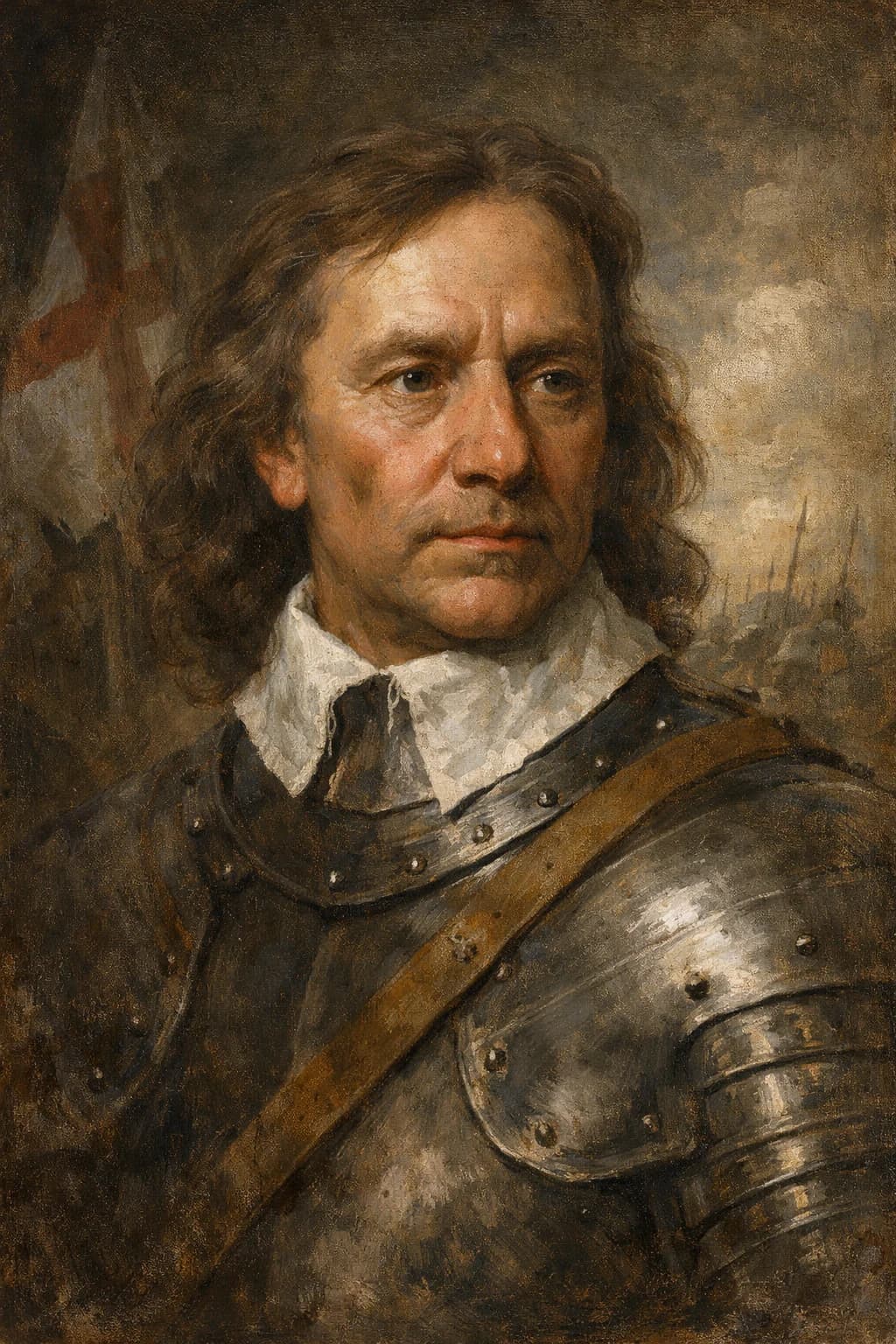
AI-generated portrait of Charles II in Restoration-era royal attire
AI-assisted historical reconstruction

An illustrative reconstruction based on historical context. It is not a photograph or documentary likeness. Image policy

Quick answer

Charles II was the restored Stuart king of England, Scotland and Ireland who returned in 1660 after the Civil War, his father's execution and the republican Interregnum. Known as the Merry Monarch, he kept his throne through charm, caution and political pragmatism while navigating plague, fire, Dutch wars, religious division and the Exclusion Crisis.

Born
1630 CE
Died
1685 CE
Role
King of England, Scotland and Ireland
Years
1630-1685 CE
Quick facts

Profile details

Additional identity and tagging details that are not already covered in the introduction.

Also known as
The Merry Monarch
Facts

Charles II timeline facts

Selected specifics from this profile's life story.

1630–1648
Prince in wartime

Charles grew up watching the Civil War destroy his father's reign, developing a pragmatic political education that no schoolroom could have provided.

1660
The Restoration

The Declaration of Breda and General Monck's intervention brought Charles back to England in May 1660 to universal celebration, though the substance of his settlement remained to be negotiated.

1678–1681
Exclusion crisis

The Popish Plot hysteria and parliament's attempt to exclude his Catholic brother James from the succession brought Charles to his most dangerous political confrontation.

Post-1685
The Merry Monarch's balance

Charles II kept his throne through flexibility, personal charm, and political shrewdness, leaving a complicated legacy of both cultural flourishing and avoided resolution.

Life Journey

The exile king who came home and stayed

Follow the story in a more continuous narrative, with a reading mode that matches how much depth you want.

Complete chronology

1630–1648

Prince in wartime

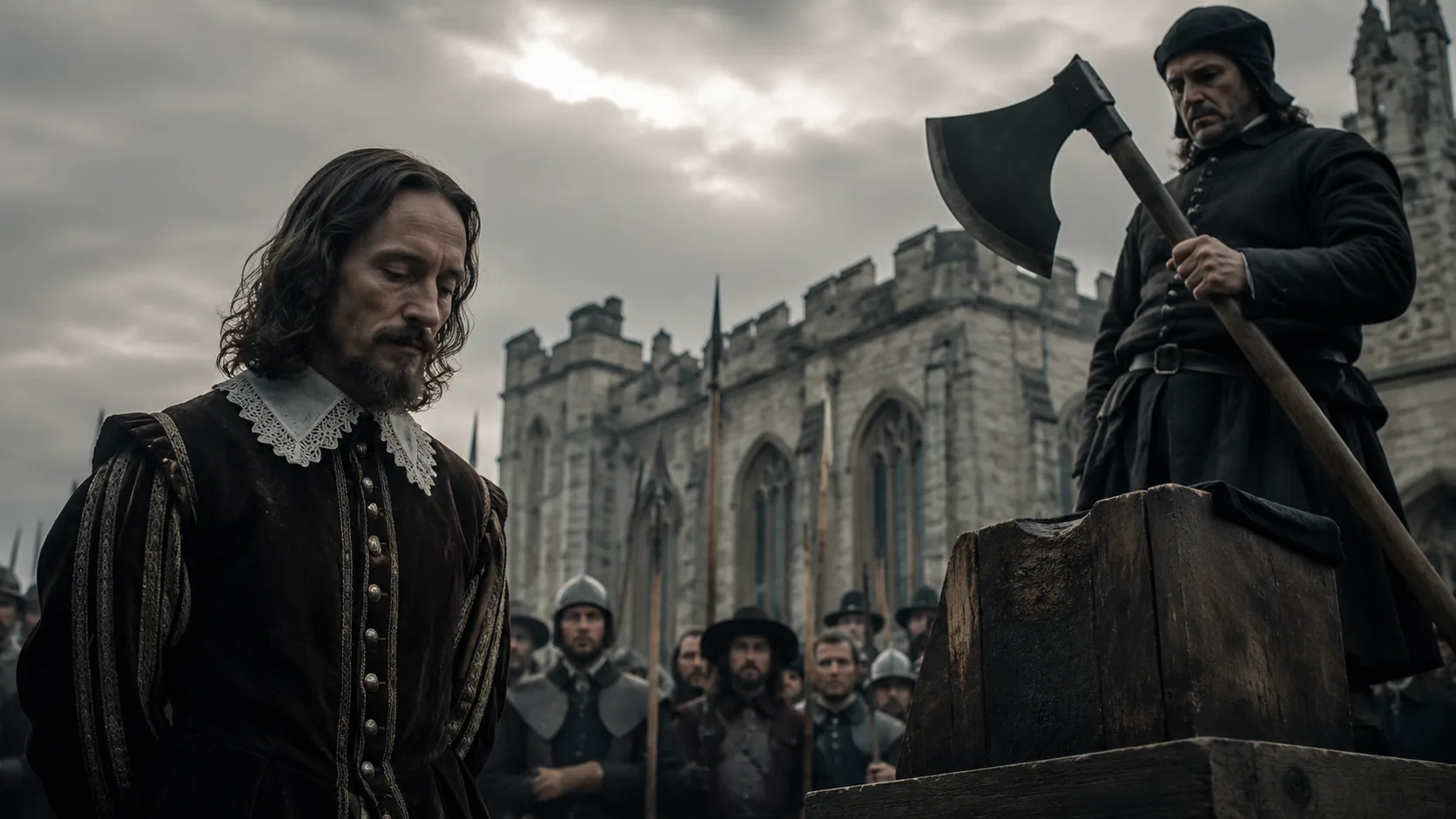
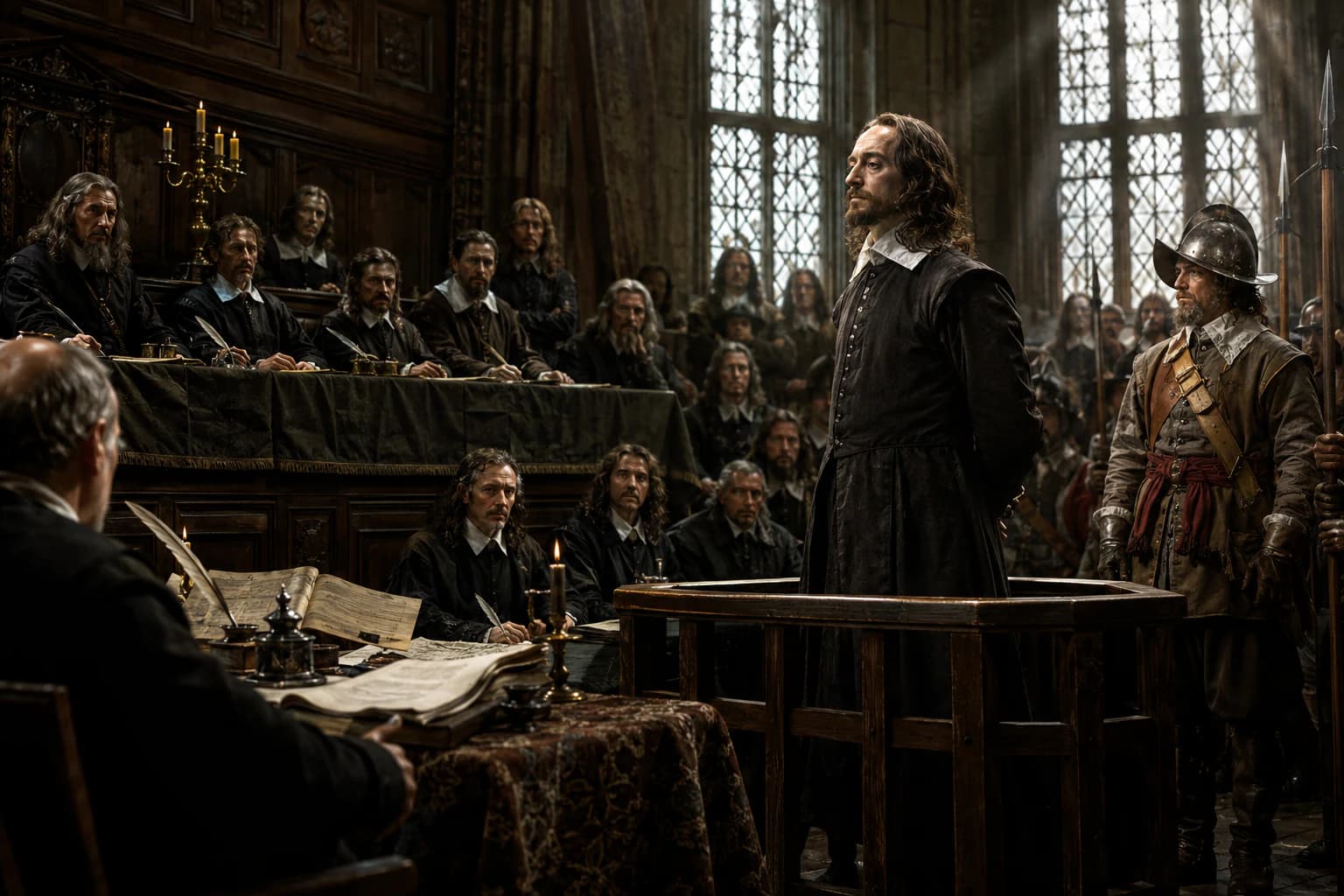
Charles was born at St James's Palace in 1630, the eldest surviving son of Charles I and Henrietta Maria, and he grew up as the court culture of his father's reign unravelled around him. By his early teens he was involved in the Civil War campaigns, gaining military experience while still a teenager and learning how quickly loyalty could become a matter of geography, religion and survival. The progressive collapse of his father's cause provided a political education of brutal directness: he watched negotiations fail, alliances crack, and military advantages dissolve through miscalculation. He saw what bad faith in government could cost. When his father was executed in January 1649, Charles was eighteen years old and had already understood more about the fragility of power than most rulers learn in a lifetime.
1650–1651

Scottish adventure

After his father's execution, Charles attempted to recover his kingdoms by allying with the Scots, who were willing to recognise him as king on conditions — including acceptance of the Presbyterian church settlement — that he found difficult but accepted. The Scottish campaign ended in catastrophe at the Battle of Worcester in September 1651, where Cromwell's forces comprehensively defeated the Royalist-Scottish army. What followed was six weeks of flight across England with a price on his head, sheltered by Catholic gentry, hiding in an oak tree, and eventually escaping to France by boat. The experience — dangerous, humbling, and oddly intimate — gave him a detailed knowledge of England's social fabric that few kings ever acquired, and a gratitude toward those who helped him that he never entirely forgot.

1651–1660

Years of exile

The years of exile were humiliating and formative. Charles moved between France, the Spanish Netherlands, and other courts, permanently short of money, surrounded by advisers who quarrelled, and dependent on whatever support European powers calculated would serve their own interests. He developed the easy social manner, the political cynicism, and the refusal to be openly committed on dangerous subjects that would define his later reign. He watched Cromwell govern England with a competence he grudgingly respected and an authority he could not match. When Cromwell died in 1658 and the Protectorate began to disintegrate, Charles waited rather than acted, allowing the situation in England to develop until an invitation was almost inevitable.

1660

The Restoration

Charles's return was managed with considerable skill. The Declaration of Breda, issued in April 1660, promised a general pardon, payment of the army's arrears, religious toleration, and settlement of disputed property — all to be determined by a free parliament. The vagueness was deliberate: it satisfied enough factions to allow the invitation to proceed without committing Charles to specific terms he might find impossible. When he landed at Dover on 25 May 1660, General Monck knelt before him, and crowds lined the route to London. Samuel Pepys, watching the scene, noted that everyone claimed to have always wanted the king back. Charles himself observed, with the dry wit that would characterise his reign, that it must have been his own fault that he had stayed away so long.

1660s

Religious tensions

The religious settlement of the Restoration was made largely by parliament rather than by the king. The Clarendon Code — a series of acts from 1661 to 1665 — required conformity to the Church of England and excluded Nonconformists from public life, military service and the universities. Charles had personal sympathies toward religious toleration, partly from political calculation and partly from genuine temperament, but he could not force a different settlement on a parliament determined to penalise dissent after the upheavals of civil war. His two attempts to issue Declarations of Indulgence, in 1662 and 1672, were both reversed by parliamentary pressure, the second leading directly into the Test Act of 1673. The underlying religious question — what England's confessional identity should be, and whether Catholics could be trusted near power — was never properly settled during his reign and would explode under his successor.

1665–1667

Dutch wars and plague

The mid-1660s subjected Charles's reign to a series of overlapping disasters. The Great Plague of 1665 killed perhaps a hundred thousand Londoners, forcing the court to relocate. The Great Fire of 1666 destroyed a large proportion of the City of London, requiring an enormous rebuilding effort that Charles engaged with constructively, commissioning Christopher Wren among others. The Second Dutch War, which had begun with commercial and colonial ambitions, ended badly, with a Dutch naval raid up the Medway in 1667 burning English ships at their moorings — one of the most humiliating moments in English naval history. The combination damaged Charles's financial position and parliamentary standing, though he survived it without the kind of constitutional crisis that had destroyed his father.

1678–1681

Exclusion crisis

The Popish Plot of 1678, a fraudulent conspiracy invented by Titus Oates alleging a Catholic plan to kill the king, unleashed a wave of anti-Catholic hysteria. In this atmosphere, the Exclusion Crisis developed: parliament attempted through three successive bills to exclude Charles's Catholic brother James, Duke of York, from the succession. Charles refused to accept exclusion and, when he needed to, dissolved parliament. His decisive use of the prerogative, combined with French subsidies that freed him from dependence on parliamentary funds, and the royalist reaction that followed the Rye House Plot of 1683, allowed him to see off the crisis. He never called another parliament after 1681 and governed his final years without it, his position more secure than at any previous point.

February 1685

Death and conversion

Charles II died on 6 February 1685, aged fifty-four, after a brief final illness. On his deathbed he received the last rites of the Catholic Church, administered in secret by a priest. Whether this represented a long-held private faith, a political insurance policy for the afterlife, or a final act of defiance against the Protestant establishment that had always constrained him, historians have debated without resolution. He died as he had lived: impossible to pin down on the questions that most divided his contemporaries. He left fourteen acknowledged illegitimate children and no legitimate heir, ensuring that the Catholic James he had spent the Exclusion Crisis protecting would take his throne. What happened next would end the Stuart dynasty within three years.

Post-1685

The Merry Monarch's balance

Charles II's reign is remembered partly for its cultural energy — the theatre reopened, women appeared legally on the English stage, the Royal Society was founded, court art and science flourished after Puritan austerity — and partly as a period of managed avoidance. He navigated disasters, religious conflicts, foreign wars, financial dependence and constitutional crises that would have destroyed a less adaptable ruler, and he died in his bed with his throne intact. Yet he also consistently avoided the hard decisions that might have resolved the underlying tensions of the Restoration settlement. The religious question, the succession question, and the question of parliament's relationship with the crown were all left more volatile than he had found them. His brother inherited a throne that Charles had kept through skill but not strengthened through reform.

Continue in context

Connected stories

Move from the profile into the wider events and settings this figure belongs to.

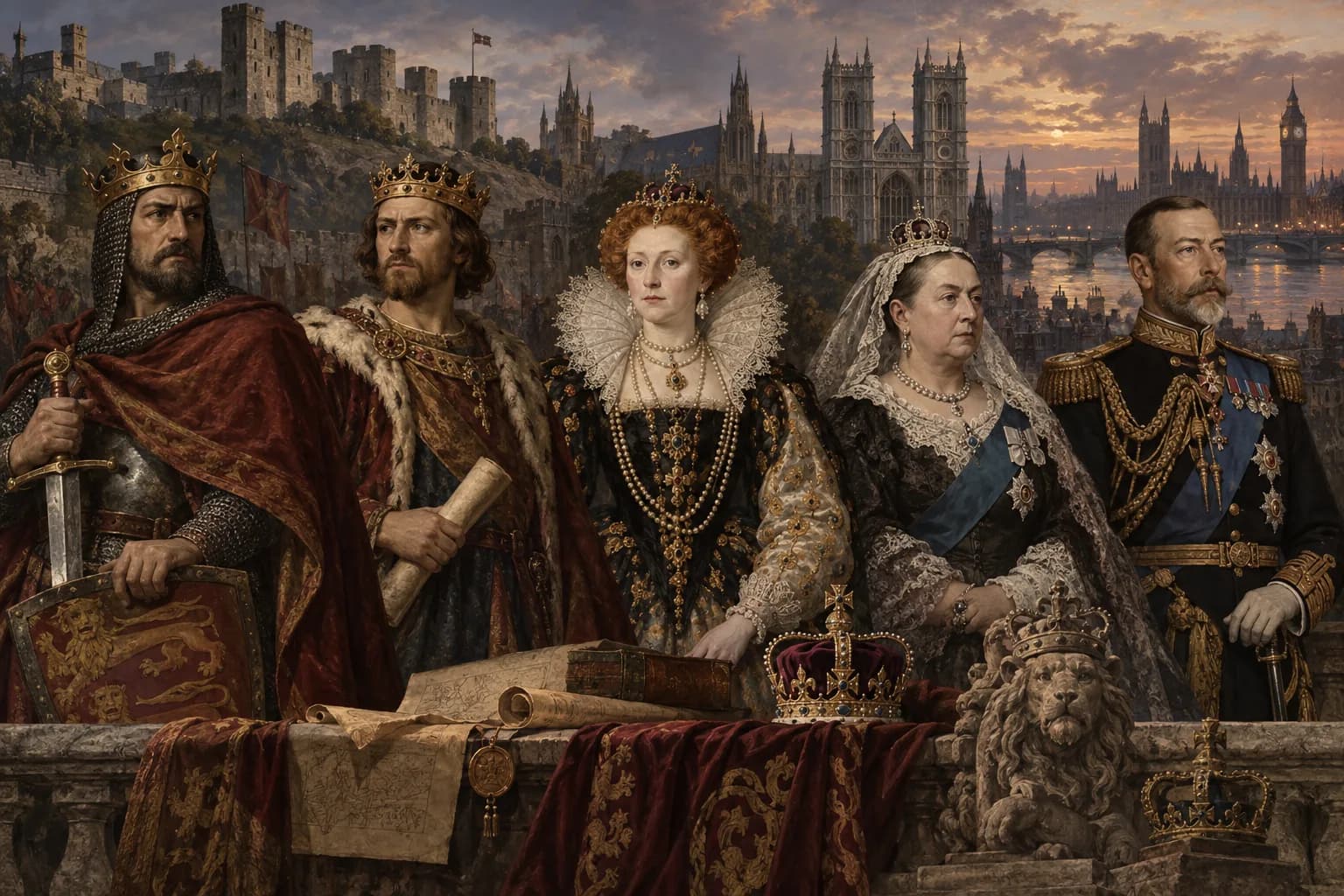
British Monarchs lineage
Lineage42 rulers
British Monarchs
1066 CE–present

Trace the English and later British monarchy from William I to today.

View lineage
Tertiary paths

Content note

This profile is written for educational use and connects to related Stories of History pages. The main portrait is an AI-assisted historical reconstruction, included as an illustrative aid rather than documentary evidence. Image policy

References

Sources & Further Reading

Reliable reference works, archives and reading paths connected to this profile.

Further reading

  1. Encyclopaedia Britannica, Search results for Charles II,” accessed June 2026.Open source
  2. WorldCat, Books and library holdings for Charles II,” accessed June 2026.Open source

Primary sources

  1. Library of Congress, Search results for Charles II,” accessed June 2026.Open source

Reviewed claim sources

Loading reviewed claim sources...

A weekly route through history

Find out first about the latest published stories, feature notes and occasional Premium offers in one weekly email.