Complete chronology
Full overview and deeper context for every journey step.
742
Birth into power
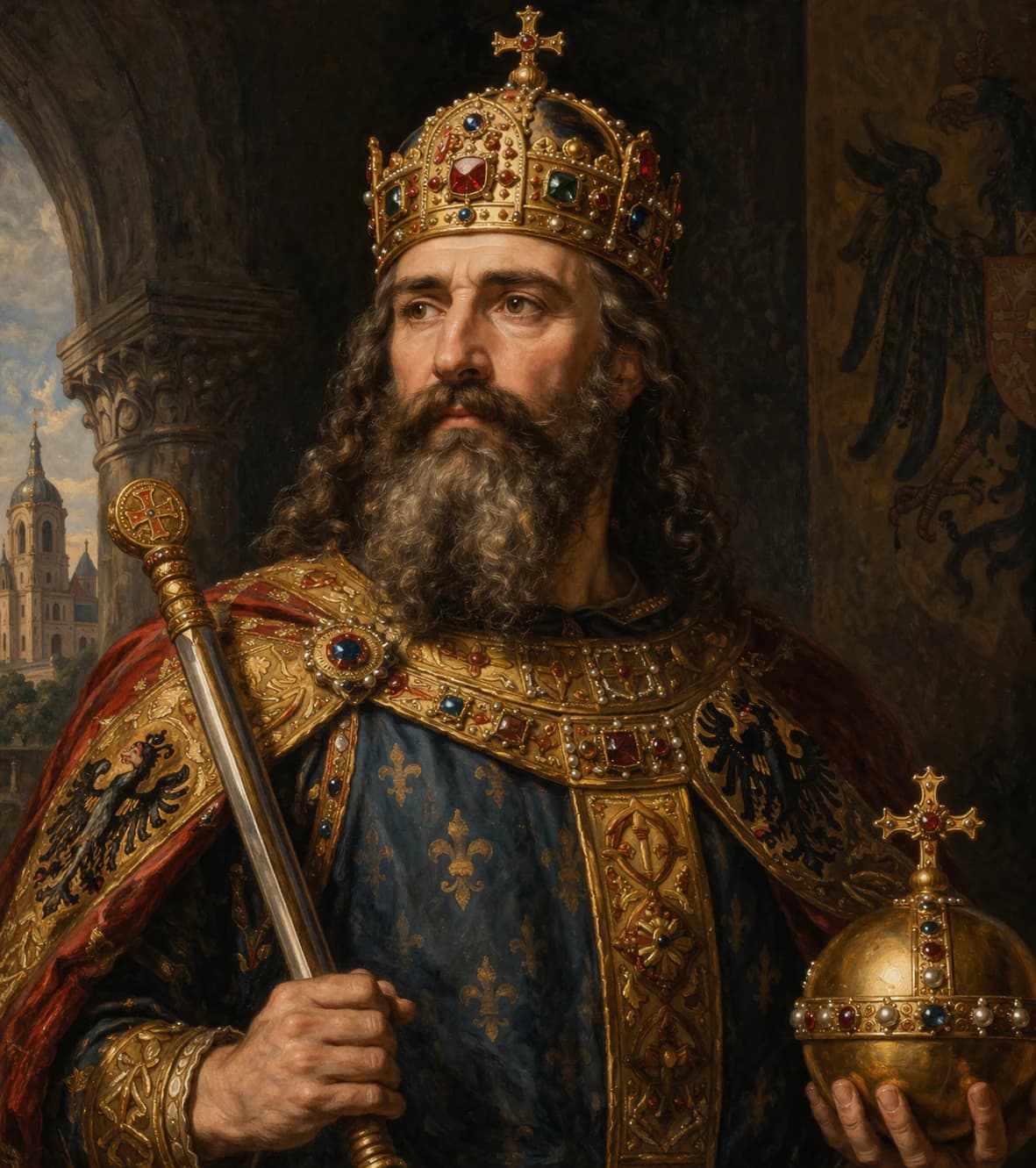
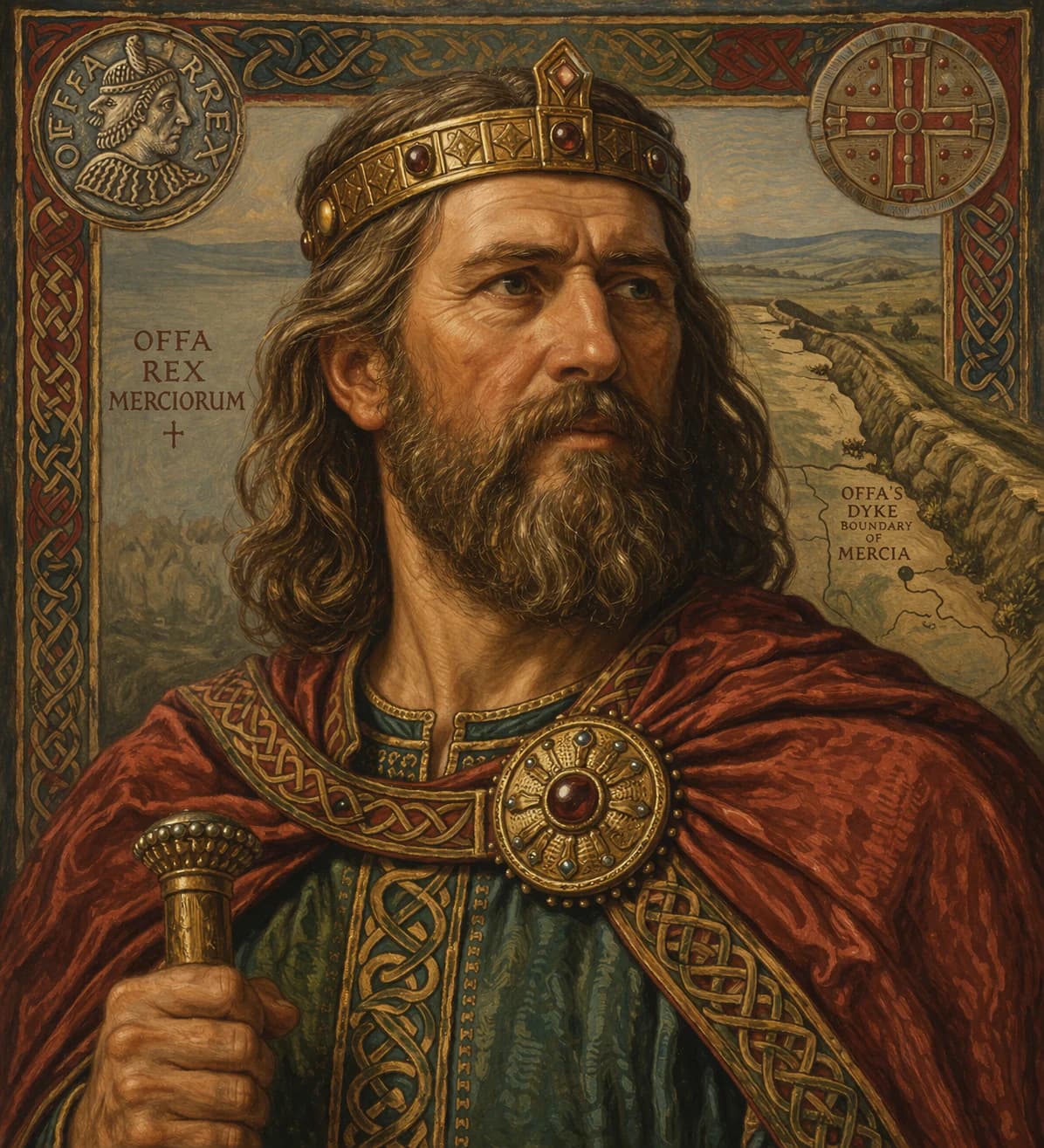
Charlemagne was born around 742 into a family that had already learned how to turn influence into kingship. His grandfather Charles Martel had defeated a Muslim raiding army near Tours in 732 and made the Carolingians the strongest force in the Frankish world. His father, Pepin the Short, went further: with papal support he deposed the last Merovingian king and took the royal title for himself. Charlemagne therefore grew up inside a political order that was both ancient and newly made. Frankish kingship rested on war leadership, Christian legitimacy, aristocratic loyalty and the distribution of land and reward. It was not enough for a ruler to inherit power; he had to keep proving that he could defend the realm, enrich his followers and protect the Church. That early lesson shaped Charlemagne's whole career.
His early environment ensured that leadership was not learned later but absorbed from the beginning.
768
Shared rule begins
Pepin divided his kingdom between his two surviving sons in the traditional Frankish manner. Charlemagne received a broad arc of territory stretching from Neustria and Austrasia toward Aquitaine, while Carloman ruled adjoining lands that made cooperation unavoidable. The arrangement was inherently unstable. Each brother had his own court, followers and ambitions, and their territories interlocked in ways that turned every military decision into a test of trust. The early Aquitanian revolt showed the problem clearly: Charlemagne acted decisively while Carloman hesitated, leaving the elder brother to look more kingly. The rivalry never became open civil war, but it taught Charlemagne that divided rulership made strategy slower and legitimacy more fragile. His later insistence on command, inspection and unity was forged in this awkward apprenticeship.
Early rivalry forced him to balance ambition with restraint.
771
Sole kingship
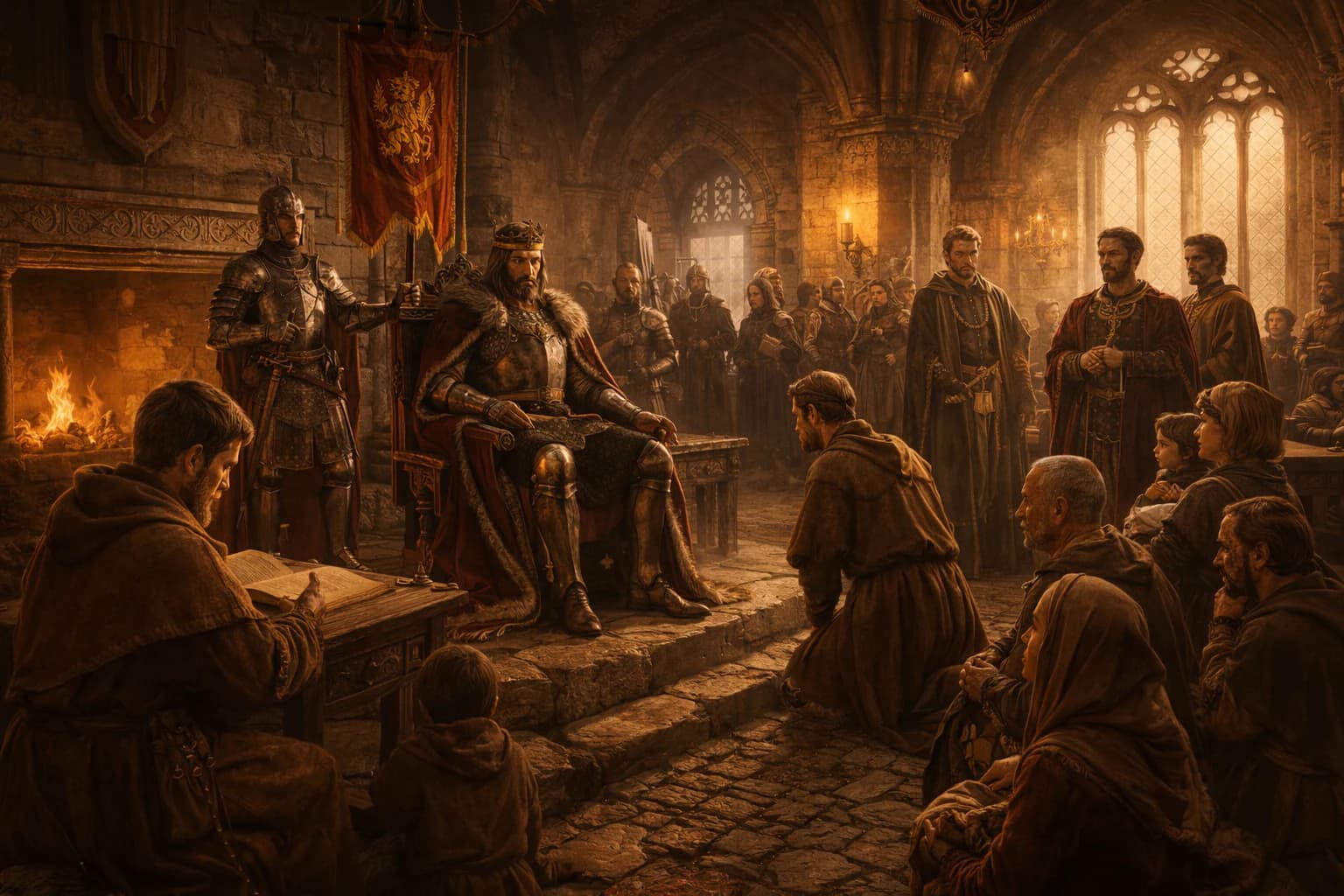
Carloman died unexpectedly in 771, leaving a widow and young sons whose claims might have divided the realm again. Charlemagne moved quickly, taking control of his brother's territories while Carloman's family fled to the Lombard court in Italy. The speed mattered. A contested succession could have shattered Carolingian authority before it reached maturity. Instead, Charlemagne emerged as the single ruler of a reunited Frankish kingdom, with the resources and confidence to act on a scale his father had only begun to imagine. The removal of internal rivalry did not make rule easy, but it gave his reign its decisive rhythm. From this point onward, Charlemagne's kingship became expansive: against the Lombards, Saxons, Avars, Bavarians and Muslim powers in northern Spain, he turned dynastic consolidation into a project of empire.
Unity at the top gave him the momentum to think beyond survival toward expansion.
770s–790s
Campaigns of expansion
Charlemagne's reign was one of almost continuous campaigning. In 774 he conquered the Lombard kingdom and took its crown, strengthening the Frankish alliance with the papacy. His longest and most brutal struggle was in Saxony, where decades of revolt, forced conversion, deportation and settlement revealed the hard edge of his Christian kingship. In 782, after a Saxon uprising, the massacre at Verden became one of the darkest episodes of his rule; medieval sources and modern historians debate its scale, but not the coercive violence behind his expansion. Elsewhere, he absorbed Bavaria, destroyed the Avar ring in the Danube basin, fought in northern Spain and established border zones to contain enemies. These campaigns were not simply raids for glory. They brought new peoples, laws and frontiers into a Frankish system that relied on counts, bishops, royal assemblies and military obligation. The empire was built by victory, but it survived through integration.
Expansion succeeded because it combined force with long-term control.
800
Imperial coronation
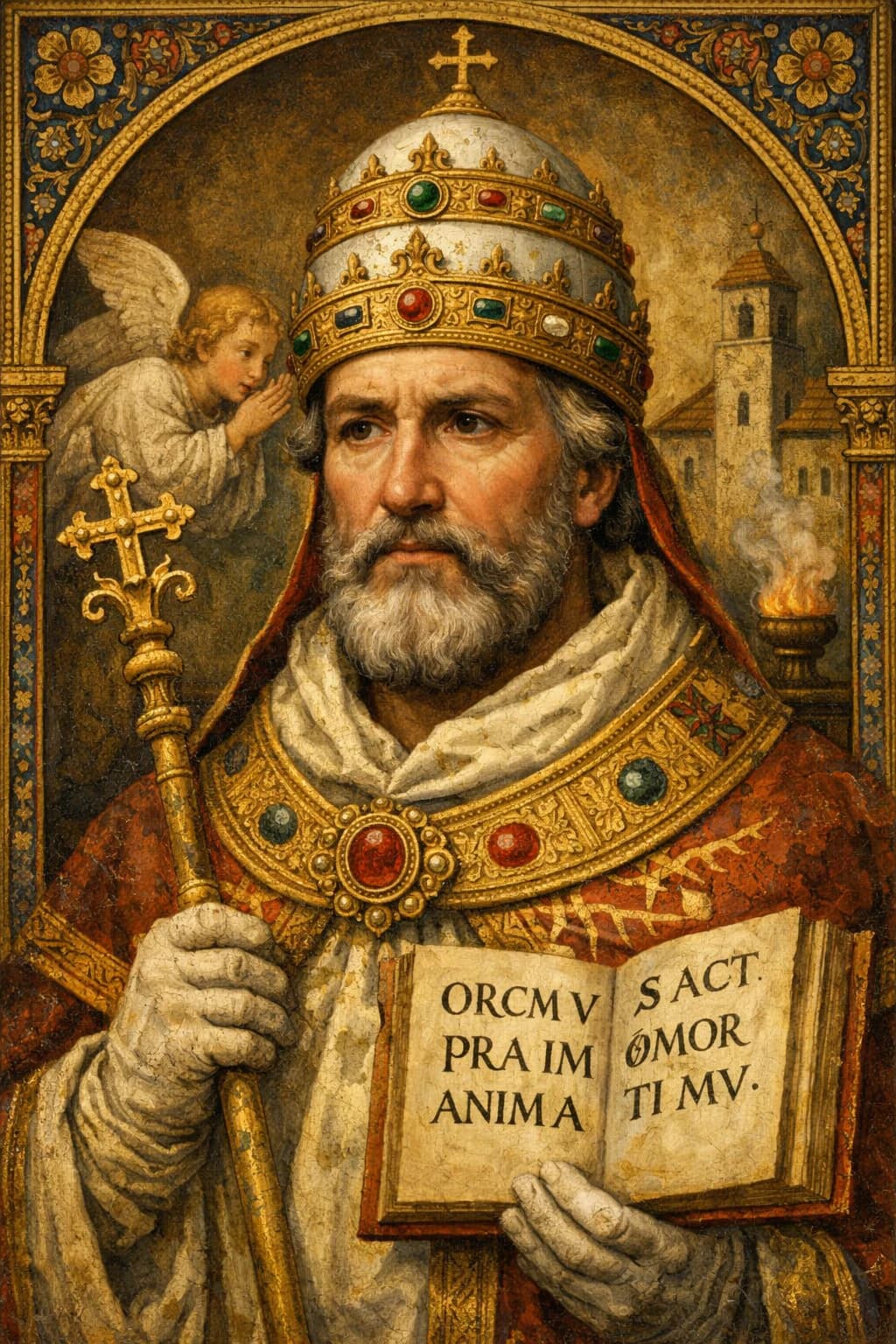
The imperial coronation was staged inside a crisis. Pope Leo III had been attacked by Roman opponents and had appealed to Charlemagne for protection. Charlemagne restored him, presided over the settlement of accusations against him and then, during Mass at Saint Peter's Basilica on Christmas Day 800, received the imperial crown. The title linked him to Rome's vanished western emperors, but it also created ambiguity. Was the pope granting authority, recognising power that already existed, or binding the Frankish ruler to the defence of the Church? Einhard later claimed Charlemagne would not have entered the church had he known what Leo intended, a story that may reflect discomfort with appearing dependent on papal initiative. The coronation also challenged the Roman Empire at Constantinople, whose rulers did not think imperial authority in the West had simply become vacant. Its significance lay in the questions it raised as much as the honour it bestowed.
The crown transformed his rule from regional dominance into a claim of universal authority.
late 700s–early 800s
Administrative reform
Charlemagne's empire could not be governed from Aachen by charisma alone. He relied on counts, bishops, abbots and local elites, but he also tried to keep them answerable. Royal capitularies set out instructions on law, military service, morality, church discipline and administration. The missi dominici, travelling royal envoys often sent in pairs of lay and clerical officials, inspected local government and reported back to the court. Annual assemblies helped bind leading men to royal policy, while border marches gave trusted commanders special military responsibility in exposed regions. None of this created a modern state. Power still depended on personal loyalty, aristocratic cooperation and the ruler's ability to move. Yet the system was unusually ambitious for its age. Charlemagne treated government as a moral and practical project: correct worship, better education, clearer law and stronger military organisation all belonged to the same vision of Christian order.
Sustainable power came from systems, not just victories.
late reign
Cultural revival
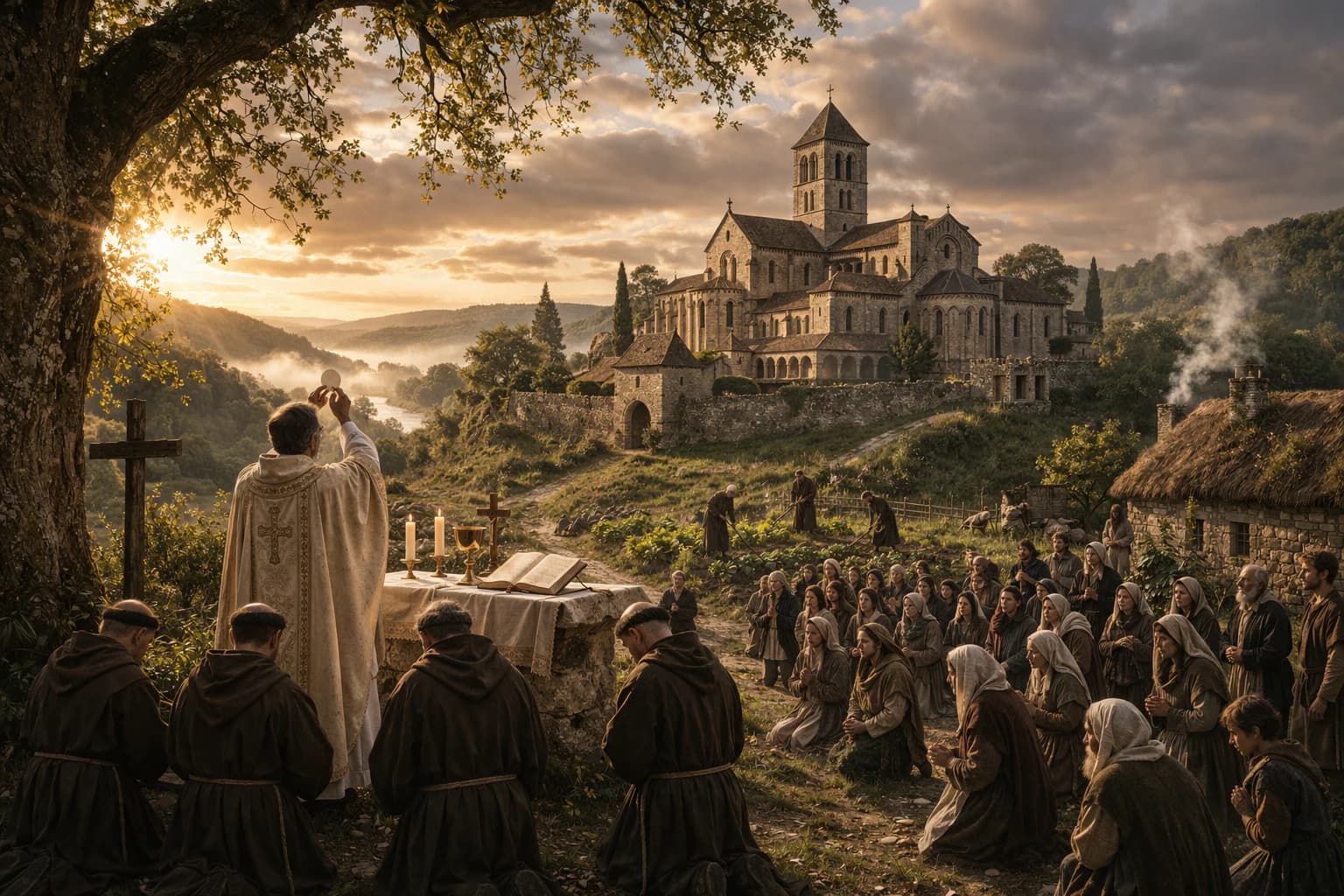
The Carolingian Renaissance was not a mass movement of popular literacy, but it mattered profoundly. Charlemagne wanted clergy who could read correctly, teach doctrine reliably and administer royal commands. To achieve that, he drew scholars to his court, most famously Alcuin of York, and supported schools attached to monasteries and cathedrals. Scribes copied biblical, classical and patristic texts, helping preserve works that might otherwise have disappeared. The development and spread of Carolingian minuscule, a clearer script, made books easier to read and reproduce. Charlemagne himself probably understood Latin better than he could write it, and Einhard says he kept writing tablets under his pillow in old age. That detail is revealing rather than embarrassing. He saw learning not as ornament, but as infrastructure: a literate Church and court could hold together a realm that weapons alone could not govern.
His support for learning showed that influence could extend through ideas as well as power.
810–814
Final years
Old age narrowed Charlemagne's options. His intended division of the empire was disrupted by the deaths of two sons, Charles the Younger and Pepin of Italy, leaving Louis the Pious as the principal surviving legitimate heir. In 813 Charlemagne crowned Louis as co-emperor at Aachen, a carefully managed act that avoided direct papal involvement and signalled continuity within the dynasty. The decision showed both confidence and anxiety. The Carolingian world still assumed that sons had claims to inheritance, but Charlemagne also knew that fragmentation could undo what he had built. He continued to issue reforms, supervise church affairs and manage frontiers, yet the empire increasingly depended on arrangements that would have to function without his commanding presence. He died at Aachen in January 814 and was buried there, leaving Louis a realm dazzling in prestige but difficult to hold together.
The greatest test of his work was whether it could survive without him.
814 and beyond
Enduring legacy
Charlemagne's political creation did not remain whole. Under Louis the Pious and then Louis's sons, civil war and negotiated partition divided the Carolingian inheritance, most famously in the Treaty of Verdun in 843. Later France and Germany would both look back to him, though neither modern nation can simply claim him without distortion. His legacy is larger than a map. He gave the medieval West a durable image of the ruler as warrior, lawgiver, patron of learning and protector of the Church. The Holy Roman Empire drew prestige from his coronation; reforming kings and emperors invoked his example; monastic libraries preserved the texts copied under his programme. Yet his legacy also includes coercion, forced conversion and the violence needed to make unity out of diversity. Charlemagne matters because he stands at the hinge between late antiquity and medieval Europe: not the founder of Europe in any simple sense, but one of the few rulers who changed what European power could imagine itself to be.
Even as his empire broke apart, his influence continued to bind future generations.