People

Augustus FitzRoy

Augustus FitzRoy, 3rd Duke of Grafton, was a British Prime Minister from 1768 to 1770 whose ministry faced the Wilkes affair, factional politics, and imperial tensions before the American Revolution.

Born
1735 CE
Died
1811 CE
Role
Prime Minister of the United Kingdom

British Prime Minister (1735–1811)

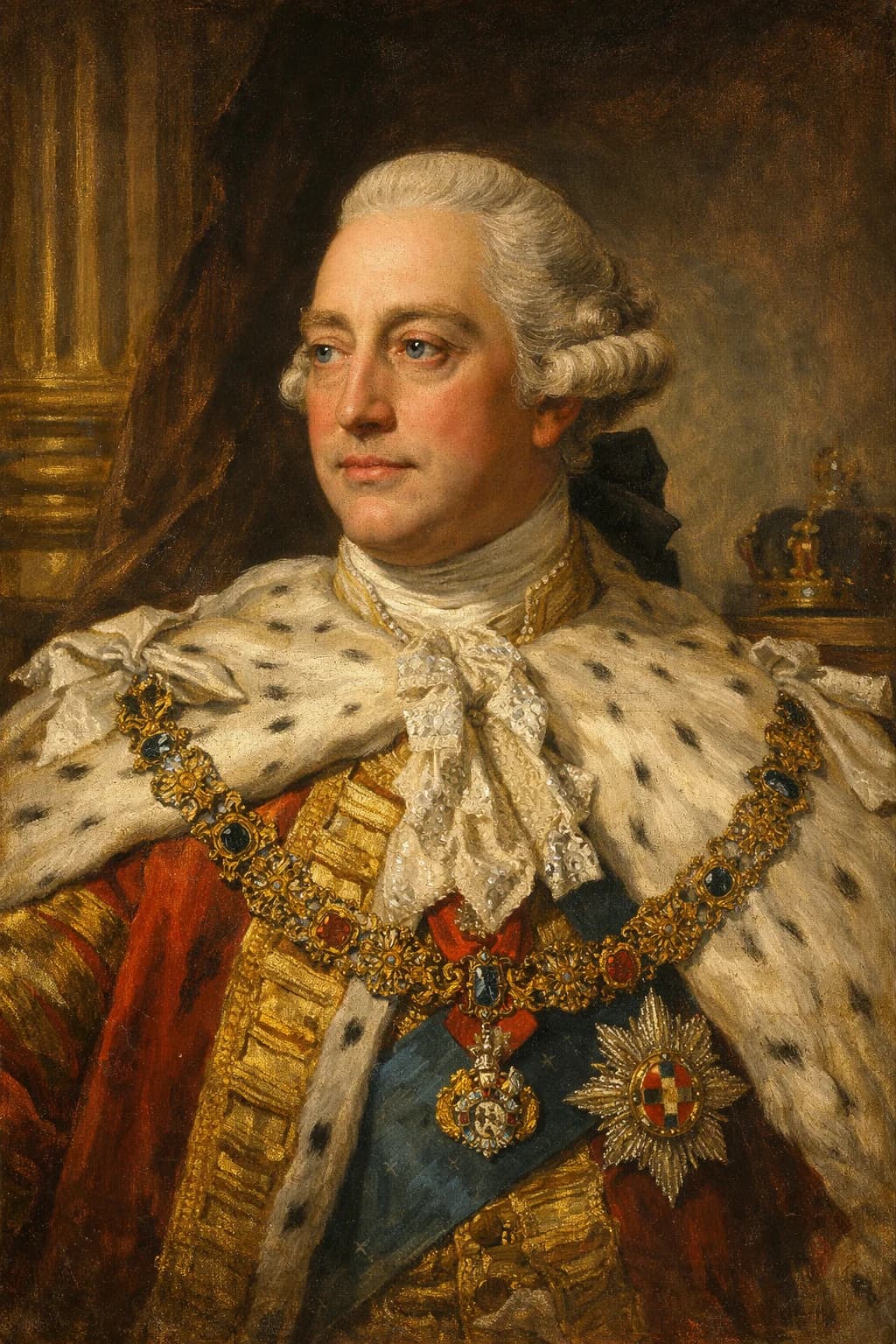
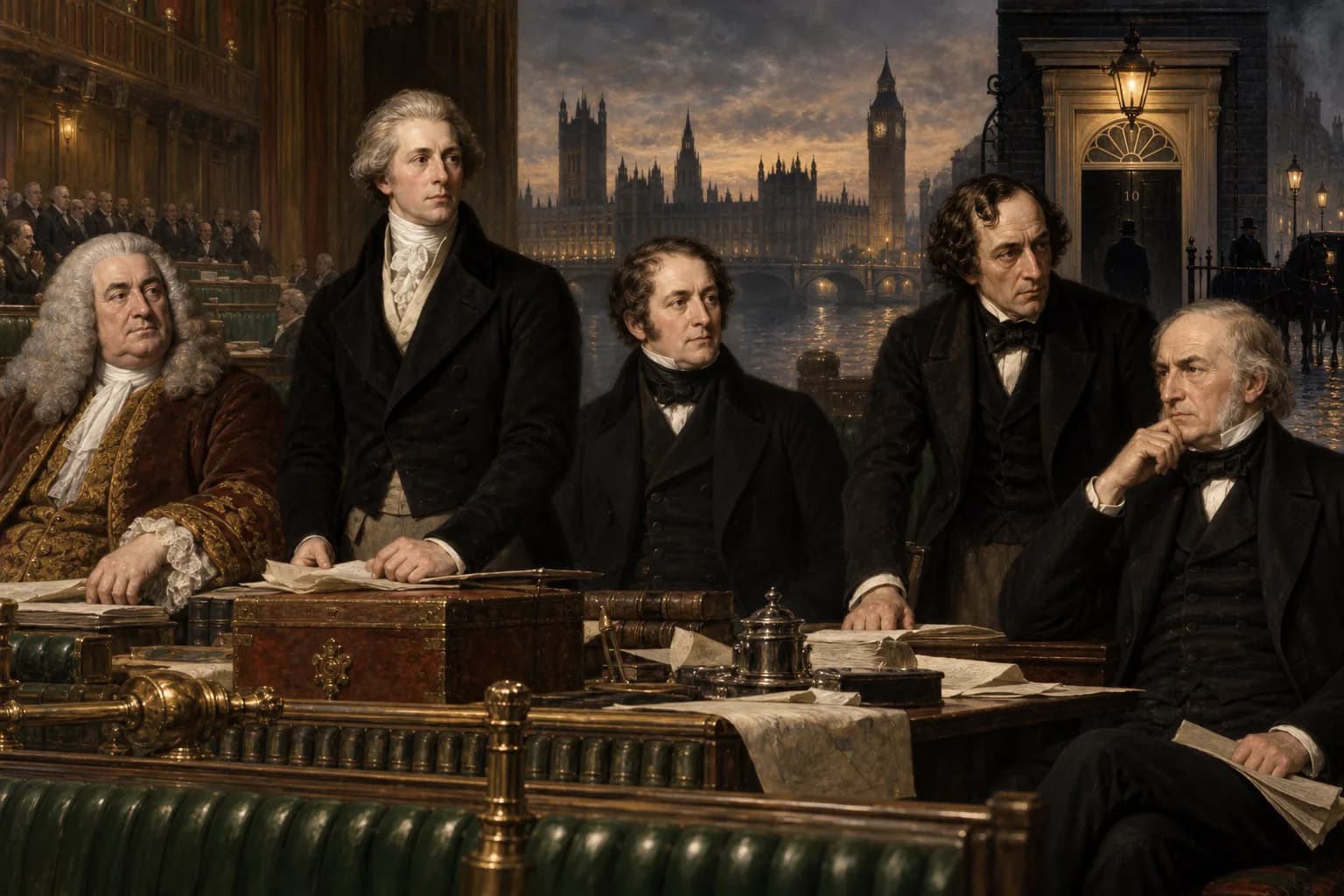
AI-generated portrait of the Duke of Grafton in formal 18th-century attire
AI-assisted historical reconstruction

An illustrative reconstruction based on historical context. It is not a photograph or documentary likeness. Image policy

Quick answer

Augustus FitzRoy, 3rd Duke of Grafton, was a British Prime Minister from 1768 to 1770 whose ministry faced the Wilkes affair, factional politics, and imperial tensions before the American Revolution.

Born
1735 CE
Died
1811 CE
Role
Prime Minister of the United Kingdom
Years
1735-1811 CE
Quick facts

Profile details

Additional identity and tagging details that are not already covered in the introduction.

Full name
Augustus FitzRoy, 3rd Duke of Grafton
Also known as
Duke of Grafton, 3rd Duke of Grafton, Augustus FitzRoy, Duke of Grafton
Facts

Augustus FitzRoy timeline facts

Selected specifics from this profile's life story.

1735
Aristocratic Beginnings

Born into a powerful aristocratic family, he inherited influence early and was positioned for public life from childhood.

1760s
Rapid Advancement

He rose quickly through political ranks, gaining high office while still relatively inexperienced.

1770
Resignation

He resigned as prime minister after losing the confidence needed to sustain his government.

1811
A Complicated Legacy

He is remembered as a prime minister whose tenure revealed the challenges of leading amid unstable political alliances.

Life Journey

A rise shaped by privilege, pressure, and political turbulence

Follow the story in a more continuous narrative, with a reading mode that matches how much depth you want.

Complete chronology

1735

Aristocratic Beginnings

Augustus FitzRoy was born in 1735 into one of Britain's great aristocratic families. As 3rd Duke of Grafton, he carried a name linked to royal descent through Henry FitzRoy, the illegitimate son of Charles II. That lineage placed him inside the world of land, patronage, court connection, and political expectation that shaped eighteenth-century government. Public life was not an eccentric choice for a man like Grafton; it was almost part of inheritance. Yet inherited rank was becoming less secure as a basis for authority. Newspapers, parliamentary opposition, urban protest, and imperial crisis were making politics more visible and more volatile. Grafton's life therefore belongs to a transitional age, when aristocrats still governed but could no longer assume that deference would protect them from public anger.
1750s

Elite Education

Grafton was educated for the world he was expected to inhabit: elite, classical, social, and political. Like many aristocratic young men, he learned not only through books but through networks, manners, sport, estates, and association with older political figures. This preparation gave him confidence and access, but it did not necessarily train him for the harshest parts of leadership. Eighteenth-century politics was full of shifting groups rather than disciplined modern parties, and influence depended on court favor, parliamentary management, family interest, and personal reputation. Grafton's education taught him how to belong among rulers. It did less to prepare him for being attacked in print, challenged by popular agitation, or trapped between a king, factions, and a restless public. Those pressures would define his premiership.

1756

Entry into Politics

Grafton entered Parliament in 1756, then moved to the House of Lords after inheriting the dukedom. He aligned with the Whig world but lived in a political system where labels were looser than later party politics. Ministries were built from personal followings, court confidence, ideological tendencies, and practical bargains. Grafton became associated with William Pitt the Elder, later Earl of Chatham, whose patriot reputation and wartime prestige offered a different model from ordinary court management. This connection raised Grafton's profile and drew him into high office. But it also tied him to a political experiment that depended heavily on Chatham's authority. When that authority weakened through illness and absence, younger colleagues such as Grafton were left trying to manage forces they had not created and could not fully command.

1760s

Rapid Advancement

Grafton's rise was rapid because Georgian politics rewarded rank, connection, and availability during moments of ministerial instability. He served as a senior figure in Chatham's ministry and effectively carried more responsibility as Chatham became incapacitated by illness. This was a difficult apprenticeship. Britain faced unresolved questions left by the Seven Years' War: debt, taxation, relations with the American colonies, management of India, and the balance between royal influence and parliamentary independence. Grafton was young for such burdens and lacked the commanding reputation of Pitt. He was not without ability, but he was operating inside a cabinet of competing ambitions. The speed of his advancement meant he reached the edge of supreme power before he had built the political authority needed to survive there.

1768

Becoming Prime Minister

Grafton became prime minister in 1768, though the term itself still described a role less formal than the modern office. His ministry inherited the Chatham government's fragments and faced a political environment already charged with resentment. George III wanted stable government and reliable ministers; Parliament was divided into factions; the public sphere was noisy; and Britain's imperial system was entering a dangerous phase. The American colonies were resisting taxation and asserting rights, while at home John Wilkes turned arguments over liberty, representation, and government authority into a mass political cause. Grafton was therefore not simply unlucky. He stood at the point where old-style aristocratic management met newer forms of public politics. His authority looked adequate inside court circles but fragile under public attack.

1768–1769

Struggling to Govern

The Wilkes affair dominated Grafton's premiership. John Wilkes, radical MP, journalist, and symbol of popular liberty to his supporters, repeatedly challenged the government's handling of parliamentary privilege and representation. When Wilkes was elected for Middlesex and then excluded from the House of Commons, the issue became larger than one man. It raised the question of whether voters or Parliament controlled representation. Grafton's government defended parliamentary authority, but the decision looked to many like contempt for the electorate. Meanwhile colonial tensions worsened after troops were sent to Boston, and opposition writers such as Junius attacked Grafton personally with savage effectiveness. His private life, including divorce and remarriage, also became public ammunition. The ministry lost moral authority as much as parliamentary confidence, and Grafton seemed increasingly exposed.

1770

Resignation

Grafton resigned in January 1770 after his support had steadily eroded. The fall was not caused by one isolated mistake but by accumulated weakness: the Wilkes crisis, cabinet instability, personal attacks, colonial tension, and the absence of a coherent political base. Lord North succeeded him and would become the minister most associated with the road to the American War of Independence. Grafton's resignation shows how premiership in the eighteenth century depended on more than royal favor or noble status. A minister needed parliamentary management, public defensibility, and colleagues willing to be led. Grafton had pieces of authority but not enough of them at once. His fall also marked the triumph of a more durable, if ultimately disastrous, North ministry.

1770s–1800s

Later Public Service

After leaving the premiership, Grafton did not disappear. He served again in public office, including as Lord Privy Seal, and gradually moved toward more reform-minded positions. He supported some measures associated with religious toleration and parliamentary reform, and he became linked to Unitarian religious ideas later in life. This later Grafton is easy to miss because his short premiership dominates his biography. Yet it complicates the picture of a failed aristocratic minister. He remained engaged with public questions, learned from the instability of the 1760s, and showed greater openness to reform than his early career might suggest. His influence was quieter, but his long life carried him through the American Revolution, the French Revolution, and the reshaping of British politics that followed.

1811

A Complicated Legacy

Grafton died in 1811, remembered less for achievement than for the exposed weakness of his premiership. That makes him historically useful. His career reveals how British government worked before modern parties hardened: ministries were fragile coalitions of rank, court confidence, parliamentary interest, and personal reputation. He also governed at a moment when public opinion was becoming harder to contain. The Wilkes affair foreshadowed later arguments about representation, rights, and the legitimacy of parliamentary exclusion. Imperial tensions during his ministry formed part of the background to the American Revolution, even if Lord North inherited the central responsibility. Grafton was not a great prime minister, but he was not irrelevant. His failure shows an old political order under stress, and that stress is often where historical change becomes visible.

Continue in context

Connected stories

Move from the profile into the wider events and settings this figure belongs to.

British Prime Ministers lineage
LineagePrime ministers in sequence
British Prime Ministers
1721 CE–present

Explore British prime ministers from Walpole to the present.

View lineage
Tertiary paths

Content note

This profile is written for educational use and connects to related Stories of History pages. The main portrait is an AI-assisted historical reconstruction, included as an illustrative aid rather than documentary evidence. Image policy

References

Sources & Further Reading

Reliable reference works, archives and reading paths connected to this profile.

Further reading

  1. Encyclopaedia Britannica, Search results for Augustus FitzRoy,” accessed June 2026.Open source
  2. WorldCat, Books and library holdings for Augustus FitzRoy,” accessed June 2026.Open source

Primary sources

  1. Library of Congress, Search results for Augustus FitzRoy,” accessed June 2026.Open source

Reviewed claim sources

Loading reviewed claim sources...

A weekly route through history

Find out first about the latest published stories, feature notes and occasional Premium offers in one weekly email.