People

Andrew Johnson

Andrew Johnson was the 17th U.S. President, Lincoln's successor after the assassination, a Unionist from Tennessee, and the first American president to be impeached during the battle over Reconstruction.

Born
1808 CE
Died
1875 CE
Role
17th President of the United States

17th President of the United States (1808–1875)

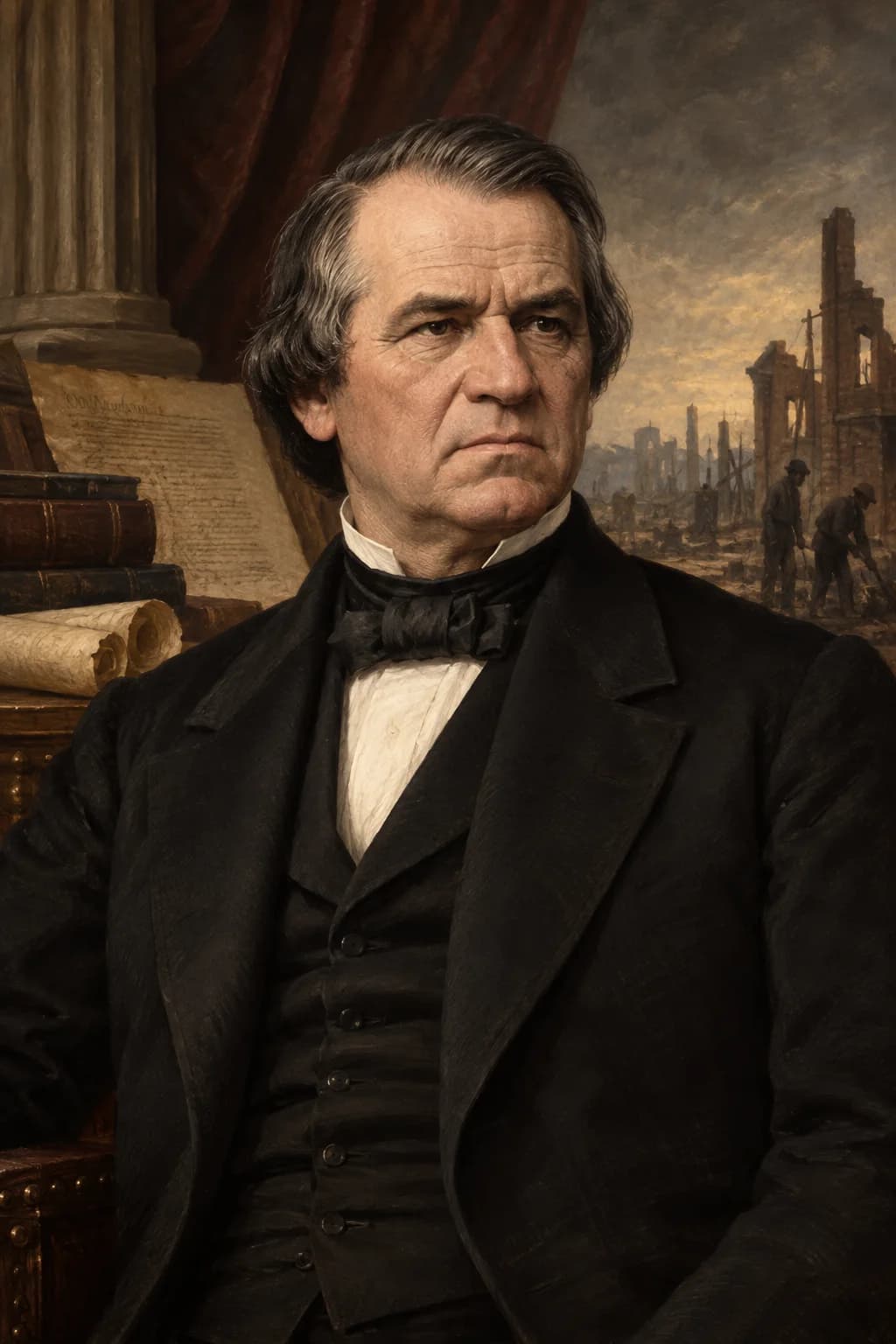
AI-generated portrait of Andrew Johnson in formal presidential attire
AI-assisted historical reconstruction

An illustrative reconstruction based on historical context. It is not a photograph or documentary likeness. Image policy Attribution

Quick answer

Andrew Johnson was the 17th U.S. President, Lincoln's successor after the assassination, a Unionist from Tennessee, and the first American president to be impeached during the battle over Reconstruction.

Born
1808 CE
Died
1875 CE
Role
17th President of the United States
Years
1808-1875 CE
Facts

Andrew Johnson timeline facts

Selected specifics from this profile's life story.

1808–1826
Poverty and apprenticeship

Johnson grew up in severe poverty in North Carolina and learned tailoring as a boy, building his life without the formal schooling most politicians received.

1860–1861
Staying with the Union

As secession spread, Johnson refused to leave the Union, making him one of the most prominent southern politicians to reject disunion.

1865–1866
Reconstruction battle lines

Johnson favored quick restoration of former Confederate states, bringing him into fierce conflict with Republicans in Congress over Reconstruction policy.

1869–1875
After office and judgment

Johnson left the presidency discredited, later returned briefly to the Senate, and remains remembered mainly for his troubled role in Reconstruction.

Life Journey

A rise from poverty into a presidency of bitter division

Follow the story in a more continuous narrative, with a reading mode that matches how much depth you want.

Complete chronology

1808–1826

Poverty and apprenticeship

Andrew Johnson was born in Raleigh, North Carolina, in 1808, into a household with little money and almost no security. His father died when Johnson was young, and the family economy pushed him into apprenticeship rather than school. Bound to a tailor, he learned a skilled trade but not the manners or credentials expected of gentlemen in public life. He later taught himself to read more fully, with important help from Eliza McCardle, whom he married after moving to Greeneville, Tennessee. Johnson's biography became central to his politics. He saw himself as a self-made man and developed a fierce resentment of planter aristocrats, bankers, and anyone who treated poor white laborers as inferior. Yet that class anger did not become racial equality. From the beginning, his democratic imagination was narrow: intense on behalf of white working men, hostile to elites, and deeply limited in its sympathy for Black Americans.
1826–1835

A local voice emerges

Greeneville gave Johnson a trade, a home, and a political audience. His tailor shop became a place where customers brought local news, grievances, and arguments about debt, land, taxes, and status. Johnson listened closely and learned the language of men who felt pushed aside by wealthier neighbors. He entered local office as alderman and mayor, presenting himself not as a polished statesman but as a plain speaker who understood labor because he had lived it. That identity was real, but it was also carefully cultivated. Johnson's early speeches attacked aristocracy and privilege with energy, especially the power of large slaveholders, yet he did not challenge the racial order that helped bind poor and elite white southerners together. His local rise showed both his political gift and his limits: he could turn resentment into support, but he rarely turned it into generosity.

1835–1857

Steady climb upward

Johnson climbed through nearly every level of American politics: town office, the Tennessee legislature, the U.S. House of Representatives, the governorship of Tennessee, and finally the U.S. Senate. His durability came from a message he repeated with stubborn force. He argued that government should protect the independence of ordinary white citizens against monopolies, banks, and planter domination. In Congress he supported the Homestead Act, seeing western land as a route to economic independence for small farmers. But his career also exposed a contradiction that would later become disastrous. Johnson could denounce slaveholding elites while accepting slavery itself and rejecting Black political equality. By the late 1850s he had become a prominent Tennessee Democrat with a reputation for fierce Unionism, class-based rhetoric, and a temperament that treated compromise as humiliation.

1860–1861

Staying with the Union

Secession forced Johnson into the decision that made him nationally important. Tennessee joined the Confederacy, but Johnson refused to leave the Union. In the Senate, he denounced secession as treason and portrayed Confederate leaders as aristocrats dragging ordinary people into rebellion. The stance required real courage: he was vilified across much of the South and separated from his home base. Northern Republicans and War Democrats embraced him as proof that southern loyalty had not vanished. Yet his Unionism should not be mistaken for racial egalitarianism. Johnson defended the United States because he believed the republic was permanent and because he hated the planter class that led disunion, not because he had embraced freedom as a broad democratic promise. That distinction would shape everything that followed.

1862–1864

Wartime prominence

Lincoln made Johnson military governor of Tennessee in 1862, placing him in one of the war's hardest laboratories of occupation and restoration. Tennessee contained Unionists, Confederates, enslaved people seeking freedom, guerrilla violence, ruined farms, and uncertain civil authority. Johnson used emergency power harshly, demanding loyalty and punishing rebels while trying to rebuild a pro-Union government. The role strengthened his standing in the North because it made him appear both southern and dependable. It also gave him an early version of the Reconstruction problem: how to restore authority after rebellion, how much mercy to show former Confederates, and whether emancipation would lead to genuine civic rights. Johnson's answer remained narrower than Lincoln's evolving view. He wanted loyalty restored and slavery weakened or destroyed by war, but he resisted a biracial political future.

1865

From vice president to president

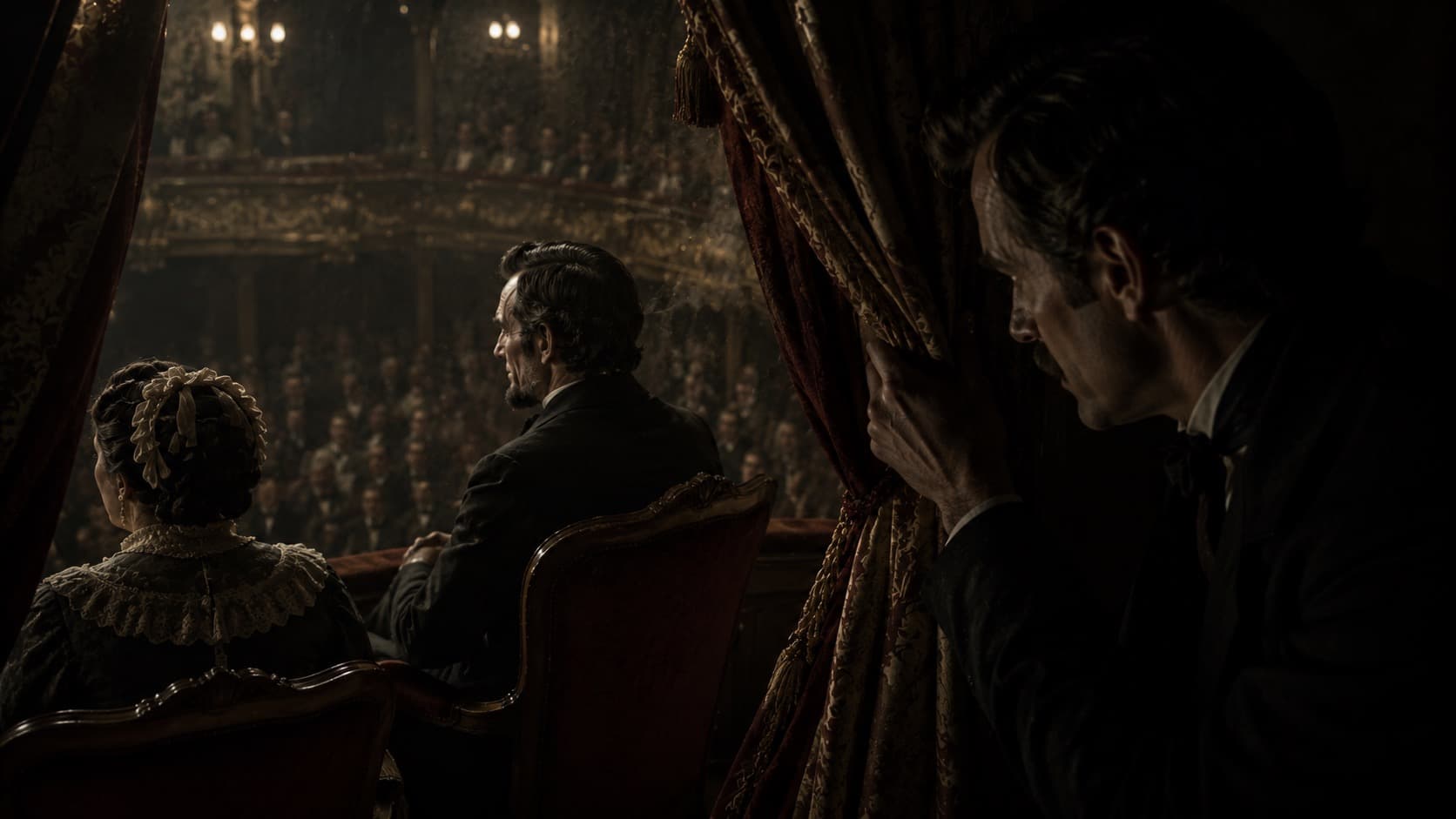
Johnson became Lincoln's running mate in 1864 on the National Union ticket, chosen to signal that the war effort reached beyond the Republican Party and beyond the North. The symbolism was powerful: a loyal southern Democrat beside the Republican president. It became fatefully practical on 15 April 1865, when Lincoln died after John Wilkes Booth's attack at Ford's Theatre. Johnson inherited the presidency just as Confederate armies were collapsing and the nation was shifting from battlefield victory to political reconstruction. The central questions were enormous. Would former Confederate leaders regain power quickly? Would freed people receive civil rights, land, education, legal protection, or the vote? Would Congress or the president control restoration? Johnson had prepared for many offices, but not for a moment requiring moral imagination on the scale of emancipation's aftermath.

1865–1866

Reconstruction battle lines

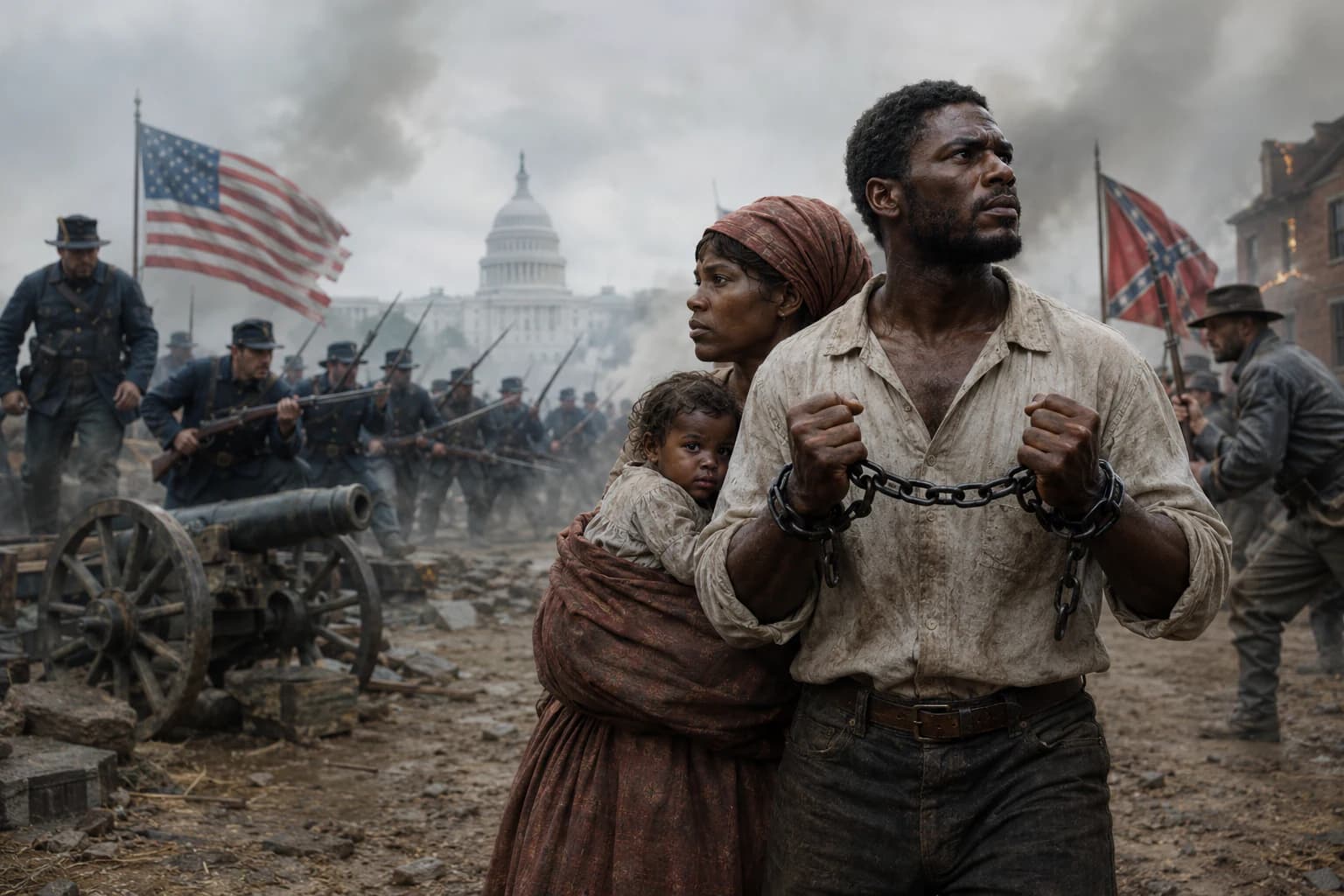
Johnson's Reconstruction policy moved quickly toward pardon, restoration, and white southern self-government. He required former Confederate states to repudiate secession and accept the end of slavery, but he allowed many former rebels to return to public life and showed little willingness to enforce Black civil or political rights. Southern legislatures responded with Black Codes that restricted freedpeople's movement, labor, testimony, and autonomy, revealing how much of slavery's social order could survive without legal slavery itself. Republicans in Congress concluded that Johnson's version of reunion betrayed the meaning of Union victory. Johnson, in turn, saw congressional Reconstruction as unconstitutional centralization and racial revolution. His vetoes of the Freedmen's Bureau bill and Civil Rights Act of 1866 turned disagreement into open war between branches of government. The fight was no longer only about policy; it was about who had authority to define freedom.

1867–1868

Impeachment and survival

By 1867 and 1868, the conflict between Johnson and Congress had hardened into a constitutional crisis. Congress passed Reconstruction Acts over his vetoes, placed the South under military districts, and tried to protect its program from presidential sabotage. The Tenure of Office Act attempted to restrict Johnson's ability to remove certain officials without Senate approval. When Johnson moved against Secretary of War Edwin Stanton, a Lincoln holdover aligned with congressional Reconstruction, the House impeached him. The Senate trial centered formally on office removal, but everyone understood the larger question: could a president hostile to Reconstruction use executive power to break it? Johnson survived conviction by one vote. The acquittal preserved the office but not his authority. He remained president, yet the future of Reconstruction had largely passed to Congress and the states.

1869–1875

After office and judgment

Johnson left office isolated and angry, convinced that he had defended the Constitution against radicalism. He made repeated attempts to return to public life and finally won election to the U.S. Senate from Tennessee in 1875, an extraordinary comeback for a former president, though he died only months later. His reputation has shifted over time, but modern assessments are overwhelmingly severe. The core issue is not simply that he clashed with Congress or was impeached. It is that he faced the aftermath of slavery with a cramped vision of democracy and used presidential power to obstruct stronger protections for freedpeople. Reconstruction's failures cannot be placed on Johnson alone; white southern violence, northern fatigue, racism, and political calculation all mattered. But his presidency gave former Confederates room to reorganize and forced the nation to fight over rights that victory should have clarified.

Continue in context

Connected stories

Move from the profile into the wider events and settings this figure belongs to.

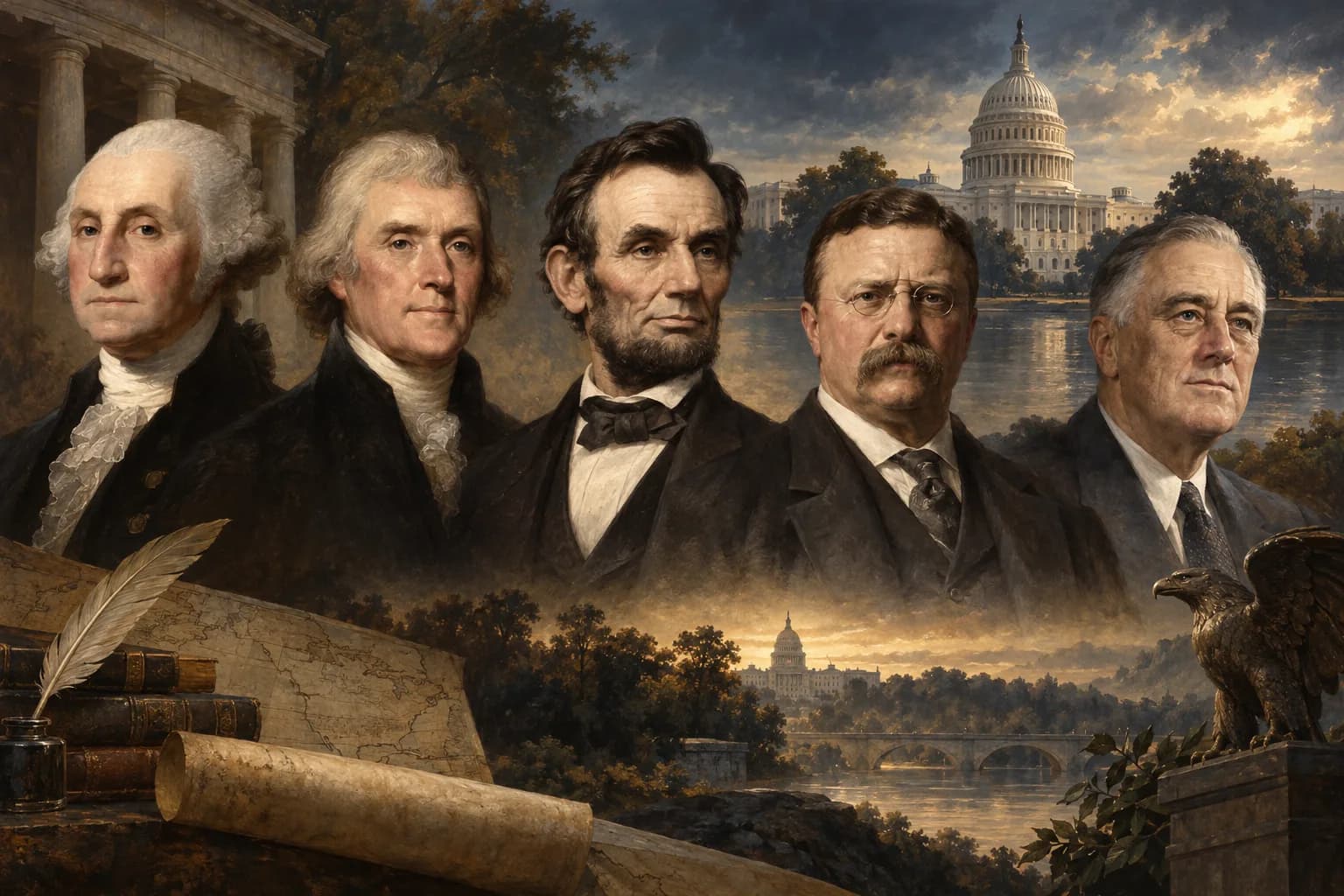
American Presidents lineage
Lineage47 presidents
American Presidents
1789 CE–present

The succession of American presidents from George Washington to today.

View lineage
Tertiary paths

Content note

This profile is written for educational use and connects to related Stories of History pages. The main portrait is an AI-assisted historical reconstruction, included as an illustrative aid rather than documentary evidence. Image policy Image attribution

References

Sources & Further Reading

Reliable reference works, archives and reading paths connected to this profile.

Further reading

  1. Encyclopaedia Britannica, Search results for Andrew Johnson,” accessed June 2026.Open source
  2. WorldCat, Books and library holdings for Andrew Johnson,” accessed June 2026.Open source

Primary sources

  1. Library of Congress, Search results for Andrew Johnson,” accessed June 2026.Open source

Reviewed claim sources

Loading reviewed claim sources...

A weekly route through history

Find out first about the latest published stories, feature notes and occasional Premium offers in one weekly email.