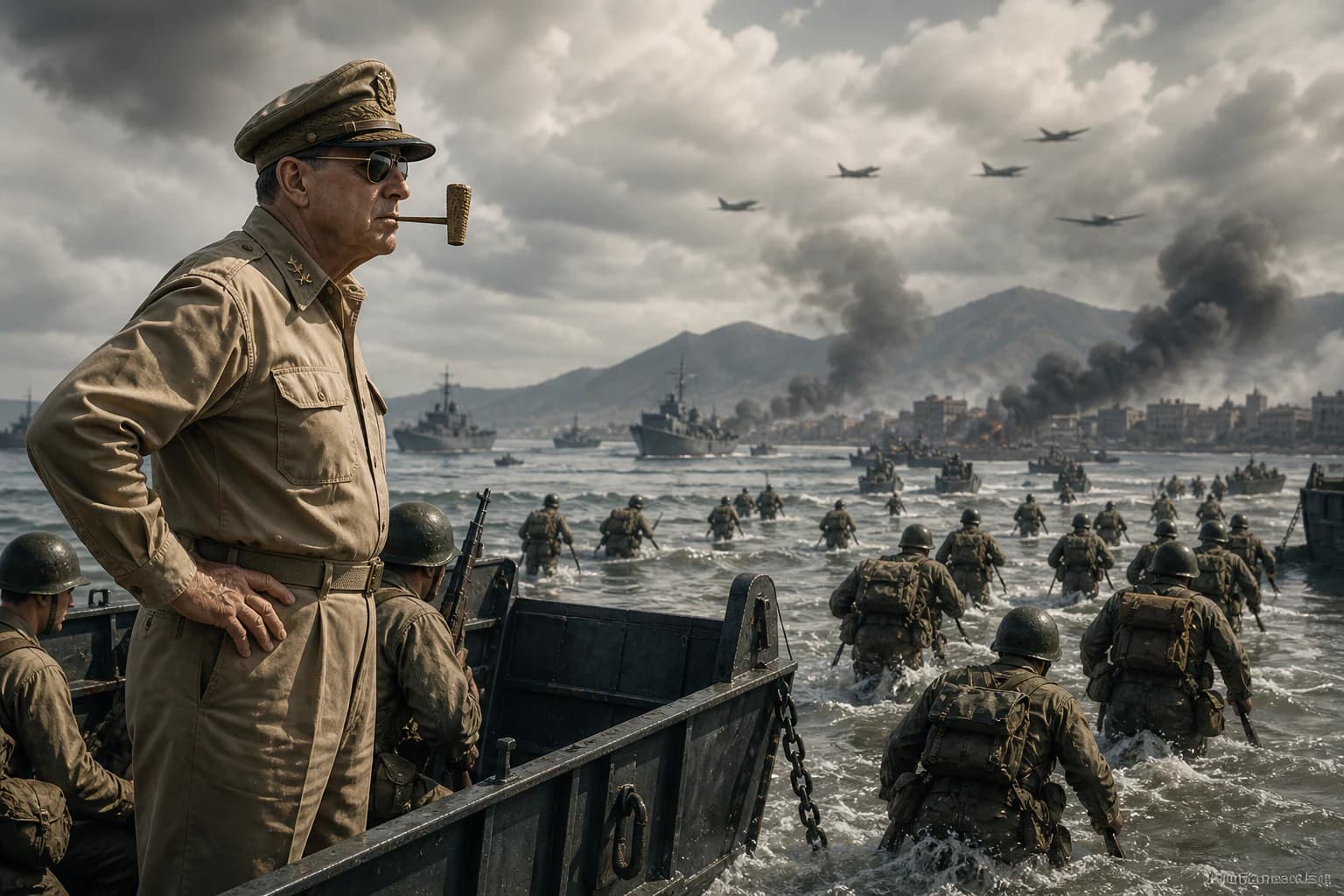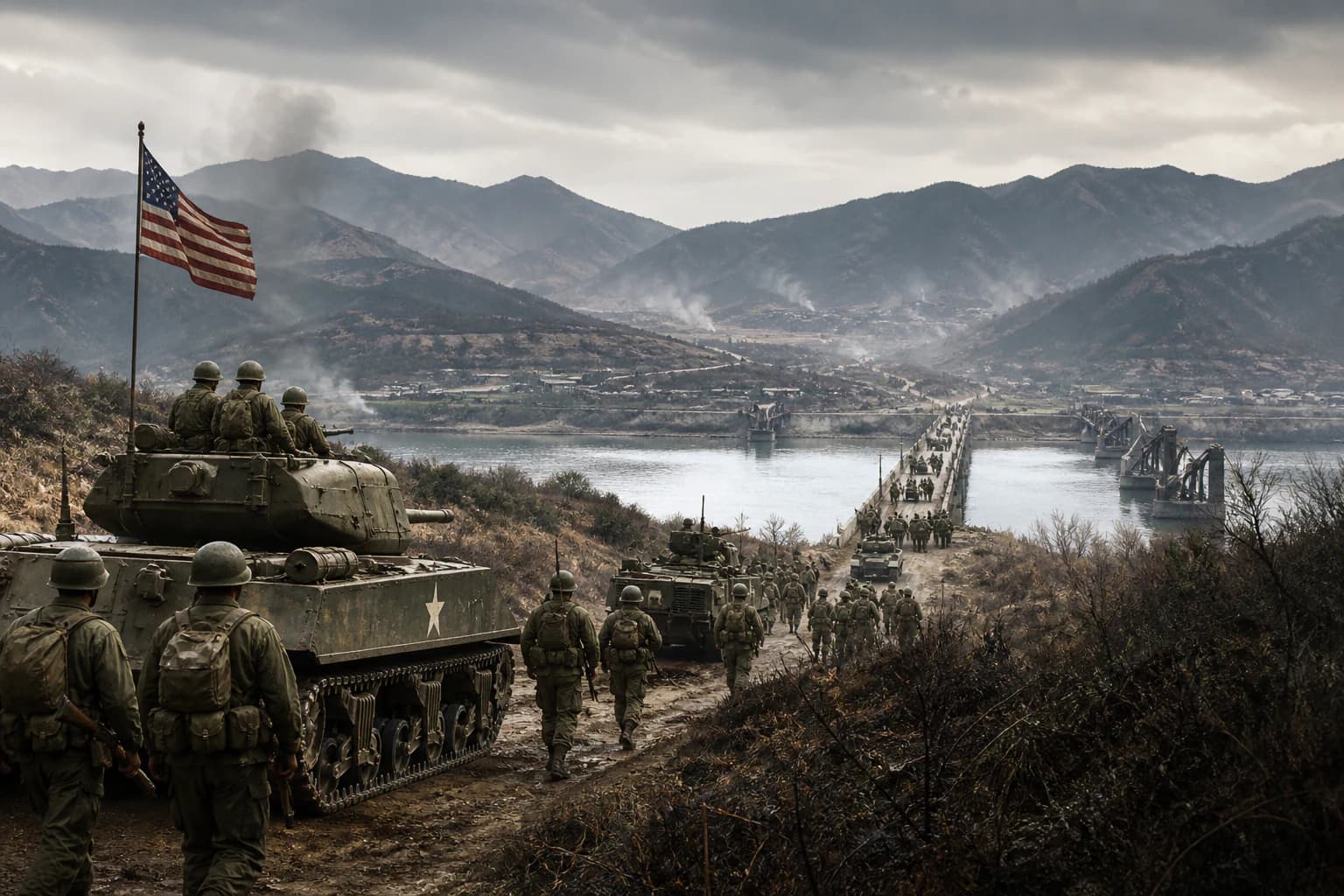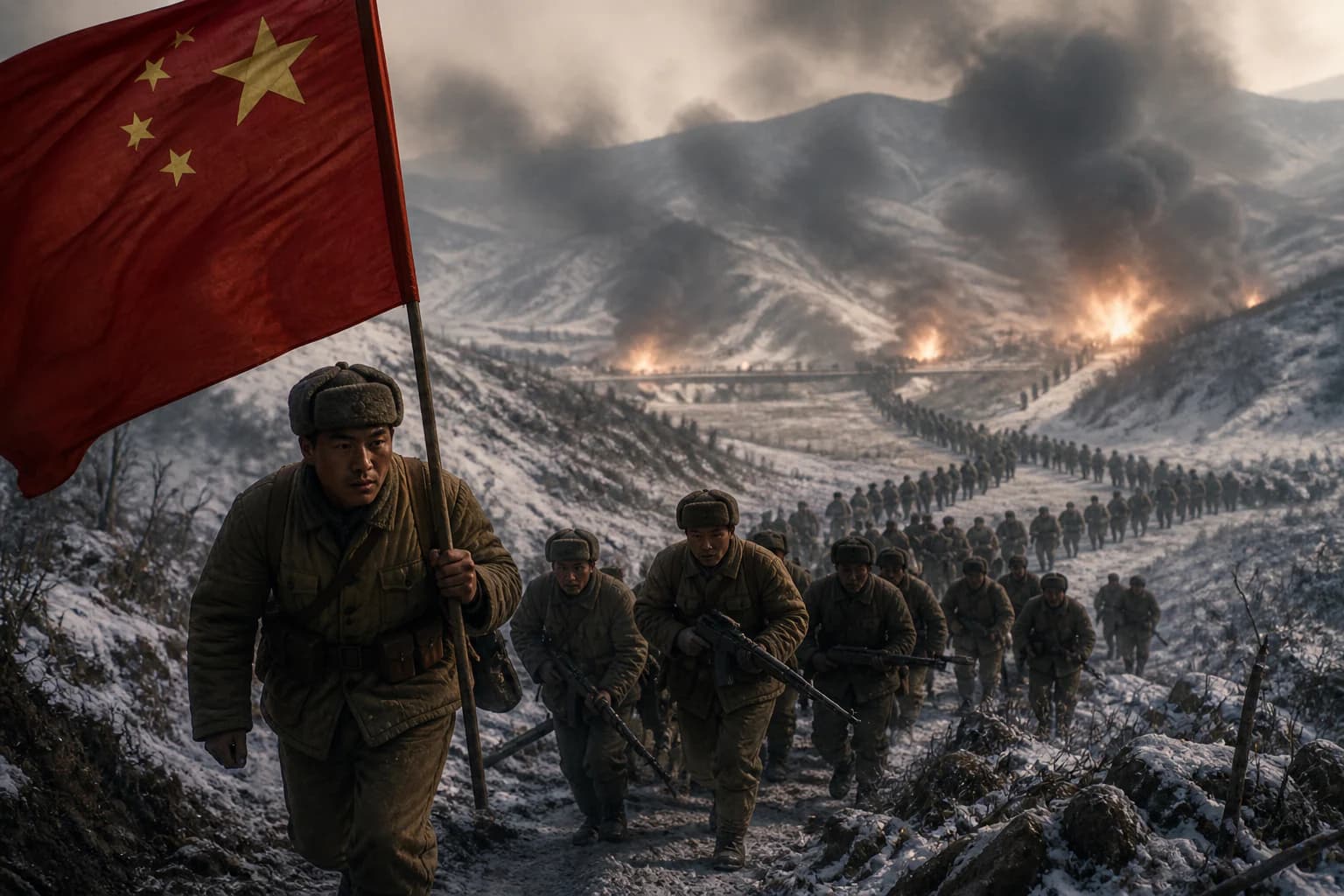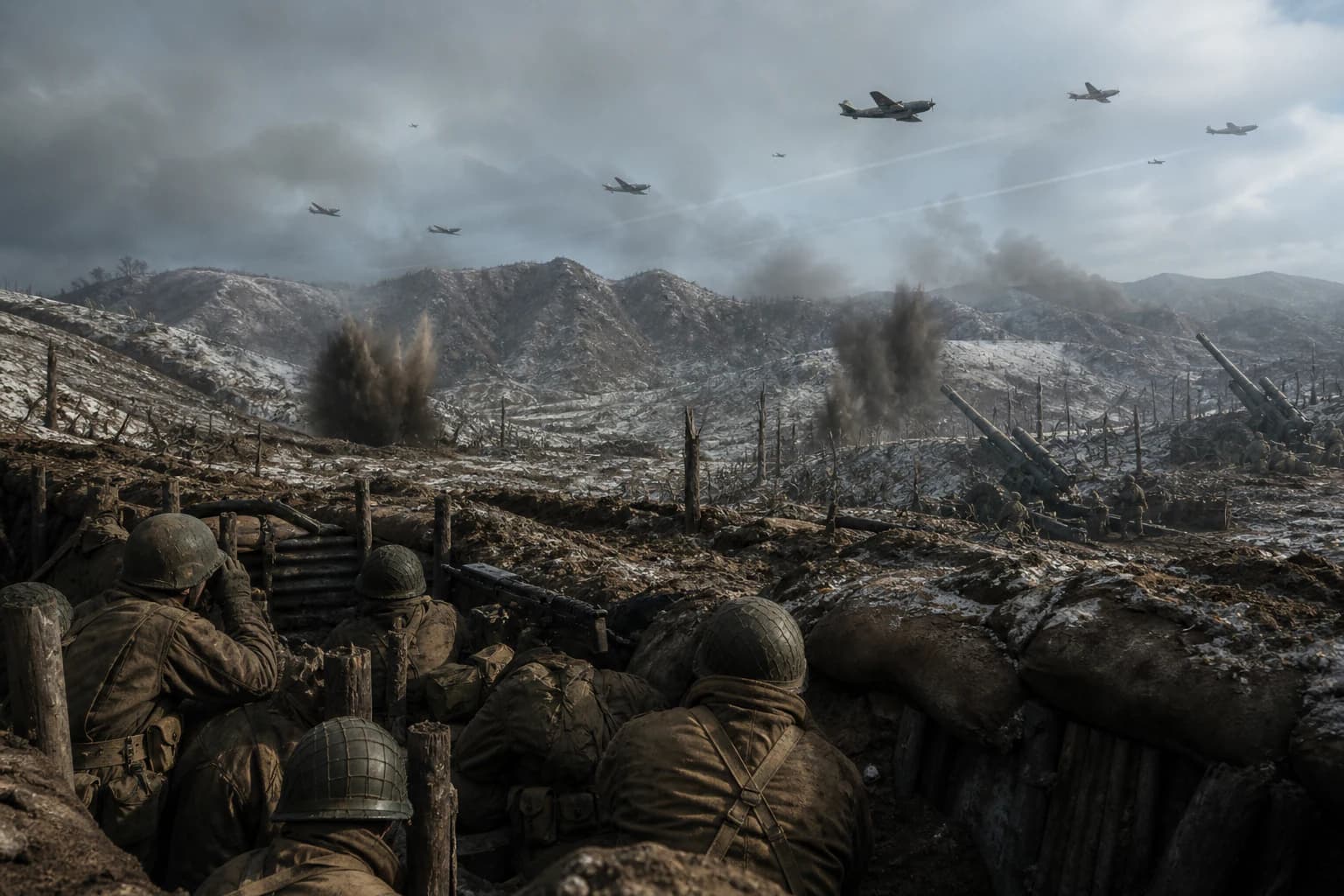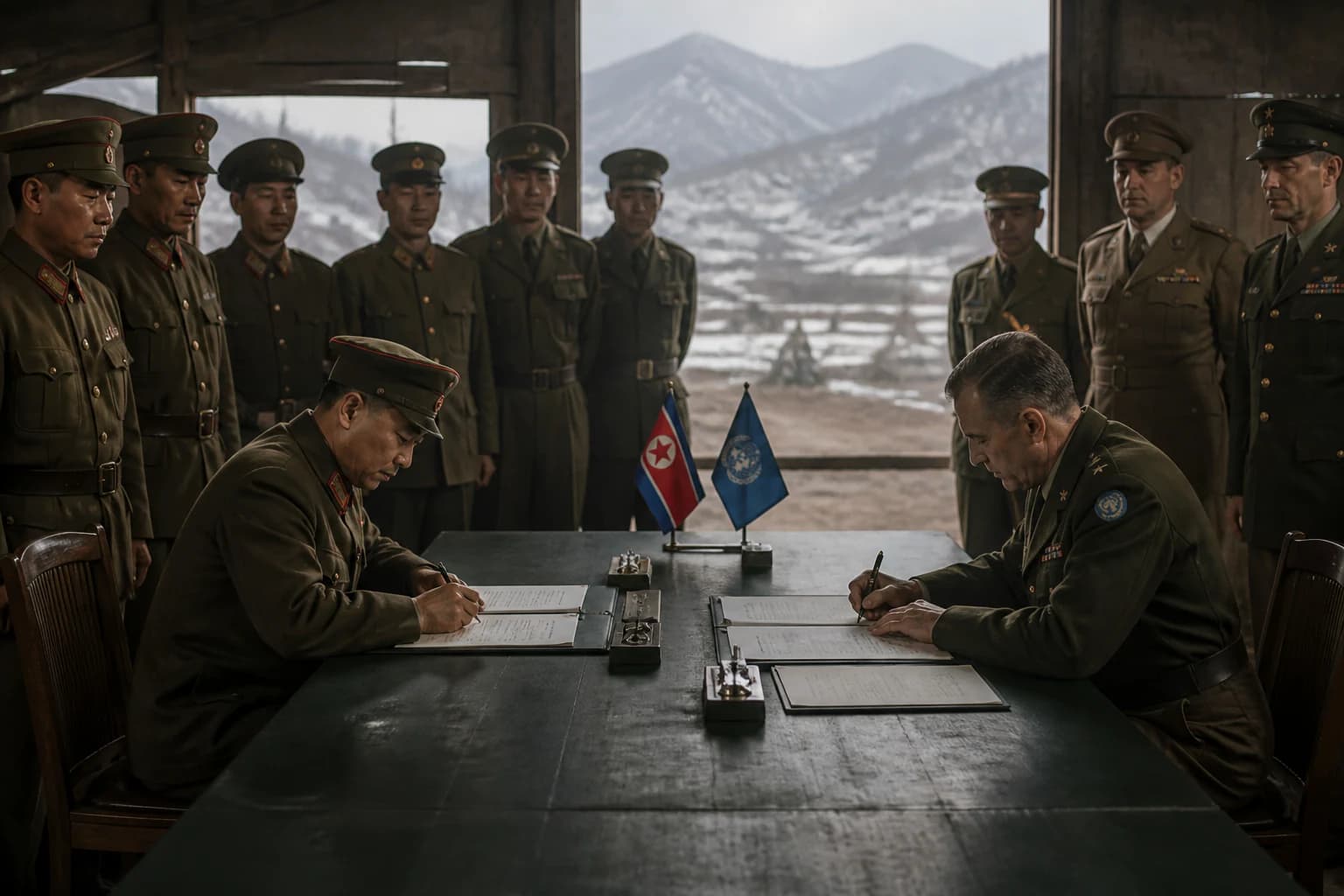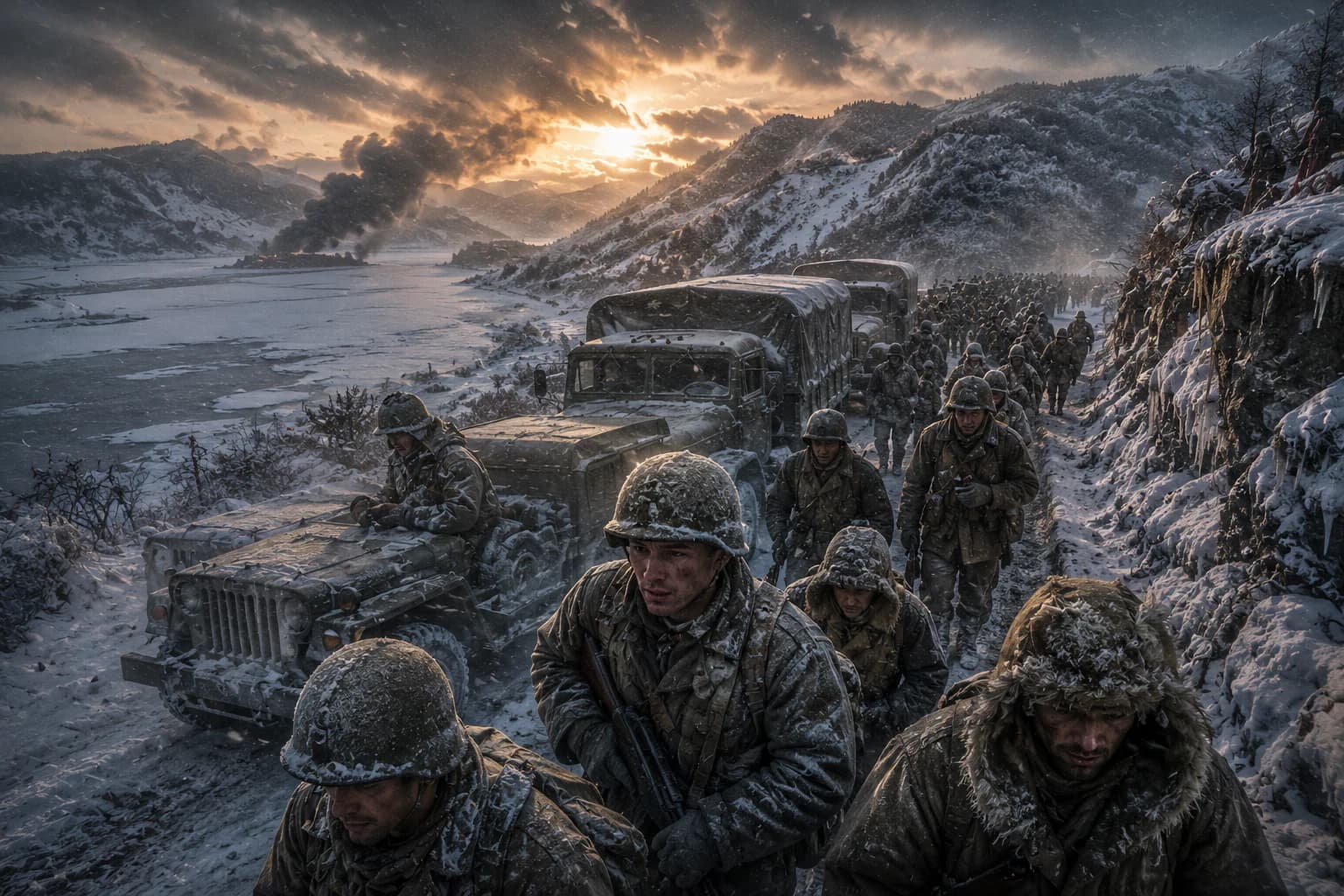
Korean War battlefield with soldiers advancing through smoke across a divided peninsula.
Premium Story

The Korean War

Follow the Korean War from invasion and UN intervention to Chinese entry, stalemate, and a divided peninsula.

11 chapters

Next

Content note

This story discusses war, violence, persecution, and death in an educational historical context.

Context

Introduction

Overview

The Korean War was fought from 1950 to 1953 after North Korea invaded South Korea, turning the divided peninsula into the Cold War's first major battlefield. The conflict drew in the United States, United Nations forces, China, and Soviet support, producing a brutal war of invasion, counteroffensive, intervention, and stalemate. It ended with an armistice rather than a peace treaty, leaving Korea divided and the conflict's consequences unresolved.

What you'll learn: You'll understand how Korea was divided, why war broke out, how international intervention shaped the conflict, and why the peninsula remains one of the most strategically significant and dangerous places in the world today.

Key forces

The Division of Korea
1945 CE
Step 1 of 101945 CEAccessible mode

The Division of Korea

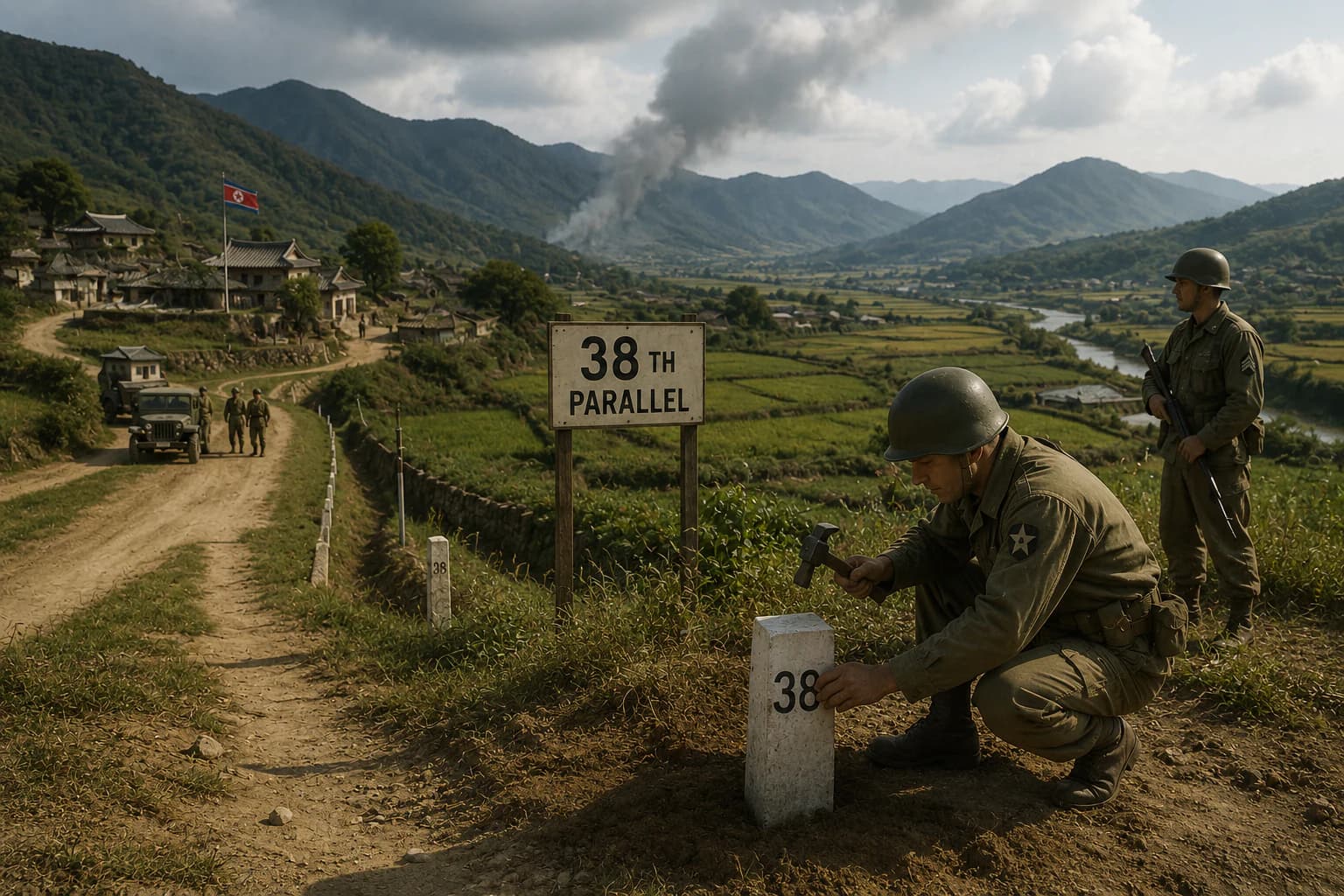
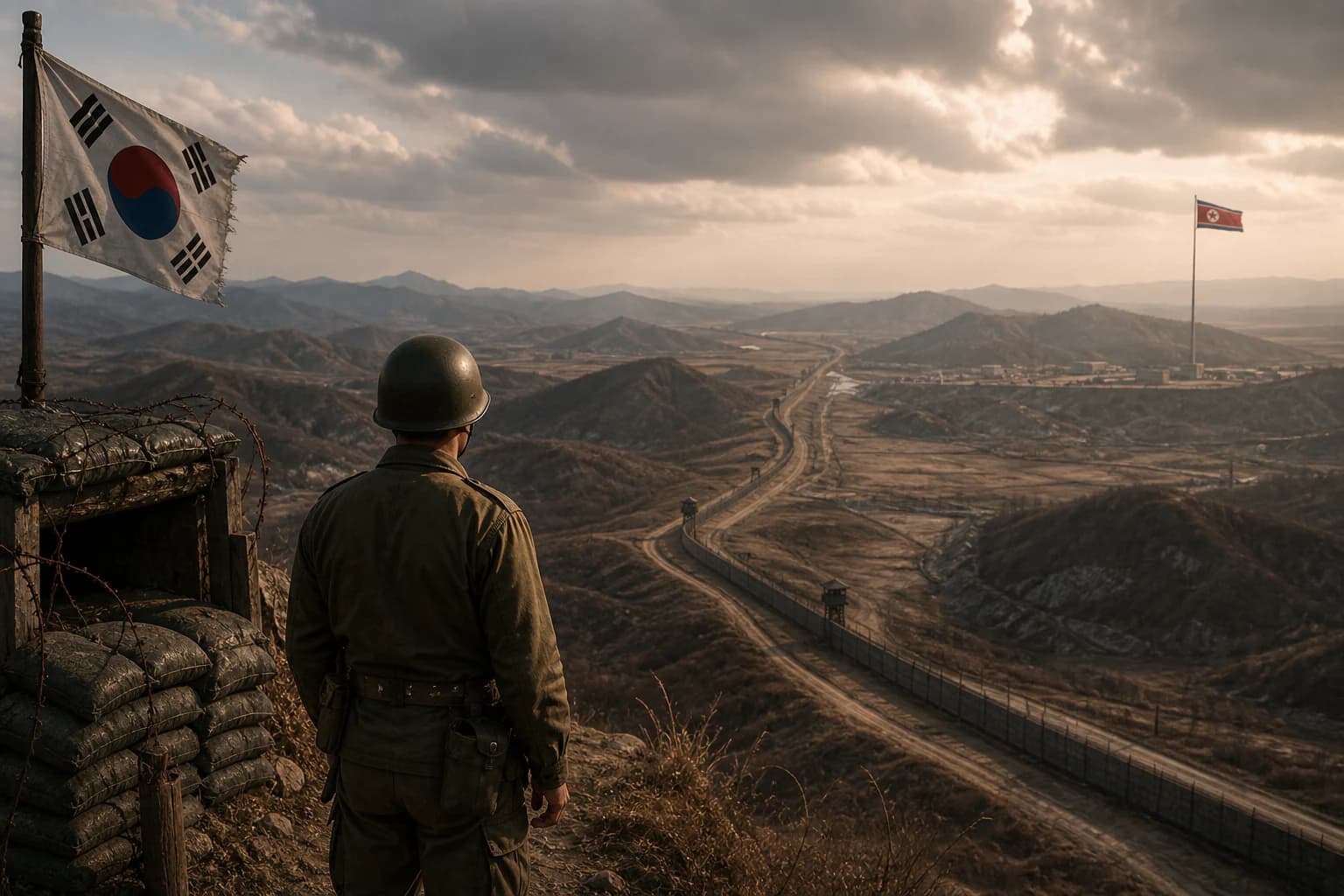
At the end of World War II, Korea was divided in two by a line drawn by American officials in a matter of hours. It was meant to be temporary. It became permanent.

Japan had ruled Korea as a colony for 35 years. When Japan surrendered in 1945, Koreans expected independence. Instead, two superpowers stepped in and divided the peninsula between them.

The Soviet Union took control north of the 38th parallel. America took the south. Each backed a different kind of government and had no intention of letting the other win the whole peninsula.

A line drawn in minutes became a divide that shaped the next century.

For Koreans, this was painful. Families were separated. The economy was cut in two. Nobody consulted ordinary people about what they wanted.

This division set the stage for everything that followed. It explains why two rival governments formed, why tensions escalated, and why war eventually broke out.

Rival States Emerge
1948 CE
Step 2 of 101948 CEAccessible mode

Rival States Emerge

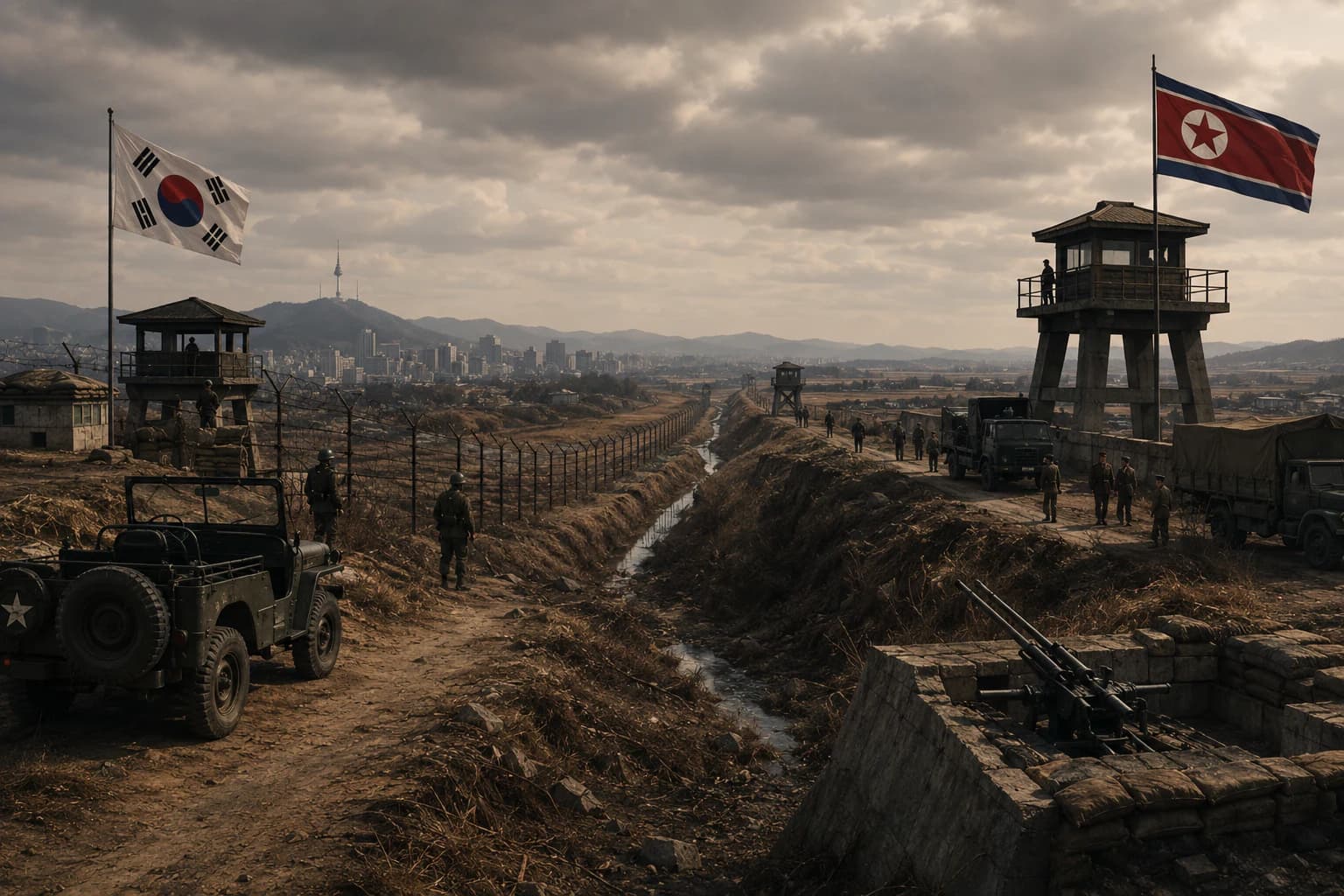
In 1948, two separate governments declared themselves the rightful rulers of all Korea. One was in , the other in . Both were preparing for conflict.

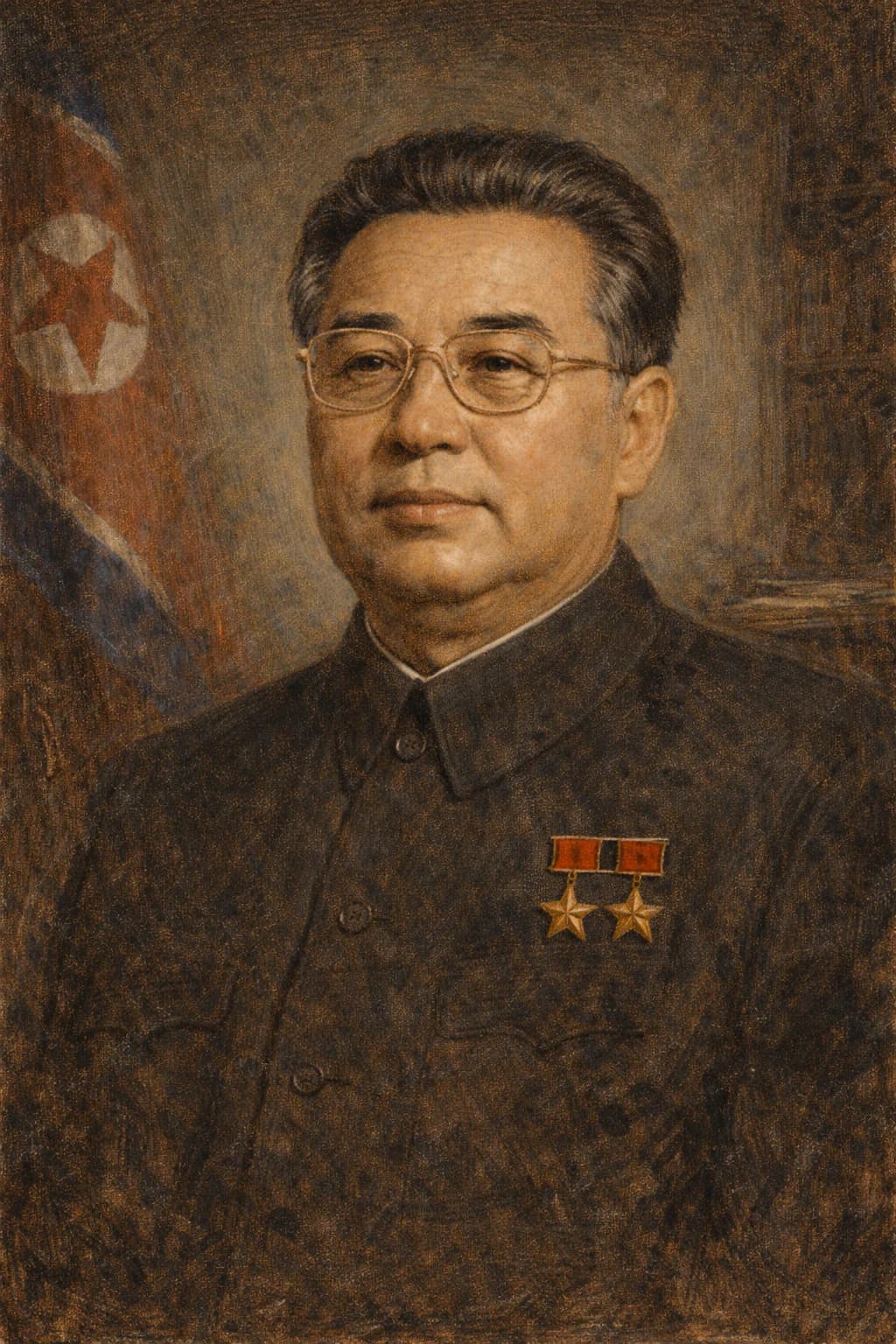
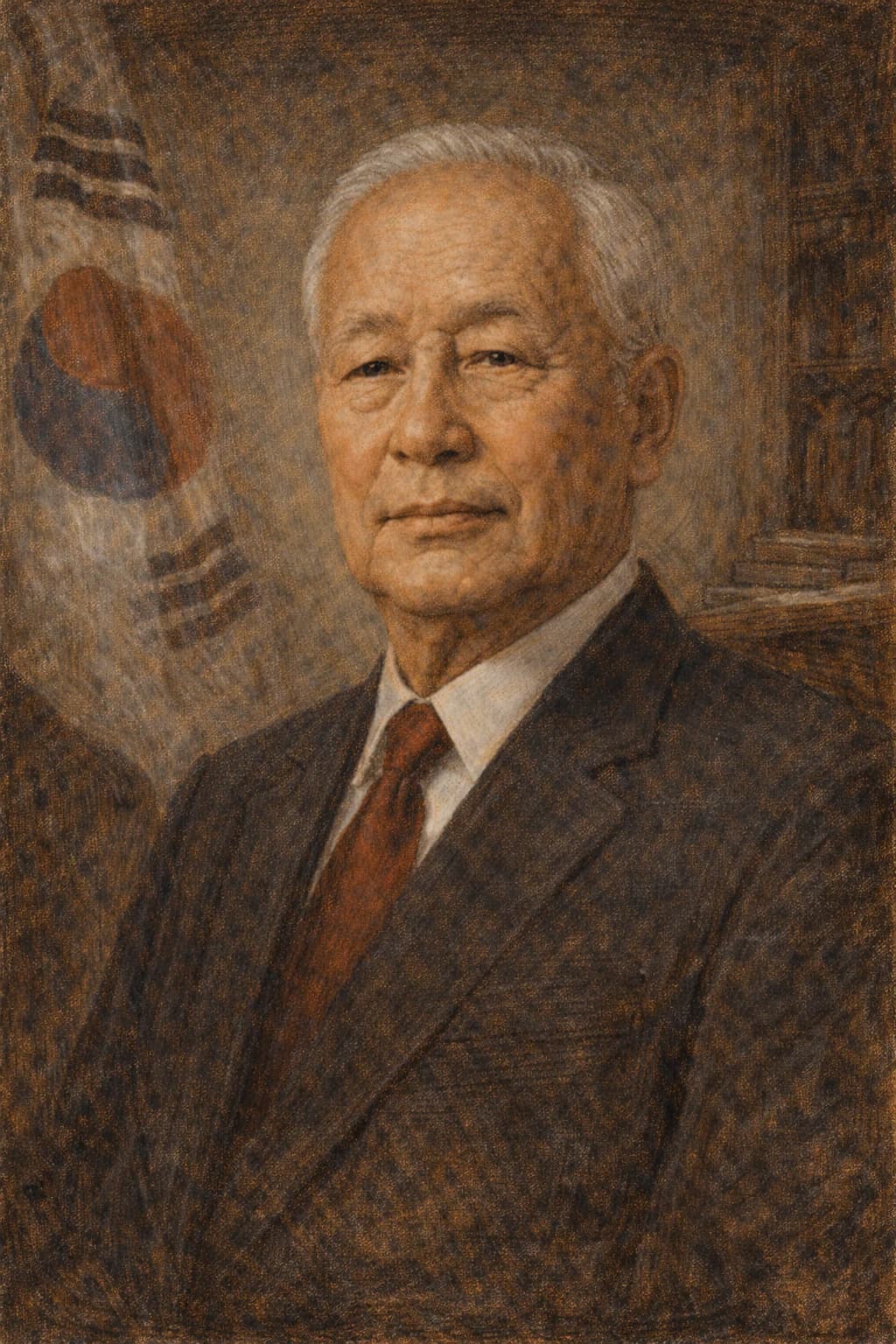
In the south, Syngman Rhee became president of the Republic of Korea. He was fiercely anti-communist and backed by the United States. In the north, Kim Il Sung led the Democratic People's Republic of Korea, with strong support from the Soviet Union.

Neither leader accepted the other's right to govern. Both claimed to represent all Koreans. Both were building up their militaries.

Both leaders claimed to speak for all Koreans. Neither would accept the other.

Tensions along the border grew through 1949. There were skirmishes, raids, and firefights. Thousands died before any full war began.

Korea was heading toward something much larger. The question wasn't whether there would be war — it was who would start it, and when.

The North Korean Invasion
1950 CE
Step 3 of 101950 CEAccessible mode

The North Korean Invasion

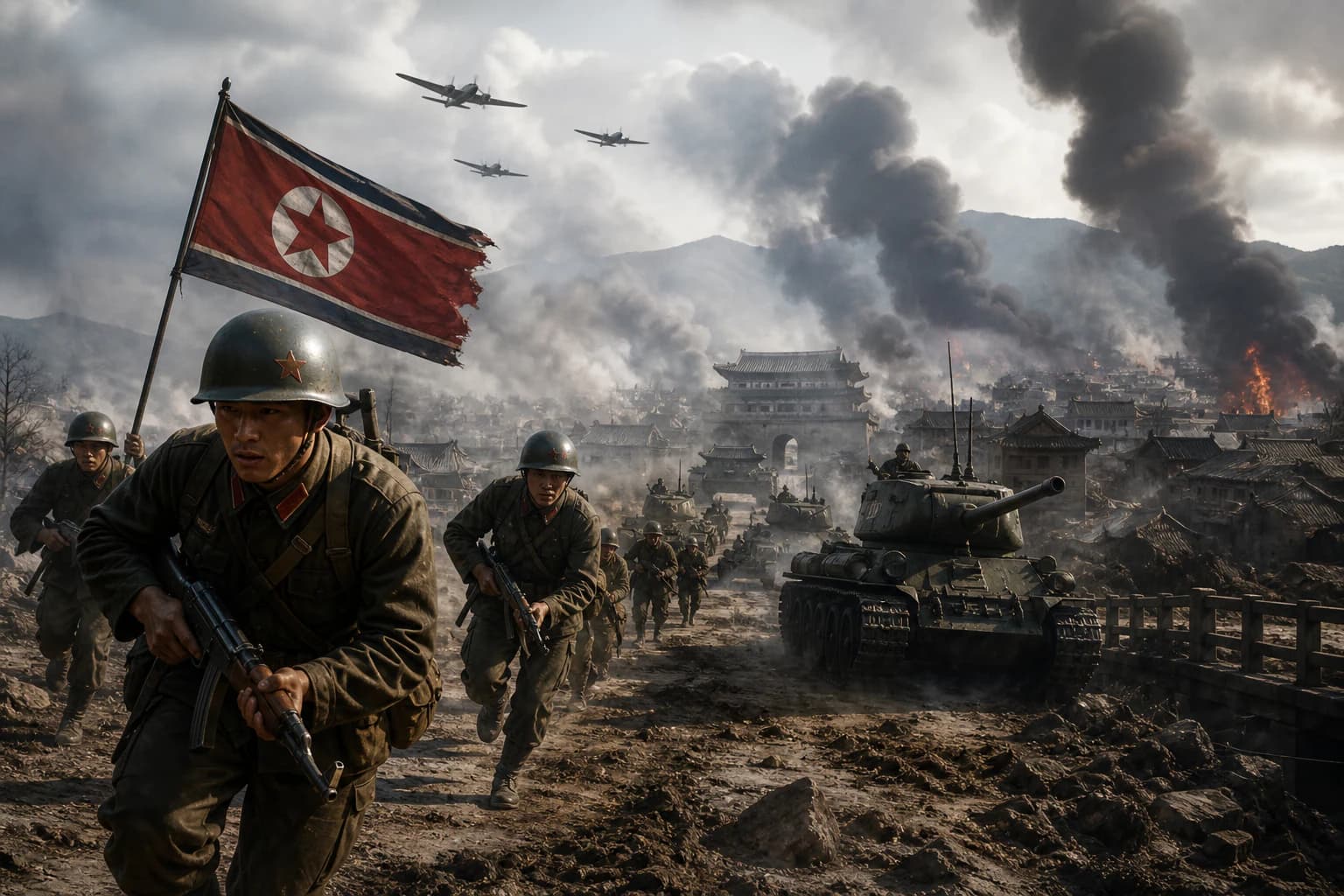
On 25 June 1950, North Korea launched a surprise invasion of South Korea. Within days, the Cold War had turned into a real shooting war.

North Korea had prepared carefully. Its army had tanks, trained soldiers, and Soviet-supplied weapons. South Korea's defenses collapsed almost immediately.

, the South Korean capital, fell in just three days. South Korean and American troops were pushed back toward the southern tip of the peninsula.

The Cold War had produced tensions for years. Now it had produced a war.

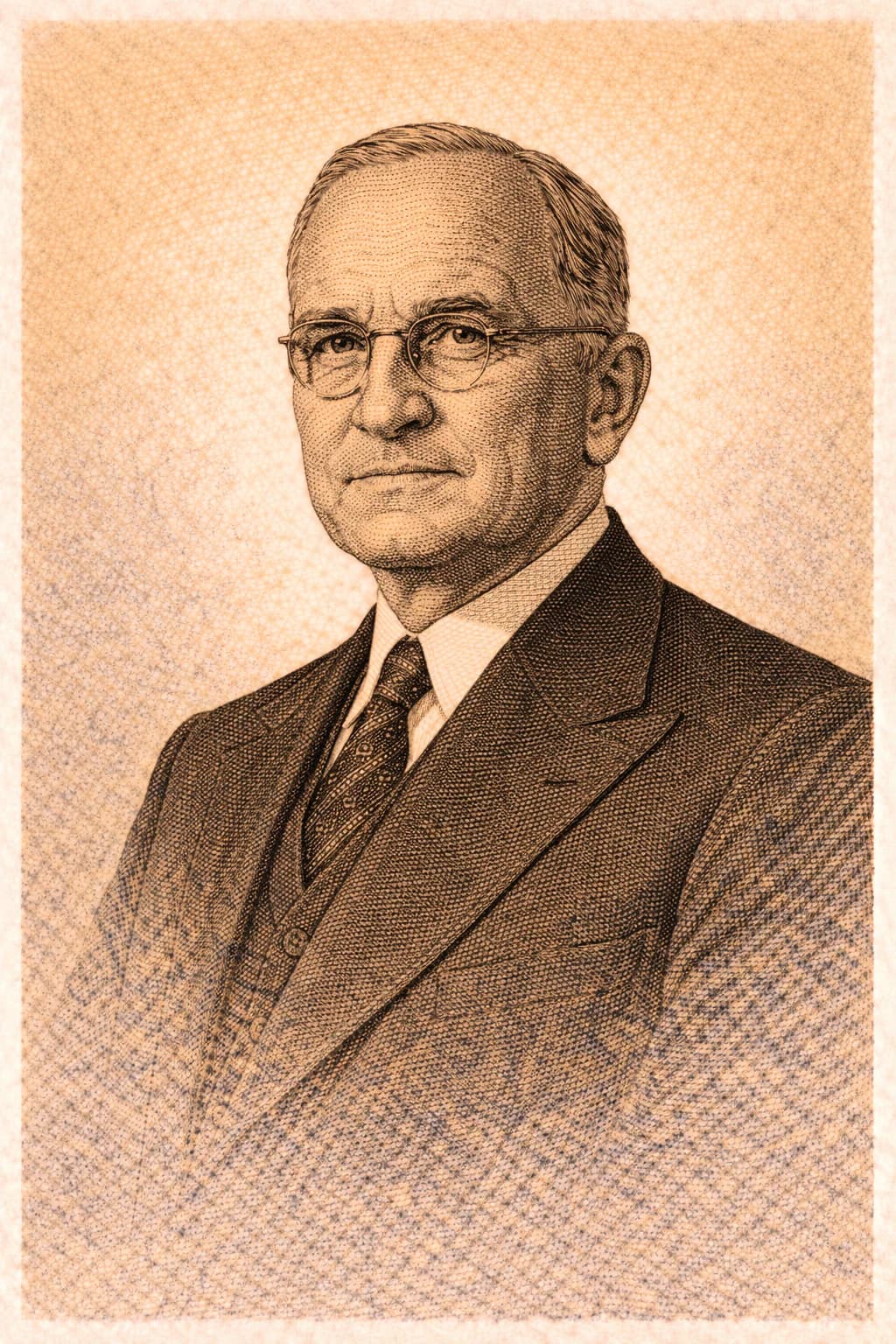
The invasion alarmed the United States and its allies. If communism could expand this quickly by force, where would it stop? President Truman decided America had to respond.

Korea became the Cold War's first major hot war — a direct military conflict that would draw in countries from across the world.

Premium

You've reached the turning point

The opening chapters show a divided peninsula becoming a battlefield. Premium follows the terrifying expansion of that war: foreign armies arrive, the front surges north and south, China enters, and millions are left inside a conflict that ends without peace.

Continue into the reversals, crises and human stakes that make the story matter.

Unlock full story

What Premium unlocks next

  1. 4The United Nations Intervenes
  2. 5The Inchon Landing
  3. 6The Drive Toward the Yalu
  4. 7China Enters the War
  5. 8The War Becomes a Stalemate
  6. 9Armistice Without Peace
  7. 10The Divided Peninsula Endures

Browse stories

Browse stories for free

Explore the people connected to this turning point or enjoy one of our free stories.

Unlock full storyBrowse stories

References

Sources & Further Reading

Reliable sources, primary-source collections and reading paths connected to this page.

Sources used

  1. Office of the Historian, U.S. Department of State, The Korean War, 1950-1953,” Open source
  2. U.S. National Archives, Korean War Records,” Open source

Further reading

  1. Bruce Cumings, The Korean War, Modern Library.

Primary sources

  1. Harry S. Truman Library and Museum, The Korean War,” Open source

A weekly route through history

Find out first about the latest published stories, feature notes and occasional Premium offers in one weekly email.