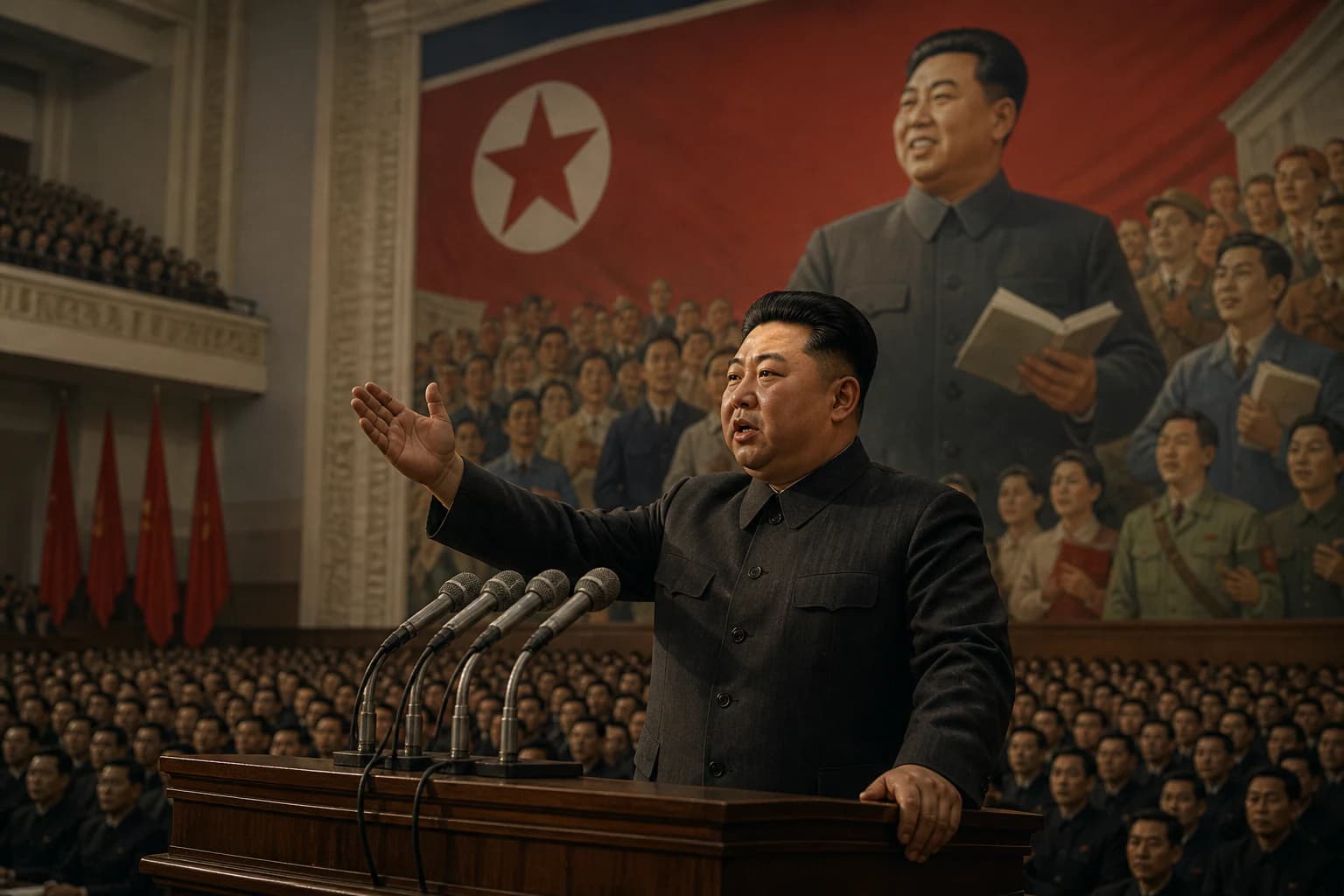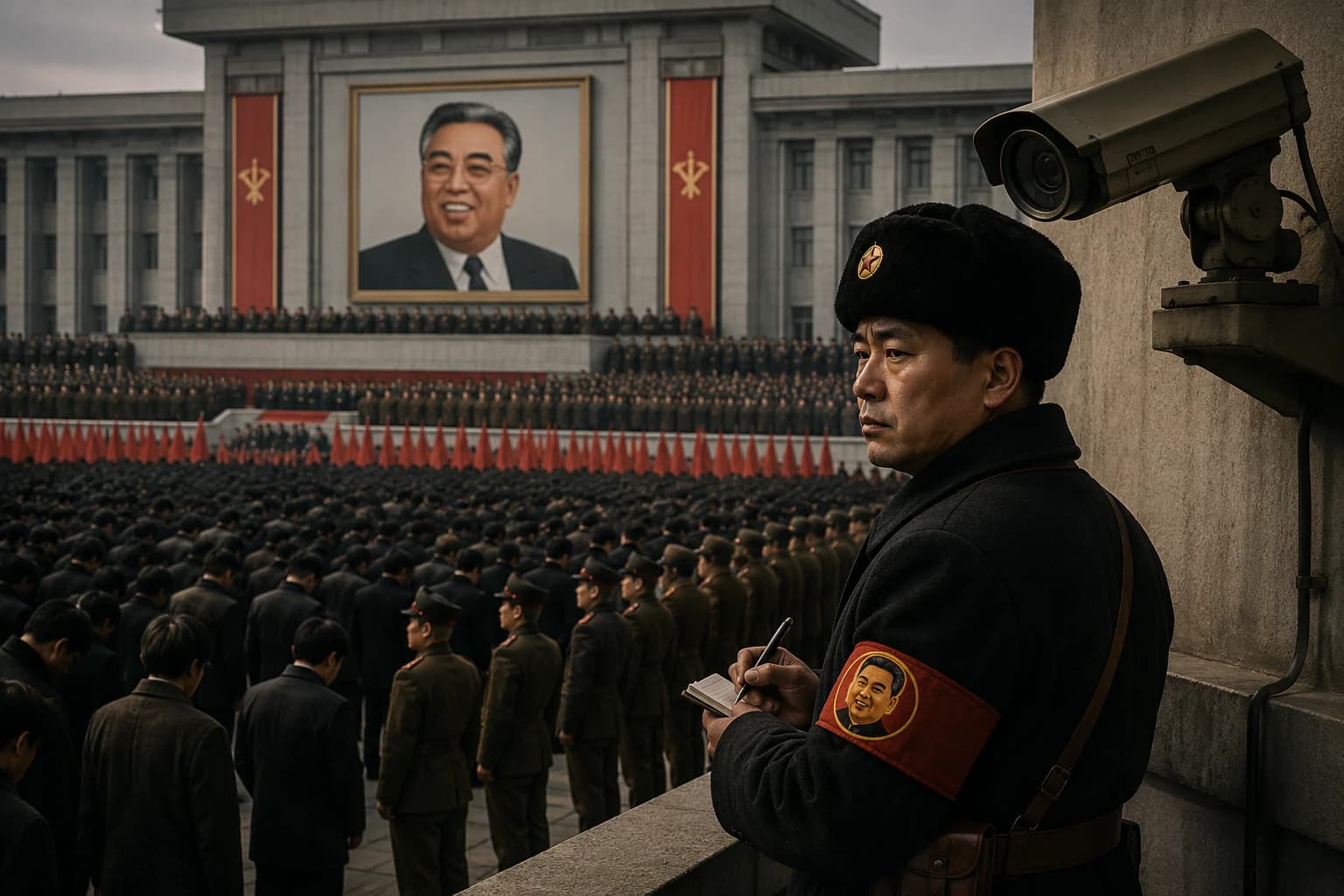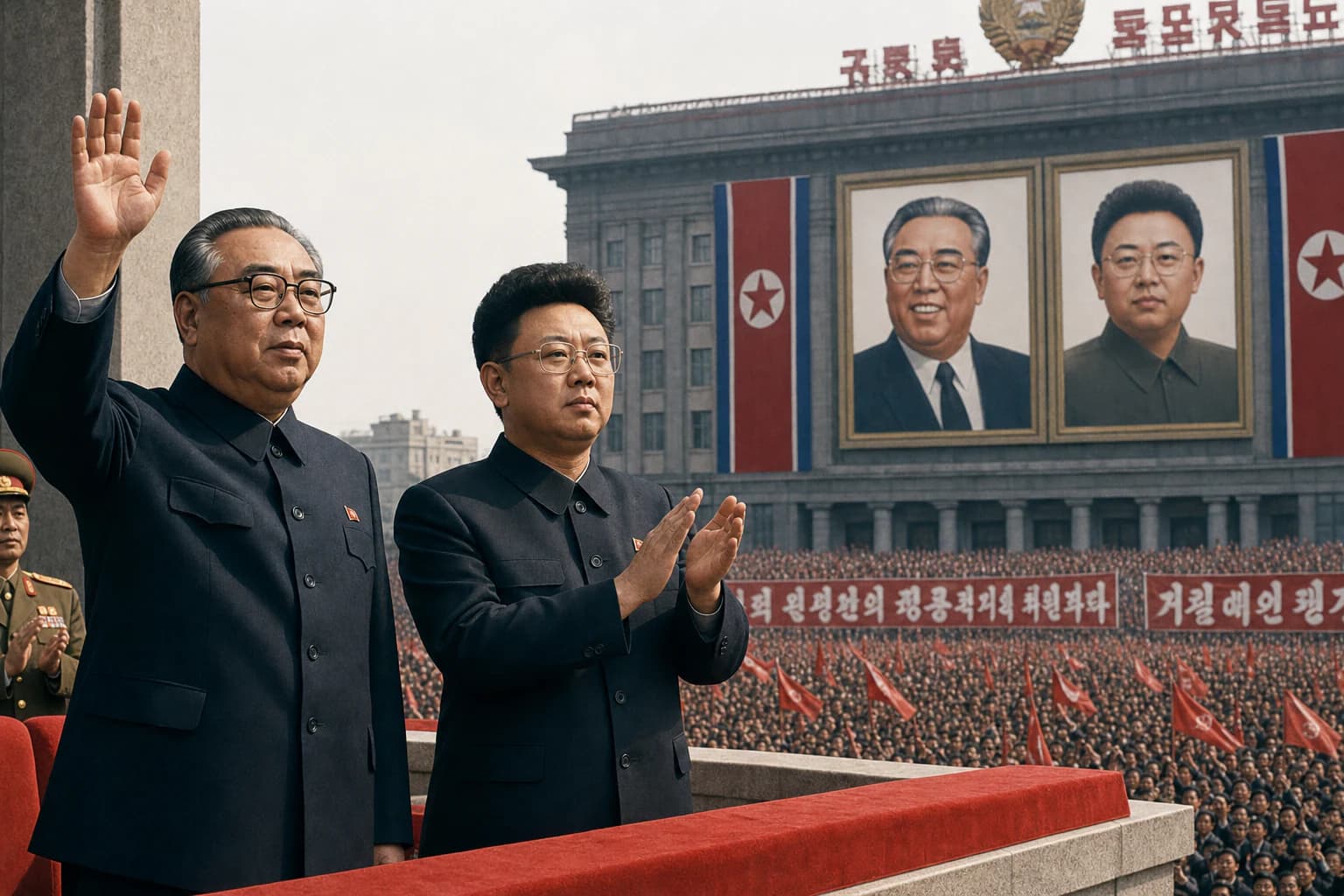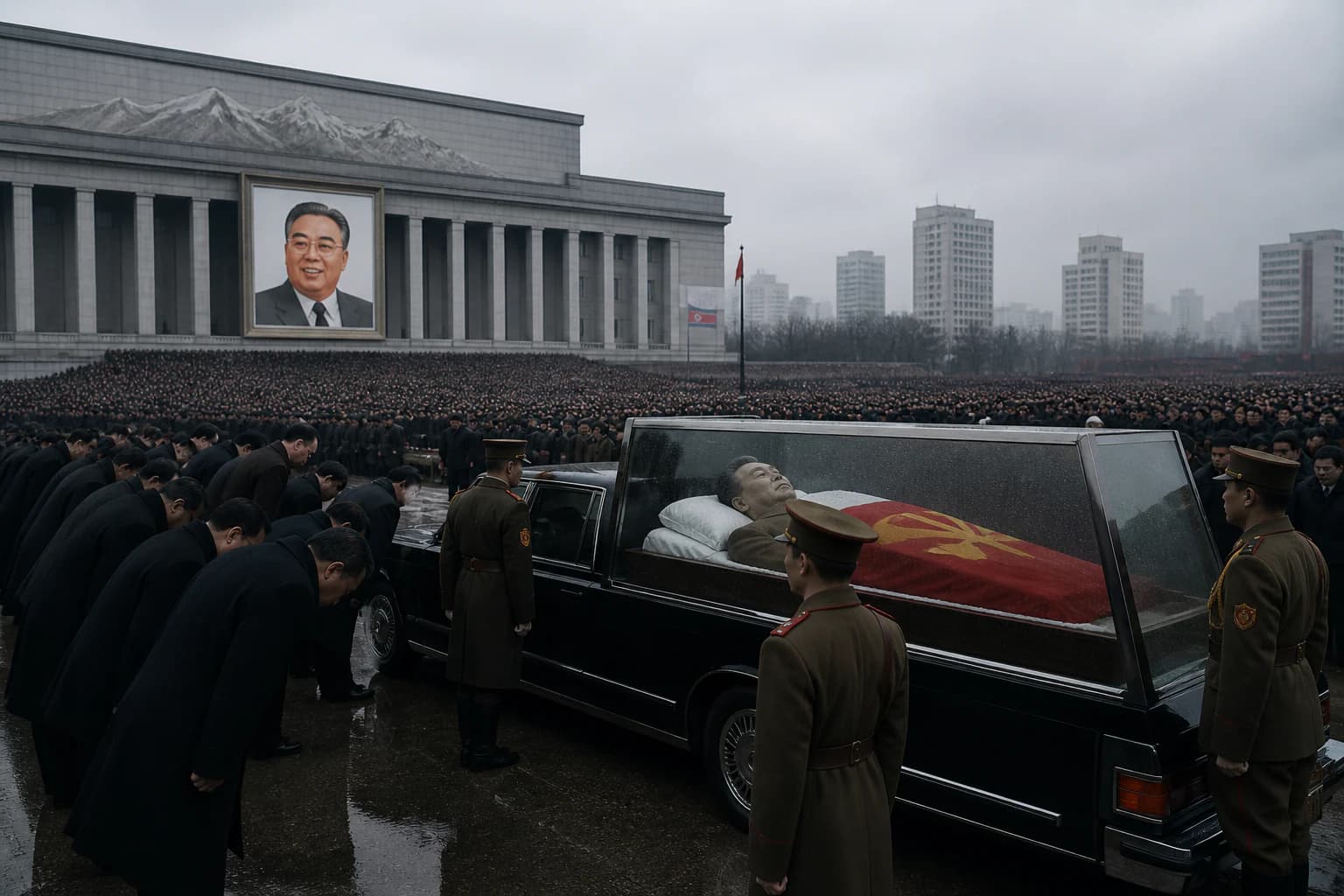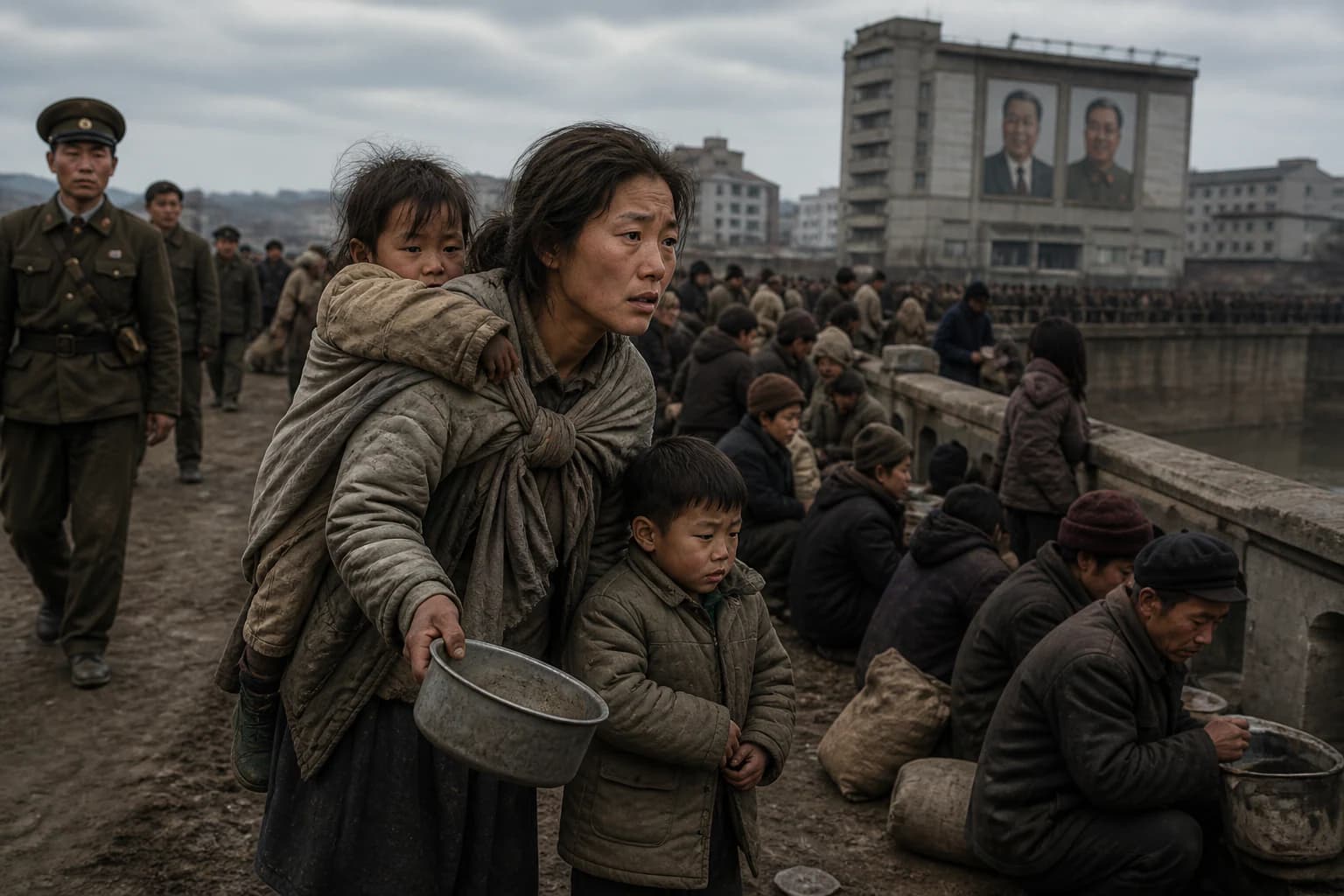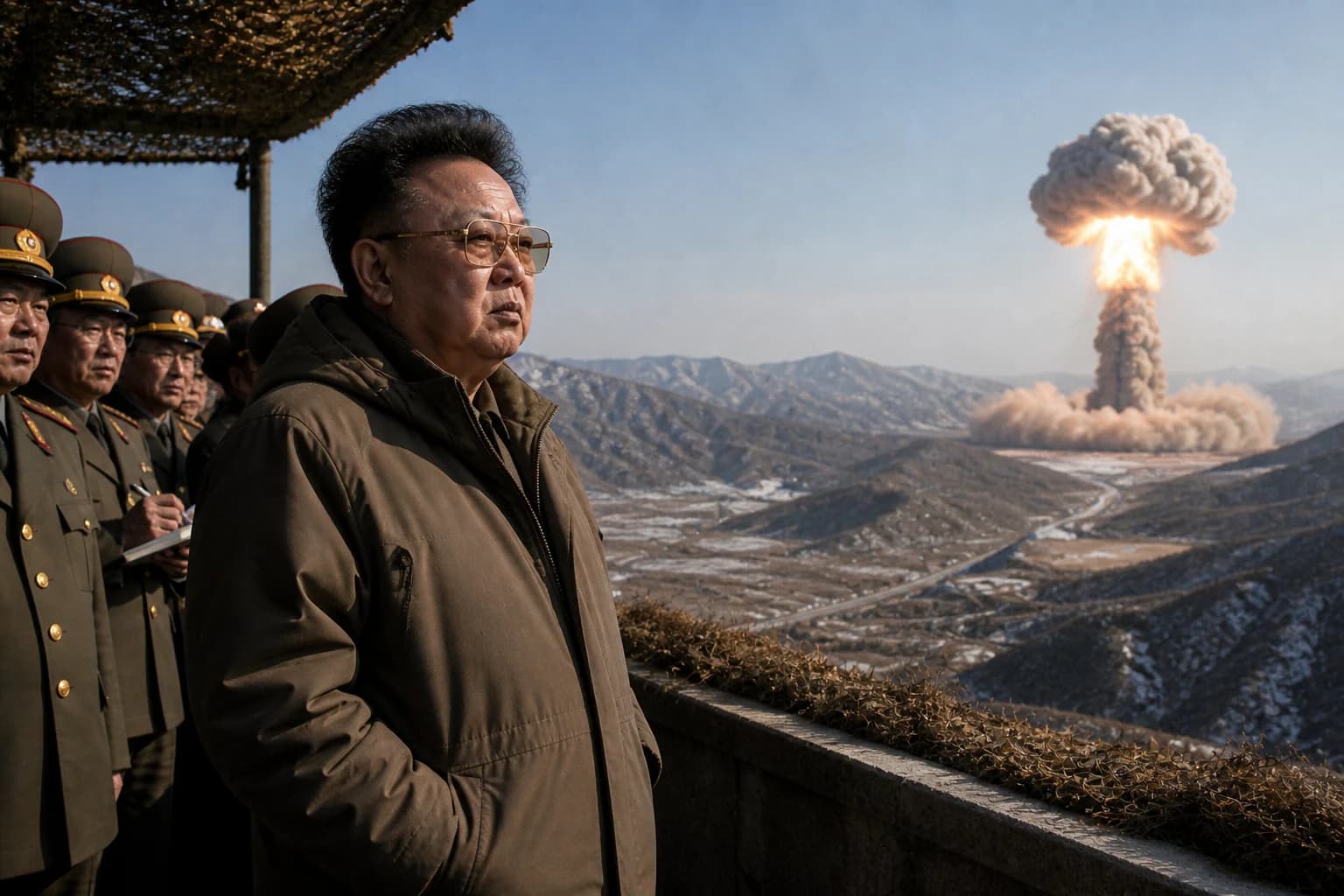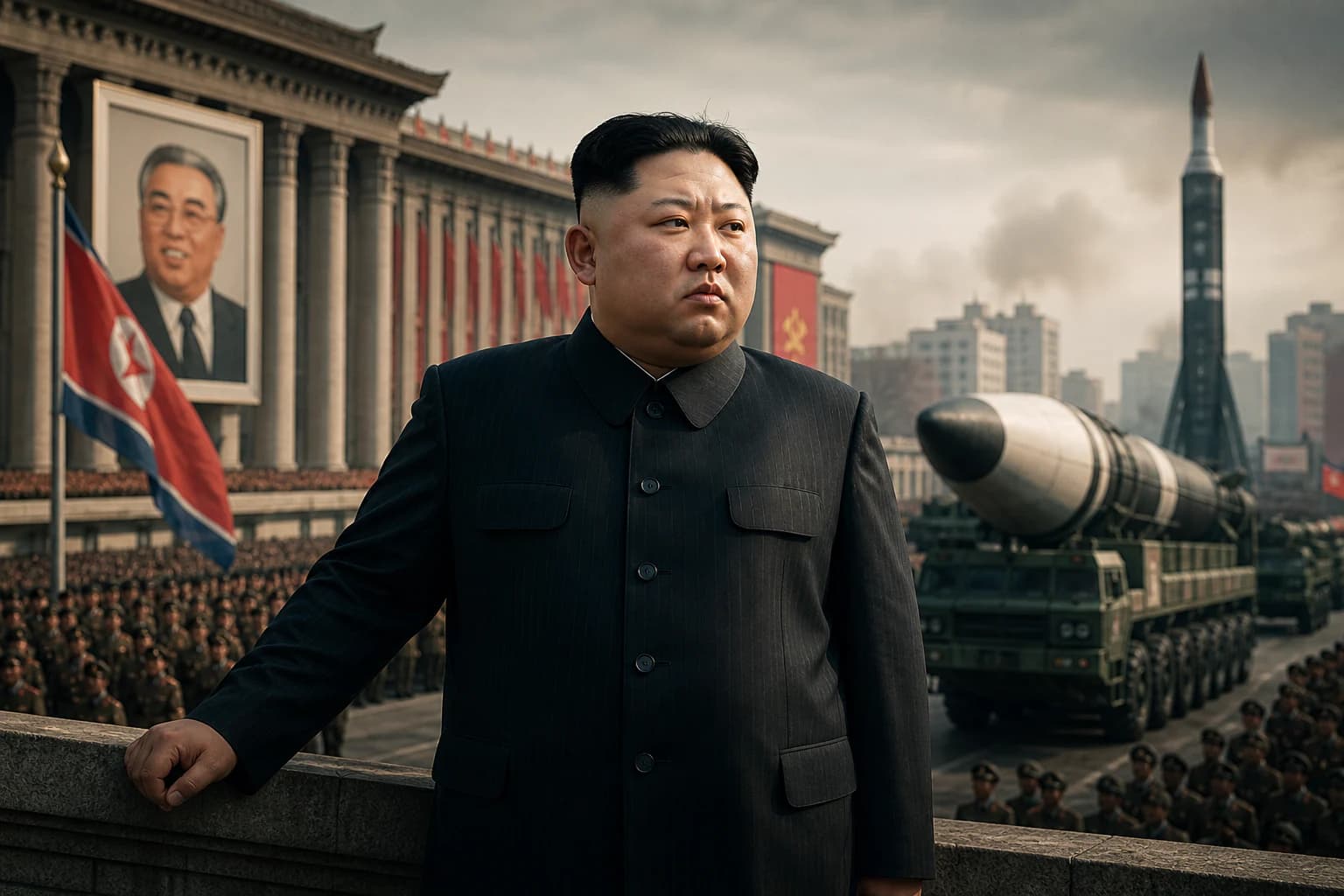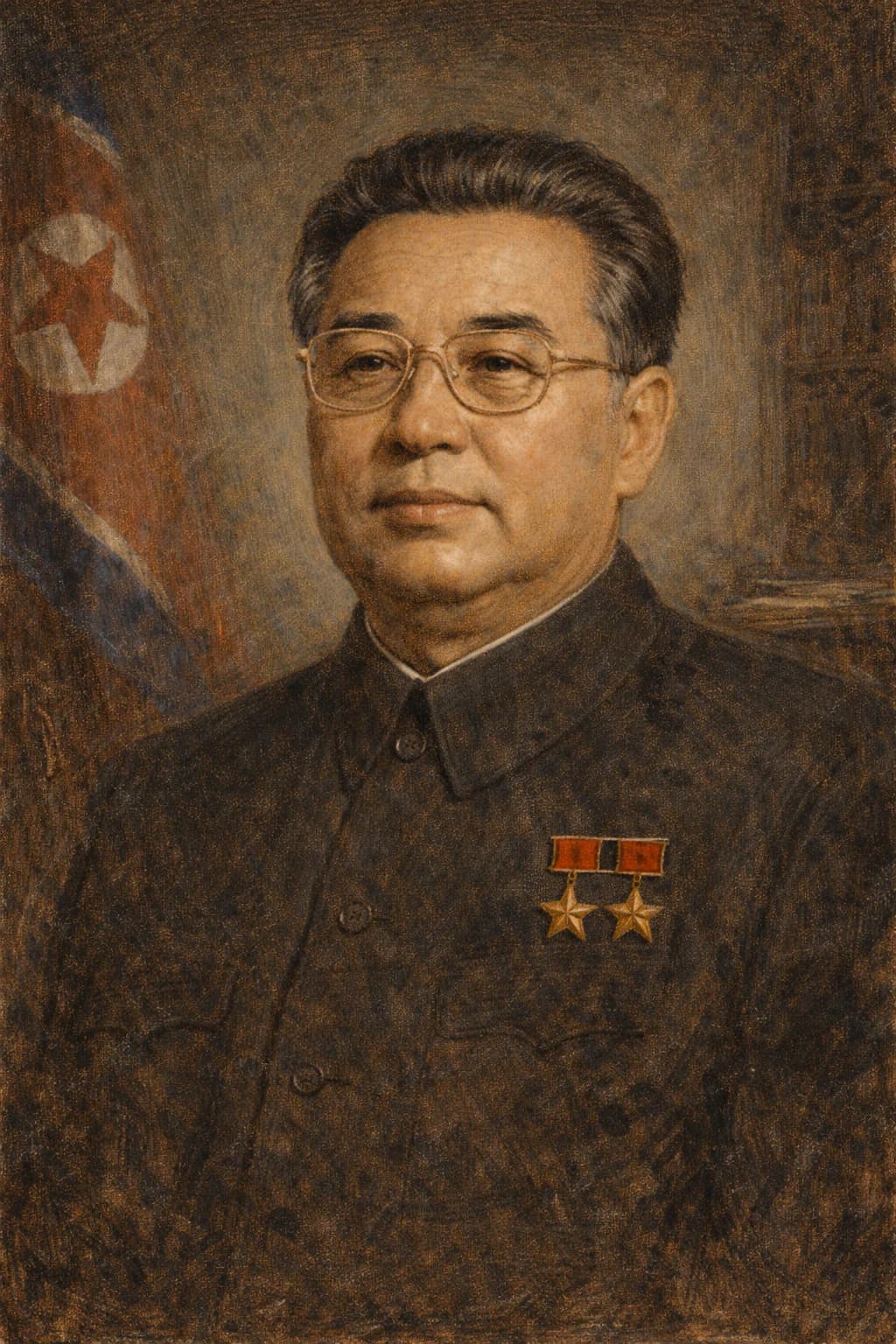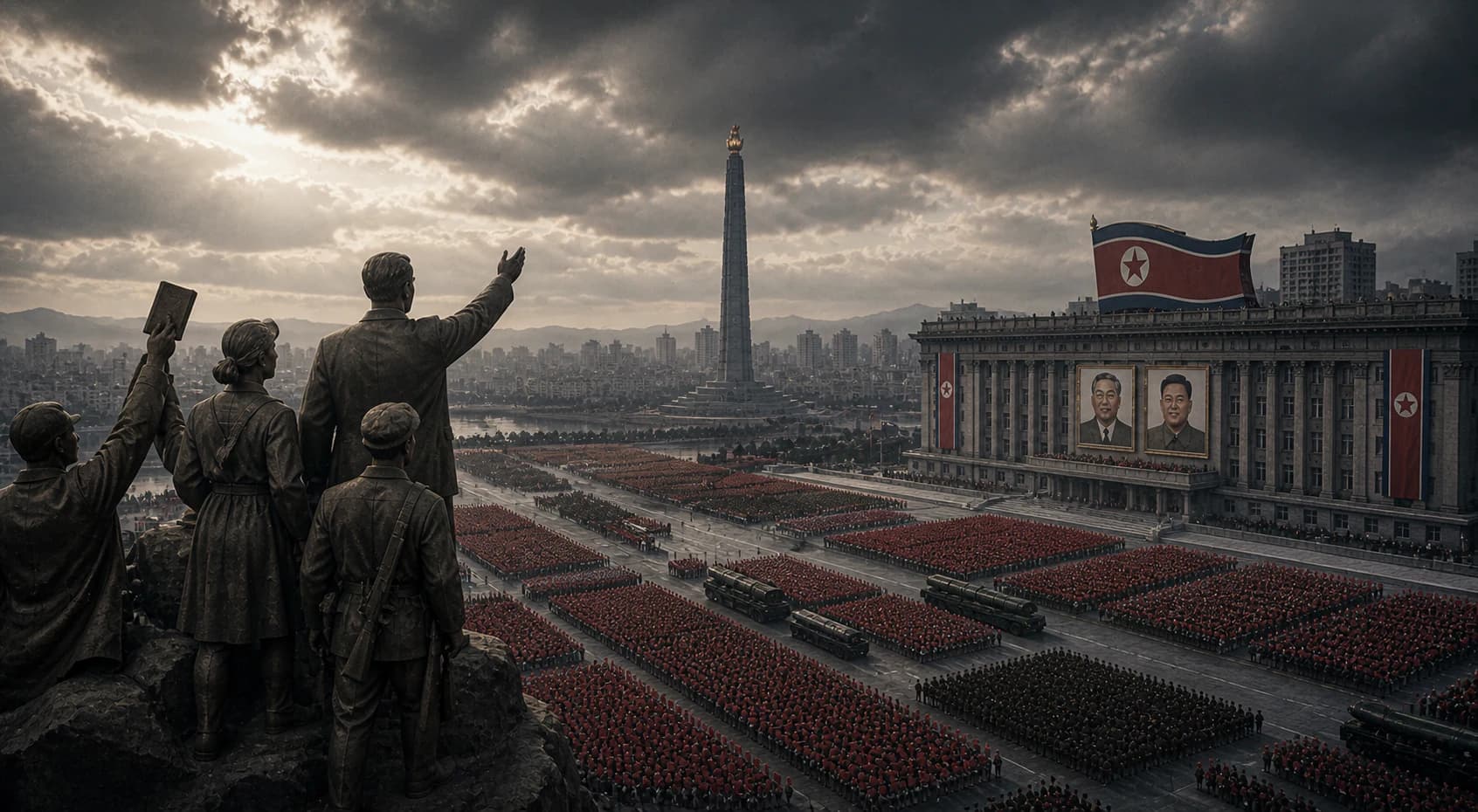
Mass gathering in Kim Il Sung Square beneath North Korean flags and state monuments.
Premium Story

The Kim Dynasty

Trace the Kim Dynasty from revolution and war to personality cult, nuclear brinkmanship, and survival.

11 chapters

Next

Content note

This story discusses violence, persecution, mass death, and human suffering in an educational historical context.

Context

Introduction

What you'll learn: You will trace how North Korea's ruling family built and preserved power through war, ideology, repression, succession, famine, and nuclear strategy.

Key forces

Soviet Patronage and State Formation
1945 CE
Step 1 of 101945 CEAccessible mode

Soviet Patronage and State Formation

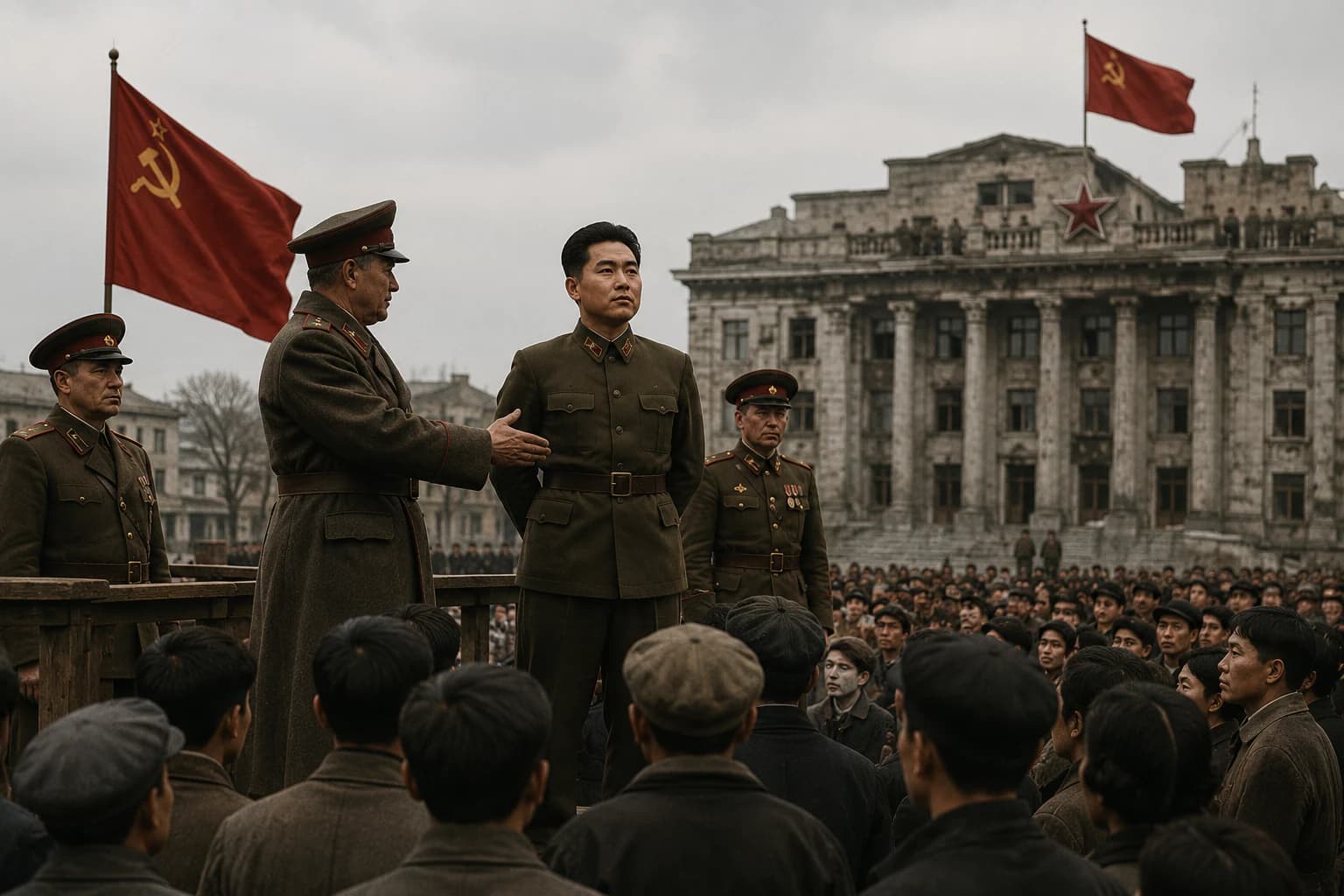
Korea's liberation from Japan in 1945 did not bring independence. It brought division — and a foreign hand shaping the north.

Japan had ruled Korea for 35 years. When Japan surrendered in August 1945, the Soviet Union took the north and the United States took the south. A temporary dividing line at the 38th parallel became permanent.

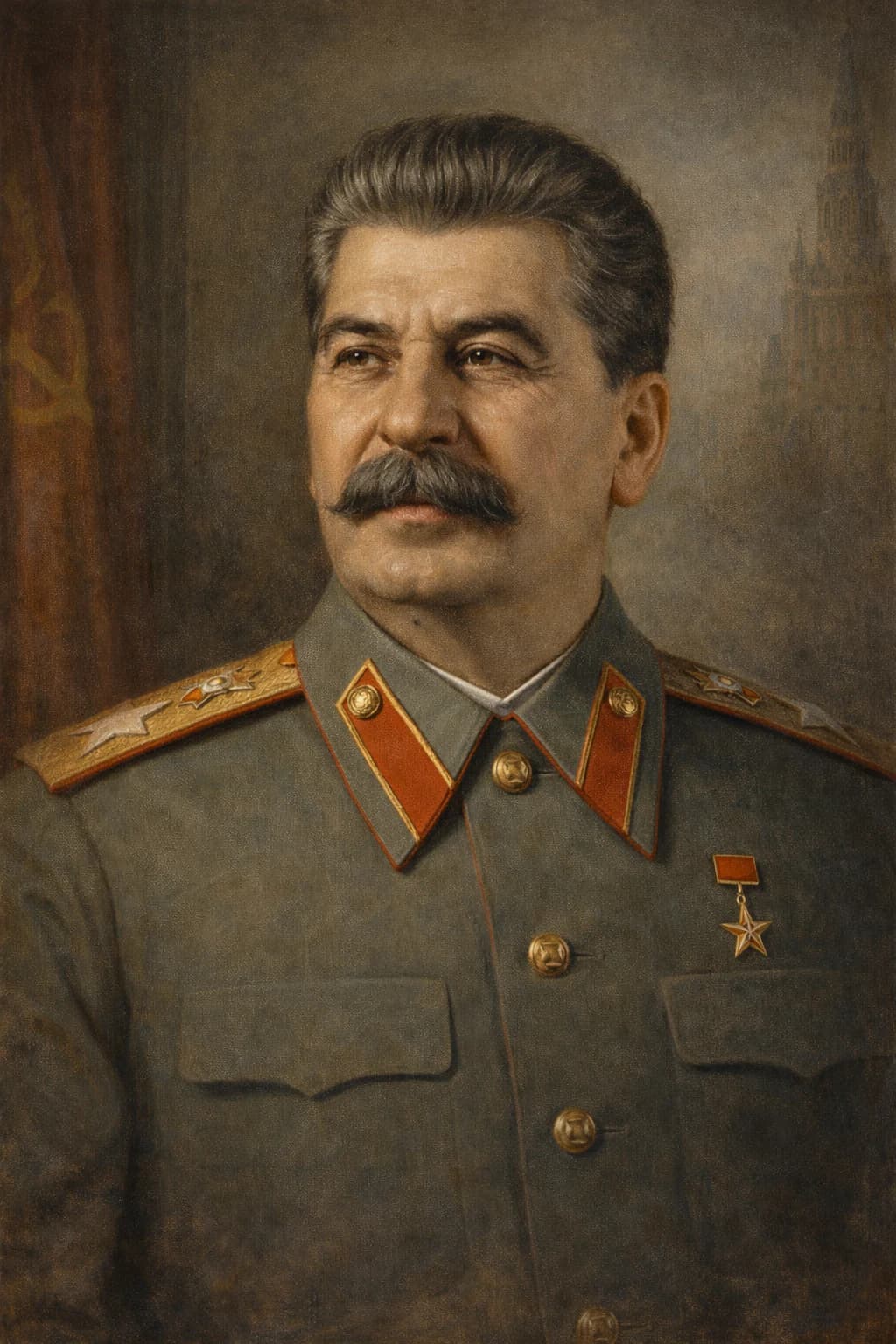
The Soviets needed a Korean leader they could trust. They chose Kim Il Sung — a Korean communist who had served in Soviet military ranks.

Kim was not the most famous Korean resistance fighter. But he was the one Moscow trusted.

With Soviet backing, Kim built a security state from scratch. Rivals were removed. Loyalty was enforced from the beginning.

Those early decisions set the template for everything that came after: centralised power, repression, and total obedience to one man.

The Founding of North Korea
1948 CE
Step 2 of 101948 CEAccessible mode

The Founding of North Korea

In 1948, North Korea became an official state. But it was born with a claim that would define everything: authority over the entire peninsula.

Both Korean zones moved to formalise their political systems. South Korea declared itself a republic in August 1948. A month later, Kim Il Sung proclaimed the Democratic People's Republic of Korea in the north.

Both governments claimed to speak for all Koreans. Neither recognised the other's right to exist.

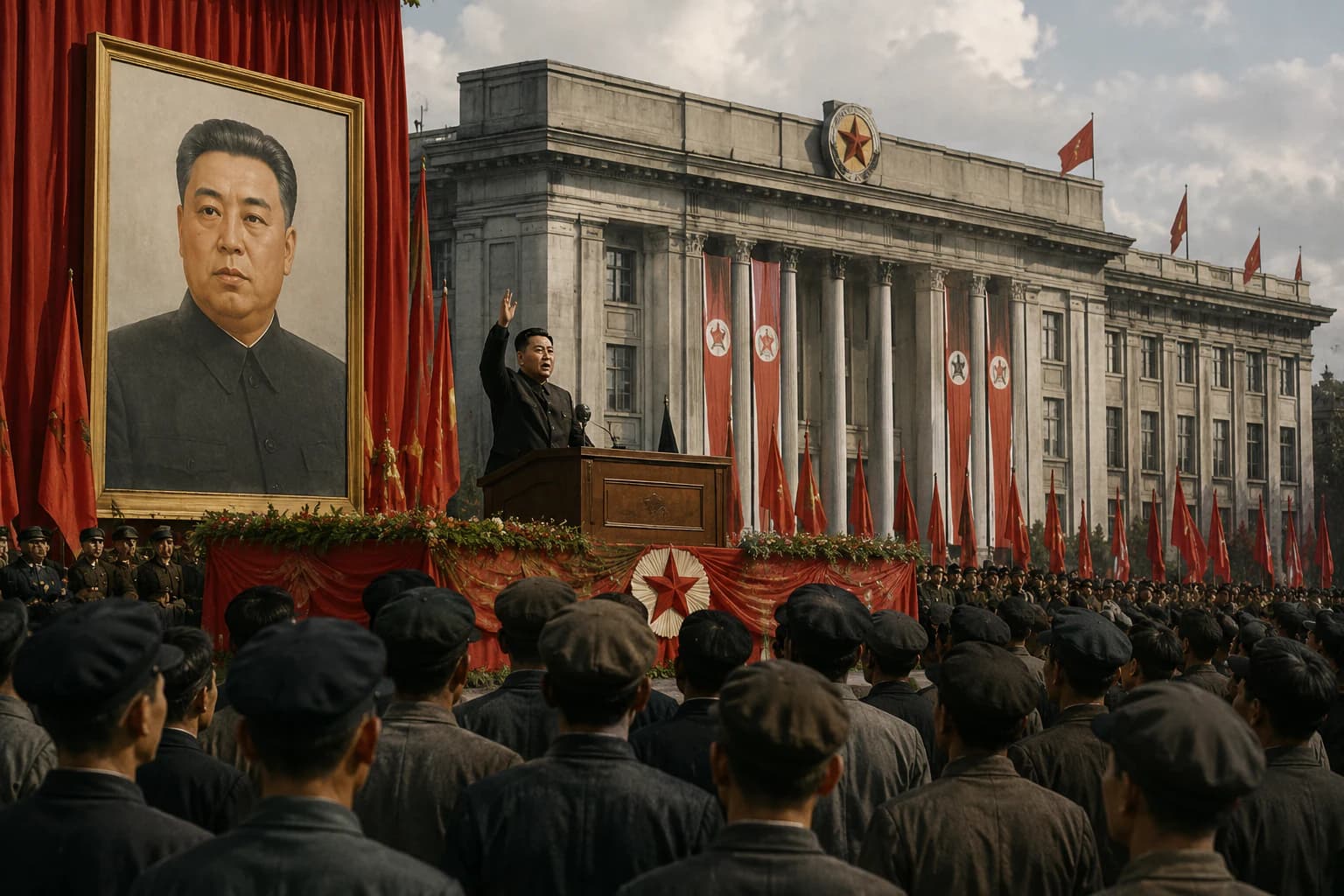
Kim built his authority quickly. He positioned himself as a national father figure, not just a political leader. Propaganda reinforced this image across every part of public life.

The rivalry between two Korean states — each claiming full legitimacy — made conflict almost inevitable. The question was not whether a confrontation would come. It was when.

The Korean War Gamble
1950 CE
Step 3 of 101950 CEAccessible mode

The Korean War Gamble

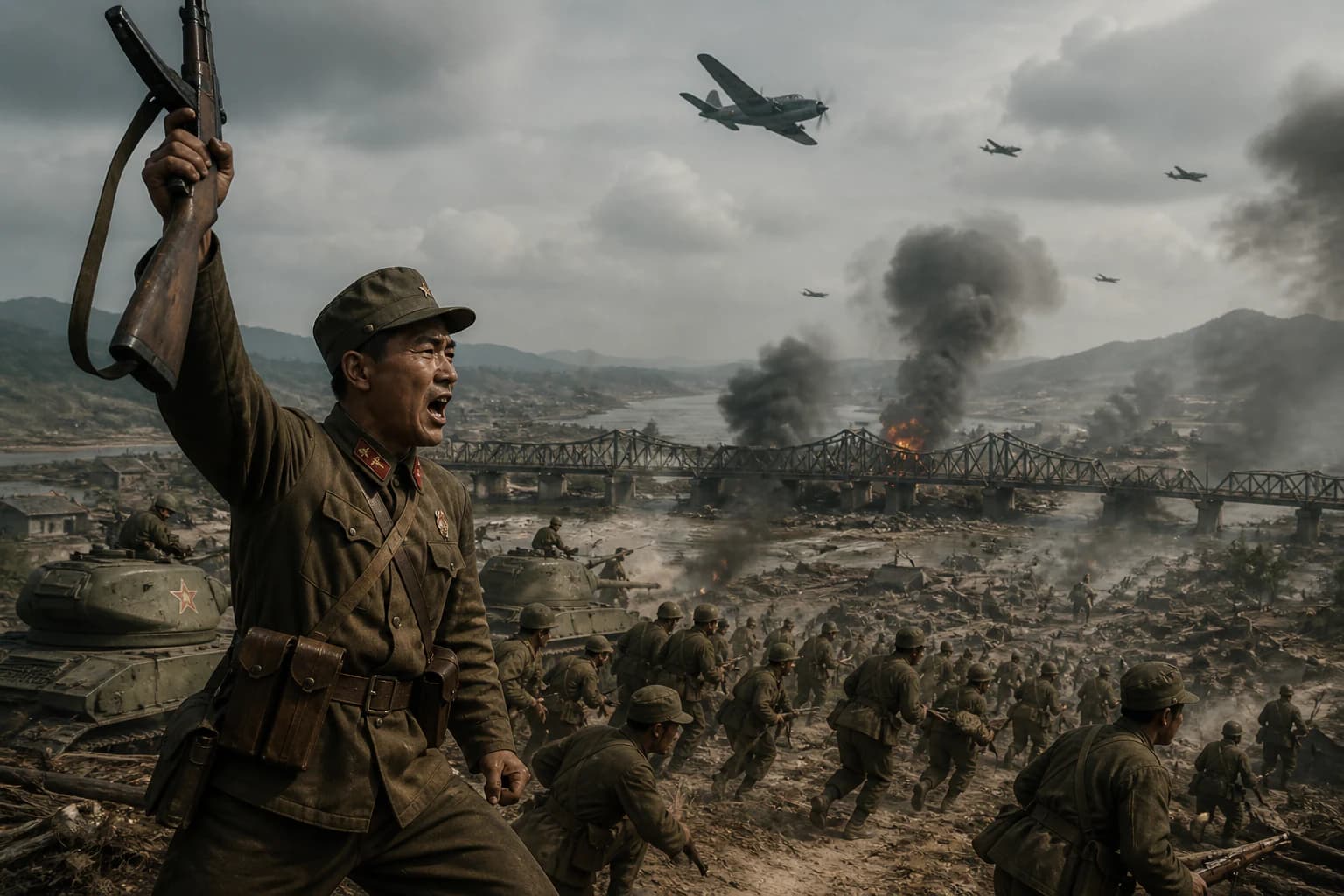
In June 1950, Kim Il Sung did something bold and dangerous. He ordered his army to invade South Korea.

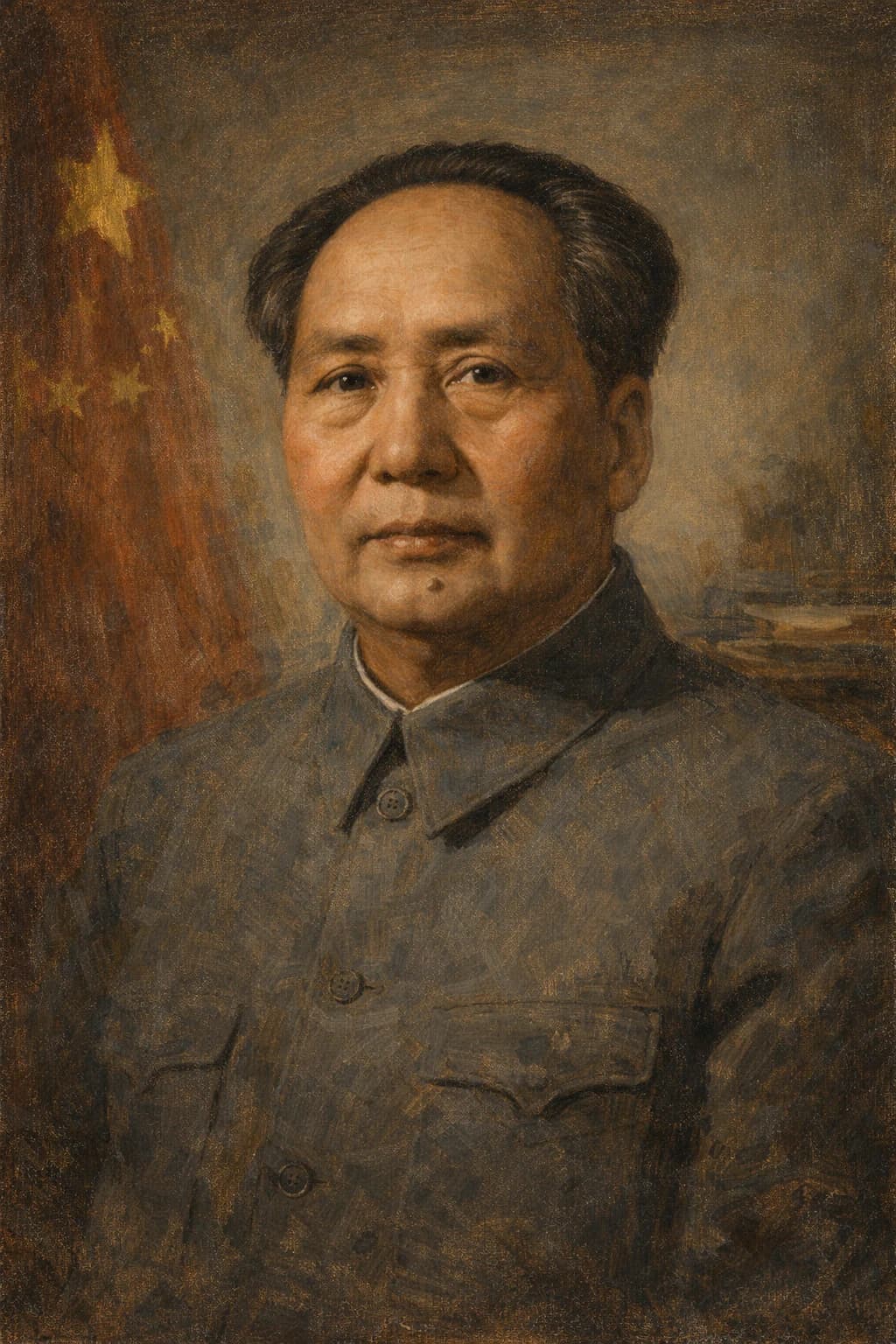
Kim believed the peninsula should be unified under his rule. He had been planning an attack for years and finally received approval — reluctantly — from Stalin and Mao Zedong.

The invasion worked at first. North Korean forces swept south and nearly took the whole country.

Kim gambled that the United States would not intervene. He was wrong.

American and United Nations forces pushed back. Then China entered the war. The fighting lasted three years and killed millions. It ended roughly where it started.

The war left North Korea convinced that hostile powers surrounded it on all sides. That sense of siege never left — and it still shapes the regime's decisions today.

Premium

You've reached the turning point

The opening chapters show North Korea taking shape under Soviet patronage and Kim Il Sung's rule. Premium follows the regime's deeper survival story: ideology becomes control, succession becomes hereditary, famine tests the state and nuclear weapons become a shield for dynasty.

Continue into the reversals, crises and human stakes that make the story matter.

Unlock full story

What Premium unlocks next

  1. 4Juche Becomes State Ideology
  2. 5The Monolithic Leadership System
  3. 6The Hereditary Succession
  4. 7The Death of Kim Il Sung
  5. 8Famine and Regime Survival
  6. 9The First Nuclear Test
  7. 10Kim Jong Un's Nuclear Dynasty

Browse stories

Browse stories for free

Explore the people connected to this turning point or enjoy one of our free stories.

Unlock full storyBrowse stories

References

Sources & Further Reading

Reliable sources, primary-source collections and reading paths connected to this page.

Sources used

  1. Wilson Center, North Korea International Documentation Project,” Open source
  2. Central Intelligence Agency, The World Factbook: Korea, North,” Open source

Further reading

  1. Andrei Lankov, The Real North Korea, Oxford University Press.

Primary sources

  1. Wilson Center Digital Archive, North Korea,” Open source

A weekly route through history

Find out first about the latest published stories, feature notes and occasional Premium offers in one weekly email.