Complete chronology
Full overview and deeper context for every journey step.
1893–1911
Hunan childhood
Mao Zedong was born on 26 December 1893 in Shaoshan, Hunan, into a peasant family that was better off than many neighbours but still rooted in the demands of rural life. His father was strict, practical and commercially minded; Mao later remembered conflict at home as part of his formation. The China of his youth was under immense strain. The Qing dynasty was weakening, foreign powers held privileges, local society remained hierarchical, and education offered one of the few routes out of village limits. Mao did not begin as a committed Marxist. He moved gradually from student curiosity and nationalism toward the belief that old China had to be remade by organised struggle.
Early exposure to inequality often seeds a lifelong drive to challenge established systems.
1911–1919
Revolutionary ideas
The 1911 Revolution ended imperial rule but did not create a strong or unified republic. Warlords, foreign pressure and political fragmentation left young intellectuals searching for new answers. Mao studied, taught, worked in libraries and read widely, encountering liberal, anarchist, nationalist and socialist ideas. The May Fourth Movement of 1919, triggered by outrage over China's treatment at Versailles, gave a generation a language of anti-imperialism and cultural renewal. Mao's thought developed in this turbulent setting. He became convinced that China's weakness was not accidental but structural, and that radical mobilisation could turn humiliation into power.
Moments of national uncertainty often create space for new and radical thinking to take hold.
1920–1927
Entering politics
Mao was present at the founding moment of the Chinese Communist Party in 1921 and worked within the fragile alliance between Communists and Sun Yat-sen's Nationalist Party, the Kuomintang. Early Communist strategy often looked to urban workers, following Marxist models drawn from industrial Europe and Russia. Mao's experience in Hunan pushed him toward a different emphasis. He studied peasant associations and argued that rural revolt could become revolutionary energy. This was not a gentle vision of reform; Mao admired the force with which oppressed villagers could overturn local hierarchy. His peasant focus later became one of the defining features of Chinese Communism.
Adapting ideology to local realities can determine whether a movement survives or fails.
1927–1935
Retreat and regroup
The alliance with the Nationalists collapsed violently in 1927 when Chiang Kai-shek and allied forces purged Communists in Shanghai and elsewhere. Mao survived by turning away from cities toward armed rural bases, especially in Jiangxi. There he helped build soviet-style institutions, land revolution and guerrilla forces, while also participating in harsh internal discipline and political violence. Nationalist encirclement campaigns eventually forced the Communists into the Long March of 1934-1935, a brutal retreat that became a founding myth. The march killed many, but it also elevated Mao at the Zunyi Conference and reshaped the party around endurance, military struggle and loyalty to his leadership.
Periods of retreat can forge stronger leadership than moments of easy success.
1935–1945
Emerging leader
At Yan'an, Mao became more than a military survivor. He became the party's central theorist, symbol and organiser. The Second United Front against Japan gave the Communists space to present themselves as patriotic resisters while expanding rural influence behind enemy lines. Mao's writings on guerrilla war, new democracy and party discipline gave ideological shape to the movement. The Rectification Campaign of the early 1940s also enforced conformity, trained cadres and subordinated alternative voices. By 1945, Mao Zedong Thought had become the party's guiding language. The war against Japan strengthened Communist legitimacy, but Mao's consolidation also showed how revolution and internal control would advance together.
External conflict can strengthen internal unity when leadership is clear and consistent.
1945–1949
Taking power
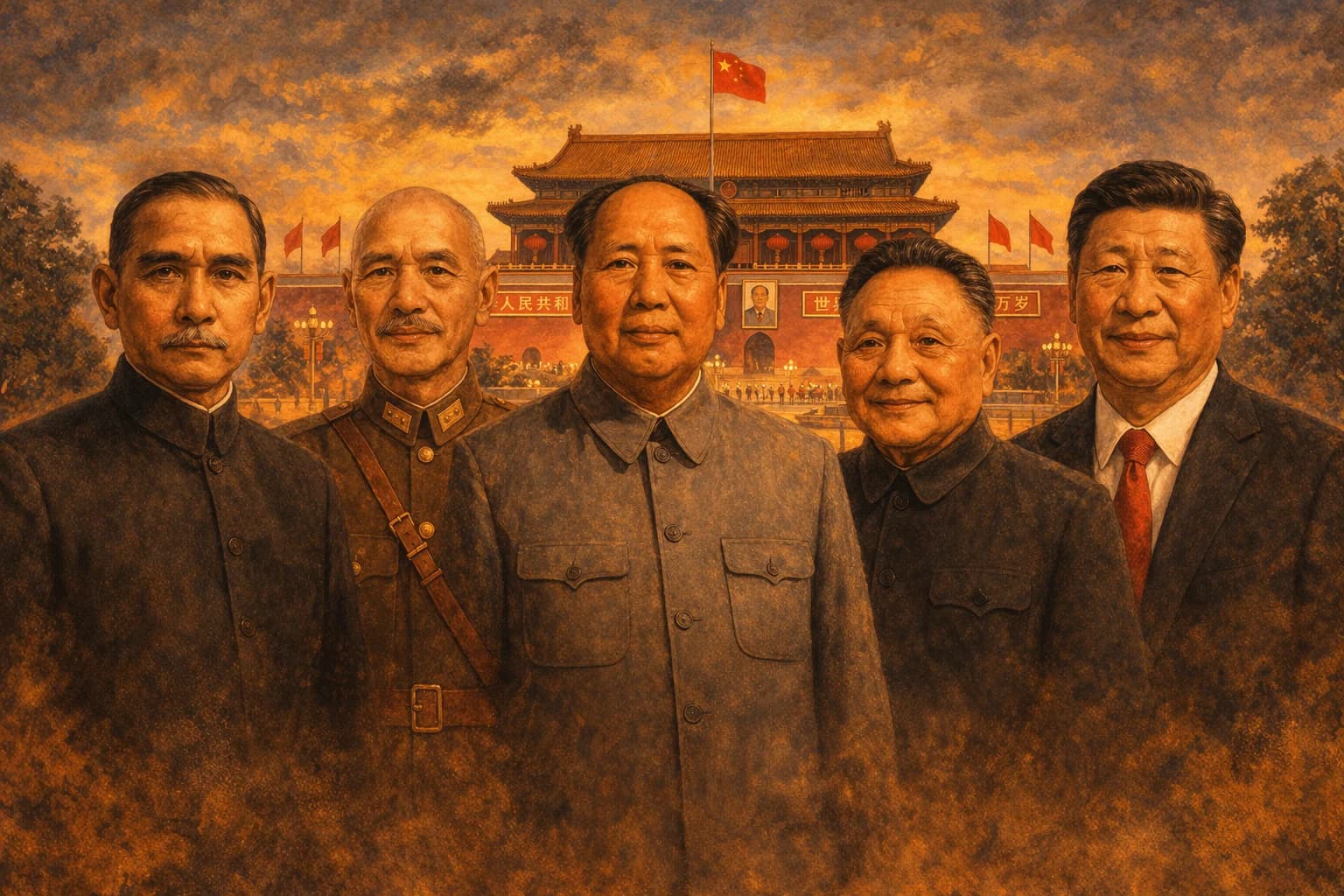
Japan's surrender reopened the struggle between Communists and Nationalists. Mao's forces, led militarily by commanders such as Zhu De, Lin Biao and Peng Dehuai, benefited from rural mobilisation, Nationalist corruption, economic crisis and effective military strategy. By 1949 the Kuomintang had retreated to Taiwan, and Mao stood in Beijing's Tiananmen Square to proclaim the People's Republic of China. The victory ended the Republic on the mainland and gave the Communist Party control over a vast, war-exhausted country. Mao's achievement was immense: he unified mainland China under a new revolutionary state. The cost would be the concentration of political life under one party and, increasingly, one dominant leader.
Revolutionary success often marks the beginning of an even more difficult phase of transformation.
1950–1957
Radical reforms
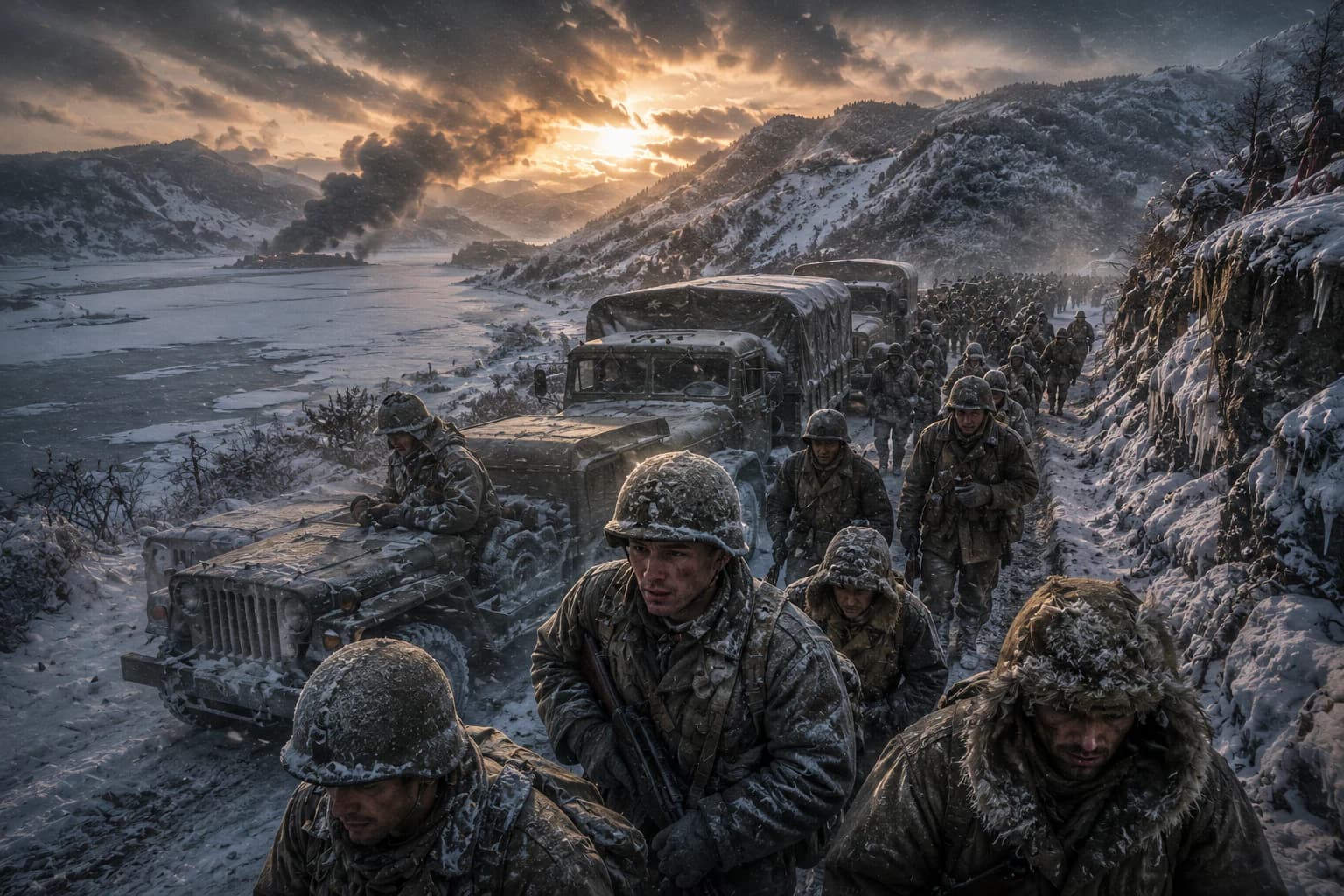
The early People's Republic combined state-building with coercive revolution. Land reform broke landlord power and redistributed property, but it also involved public denunciations, executions and local violence. Campaigns targeted perceived counter-revolutionaries, corruption and ideological enemies. China's intervention in the Korean War strengthened Mao's revolutionary prestige while imposing heavy costs. In the mid-1950s, the state moved toward collectivisation and socialist transformation of industry and agriculture. Many Chinese experienced literacy drives, public health improvements and restored national confidence after decades of war. Others experienced fear, dispossession and political labelling. Mao's new China promised liberation, but it demanded submission to party authority.
Transforming society at scale requires balancing ambition with the limits of human systems.
1958–1971
Upheaval and turmoil
Mao's most destructive campaigns came after he pushed beyond cautious development. The Great Leap Forward, launched in 1958, tried to accelerate China into communism through communes, mass mobilisation, inflated production claims and backyard industry. Local officials hid failure, grain procurement continued, and famine followed. Death toll estimates vary, but tens of millions died from starvation and related causes. Mao's authority weakened for a time, but he later reasserted ideological dominance through the Cultural Revolution beginning in 1966. Students, workers and factions attacked 'capitalist roaders,' officials, teachers and cultural targets. Institutions were paralysed, families divided, and violence spread. These disasters were not accidents outside Mao's system; they flowed from utopian ambition fused with fear-driven obedience.
Unchecked authority can magnify both ambition and error on a massive scale.
1971–1976
End and legacy
Mao's final years were marked by frailty, court politics and contradiction. The Cultural Revolution had damaged the party-state he depended on, yet his image remained sacred. Lin Biao, once designated successor, died in 1971 after an alleged coup plot, deepening uncertainty. Mao then permitted the opening to the United States, meeting Richard Nixon in 1972 and reshaping Cold War diplomacy. At home, Zhou Enlai, Deng Xiaoping, Jiang Qing and the radical faction later known as the Gang of Four manoeuvred around the ageing leader. Mao died on 9 September 1976. Afterward, China preserved him as founder while moving away from many of his policies. His legacy remains foundational and devastating: national unification, Communist victory and anti-imperial pride alongside famine, persecution and the dangers of unchecked revolutionary power.
Historical figures can leave legacies that are both foundational and deeply contested.