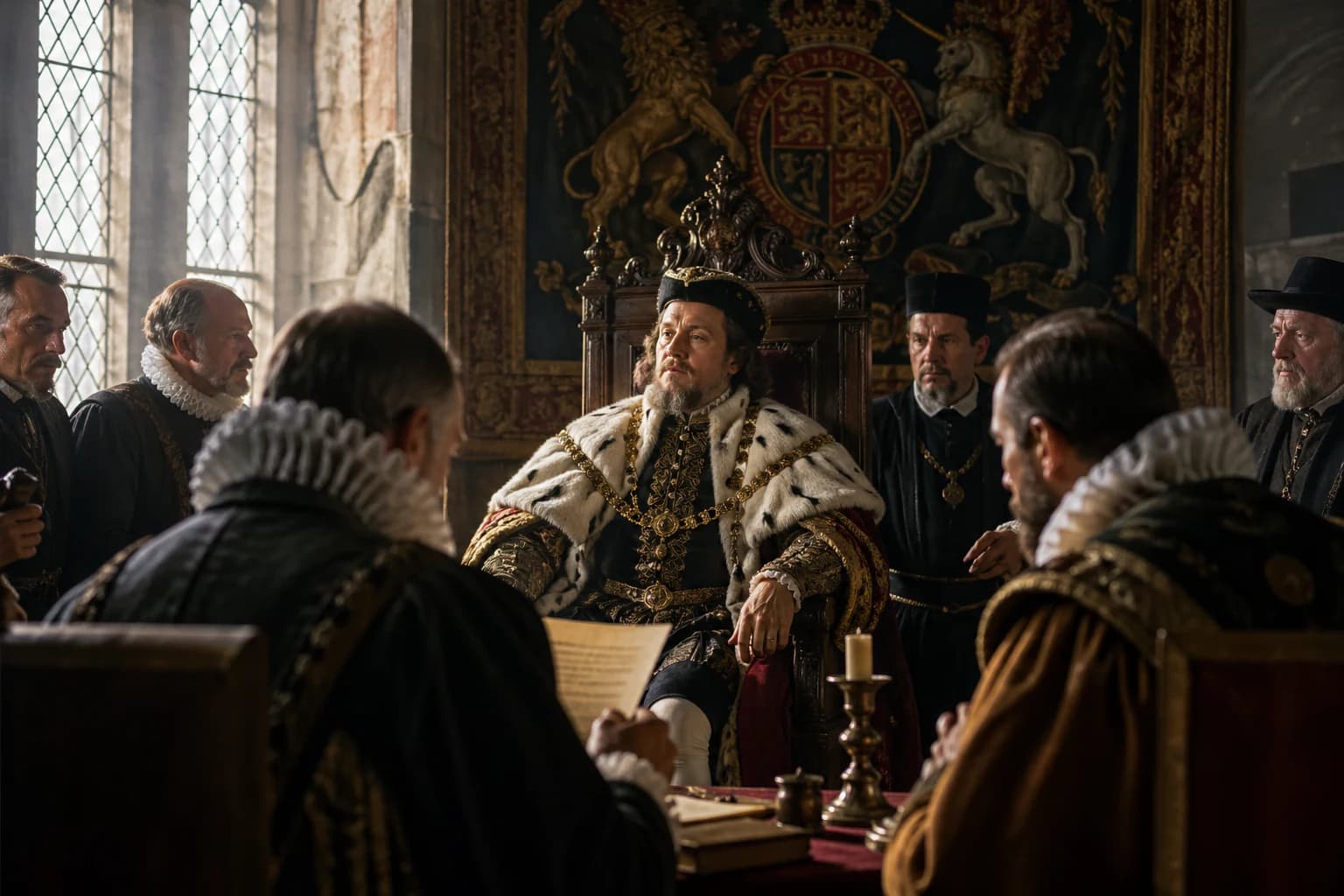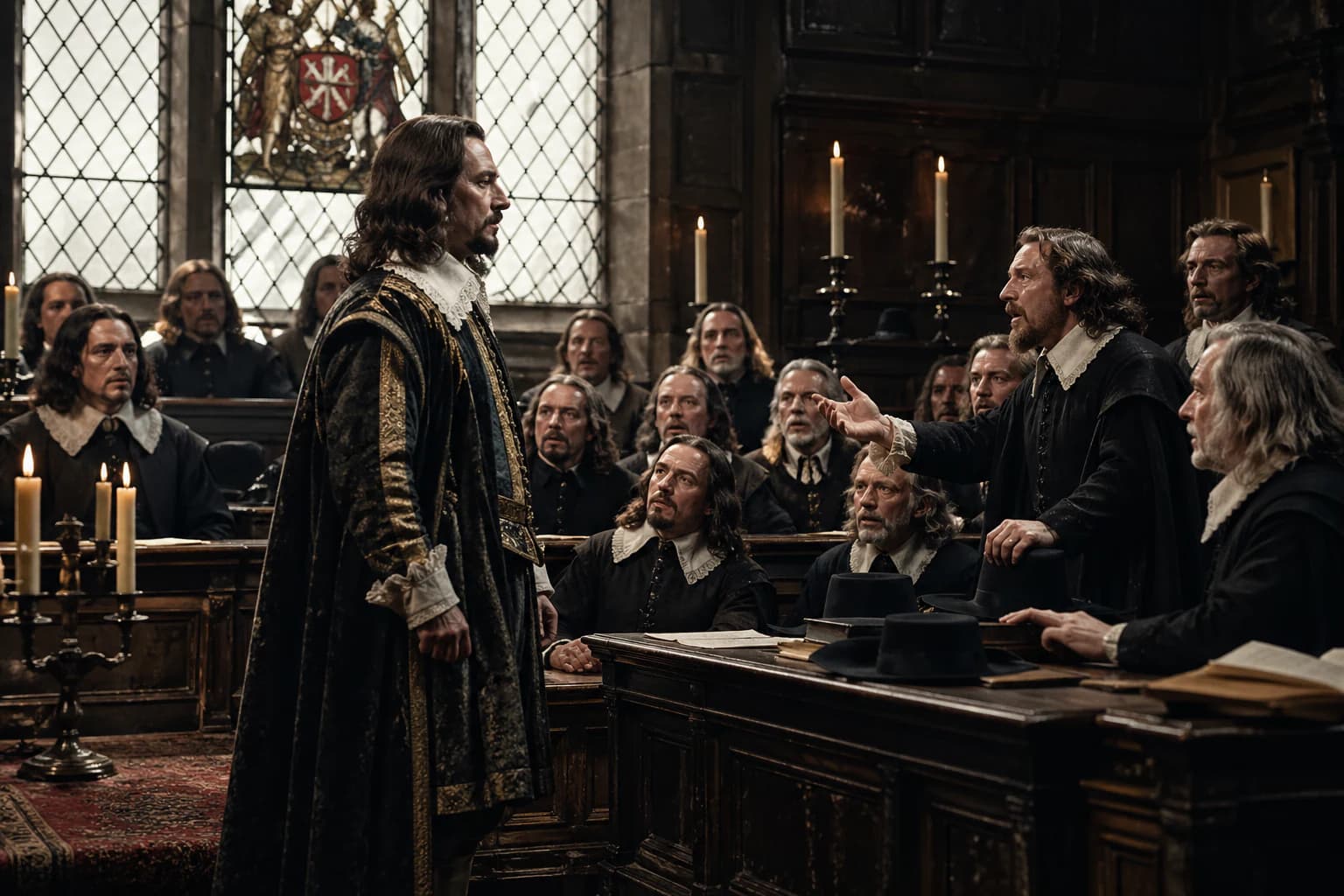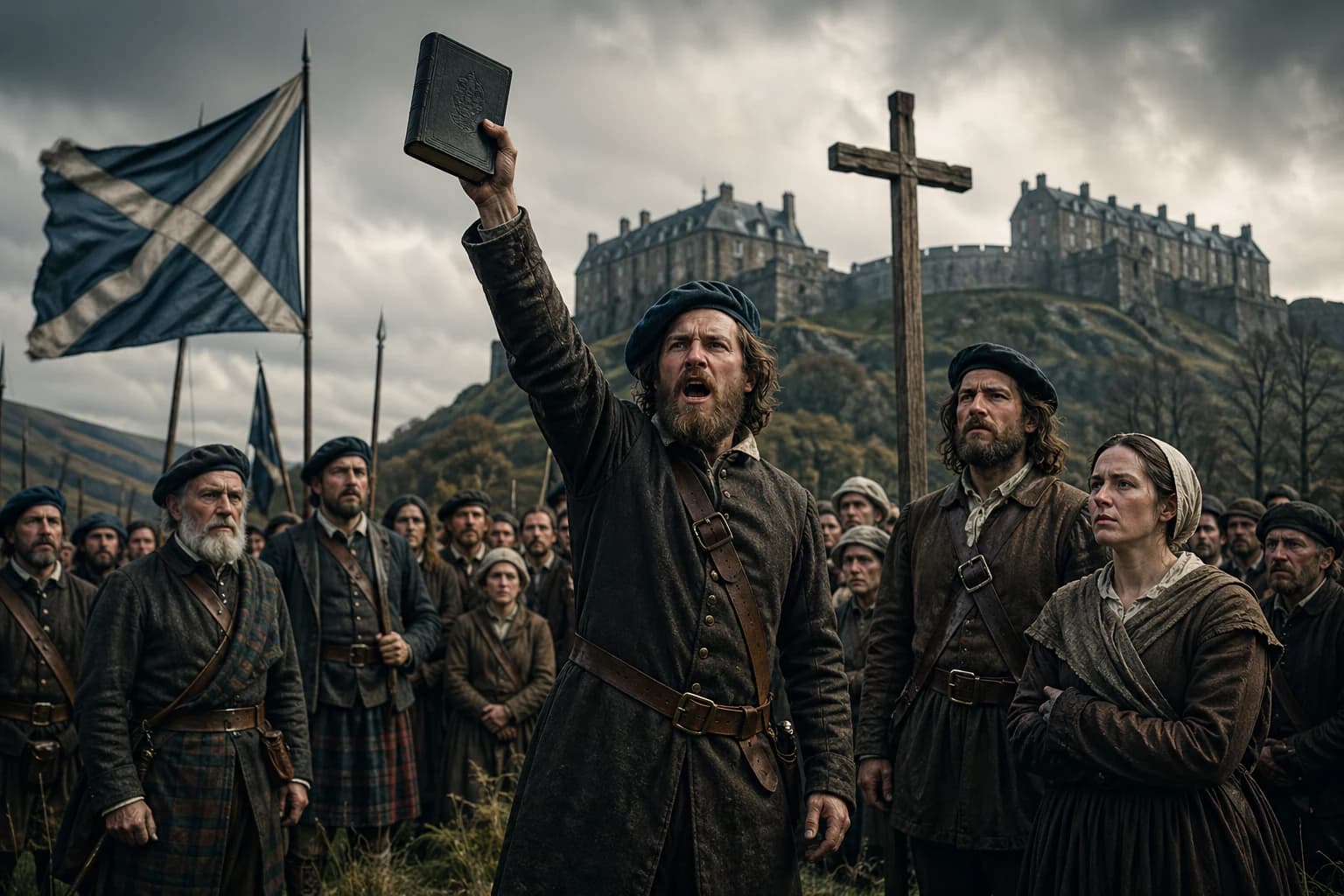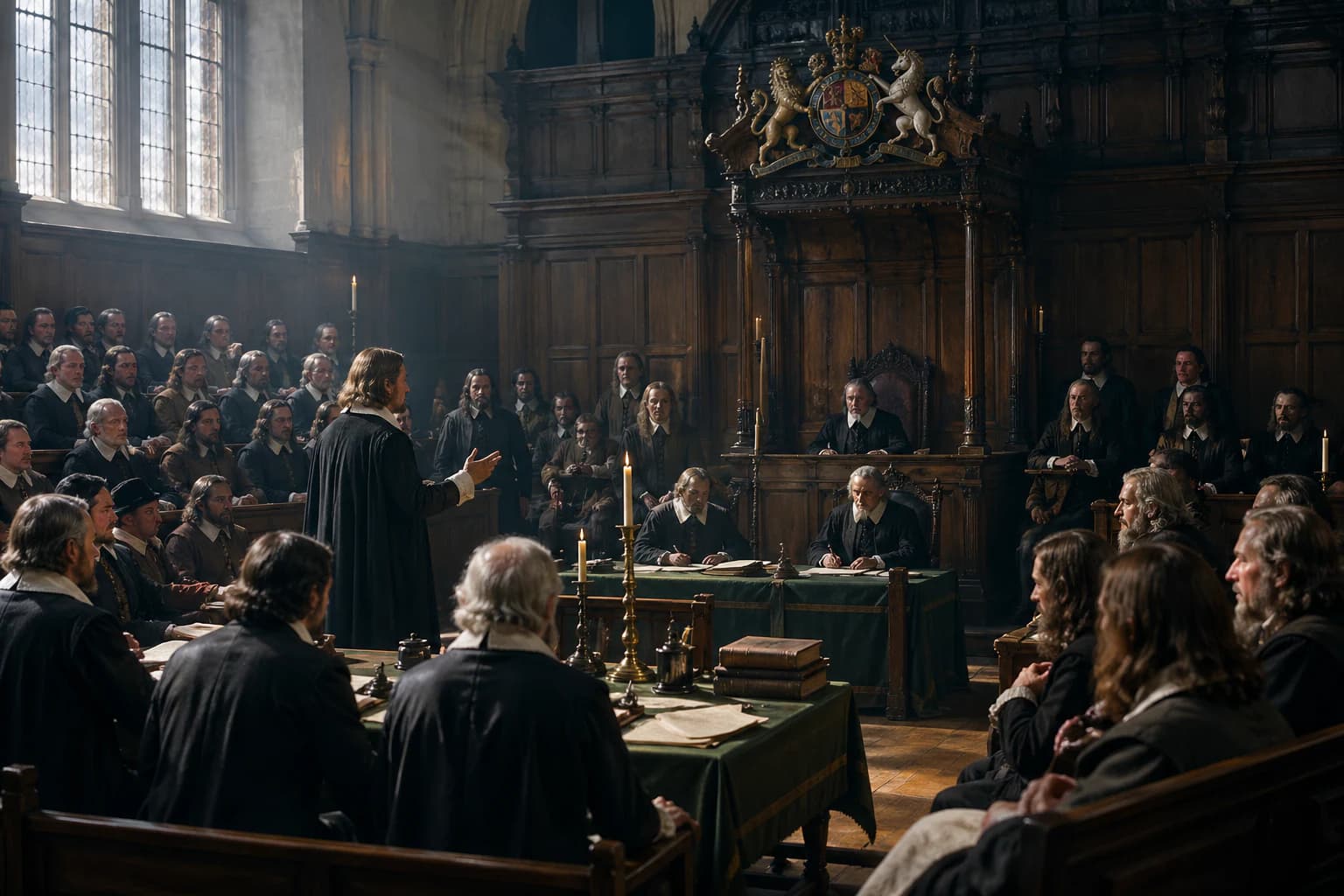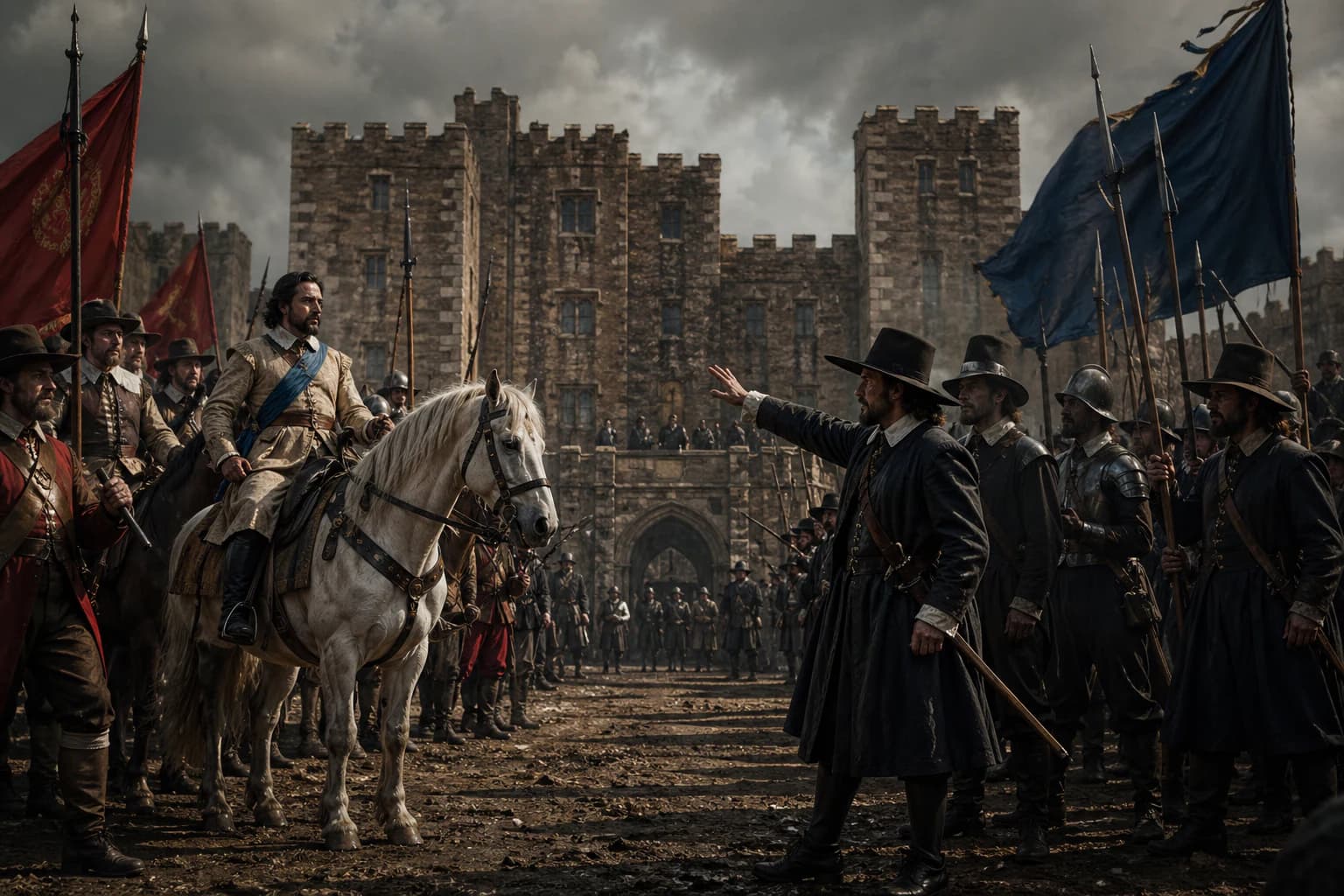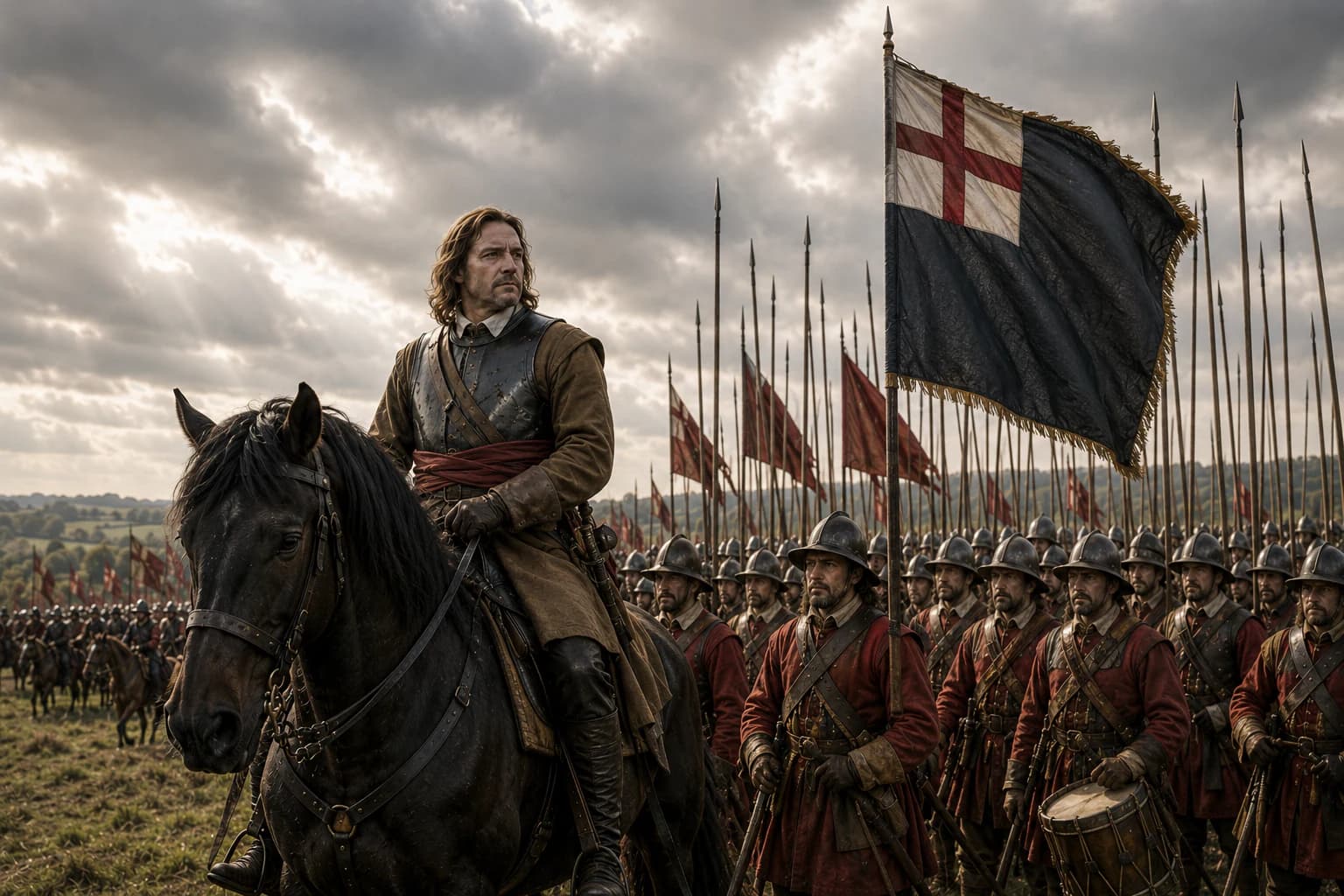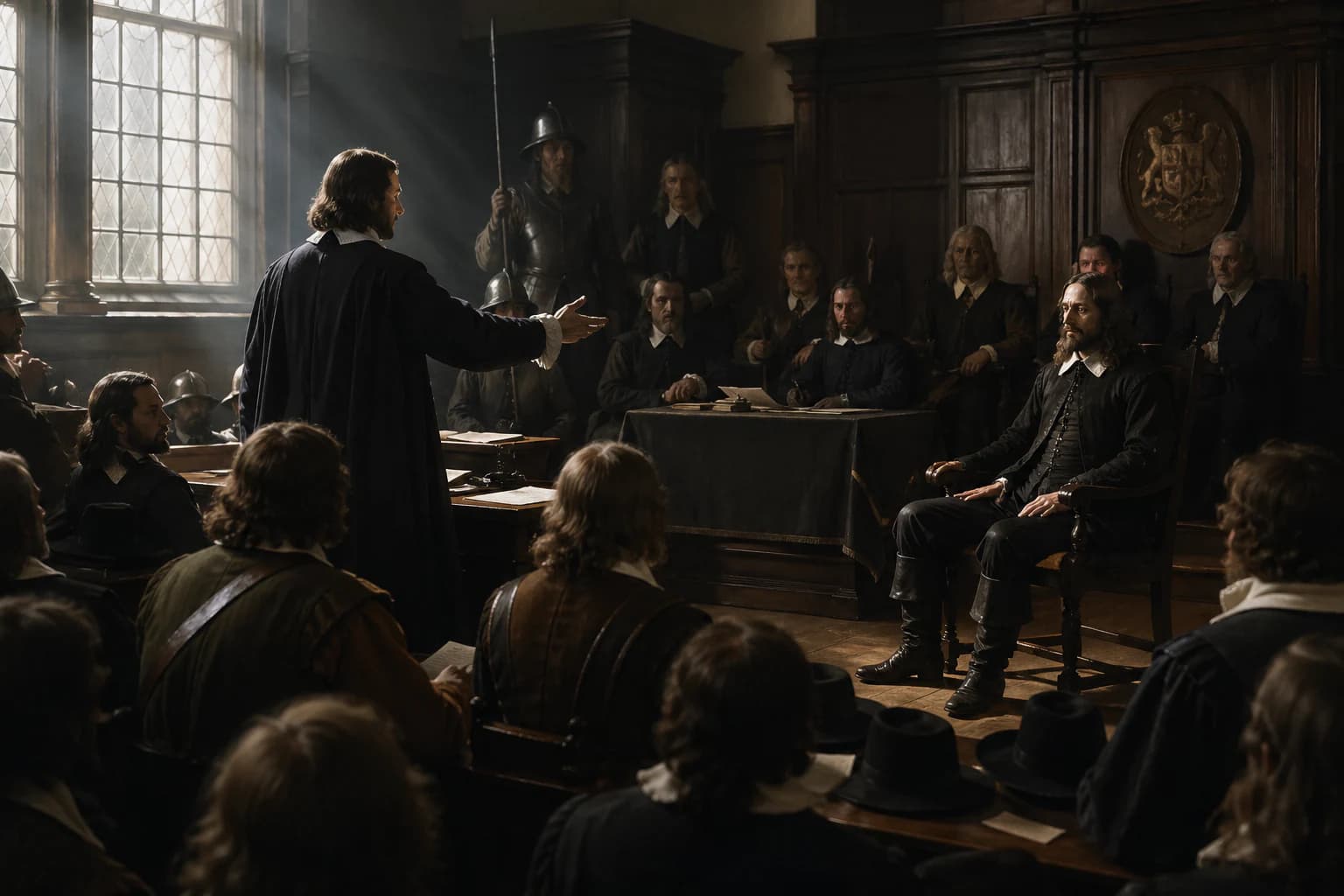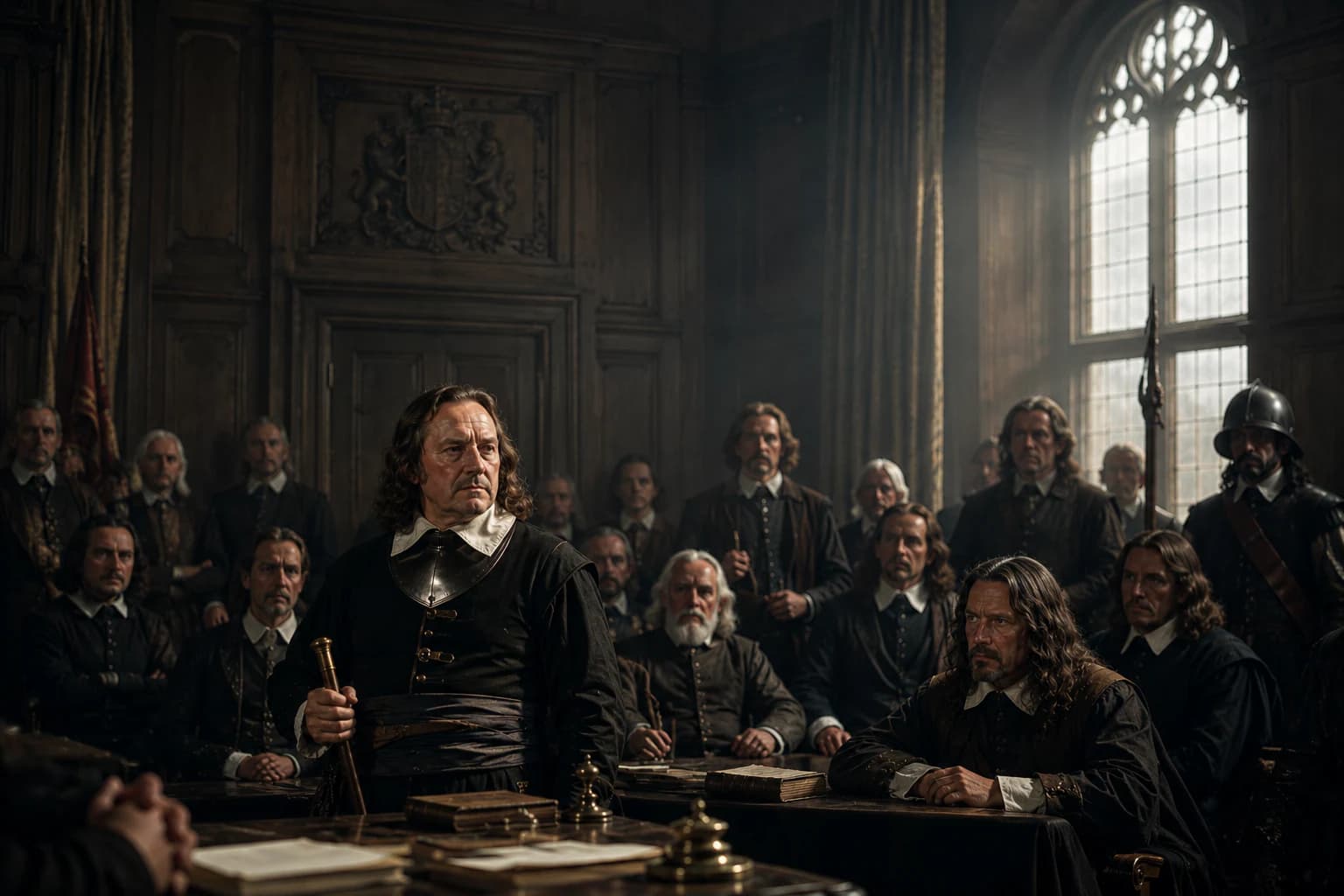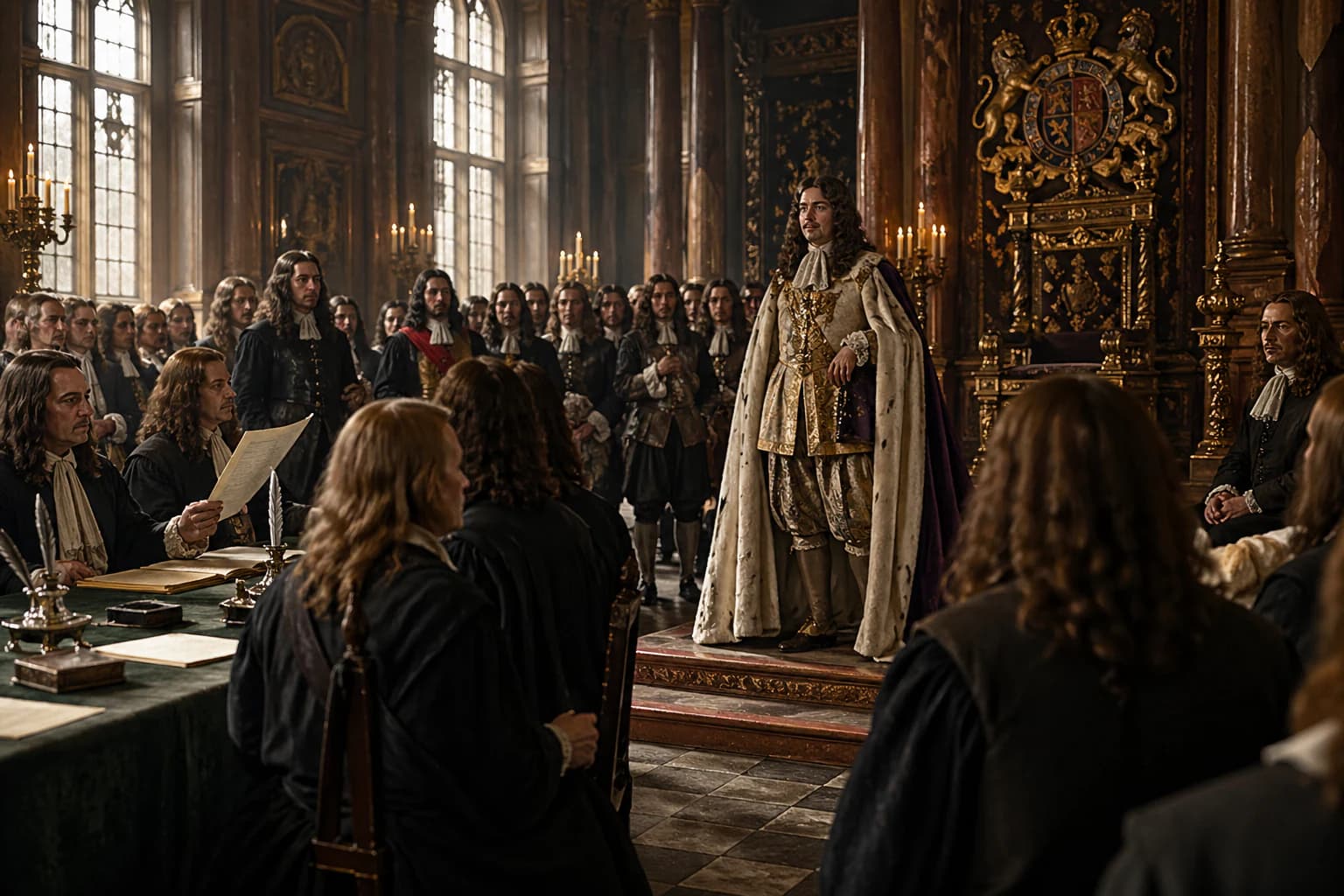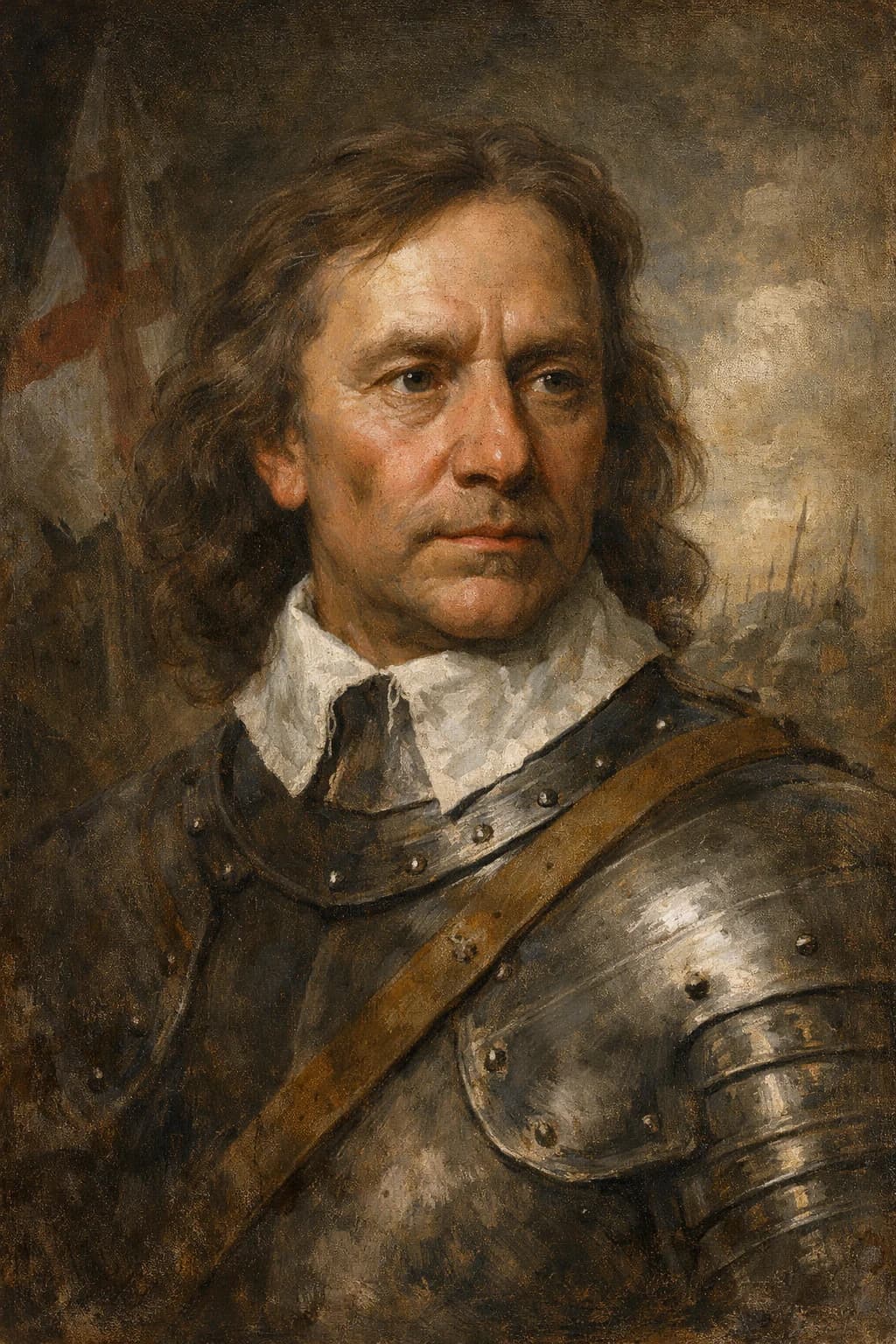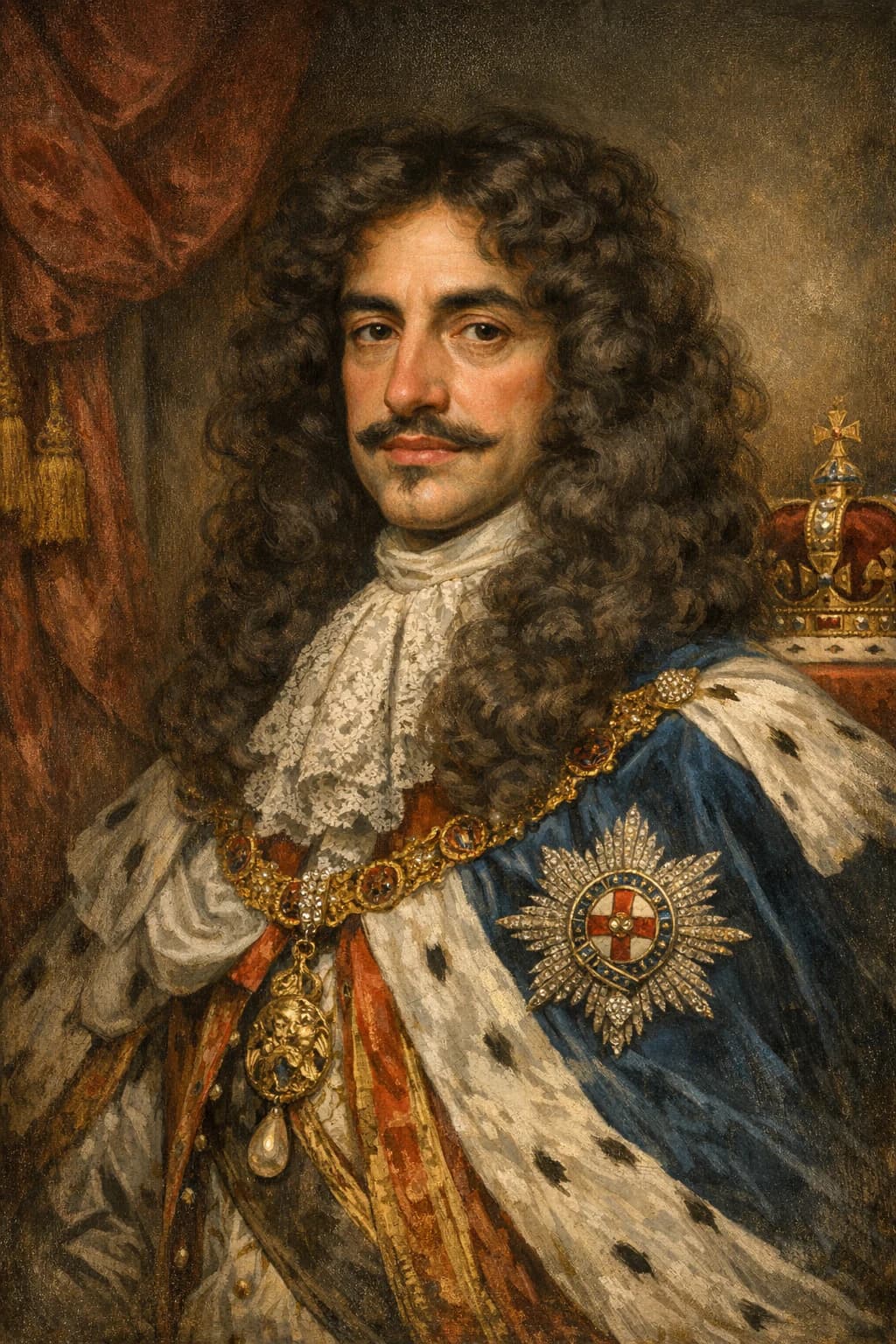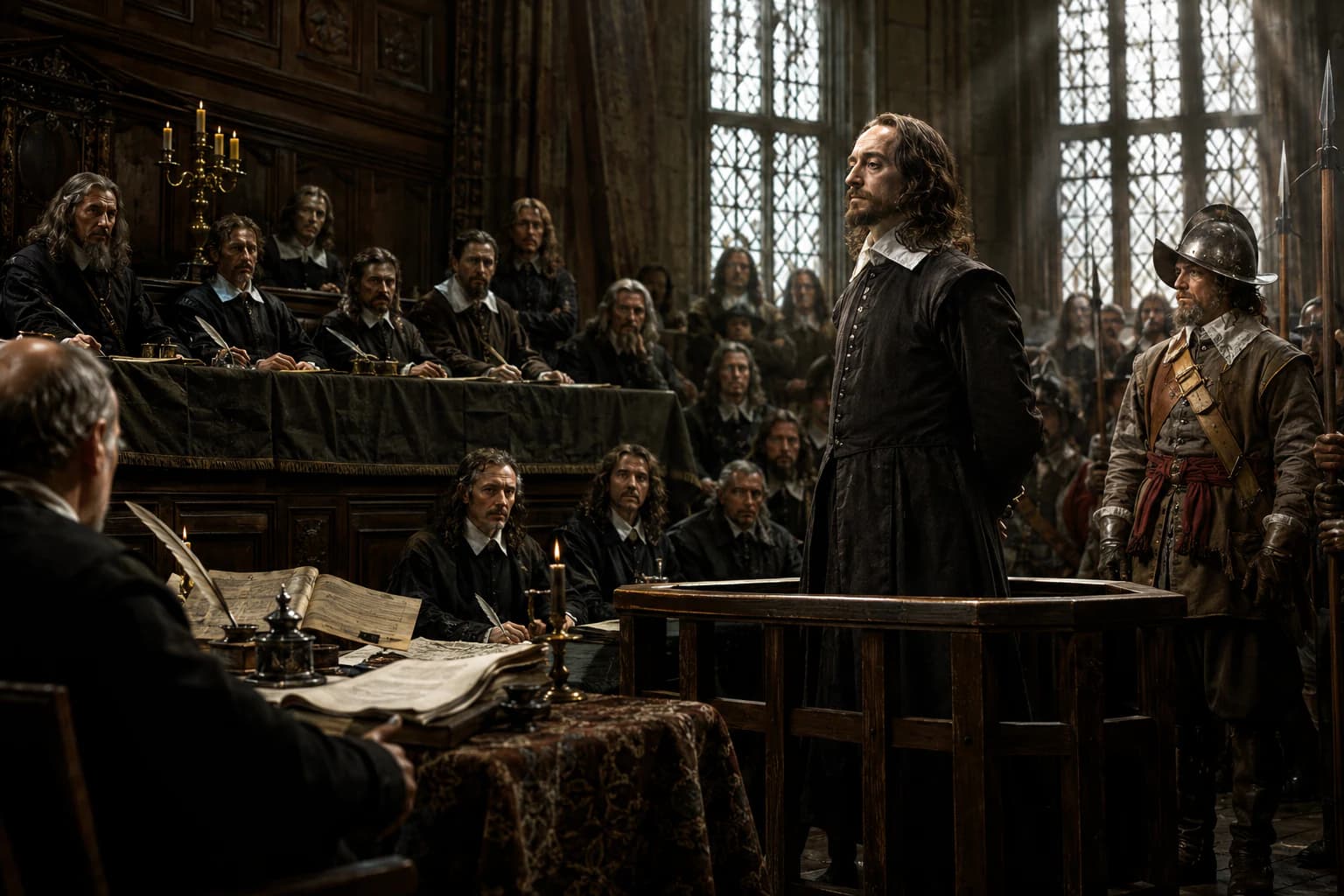
Parliamentarian and Royalist forces preparing for battle during the English Civil War
Premium Story

The English Civil War

Follow the English Civil War as crown and Parliament collide over religion, sovereignty, and the future of monarchy.

11 chapters

Next

Content note

This story discusses war, violence, persecution, and death in an educational historical context.

Context

Introduction

What you'll learn: You will follow how disputes about royal authority, Parliament, and religion escalated from political argument into civil war, regicide, and republican experiment — and how the Restoration of 1660 left a changed constitutional landscape that shaped English politics for centuries.

Key forces

The Stuart Crisis Begins
1603 CE
Step 1 of 101603 CEAccessible mode

The Stuart Crisis Begins

When James I took the throne in 1603, England passed from one dynasty to another. But the new king brought ideas about power that would quietly set the stage for civil war.

James came from Scotland, where kings held broader authority. In England, Parliament expected to be consulted on taxation and legislation. James found this irritating.

He believed firmly in the divine right of kings. God had appointed him to rule, and no human institution had the right to question that. Parliament heard this and disagreed.

The new king believed he answered only to God. Parliament believed someone should answer to them.

Religion added its own pressure. Puritans hoped James would reform the church further. Catholics hoped for toleration. Both were disappointed. The Gunpowder Plot of 1605 showed how far some were willing to go.

James ruled for over two decades, but the underlying tension between crown and Parliament never went away. His son Charles would inherit not just a throne, but an argument that had been building for years.

Charles I Confronts Parliament
1625 CE
Step 2 of 101625 CEAccessible mode

Charles I Confronts Parliament

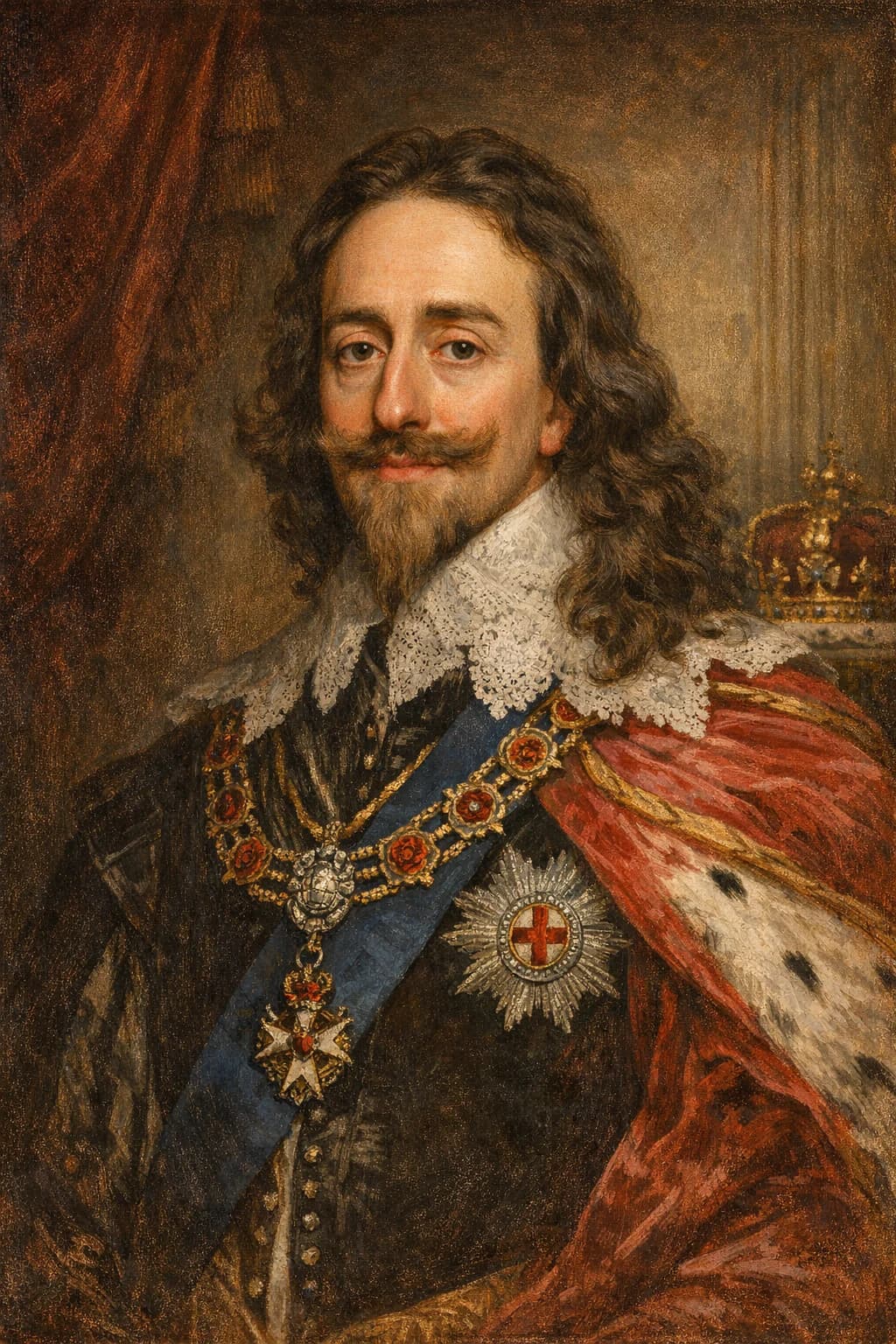
Charles I became king in 1625. Within a few years, his relationship with Parliament had turned from difficult to something close to open hostility.

Charles was proud, reserved, and deeply convinced of his royal rights. He found parliamentary criticism almost personally offensive.

From the start there were arguments about money. Parliament was reluctant to grant Charles funds without attaching conditions. Charles tried to raise money in other ways. That made Parliament angrier.

Every argument about money was really an argument about who was in charge.

Charles had a powerful favourite — George Villiers, Duke of Buckingham — who was blamed for military disasters and deeply unpopular with Parliament. When Parliament tried to impeach him, Charles dissolved Parliament instead.

The Petition of Right in 1628 briefly settled things, with Charles agreeing not to imprison people without lawful cause or levy taxes without consent. He accepted, got his money, and then largely ignored the agreement.

Charles was not cruel, but he could not accept that others had legitimate claims on his power. That inability would eventually prove fatal.

The Personal Rule
1629 CE
Step 3 of 101629 CEAccessible mode

The Personal Rule

For eleven years, Charles I governed without Parliament. This period, known as the Personal Rule, looked like stability — but it was building toward explosion.

Without Parliament, Charles needed to find other ways to raise money. One method was ship money — a tax traditionally charged only to coastal towns for naval defence. Charles extended it to the whole country.

People resented this deeply. They believed no tax could be levied without Parliament's agreement. Ship money felt like a royal attempt to bypass the constitution entirely.

Raising money without Parliament was not just unpopular. Many believed it was illegal.

Religion caused just as much trouble. Charles's Archbishop William Laud pushed for more ceremony in church services. To many Puritans, this looked like Catholicism coming in through the back door.

These eleven years ended not because Charles chose to call Parliament back, but because Scotland forced his hand. The Personal Rule had not resolved the tensions between crown and Parliament. It had simply delayed them — and made them far worse.

Premium

You've reached the turning point

The opening chapters show mistrust widening between king and Parliament. Premium follows the moment argument becomes rupture: kingdoms choose sides, a new army changes the war, and England crosses the unthinkable line of putting its king on trial.

Continue into the reversals, crises and human stakes that make the story matter.

Unlock full story

What Premium unlocks next

  1. 4The Scottish Rebellion
  2. 5The Long Parliament
  3. 6The Kingdom Divides
  4. 7The New Model Army
  5. 8The King on Trial
  6. 9Cromwell's Protectorate
  7. 10The Restoration Settlement

Browse stories

Browse stories for free

Explore the people connected to this turning point or enjoy one of our free stories.

Unlock full storyBrowse stories

References

Sources & Further Reading

Reliable sources, primary-source collections and reading paths connected to this page.

Sources used

  1. The National Archives, Civil War,” Open source
  2. The British Library, The English Civil Wars,” Open source

Further reading

  1. Michael Braddick, God's Fury, England's Fire, Penguin.

Primary sources

  1. Fordham University, Internet Modern History Sourcebook,” Open source

A weekly route through history

Find out first about the latest published stories, feature notes and occasional Premium offers in one weekly email.