Complete chronology
Full overview and deeper context for every journey step.
1599
Humble beginnings
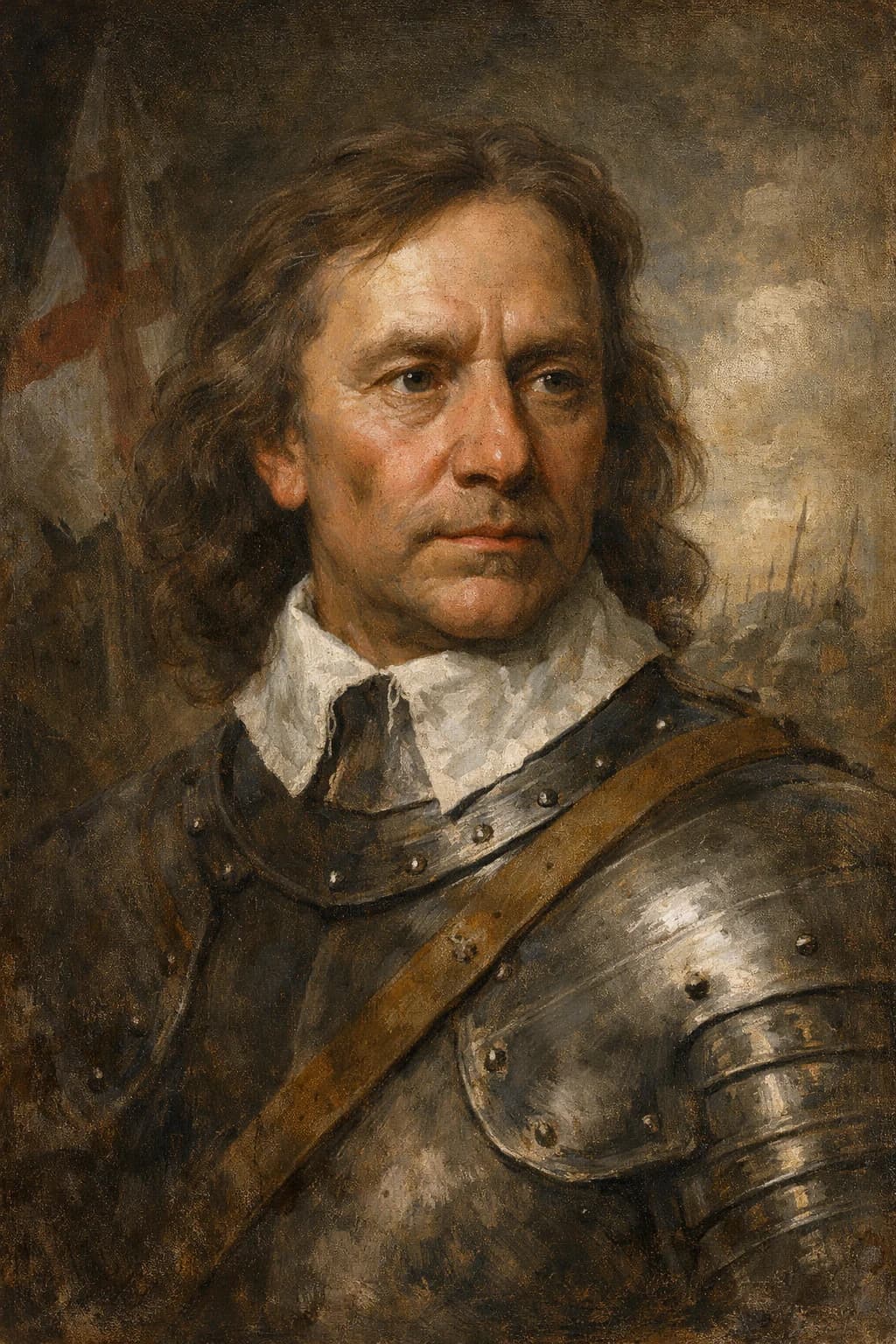
Oliver Cromwell was born in Huntingdon into the lower gentry, connected through family memory to Thomas Cromwell but far from the highest aristocracy. His world was one of land, local status, parish religion and county politics. He attended Cambridge briefly, left after his father's death, married Elizabeth Bourchier and lived for years as a relatively obscure gentleman managing property and family obligations. Nothing in his early career made future dictatorship obvious. Yet that ordinariness mattered. Cromwell understood the anxieties of provincial Protestant gentry who feared religious backsliding, arbitrary taxation and the erosion of local liberties. He did not enter history as a polished court politician. He entered it as a godly outsider with a capacity for action.
His ordinary upbringing helped form the practical mindset that later set him apart from traditional elites.
1630s
Religious awakening
In the 1630s Cromwell underwent a profound religious awakening. His letters later speak in the language of sin, mercy, struggle and divine calling. This Puritan faith was not private decoration. It gave him a way to interpret politics as spiritual conflict and military success as providence. It also made him unusually tolerant of some Protestant diversity while deeply hostile to Catholic power and what he saw as ceremonial corruption in the Church of England. Cromwell's religion could produce humility and self-scrutiny, but also terrible certainty. When he believed God had opened a door, he was willing to walk through it even if law, custom and moderation stood in the way.
His sense of divine mission gave him unusual confidence to challenge established power.
1628–1640
Entering Parliament
Cromwell sat briefly in the Parliament of 1628-1629 and returned in the Short and Long Parliaments of 1640. He was not yet a national leader, but he entered a political environment transformed by Charles I's Personal Rule, ship money, religious ceremonialism under Archbishop Laud and distrust between crown and Parliament. Cromwell aligned with the godly opposition, supporting reform of the church and resistance to arbitrary government. The Long Parliament radicalised many men who had begun by seeking restoration of old liberties rather than revolution. Cromwell was one of them. Crisis taught him that the king could not be trusted easily, and that politics might require force if constitutional argument failed.
Early exposure to political conflict gave him the awareness needed to act decisively later.
1642
Civil war begins
The outbreak of civil war transformed Cromwell from county politician into soldier. He raised a troop of cavalry in eastern England and insisted on discipline, religious seriousness and promotion by ability rather than birth. His cavalry performed well at Marston Moor in 1644, helping deliver a major parliamentary victory in the north. Cromwell's genius lay not in textbook military theory but in judging men, maintaining morale and linking faith to battlefield endurance. He believed soldiers who knew what they fought for would stand when gentlemen amateurs broke. The war rewarded that insight. Cromwell became one of Parliament's most effective commanders because he built units with purpose as well as weapons.
Conflict provided the stage where his latent leadership abilities became visible.
1645
New Model Army
By 1645 Parliament had learned that half-measures would not defeat the king. The New Model Army created a more professional, centrally funded force under Sir Thomas Fairfax, with Cromwell as lieutenant-general of horse. Its officers were chosen more for competence and commitment than social rank, though the shift was never as purely meritocratic as later myth suggested. At Naseby in June 1645, the army destroyed the main Royalist field force and captured Charles I's correspondence, exposing his attempts to draw in outside support. The New Model Army then became more than a military instrument. It was an armed political community with grievances, religious energy and ideas about settlement. Cromwell helped create the force that would later constrain Parliament itself.
Reforming the army showed his belief that ability mattered more than inherited status.
1649
King’s execution
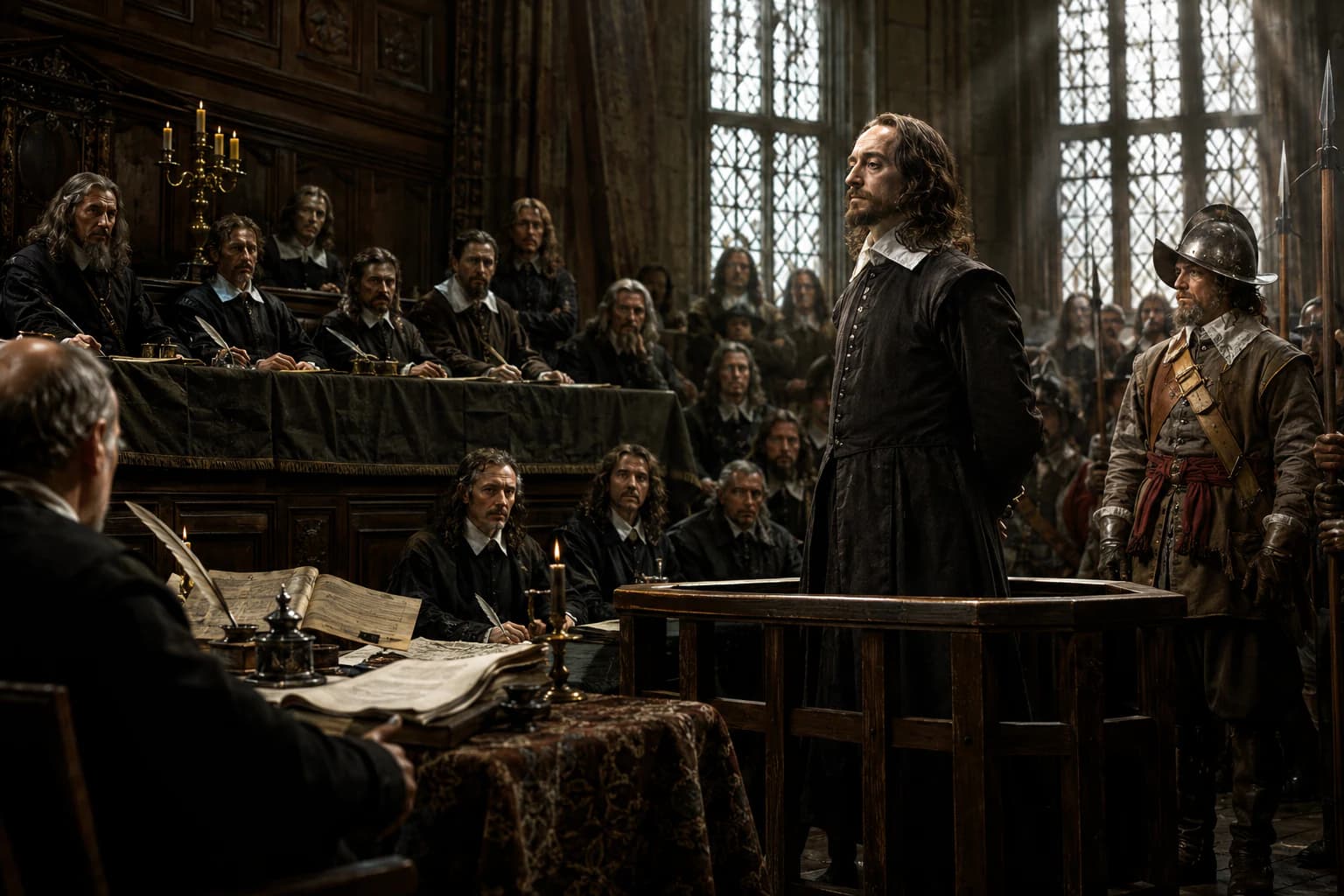
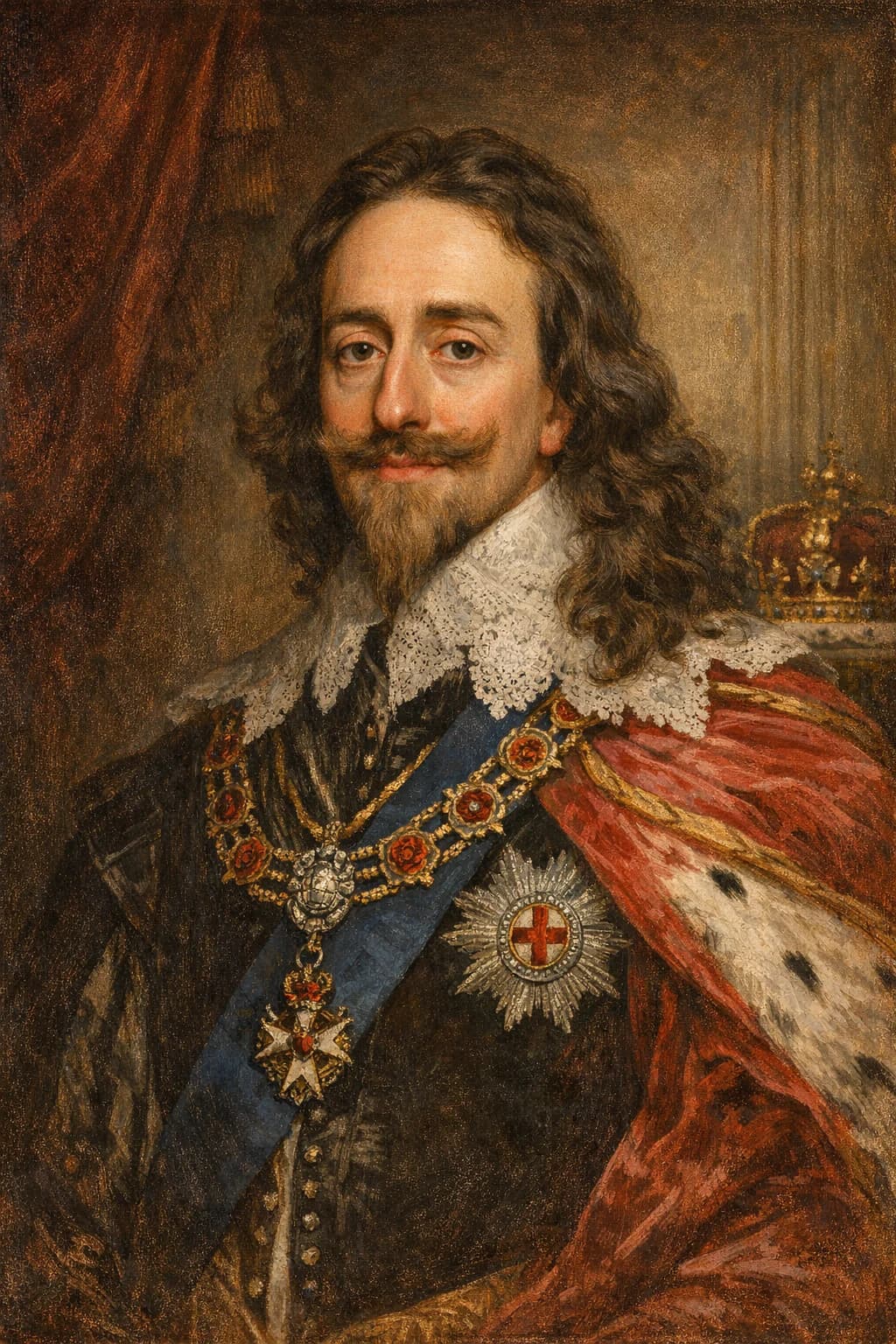
The execution of Charles I was the point of no easy return. After the first Civil War, Charles negotiated with different factions while encouraging renewed conflict. The Second Civil War in 1648 convinced Cromwell and other army leaders that the king was a man of blood whose continued existence made peace impossible. Pride's Purge removed MPs unwilling to proceed, and the remaining Rump Parliament established a court to try the king. Cromwell signed the death warrant. The execution on 30 January 1649 shocked Europe because it treated an anointed monarch as accountable to his people under law. It also created a problem Cromwell never solved: once monarchy was destroyed, what legitimate authority could replace it?
By endorsing the king’s death, he committed fully to a path with no easy return.
1653–1658
Rule as Protector
Cromwell's path to the Protectorate ran through Ireland, Scotland and repeated failure to settle the revolution. His Irish campaign of 1649-1650, especially the storming of Drogheda and Wexford, remains one of the darkest parts of his legacy, remembered in Ireland as massacre and conquest. He then defeated Scottish Royalist forces at Dunbar and Worcester. In 1653, after dismissing the Rump Parliament, he became Lord Protector under the Instrument of Government, one of the first written constitutions in English history. His rule combined religious toleration for many Protestants, readmission of Jews, administrative reform and censorship, military taxation and experiments such as the Major-Generals. It was neither monarchy nor stable republic. It was revolutionary rule searching for legitimacy.
His government revealed the difficulty of replacing old systems without clear alternatives.
1658
Final years
The Humble Petition and Advice of 1657 offered Cromwell the crown. He refused it after agonising pressure from army officers and political allies, but accepted a revised constitutional settlement that looked increasingly monarchical in practice. He could summon another parliamentary chamber, name his successor and govern with a courtly style that made some republicans feel betrayed. The contradiction was severe. England had killed a king, then found that stable executive authority still seemed to require something like kingship. Cromwell's health declined after the death of his daughter Elizabeth Claypole, and he died on 3 September 1658, the anniversary of his victories at Dunbar and Worcester. His son Richard inherited the title but not the authority.
A system built around one leader can falter quickly once that leader is gone.
Post-1658
Enduring legacy
After Cromwell's death, the Protectorate collapsed quickly. The monarchy was restored in 1660, and Cromwell's corpse was later dug up and posthumously executed in a ritual of royal revenge. Yet restoration could not erase what had happened. A king had been tried and killed; the army had become a political actor; written constitutional experiments had been attempted; religious toleration had widened for some while repression remained brutal for others. In England, Cromwell could be remembered as a champion of liberty or a hypocritical dictator. In Ireland, his name became associated with conquest, dispossession and massacre. His importance lies in the unresolved force of those contradictions. He destroyed one form of tyranny, then ruled through power no ordinary republic could control.
His legacy lies less in what he built and more in the questions he forced society to confront.