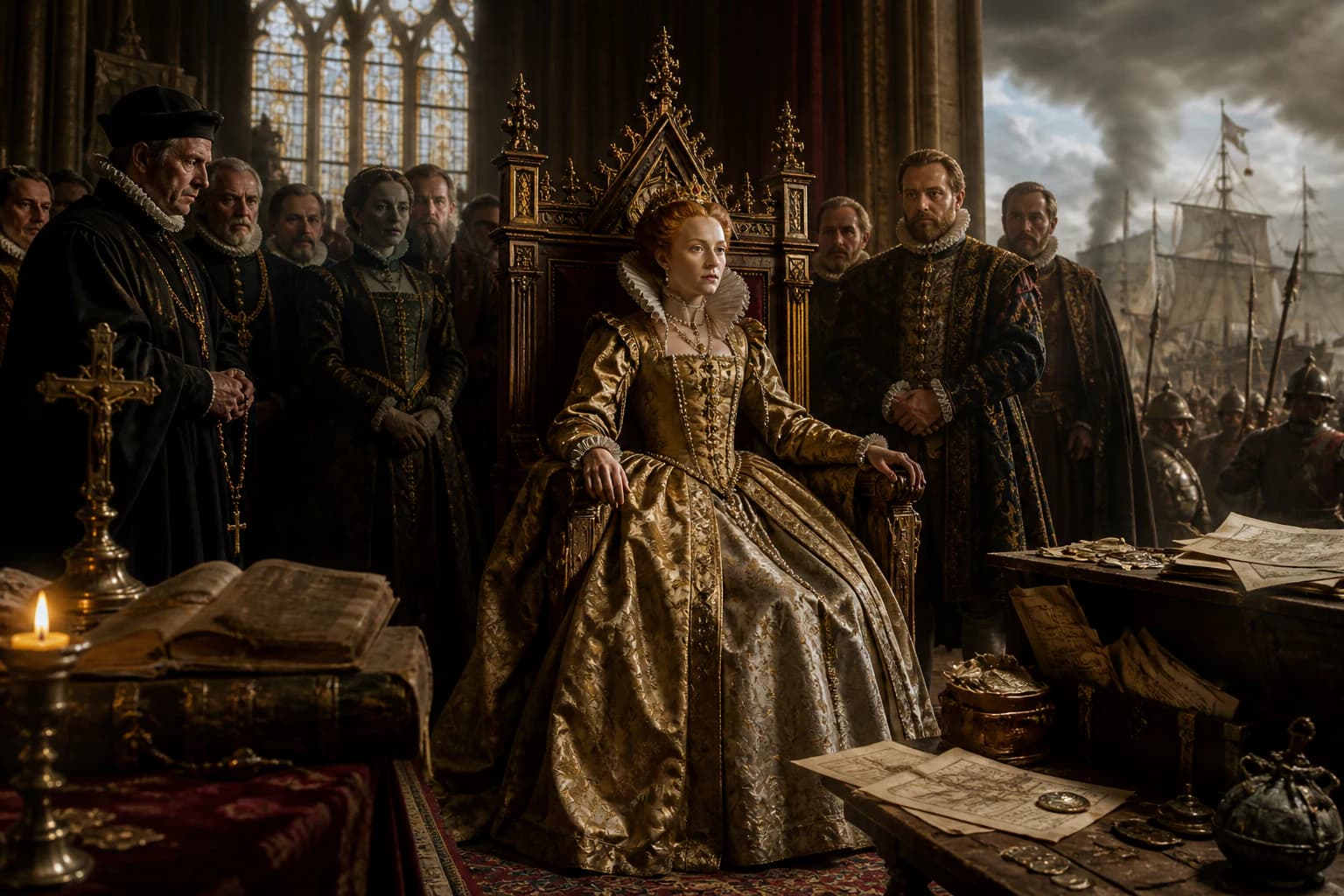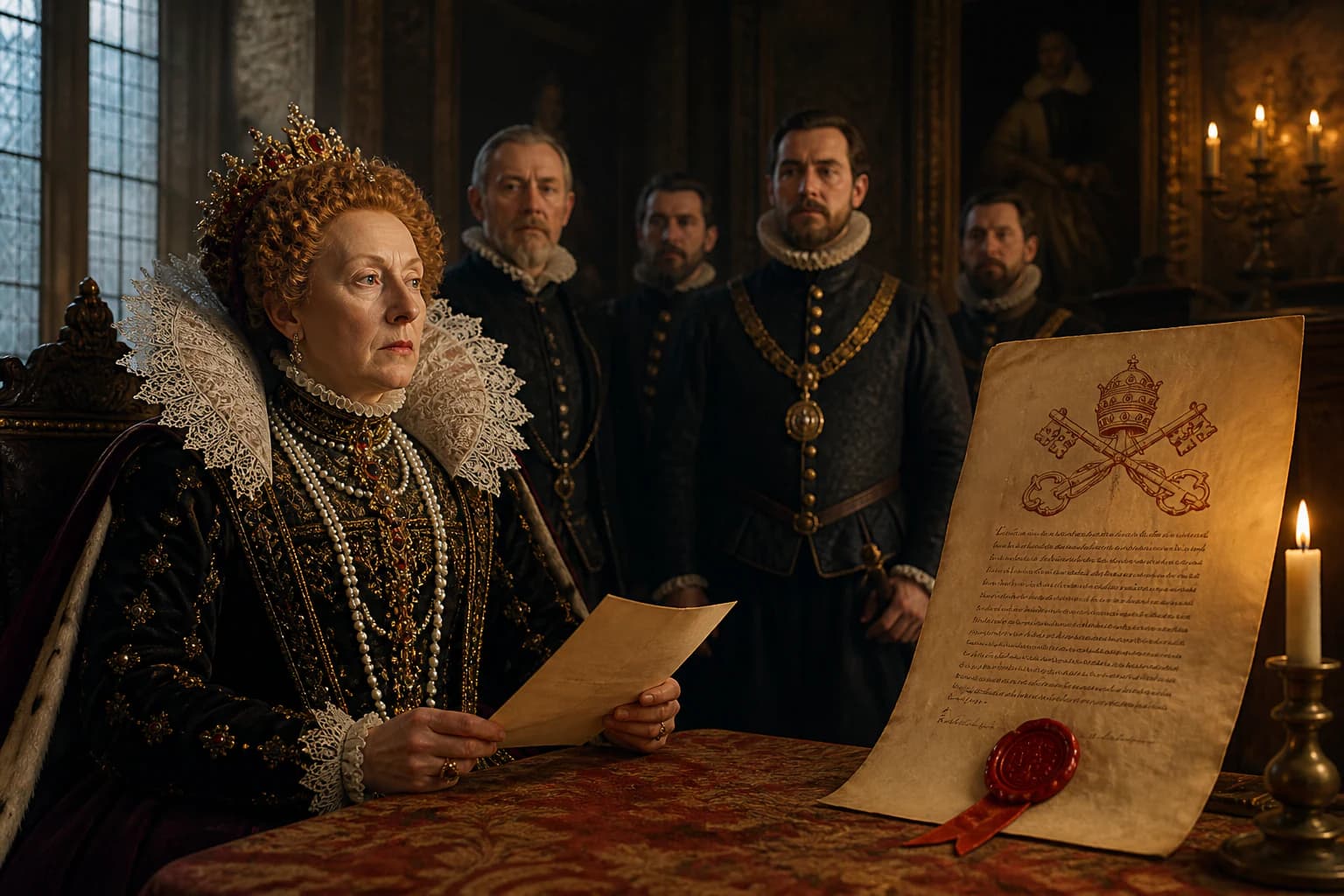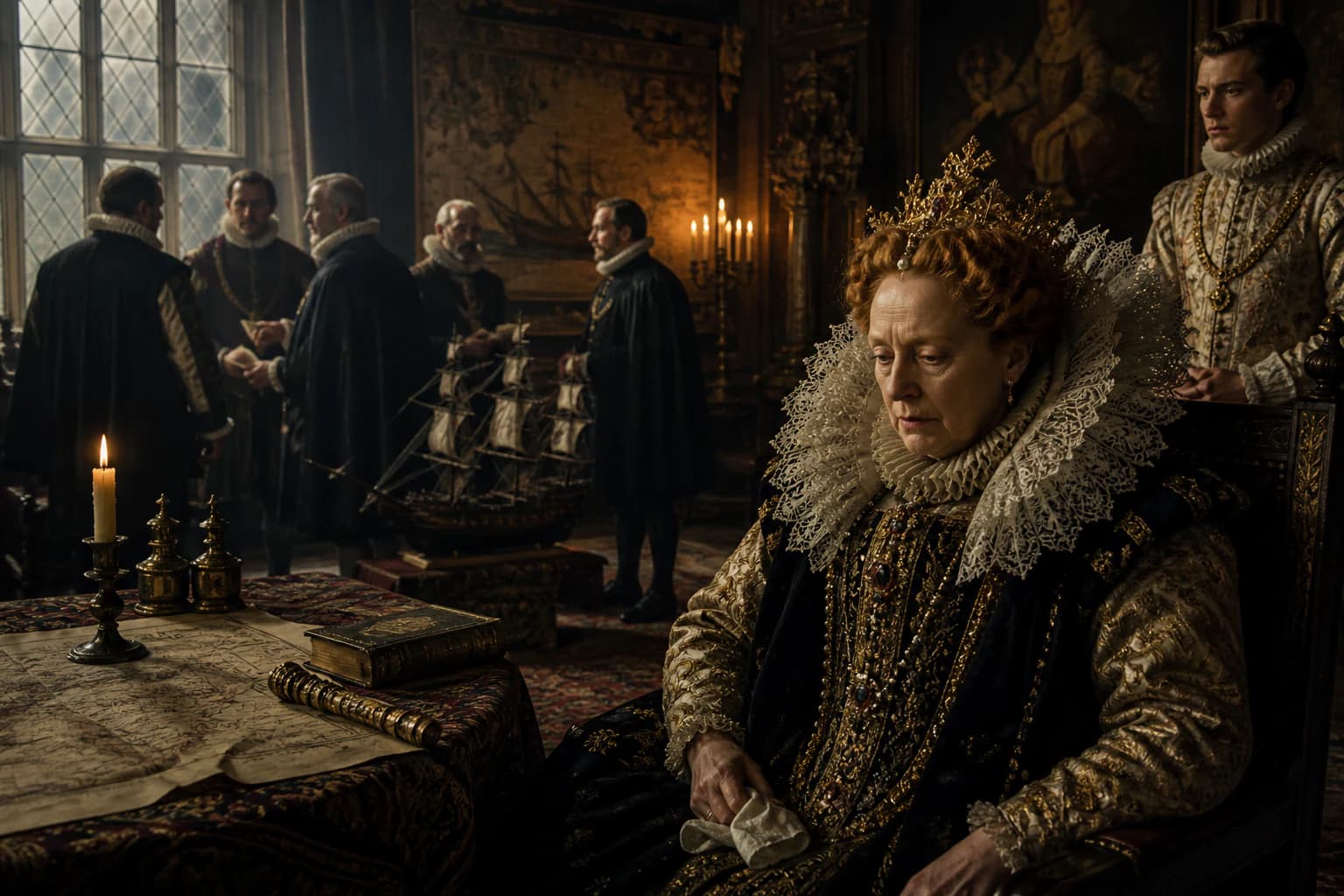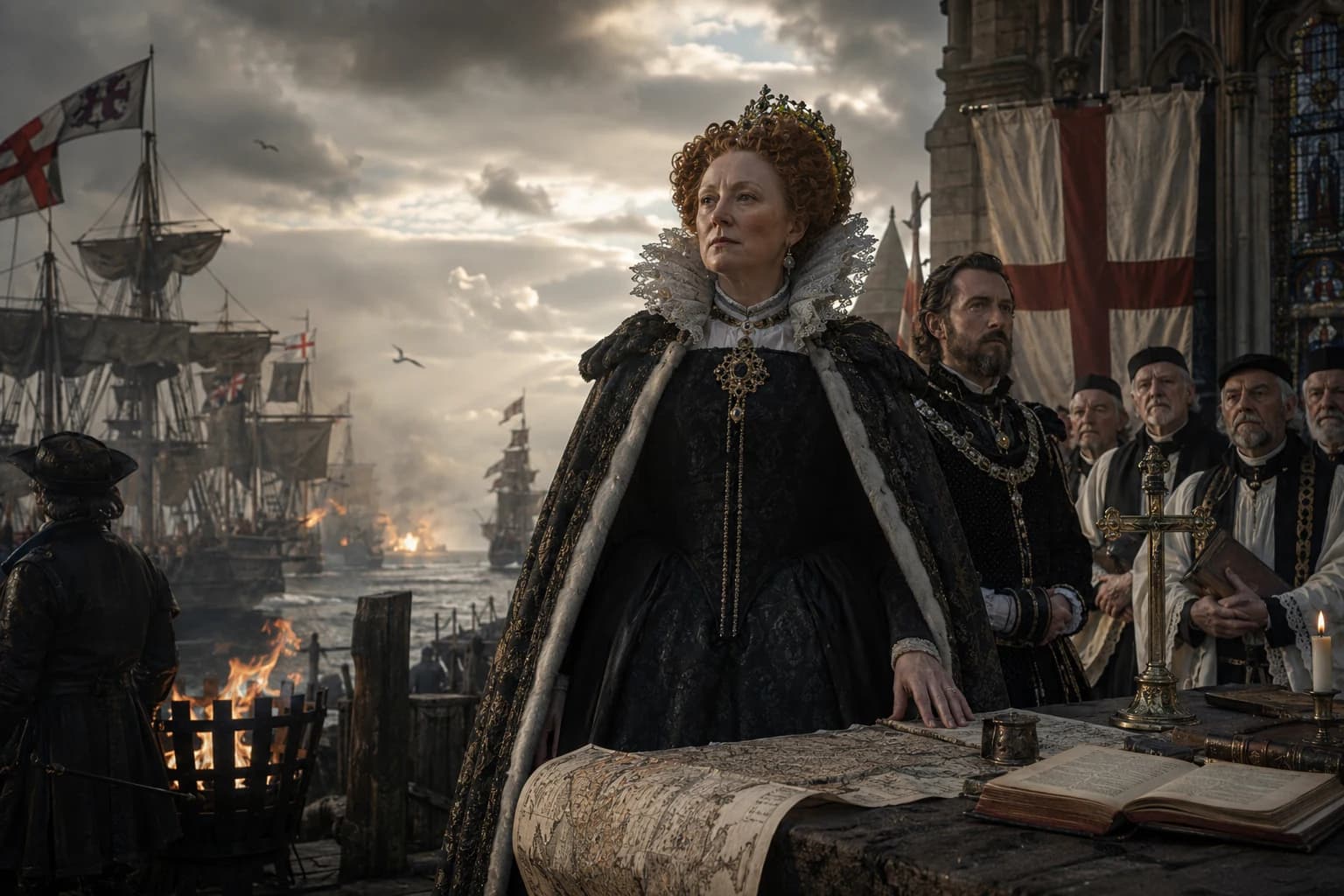
Queen Elizabeth I presiding over a flourishing Elizabethan court during England’s golden age
Premium Story

The Elizabethan Age

Enter Elizabethan England, where royal power, theatre, sea power, faith, and espionage forged a golden age.

11 chapters

Next
Context

Introduction

What you'll learn: You will explore how Elizabeth balanced faith, power, image, war, succession, sea power, and culture in one of England's most remembered reigns.

Key forces

Elizabeth I being proclaimed queen as courtiers bow in the great hall of a Tudor palace.
1558 CE
Step 1 of 101558 CEAccessible mode

Elizabeth Takes the Throne

In November 1558, a twenty-five-year-old woman inherited the English throne — and a kingdom deep in trouble.

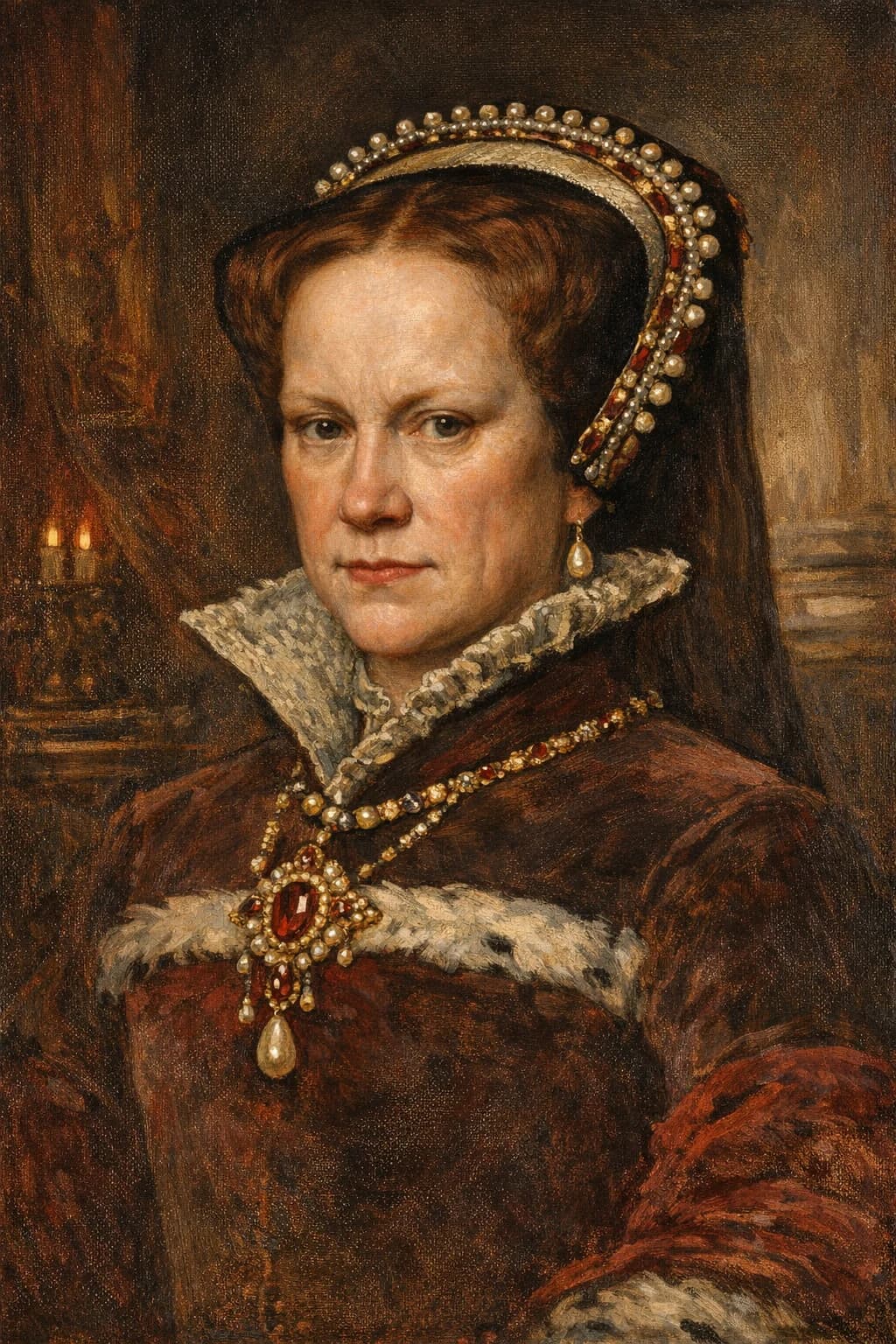
England had lurched through decades of religious upheaval. Henry VIII had broken from Rome. His son Edward pushed the country toward harsh Protestantism. Then Mary I reversed it all, burning hundreds of Protestants for heresy.

When Mary died, she left behind debt, religious division, and a country that had lost the port of to France. Many doubted whether a woman could hold the kingdom together.

She inherited not power, but chaos — and had to build something from it.

Elizabeth had survived her own father's court, , and the constant threat of execution. She was experienced in danger before she was twenty-five.

Her accession opened a new political chapter. England had no idea the reign would last forty-five years and become one of the most celebrated in its history.

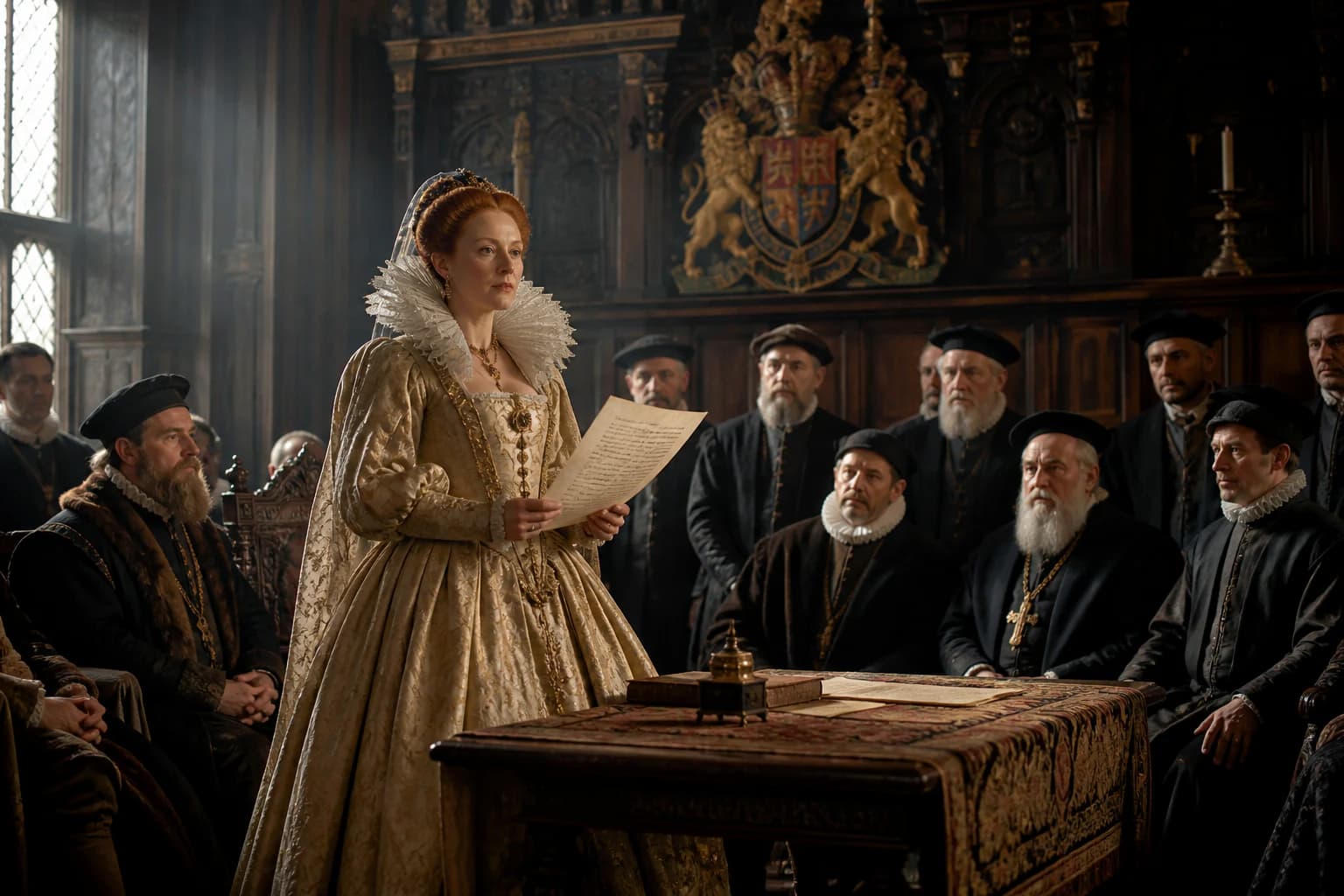
Elizabeth I presiding over Parliament as the Acts of Supremacy and Uniformity are debated.
1559 CE
Step 2 of 101559 CEAccessible mode

The Religious Settlement

In 1559, Elizabeth tried to solve England's religious crisis by creating a church that most people could accept.

England had swung between Protestantism and Catholicism in just a few years. The country was exhausted by religious conflict. Elizabeth needed to find a middle ground.

Parliament passed two acts. The Act of Supremacy made Elizabeth the Supreme Governor of the Church of England. The Act of Uniformity set out a single form of worship for everyone.

She did not want a fight over religion. She wanted England to function.

The settlement was deliberately vague. It was Protestant enough to satisfy most reformers but kept enough traditional elements to ease the transition for others.

Not everyone was satisfied. Committed Catholics rejected it. Strict Protestants thought it did not go far enough. But it held — and England did not descend into the religious civil wars that tore France apart.

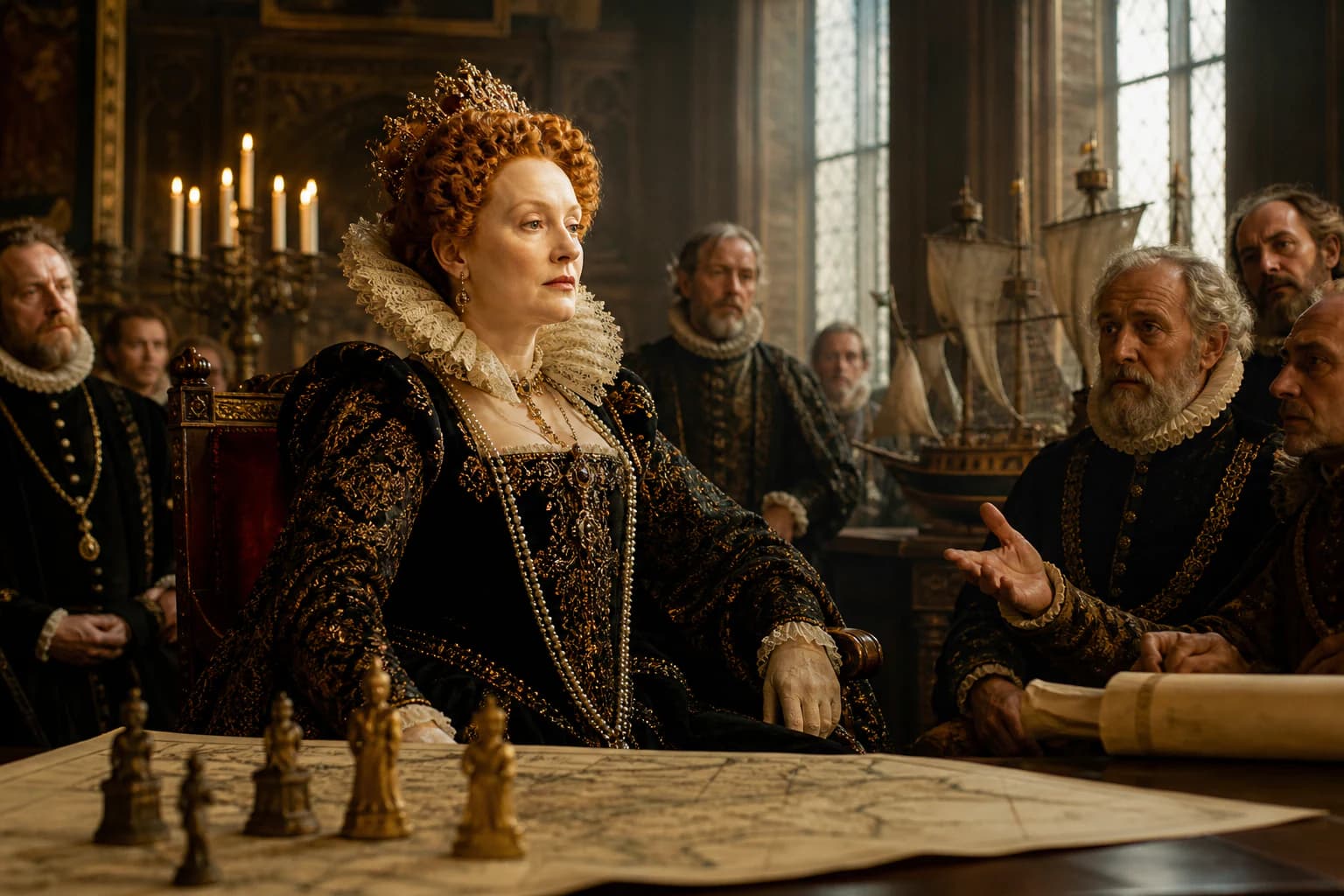
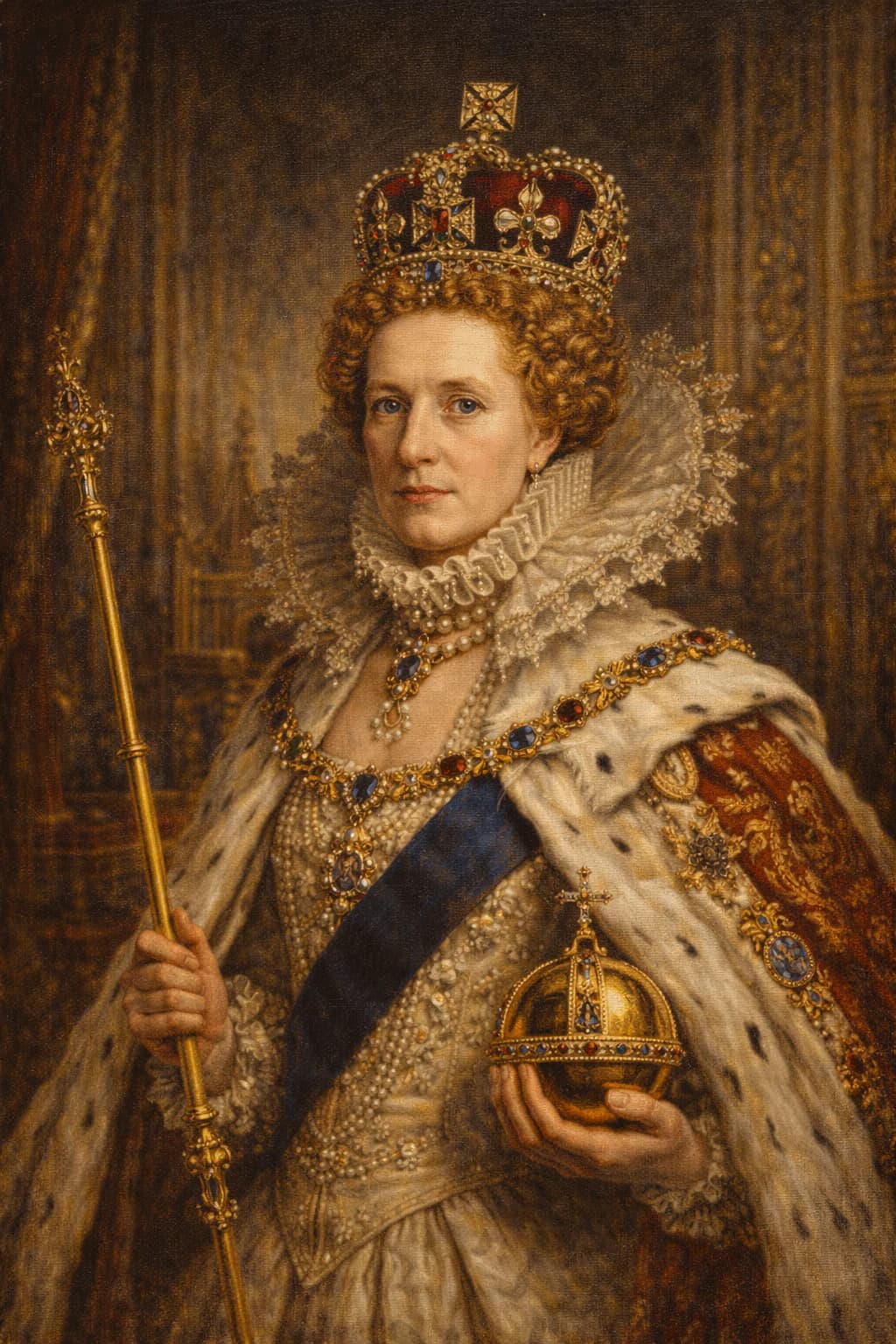
Elizabeth I surrounded by foreign suitors and court advisers, holding an orb of sovereignty.
1566 CE
Step 3 of 101566 CEAccessible mode

Survival Without Marriage

Every queen was expected to marry and produce an heir. Elizabeth refused to commit, and turned that refusal into a political strategy.

Parliament repeatedly asked Elizabeth to name a husband or at least an heir. They were terrified that if she died without a successor, England could fall back into civil war.

Elizabeth kept everyone guessing. She conducted lengthy negotiations with foreign princes — Philip of Spain, Archduke Charles of Austria — without ever agreeing to marry any of them.

By not choosing, she kept her options — and her power.

Her unmarried status made her useful in diplomacy. The promise of her hand was a valuable bargaining tool she was reluctant to spend.

But the risk was real. Without an heir, her death could mean chaos. As the years passed and no marriage came, the succession question became one of the most dangerous unresolved problems of the reign.

Premium

You've reached the turning point

The opening chapters show Elizabeth trying to steady a divided kingdom. Premium follows the pressure as it sharpens: rebellion, excommunication, Mary Queen of Scots, the Spanish Armada and the question of whether England could survive as a Protestant power.

Continue into the reversals, crises and human stakes that make the story matter.

Unlock full story

What Premium unlocks next

  1. 4The Northern Rebellion
  2. 5The Excommunication Crisis
  3. 6England Looks Overseas
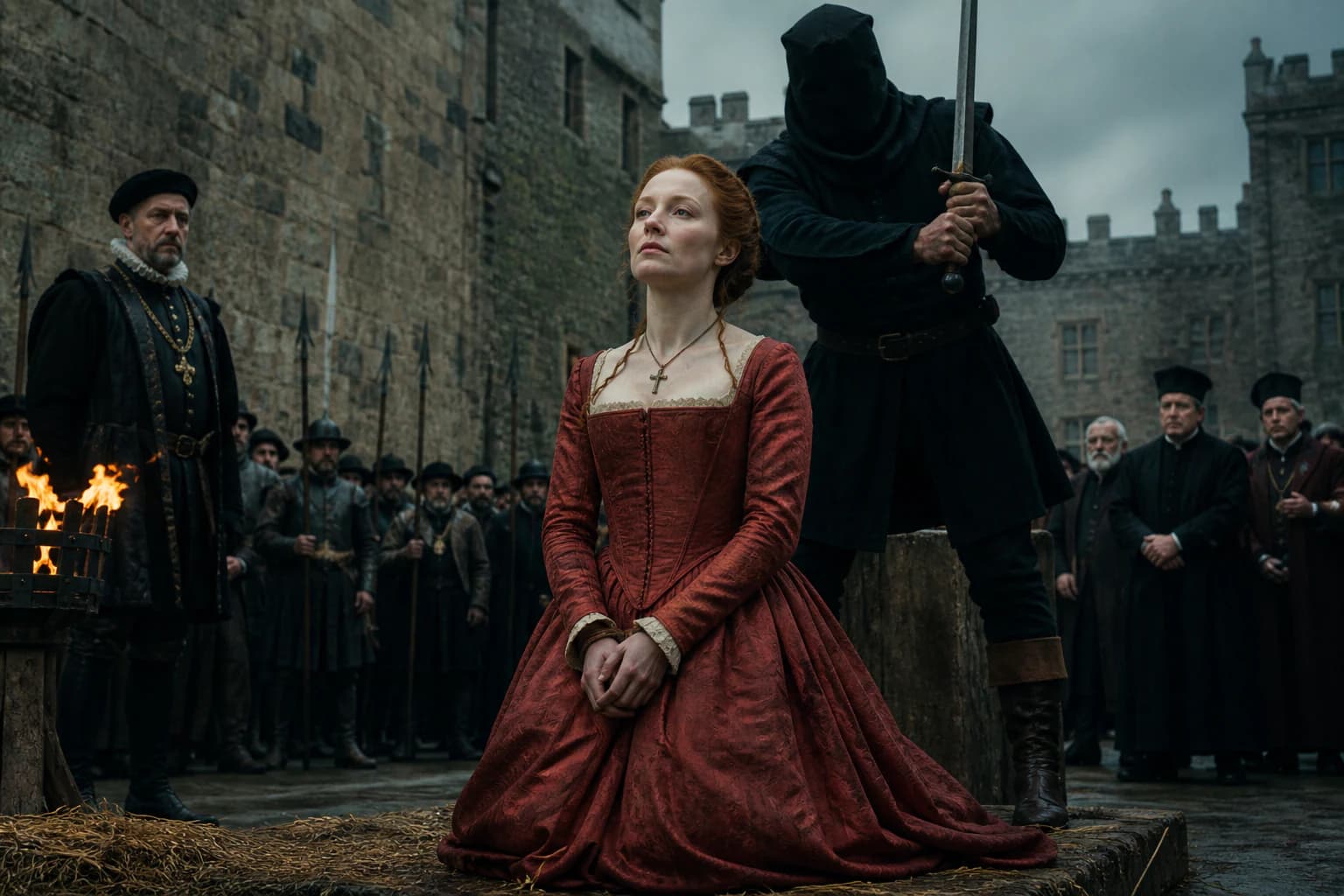
  4. 7Mary Queen of Scots Executed
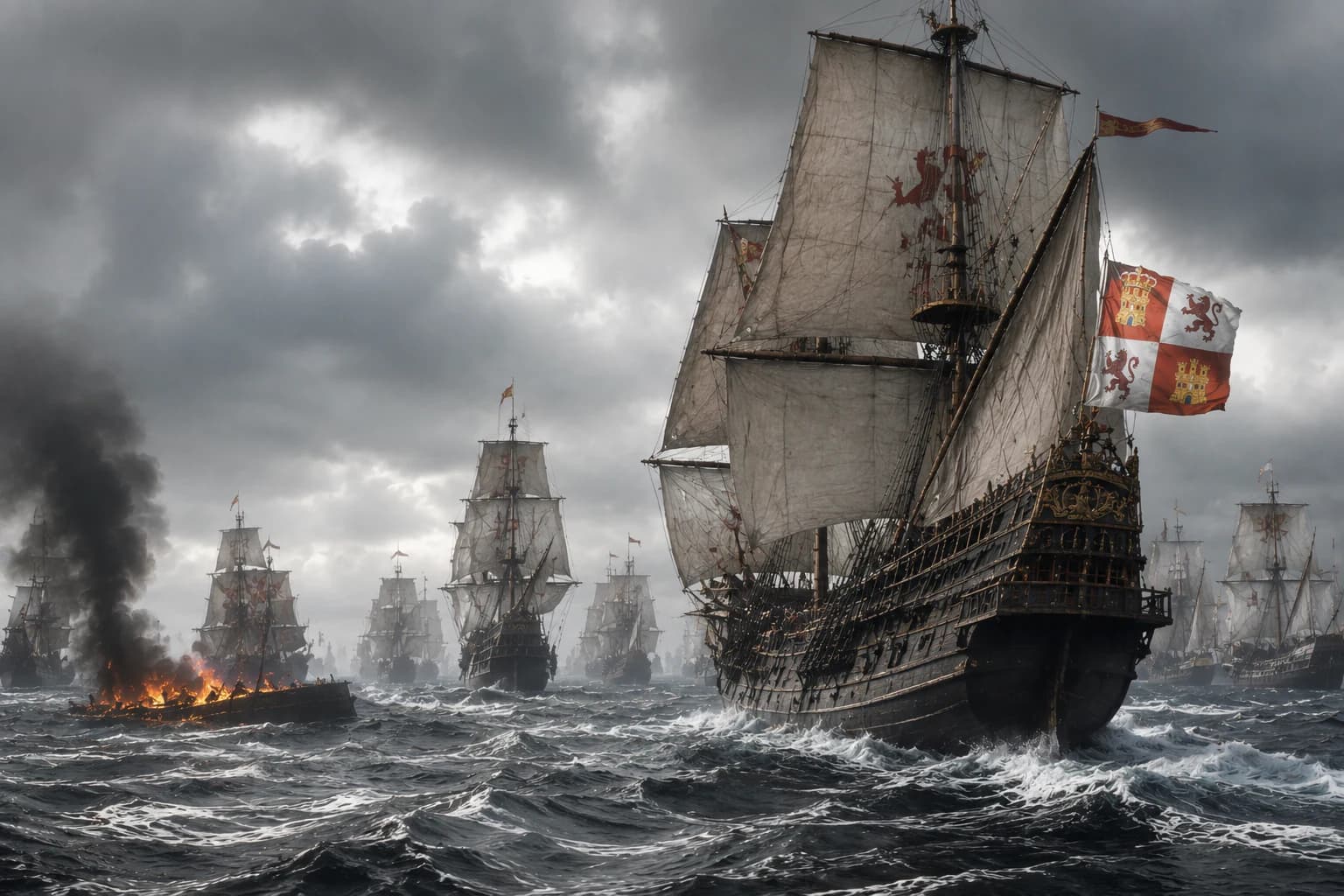
  5. 8The Spanish Armada
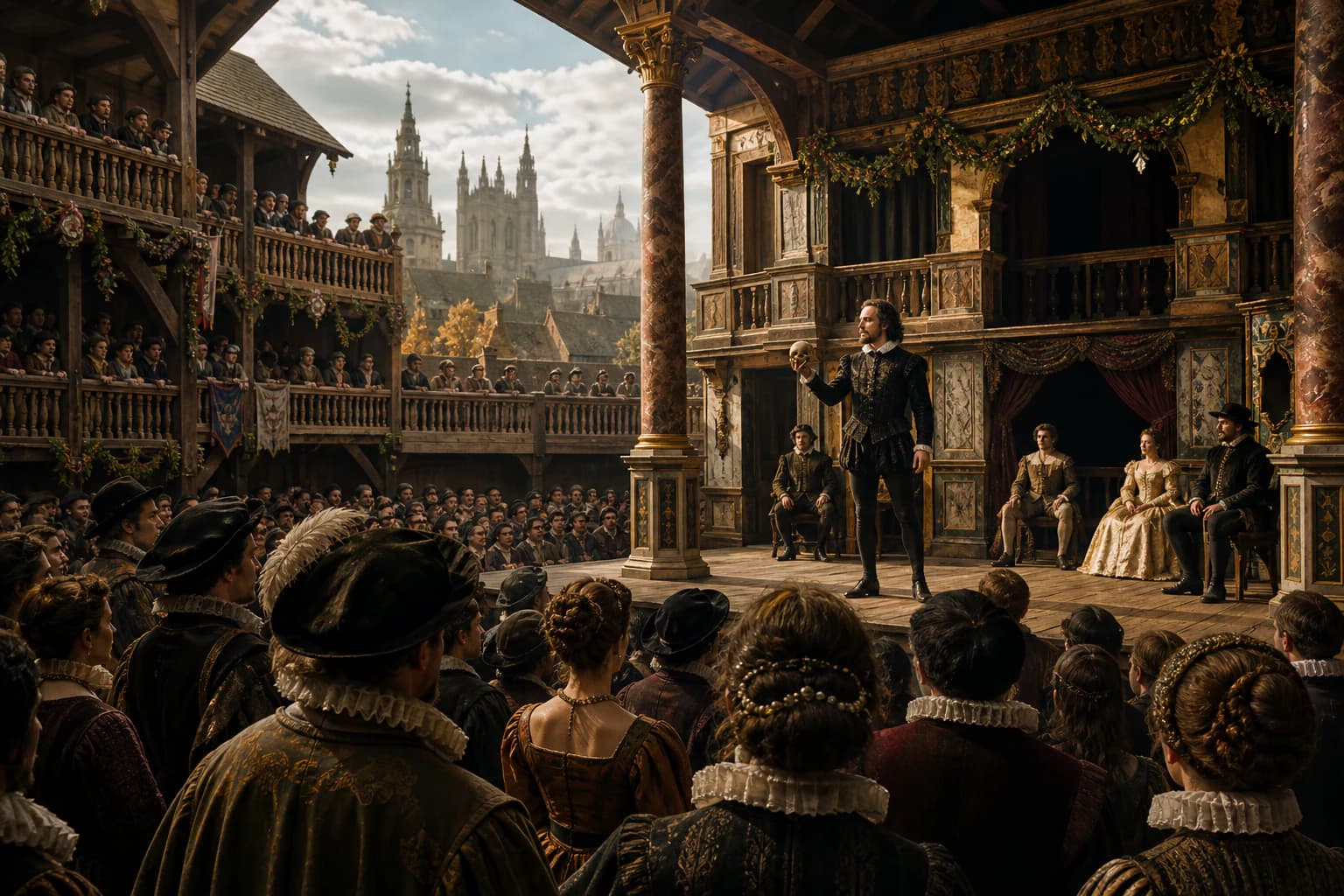
  6. 9The Flowering of English Culture
  7. 10The End of the Elizabethan World

Browse stories

Browse stories for free

Explore the people connected to this turning point or enjoy one of our free stories.

Unlock full storyBrowse stories

References

Sources & Further Reading

Reliable sources, primary-source collections and reading paths connected to this page.

Sources used

  1. The British Library, Elizabeth I,” Open source
  2. Royal Museums Greenwich, Elizabeth I and Tudor exploration,” Open source

Further reading

  1. Susan Doran, Elizabeth I and Her Circle, Oxford University Press.

Primary sources

  1. British History Online, Primary sources for early modern Britain,” Open source

Image references

  1. National Portrait Gallery, Search: Elizabeth I,” Open source

A weekly route through history

Find out first about the latest published stories, feature notes and occasional Premium offers in one weekly email.