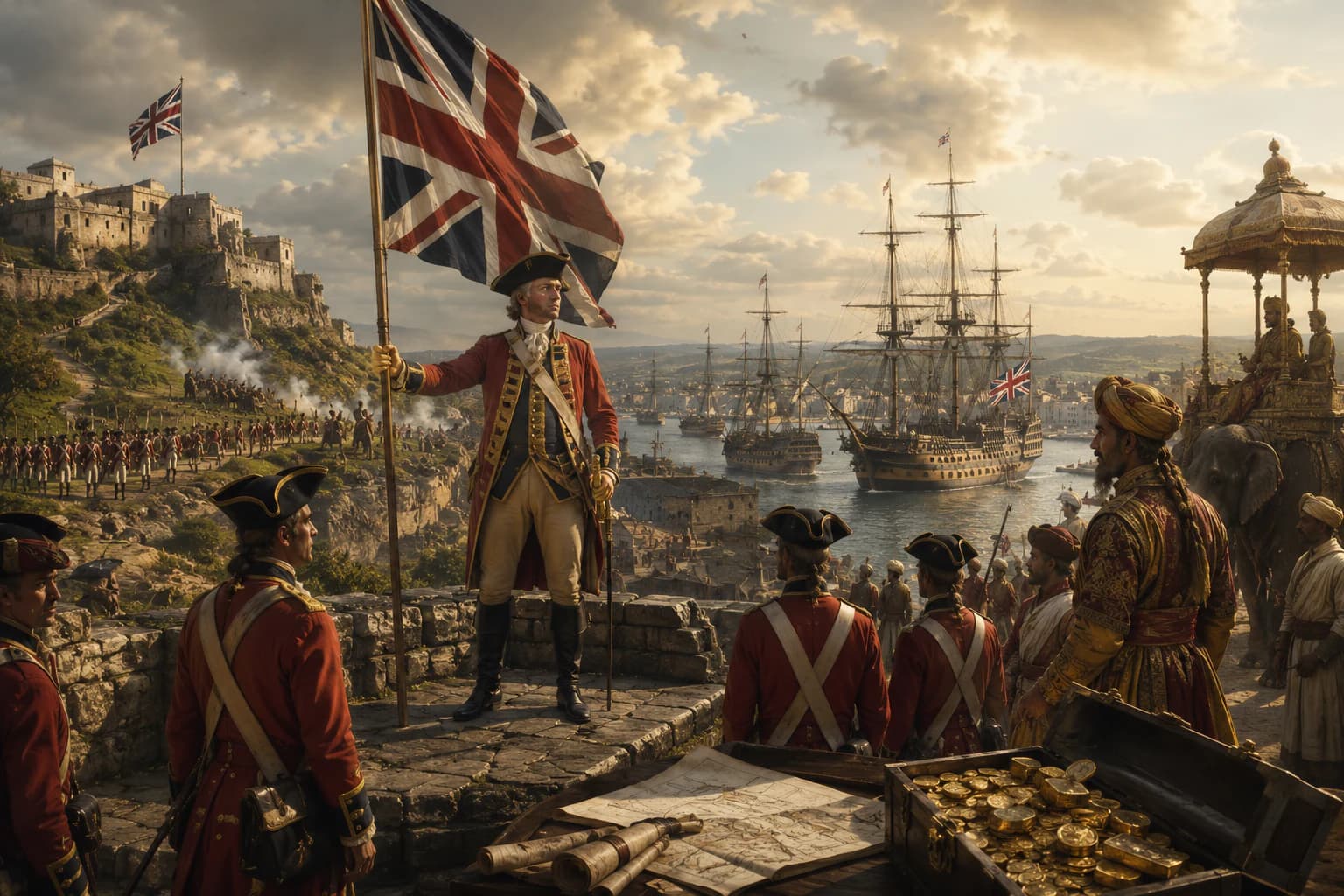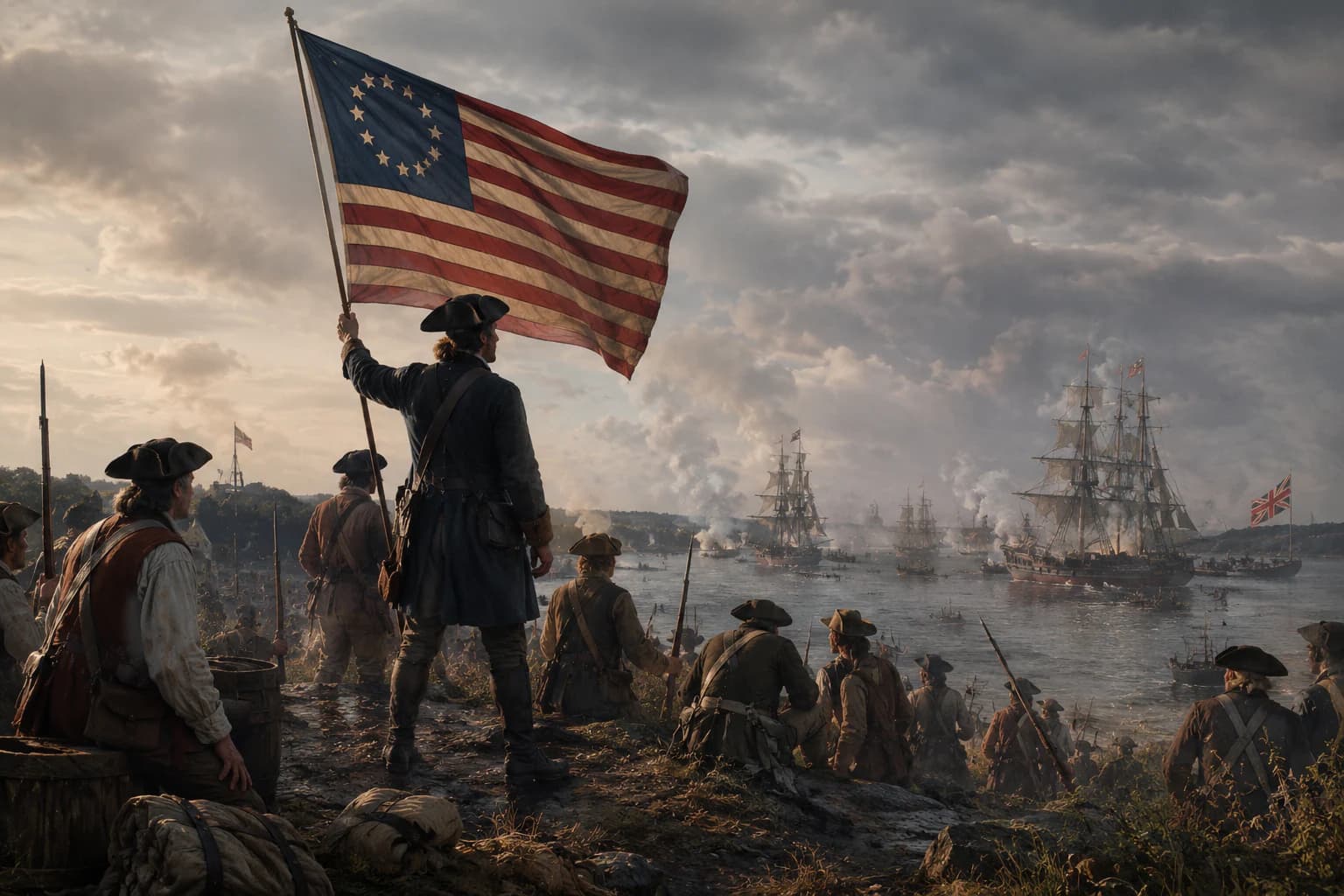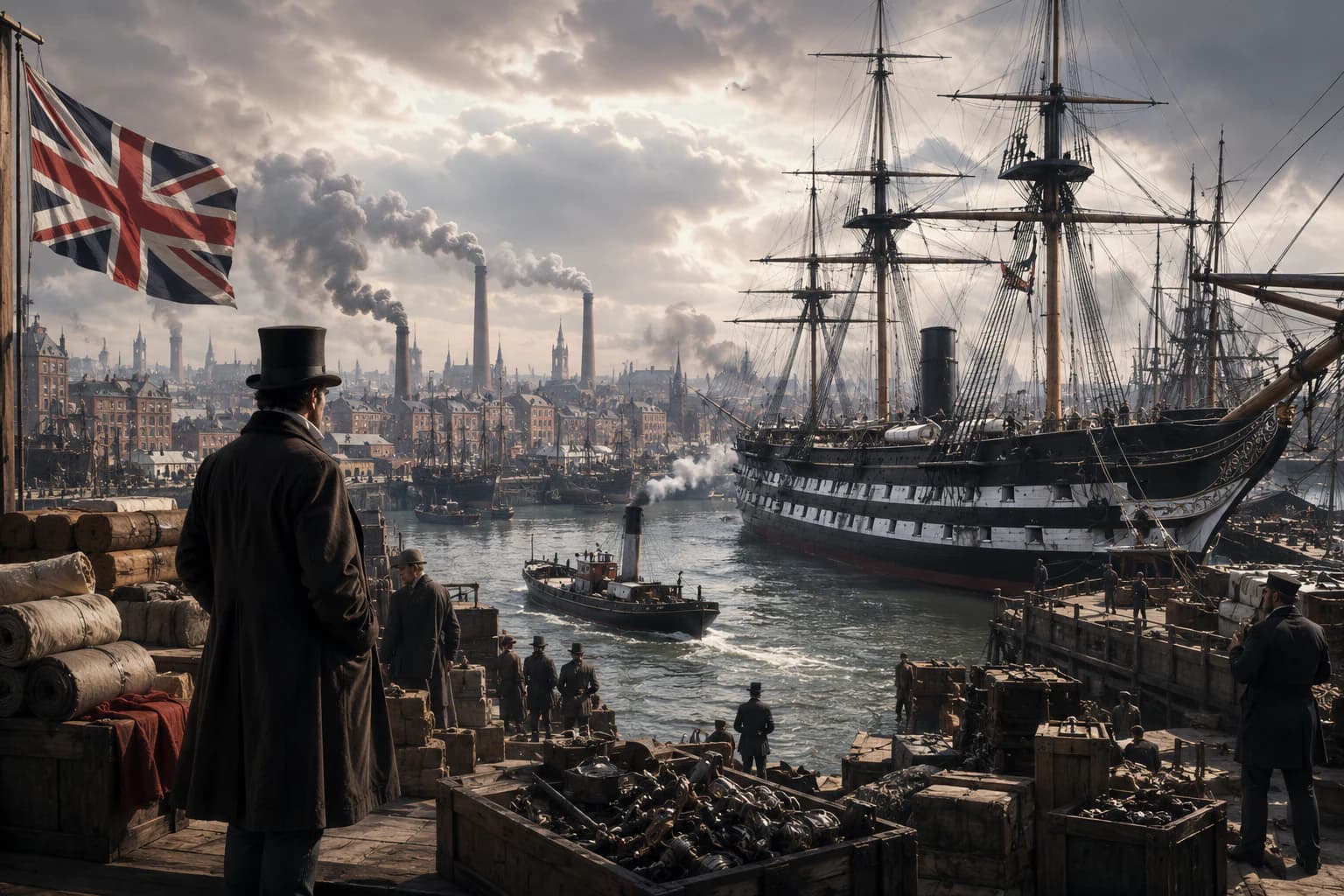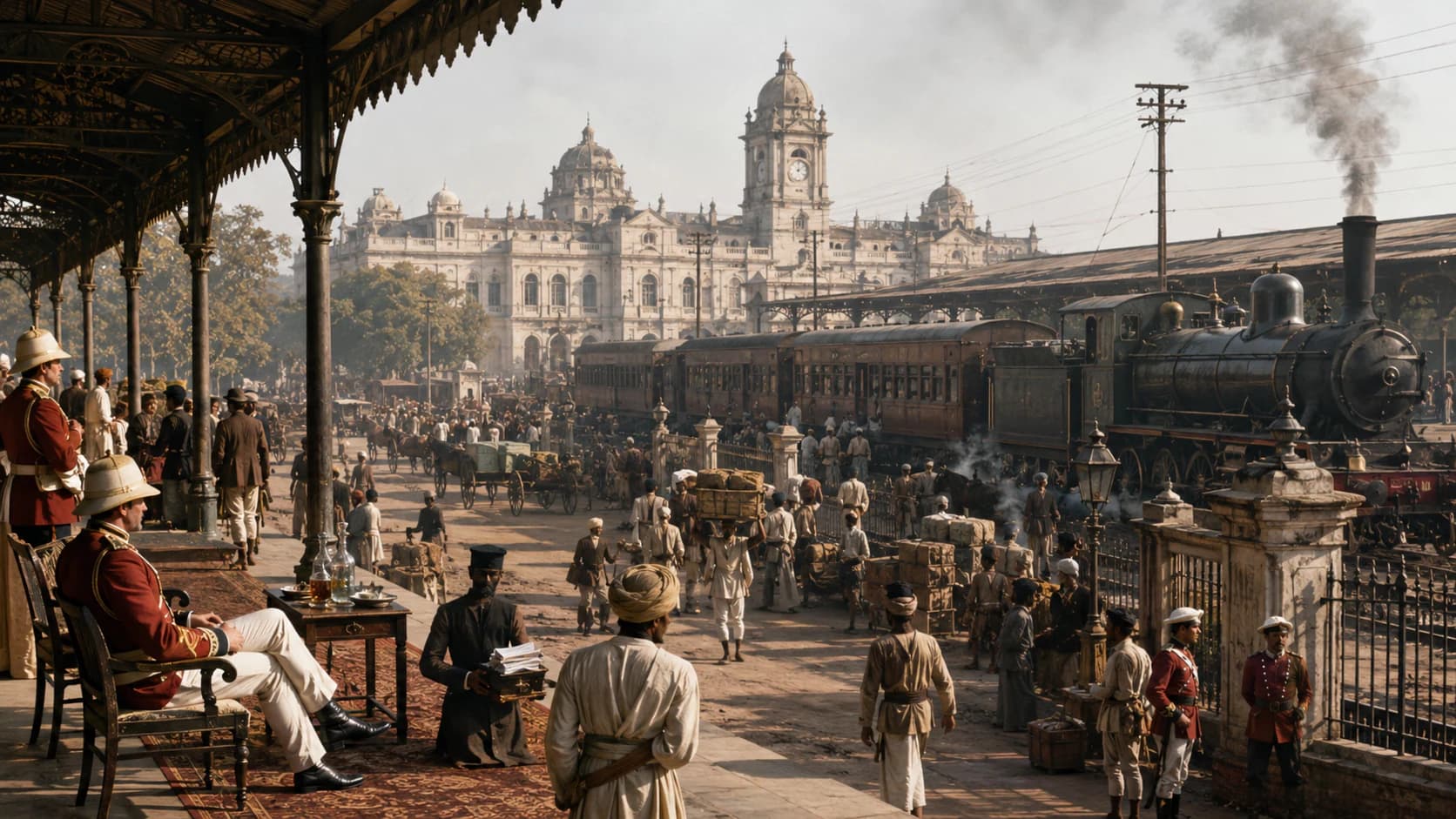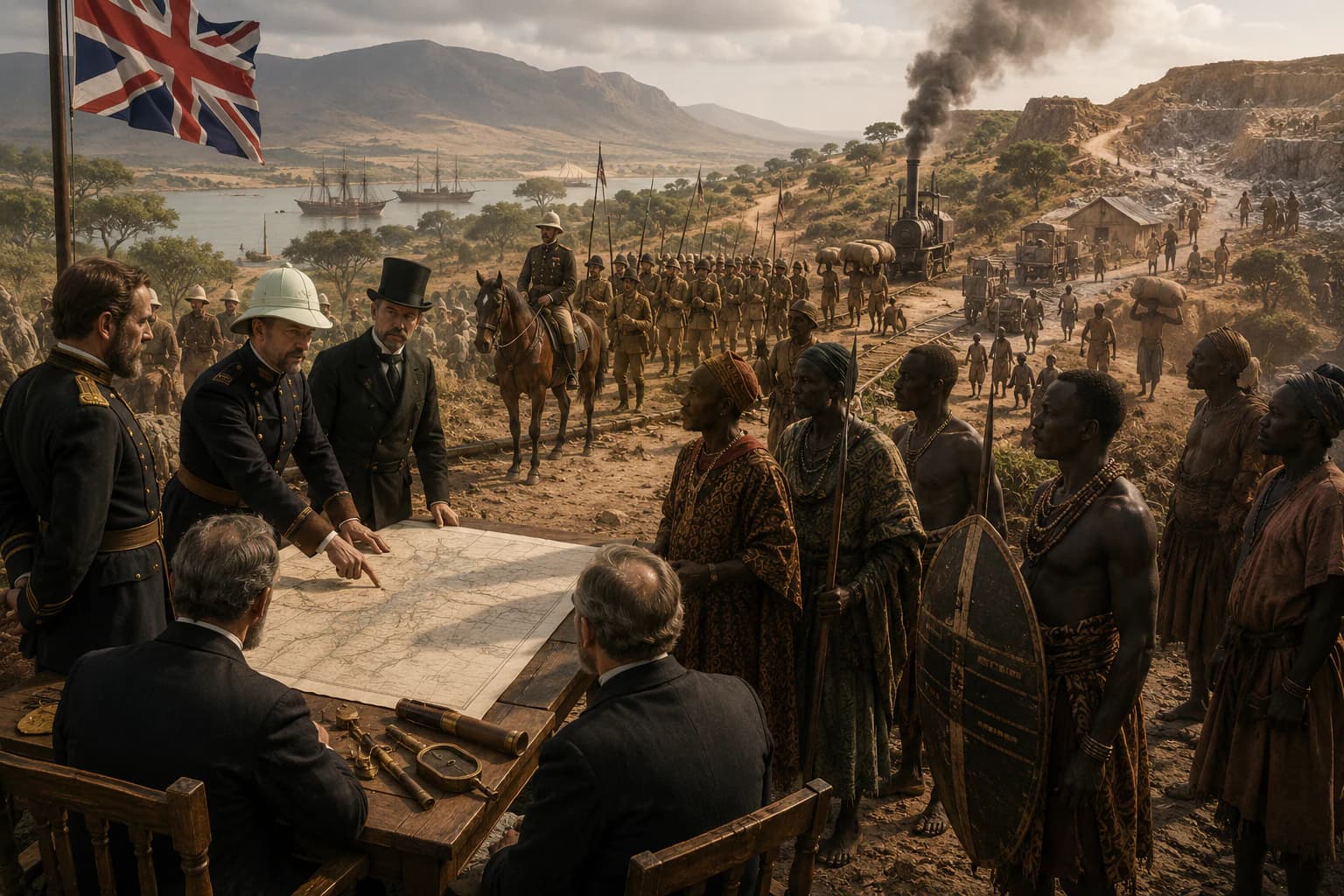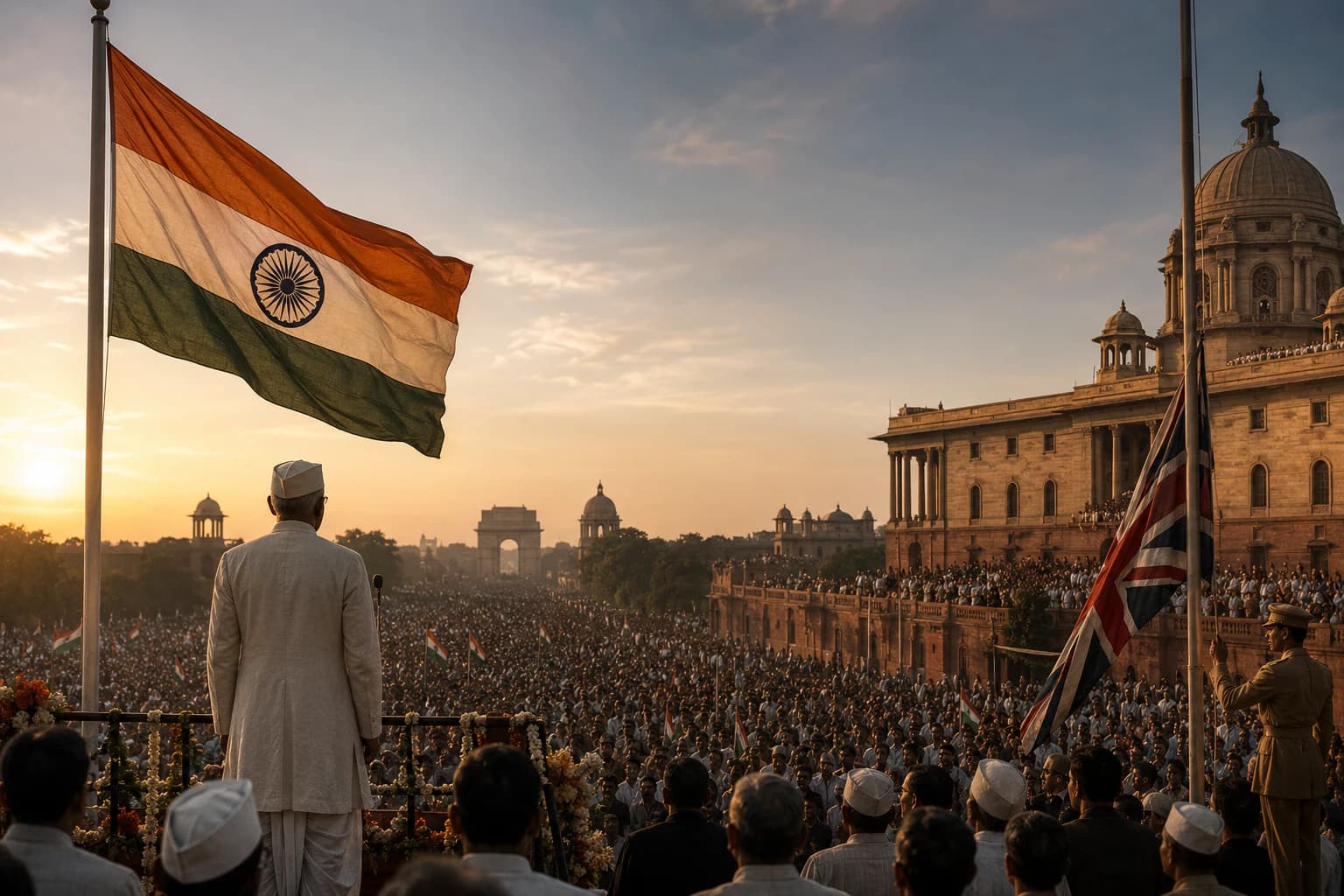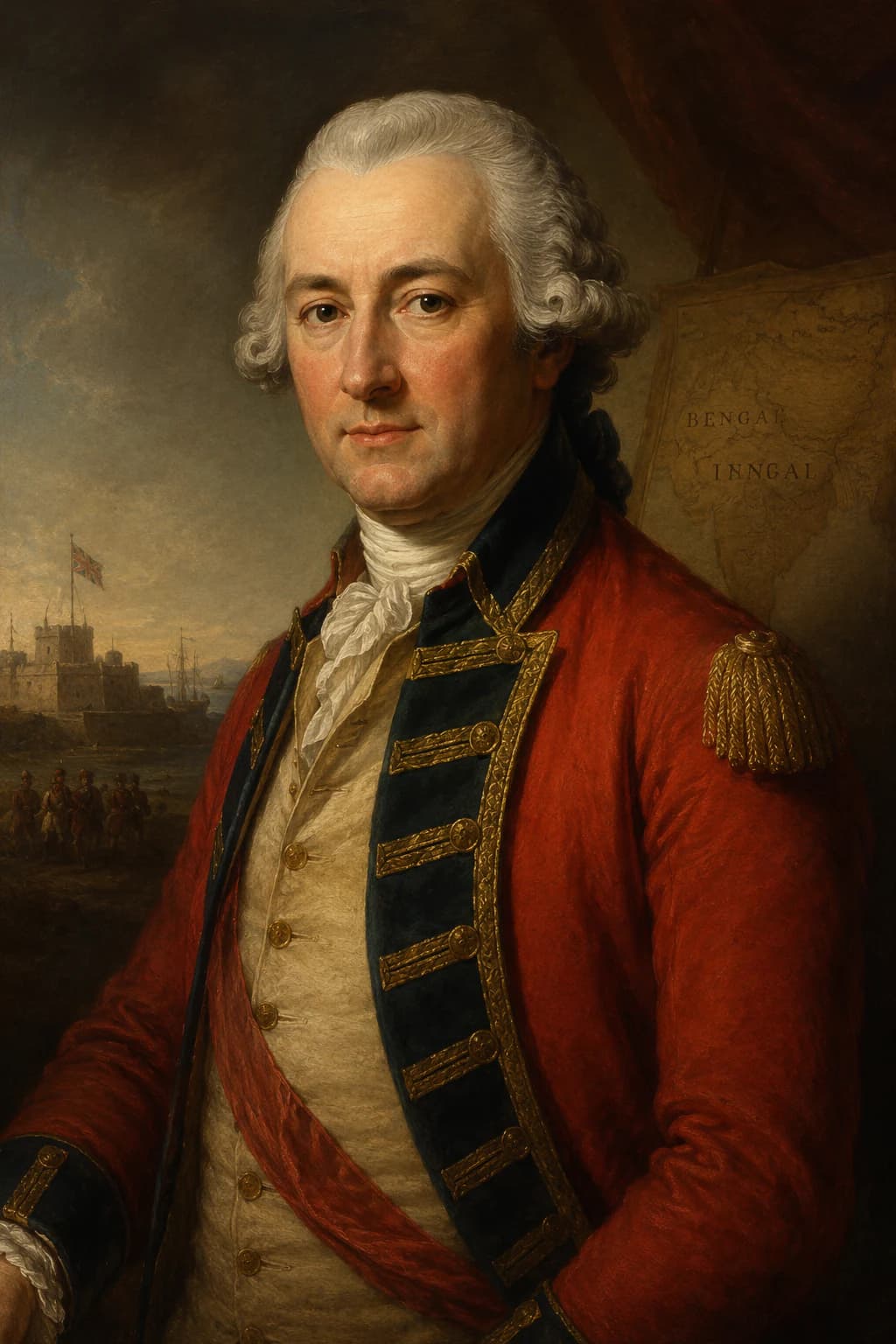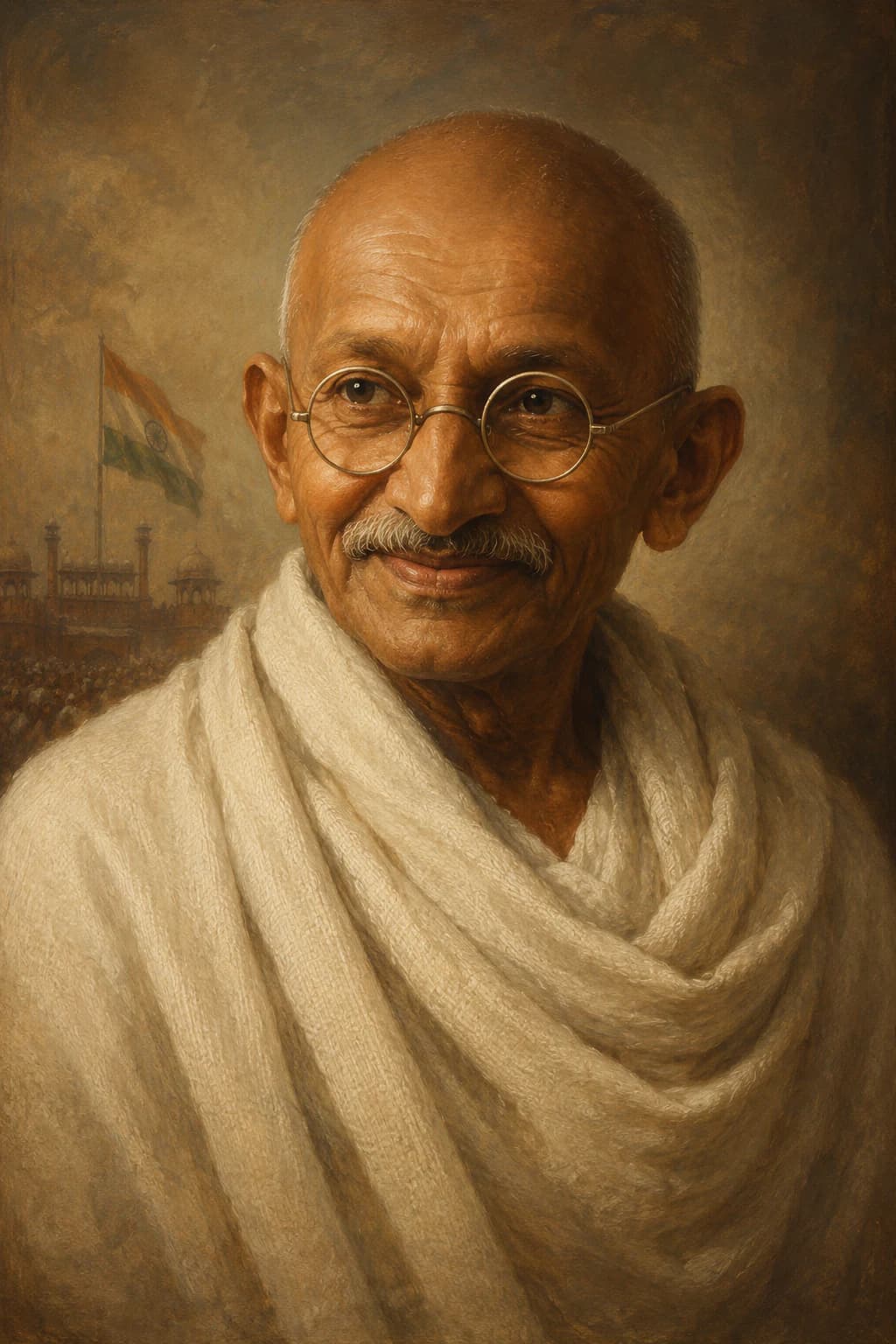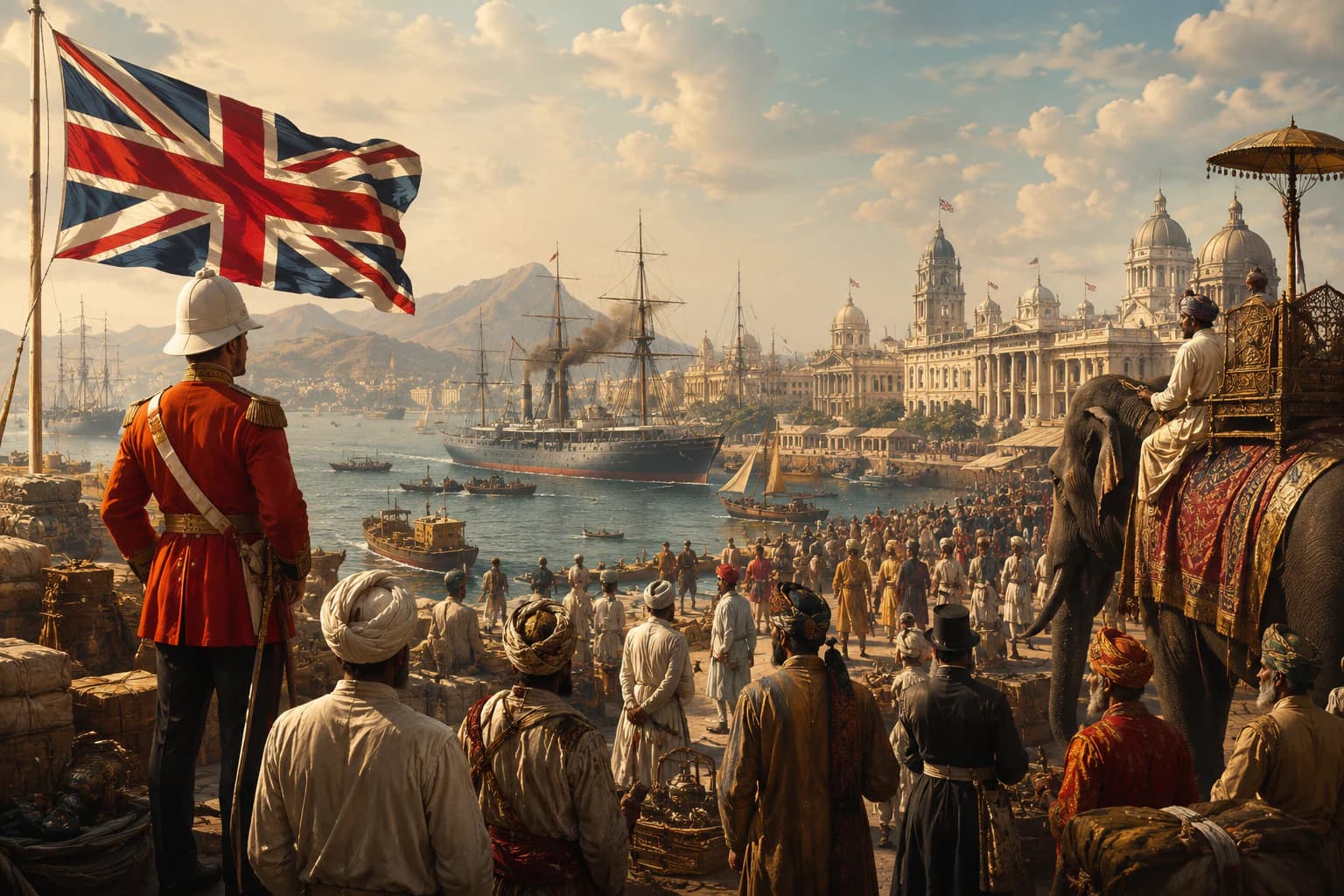
A sweeping view of ships, ports, colonies, and anti-colonial protests across centuries of British imperial history.
Premium Story

The British Empire

Trace how Britain built, ruled, profited from, and lost the largest empire in history.

11 chapters

Next

Content note

This story discusses slavery, exploitation, racial persecution, and violence in an educational historical context.

Context

Introduction

Overview

The British Empire was the largest empire in recorded history, built through sea power, trade, colonisation, slavery, settlement, finance, and military force. At its height, Britain ruled or influenced territories across every inhabited continent. The empire generated wealth and global connections, but also dispossession, exploitation, racial hierarchy, famine, and resistance, leaving legacies that still shape politics, borders, culture, and inequality.

What you'll learn: You will track how Britain built and defended a global empire, how colonised peoples challenged it, and why its legacies still shape modern politics, economics, and identity.

Key forces

The Elizabethan Sea Challenge
1588 CE
Step 1 of 101588 CEAccessible mode

The Elizabethan Sea Challenge

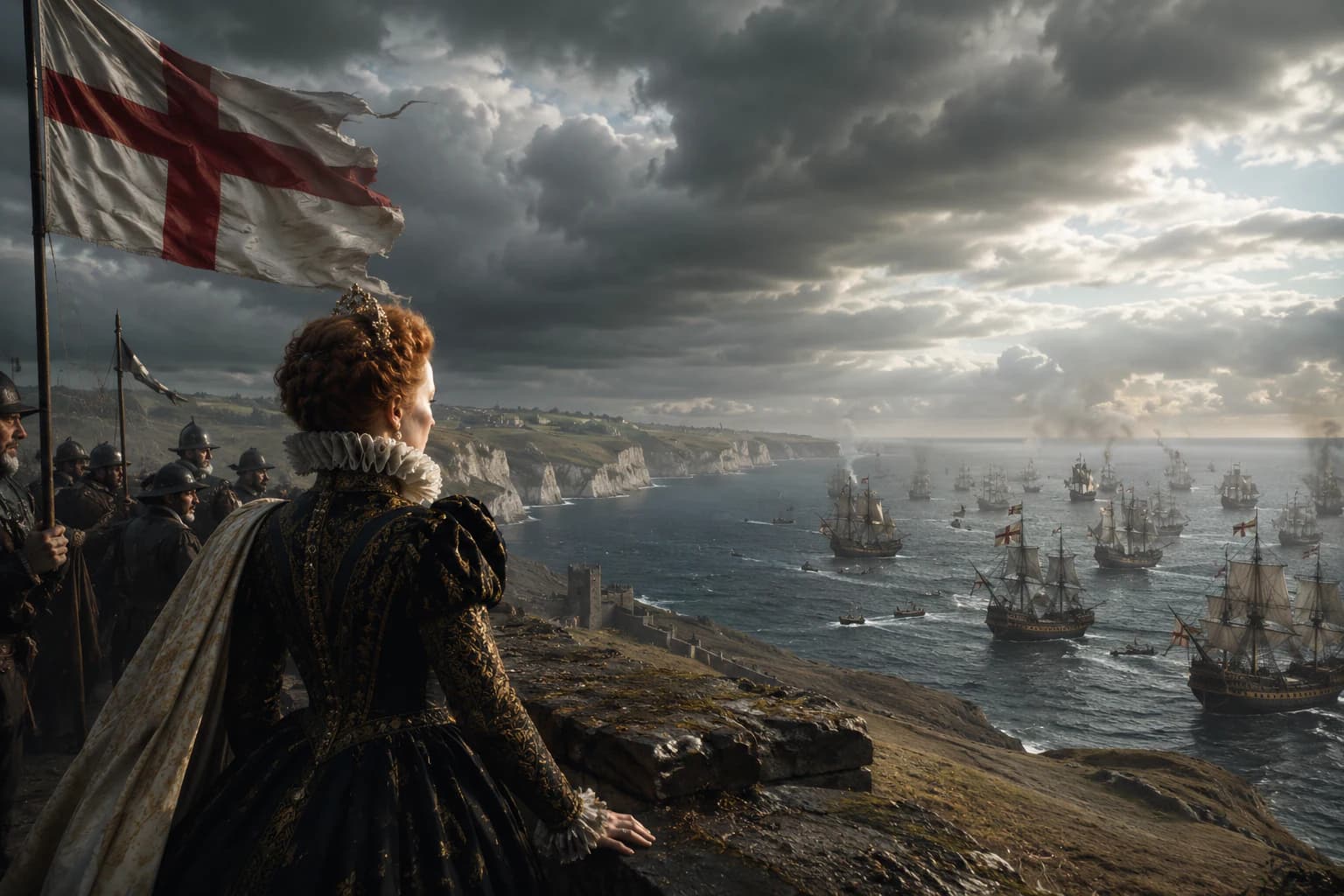
In 1588, England's defeat of the Spanish Armada changed how the English state saw the sea and its future.

England had been weaker than Spain for years. Spain ruled huge American territories and controlled rich silver fleets. England could not match that empire on land.

Instead, English leaders backed privateering. Captains like Francis Drake attacked Spanish shipping with royal approval. These raids mixed religion, war, and profit.

The Armada campaign showed that manoeuvrable ships, naval gunnery, and weather knowledge could block invasion. England survived and gained confidence at sea.

After 1588, overseas action looked less like reckless piracy and more like national strategy. Merchants and courtiers began imagining protected trade routes and distant bases.

The battle did not create an empire overnight, but it opened a mental and political path. Naval power became tied to wealth, security, and expansion.

The East India Company
1600 CE
Step 2 of 101600 CEAccessible mode

The East India Company

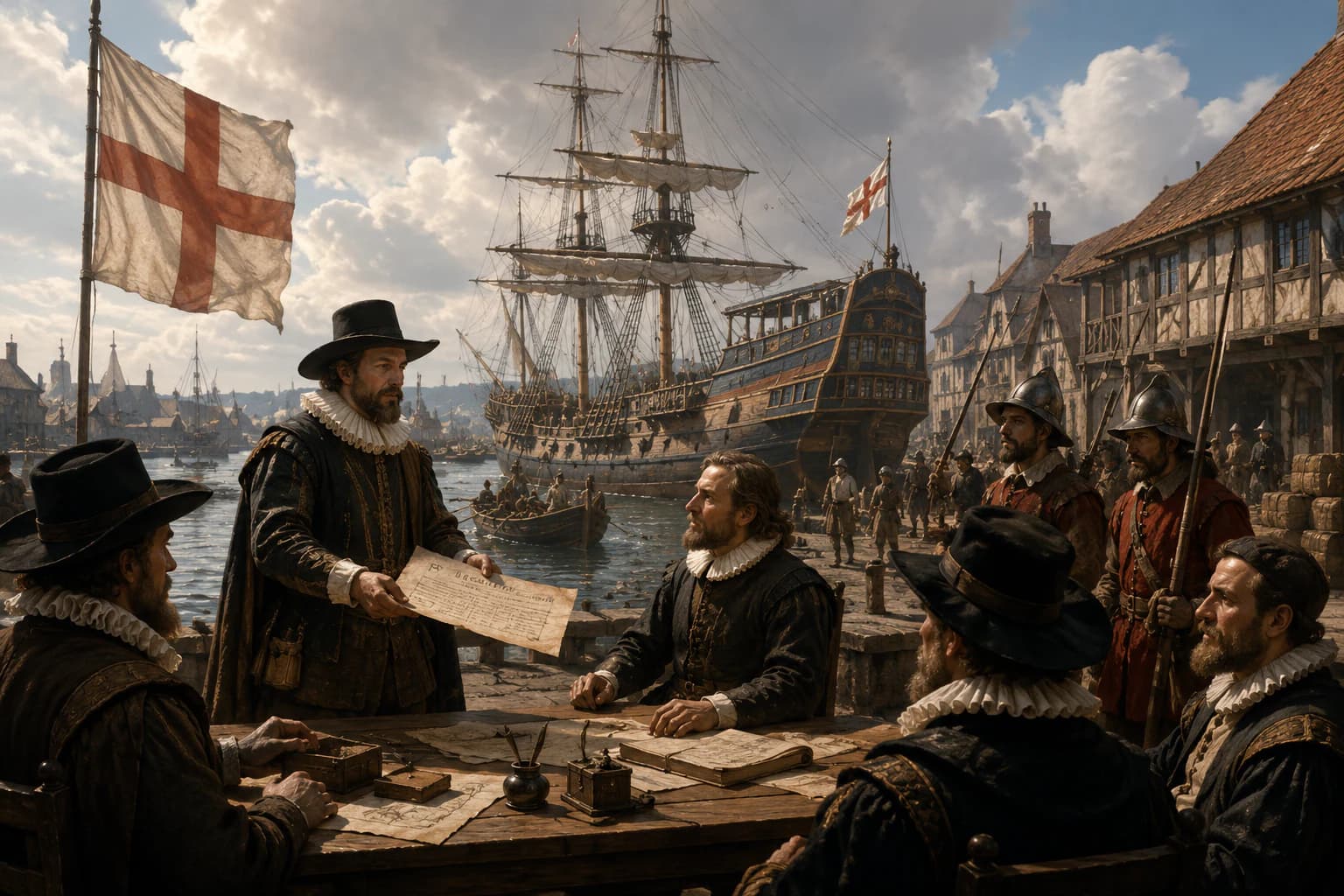
In 1600, the English crown gave the East India Company a monopoly over trade east of the .

This charter let one company act with state support. It could raise money, send fleets, negotiate treaties, and defend its interests with force.

At first, the goal was profit from spices, textiles, and Asian trade routes. Company agents set up coastal bases by bargaining with local rulers.

But trade and power quickly mixed. To protect markets, the Company built forts, armed ships, and private armies. Commerce moved with diplomacy and violence together.

For the English state, this was efficient. Risk stayed with investors, while strategic gains still served national rivalry with Dutch, Portuguese, and French competitors.

The Company became a model for empire-building by contract: private capital under royal protection, expanding influence long before direct Crown rule.

Colonies in the Atlantic
1607 CE
Step 3 of 101607 CEAccessible mode

Colonies in the Atlantic

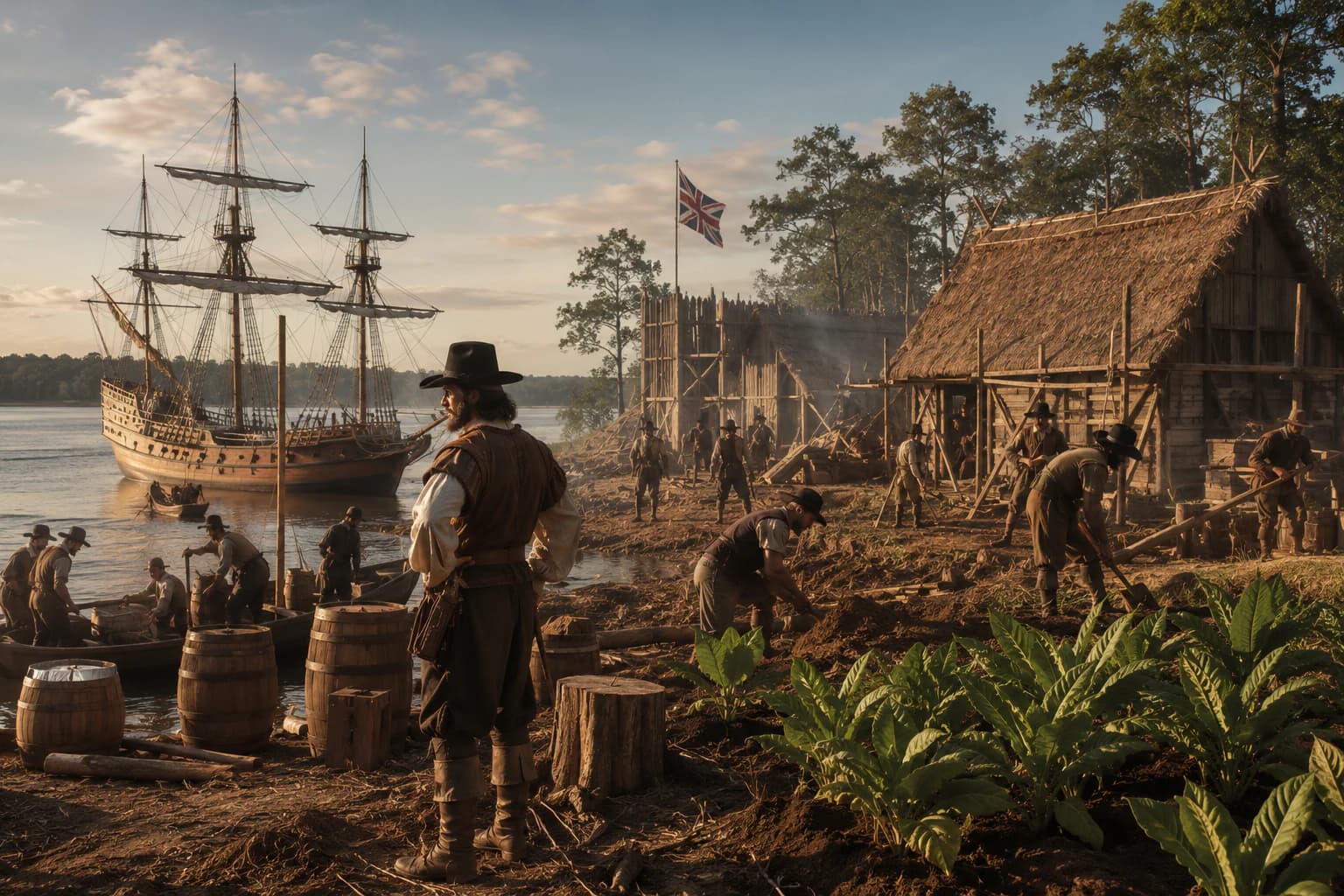
, founded in 1607, became England's first lasting colony in North America.

Early years were brutal. Disease, hunger, and conflict killed many settlers. The colony survived only through support from England and local exchanges with Indigenous peoples.

As tobacco farming expanded, colonists needed more land. They pushed outward, taking territory from Powhatan communities through treaties, force, and settlement pressure.

This was not just migration. It was settler colonisation: newcomers stayed permanently, claimed political control, and changed land use for export agriculture.

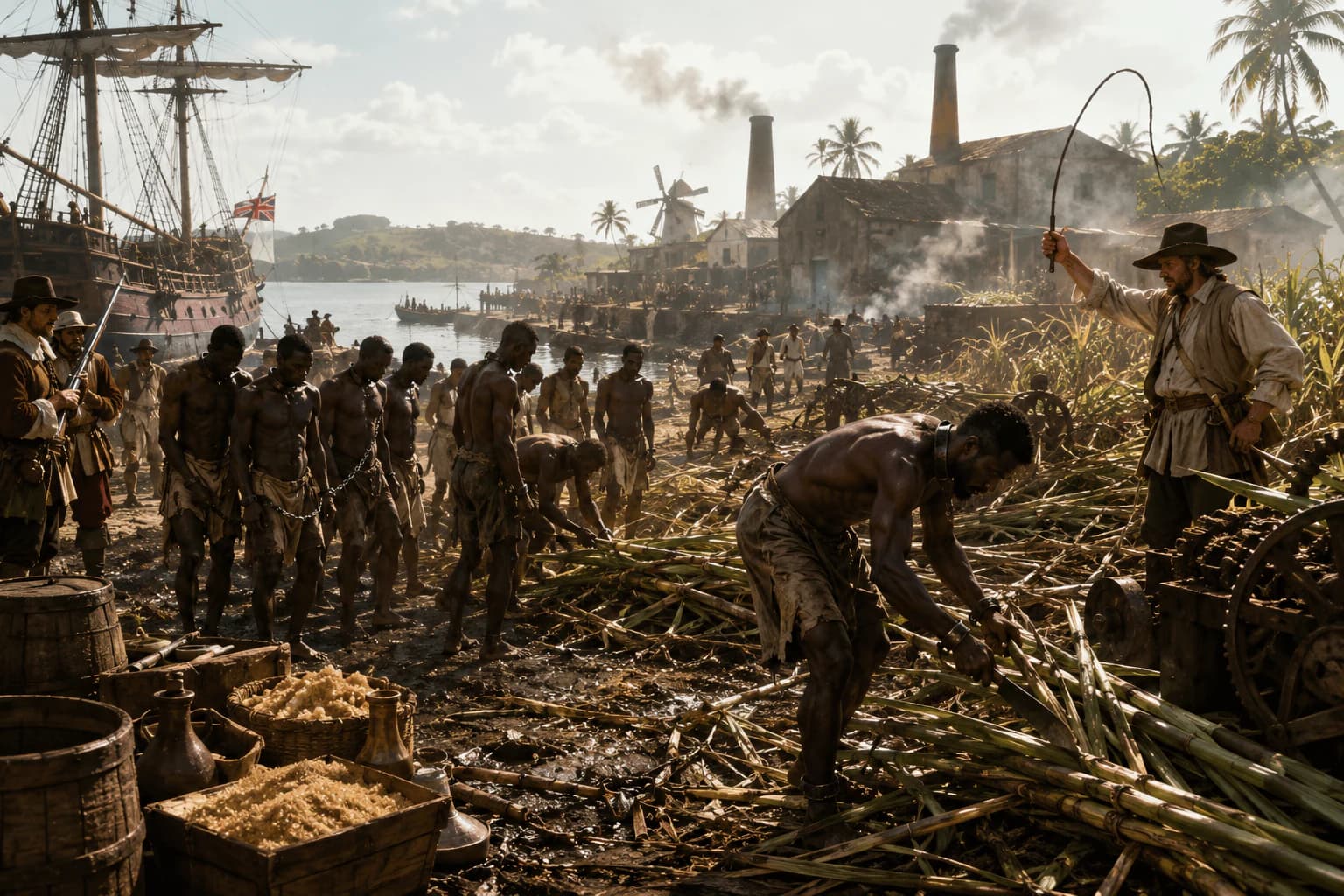
Labour systems hardened too. Indentured workers were joined, then increasingly replaced, by enslaved Africans in plantation regions across the Atlantic world.

showed how empire could grow through families, farms, and local assemblies, while still depending on metropolitan money, shipping, and military protection.

Premium

You've reached the turning point

The opening chapters show Britain turning sea power and trade into imperial reach. Premium follows the darker bargain underneath that power: slavery, conquest, industrial wealth and colonial rule create an empire whose consequences outlast its authority.

Continue into the reversals, crises and human stakes that make the story matter.

Unlock full story

What Premium unlocks next

  1. 4Slavery and Sugar Wealth
  2. 5Victory in the Seven Years War
  3. 6Revolution in America
  4. 7Industrial Empire
  5. 8The Raj After Rebellion
  6. 9The Scramble for Africa
  7. 10Decolonisation and Imperial Legacy

Browse stories

Browse stories for free

Explore the people connected to this turning point or enjoy one of our free stories.

Unlock full storyBrowse stories

References

Sources & Further Reading

Reliable sources, primary-source collections and reading paths connected to this page.

Sources used

  1. Encyclopaedia Britannica, British Empire,” Open source
  2. The British Library, Trading Places: The East India Company and Asia,” Open source

Further reading

  1. P. J. Marshall, The Cambridge Illustrated History of the British Empire, Cambridge University Press.

Primary sources

  1. British History Online, Primary sources for British history,” Open source

Image references

  1. The British Library, Maps,” Open source

A weekly route through history

Find out first about the latest published stories, feature notes and occasional Premium offers in one weekly email.