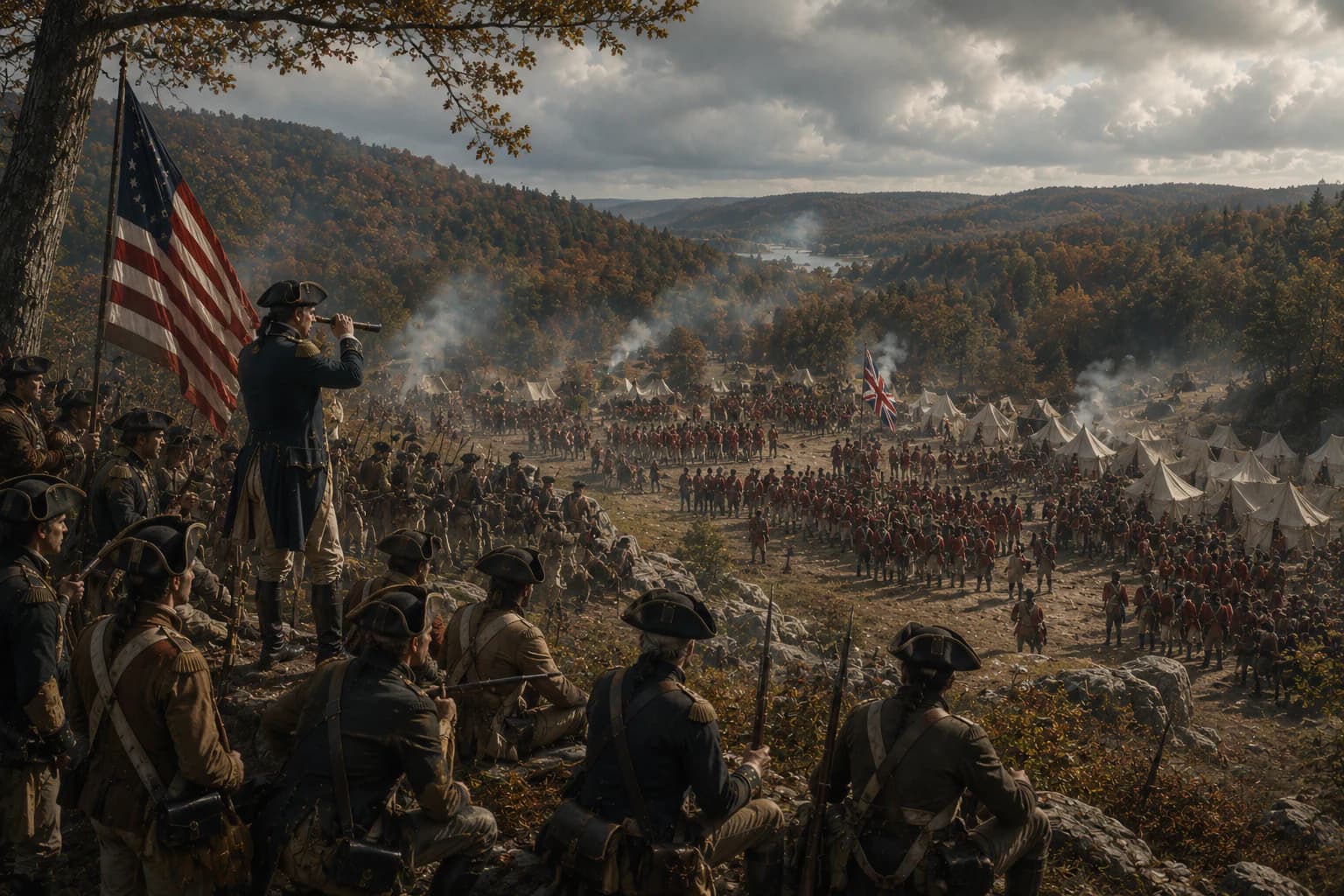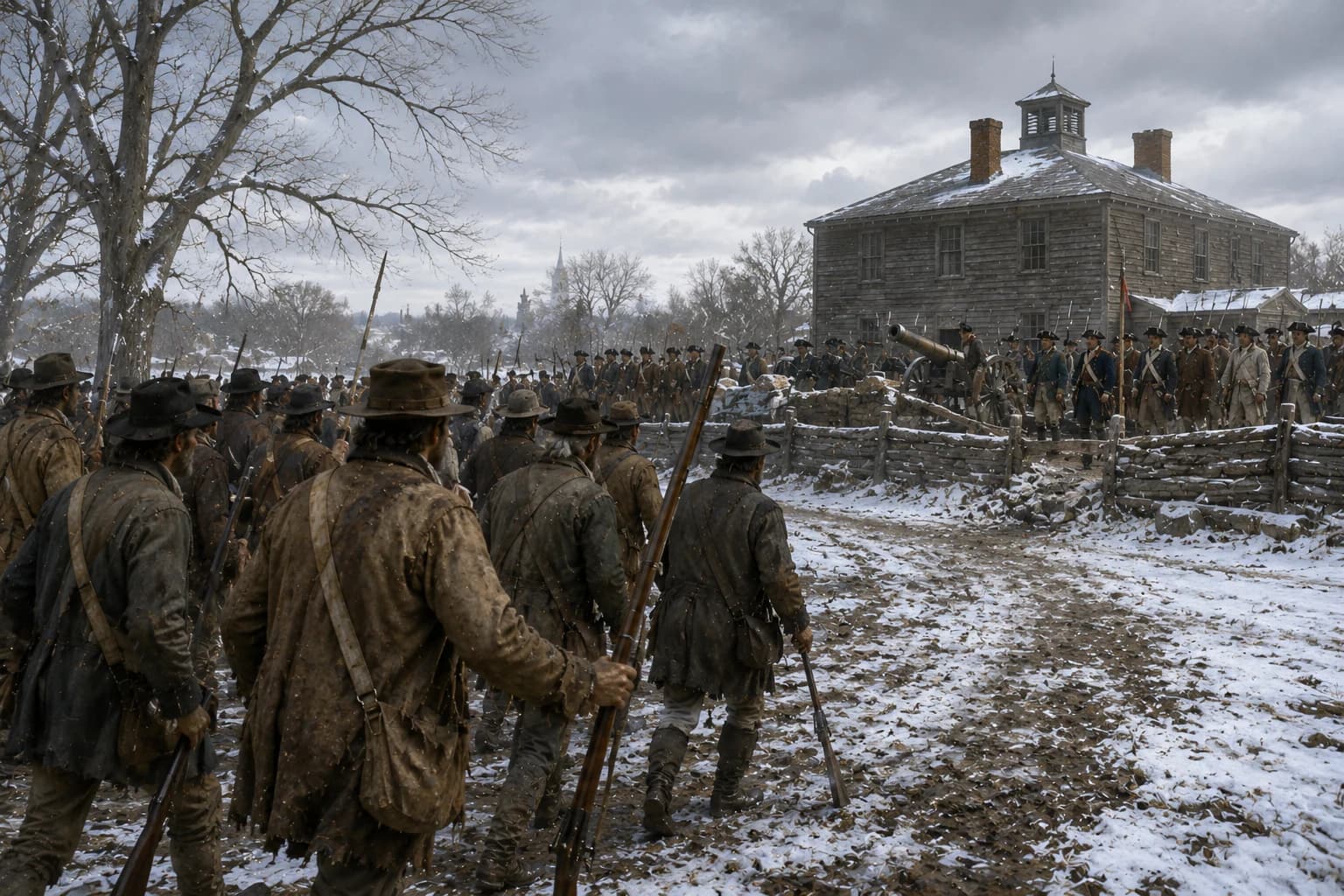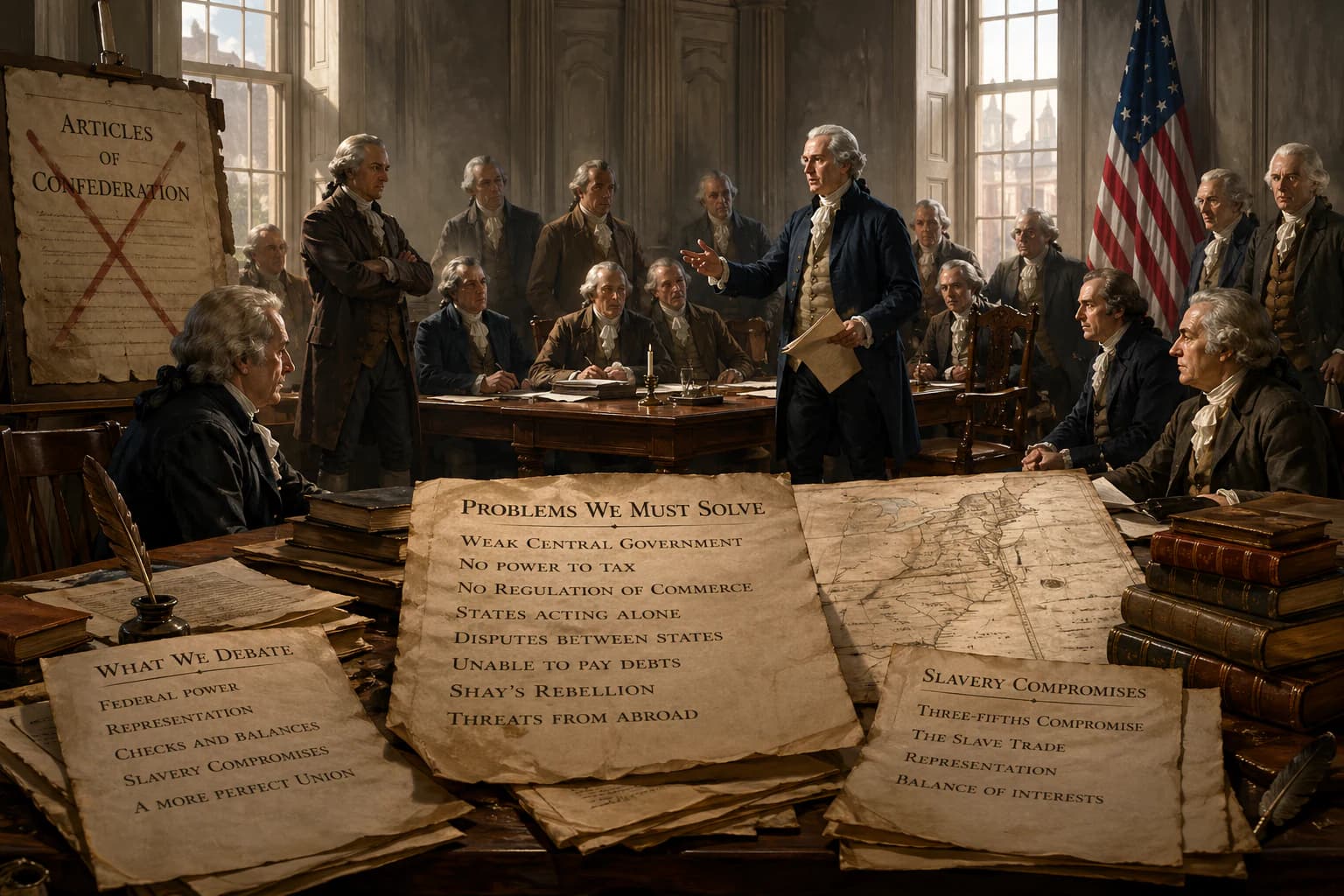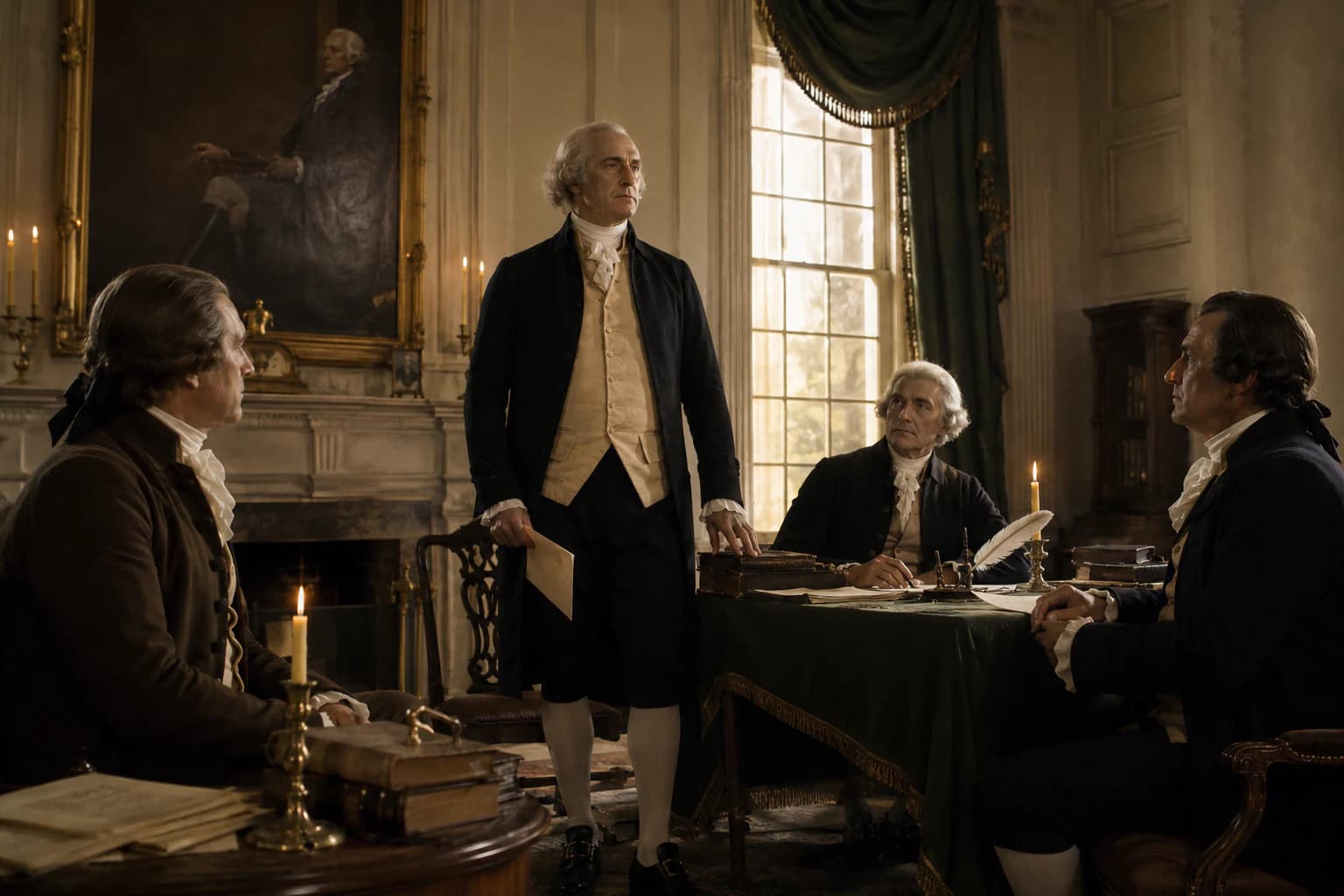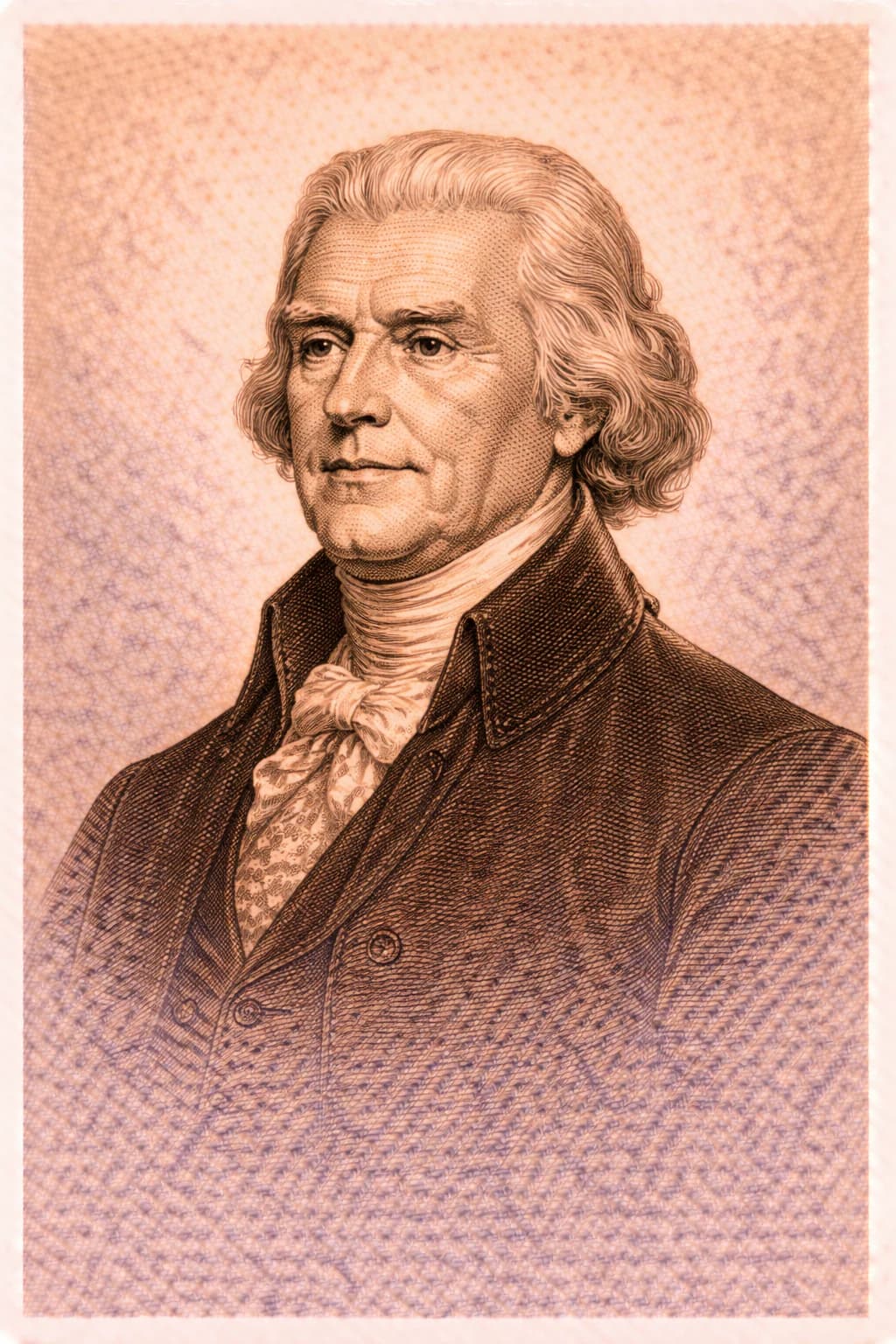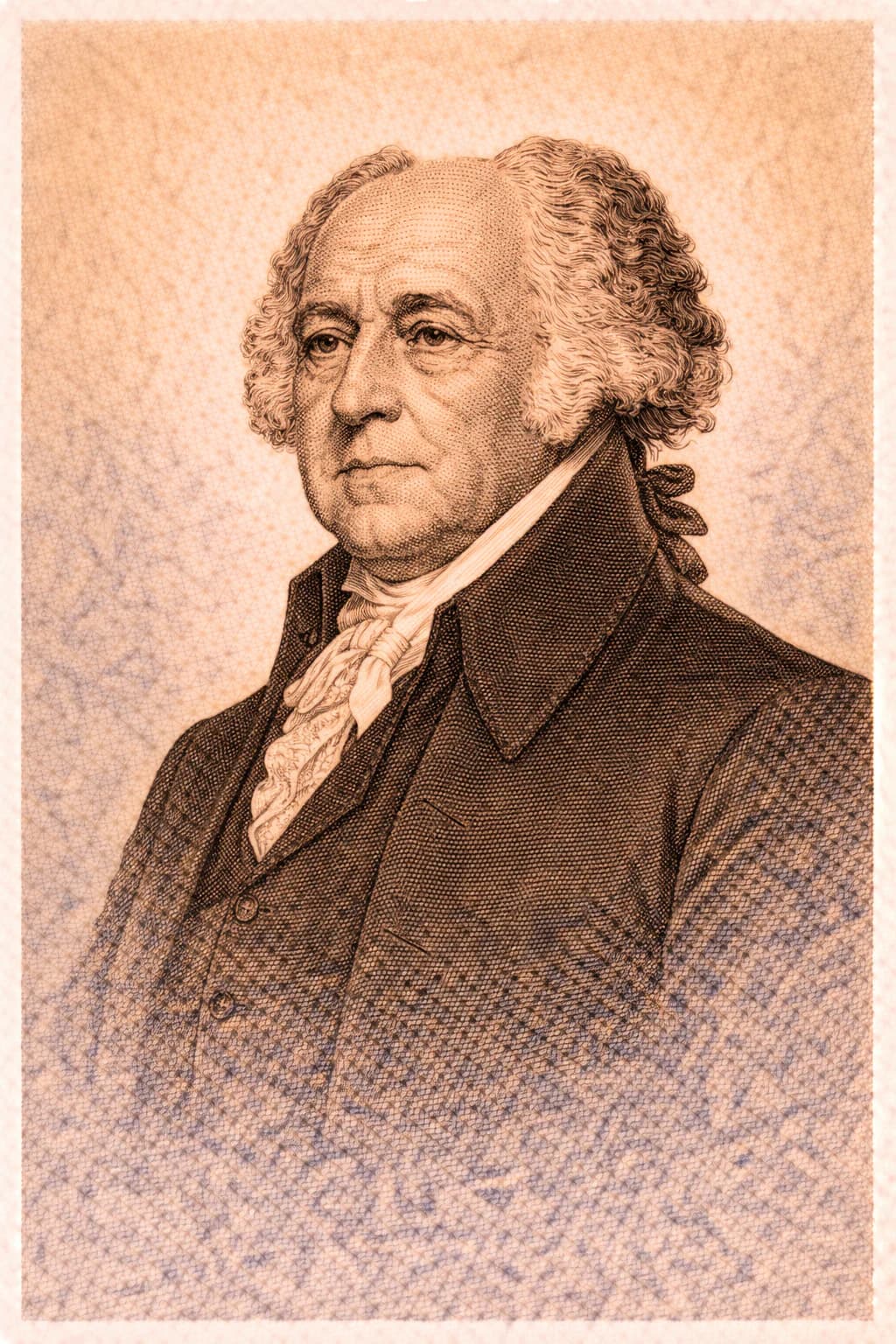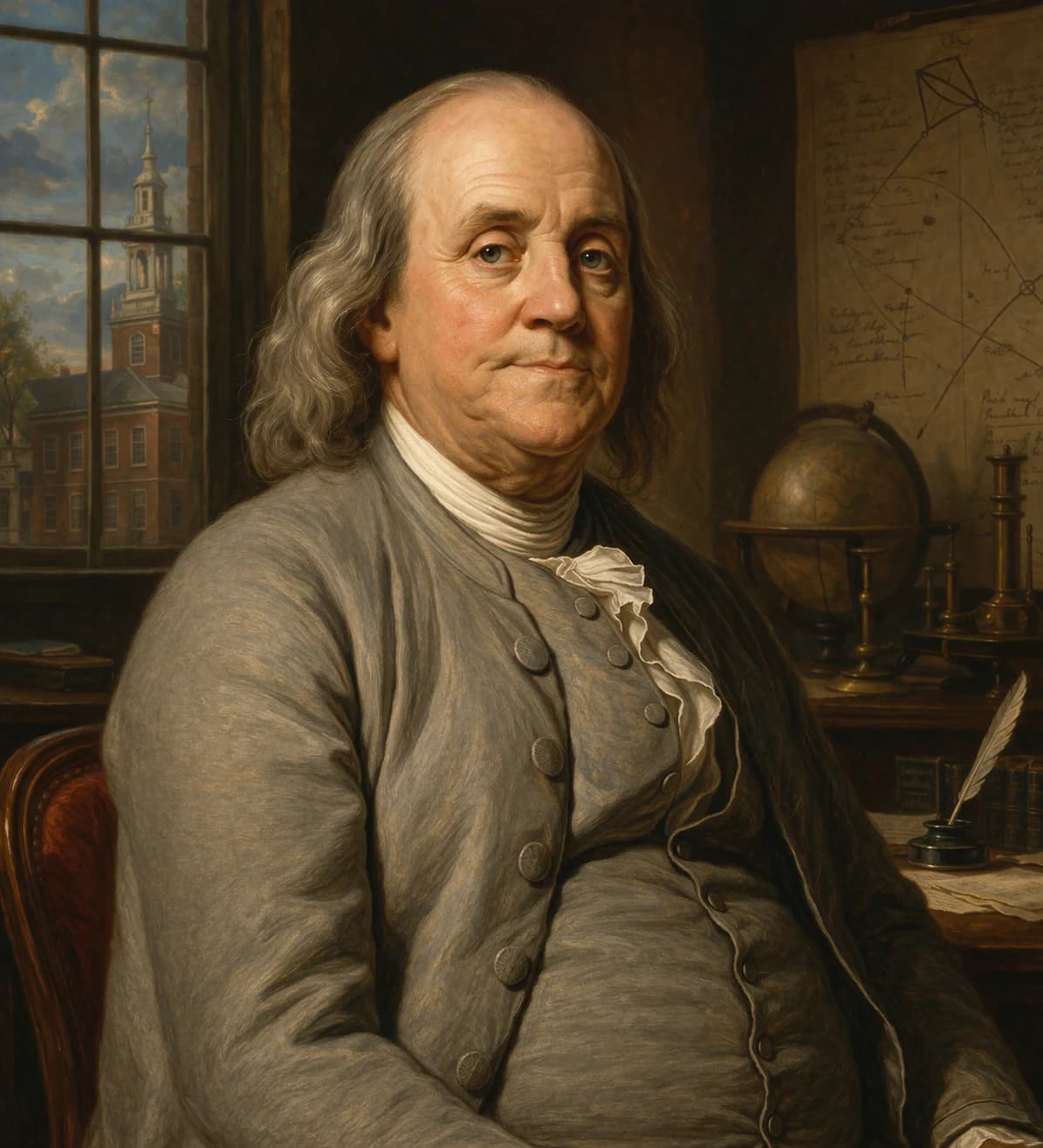
American revolutionaries and British troops facing each other during the struggle for independence.
Premium Story

The American Revolution and Early Republic

Enter the American Revolution, from colonial revolt to independence, constitution, and the republic’s first trials.

11 chapters

Next
Context

Introduction

Overview

The American Revolution was the struggle by thirteen British colonies in North America to win independence and create a new republic. Between protest, war, diplomacy, constitution-making, and political conflict, Americans challenged imperial rule while debating liberty, representation, slavery, and citizenship. The early republic that followed tested whether revolutionary ideals could survive the pressures of government, expansion, faction, and power.

What you'll learn: You will follow how imperial protest became revolution, how independence was won, and how the new republic tried to turn political ideals into working institutions.

Key forces

The Imperial Crisis Begins
1763 CE
Step 1 of 101763 CEAccessible mode

The Imperial Crisis Begins

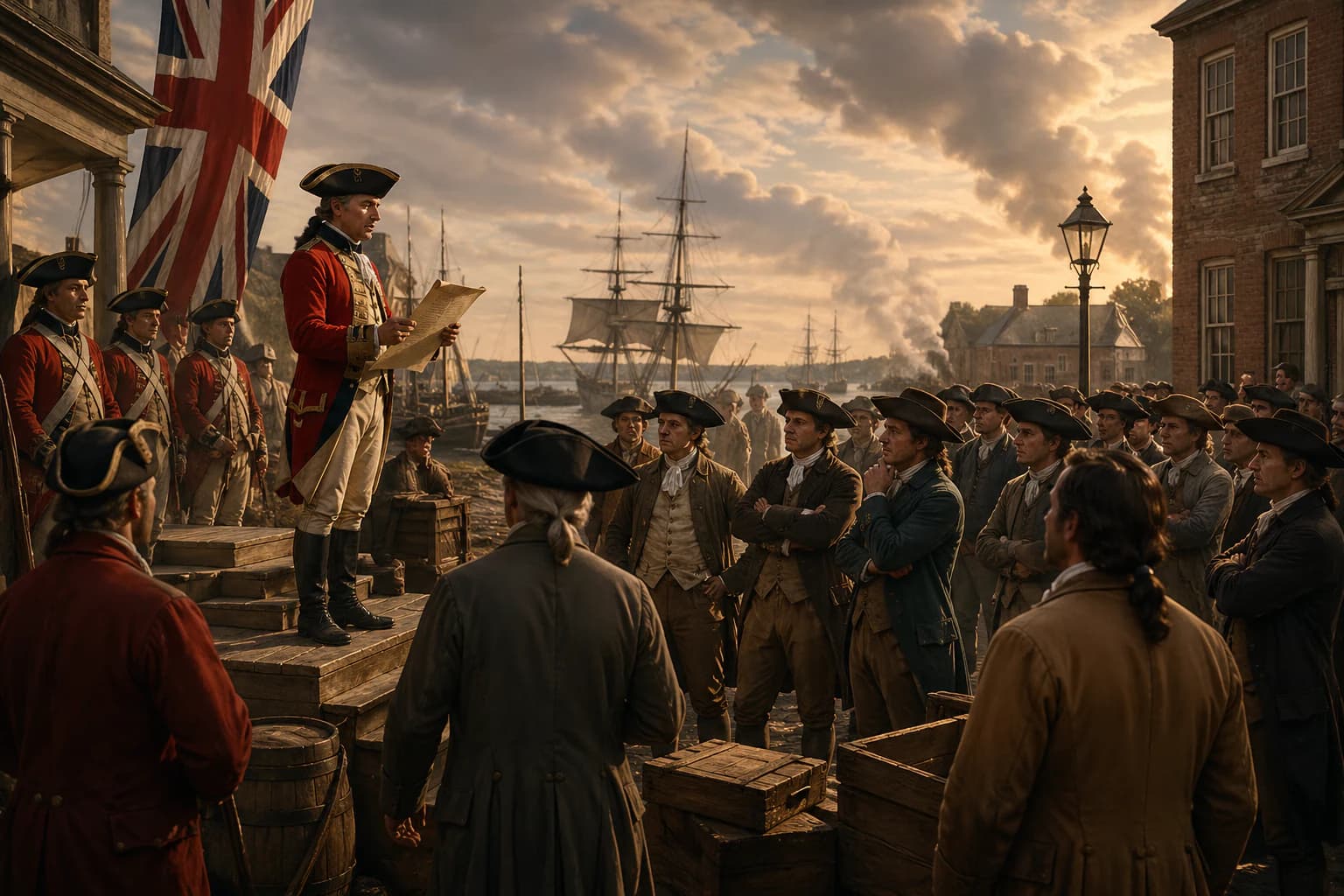
Britain had just won a massive war. But winning left it deep in debt — and it looked to the colonies to help pay.

The Seven Years’ War ended in 1763. Britain was victorious but exhausted. The national debt had doubled, and Parliament needed new money.

The colonies seemed like the obvious place to find it. British soldiers had fought in America, so why shouldn’t Americans help cover the cost?

Taxed by a parliament they had never voted for.

New laws followed. The Stamp Act taxed legal papers and newspapers. The Sugar Act tightened trade duties. Colonists were outraged — they had their own elected assemblies and believed only those bodies could tax them.

Britain also blocked western expansion, drawing a line along the Appalachians to limit conflicts with Native peoples. Colonists who wanted new land felt trapped.

These policies marked a turning point. After generations of limited oversight, Britain was tightening its grip — and the colonies were not ready to accept it.

Resistance Becomes Rebellion
1773 CE
Step 2 of 101773 CEAccessible mode

Resistance Becomes Rebellion

Tensions had been building since the Stamp Act. The Tea Party turned them into something that could not be walked back.

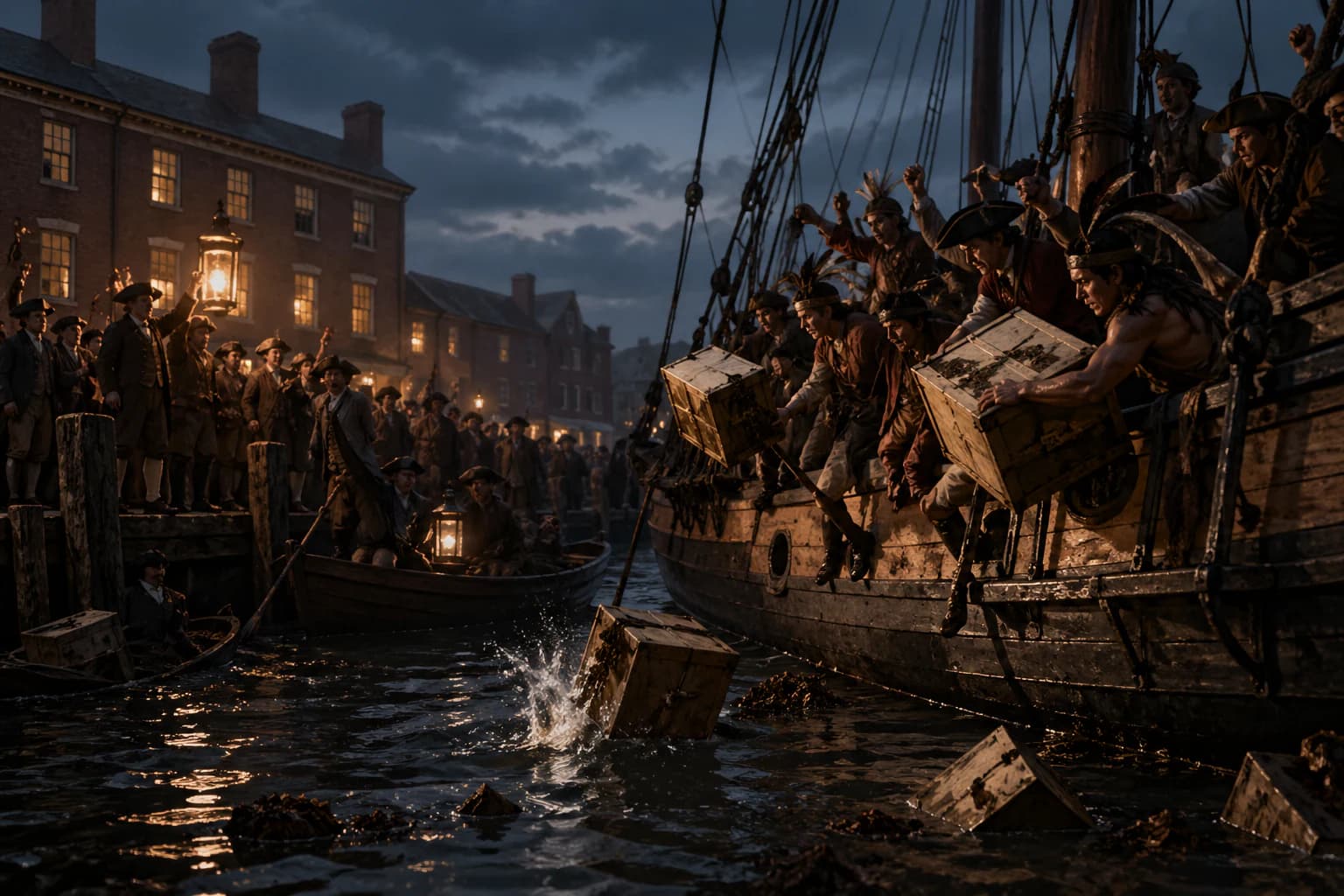
After a decade of growing protests, Britain tried a new approach: allow a trading company to sell cheap tea directly to the colonies. Colonists saw it as a trick. Accept the deal, and you accept Parliament’s right to tax you.

This was never really about tea.

In December 1773, protesters boarded ships in Harbor and threw 342 chests of tea into the sea. It was organised, deliberate, and impossible to ignore.

Britain’s response was immediate and harsh. It closed ’s port and suspended Massachusetts’s elected government. The aim was to punish defiance and frighten the other colonies into obedience.

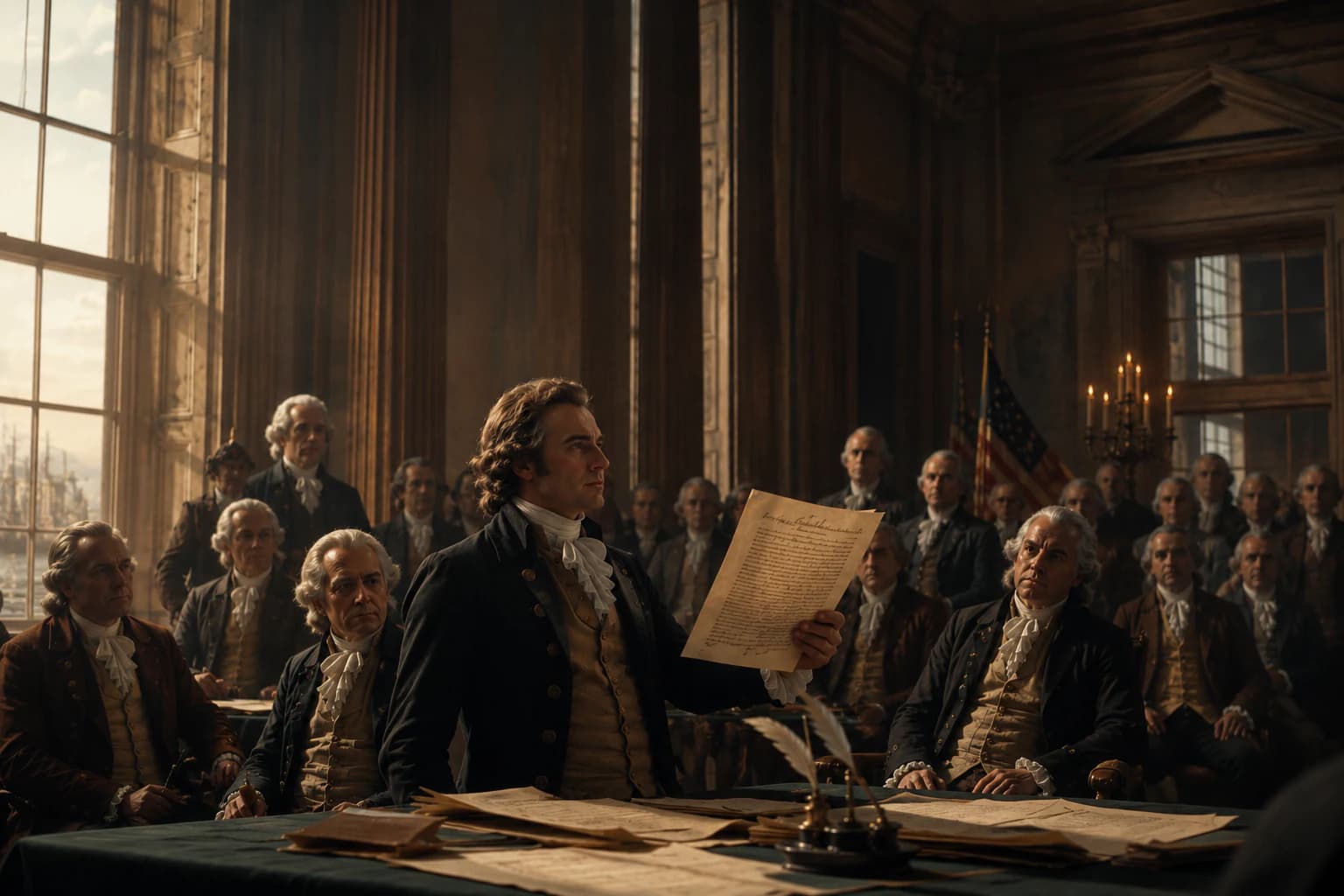
It backfired. The Intolerable Acts, as colonists called them, pushed the thirteen colonies closer together. Representatives from twelve of them met in in 1774 to plan a joint response. The road to revolution was now open.

The War Begins
1775 CE
Step 3 of 101775 CEAccessible mode

The War Begins

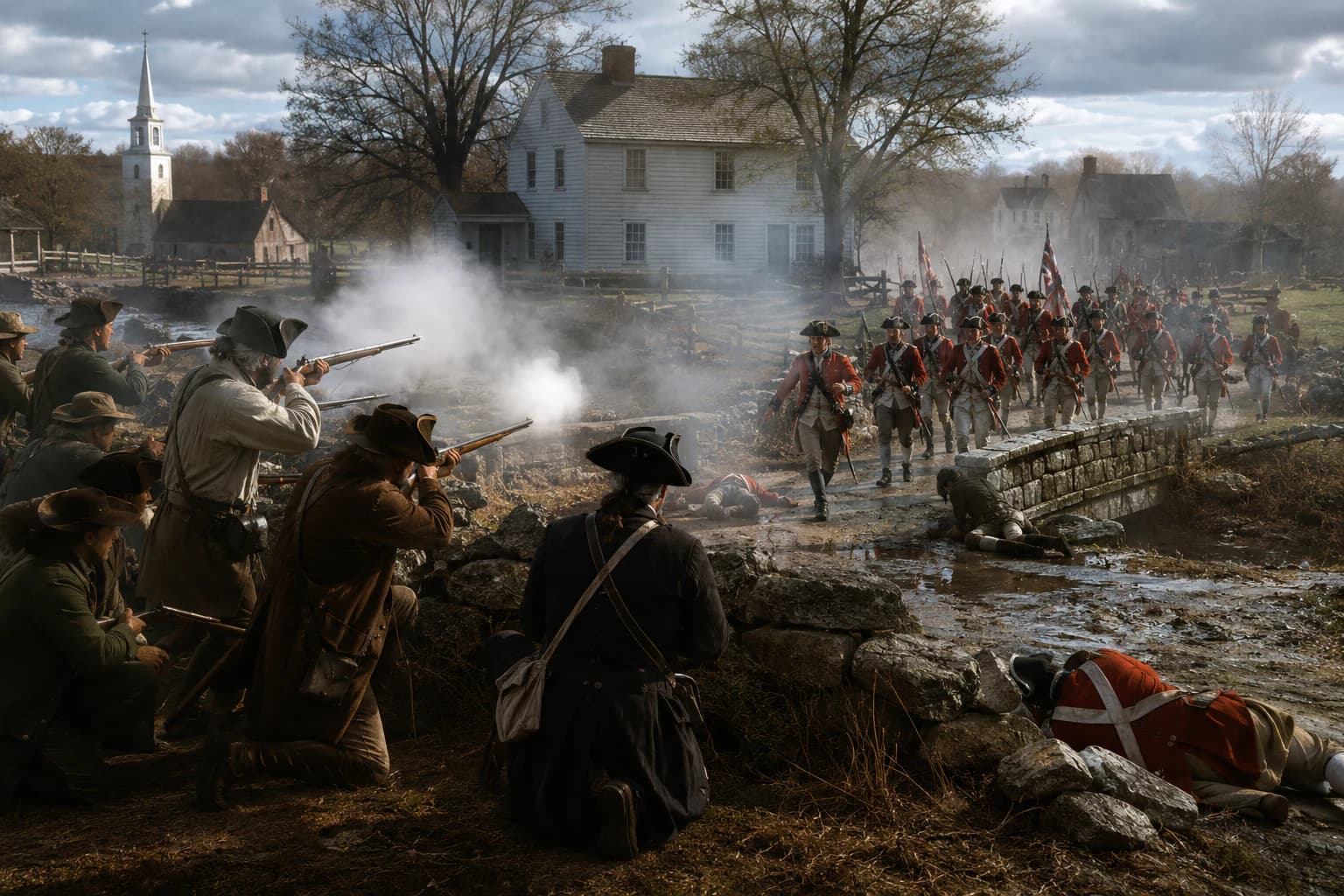
In April 1775, British soldiers marched out of to seize colonial arms. They did not expect what awaited them.

Riders had warned the countryside overnight. At , militia stood their ground. Shots were fired and eight colonists died. The British marched on to Concord, then retreated under fire all the way back. Nearly 300 British soldiers were killed or wounded.

The war had begun before anyone had declared it.

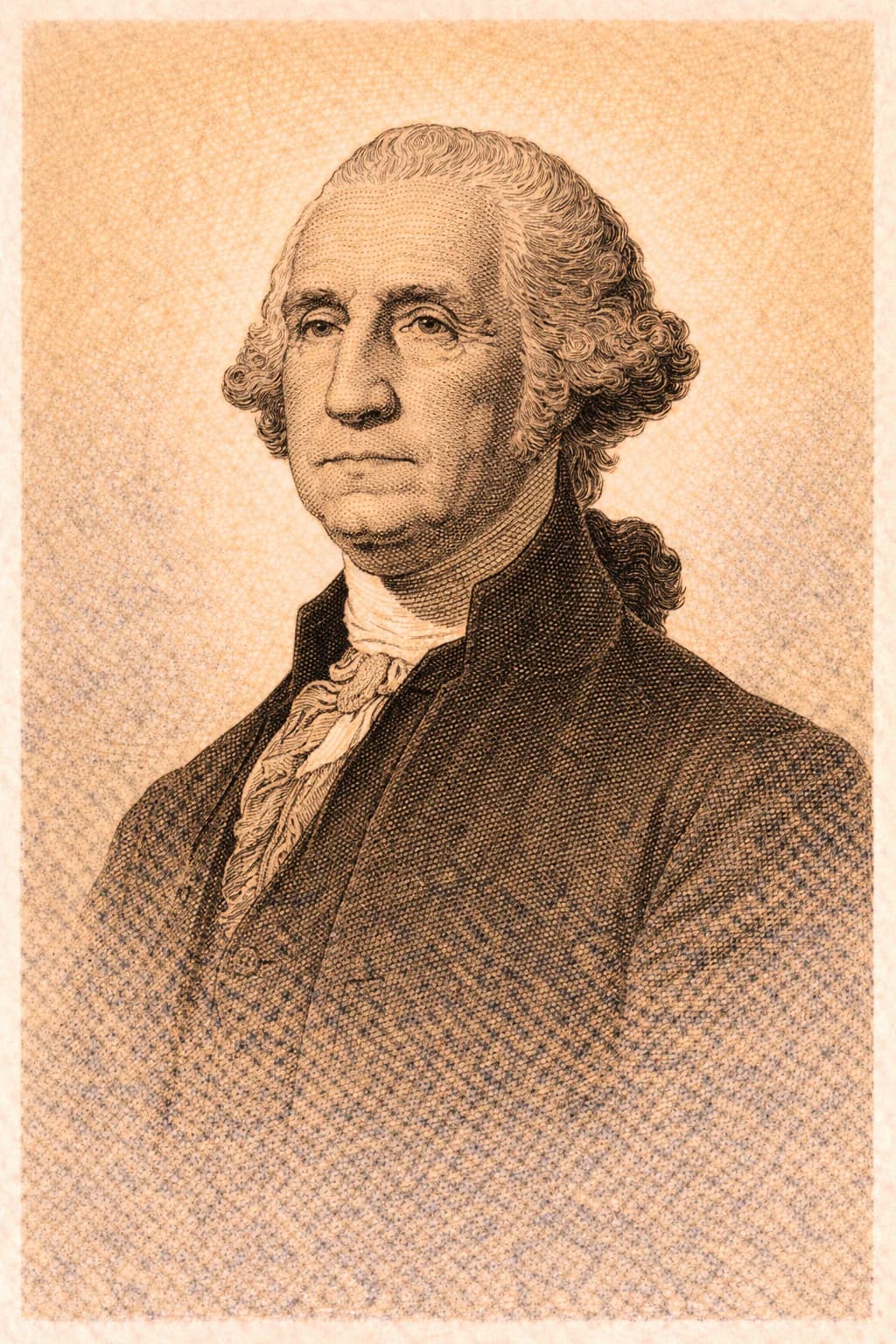
Colonial forces surrounded . The Continental Congress created the Continental Army and chose George Washington — a respected Virginia officer — to lead it.

His appointment sent a message to the southern colonies: this was a shared cause, not just a New England revolt.

The colonies had not yet declared independence. But armed conflict was now underway, and there was no easy return to negotiation.

Premium

You've reached the turning point

The opening chapters show protest hardening into resistance. Premium follows the dangerous leap from grievance to nationhood: independence has to be declared, won, governed and defended while the new republic discovers how unfinished its promises really are.

Continue into the reversals, crises and human stakes that make the story matter.

Unlock full story

What Premium unlocks next

  1. 4Independence Declared
  2. 5The Revolutionary War Turns
  3. 6Victory and Fragile Union
  4. 7The Constitution Is Forged
  5. 8The Republic Takes Shape
  6. 9Parties and Power Divide the Nation
  7. 10The Revolution's Unfinished Legacy

Browse stories

Browse stories for free

Explore the people connected to this turning point or enjoy one of our free stories.

Unlock full storyBrowse stories

References

Sources & Further Reading

Reliable sources, primary-source collections and reading paths connected to this page.

Sources used

  1. U.S. National Archives, Founding Documents,” Open source
  2. Library of Congress, American Revolution, 1763-1783,” Open source

Further reading

  1. Gordon S. Wood, The Radicalism of the American Revolution, Vintage.

Primary sources

  1. Yale Law School, Avalon Project: 18th Century Documents,” Open source

A weekly route through history

Find out first about the latest published stories, feature notes and occasional Premium offers in one weekly email.