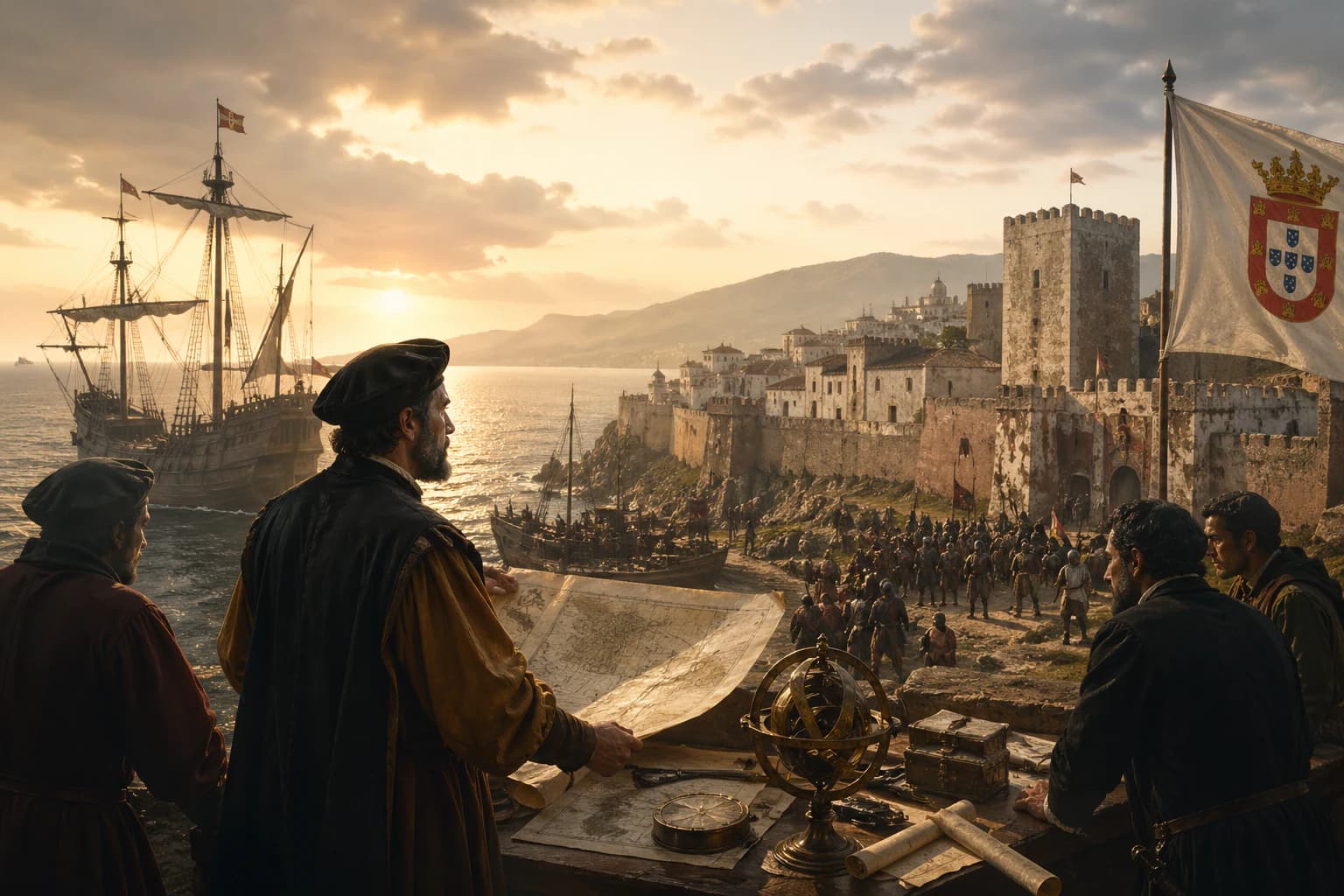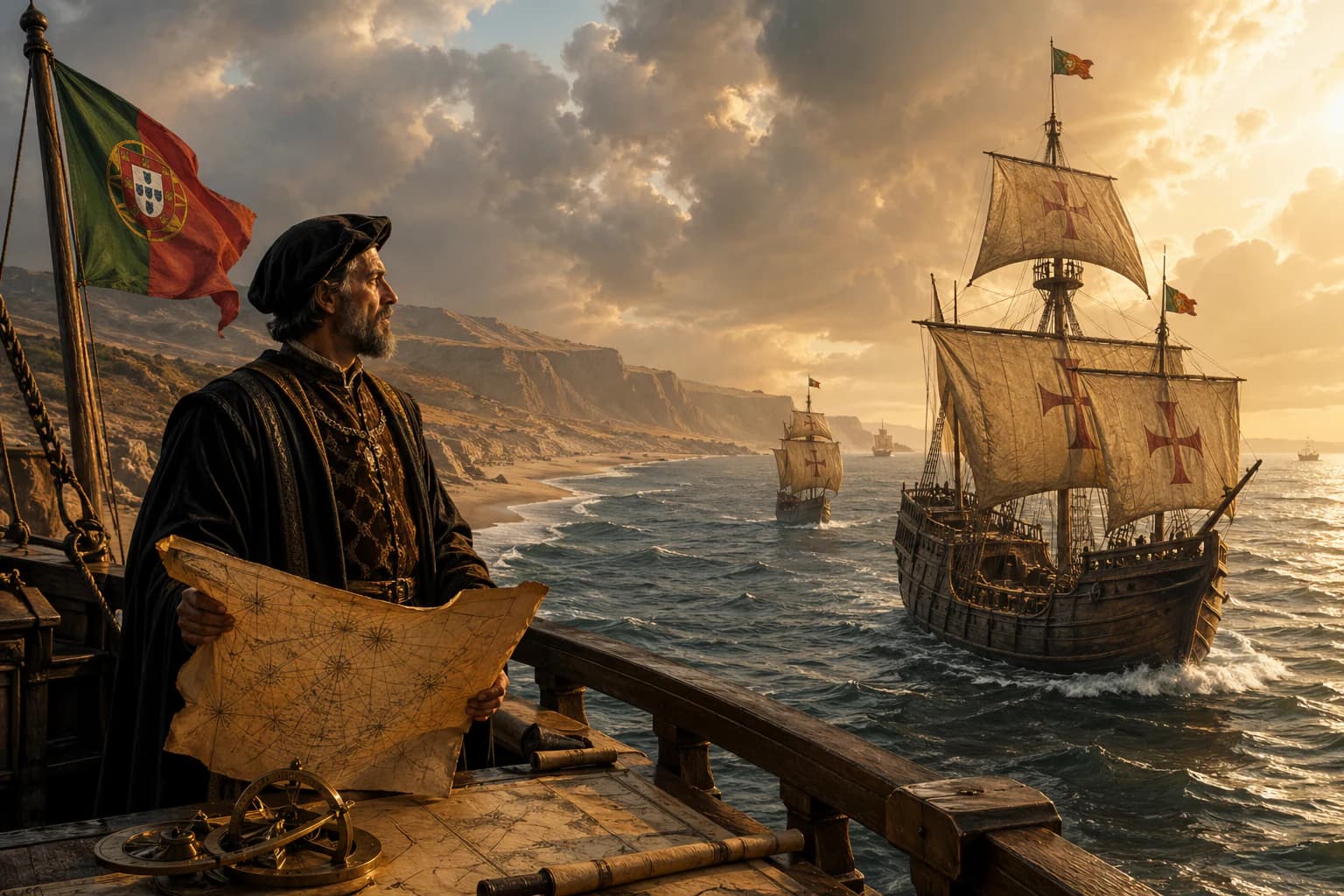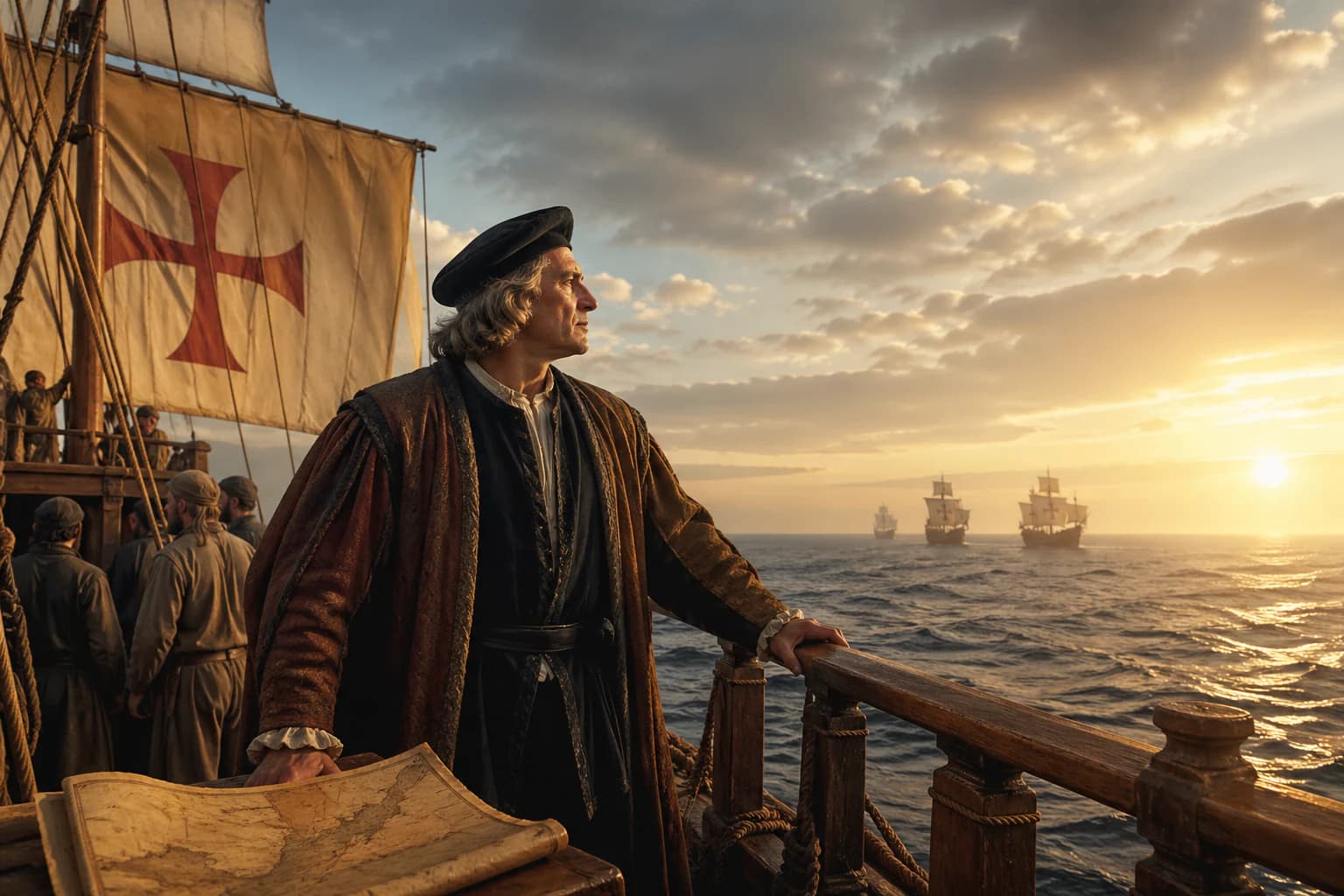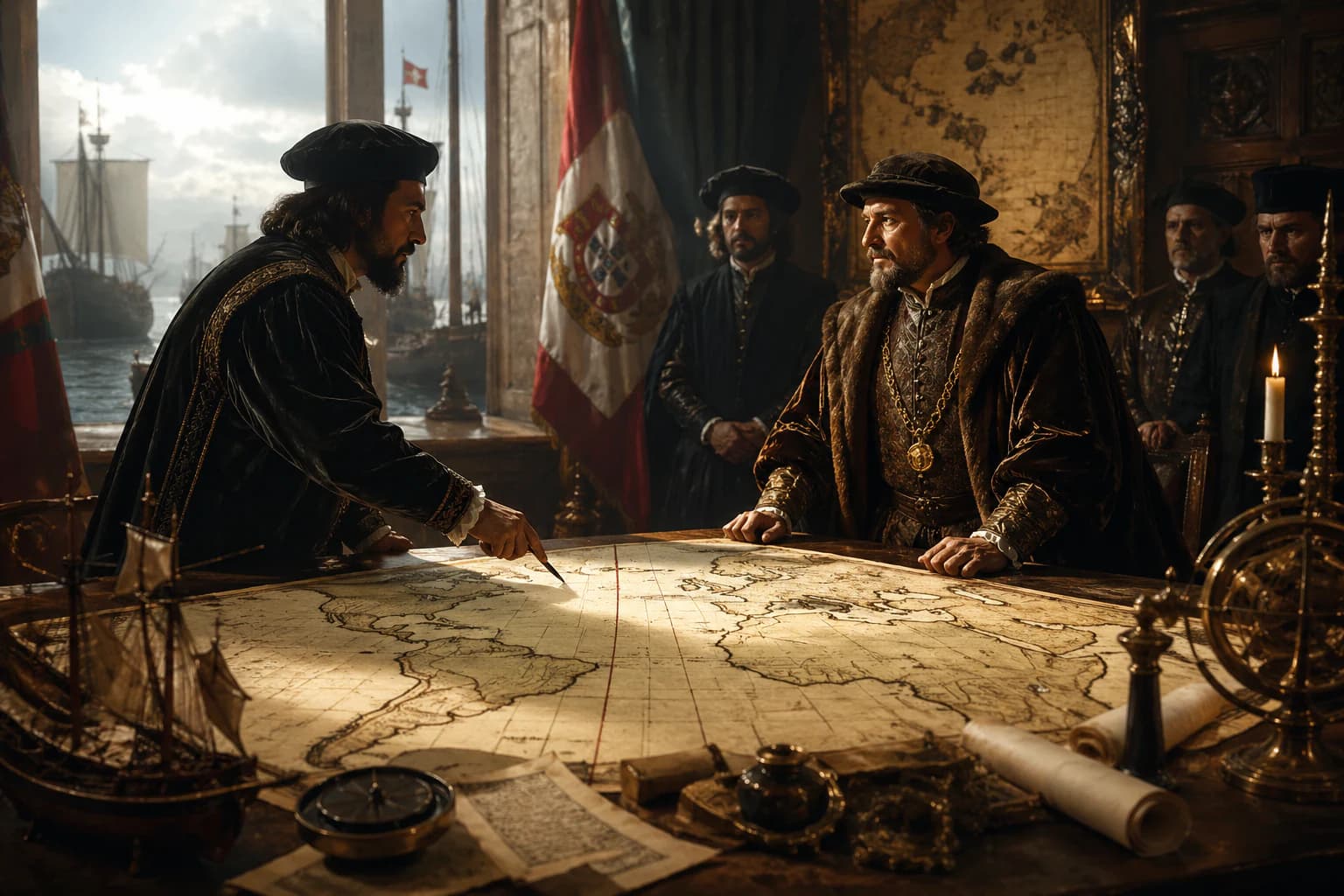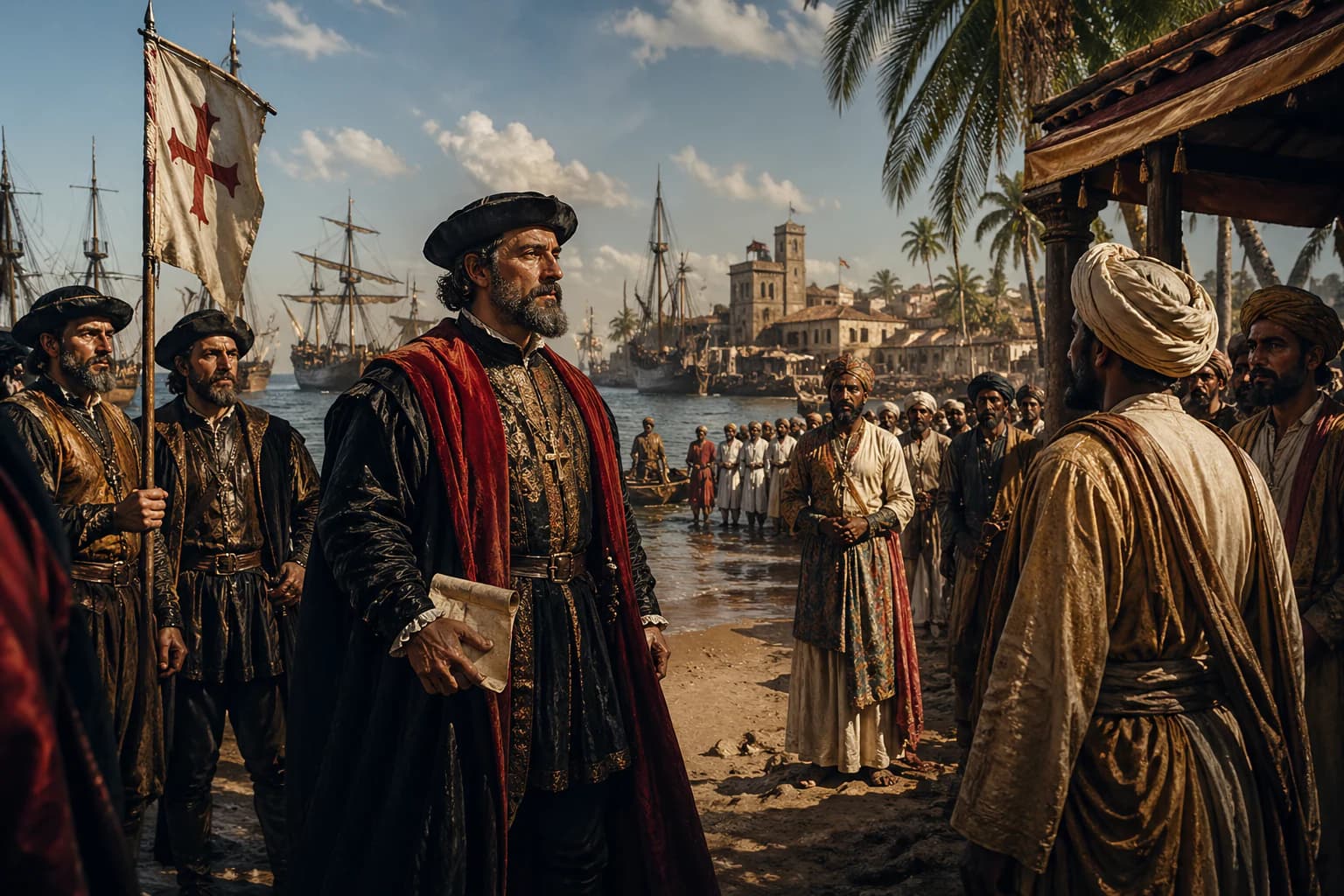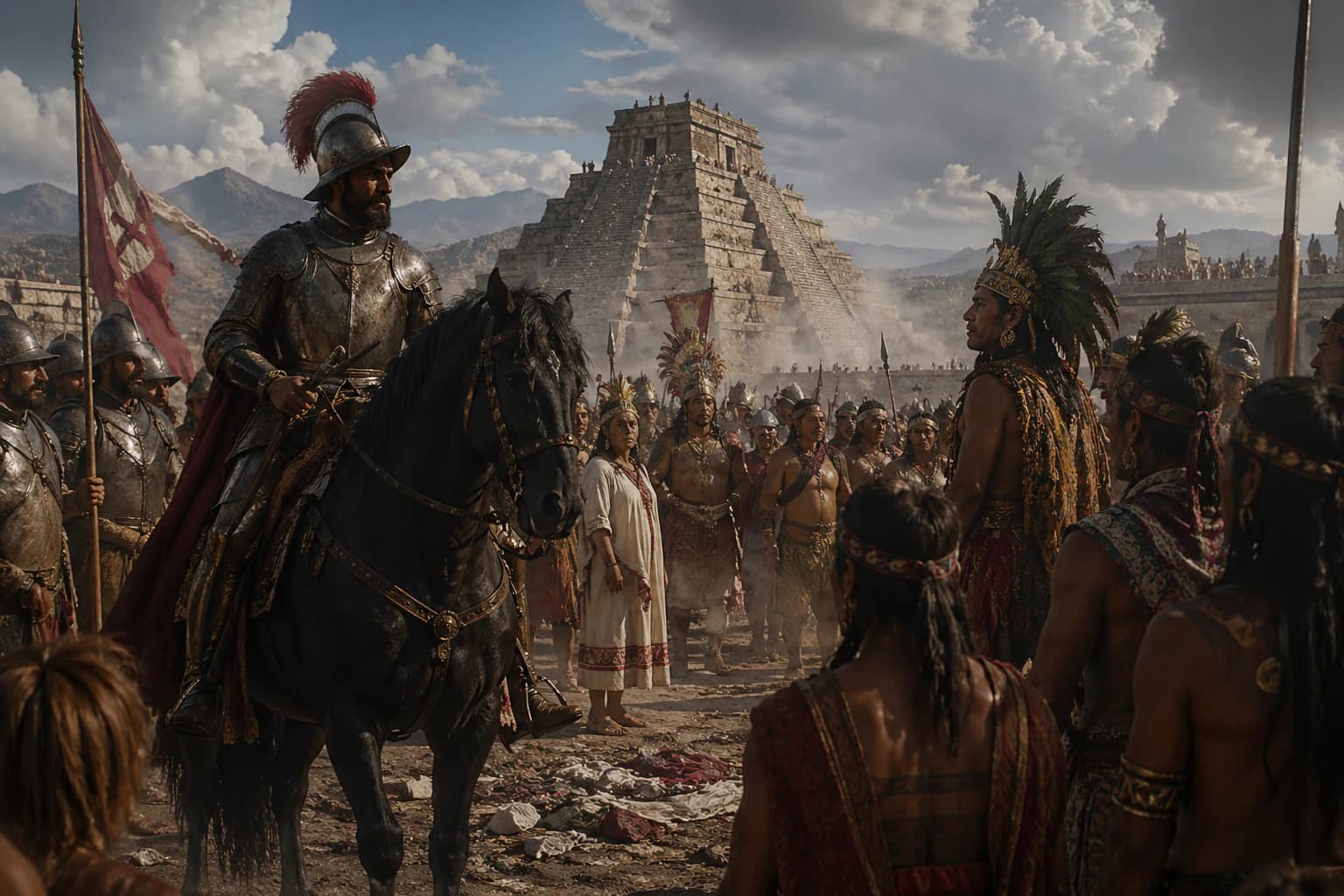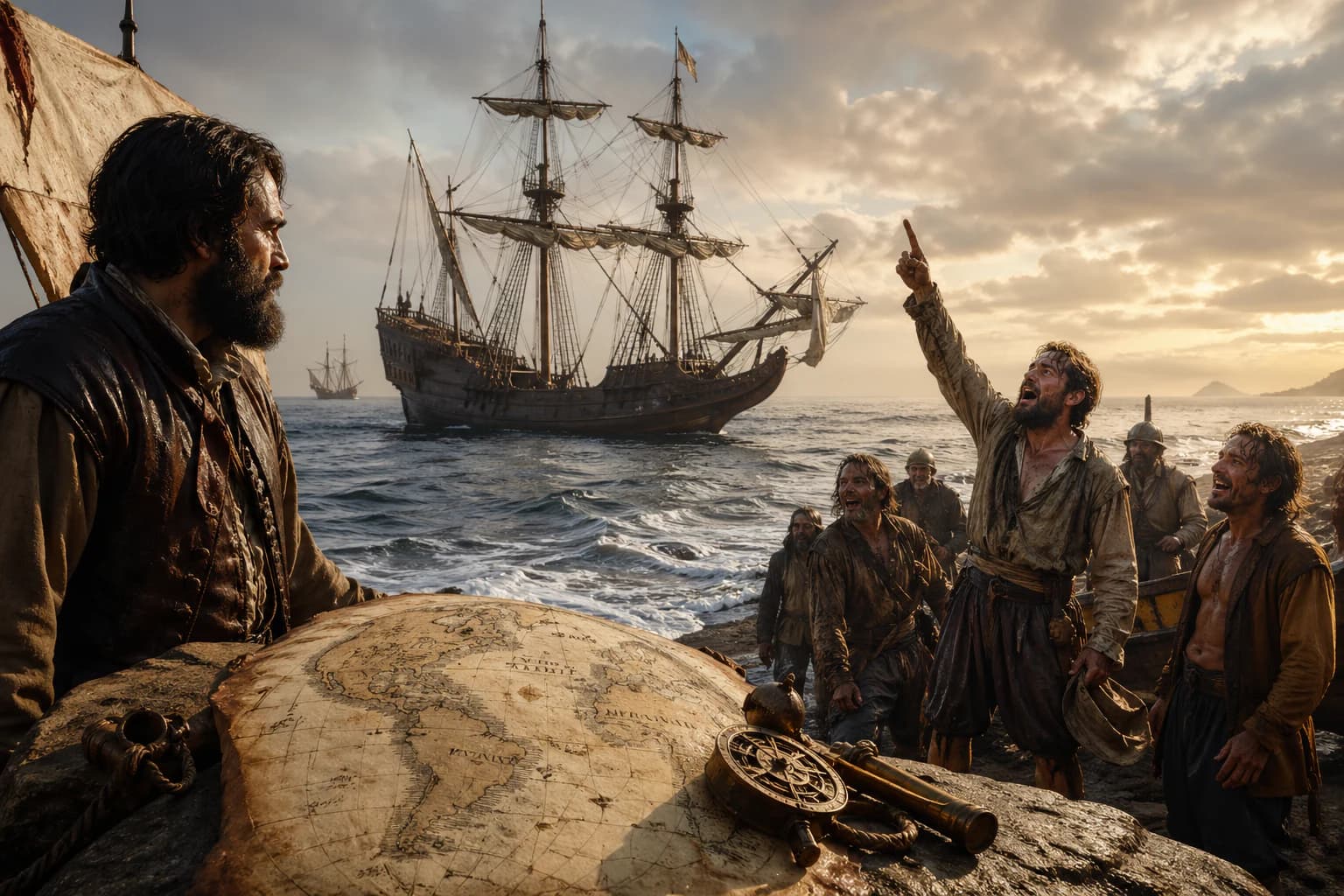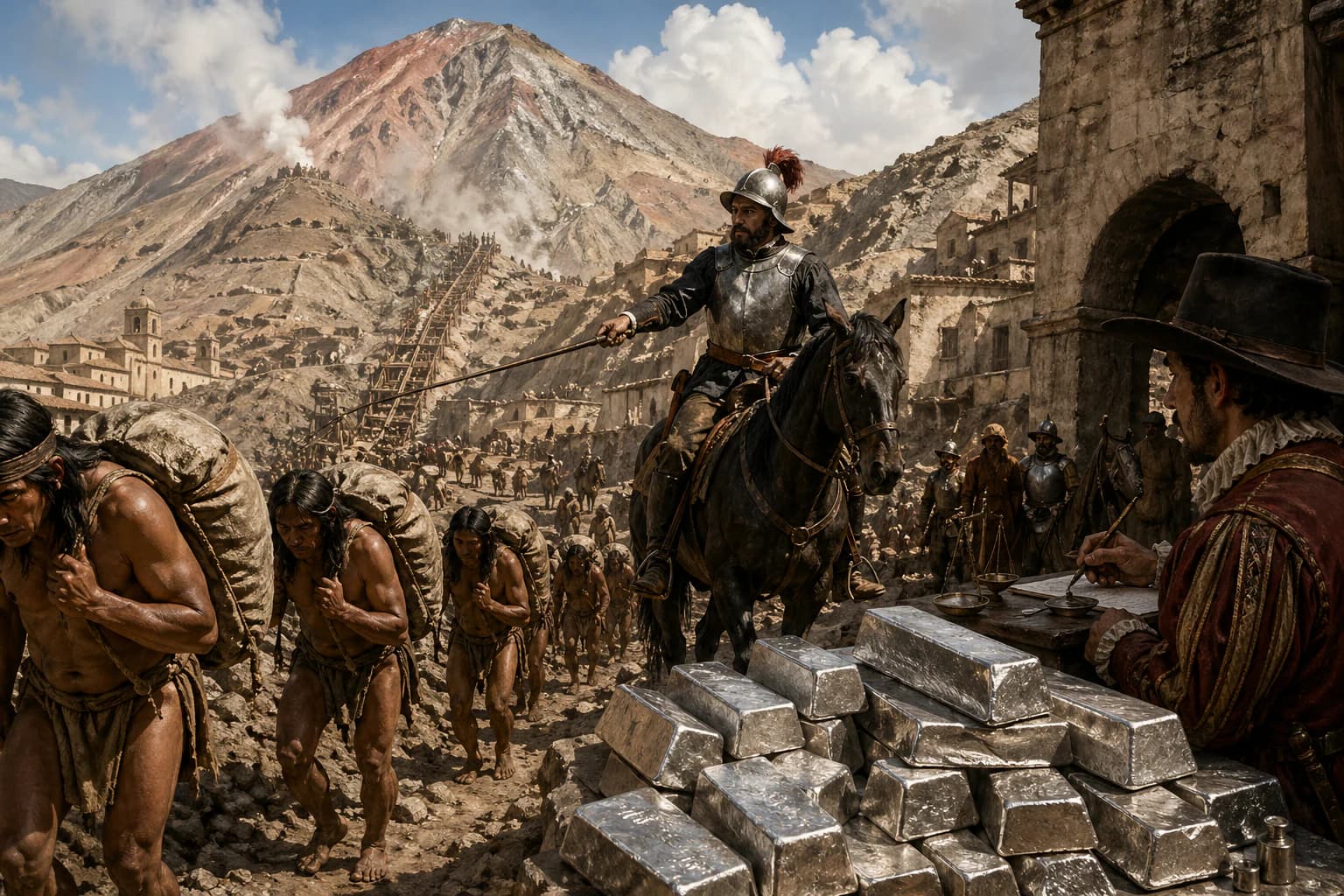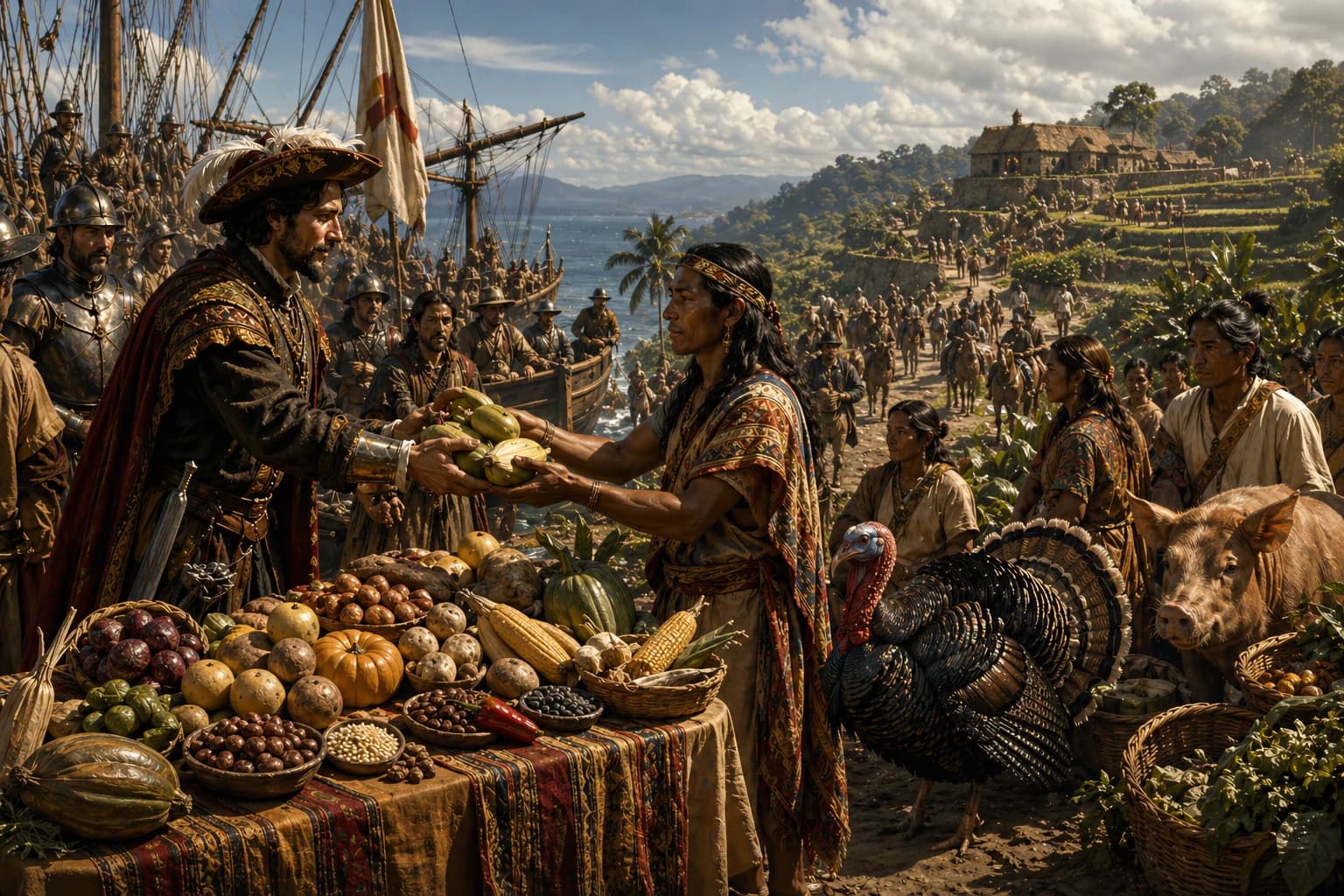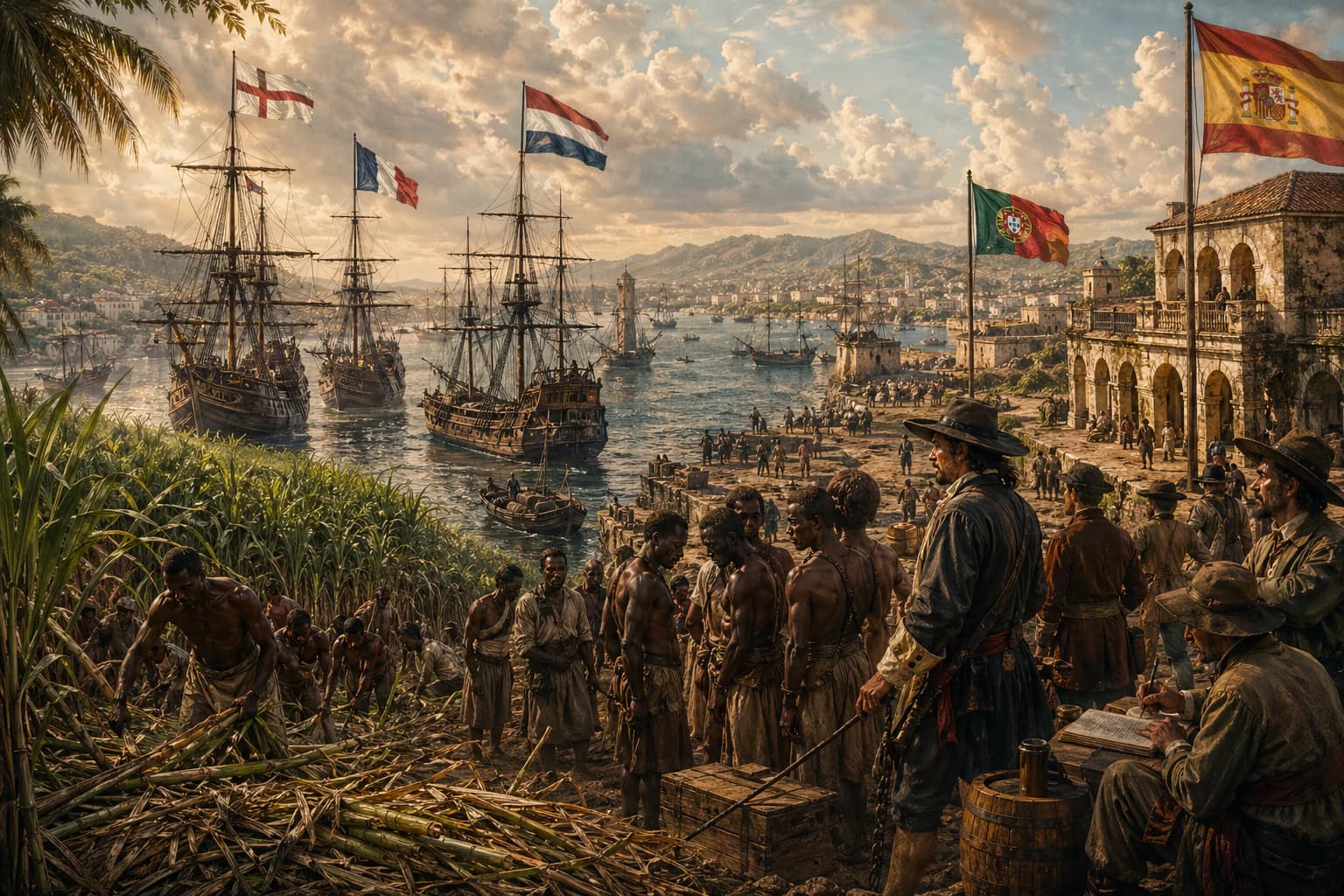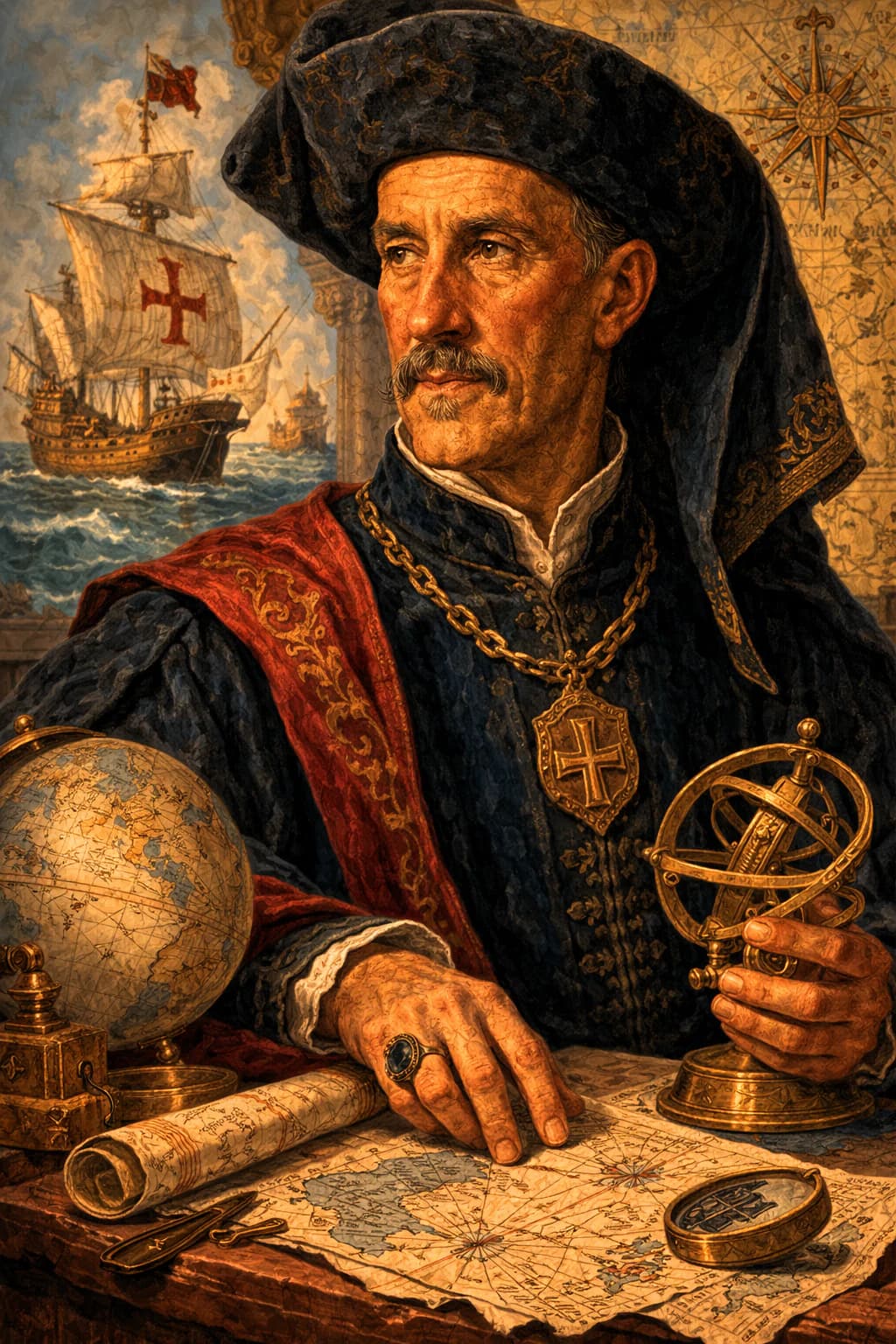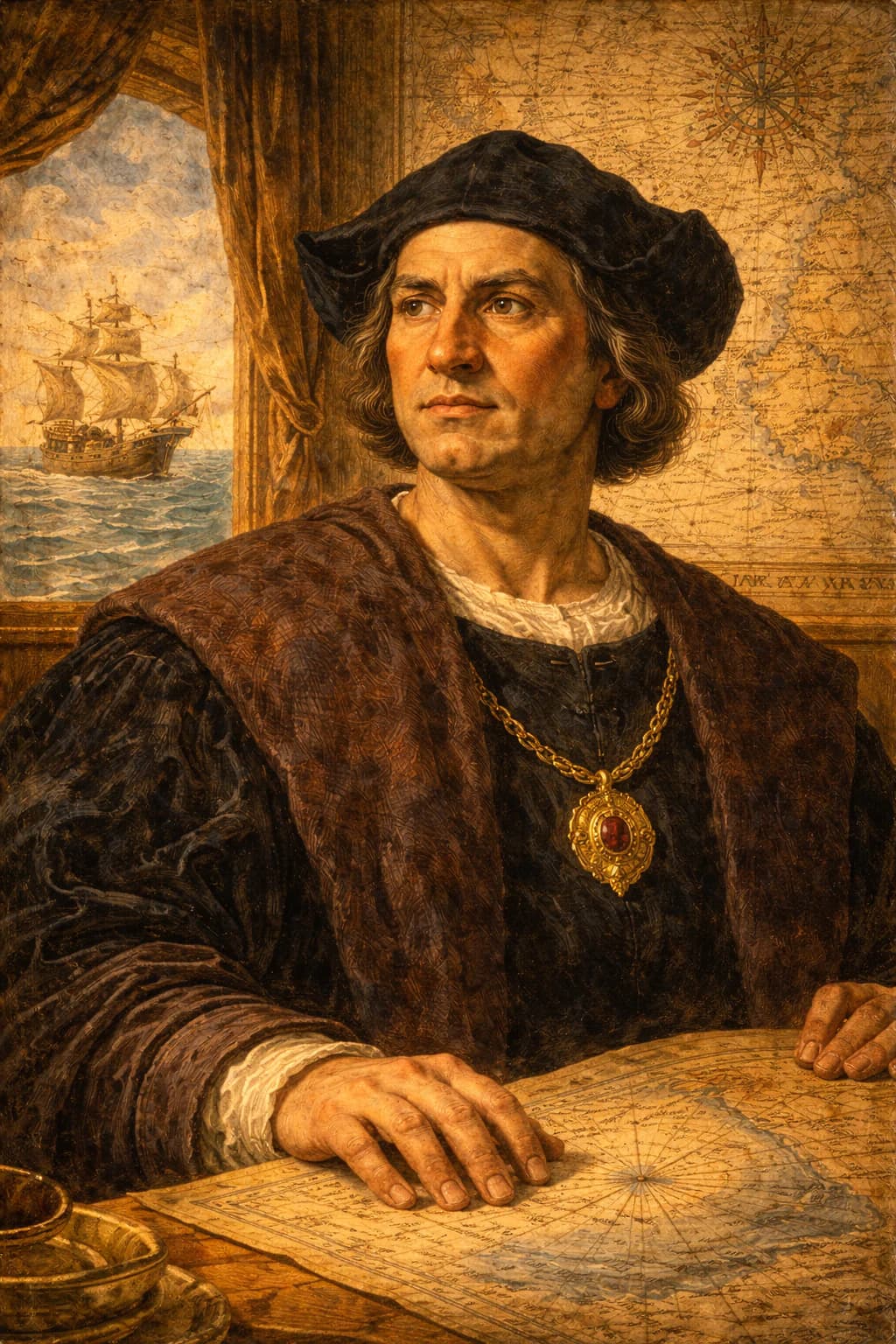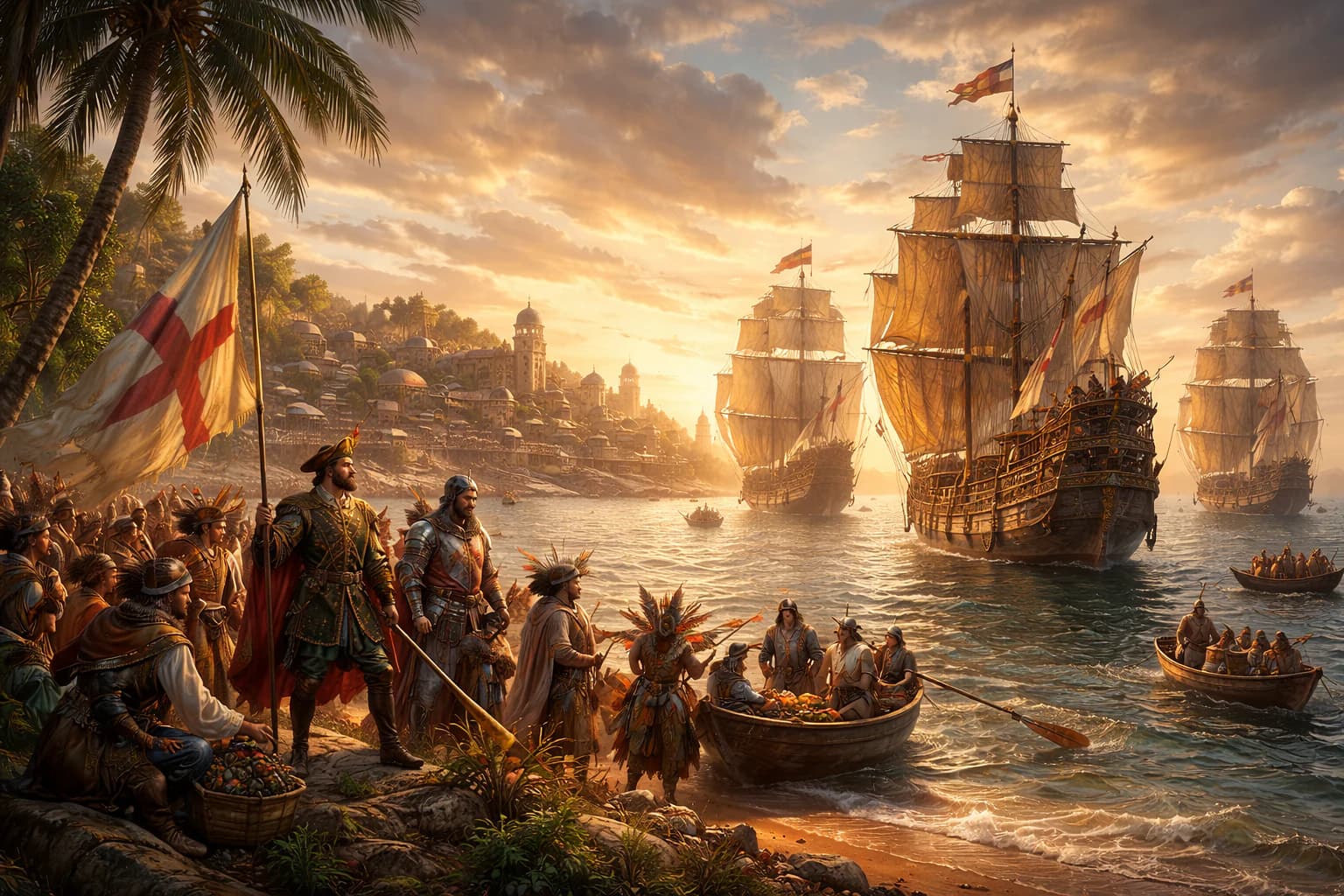
Ocean-going caravels arriving on distant shores during the Age of Exploration
Premium Story

The Age of Exploration

Sail the Age of Exploration as ocean routes, conquest, trade, and encounter bind the world together.

11 chapters

Next

Content note

This story discusses slavery, exploitation, racial persecution, and violence in an educational historical context.

Context

Introduction

What you’ll learn: You’ll learn how ocean exploration connected the world for the first time, how trade and empire expanded across continents, and how these encounters reshaped societies on a global scale.

Key forces

The Search for New Routes
1415 CE
Step 1 of 101415 CEAccessible mode

The Search for New Routes

In the early 1400s, European kingdoms wanted a better route to Asia's goods. Portugal was the first to act.

Europe loved spices, silk, and other goods from Asia. But getting them was expensive and difficult. These goods traveled long routes through the Middle East and North Africa, changing hands many times. Merchants in those regions controlled the routes and charged high prices. European rulers wanted to cut them out and trade directly.

The desire for direct trade with Asia pushed Europe to look outward.

Portugal was perfectly placed to try. It sat on the Atlantic coast, facing open ocean. Its people were experienced sailors. The Portuguese crown began to see the sea as an opportunity rather than a barrier.

In 1415, Portugal captured the North African port of Ceuta. It was a modest step, but it mattered. Portugal had shown it could reach beyond its own borders. It was the first move in what would become the Age of Exploration — and it would change the world.

Portugal Masters the Atlantic
1434 CE
Step 2 of 101434 CEAccessible mode

Portugal Masters the Atlantic

Portugal spent decades learning to sail the Atlantic. Better ships and navigation helped its sailors push farther south along the African coast.

Sailing south from Europe was not easy. Powerful winds along the African coast could trap ships far from home. Many sailors turned back out of fear. Portugal's challenge was to find a way past these barriers.

Better ships and bolder sailors gradually opened the Atlantic to exploration.

Portuguese shipbuilders created a new type of vessel called the caravel. It was smaller and more agile than older ships, with sails that could angle against the wind. This meant sailors could travel south and still make it home. Navigation also improved, with better compasses and instruments to measure position at sea.

In 1434, Portuguese navigator Gil Eanes finally sailed past Cape Bojador, a cape on the West African coast that sailors had feared for years. His success broke the barrier. Portugal could now push further south, opening the Atlantic to the world.

Columbus Crosses the Ocean
1492 CE
Step 3 of 101492 CEAccessible mode

Columbus Crosses the Ocean

In 1492, Christopher Columbus sailed west from Spain hoping to reach Asia. He found something else entirely.

Columbus believed the world was smaller than it actually is. He thought a ship could sail west from Europe and reach Asia in a matter of weeks. The Spanish rulers Ferdinand and Isabella agreed to fund the attempt.

Columbus was wrong about where he was going — but his voyage changed everything.

After 33 days at sea, land appeared on 12 October 1492. Columbus had reached the Bahamas, in what we now call the Americas. He thought he had found islands near Asia. He never realised he had reached a continent entirely unknown to Europeans.

The voyage opened the Americas to sustained European contact for the first time. Within years, Spanish ships were crossing the Atlantic regularly. What began as a search for a shortcut to Asia became the beginning of a new era in world history.

Premium

You've reached the turning point

The opening chapters show Europeans edging beyond familiar seas. Premium follows the moment exploration becomes global disruption: oceans turn into imperial routes, conquest remakes American societies, and new exchanges of silver, crops, labor and disease bind continents together unequally.

Continue into the reversals, crises and human stakes that make the story matter.

Unlock full story

What Premium unlocks next

  1. 4The World Divided by Treaty
  2. 5Vasco da Gama Reaches India
  3. 6Conquest in the Americas
  4. 7Magellan's Voyage Circles the Globe
  5. 8Silver Empires and Forced Labor
  6. 9The Columbian Exchange Transforms Life
  7. 10Atlantic Empires Take Shape

Browse stories

Browse stories for free

Explore the people connected to this turning point or enjoy one of our free stories.

Unlock full storyBrowse stories

References

Sources & Further Reading

Reliable sources, primary-source collections and reading paths connected to this page.

Sources used

  1. The Metropolitan Museum of Art, Europe and the Age of Exploration,” Open source
  2. Library of Congress, 1492: An Ongoing Voyage,” Open source

Further reading

  1. Felipe Fernandez-Armesto, Pathfinders: A Global History of Exploration, Oxford University Press.

Primary sources

  1. Fordham University, Internet Modern History Sourcebook,” Open source

Image references

  1. Library of Congress, Discovery and Exploration,” Open source

A weekly route through history

Find out first about the latest published stories, feature notes and occasional Premium offers in one weekly email.