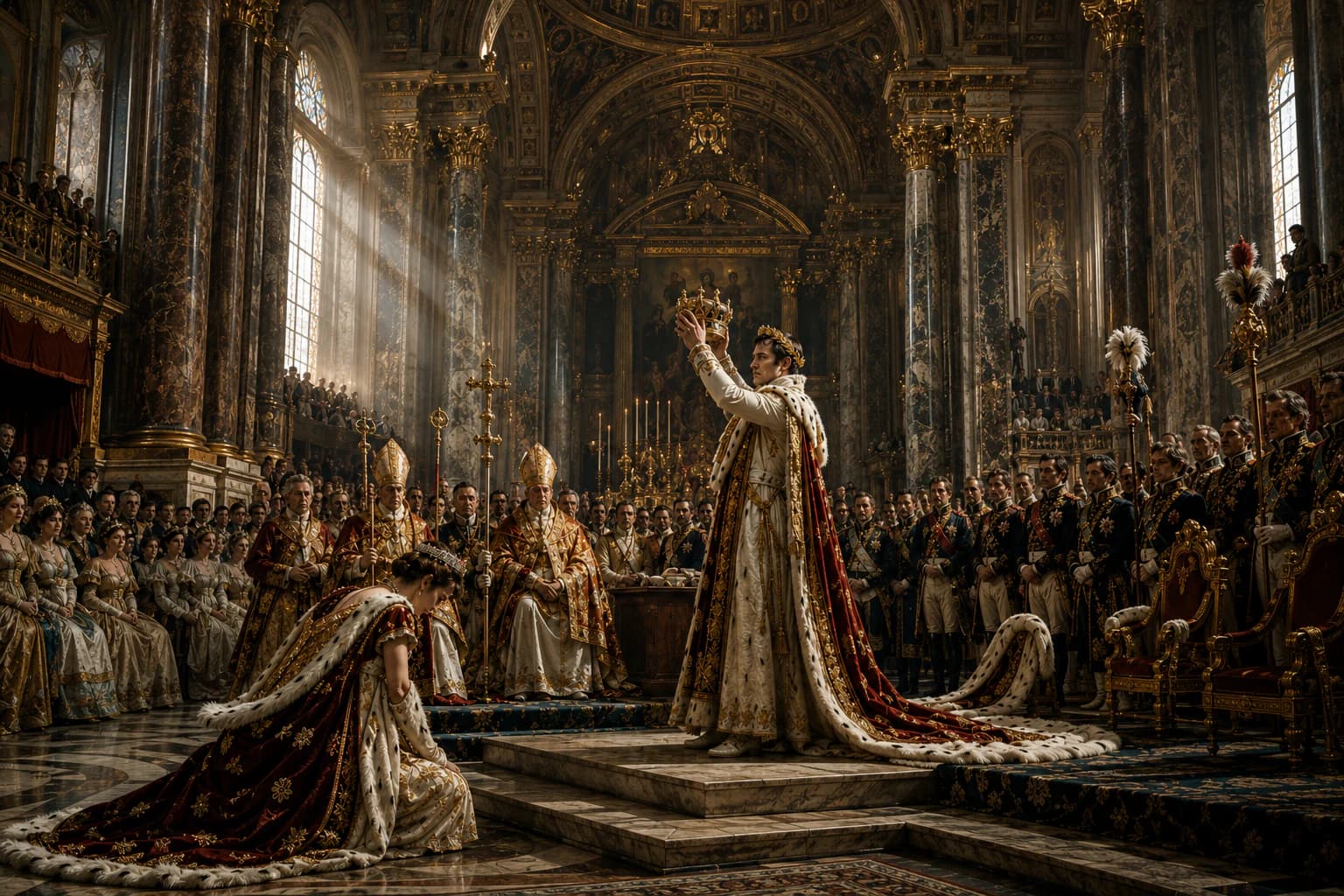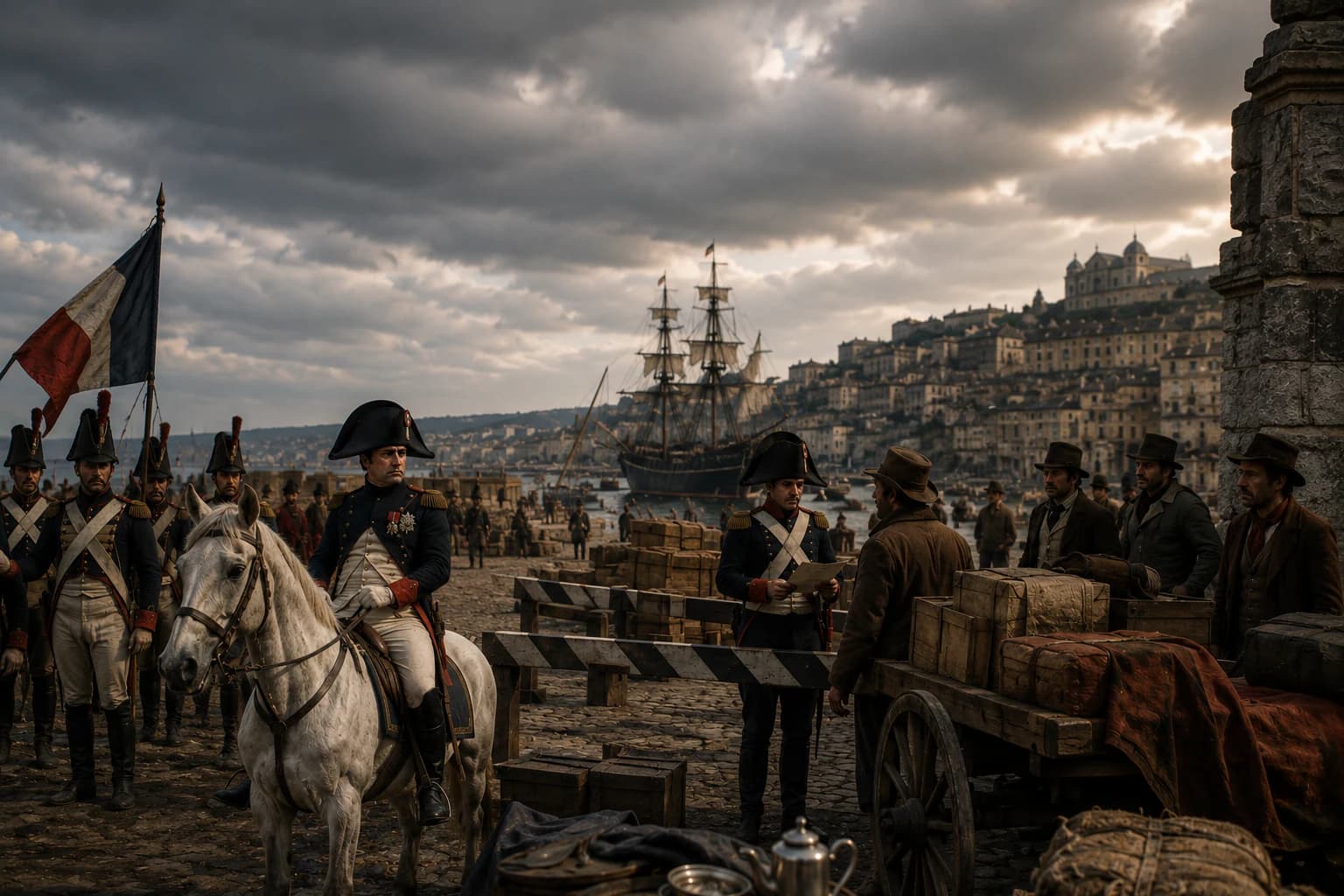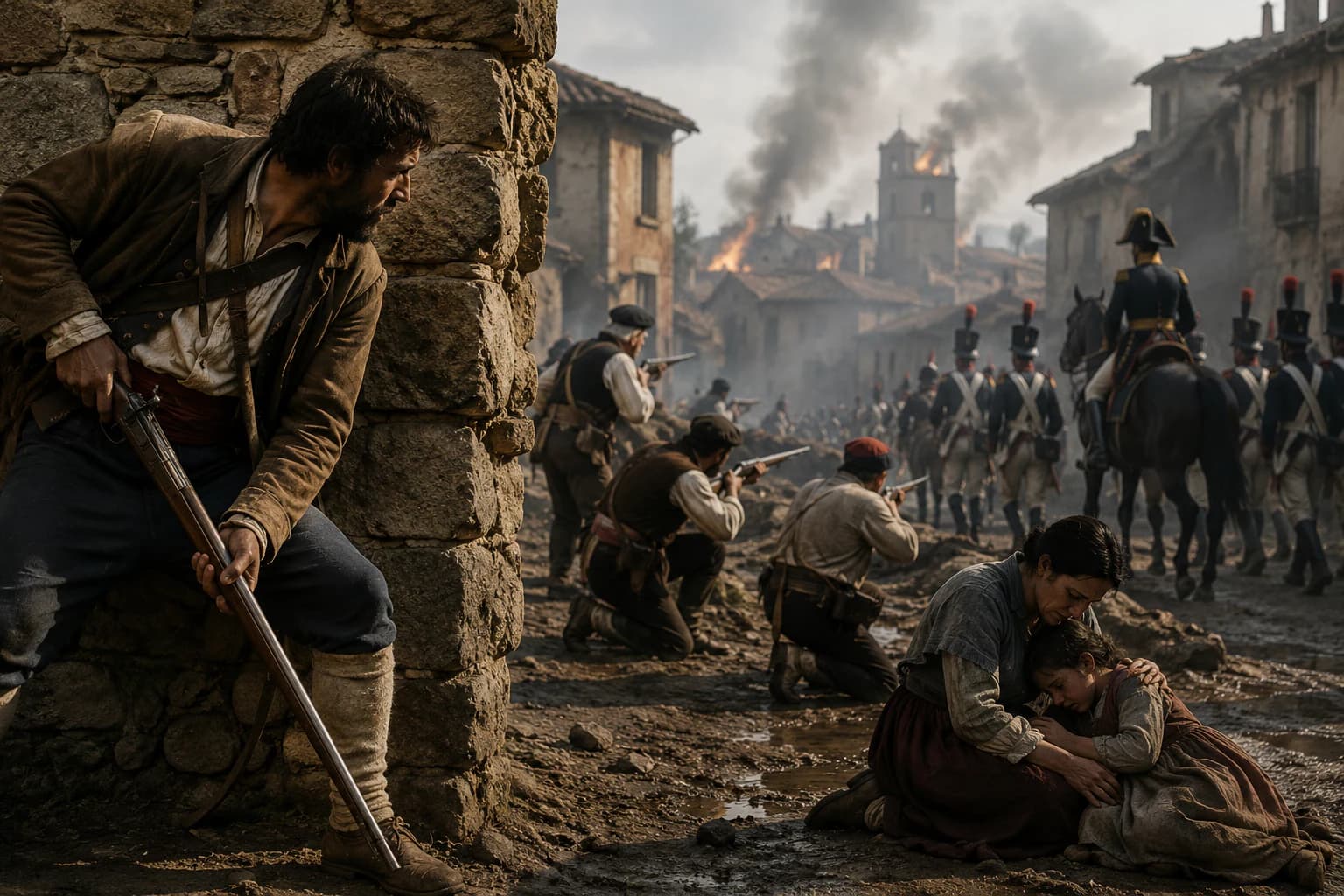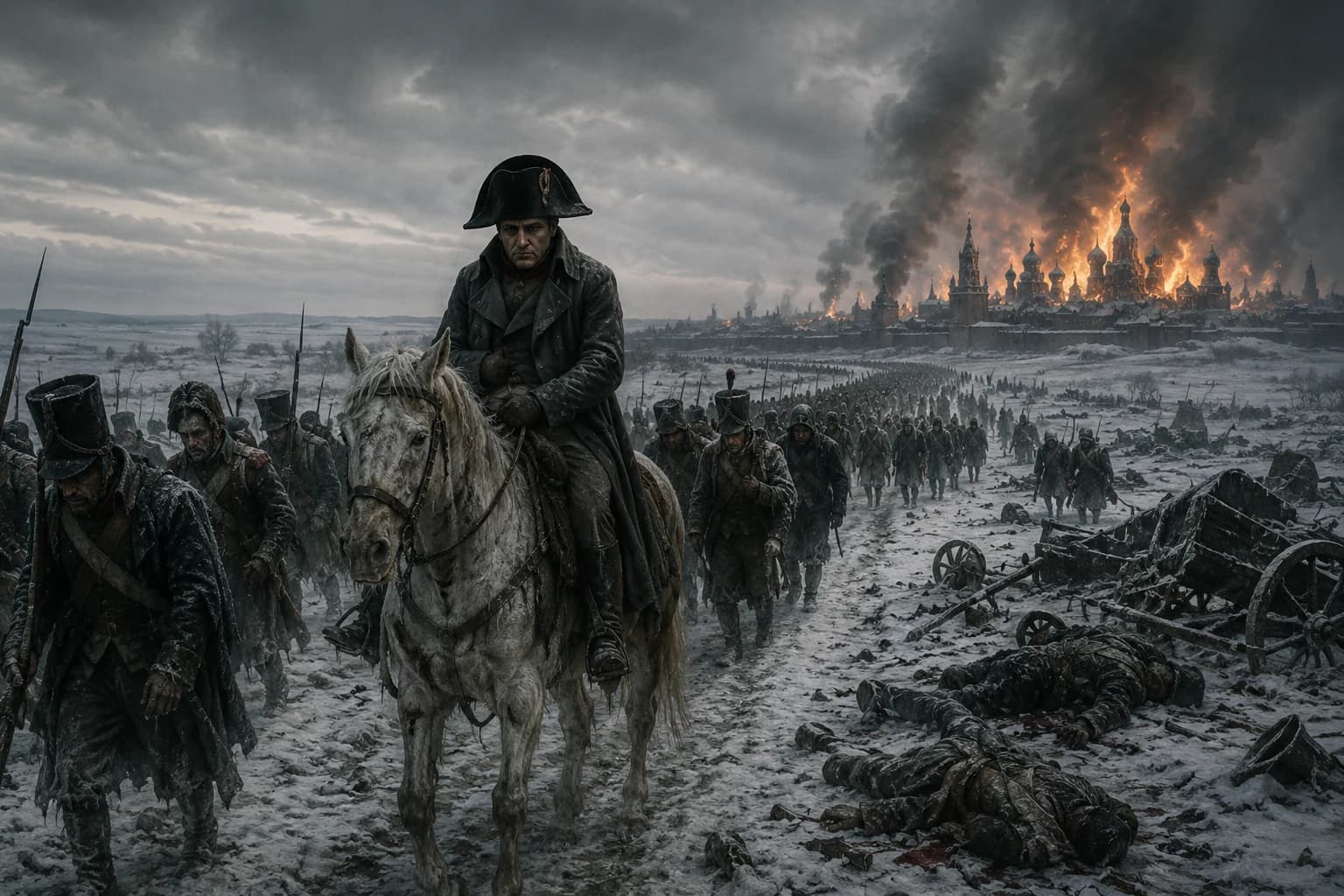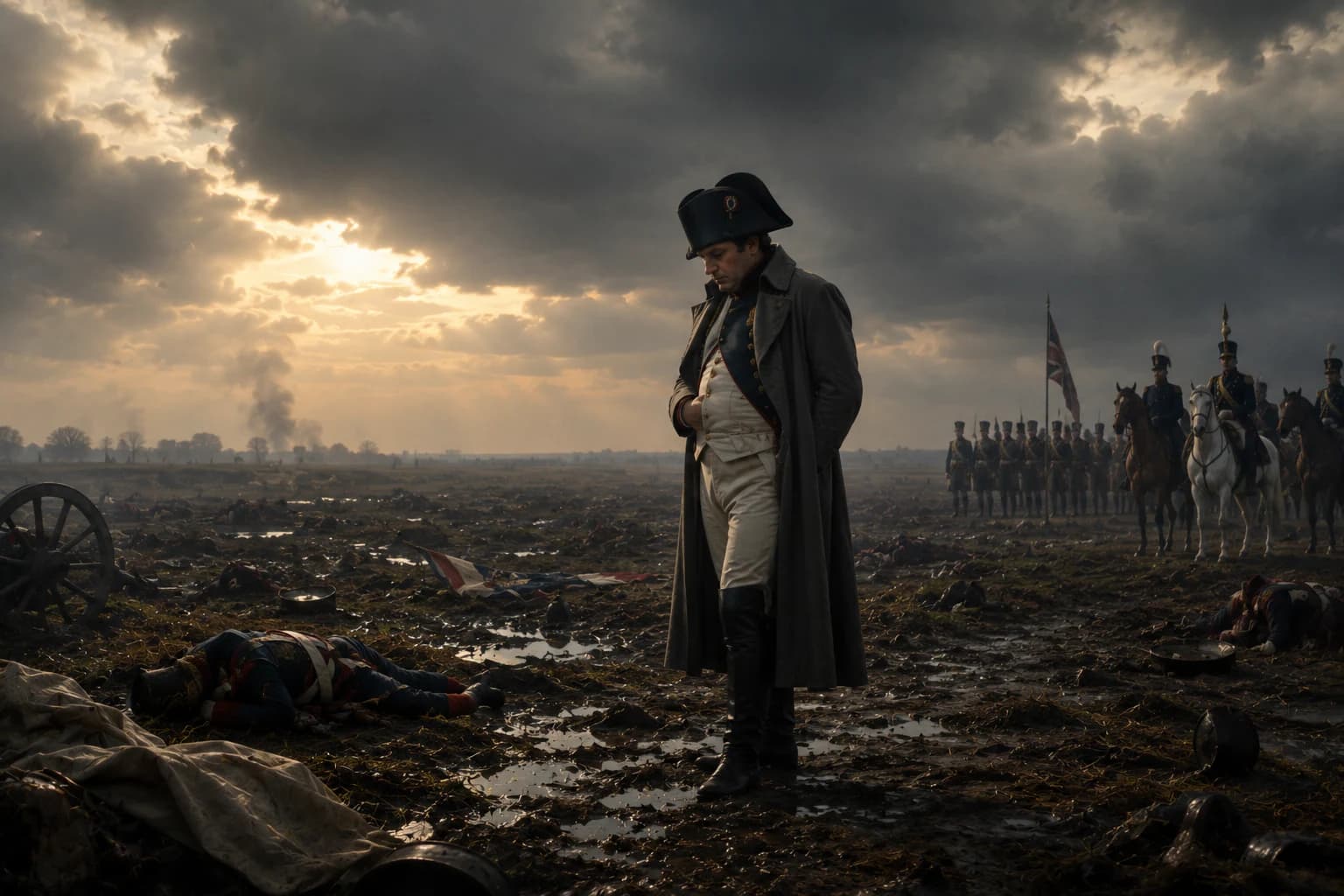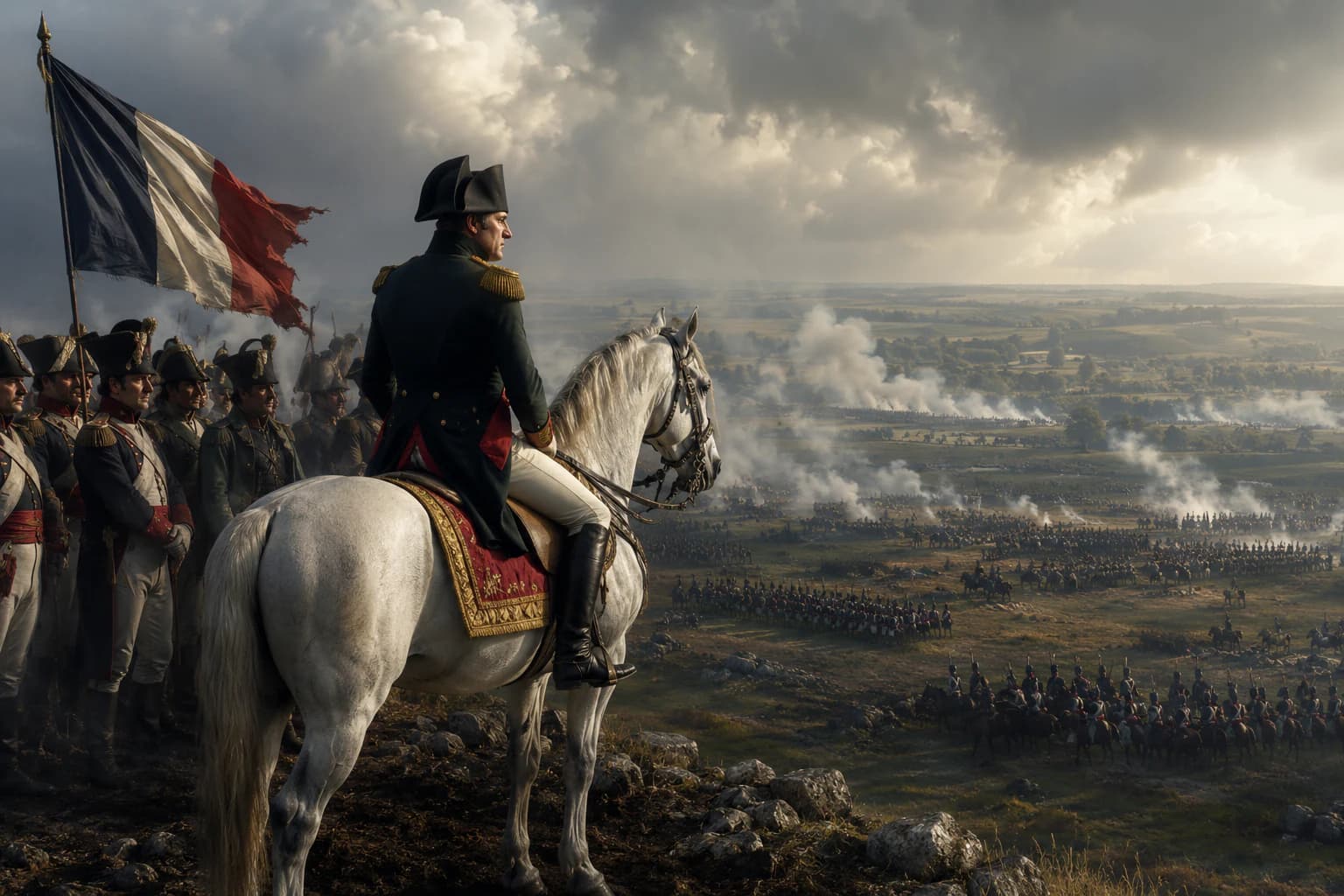
Napoleonic armies crossing Europe between revolution and empire.
Premium Story

Napoleon and the Napoleonic Wars

Follow Napoleon's rise from revolutionary officer to emperor, his continental wars, and the remaking of Europe after his defeat.

11 chapters

Next

Content note

This story discusses war, violence, persecution, and death in an educational historical context.

Context

Introduction

Overview

Napoleon Bonaparte rose from the upheaval of the French Revolution to become Emperor of the French and one of history's most influential military leaders. His campaigns redrew Europe, spread legal and administrative reforms, and created a new age of mass warfare. The Napoleonic Wars ended with his defeat at in 1815, but the political, military, and nationalist forces they unleashed continued to shape Europe.

What you'll learn: You'll see how Napoleon rose through revolutionary war, remade Europe through conquest and reform, and why his defeat still left lasting political change.

Key forces

The Revolution Opens the Army
1789 CE
Step 1 of 101789 CEAccessible mode

The Revolution Opens the Army

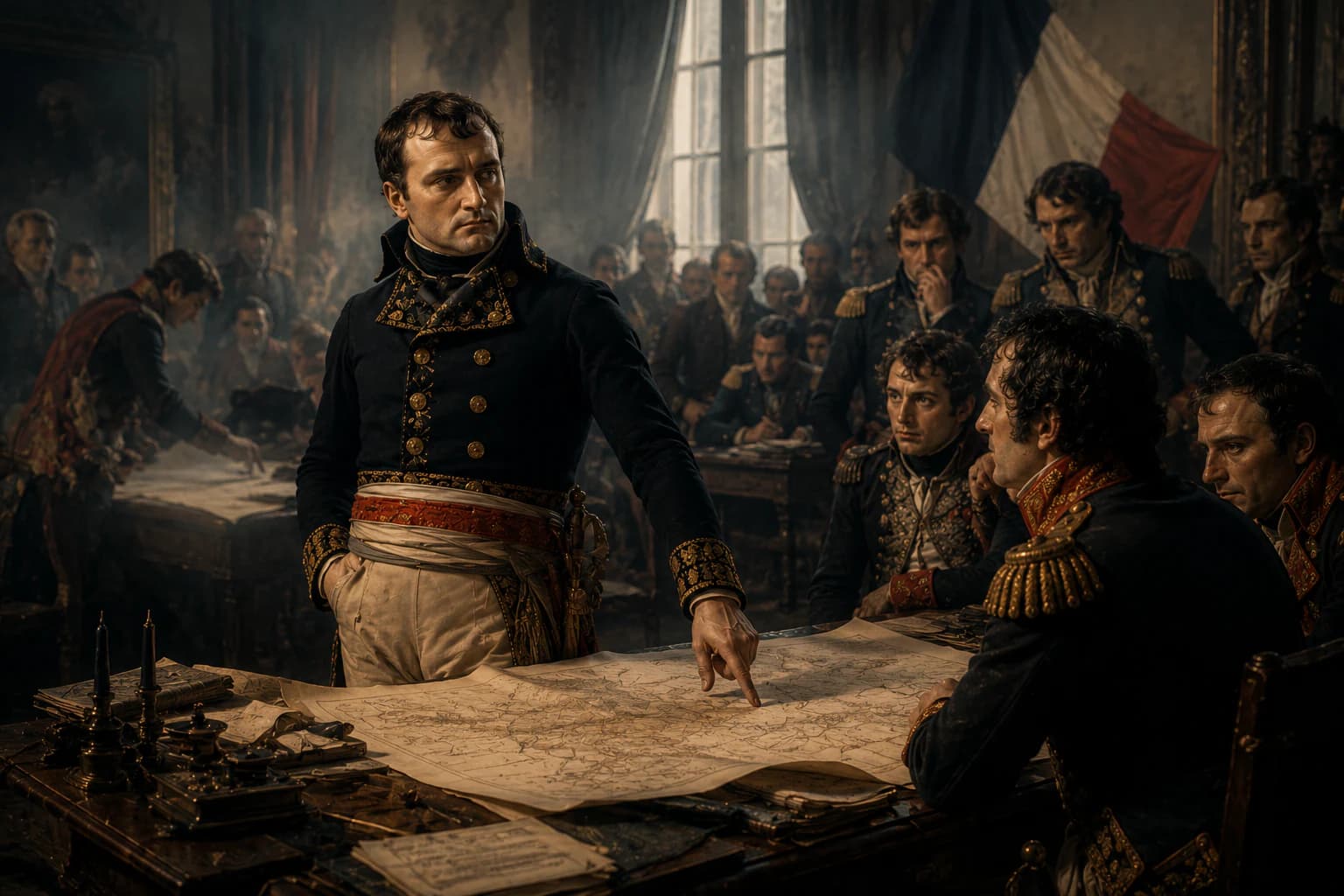
In 1789, the French Revolution broke old rules and unexpectedly opened the army to new men.

Before the revolution, top military jobs usually went to nobles by birth. Talent mattered less than family name.

When the old system collapsed, many aristocratic officers fled France. Suddenly, the army needed capable replacements fast.

At the same time, France faced war with European monarchies. The new government had to raise huge citizen armies to survive.

This emergency rewarded skill, speed, and confidence. Young officers who could organize artillery and inspire soldiers moved up quickly.

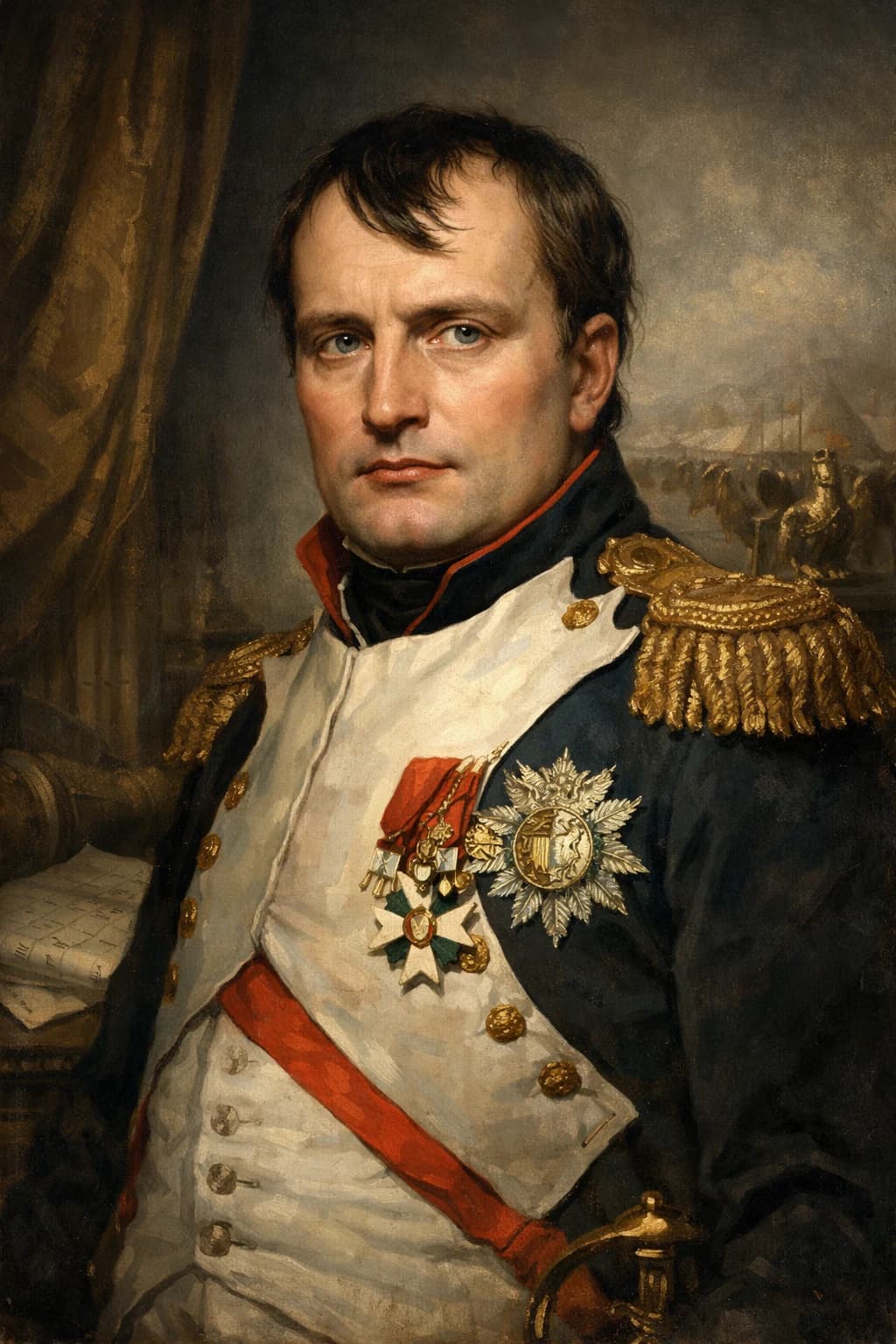
Napoleon Bonaparte, a Corsican outsider with strong technical training, entered exactly this world. Revolution gave him the opening the old regime never would.

That change mattered far beyond one career: modern mass armies began to value proven ability, and politics started rewarding generals who could deliver results quickly.

The Siege of Toulon
1793 CE
Step 2 of 101793 CEAccessible mode

The Siege of Toulon

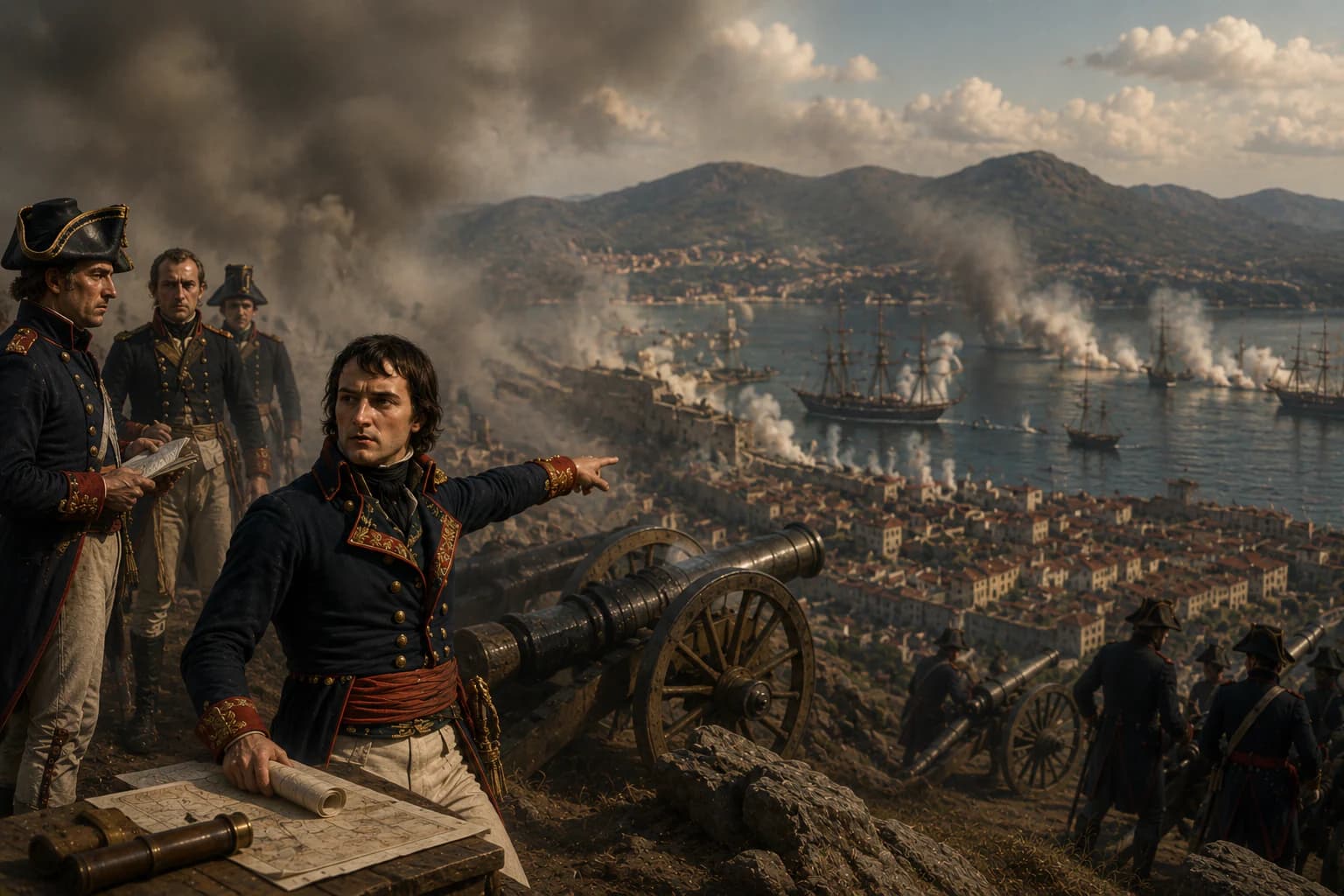
In 1793, the port of gave Napoleon his first real chance to stand out.

Royalists in rebelled against the Revolution and invited British and Spanish forces into the harbor. Losing the city was a major humiliation.

Napoleon, then a young artillery officer, argued that the key was not a direct assault but control of the high ground above the port.

He placed guns to hit enemy ships and force them to withdraw. This plan turned the siege in France's favor.

When fell, revolutionary leaders noticed him. He was promoted to brigadier general while still very young.

The victory showed his style early: technical skill, aggressive confidence, and smart political alliances that converted one success into a career leap.

It also proved to politicians that he could solve urgent crises, a reputation that followed him into every later command and helped him outpace older rivals.

The Italian Campaign
1796 CE
Step 3 of 101796 CEAccessible mode

The Italian Campaign

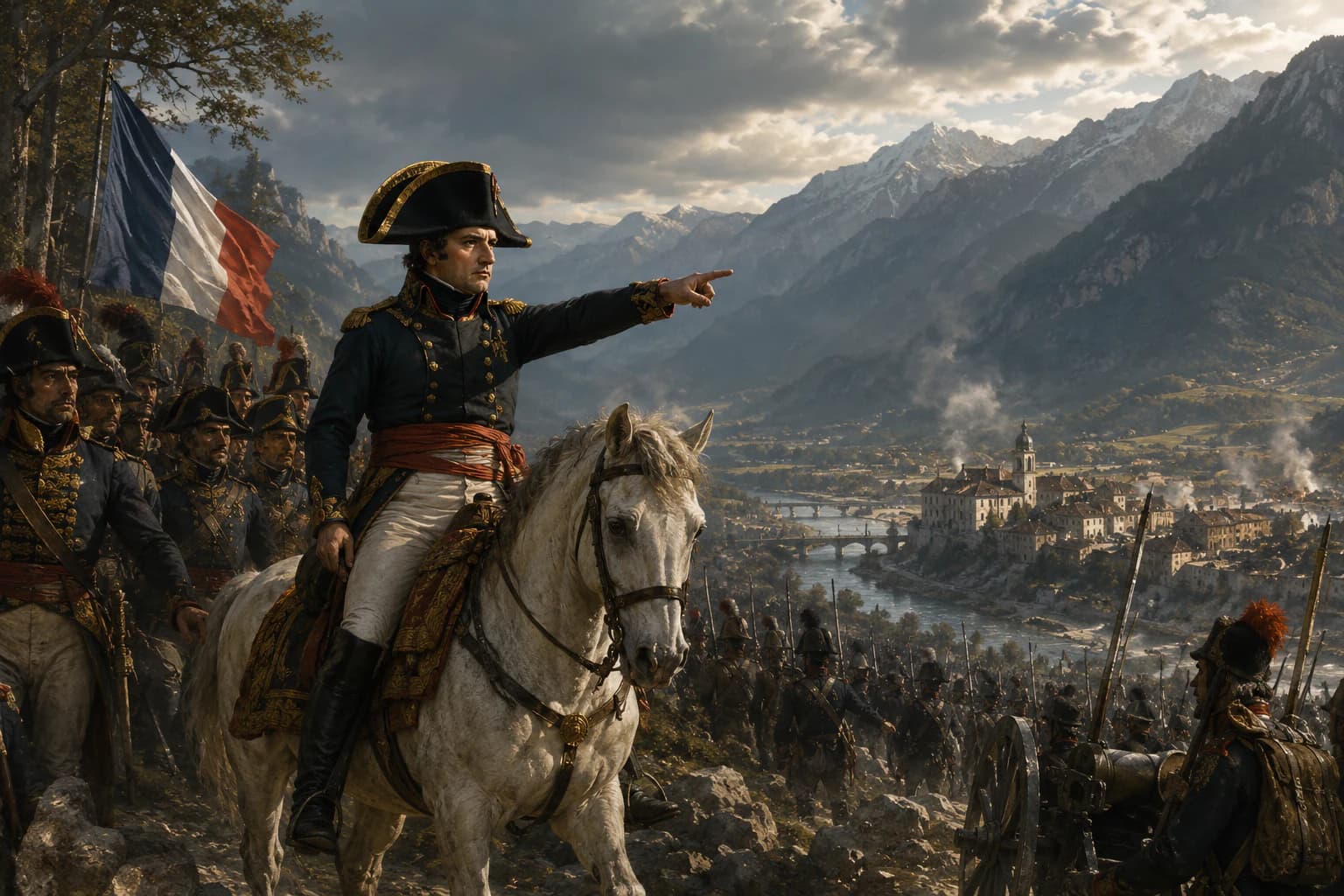
In 1796, Napoleon took command in Italy and turned a struggling army into a winning force.

French troops in northern Italy were poorly supplied and tired. Napoleon moved fast, struck isolated enemy units, and kept momentum.

He beat and allied armies in a series of rapid battles, forcing opponents to retreat before they could fully combine.

Napoleon also mastered publicity. His bulletins praised French heroism and presented every victory as proof of his genius.

Campaign success weakened 's position in Italy and pushed the war toward negotiations favorable to France.

By the end, he was no longer just a talented officer. He was a European celebrity whose military reputation could influence French politics.

His enemies now faced not only French armies but a commander who could shape public opinion as effectively as he shaped campaigns.

Premium

You've reached the turning point

The opening chapters show Napoleon rising from revolutionary opportunity. Premium follows the dangerous transformation: a gifted commander becomes an emperor, Europe bends around his ambition, and the pursuit of glory begins to consume the world he tried to master.

Continue into the reversals, crises and human stakes that make the story matter.

Unlock full story

What Premium unlocks next

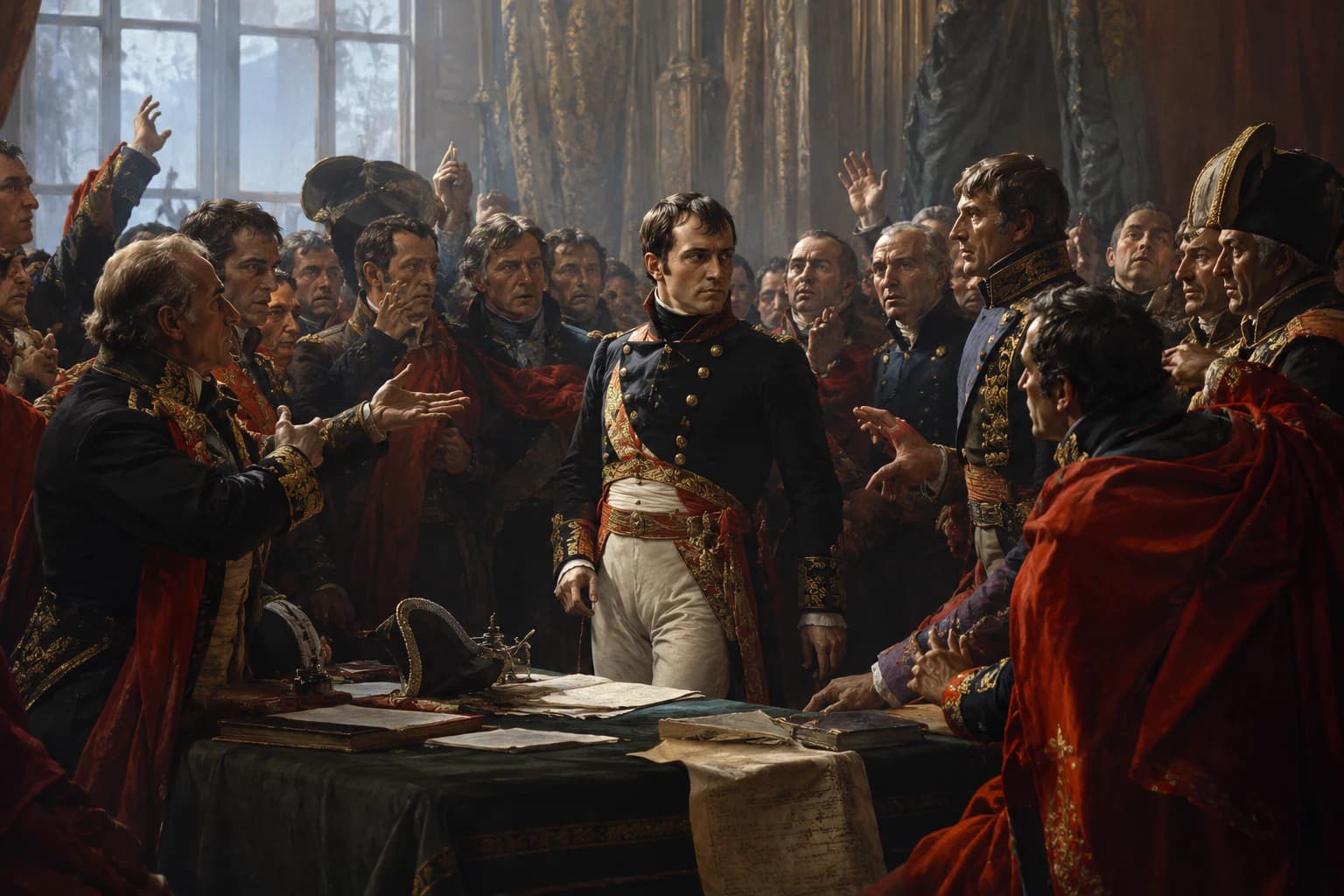
  1. 4The Coup of Brumaire
  2. 5The Emperor Reforms France
  3. 6Austerlitz Breaks the Old Empires
  4. 7Europe Under the Continental System
  5. 8Spain Becomes a People's War
  6. 9The Russian Disaster
  7. 10Waterloo and the New Europe

Browse stories

Browse stories for free

Explore the people connected to this turning point or enjoy one of our free stories.

Unlock full storyBrowse stories

References

Sources & Further Reading

Reliable sources, primary-source collections and reading paths connected to this page.

Sources used

  1. Encyclopaedia Britannica, Napoleon I,” Open source
  2. Fondation Napoleon, Napoleon.org,” Open source

Further reading

  1. Andrew Roberts, Napoleon: A Life, Viking.

Primary sources

  1. Yale Law School, Avalon Project: Napoleonic Documents,” Open source

Image references

  1. Chateau de Versailles, Napoleon I,” Open source

A weekly route through history

Find out first about the latest published stories, feature notes and occasional Premium offers in one weekly email.