Complete chronology
Full overview and deeper context for every journey step.
1769
Corsican beginnings
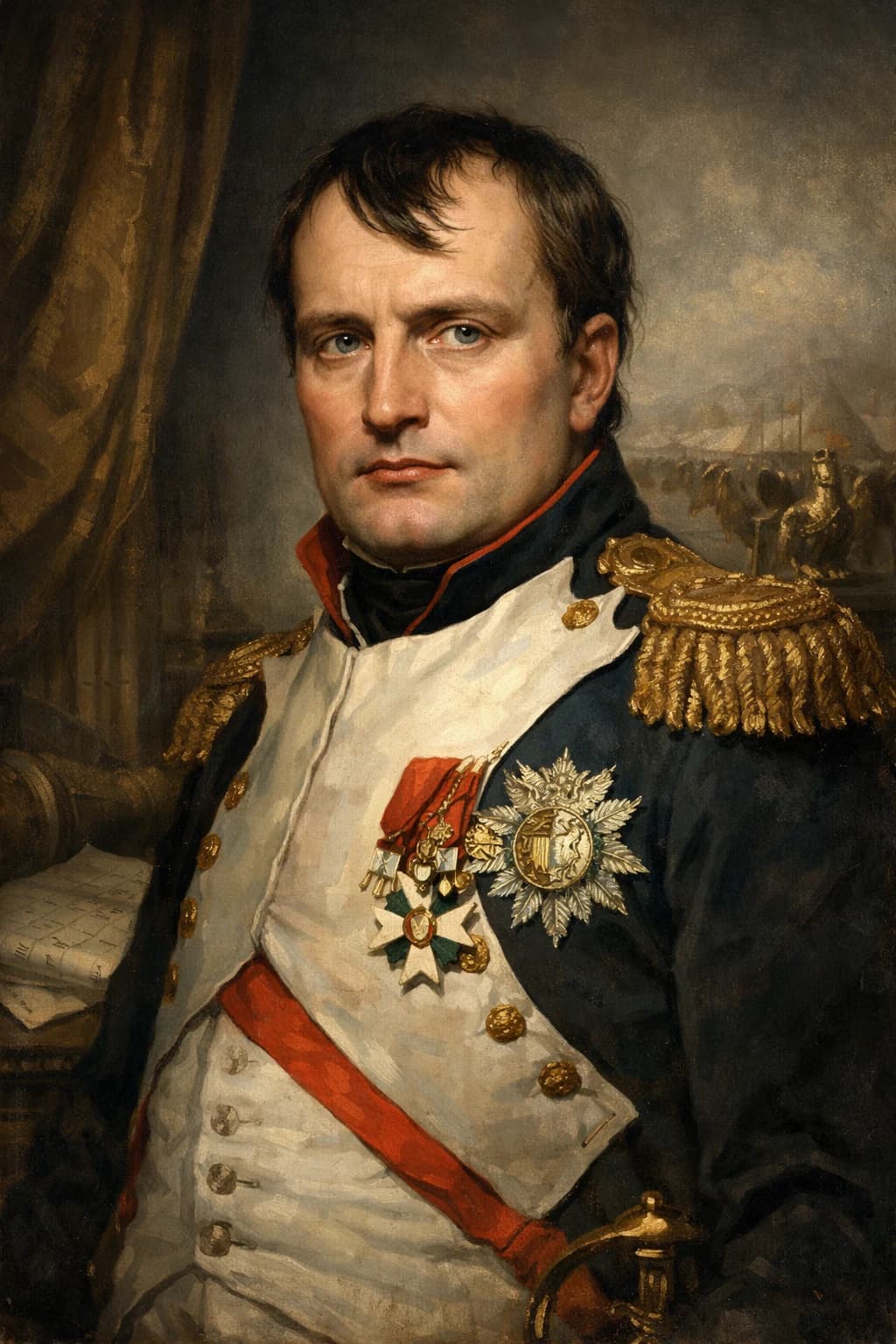
Napoleon Bonaparte was born in Ajaccio on 15 August 1769, only months after France took control of Corsica from Genoa. His family belonged to the minor nobility, respectable enough to secure education but far from the wealth of France's great aristocratic houses. As a child he admired Corsican patriot Pasquale Paoli and felt the sting of being provincial, accented and socially marginal in French schools. That outsider position became part of his drive. He learned the institutions of the state that had absorbed his island, then used them more effectively than men born closer to power. Napoleon's life began in a borderland between local identity and imperial opportunity.
His mixed identity gave him both an outsider’s perspective and a drive to prove himself within France.
1779–1785
Military education
Napoleon entered French military education as a scholarship student, first at Brienne and then at the Ecole Militaire in Paris. He trained in artillery, the most technical branch of the army, where mathematics, ballistics, logistics and timing mattered more than aristocratic style. He read widely, worked intensely and developed habits of concentration that later astonished subordinates. The old royal army still carried social hierarchy, but artillery offered a path for ability. Napoleon's training gave him a practical understanding of firepower, movement and supply. He would later become famous for audacity, but his audacity rested on calculation. He saw battlefields as systems of roads, guns, morale, timing and pressure points.
His technical training shaped a style of command rooted in calculation rather than aristocratic convention.
1789–1795
Revolutionary rise
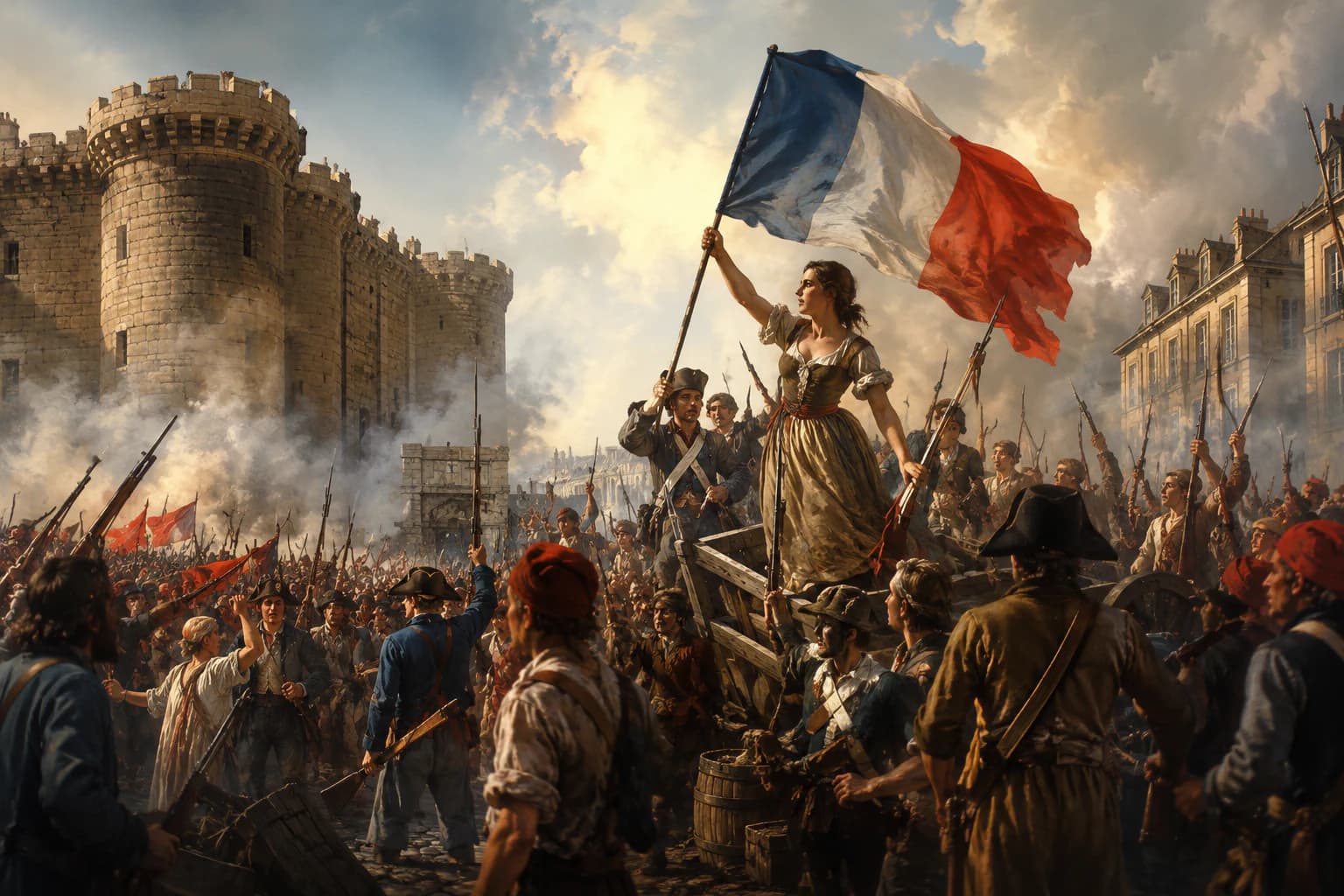
The Revolution remade Napoleon's world. Noble officers emigrated, armies expanded, and political loyalty became as important as birth. Napoleon first tried to connect revolutionary France with Corsican politics, but after conflict with Paoli he committed himself to France. His breakthrough came at the siege of Toulon in 1793, where his artillery plan helped drive British and royalist forces from the port. Promotion followed. In 1795 he defended the Convention in Paris against a royalist uprising with what became famously remembered as a whiff of grapeshot. Violence, legitimacy and opportunity were now intertwined. Napoleon rose because he was talented, but also because revolutionary crisis rewarded men willing to act decisively.
Revolutionary chaos opened doors that his talent alone might not have unlocked in a stable system.
1796–1797
Italian campaign
The Italian campaign of 1796-1797 made Napoleon famous. Given command of a poorly supplied French army, he offered his soldiers victory, plunder and momentum. He repeatedly divided enemy forces, moved faster than Austrian commanders expected, and turned operational speed into strategic shock. Battles such as Lodi, Arcole and Rivoli built his legend, though the propaganda he sent back to France polished the story carefully. He also negotiated like a ruler, redrawing northern Italy, extracting resources and treating the Directory in Paris as a partner he could pressure rather than merely obey. Italy revealed the full Napoleonic pattern: military brilliance, political theatre, administrative extraction and an instinct for making victory serve personal power.
His success in Italy revealed his talent for turning disadvantage into dominance through speed and planning.
1799
Seizing power
Napoleon's Egyptian expedition mixed ambition, science, propaganda and strategic overreach. He won at the Pyramids but was stranded after Nelson destroyed the French fleet at the Nile. Returning to France in 1799, he found the Directory discredited by war, corruption and instability. With allies including Sieyes, he helped overthrow it in the coup of 18 Brumaire. The new Consulate looked collective on paper, but Napoleon as First Consul quickly became the decisive authority. He offered France what many citizens craved after a decade of revolution: order without a full Bourbon restoration, reform without permanent terror, glory without parliamentary chaos. Personal dictatorship was sold as national rescue.
He framed personal power as national stability, making his rule appear both necessary and justified.
1804
Crowned emperor
By 1804 Napoleon had made himself indispensable enough to become emperor. The coronation in Notre-Dame, attended by Pope Pius VII, borrowed from monarchy while insisting on achievement rather than ancient blood. The famous image of Napoleon crowning himself captured the message: authority came through his own genius and the nation he claimed to embody. His domestic achievements were immense. The Napoleonic Code rationalised civil law, protected property rights and equality before the law for men, while limiting women's legal independence and labour organisation. He centralised administration through prefects, stabilised finances, founded institutions and reconciled with the Catholic Church through the Concordat. His France was modern, efficient and tightly controlled.
His empire fused revolutionary ideals with personal authority, creating a system both modern and autocratic.
1805–1809
European dominance
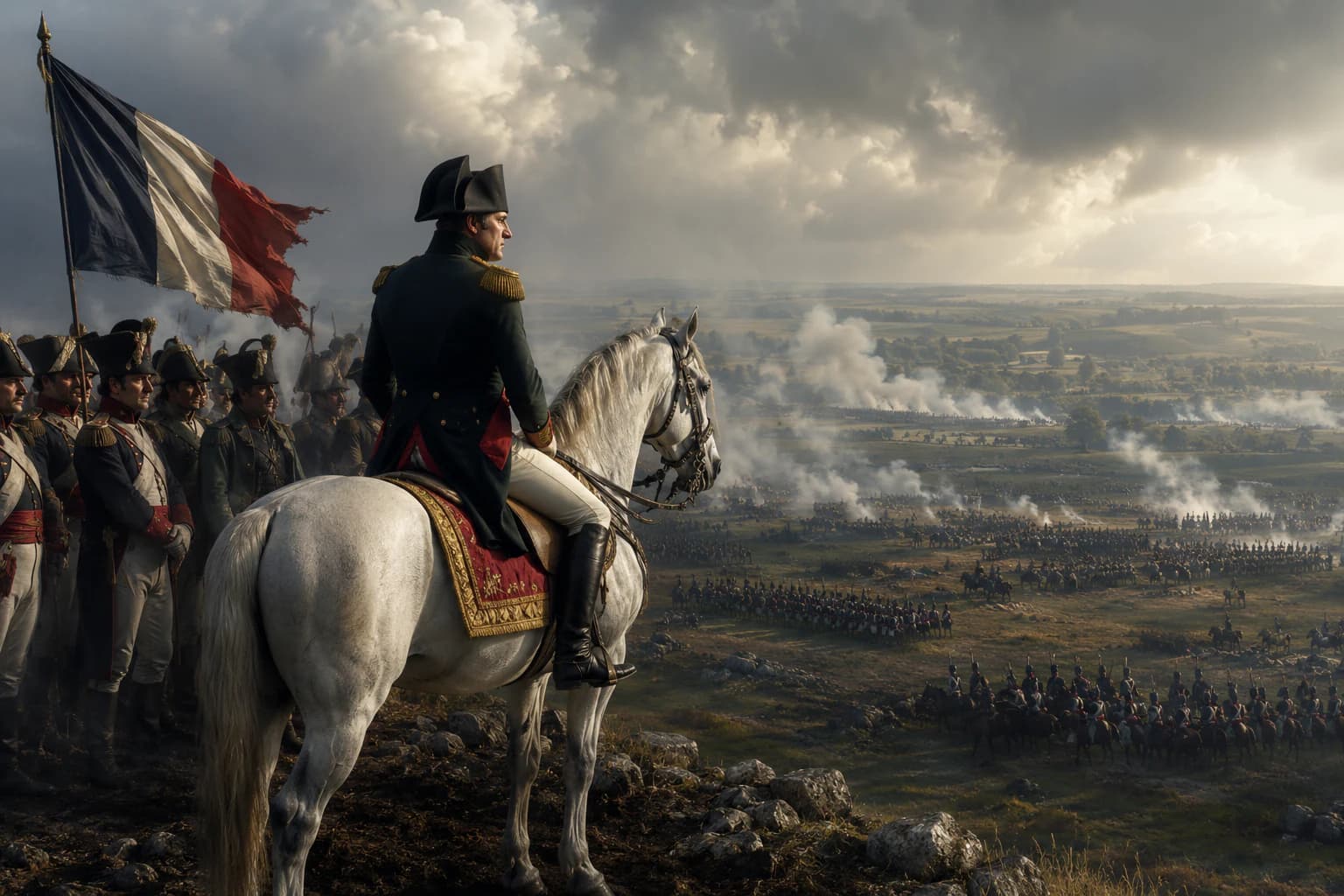
Napoleon's military peak came in the wars against the Third, Fourth and Fifth Coalitions. Austerlitz in 1805 destroyed the aura of Austria and Russia in a single masterpiece of deception and timing. Jena-Auerstedt crushed Prussia in 1806, and Wagram defeated Austria again in 1809. Across Europe, Napoleon dissolved the Holy Roman Empire, created the Confederation of the Rhine, placed relatives on thrones, spread legal reform and demanded soldiers, taxes and obedience. Yet the system contained its own opposition. The Continental System, designed to strangle British trade, damaged allies and subjects. In Spain, invasion produced a brutal guerrilla war and British intervention. French domination exported revolutionary change, but also awakened resistance, nationalism and hatred of occupation.
His dominance depended on constant expansion, making stability difficult to sustain.
1812
Russian disaster
The Russian campaign was the hinge of Napoleon's downfall. Tsar Alexander I had grown unwilling to maintain the Continental System, and Napoleon answered with a vast multinational army in 1812. The Russians retreated, trading space for time, while supply lines stretched and the army bled through heat, hunger, disease and desertion. Borodino gave Napoleon a costly battlefield victory but not a decisive political result. Moscow burned, Alexander refused to negotiate, and the retreat became a catastrophe as winter, hunger and Russian attacks destroyed the Grande Armee. Napoleon still possessed genius and authority, but the material basis of domination had cracked. Prussia, Austria, Russia and Britain now had reason to believe the impossible was possible: Napoleon could be beaten.
Overreach exposed the limits of even the most effective military leadership.
1815–1821
Final exile
After defeat in 1814, Napoleon abdicated and was exiled to Elba, close enough to Europe for his name to remain dangerous. In 1815 he returned to France, and the army sent to stop him joined him instead. The Hundred Days ended at Waterloo, where Wellington and Blucher defeated his final bid for power. This time the allies sent him far away to Saint Helena in the South Atlantic. There Napoleon dictated memories, justified decisions and helped craft the image of the persecuted genius betrayed by lesser men. He died in 1821. His legacy is double. He preserved and exported parts of the Revolution through law and administration, but did so through censorship, dynastic rule and continuous war. Europe after Napoleon could not return to what it had been.
Even in defeat, he carefully shaped the narrative that would define him in history.