Complete chronology
Full overview and deeper context for every journey step.
1870–1887
Family and shock
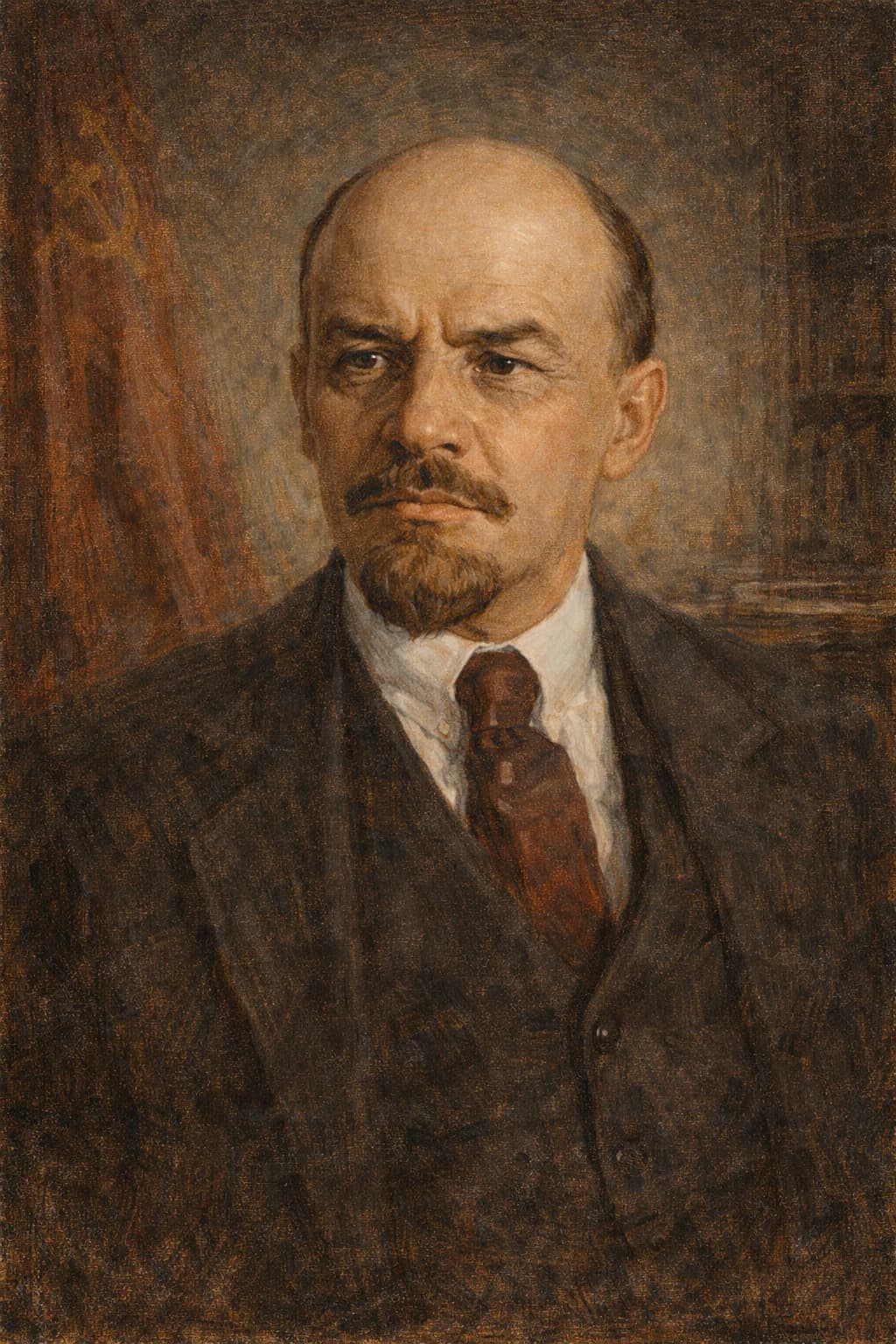
Lenin's childhood in Simbirsk was not one of poverty or proletarian hardship. His father was an inspector of schools, and the family valued education, discipline and advancement within the imperial system. The rupture came in 1887, when Lenin's older brother Alexander was hanged for involvement in a plot to assassinate Tsar Alexander III. The execution did not simply produce grief. It exposed the violence beneath autocracy and gave Lenin a personal relationship to revolutionary sacrifice. He did not follow his brother into conspiratorial terrorism. Instead, he sought a more systematic explanation of power, class and state repression, eventually finding it in Marxism.
Personal loss can transform abstract ideas about injustice into a lifelong political mission.
1887–1895
Student radicalisation
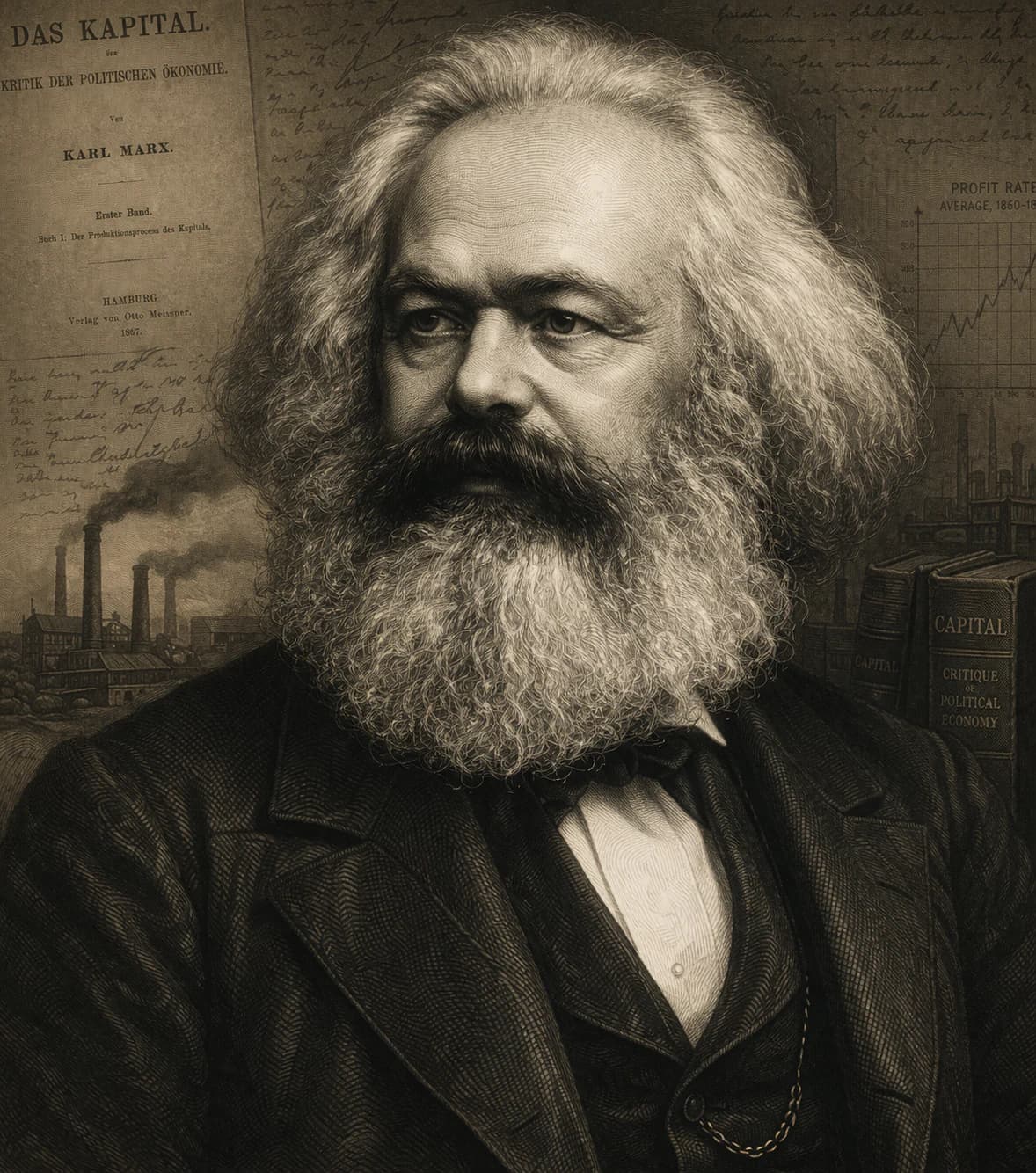
Lenin was expelled from Kazan University after student unrest but continued his studies externally, qualifying in law. His political education came through banned literature, discussion circles and the study of Russia's social transformation. Marxism appealed because it seemed to make revolution scientific rather than merely heroic. It explained capitalism, class struggle and the historical role of workers, while also allowing Lenin to criticise older populist hopes that Russia's peasant commune could bypass modern class conflict. Repression taught him another lesson: an opposition movement in Russia could not survive as a loose moral protest. It needed secrecy, discipline and professional commitment.
Repression often sharpens conviction rather than extinguishing it.
1895–1903
Exile and theory
Lenin's Siberian exile was punitive, but it also gave him time to become a strategist. He married Nadezhda Krupskaya, studied Russian capitalism and developed the habits of relentless polemic that would define his career. In What Is to Be Done?, he argued that socialist consciousness would not arise automatically from economic struggle; it required a party of professional revolutionaries. Critics saw elitism and authoritarian danger in this model. Lenin saw realism under autocracy. His revolutionary party would be centralised, argumentative internally, and ruthless toward opponents once decisions had been made. The future Bolshevik style was already visible.
Periods of constraint can become laboratories for strategic clarity.
1903
Factional split
The Bolshevik-Menshevik split began over organisational questions that seemed narrow but proved historic. Lenin wanted a tighter party of committed activists; Julius Martov favoured a broader membership definition. Personal rivalry, editorial control and strategic differences deepened the divide. The labels Bolshevik and Menshevik originally referred to majority and minority alignments at the congress, but they hardened into political identities. Lenin's faction did not always command the majority of Russian socialists, yet it built a culture of discipline, polemic and central command. That made it unusually capable in a crisis, when hesitation could destroy opportunity.
Structure and discipline can outweigh numbers when movements face moments of decision.
1905–1917
Years abroad
The 1905 Revolution showed Lenin both possibility and failure. Workers' councils, or soviets, emerged; strikes shook the empire; the tsar made concessions; but the regime survived. Lenin spent much of the next decade abroad, often poor, often quarrelling, but intellectually active. He debated imperialism, nationalism, party finance, war and the meaning of Marxism in a backward agrarian empire. The First World War isolated him further because he denounced the conflict as imperialist and urged revolution against one's own ruling class. To many socialists this seemed extreme. To Lenin, the war was proof that capitalism and empire had entered a terminal crisis.
Patience combined with preparation can position leaders to act decisively when circumstances shift.
1917
Return to Russia
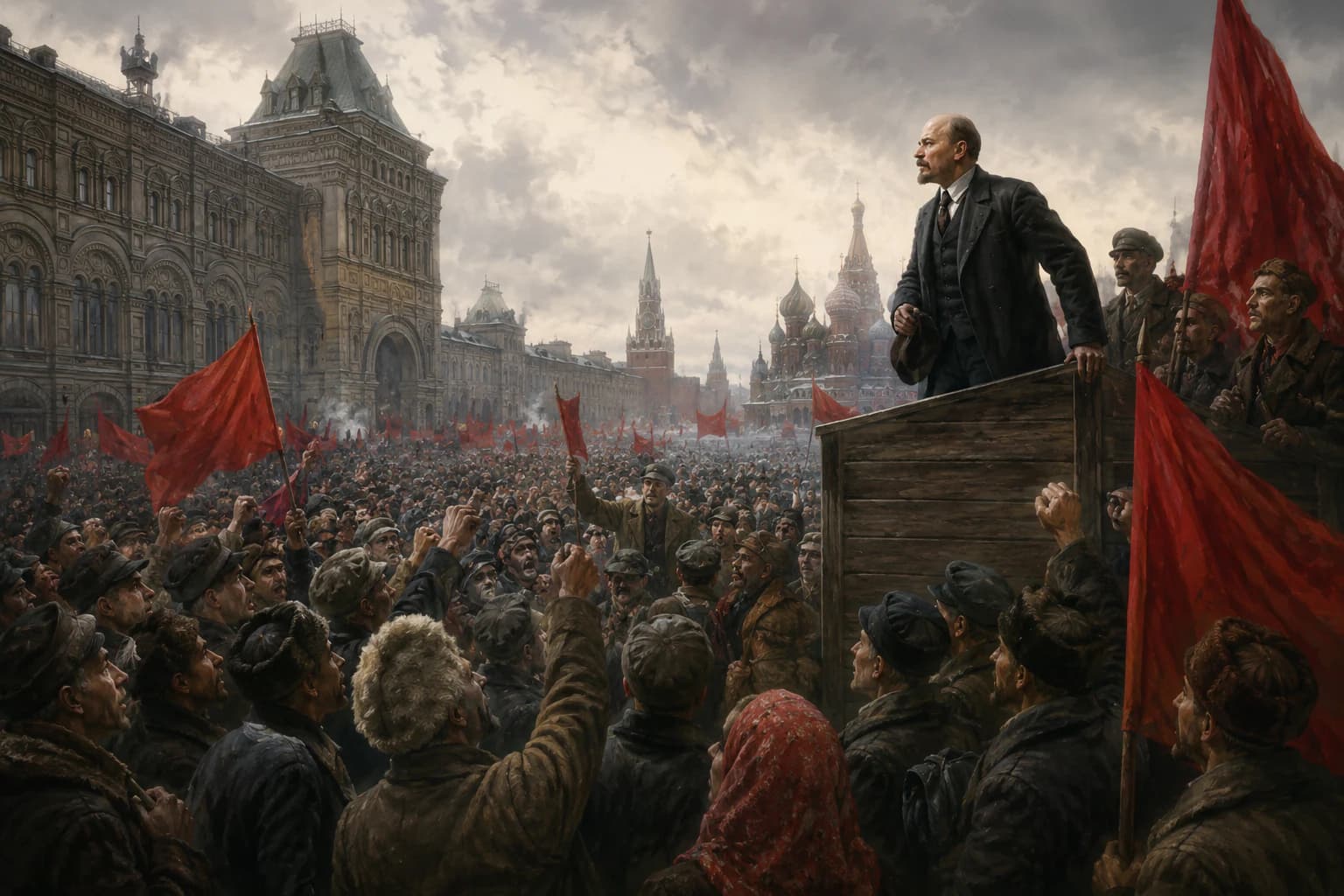
The February Revolution of 1917 overthrew the Romanovs while Lenin was still in exile. Germany allowed him to travel across its territory in a sealed train, hoping unrest would weaken Russia's war effort. Lenin arrived in Petrograd and stunned even Bolshevik colleagues by rejecting cooperation with the Provisional Government. His April Theses demanded peace, land, bread and soviet power. The slogans worked because they addressed immediate exhaustion: soldiers wanted out of war, peasants wanted land, workers wanted control and many citizens distrusted liberal delay. Lenin's genius in 1917 was timing. He recognised that legitimacy was moving faster than institutions could contain.
Moments of instability reward those willing to propose clear and radical alternatives.
1917
Seizure of power
The October Revolution was less a mass storming than a disciplined insurrection at a moment of state weakness. Lenin pressed hard for action before the Second Congress of Soviets could be used against Bolshevik momentum. Armed Red Guards and sympathetic soldiers took key points in Petrograd and arrested the Provisional Government in the Winter Palace. The new regime issued decrees on peace and land, promising to end the war and legitimise peasant seizures. But the Bolsheviks also dissolved the elected Constituent Assembly when it did not give them a majority. From the beginning, Lenin linked revolutionary legitimacy to one-party control.
Winning power is only the beginning; shaping what follows defines historical impact.
1918–1921
Civil war leadership
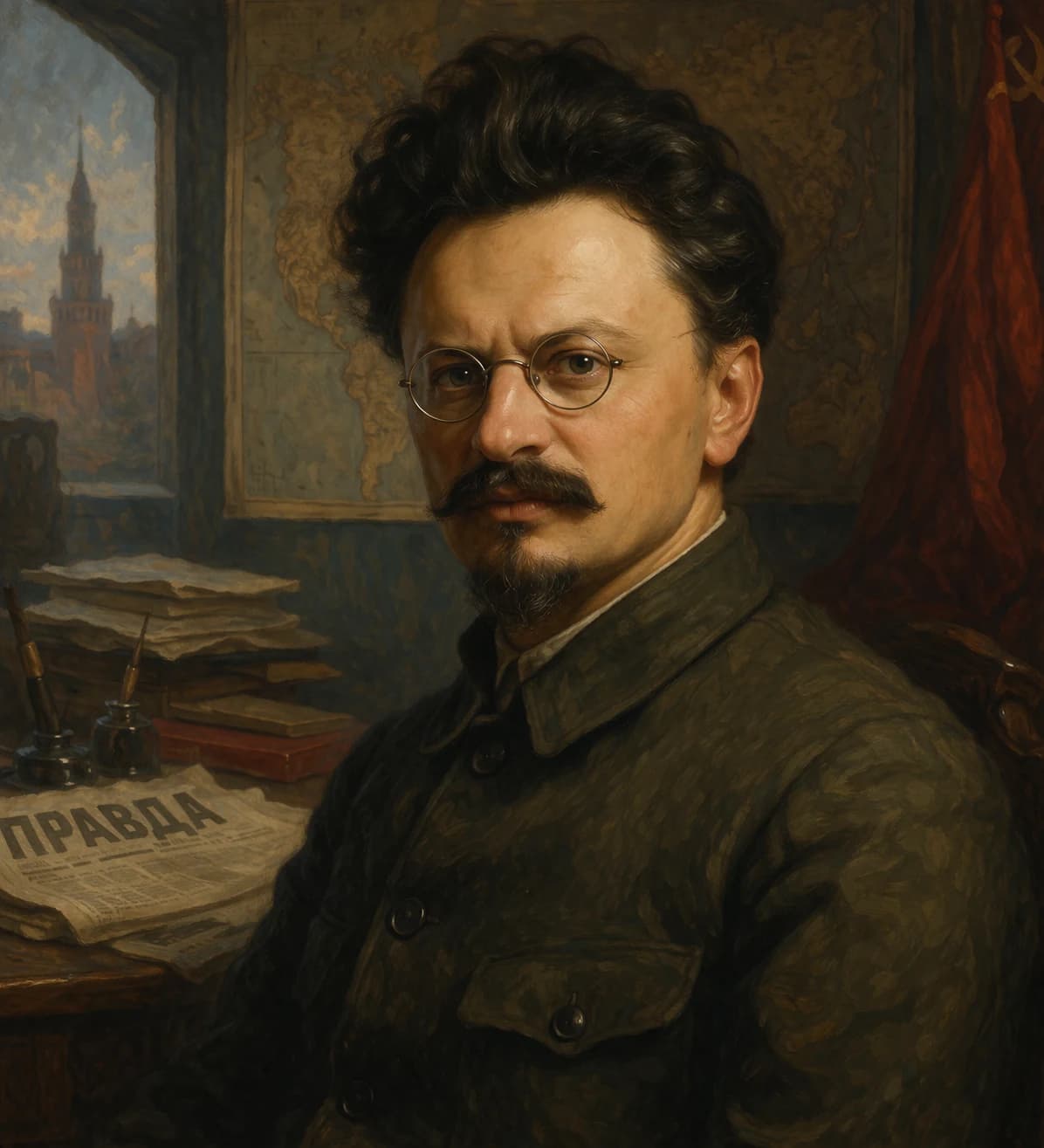
Civil war made Lenin's revolution harsher and more centralised. The Bolsheviks faced White armies, foreign intervention, nationalist movements, peasant resistance and economic collapse. Leon Trotsky built the Red Army, while the Cheka suppressed enemies through terror. War Communism requisitioned grain and militarised economic life, helping feed the state and army but deepening famine and revolt. Lenin defended coercion as necessary for revolutionary survival. The Bolsheviks won, but victory shaped the regime profoundly: emergency methods became governing habits, plural socialist politics was crushed, and violence became embedded in the new state.
Extreme threats often push leaders toward methods that shape the future character of their systems.
1921–1924
Final years and legacy
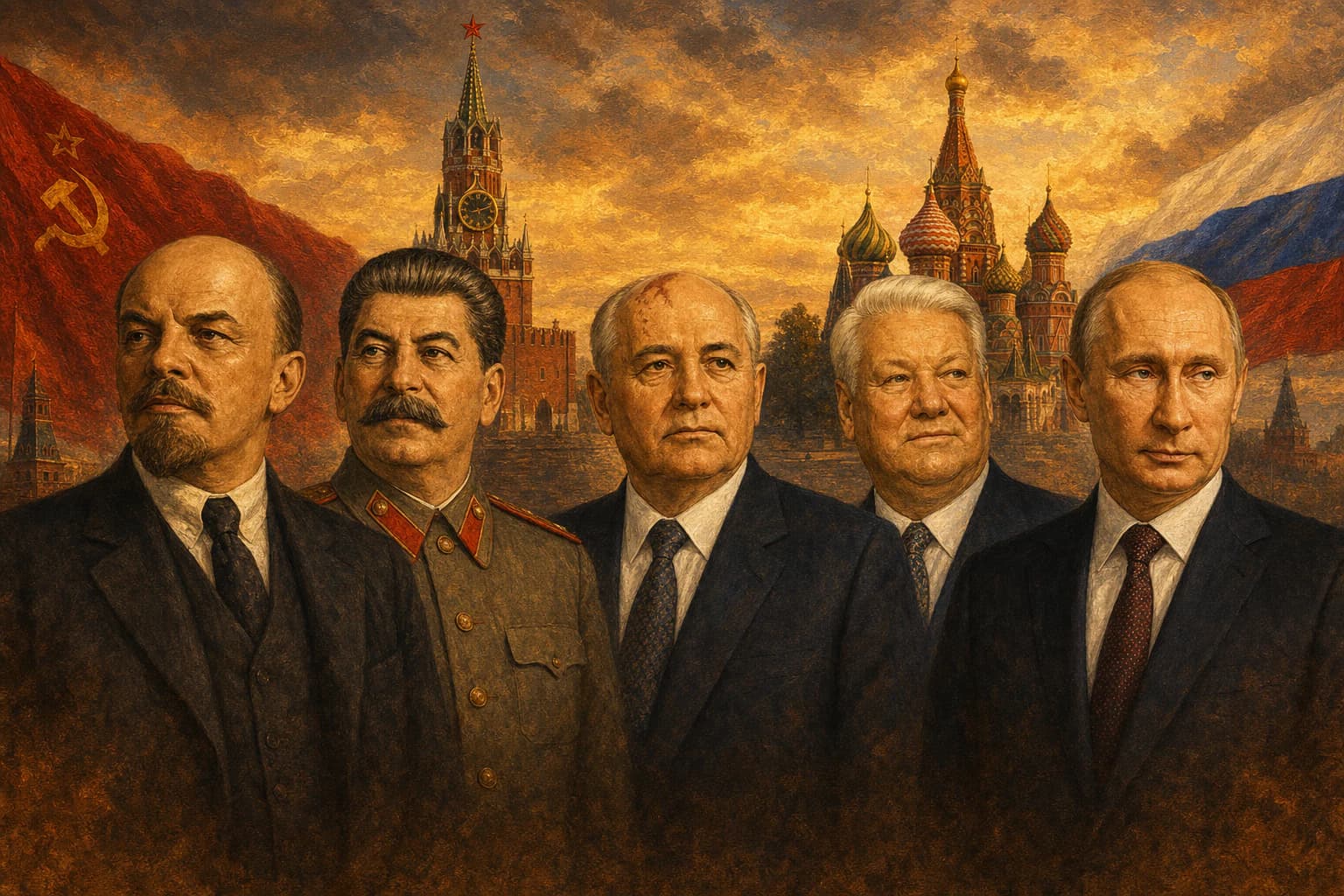
By 1921, famine, strikes and the Kronstadt rebellion forced retreat. Lenin introduced the New Economic Policy, allowing limited markets while preserving Bolshevik political monopoly. In 1922, the Union of Soviet Socialist Republics was founded, giving institutional form to the revolutionary state. Lenin's final illness, caused by strokes, removed him from daily power while succession struggles sharpened. In his last writings he criticised bureaucracy and warned about Stalin's rudeness and concentration of authority, but he had already helped create the one-party system Stalin would inherit. Lenin's legacy is therefore inseparable from both revolutionary anti-imperial appeal and authoritarian state-building.
The systems leaders create often outlast them, carrying both their intentions and their unresolved tensions.