Complete chronology
Full overview and deeper context for every journey step.
1868–1880s
Imperial upbringing
Nicholas grew up as the eldest son of Alexander III, a physically imposing and politically reactionary emperor who had seen his own father assassinated. The lesson Nicholas absorbed was not reform but firmness. His education gave him languages, military habits and dynastic piety, but little preparation for managing industrial unrest, nationalism, peasant hunger or constitutional politics. He was personally gentle in many private settings and devoted to family life, yet politically rigid. He believed the tsar's authority was a God-given trust that could not be bargained away. That conviction gave him moral certainty and strategic blindness.
A childhood built on control and isolation left him unprepared for a society already beginning to shift beneath the throne.
1894
Unexpected ascension
When Alexander III died, Nicholas inherited one of the world's largest and most difficult empires at twenty-six. His marriage to Alexandra of Hesse soon followed, creating a deeply affectionate but increasingly isolated royal partnership. The coronation celebrations in 1896 were overshadowed by the Khodynka Field disaster, where more than a thousand people died in a crowd crush. Nicholas's decision to attend a French embassy ball afterward damaged his public image. Early in the reign he rejected hopes for constitutional participation as 'senseless dreams.' The tone was set: private sensitivity, public distance and an inability to understand how symbols could wound.
Taking power too soon, he leaned on certainty rather than adaptability when confronted with complexity.
1890s–1904
Autocracy maintained
Russia under Nicholas was changing faster than its political system. Railways, factories, urban workers, professional classes and revolutionary parties expanded alongside peasant poverty and national tensions across the empire. Sergei Witte's industrial policies brought growth, but growth brought strikes, slums and organised dissent. Nicholas's government answered pressure with police surveillance, censorship and selective reform rather than genuine power-sharing. The tsar saw concessions as weakness and opposition as disloyalty. That view made peaceful adaptation harder. The empire was not doomed by modernity alone; it was endangered by a ruler who interpreted modern political demands through the moral vocabulary of obedience.
Refusing gradual change often makes eventual upheaval more severe.
1905
Revolution of 1905
Russia's defeat by Japan in 1904-1905 shattered assumptions about imperial strength. Then, on Bloody Sunday in January 1905, troops fired on workers marching peacefully to petition the tsar in St Petersburg. Nicholas was not present, but the myth of the benevolent father-tsar was badly damaged. Strikes, mutinies, peasant unrest and national movements forced the October Manifesto, promising civil liberties and an elected Duma. Yet Nicholas regarded these concessions as forced humiliation. The Fundamental Laws of 1906 preserved wide autocratic powers, and the regime repeatedly limited the Duma's independence. The revolution had been survived, not solved.
Concessions made under pressure rarely restore trust if they are quickly undermined.
1906–1913
Fragile stability
Prime Minister Pyotr Stolypin tried to stabilise Russia through agrarian reform, economic development and harsh repression of revolutionaries. There were signs of recovery: growth resumed, some peasants consolidated land, and parliamentary politics acquired routines. But the settlement rested on contradiction. Russia had a Duma, yet the tsar and his ministers kept decisive authority. Russia had reform, yet police coercion remained central. The imperial family also became more vulnerable through the illness of the heir, Alexei, whose haemophilia was concealed from the public. Alexandra's dependence on Grigori Rasputin for spiritual and emotional support later fed rumours that corroded respect for the dynasty.
Short-term calm can disguise long-term instability when root causes remain untouched.
1914–1915
War leadership
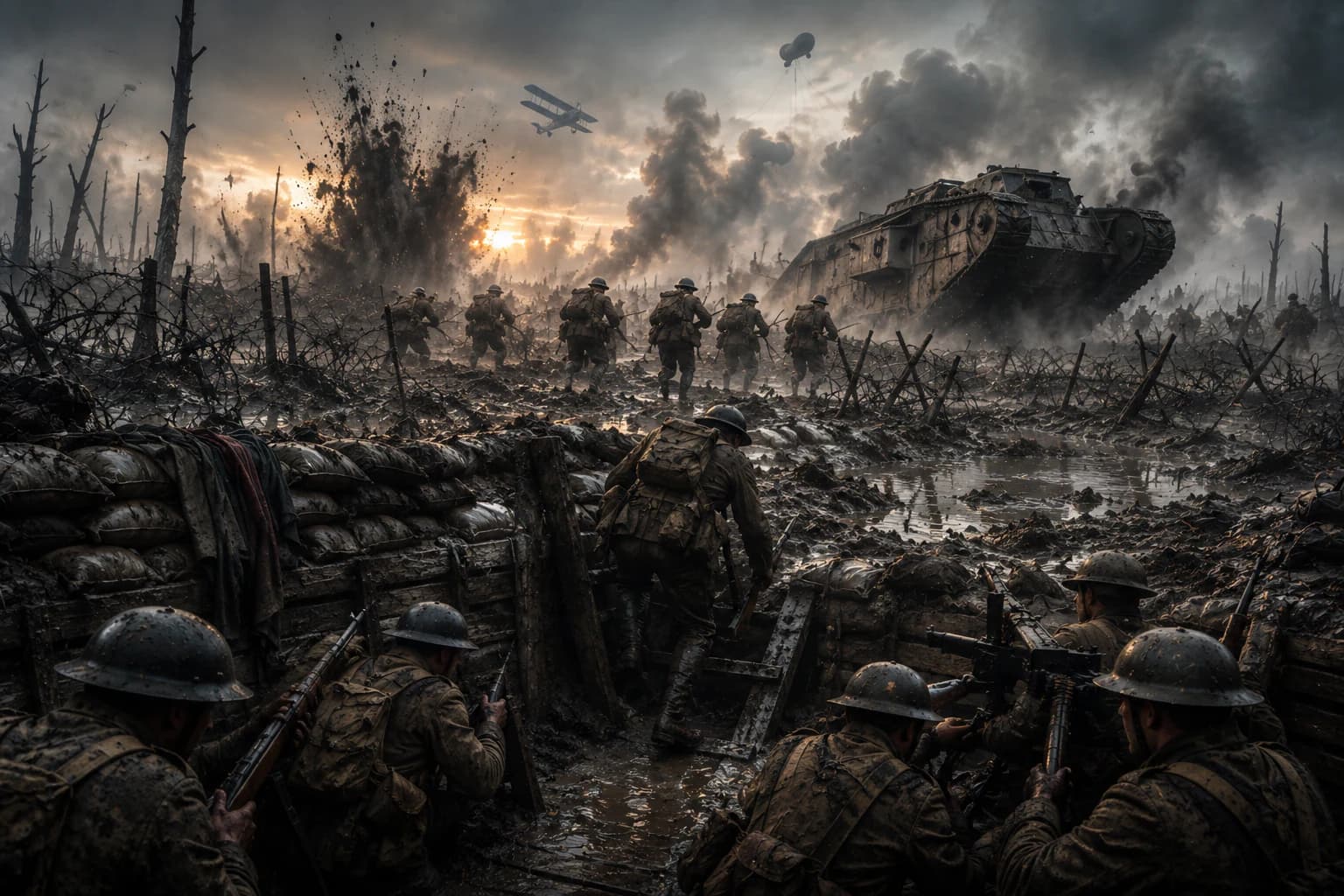
War initially produced patriotic unity, but Russia was not prepared for the scale of modern industrial conflict. Defeats, shell shortages, casualties, inflation and transport breakdowns eroded confidence. In 1915 Nicholas took personal command at army headquarters, hoping to inspire the front. Politically it was disastrous. He became directly associated with military failure while Alexandra, increasingly unpopular and distrusted because of her German birth and reliance on Rasputin, was left exposed in Petrograd politics. Ministers came and went in what critics called ministerial leapfrog. The state looked incompetent, secretive and detached from suffering. War turned chronic weakness into revolutionary crisis.
Personalizing responsibility in a failing system can accelerate its collapse.
1917
Revolution and abdication
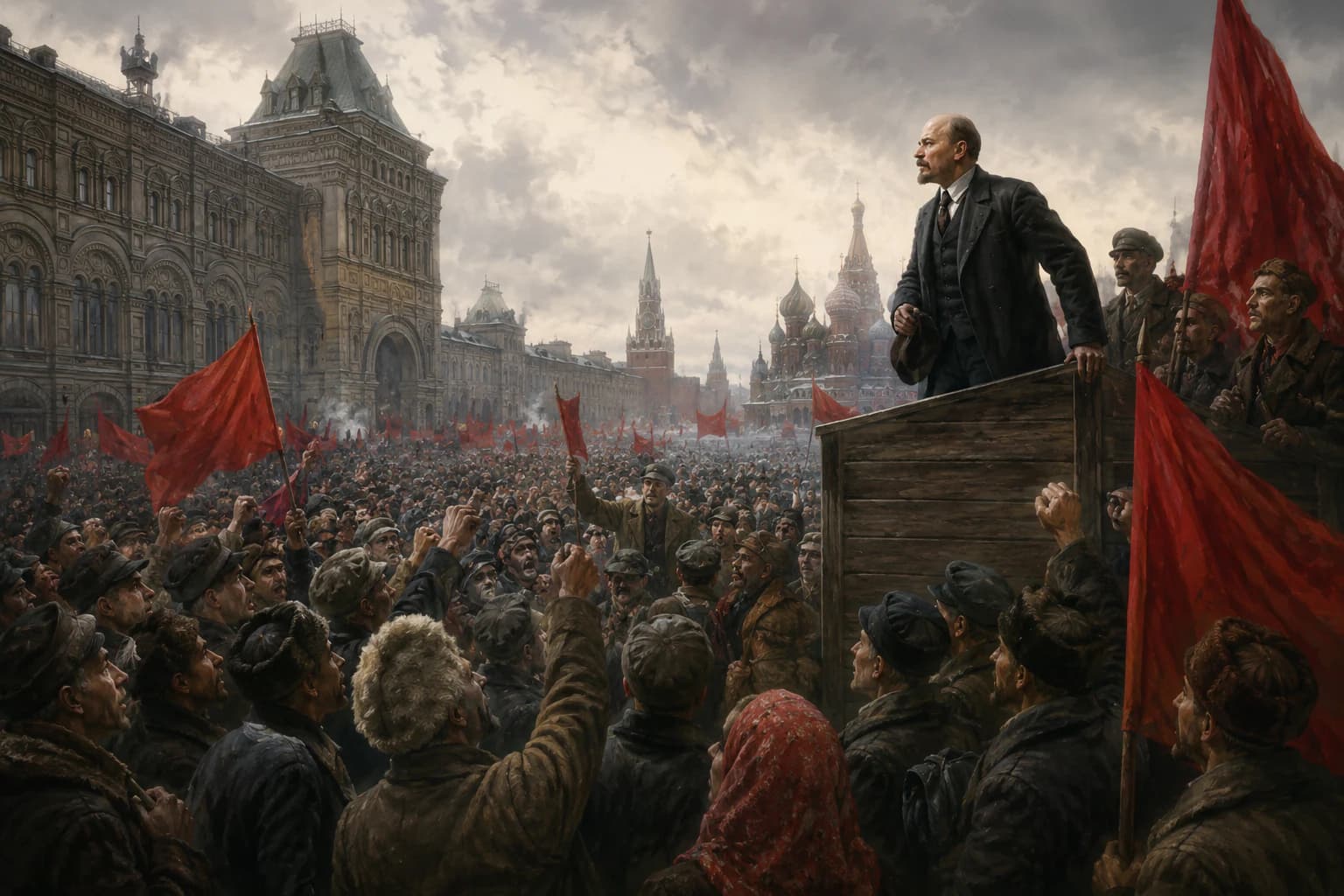
The February Revolution began with bread queues, strikes and demonstrations in Petrograd, then became fatal when soldiers refused to suppress the crowds. Nicholas, away at headquarters, misunderstood the speed of collapse. His train was blocked; generals, politicians and even monarchists concluded that abdication was necessary to preserve the war effort and public order. He first abdicated for himself and his son Alexei, then for his brother Michael, who declined the throne without popular consent. Three hundred years of Romanov rule ended in days. The collapse revealed that autocracy had become hollow: when army and elite confidence vanished, sacred authority had no machinery left.
When loyalty from institutions collapses, even entrenched power can vanish almost overnight.
1917–1918
Captivity and execution
After abdication, the Romanovs lived first under guard at Tsarskoe Selo, then at Tobolsk, and finally in the Ipatiev House at Ekaterinburg. The Provisional Government had hoped to send them abroad, but Britain withdrew willingness to receive them, and revolution overtook the question. After the Bolshevik seizure of power and the outbreak of civil war, the family became dangerous symbols. As anti-Bolshevik forces approached Ekaterinburg, Nicholas, Alexandra, their children and attendants were shot in the night of 16-17 July 1918. The killing was secretive, brutal and final, intended to prevent restoration from gathering around living Romanovs.
Revolutions often close chapters of history with decisive and irreversible acts.
Post-1918
End of empire
Nicholas II's legacy remains contested because his private and public lives point in different directions. As husband and father he appears devoted, sincere and often sympathetic. As ruler he was narrow, indecisive at critical moments and committed to an autocratic principle Russia could no longer sustain. Some later memory, especially after his canonisation as a passion-bearer by the Russian Orthodox Church, emphasises suffering and martyrdom. Political history must also reckon with responsibility. Nicholas did not create every crisis that destroyed the empire, but he repeatedly resisted reforms that might have broadened legitimacy. His reign shows how personal decency cannot compensate for political incapacity when a state is under revolutionary strain.
History often judges leaders not only by their intentions, but by how they respond when circumstances demand change.