People

Thomas Cranmer

Thomas Cranmer was Archbishop of Canterbury from 1533 to 1555. A central architect of the English Reformation, he wrote the Book of Common Prayer and was burned for heresy under Mary I.

Born
1489 CE
Died
1556 CE
Role
Archbishop of Canterbury

Archbishop of Canterbury (1489–1556)

AI-generated portrait of Thomas Cranmer in ecclesiastical robes
AI-assisted historical reconstruction

An illustrative reconstruction based on historical context. It is not a photograph or documentary likeness. Image policy

Quick answer

Thomas Cranmer was Archbishop of Canterbury from 1533 to 1555. A central architect of the English Reformation, he wrote the Book of Common Prayer and was burned for heresy under Mary I.

Born
1489 CE
Died
1556 CE
Role
Archbishop of Canterbury
Years
1489-1556 CE
Facts

Thomas Cranmer timeline facts

Selected specifics from this profile's life story.

1489
Quiet beginnings

Thomas Cranmer was born in Nottinghamshire in 1489 into a modest gentry family and rose through scholarship rather than noble power.

1533
Archbishop appointment

Made Archbishop of Canterbury in 1533, Cranmer declared Henry's marriage to Catherine invalid and Anne Boleyn's marriage lawful.

1552
Doctrinal shift

The 1552 Prayer Book and Forty-Two Articles moved England more clearly toward Reformed Protestant theology.

1556
Final stand

At his execution in 1556, Cranmer rejected his recantations and held the hand that signed them into the flames.

Life Journey

Scholar, archbishop, prayer-book reformer, and Protestant martyr

Follow the story in a more continuous narrative, with a reading mode that matches how much depth you want.

Complete chronology

1489

Quiet beginnings

Cranmer's beginnings were respectable but not grand. Born at Aslockton in Nottinghamshire, he belonged to the lower gentry, a world that valued land, education and clerical opportunity but did not guarantee national influence. Cambridge gave him the route upward. There he absorbed humanist learning, theology and the habits of slow textual argument. This matters because Cranmer was never a simple firebrand. He was cautious, scholarly and often hesitant in public action. The English Reformation would later move through proclamations, statutes and executions, but Cranmer's mind was formed in libraries, disputations and the patient comparison of scripture, fathers and doctrine.
1510s

Cambridge scholar

Cranmer's Cambridge years coincided with the spread of humanist scholarship and early evangelical discussion in England. Reform did not arrive as a single conversion. It came through language, texts and networks: Greek and Hebrew learning, debates over justification, criticism of abuses, and growing attention to the authority of scripture. Cranmer remained careful, but his theology shifted steadily away from late medieval Catholic assumptions. He also married early in life, lost his wife, and returned to clerical celibacy, a personal history that later made his Protestant views on clerical marriage more than theoretical. His scholarship prepared him for a world in which theology could suddenly become state policy.

1529

Royal attention

Henry VIII's effort to annul his marriage to Catherine of Aragon created the crisis that transformed Cranmer's life. Cranmer reportedly suggested that the question be tested by learned opinion across universities, shifting the issue from papal discretion to scriptural and scholarly argument. The proposal appealed to a king frustrated by Rome and by imperial pressure on the pope. Cranmer was drawn into royal service and sent abroad to gather support. There he also encountered continental reformers more directly and married Margarete, niece of the Lutheran theologian Andreas Osiander, despite clerical celibacy rules. His private commitments and public usefulness were beginning to converge.

1533

Archbishop appointment

Cranmer's appointment as archbishop was extraordinary. He was not a conventional church prince with long episcopal experience; he was a scholar useful to a king in a marital and jurisdictional crisis. In 1533 he declared Henry's marriage to Catherine of Aragon invalid and confirmed the king's marriage to Anne Boleyn. These acts placed him at the heart of England's break with papal authority. Yet Cranmer's position was always dangerous. Henry wanted supremacy over the church, not necessarily Protestant doctrine. Cranmer had to advance reform where possible while surviving a king whose theology remained conservative in many areas and whose favour could vanish fatally.

1530s

Reform takes shape

Cranmer's reform under Henry VIII was real but constrained. He supported the circulation of scripture in English and encouraged preaching rooted in biblical authority. He also helped formulate doctrinal statements that moved England unevenly away from Rome. But Henry's church was not yet the Protestant church Cranmer wanted. The king defended traditional teachings such as transubstantiation and clerical celibacy, and the Six Articles of 1539 threatened reformers with severe punishment. Cranmer survived partly because Henry valued him and partly because he knew when to bend. This caution has made him look weak to some historians, but it also kept a reforming presence alive at the centre of power.

1549

Prayer Book creation

Edward VI's accession in 1547 gave Cranmer room to move much faster. The 1549 Book of Common Prayer was revolutionary because it placed public worship in English and gave the realm a common liturgical structure. It drew on older forms while redirecting them through reforming theology. The change reached ordinary people not as abstract doctrine but as words heard at baptism, marriage, communion, burial and daily prayer. Resistance was strong, especially in the western rebellion of 1549, where religious change mixed with social grievance. Cranmer's achievement was therefore both literary and political. He turned reform into repeated language, and repeated language into religious identity.

1552

Doctrinal shift

Cranmer's 1552 Prayer Book was sharper and more Protestant than the 1549 version. Its communion rite moved away from language that could suggest a sacrificial mass and placed greater emphasis on remembrance, faith and reception. The Forty-Two Articles, drafted near the end of Edward's reign, gave doctrinal shape to this emerging church. Cranmer was not simply translating services; he was remaking English Christianity's assumptions about authority, sacraments, ministry and salvation. Yet the reform was fragile because it depended on a young king's life and a Protestant political regime. When Edward VI died in 1553, Cranmer's church settlement was exposed.

1553–1556

Fall and trial

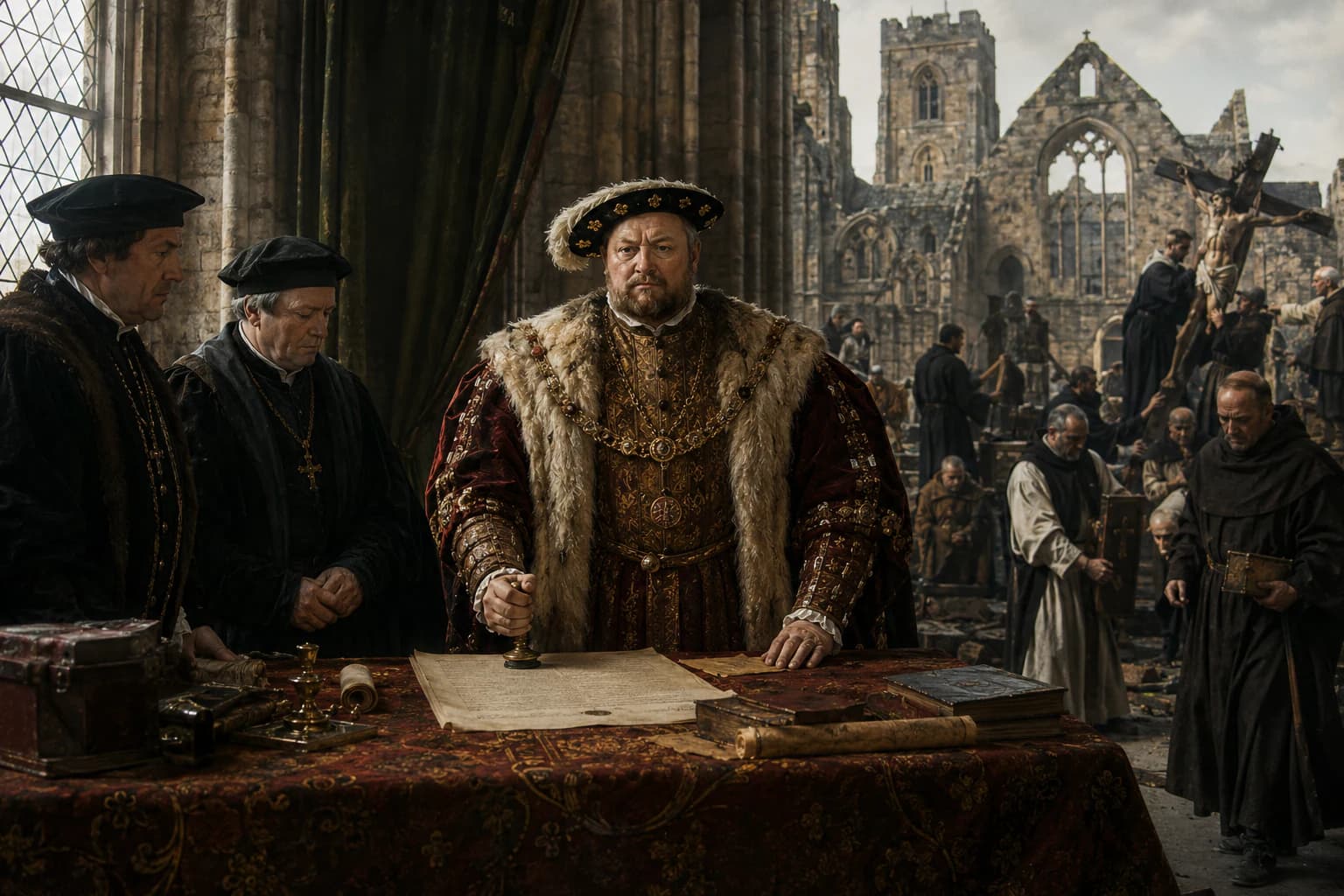
Cranmer's fall was tied to both politics and religion. He had supported the attempt to place Lady Jane Grey on the throne, making him vulnerable when Mary I triumphed. More fundamentally, Mary's restoration of Catholic worship made him the most visible architect of the Protestant settlement she meant to undo. Imprisoned at Oxford, Cranmer endured isolation, disputation and pressure. He signed several recantations, apparently hoping for mercy or overwhelmed by fear and exhaustion. Those signatures complicate his martyrdom. Cranmer was not a simple hero untouched by weakness. He was a frightened old man who broke under pressure before making one final reversal.

1556

Final stand

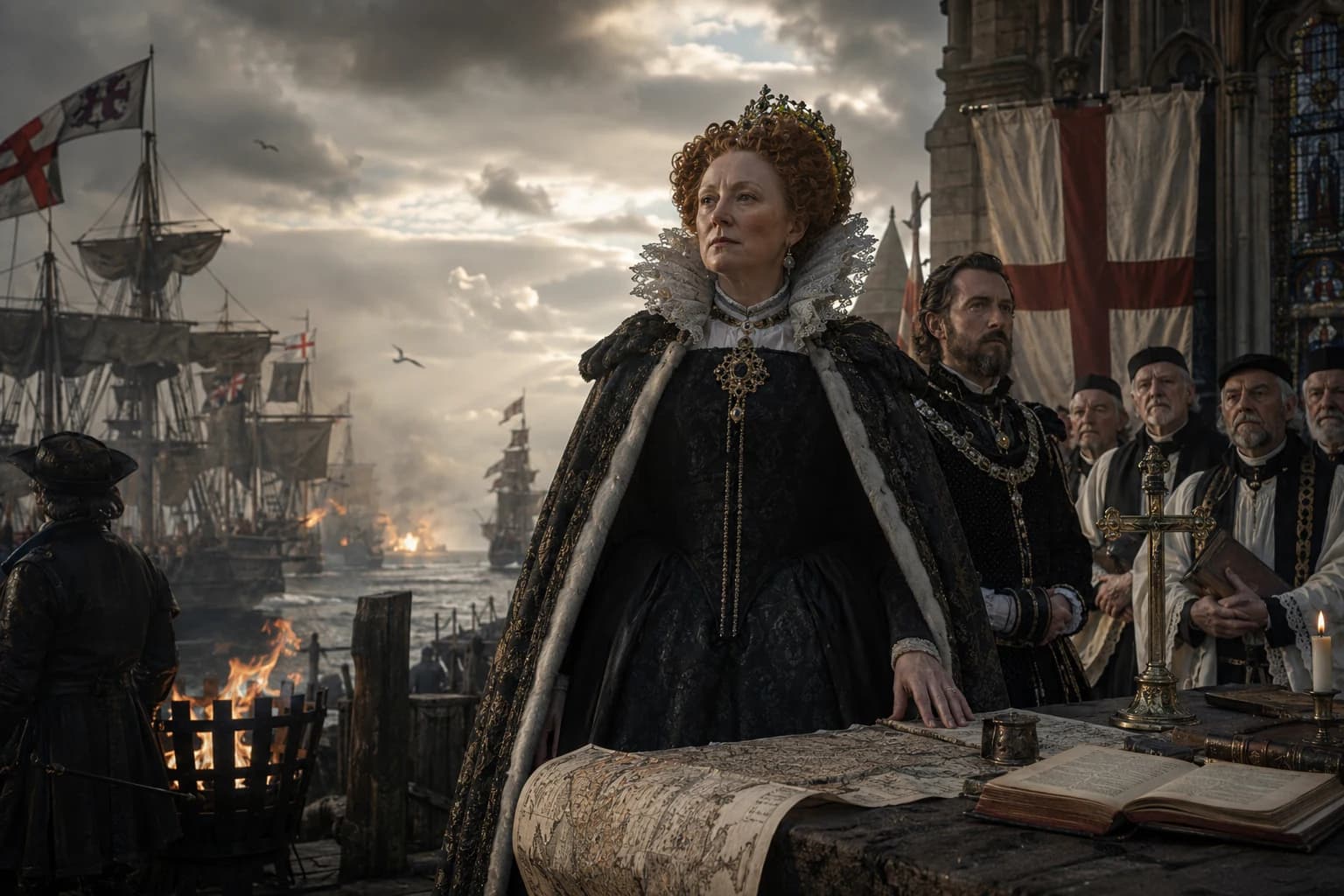
Cranmer's final act transformed his memory. Brought to St Mary's Church in Oxford to make a public submission before execution, he instead repudiated his recantations, denounced papal authority and affirmed the Protestant faith for which he was about to die. At the stake, he reportedly thrust his right hand into the fire first, punishing the hand that had signed against his conscience. The scene became one of English Protestantism's defining martyr stories, preserved powerfully in Foxe's Acts and Monuments. Cranmer's legacy rests on more than death. The Elizabethan settlement restored and revised his liturgy, and the Book of Common Prayer shaped English worship, language and identity for centuries.

Continue in context

Connected stories

Move from the profile into the wider events and settings this figure belongs to.

Tertiary paths

Content note

This profile is written for educational use and connects to related Stories of History pages. The main portrait is an AI-assisted historical reconstruction, included as an illustrative aid rather than documentary evidence. Image policy

References

Sources & Further Reading

Reliable reference works, archives and reading paths connected to this profile.

Further reading

  1. Encyclopaedia Britannica, Search results for Thomas Cranmer,” accessed June 2026.Open source
  2. WorldCat, Books and library holdings for Thomas Cranmer,” accessed June 2026.Open source

Primary sources

  1. Library of Congress, Search results for Thomas Cranmer,” accessed June 2026.Open source

Reviewed claim sources

Loading reviewed claim sources...

A weekly route through history

Find out first about the latest published stories, feature notes and occasional Premium offers in one weekly email.