← People

Simon de Montfort

Simon de Montfort was earl of Leicester and baronial reformer. He defeated Henry III and brought town representatives into Parliament, but his brief rule also rested on coercion, family advantage and the persecution of Jewish communities.

Born
c. 1208 CE
Died
1265 CE
Role
Earl of Leicester and baronial reformer
Full name
Simon de Montfort, Earl of Leicester

Earl of Leicester and baronial reformer (c. 1208–1265)

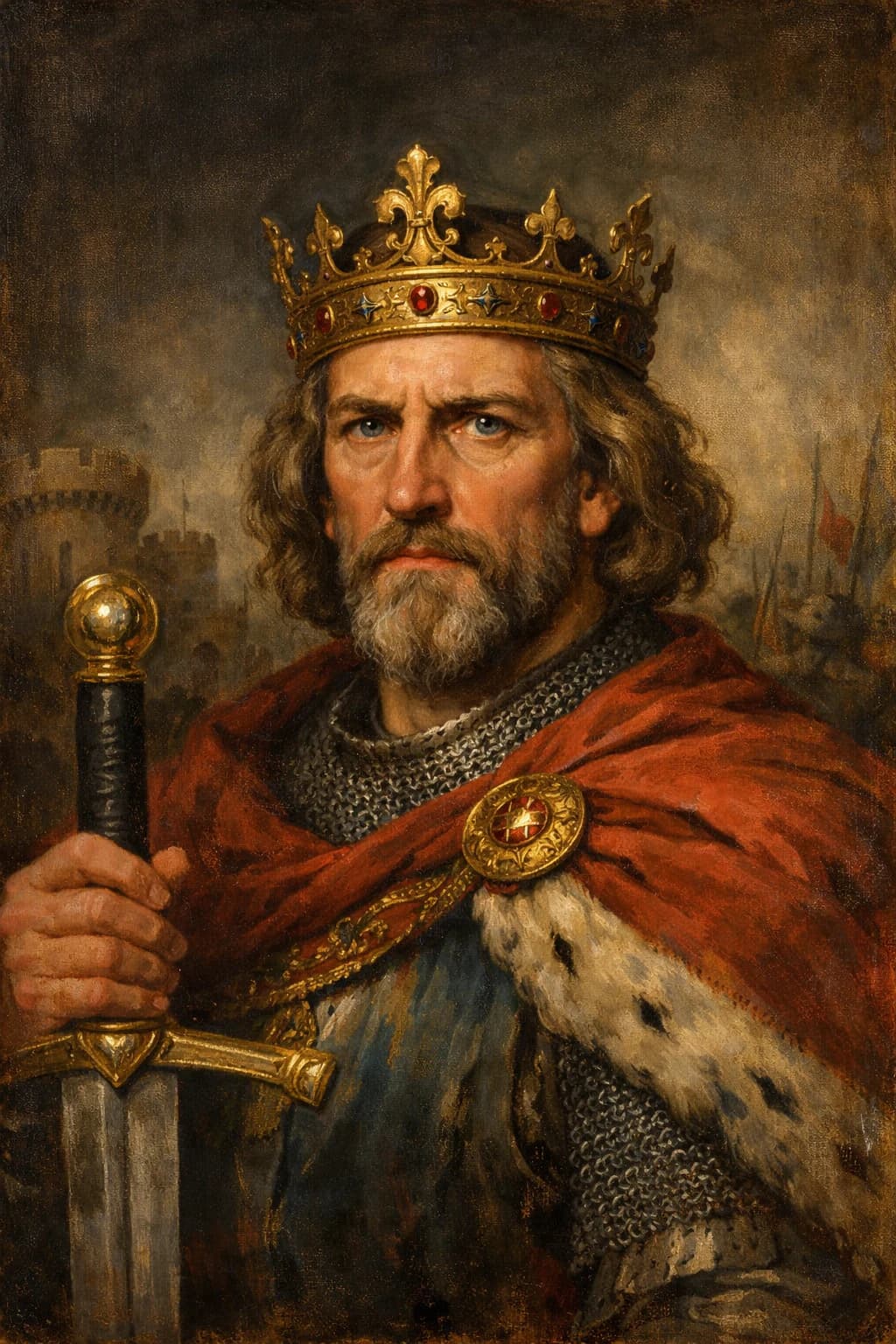
AI-generated portrait of Simon de Montfort in period clothing; an interpretive reconstruction, not a documented likeness
AI-assisted historical reconstruction

An illustrative reconstruction based on historical context. It is not a photograph or documentary likeness. Image policy

Life Journey

The rebel who put a king under restraint

Follow Simon from royal favour to rebellion, parliamentary experiment and defeat.

Complete chronology

c. 1208–1230

A French inheritance

Simon was a younger son of the French lord who led the Albigensian Crusade. His family also possessed a claim to lands in England, though possession had become entangled with the wars between the English and French crowns. Around 1230, Simon crossed the Channel to pursue that inheritance. His arrival shows how porous aristocratic identities could be: the man later associated with opposition to foreign influence began his English career as an outsider seeking royal favour. His birth is usually placed around 1208, rather than on a securely recorded date.

1230–1239

The king’s brother-in-law

Royal service offered Simon a way into the centre of English politics. His marriage to Eleanor, Henry III’s widowed sister, made him a member of the royal family by marriage. It also provoked opposition, including anger over Eleanor’s earlier vow of chastity and resentment of Simon’s advancement. Henry accepted the union, but the relationship between king and earl never became secure. Money, promises and personal accusations soon sharpened their disagreements. Simon had gained a great title and powerful connections; keeping them required a trust that neither man consistently supplied.

1230s–1240s

Faith and exclusion

Simon cultivated friendships with influential churchmen and thinkers concerned with lawful government and Christian duty. His devotion could inspire loyalty, but it also carried intolerance. As lord of Leicester, he ordered the exclusion of its Jewish community. This was persecution, not a harmless expression of medieval piety. Jewish people already lived under a crown that both protected and exploited them, and aristocratic hostility made their position more dangerous. Simon’s later reputation as a champion of liberty needs to sit alongside the people his vision of a Christian political community deliberately excluded.

1240–1257

Royal service turns bitter

Simon joined the crusading movement before taking responsibility for Gascony, one of the English crown’s remaining continental possessions. Governing there meant dealing with resistant local lords, insecure revenues and royal expectations. Simon used force, and complaints about his conduct reached Henry. He defended himself by arguing that he had carried out a difficult assignment without adequate support. The dispute left both men convinced of the other’s failings. Experience of royal government did not make Simon a consistent opponent of strong authority; it helped persuade him that this king exercised it badly.

1258–1263

The Provisions of Oxford

In 1258, financial strain and dissatisfaction with royal government brought a group of barons together. The Provisions of Oxford sought to place Henry’s government under organised oversight, including a council and regular meetings of Parliament. Simon became one of the movement’s strongest advocates. Yet reformers disagreed among themselves, and Henry worked to escape the restraints. The struggle was about who should govern and on what terms, rather than a straightforward contest between monarchy and democracy. When negotiated arrangements failed to hold, the language of lawful reform began to travel alongside the preparations for war.

1264

Victory at Lewes

The Battle of Lewes in May 1264 reversed the balance of power. Simon’s victory put Henry III and his son Edward in the reformers’ hands. The settlement that followed left the king in place while restricting his freedom to act. Simon now dominated government, but his success created a fresh problem: opponents saw a rebel controlling the monarchy, while some former allies resented his growing authority. War had given him the leverage negotiation had failed to supply. It had not created broad agreement about who should wield that leverage or how long the arrangement should last.

1265

Parliament and its boundaries

The Parliament that met in January 1265 included county knights and town representatives alongside selected nobles and churchmen. Earlier assemblies had already drawn on different forms of representation; Simon’s gathering brought these groups together in a particularly influential combination. It was also a way to support his embattled government. The participants were a small, privileged part of society, and the meeting did not create universal voting rights or the modern House of Commons. Its significance lies in a developing practice: rulers could seek consent and support through representatives beyond the highest ranks of the aristocracy.

1264–1265

Reform becomes domination

Simon’s rule combined arguments for accountability with conduct that weakened his own authority. His family acquired rewards and influence, and former allies, including Gilbert de Clare, turned against him. Attacks on Jewish communities and the destruction of debt records accompanied the wider rebellion; Simon’s policies benefited sections of the landowning population at Jewish people’s expense. These acts should not disappear behind the story of parliamentary progress. As opposition grew, Prince Edward escaped captivity and organised a recovery. The coalition that had restrained Henry was coming apart under the strain of Simon’s dominance.

1265

Evesham and an unfinished legacy

At Evesham in August 1265, Simon faced the army of the escaped Prince Edward and was killed in a crushing defeat. His body was mutilated, a sign of the bitterness the conflict had generated. Royal authority returned, though resistance did not vanish at once. Later kings continued to summon representatives, and parliamentary government developed through decisions far beyond Simon’s lifetime. He remains a consequential figure without being a simple founder of democracy. His life brings together constitutional experiment, aristocratic ambition, religious conviction and persecution, making its legacy both influential and deeply compromised.

Continue in context

Connected stories

Move from the profile into the wider events and settings this figure belongs to.

Tertiary paths

Content note

This profile is written for educational use and connects to related Stories of History pages. The main portrait is an AI-assisted historical reconstruction, included as an illustrative aid rather than documentary evidence. Image policy

References

Sources & Further Reading

Reliable reference works, archives and reading paths connected to this profile.

Sources used

  1. UK Parliament, “Simon de Montfort’s Parliament,” accessed 2 October 2026.

    Court connections and the inclusion of knights and burgesses in 1265.

    Open source
  2. UK Parliament, “Simon de Montfort’s Legacy,” accessed 2 October 2026.

    Reform, family enrichment and persecution; constitutional significance does not excuse exclusion.

    Open source
  3. Cambridge University Press, “Who Was Simon de Montfort, Earl of Leicester?,” accessed 2 October 2026.

    David Carpenter’s research on Montfort’s rise and political identity.

    Open source
  4. Oxford Dictionary of National Biography, “Montfort, Simon de (c. 1208–1265),” accessed 2 October 2026.

    Biographical reference; the birth year is approximate.

    Open source

Further reading

  1. Encyclopaedia Britannica, “Search results for Simon de Montfort,” accessed June 2026.Open source
  2. WorldCat, “Books and library holdings for Simon de Montfort,” accessed June 2026.Open source

Primary sources

  1. Library of Congress, “Search results for Simon de Montfort,” accessed June 2026.Open source

Reviewed claim sources

Loading reviewed claim sources...

A monthly route through history

Find out first about the latest published stories, feature notes and occasional Premium offers in one monthly email.