Complete chronology
Full overview and deeper context for every journey step.
c. 2334 BCE
Obscure Beginnings
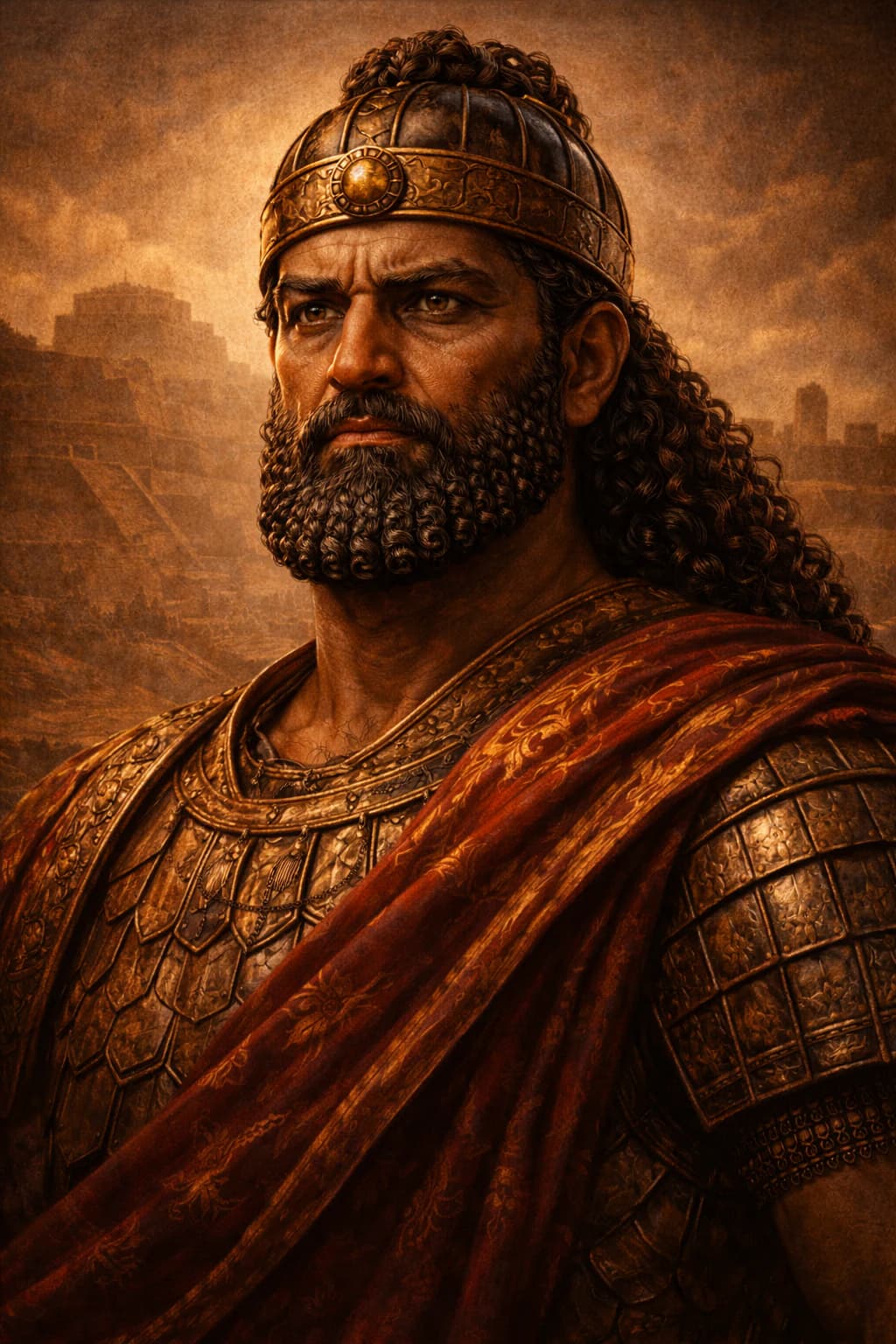
Sargon of Akkad belongs to the difficult borderland between history and royal legend. Later Mesopotamian traditions claimed that his mother bore him in secret, placed him in a basket sealed with bitumen, and set him on a river, where he was rescued and raised by a water-drawer. The story cannot be treated as straightforward biography; it is political myth, crafted to make his rise appear chosen, astonishing, and independent of ordinary dynastic legitimacy. Yet the legend tells us something real about how Sargon was remembered. He was not presented as merely another city ruler. He was the outsider-founder whose authority had to be explained by destiny, charisma, and achievement.
Legends of humble origins often serve to magnify the significance of later success.
mid 24th century BCE
Rise to Position
The Sargon timeline is uncertain, but later accounts connect him with Kish, one of the great cities of northern Babylonia. He is described as cupbearer to King Ur-Zababa, a role that may sound domestic but in ancient courts could place a trusted servant close to the ruler's person and decision-making. Whether the detail is literal or symbolic, it captures an important possibility: Sargon rose through the machinery of an existing city-state before overturning it. Mesopotamia before Sargon was a landscape of rival cities, each with gods, temples, walls, fields, and kings. To build something larger, he first had to understand the limits of that world.
Understanding a system from within can reveal how to reshape it.
c. 2334 BCE
Seizing Power
Sargon's breakthrough came when he moved beyond court service and created a new centre of power at Akkad, a city whose exact location remains unidentified despite its enormous historical importance. His great opponent was Lugalzagesi of Uruk, who had already brought much of Sumer under his authority. Sargon's victory over him was therefore not a local coup but a decisive struggle for Mesopotamian supremacy. Later inscriptions boast of Sargon defeating Uruk, tearing down walls, and reaching the Persian Gulf. Royal rhetoric exaggerates, but the political shift was real. A ruler from the Akkadian-speaking north had taken control over the Sumerian south.
The shift from influence to control often comes through a single decisive moment.
2330s BCE
Campaigns of Expansion
Sargon's achievements were military, administrative, and imaginative. Earlier rulers had dominated neighbouring cities, but Sargon's inscriptions present a far wider horizon: campaigns from the Persian Gulf toward the upper Euphrates, the lands of Elam, and trading routes linked to the Mediterranean world. Not every claim can be verified in modern terms, and the boundaries of the empire were not fixed like a modern map. Still, the scale of ambition was new. Sargon used repeated campaigns to break rival coalitions, seize resources, control routes, and make distant rulers acknowledge Akkadian supremacy. Empire began as motion before it became administration.
Expansion depends on both persistence and the ability to manage newly gained territory.
late 24th century BCE
Empire Formation
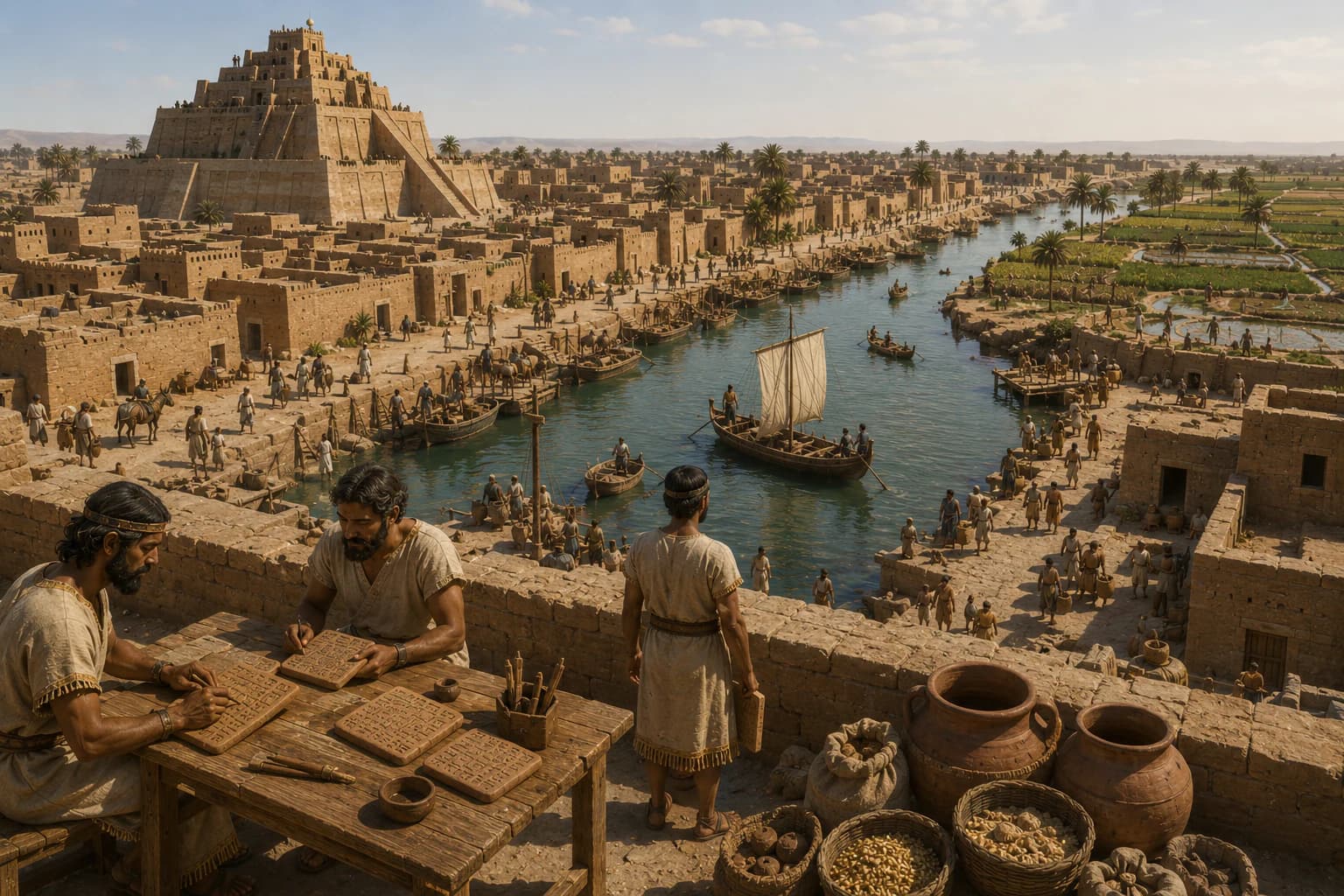
The Akkadian Empire mattered because it joined different regions, languages, and city traditions under a single royal house. Sumerian cities retained local identities and temple institutions, but they now existed inside a broader imperial order. Akkadian became a language of power, royal inscriptions celebrated universal conquest, and kingship began to claim a scale previously associated more with myth than practical politics. Sargon's empire was not a modern state, but it was more than a loose alliance. It required governors, garrisons, tribute, roads, messengers, and ideological claims strong enough to make distant obedience seem normal. That was the breakthrough.
True transformation occurs when conquest is turned into a stable system.
reign period
Administrative Control
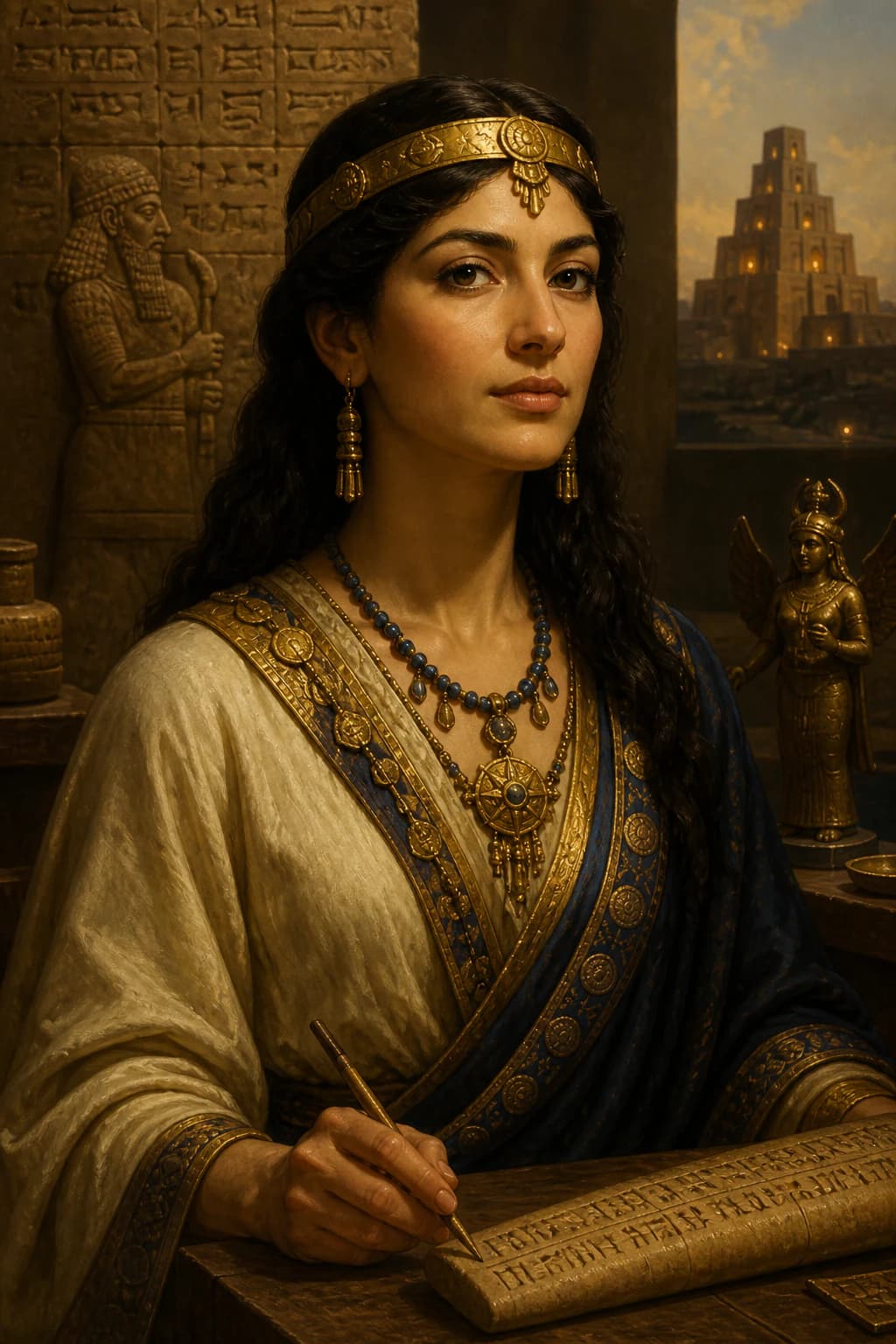
Conquest alone would have evaporated without control. Sargon appears to have installed loyal governors in key cities, reorganised flows of goods and tribute, and tied religious institutions to royal authority. His daughter Enheduanna, appointed high priestess of the moon god Nanna at Ur, became one of the most remarkable figures of the dynasty and is often associated with some of the earliest named literary works in history. Her position was political as well as religious, binding the southern sacred landscape to the Akkadian royal family. Sargon's administration mixed practical coercion with symbolic integration. The empire had to be feared, but it also had to be ritually and economically embedded.
Large-scale power requires systems that extend beyond direct personal control.
late reign
Challenges and Revolts
Akkadian rule generated resistance because it disrupted the autonomy of proud cities with older traditions than Akkad itself. Later texts describe widespread rebellion in Sargon's old age, forcing him to fight again for control. Whether the stories compress events or preserve genuine crises, they fit the logic of early empire. Local elites resented governors, tribute, garrisons, and the loss of independent prestige. The larger Sargon's realm became, the more energy it required simply to keep it from splintering. His achievement was not peaceful unity. It was the repeated use of force, patronage, and administration to hold together a political structure many subjects had reason to resist.
Maintaining power over diverse regions is often harder than gaining it.
c. 2280s BCE
Later Years
Sargon's later years matter because empire had to become inheritance. His sons Rimush and Manishtushu succeeded him, and both faced rebellion; later tradition suggests violent deaths, though the details remain uncertain. His grandson Naram-Sin pushed Akkadian kingship to even more spectacular heights, claiming divine status and extending imperial ideology. This continuity shows that Sargon's work did not die with him, but it also shows how unstable the system remained. Each new ruler had to reconquer loyalty. The Akkadian Empire was a machine of power built in an age when institutions were still learning how to operate at imperial scale.
Long-term success depends on securing what has been built, not just expanding it.
after 2279 BCE
Lasting Legacy
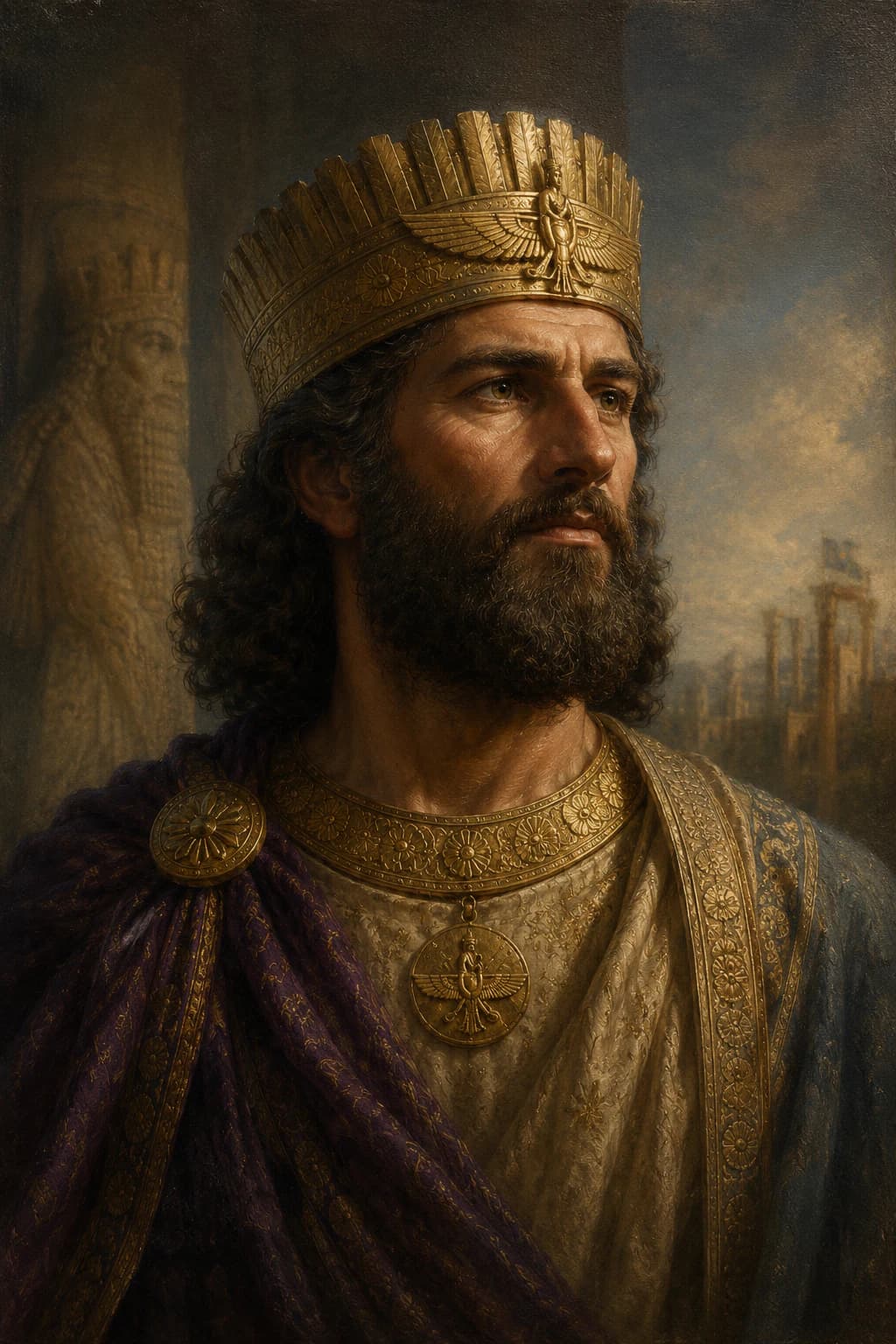
Sargon of Akkad remained famous long after the Akkadian Empire fell. Later Mesopotamian kings copied his titles, told stories about his rise, and measured their own ambitions against his example. His legend mattered because it offered a new template: a king could rule not merely a city, but 'the four quarters' of the world; he could cross languages and landscapes; he could make conquest into cosmic order. Modern historians rightly treat the sources with caution, separating royal boasting from recoverable fact. Even so, Sargon's importance is secure. He stands near the beginning of the imperial imagination, the point at which Mesopotamian politics discovered that power could be organised on a scale large enough to become world history.
Even short-lived empires can define the blueprint for those that follow.