Complete chronology
Full overview and deeper context for every journey step.
1871
Birth in Partitioned Poland
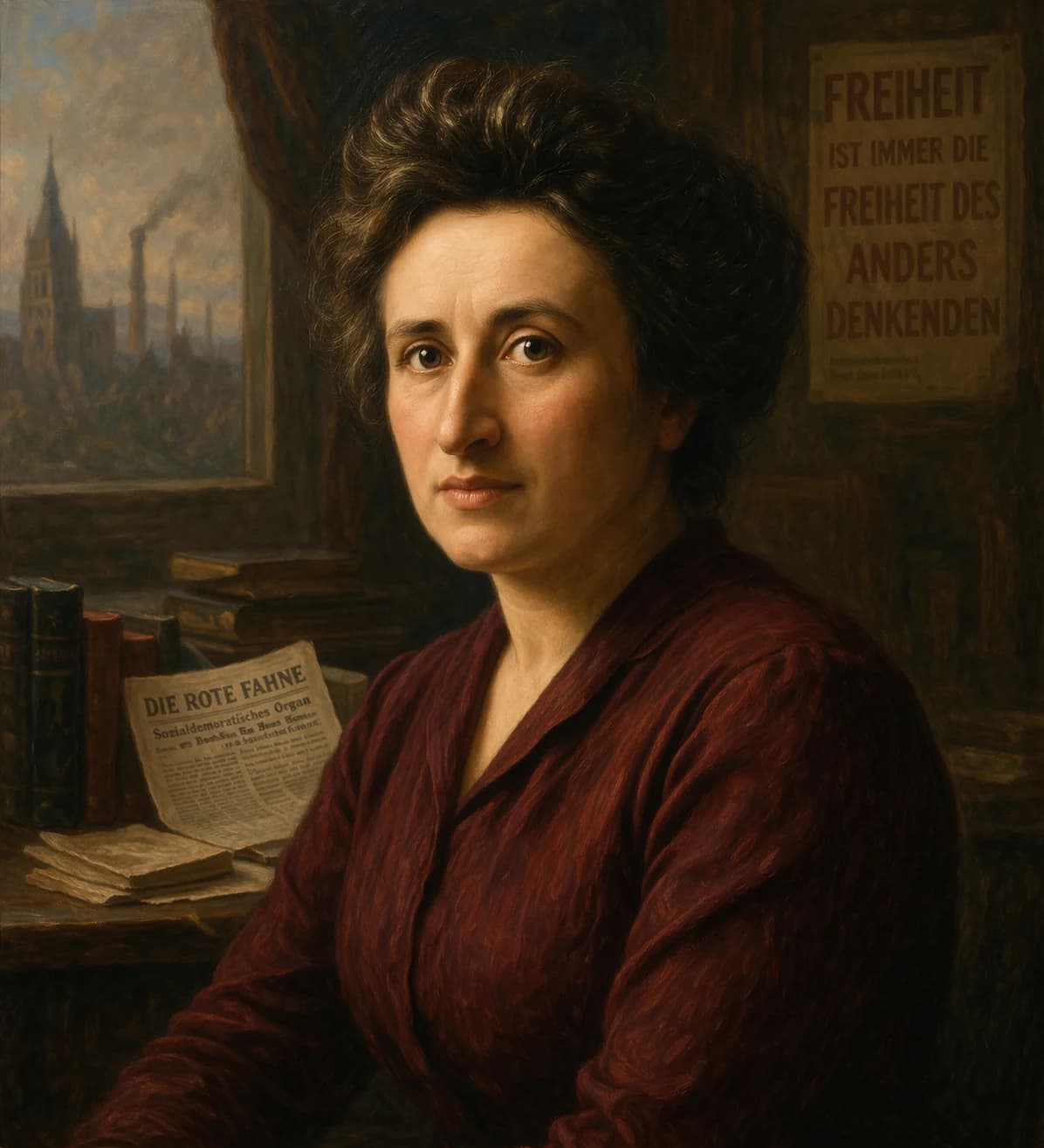
Rosa Luxemburg was born into a Polish Jewish family in a region controlled by the Russian Empire, where national identity, language, religion, and politics were all touched by coercion. Her family valued education, and she proved intellectually formidable from an early age. A childhood hip illness left her with a limp, but nothing in her later life suggests that she accepted physical vulnerability as a limit on ambition. She grew up watching how imperial authority policed speech and how social hierarchy shaped opportunity. That background mattered deeply. Luxemburg's socialism was never only an economic theory; it was a response to domination in its national, political, and class forms.
Early exposure to repression can sharpen both awareness and resolve in ways that last a lifetime.
1880s
Radical Youth Activism
Luxemburg's radicalism began before she had a public name. In Warsaw she entered illegal socialist networks that circulated forbidden literature, argued over strategy, and tried to organise under the eyes of tsarist authorities. The danger was real enough that she left for Zurich in 1889 to avoid arrest. Exile did not detach her from Poland; it internationalised her. She became convinced that socialism could not be reduced to national independence alone and later clashed with Polish socialists who treated the national question as primary. From the beginning, she preferred international class struggle to romantic nationalism, a position that made her both original and controversial.
Commitment to an idea often begins long before recognition, shaped by quiet acts of courage.
1889–1897
Studies in Zurich
Zurich was one of the few European universities open to women, political exiles, and ambitious outsiders. Luxemburg used that space ruthlessly. She studied economics and law, completed a doctoral dissertation on Polish industrial development, and built relationships with socialists from across Europe. Her mind was already combative: she did not treat Marxism as scripture but as a method to be tested against history, capitalism, empire, and mass action. Education gave her technical authority in movements where women were often expected to support rather than lead. By the time she moved into German politics, she was not a symbol of youthful rebellion. She was a trained economist and a dangerous polemicist.
Access to open debate can transform conviction into carefully reasoned ideology.
1898
Entry into German Politics
Germany placed Luxemburg at the centre of the most powerful socialist party in Europe, the SPD. She quickly entered the revisionism debate, opposing Eduard Bernstein's argument that socialism could evolve peacefully through reform within capitalism. Luxemburg did not reject reforms; she rejected the idea that reforms were enough. In 'Reform or Revolution', she argued that a workers' movement that abandoned revolutionary purpose would gradually become an appendage of the existing order. Her style was brilliant, cutting, and often unforgiving. She challenged older male leaders on their own theoretical ground and refused the politeness expected of outsiders. That made her admired, feared, and resented.
Influence often comes from challenging accepted thinking rather than reinforcing it.
1900–1913
Theory and Debate
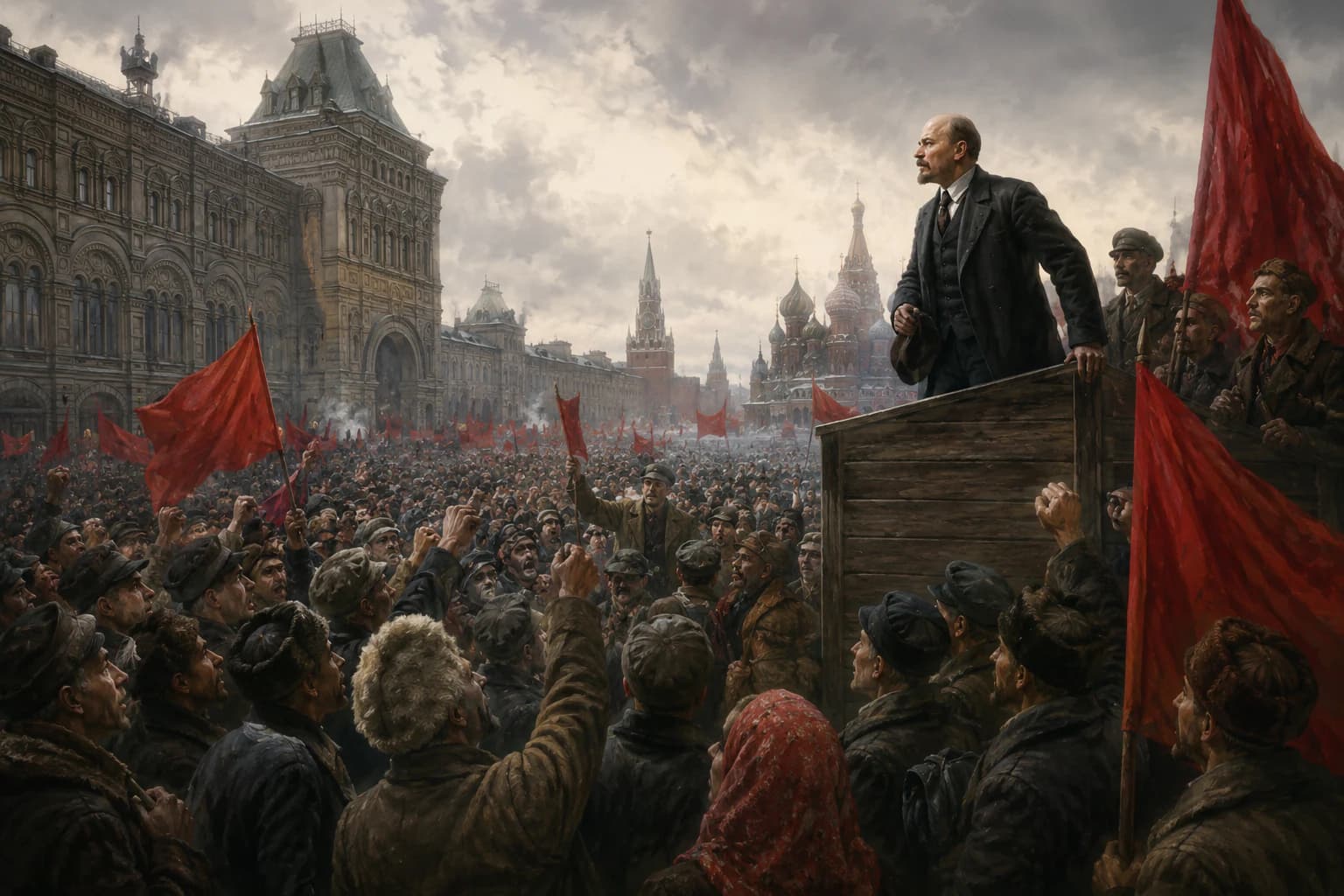
Luxemburg's importance lies in the tension she held together: she was a revolutionary who feared the deadening of democracy inside revolutionary movements. The 1905 Russian Revolution convinced her that mass strikes could educate, organise, and radicalise workers beyond what party committees could plan in advance. Her study 'The Accumulation of Capital' tried to explain imperialism as part of capitalism's need for expansion, though economists have debated its technical claims ever since. She criticised reformists for timidity and Lenin for excessive centralism, warning that freedom only for party loyalists was not real freedom. Her thought remains powerful because it refuses easy categories: radical, democratic, disciplined, spontaneous, internationalist, and deeply suspicious of bureaucratic control.
Ideas about change matter most when they shape how people organize and act together.
1914
Opposition to War
August 1914 was Luxemburg's great rupture with the party she had fought within for years. The SPD voted for war credits, joining the national consensus it had once promised to resist. Luxemburg saw the decision as a catastrophe: the international workers' movement had been swallowed by nationalism at the exact moment it was meant to oppose imperial slaughter. With Karl Liebknecht, Clara Zetkin, and others, she helped form the group that became the Spartacus League. Her anti-war writings attacked not only the German state but the socialist leadership that had accommodated it. In prison and out, she insisted that internationalism meant little if it vanished when governments demanded obedience.
Moments of crisis reveal whether principles are deeply held or easily set aside.
1915–1918
Imprisonment Years
The German state tried to remove Luxemburg from politics by imprisoning her, but confinement gave some of her writing its enduring force. The Junius Pamphlet, written from prison, denounced the war as imperialist catastrophe and called for socialist renewal. Her letters from prison reveal another register: birds, plants, weather, grief, loneliness, and moral endurance appear beside revolutionary analysis. That combination matters. Luxemburg was not a mechanical ideologue. She possessed a fierce sensitivity to life and suffering, which made her hatred of militarism more than tactical opposition. Prison made her physically absent from organising, but it strengthened her symbolic authority among radicals who saw in her a voice that would not be domesticated.
Physical confinement cannot fully silence a voice that continues to think and communicate.
1919
Revolution and Death
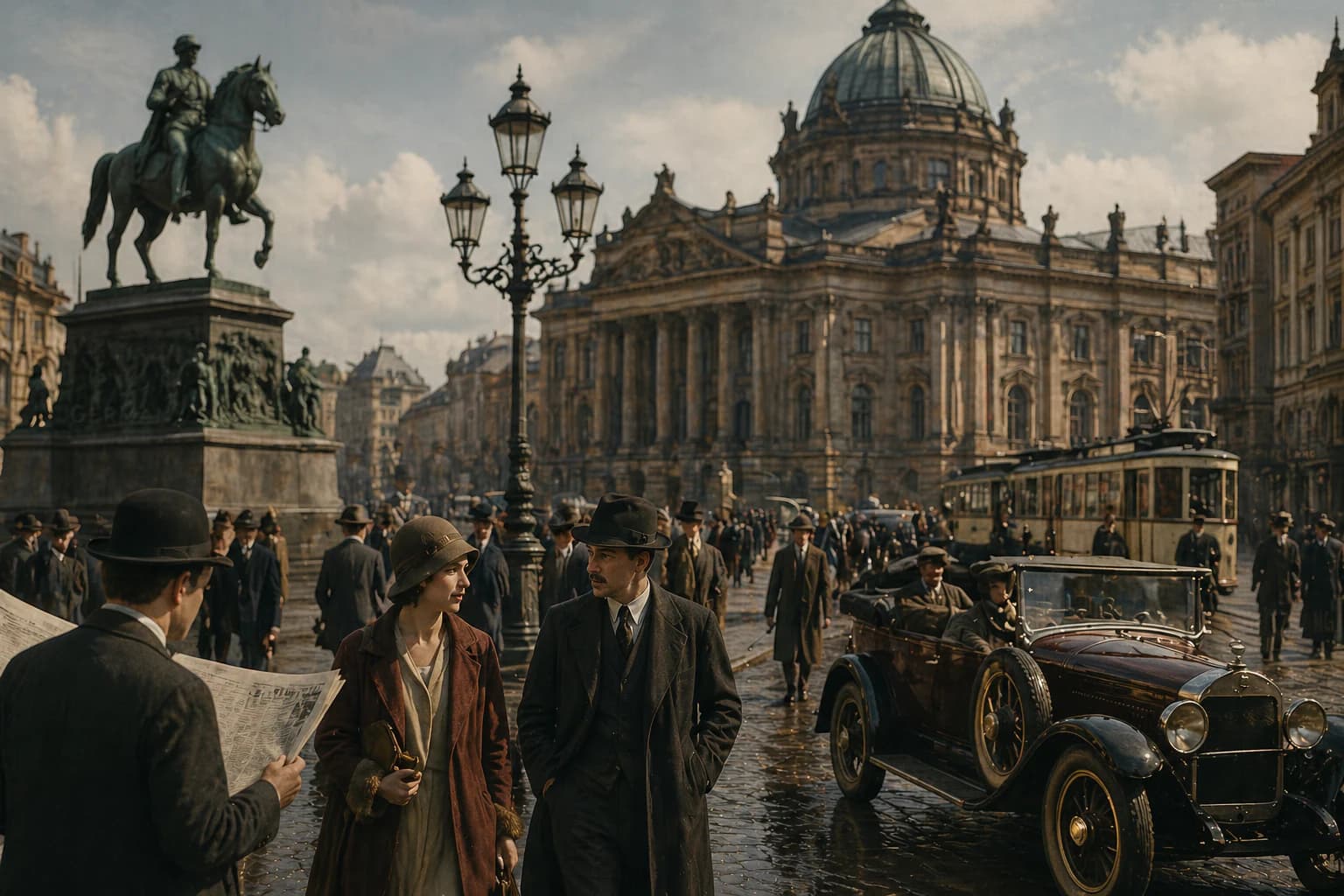
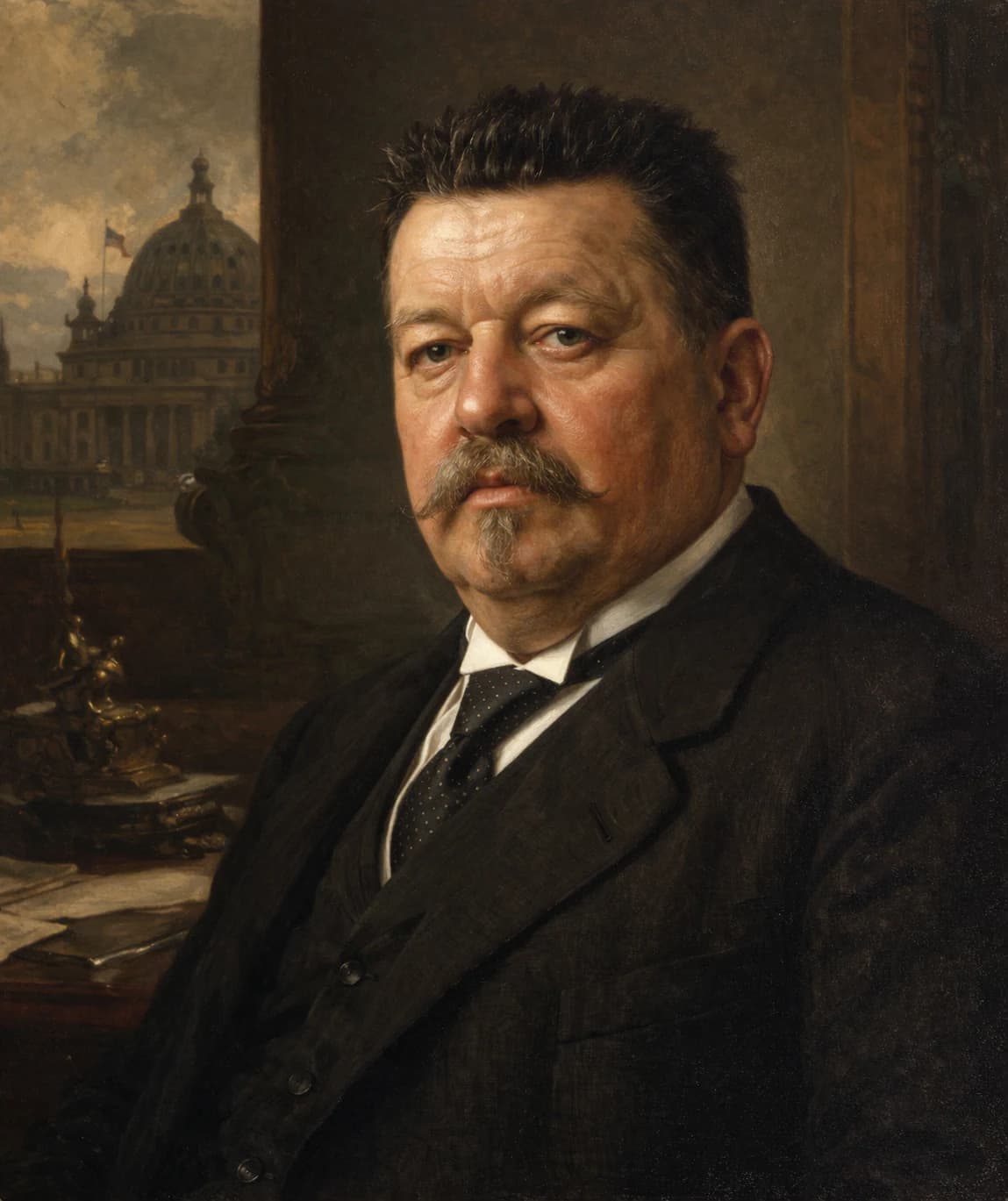
Germany's defeat in 1918 opened a revolutionary moment: the Kaiser fell, workers' and soldiers' councils appeared, and the future of the republic was uncertain. Luxemburg helped found the Communist Party of Germany, but she was not blind to danger. She opposed boycotting elections to the National Assembly and doubted the wisdom of an ill-prepared uprising in Berlin. Events outran caution. In January 1919 the Spartacist rising was crushed with the help of Freikorps units operating under a Social Democratic government. Luxemburg and Karl Liebknecht were captured, beaten, and murdered. Her body was thrown into a canal. The killing made her a martyr, but it also removed one of the few revolutionary leaders willing to pair radical transformation with democratic warning.
Revolutionary moments can elevate ideas quickly but also expose their advocates to sudden and severe risks.
Post-1919
Enduring Influence
Rosa Luxemburg's legacy has never belonged to one camp for long. Communist parties honoured her martyrdom while often ignoring her warnings about freedom and party bureaucracy. Democratic socialists claimed her as proof that radical politics need not abandon pluralism. Feminists have returned to her as a woman who forced herself into male-dominated theory and leadership without asking permission. Anti-war movements remember her refusal to surrender internationalism to patriotic pressure. Historians continue to debate her economics, her strategy, and whether her faith in spontaneous mass action underestimated the brutality of power. What makes her lasting is not that she solved the problem of revolution. It is that she saw, earlier than most, that liberation pursued without democracy could reproduce domination in a new language.
A lasting legacy often lies not in fixed answers but in questions that continue to challenge future generations.