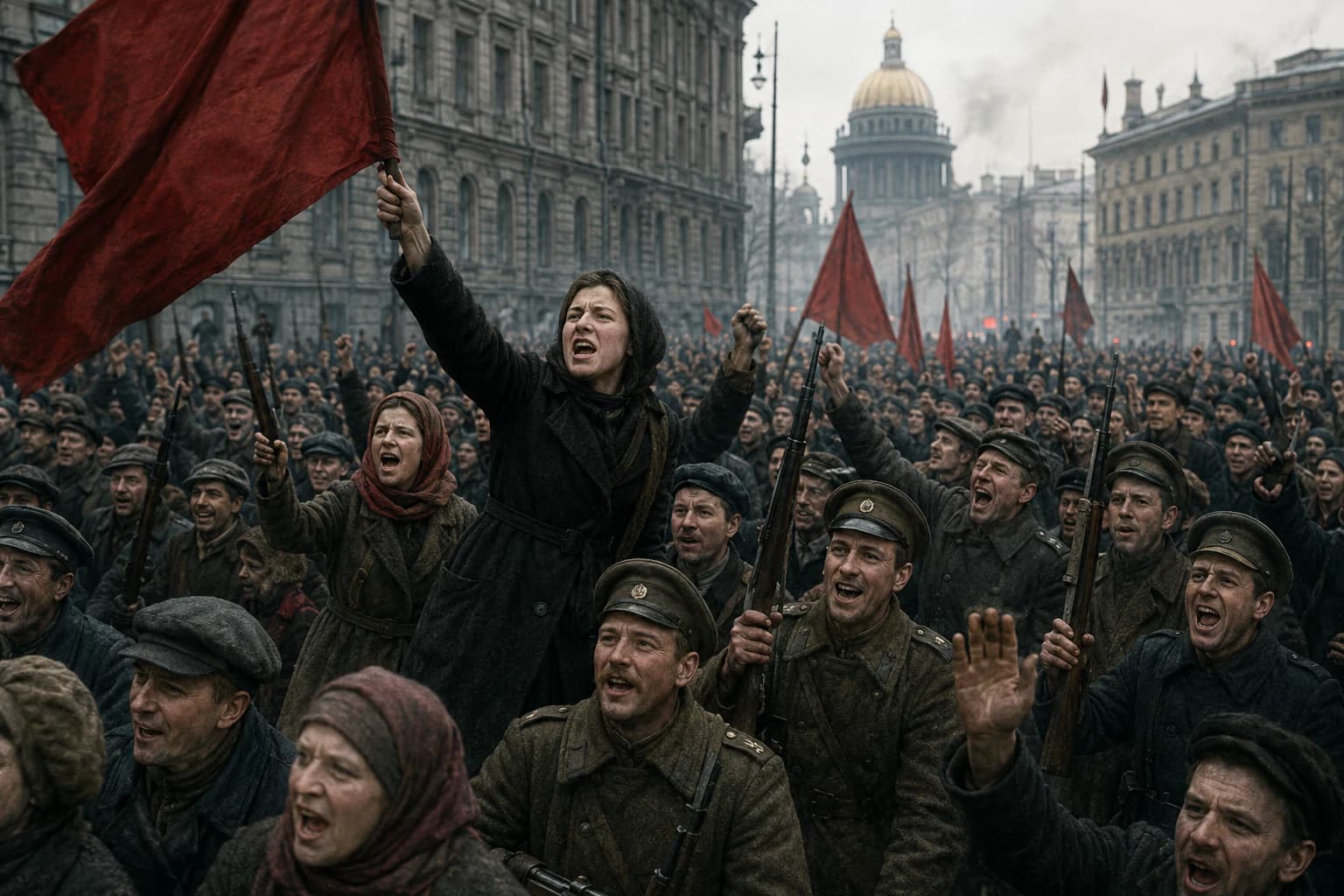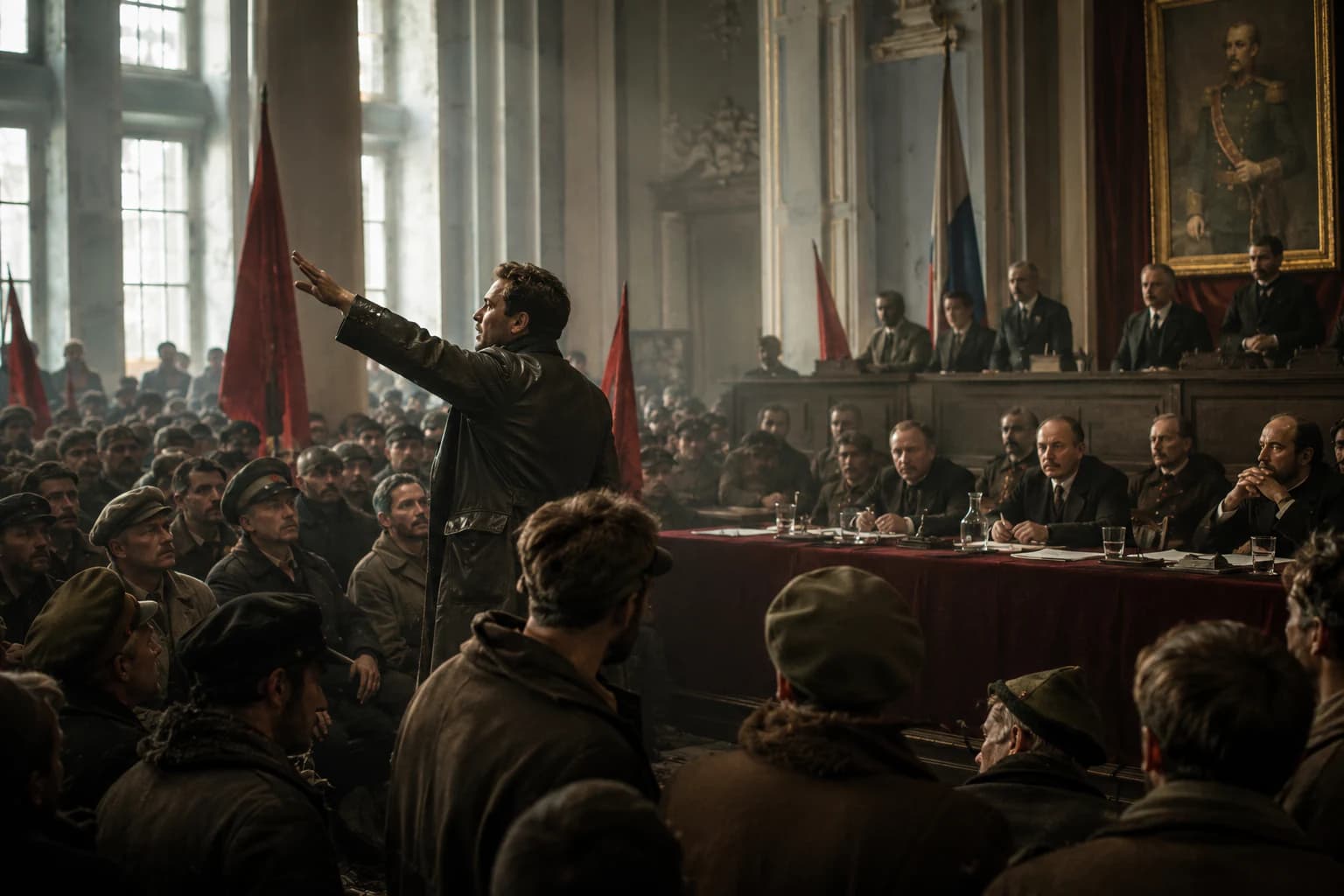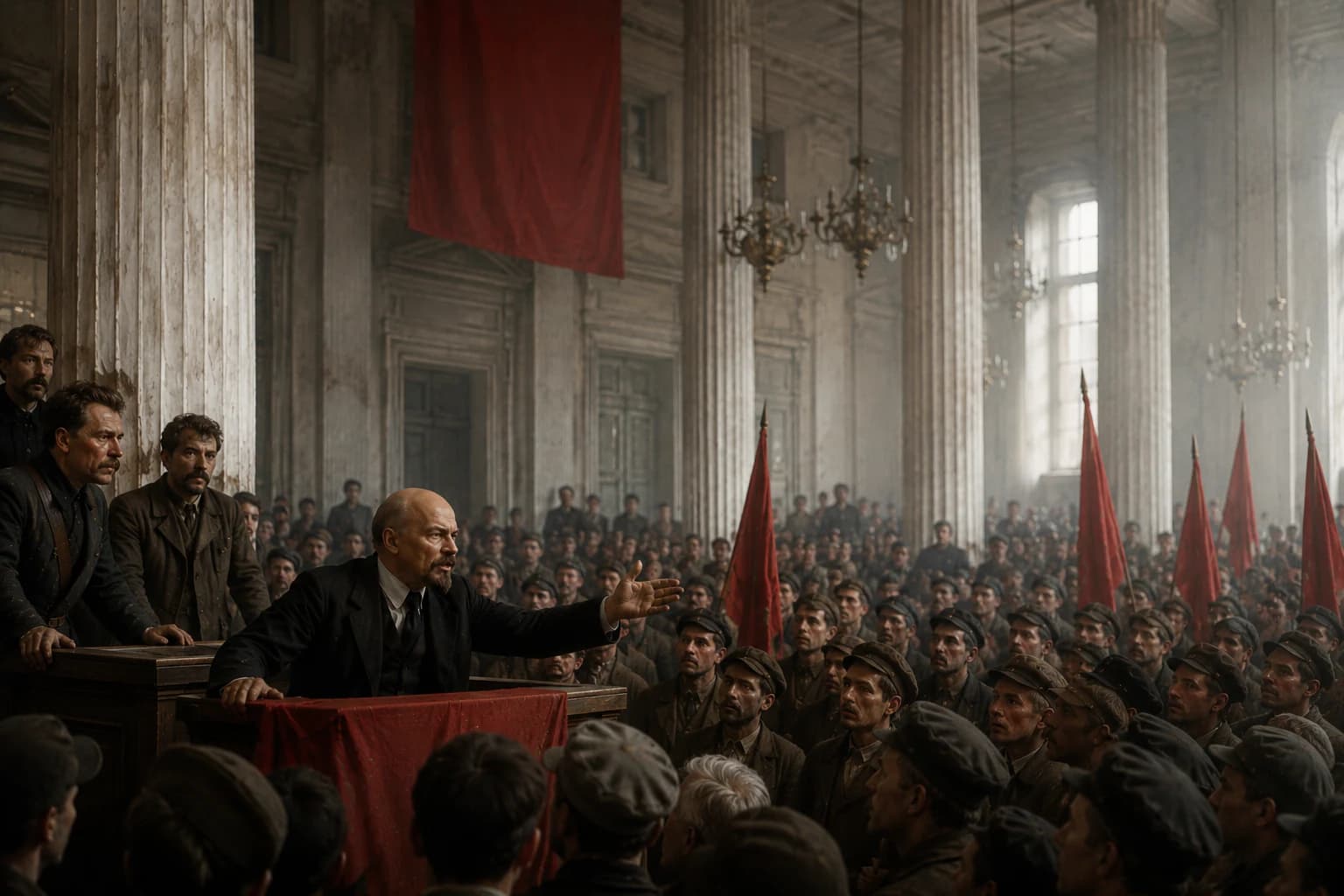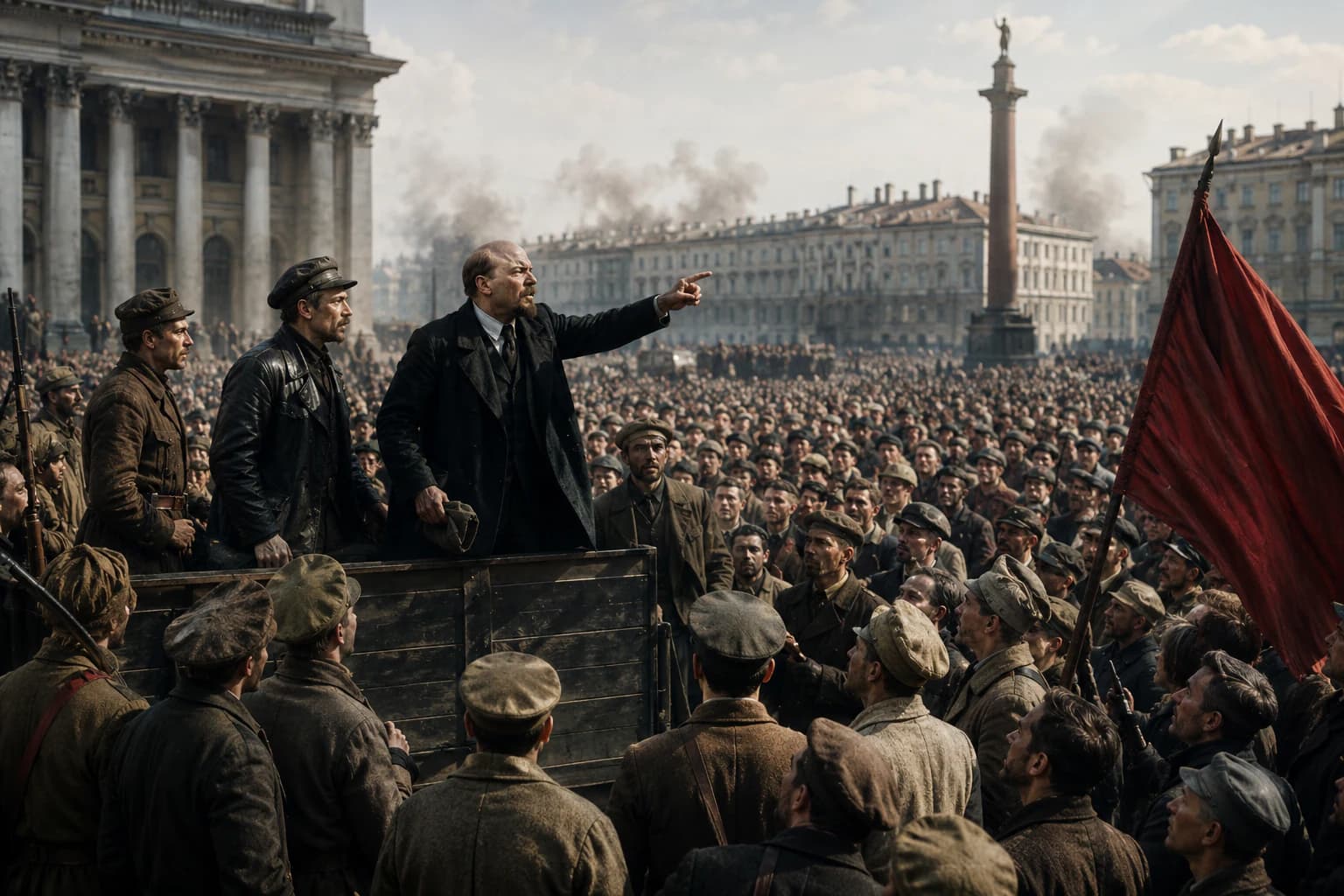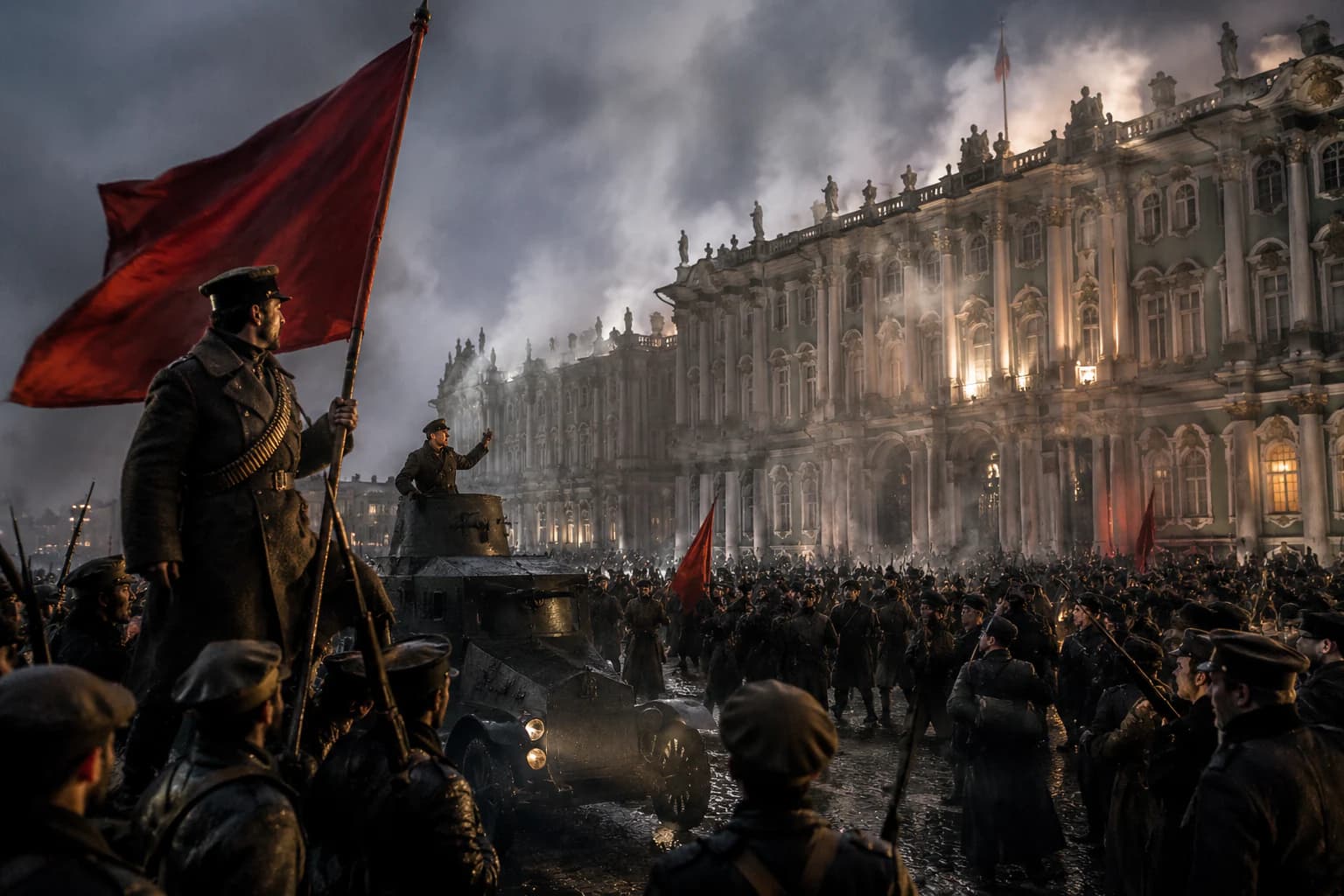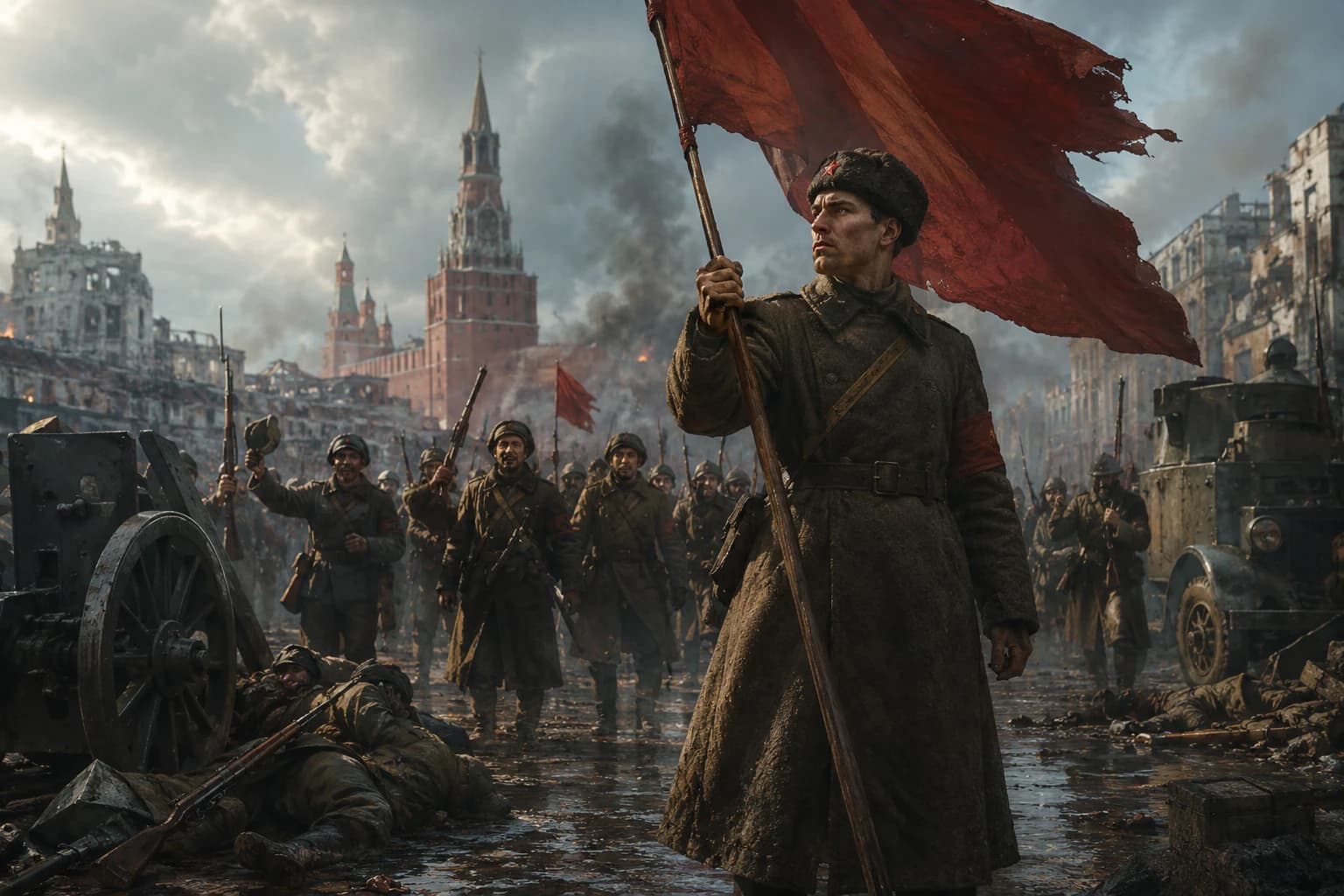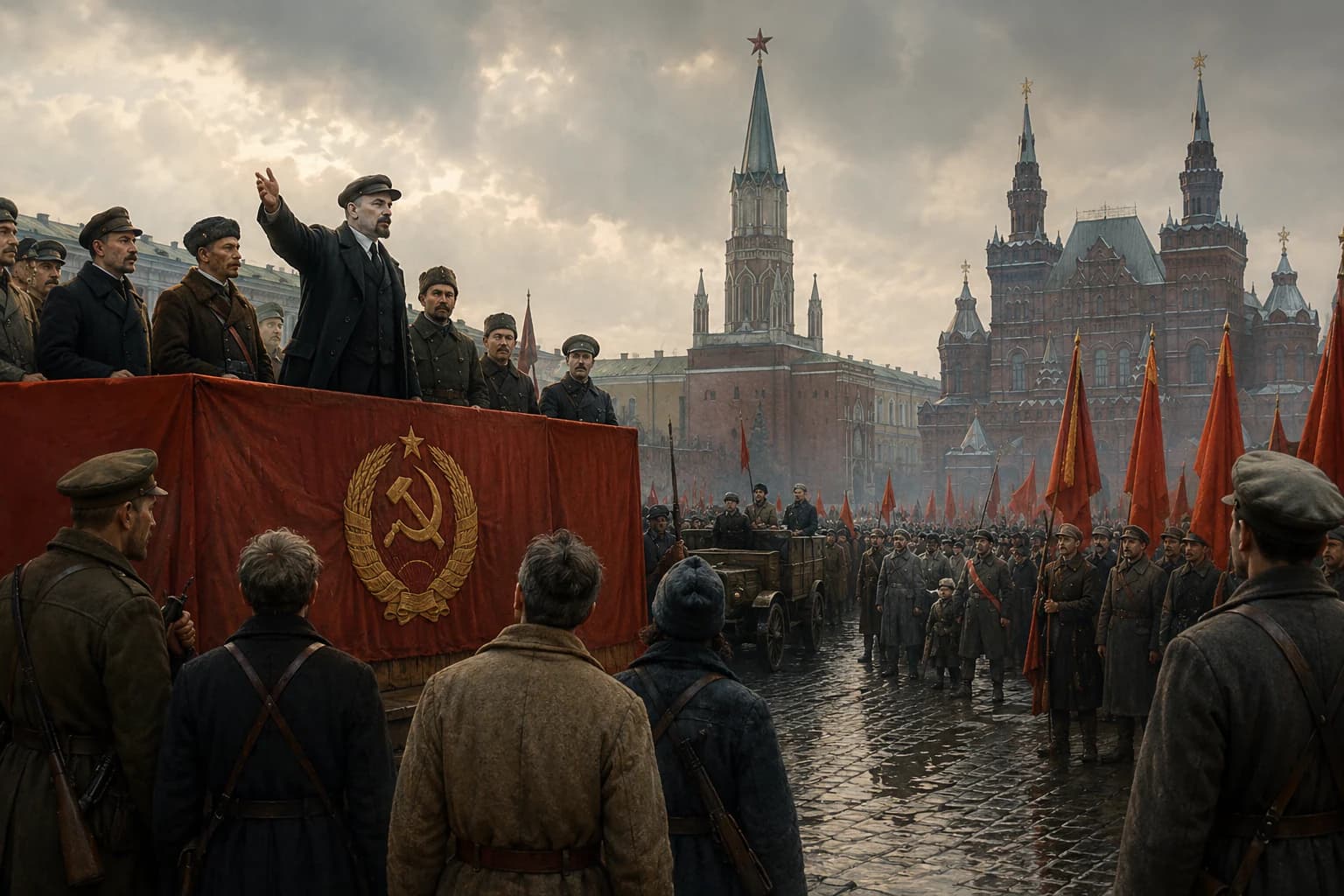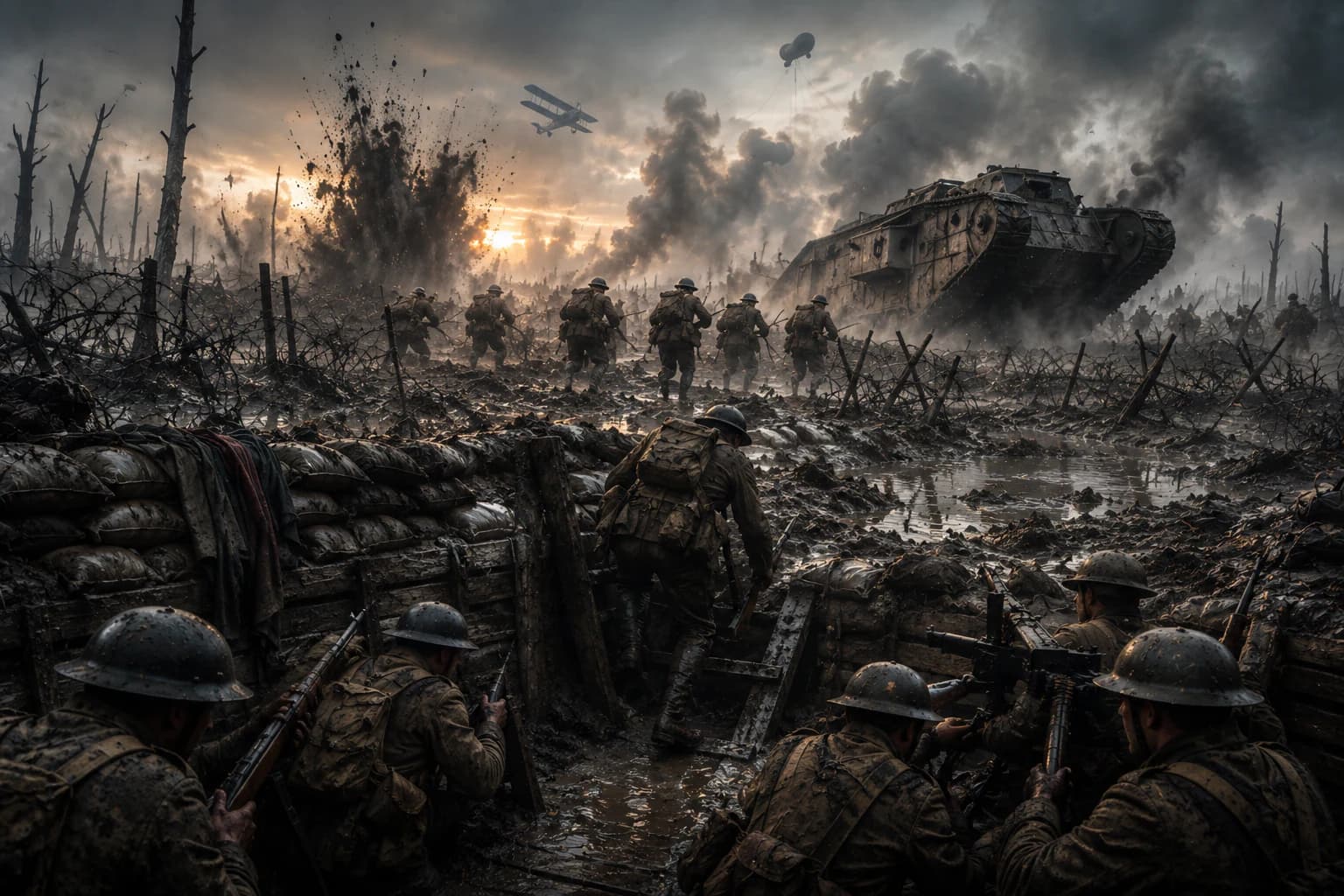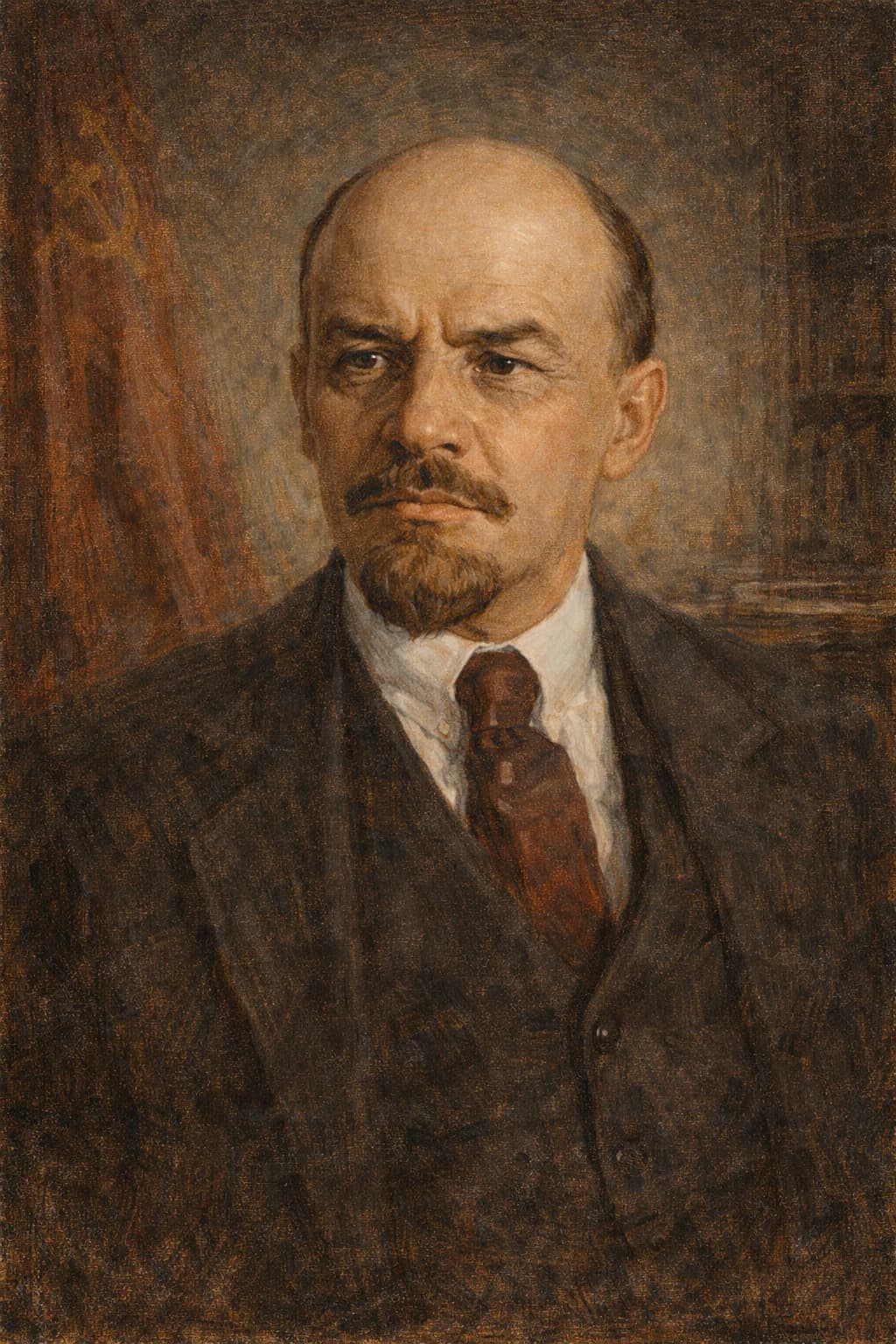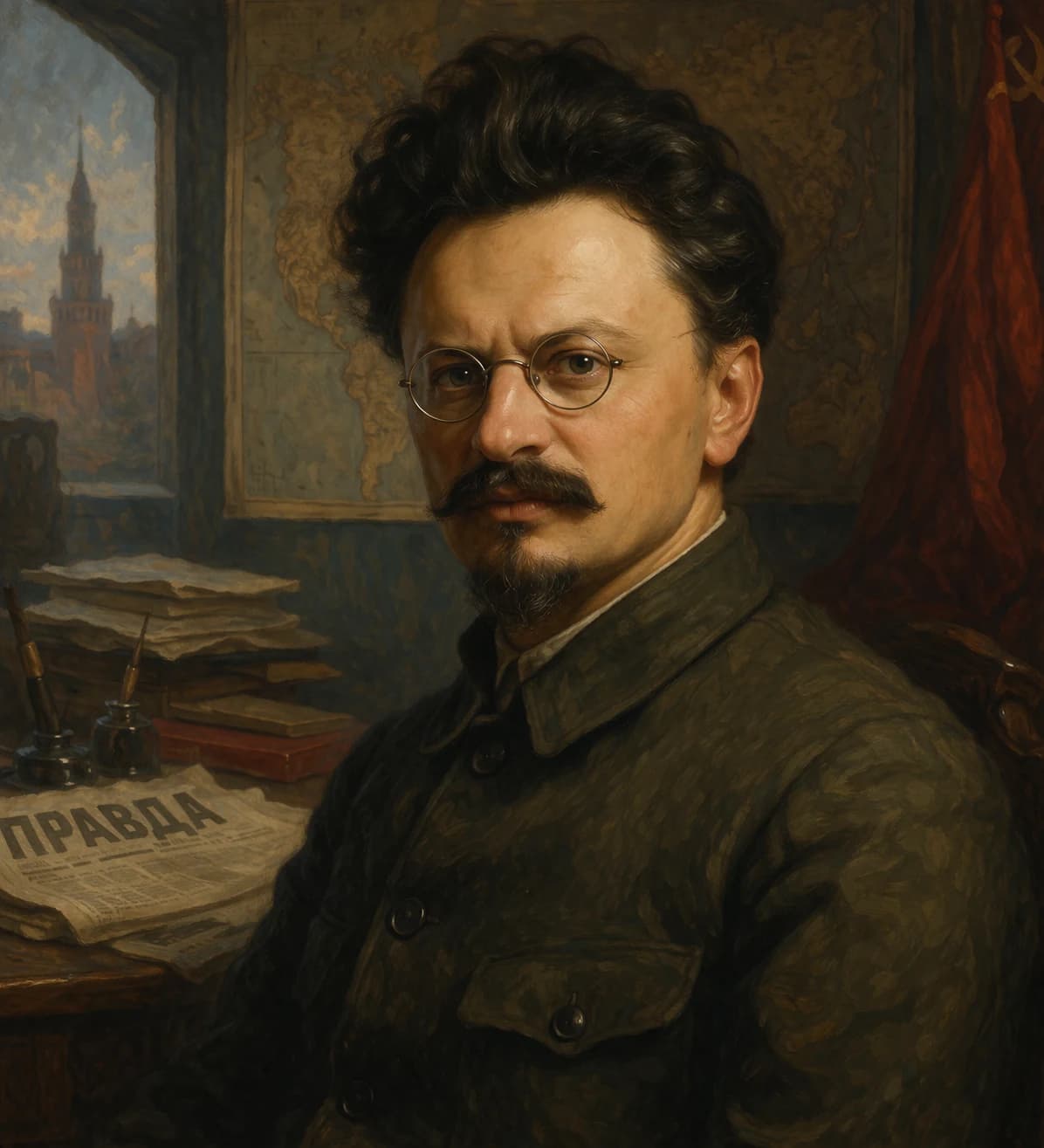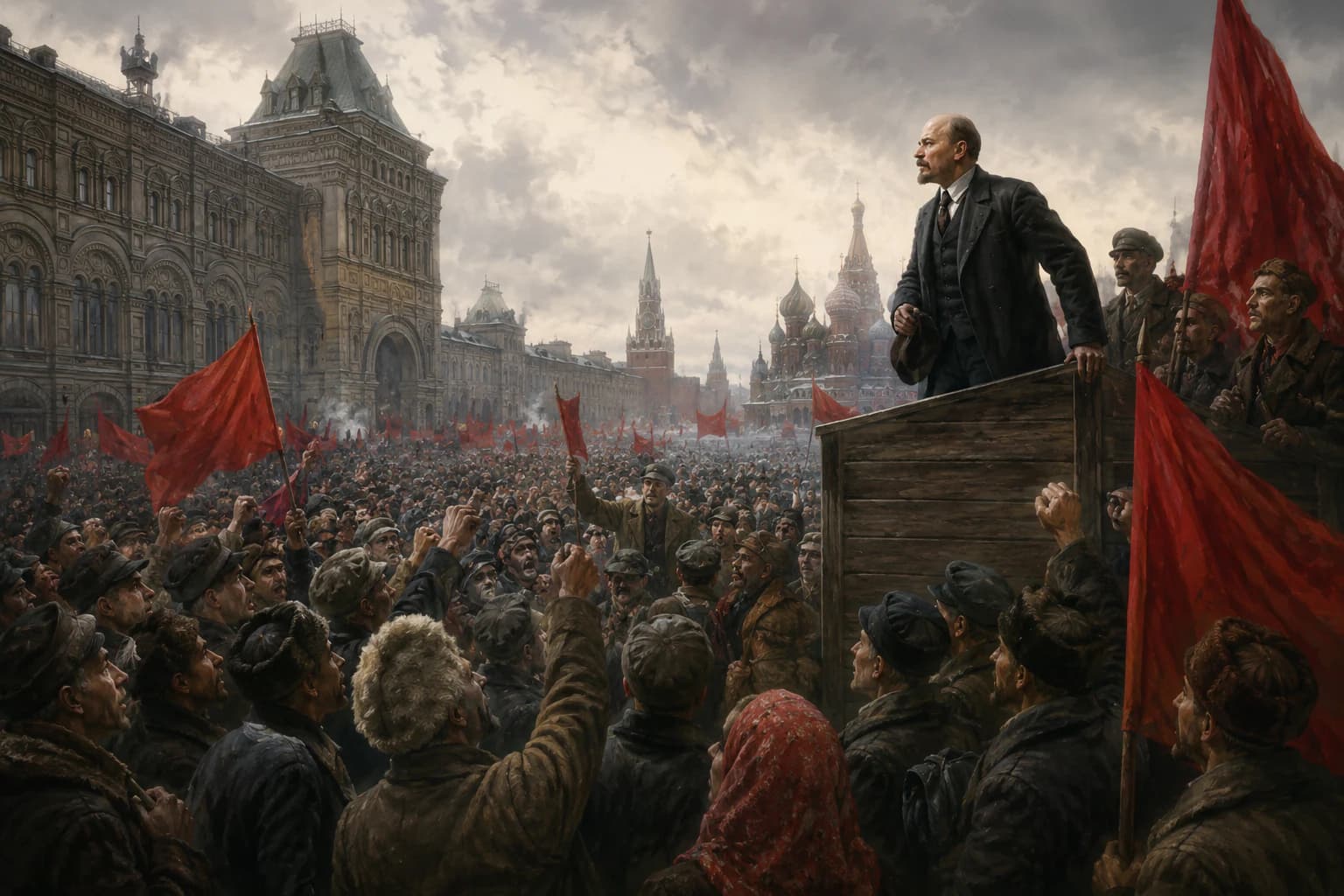
Crowds and armed workers in Petrograd during the Russian Revolution of 1917.
Premium Story

The Russian Revolution

Follow Russia from imperial breakdown to Bolshevik power, civil war, and the birth of the Soviet state.

11 chapters

Next

Content note

This story discusses war, violence, persecution, and death in an educational historical context.

Context

Introduction

Overview

The Russian Revolution was the collapse of the Romanov monarchy and the rise of Bolshevik power during the crisis of war, hunger, land conflict, and political failure. In 1917, the February Revolution overthrew the tsar, while the October Revolution brought Lenin's Bolsheviks to power. The revolution led to civil war, the creation of the Soviet Union, and a new communist state that reshaped the twentieth century.

What you'll learn: You will see how imperial collapse, war, ideology, and civil conflict turned Russia's 1917 revolutions into a durable Soviet state.

Key forces

The Tsarist Autocracy Under Strain
1905 CE
Step 1 of 101905 CEAccessible mode

The Tsarist Autocracy Under Strain

In 1905, Russia looked powerful on paper, but one year of protest showed how fragile the tsar's system really was.

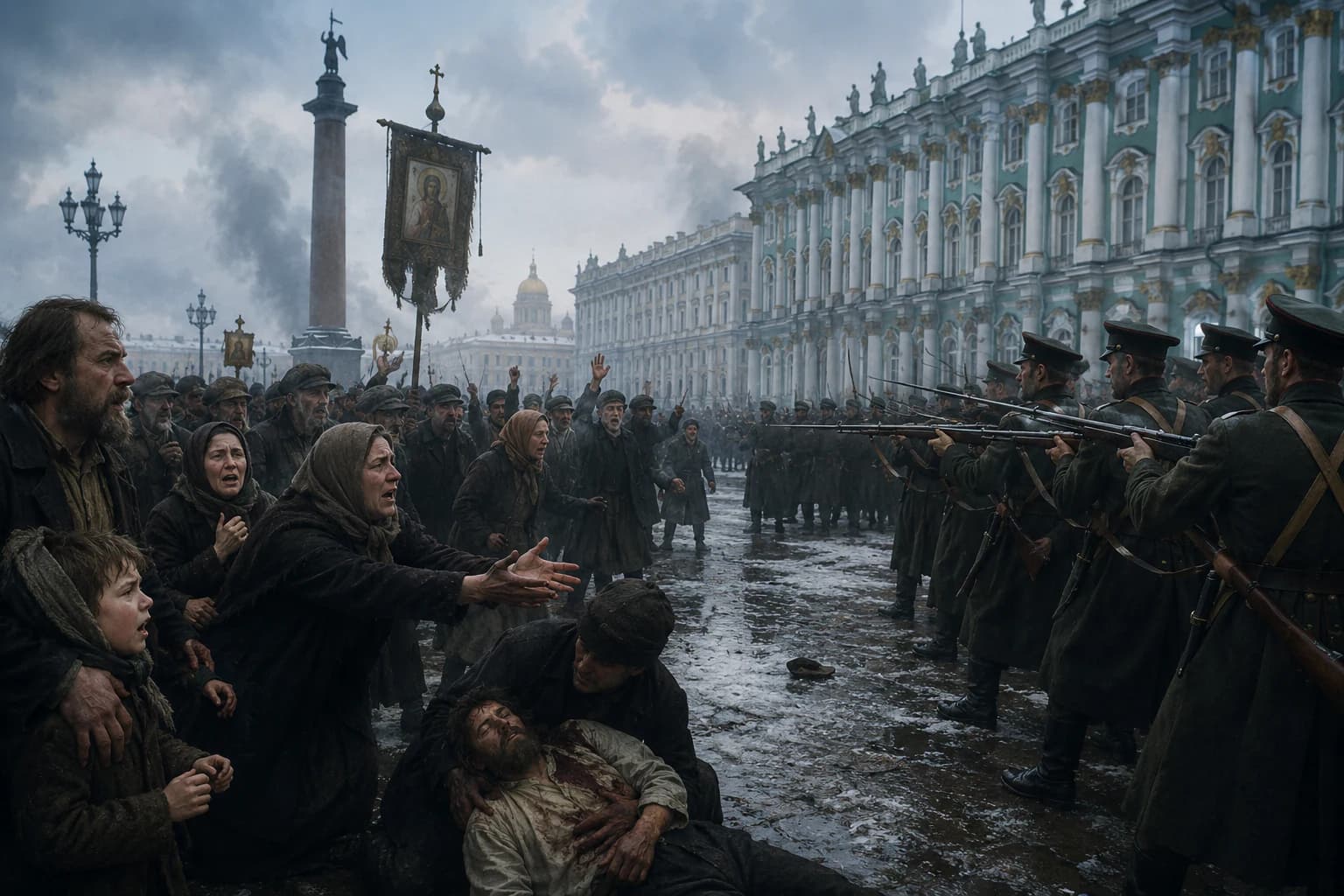
The crisis exploded after Bloody Sunday, when troops fired on peaceful marchers in St Petersburg. Many Russians stopped believing the tsar would protect them.

Strikes spread across factories and railways. Workers formed soviets to coordinate demands. In the countryside, peasants attacked estates and demanded land reform.

Nicholas II answered with the October Manifesto. It promised civil freedoms and a national assembly, the Duma, so unrest would calm.

But the monarchy kept real power. Election rules were changed, opposition voices were contained, and police repression returned quickly.

So 1905 solved little. It taught workers, peasants, and soldiers that protest could shake the regime, and it showed that reform from above would remain limited.

Russia Enters the Great War
1914 CE
Step 2 of 101914 CEAccessible mode

Russia Enters the Great War

When war began in 1914, many Russians supported it. Within two years, that support had turned into anger and exhaustion.

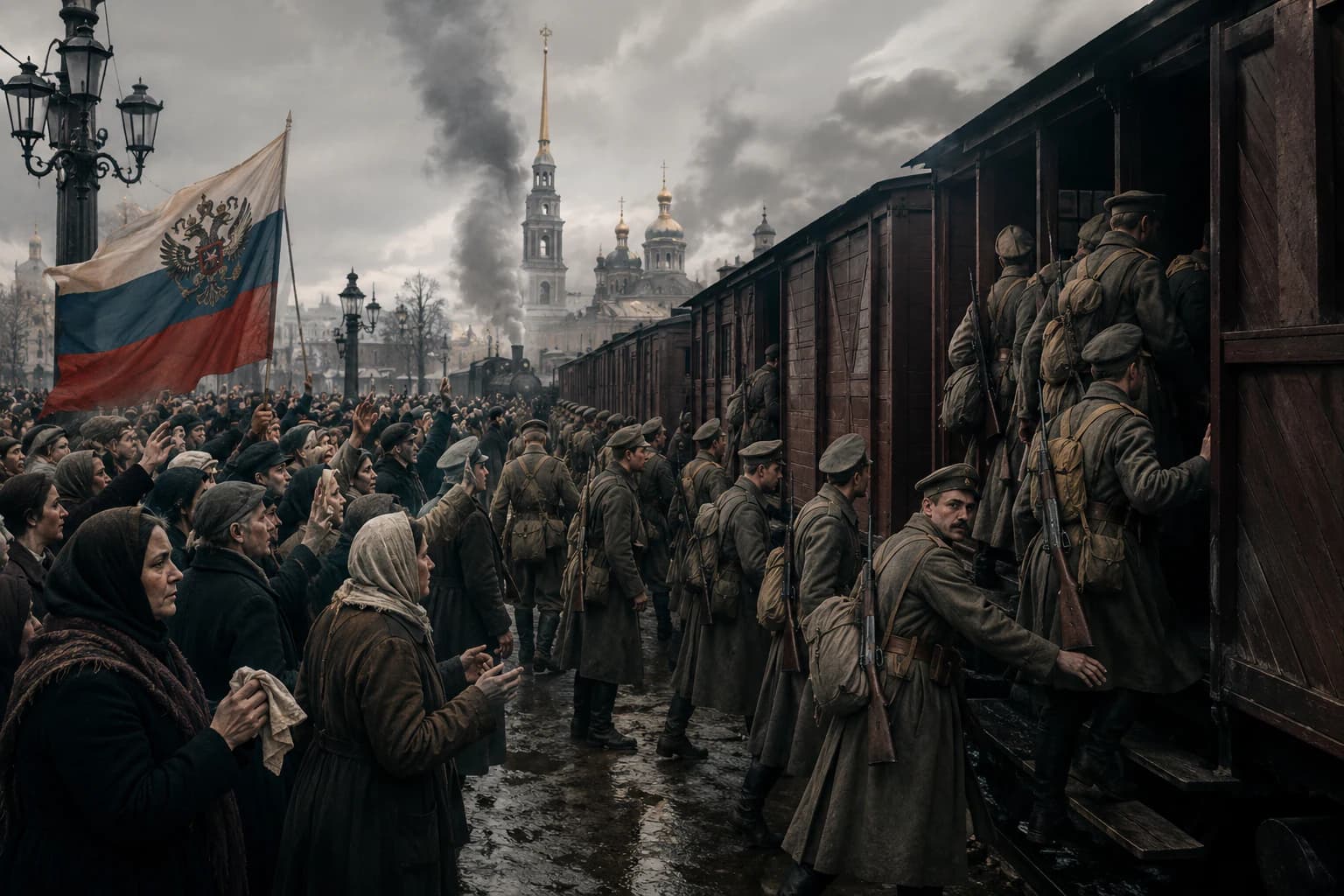
The government mobilized millions of men quickly. Crowds cheered in major cities, and leaders hoped war would unite society around the throne.

Early optimism faded fast. Russian armies suffered huge losses against better-equipped German and Austro-Hungarian forces, especially in 1915.

The state could not supply rifles, shells, boots, and transport at the scale modern war demanded. Soldiers and civilians felt the failures daily.

Railways were overwhelmed. Food and fuel reached fronts unevenly, while cities faced shortages and rising prices. Everyday life became harder each month.

Instead of strengthening tsarism, the war exposed weak leadership and weak institutions. Pressure on the empire grew until the political system could no longer absorb it.

War Weariness and Social Breakdown
1916 CE
Step 3 of 101916 CEAccessible mode

War Weariness and Social Breakdown

By 1916, many Russians believed the state was failing at the front and at home. Daily life became a struggle.

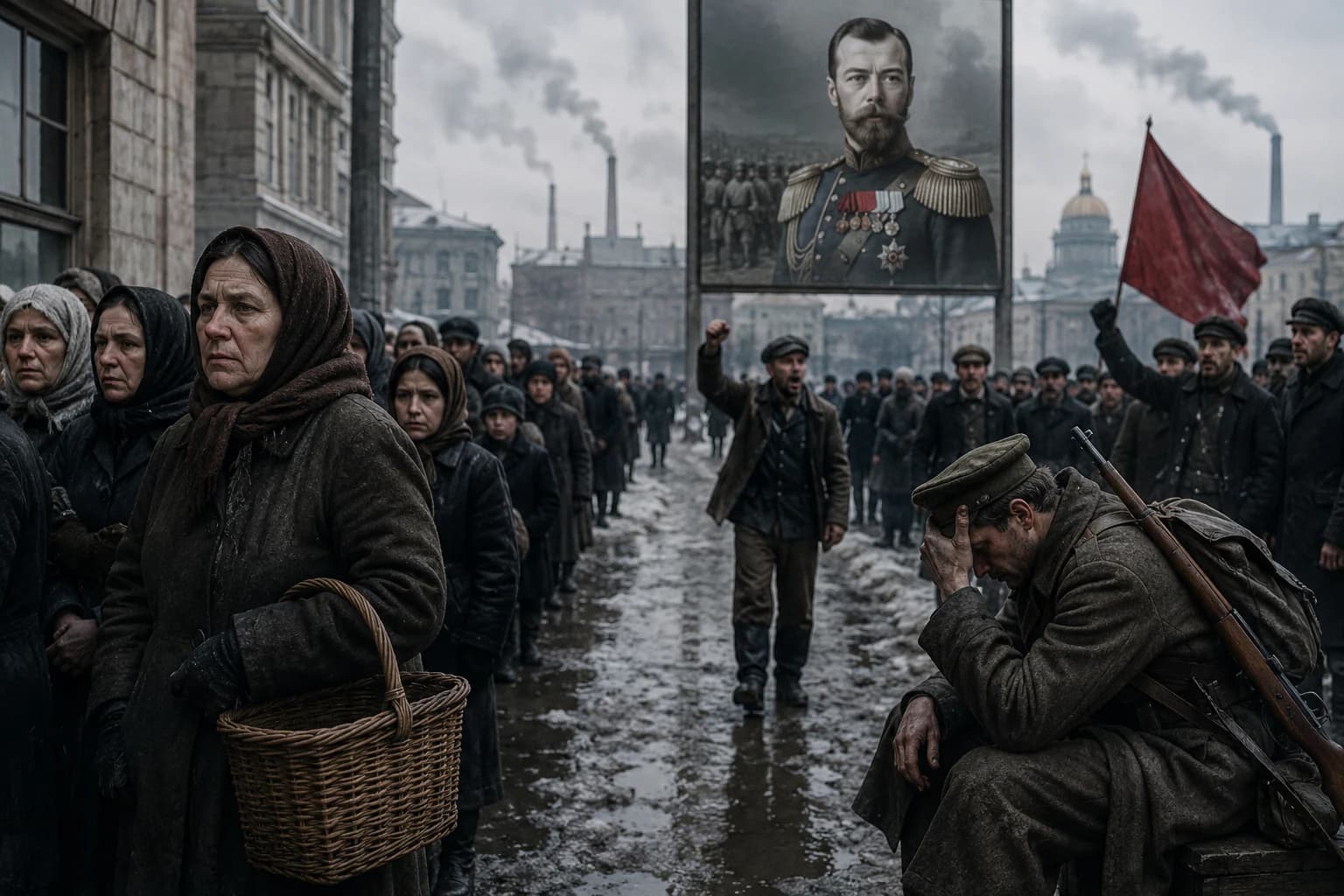
Food shortages hit major cities hard. Families waited in long bread lines, and rumors spread that officials were hoarding supplies.

Prices rose much faster than wages. Inflation wiped out workers' pay and hurt soldiers' families, increasing strikes and social anger.

At the front, desertion grew as units suffered losses and poor supply. Soldiers questioned why they were still fighting.

Nicholas II made things worse by taking personal command of the army in 1915. Defeats now damaged his authority directly.

In the capital, distrust of the court deepened around stories of corruption and chaos. By late 1916, faith in the old regime was collapsing.

Premium

You've reached the turning point

The opening chapters show an empire cracking under war, hunger and distrust. Premium follows the revolutionary acceleration: power splits in Petrograd, Lenin returns with a sharper demand, and a collapsing order gives way to civil war and one-party rule.

Continue into the reversals, crises and human stakes that make the story matter.

Unlock full story

What Premium unlocks next

  1. 4The February Revolution
  2. 5Dual Power in Petrograd
  3. 6Lenin and the April Theses
  4. 7The July Days and Kornilov Affair
  5. 8The October Seizure of Power
  6. 9Civil War and Red Victory
  7. 10The Soviet State Takes Shape

Browse stories

Browse stories for free

Explore the people connected to this turning point or enjoy one of our free stories.

Unlock full storyBrowse stories

References

Sources & Further Reading

Reliable sources, primary-source collections and reading paths connected to this page.

Sources used

  1. The British Library, Russian Revolution,” Open source
  2. Michigan State University, Seventeen Moments in Soviet History,” Open source

Further reading

  1. Sheila Fitzpatrick, The Russian Revolution, Oxford University Press.

Primary sources

  1. Marxists Internet Archive, Russian Revolution archive,” Open source

A weekly route through history

Find out first about the latest published stories, feature notes and occasional Premium offers in one weekly email.