Complete chronology
Full overview and deeper context for every journey step.
1906
Born into the Qing clan
Puyi was born in Beijing on 7 February 1906 into the Aisin Gioro clan, the ruling family of the Qing dynasty. His birth came after decades of rebellion, foreign defeat, reform failure, and political crisis. The dynasty still possessed palaces, rituals, titles, and officials, but its authority was increasingly brittle. Constitutional reform, revolutionary activism, provincial militarization, and foreign influence all pressed on the old order. Puyi's life would become inseparable from this timing. He was born not into the confident world of Kangxi or Qianlong, but into the final act of imperial China.
Puyi inherited a throne already losing its world.
1908
Chosen by Cixi
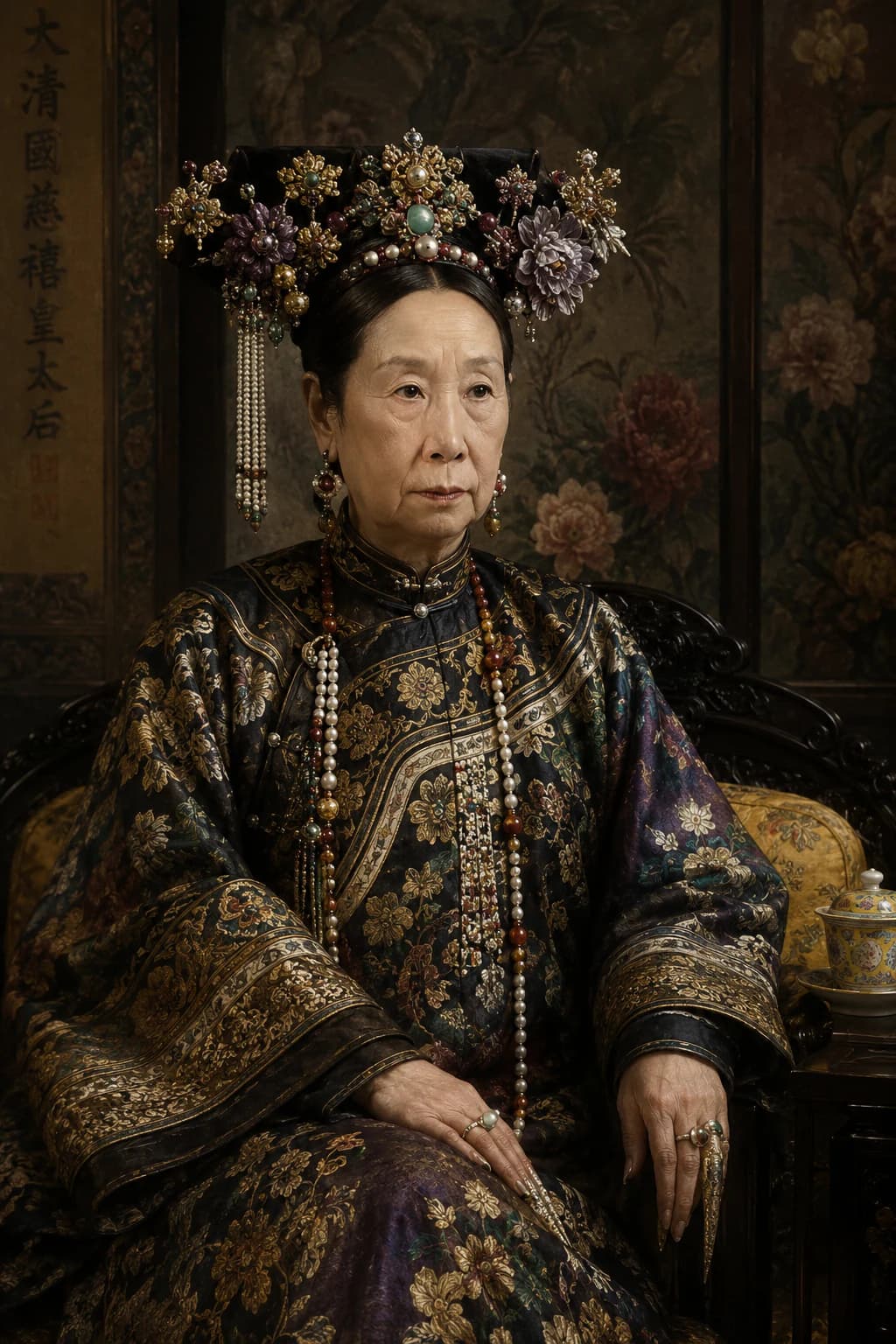
In November 1908, the Guangxu Emperor died, and Empress Dowager Cixi selected the very young Puyi as the next emperor. He took the reign title Xuantong. The decision placed a toddler at the summit of a collapsing political system. Regency arrangements attempted to govern in his name, but the court no longer commanded unquestioned loyalty across the empire. Puyi himself had no understanding of the forces gathering around him. His accession was less a fresh beginning than a sign of dynastic exhaustion.
A child emperor became the symbol of a dynasty running out of political options.
1911–1912
Xinhai Revolution
The Xinhai Revolution began in 1911 and quickly spread as provinces broke from Qing authority. Negotiations between revolutionaries, Yuan Shikai, and the court produced the abdication of the child emperor on 12 February 1912. The abdication ended more than two thousand years of imperial monarchy in China, though the transition was managed through compromise. Puyi retained his title and lived in the Forbidden City under favorable Articles of Favourable Treatment. This strange arrangement left him emperor inside the palace but not ruler of China.
Puyi lost the empire before he was old enough to grasp what an empire was.
1912–1924
Forbidden City childhood
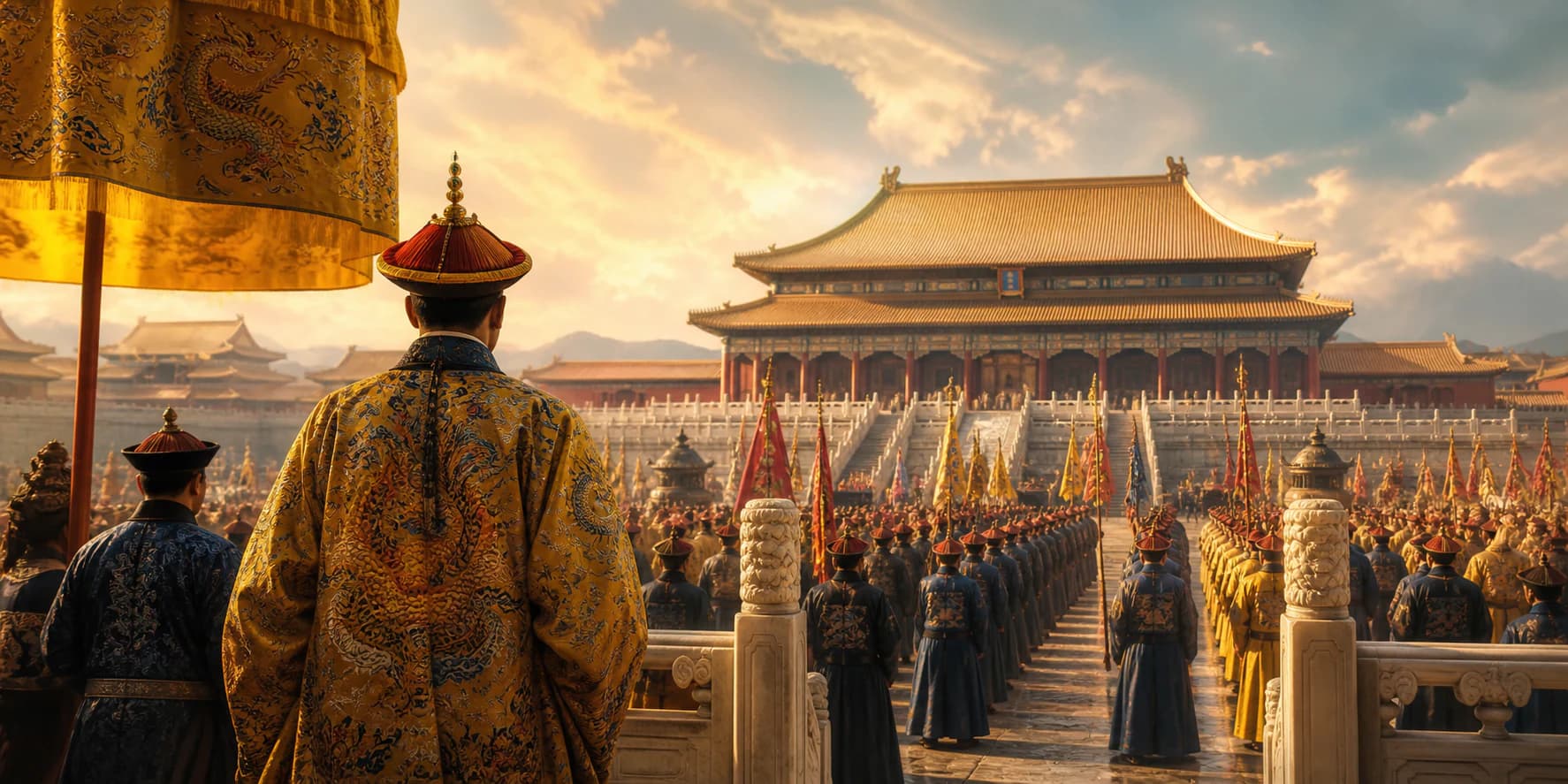
Puyi's childhood after abdication was psychologically unusual. He lived within the Forbidden City, served by eunuchs and attendants, addressed as emperor, and insulated from the republic outside the walls. The rituals of monarchy continued around him as performance without sovereignty. His Scottish tutor Reginald Johnston later shaped his education and introduced him to Western habits and ideas. Puyi adopted the English name Henry, but his identity remained unsettled. He was treated as sacred by some, irrelevant by others, and useful by anyone who wanted a symbol of restoration.
The palace preserved imperial theatre after imperial power had disappeared.
1917
Brief restoration
The 1917 restoration was one of the strangest episodes in early republican China. Zhang Xun, a monarchist warlord, entered Beijing and announced Puyi's return to the throne. The restoration lasted only a brief time before republican forces ended it. For Puyi, still a child, the episode reinforced the illusion that the throne might someday be recovered. For China, it showed how fragile the republic remained and how imperial symbols could still be exploited by military strongmen. The failed restoration did not revive monarchy; it made its weakness plain.
The 1917 restoration proved that nostalgia could seize Beijing but not govern China.
1924
Expelled from the palace
In 1924, Feng Yuxiang's forces took control in Beijing and expelled Puyi from the Forbidden City. The move shattered the compromise that had allowed the former emperor to remain in imperial surroundings. Puyi eventually found refuge in the foreign-controlled environment of Tianjin, where he lived among competing advisers, monarchist hopes, and Japanese interest. Exile deepened his resentment and his longing for restored status. It also made him vulnerable to powers that saw in him not a sovereign, but an instrument.
Once removed from the palace, Puyi became a symbol in search of a patron.
1932–1945
Manchukuo
After Japan seized Manchuria in 1931, Puyi was brought into the new state of Manchukuo. He first served as chief executive and in 1934 became emperor under the reign title Kangde. Japanese propaganda presented Manchukuo as legitimate restoration and multiethnic harmony, but real power lay with Japan's military and officials. Puyi had ceremonies, palaces, and titles, yet little sovereignty. His role remains morally serious because Manchukuo was tied to occupation, coercion, exploitation, and war. Puyi was not the architect of Japanese imperialism, but he lent it dynastic cover.
In Manchukuo, Puyi regained an imperial title while losing meaningful independence.
1945–1959
Capture and re-education
Japan's surrender in 1945 ended Manchukuo. Puyi attempted to flee but was captured by Soviet forces and later handed over to the People's Republic of China. He was imprisoned at the Fushun War Criminals Management Centre, where the new communist state subjected him to ideological re-education. His transformation was later presented as proof that even a former emperor and collaborator could be remade into a citizen. The process was political theatre, punishment, and personal reckoning at once. Puyi's own writings after release reflected the language and expectations of the regime that rehabilitated him.
The last emperor became a living exhibit in the new state's story of remaking old China.
1959–1967
Citizen of the republic
Puyi was pardoned in 1959 and lived the last phase of his life in the People's Republic of China. He worked as a gardener and later held a modest role connected to the Chinese People's Political Consultative Conference. His final years were far removed from the Forbidden City and Manchukuo's imperial pageantry. He died in Beijing on 17 October 1967 during the Cultural Revolution. Puyi's historical importance lies less in what he commanded than in what his life passed through: Qing collapse, republican fragmentation, Japanese imperialism, communist victory, and the deliberate burial of monarchy as a political future.
Puyi's life became a human bridge across the end of imperial China.