Complete chronology
Full overview and deeper context for every journey step.
c. 11th century BC
A western lord
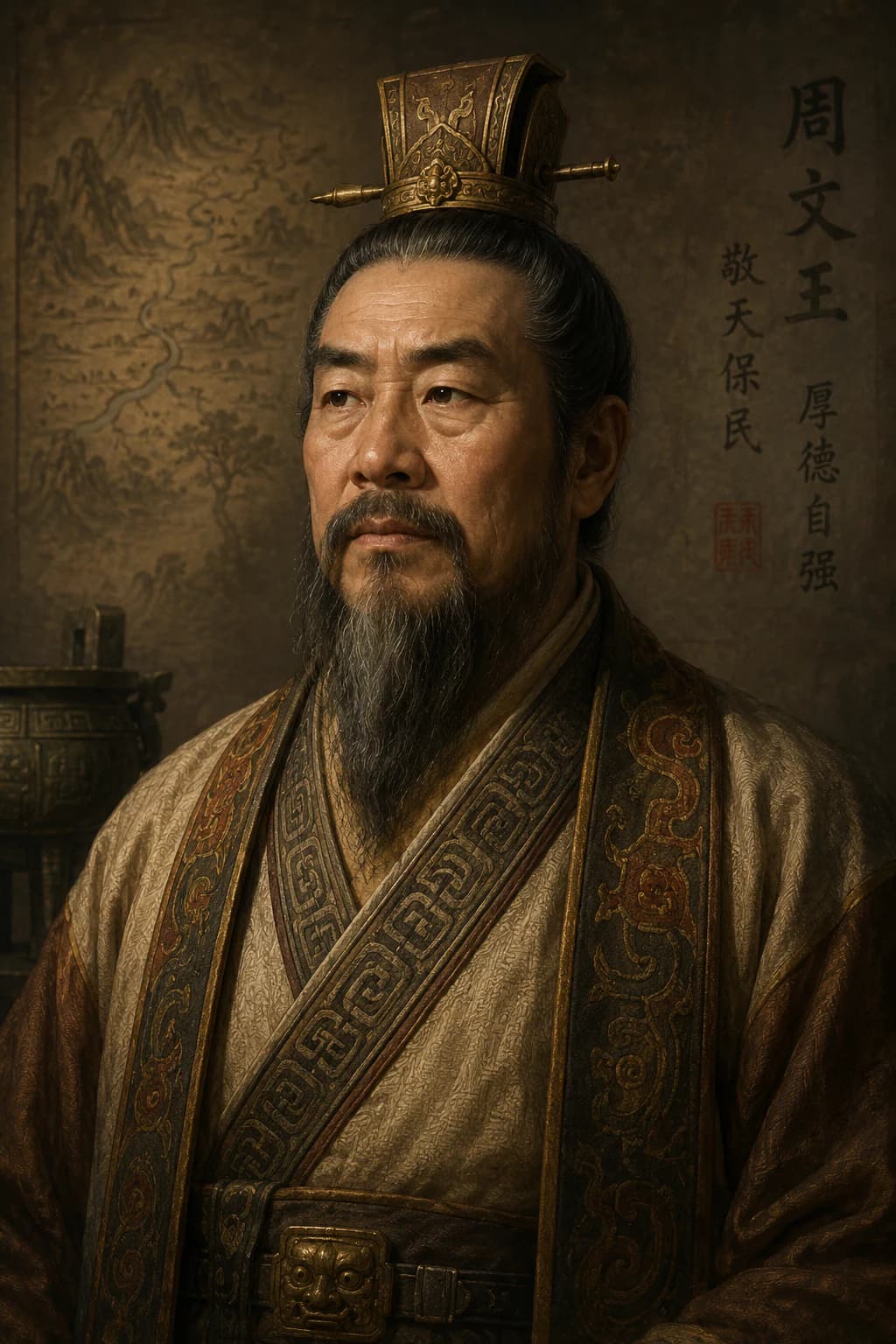
Ji Chang, later honoured as King Wen of Zhou, belonged to the pre-dynastic Zhou leadership in the Wei River region. The Zhou were not yet rulers of China. They were one powerful polity among others, operating within a world still dominated by the Shang royal house at Yin. Ji Chang's importance lies in how far Zhou power advanced before open conquest. Later tradition presented him as a ruler of extraordinary virtue, restraint and wisdom. That portrait is shaped by Zhou memory, but it reflects a real political need. The dynasty that overthrew the Shang required an ancestor whose moral prestige could make rebellion appear righteous. King Wen became that ancestor: the man who prepared the ground without personally taking the final throne.
His historical role was to make Zhou power look both practical and morally legitimate.
c. 11th century BC
Building Zhou strength
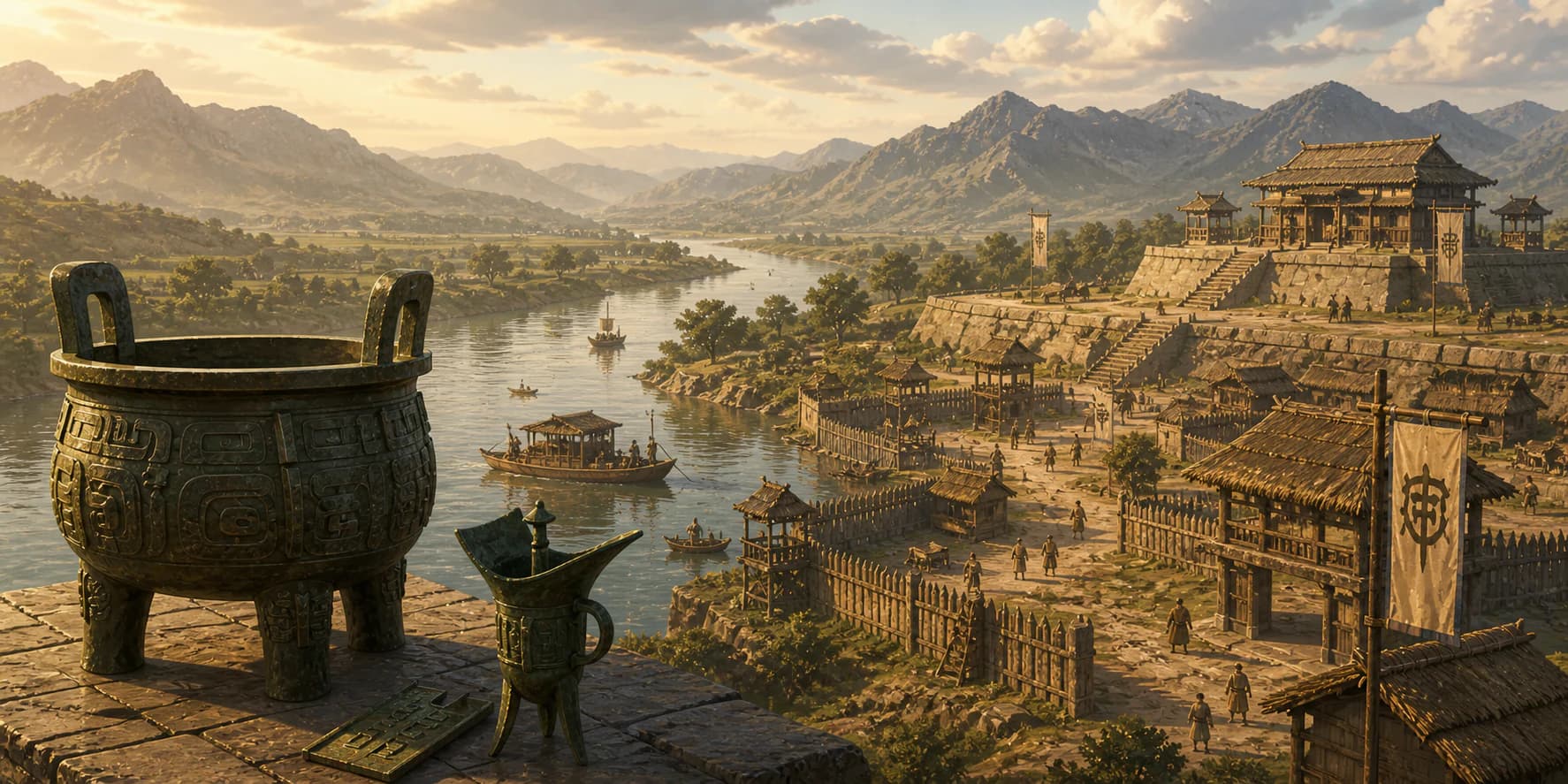
The Zhou conquest under King Wu would have been impossible without earlier consolidation under King Wen. He strengthened Zhou's regional base, drew other leaders into its orbit and positioned the state as a credible alternative to Shang rule. Ancient sources describe him attracting followers through humane government and moral excellence. Modern historians are more cautious, but the political effect is clear: Zhou became stronger while Shang authority weakened or faced increasing resistance. King Wen's achievement was not a single dramatic battle. It was the slow accumulation of capacity, reputation and opportunity. He helped turn Zhou from a frontier power into a state with dynastic ambition.
The decisive conquest began before the battlefield, in the patient construction of alliances and authority.
c. 11th century BC
Conflict with Di Xin
One of the most famous stories about King Wen is his imprisonment by Di Xin, the last Shang king, at Youli. The details are difficult to verify, and the story was preserved by traditions favourable to Zhou legitimacy. Even so, it mattered profoundly. It cast King Wen as the righteous servant oppressed by a suspicious and corrupt overlord. It also dramatized the moral contrast that Zhou writers wanted later generations to see: Shang power as arbitrary, Zhou virtue as patient and enduring. Whether the episode happened exactly as told, it expresses a real political relationship under strain. The Zhou were no longer merely loyal dependants. They had become threatening enough for the Shang centre to watch closely.
The Youli tradition turned political tension into a moral drama of virtue under oppression.
c. 1056 BC
Father of conquest
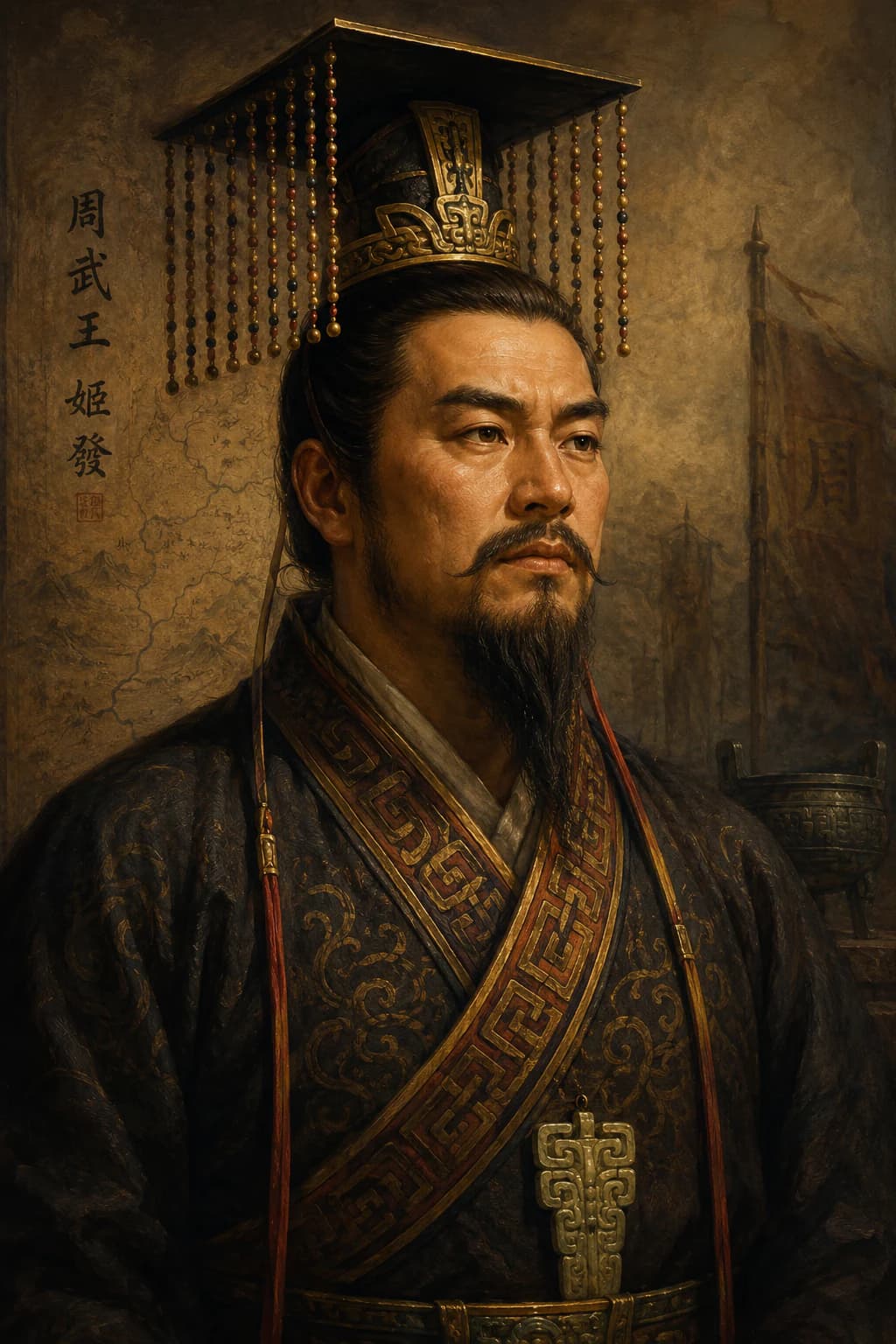
King Wen did not live to see the overthrow of the Shang. His son Ji Fa, remembered as King Wu, led the campaign that defeated Di Xin at Muye around 1046 BC. This sequence shaped the Zhou founding story. King Wen became the preparer, the moral source and the unfulfilled promise; King Wu became the actor who completed what his father had made possible. That division of roles was politically useful and emotionally powerful. It allowed the dynasty to honour both patient virtue and decisive force. In later thought, King Wen's restraint and King Wu's action belonged together. One gave the conquest legitimacy; the other made legitimacy effective.
His death before victory made him an ancestor of conquest rather than merely a conqueror.
After c. 1056 BC
Enduring legacy
King Wen remains important because he became one of Chinese history's great models of pre-conquest legitimacy. He did not found the Zhou dynasty in the formal sense; King Wu did that after Muye. Yet without King Wen, the conquest lacked its deepest moral ancestor. Confucius and later scholars treated the early Zhou as a lost standard of humane government, ritual seriousness and political order. King Wen's image sat at the heart of that ideal. Modern historians recognise that this portrait is partly constructed by the winners, but constructed memory can itself be historically powerful. King Wen shaped the language by which China imagined good rule: patient, cultivated, restrained, ancestral and aligned with Heaven.
His greatest power came after death, when memory made him the moral father of Zhou rule.