Complete chronology
Full overview and deeper context for every journey step.
1941
Contested birth
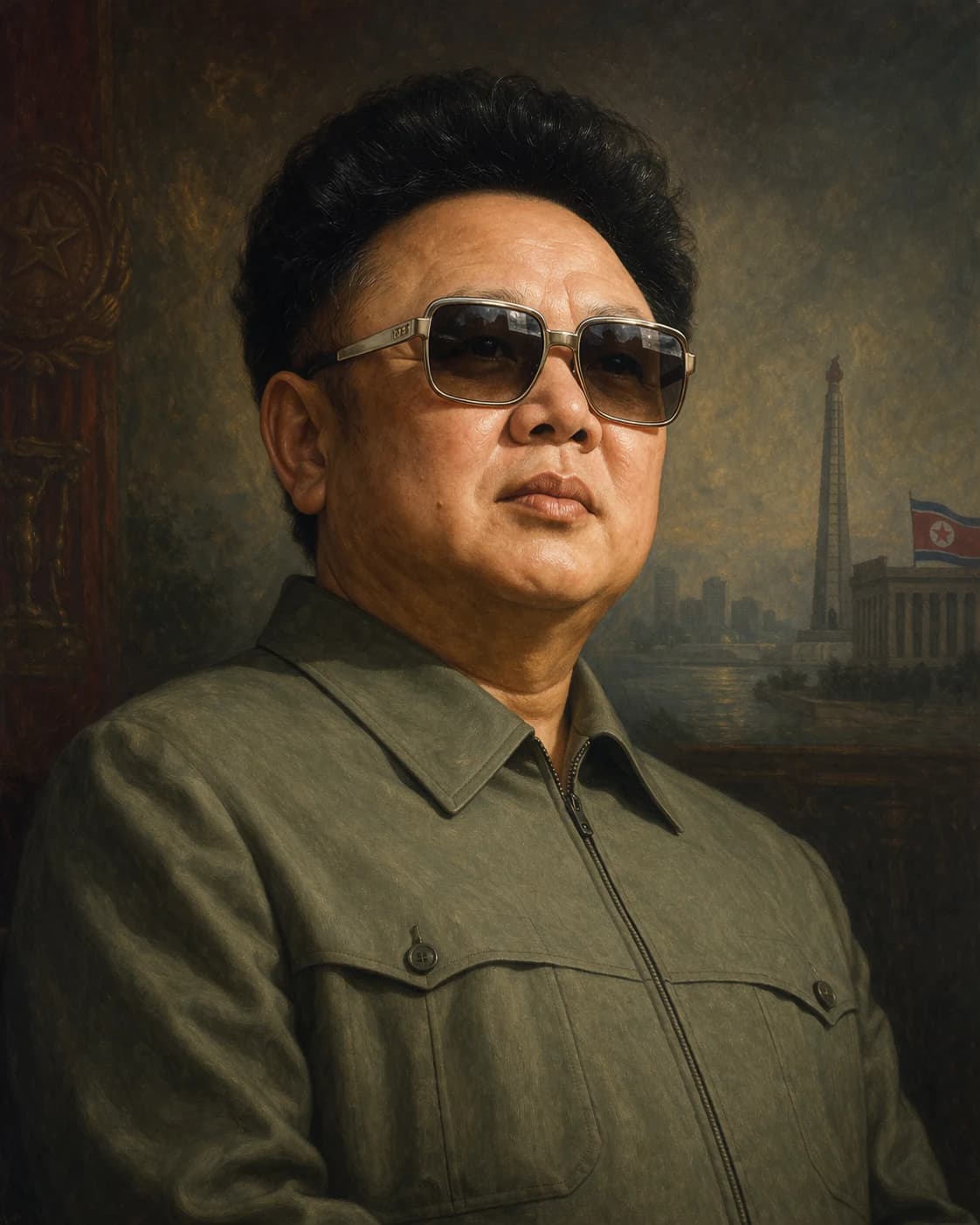
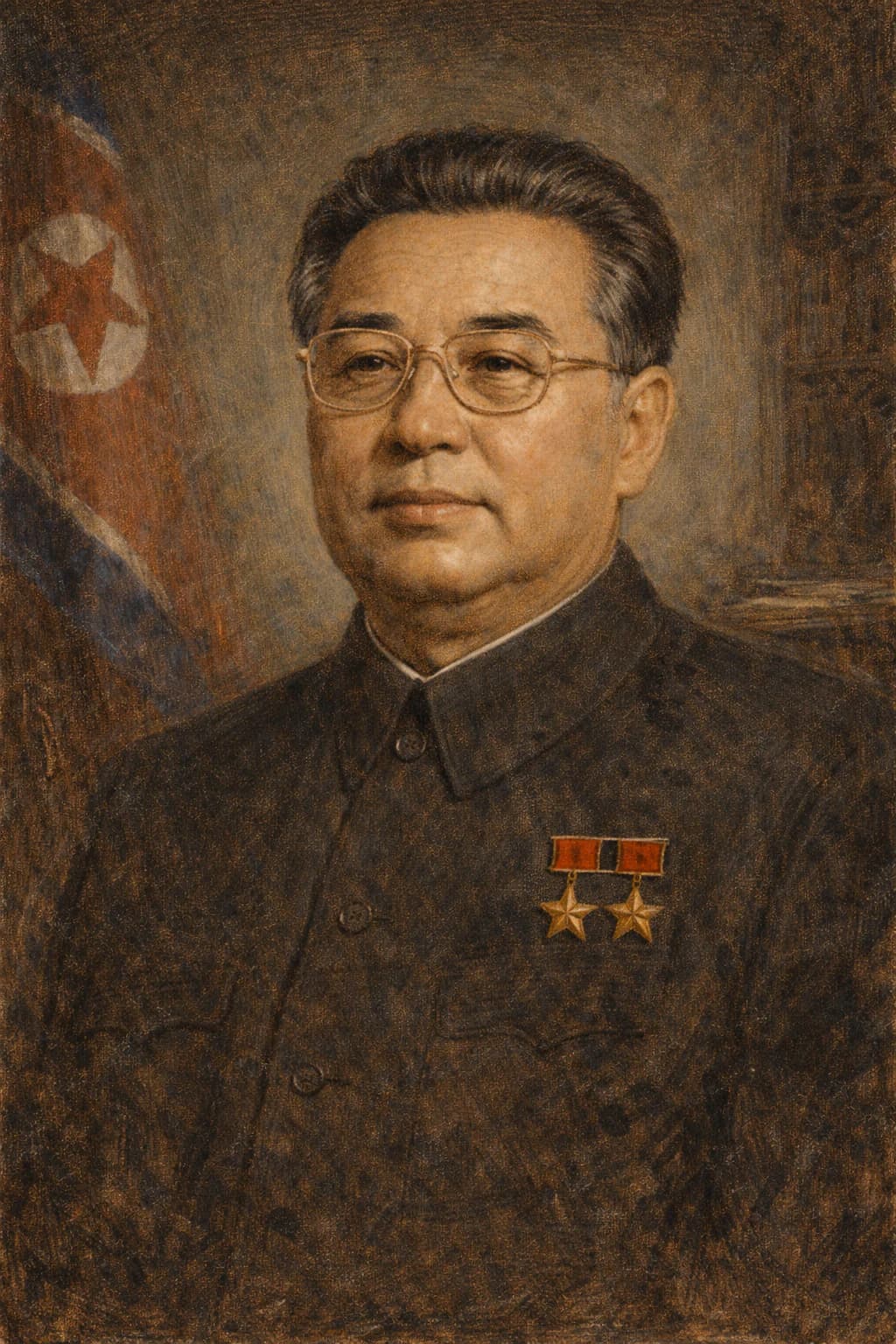
Kim Jong Il was born on 16 February 1941 in the Soviet Union, where his father Kim Il-sung was connected to anti-Japanese communist forces and Soviet military structures. North Korean official mythology later placed his birth on Mount Paektu in 1942, surrounding it with revolutionary symbolism. The difference matters because Kim Jong Il's life cannot be separated from propaganda. His biography was not merely recorded; it was manufactured as part of the state's sacred political story. From the beginning, his identity was folded into the Kim family's claim to embody Korean resistance, national destiny, and party legitimacy.
The gap between documented birth and official myth shows how North Korea turns family history into state ideology.
1945-1960s
Son of Kim Il-sung
After Korea's liberation from Japan and the division of the peninsula, Kim Jong Il grew up within the emerging Democratic People's Republic of Korea. The Korean War devastated the peninsula and hardened North Korea's siege mentality. His father Kim Il-sung built a state organised around the Workers' Party of Korea, security control, command economics, and a vast personality cult. Kim Jong Il's education and early party work took place inside that system. He did not have to seize power from outside; he learned how power was staged, guarded, narrated, and inherited from within the innermost circle.
Kim Jong Il was trained in a state where legitimacy depended as much on ritual and control as on formal office.
1960s-1970s
Propaganda apparatus
Kim Jong Il built influence in the party's Organisation and Guidance Department and propaganda sphere, where loyalty, culture, and surveillance overlapped. He treated cinema, literature, mass spectacle, and ideological training as instruments of rule. This background was central to his leadership style. He understood that North Korean power required more than police coercion; it required a controlled emotional universe in which citizens encountered the leader through song, image, slogan, schoolbook, and ceremony. His role in propaganda helped prepare his succession by making hereditary power appear revolutionary rather than monarchical.
Before he ruled the state, he helped design the world of symbols through which the state understood itself.
1980
Heir apparent
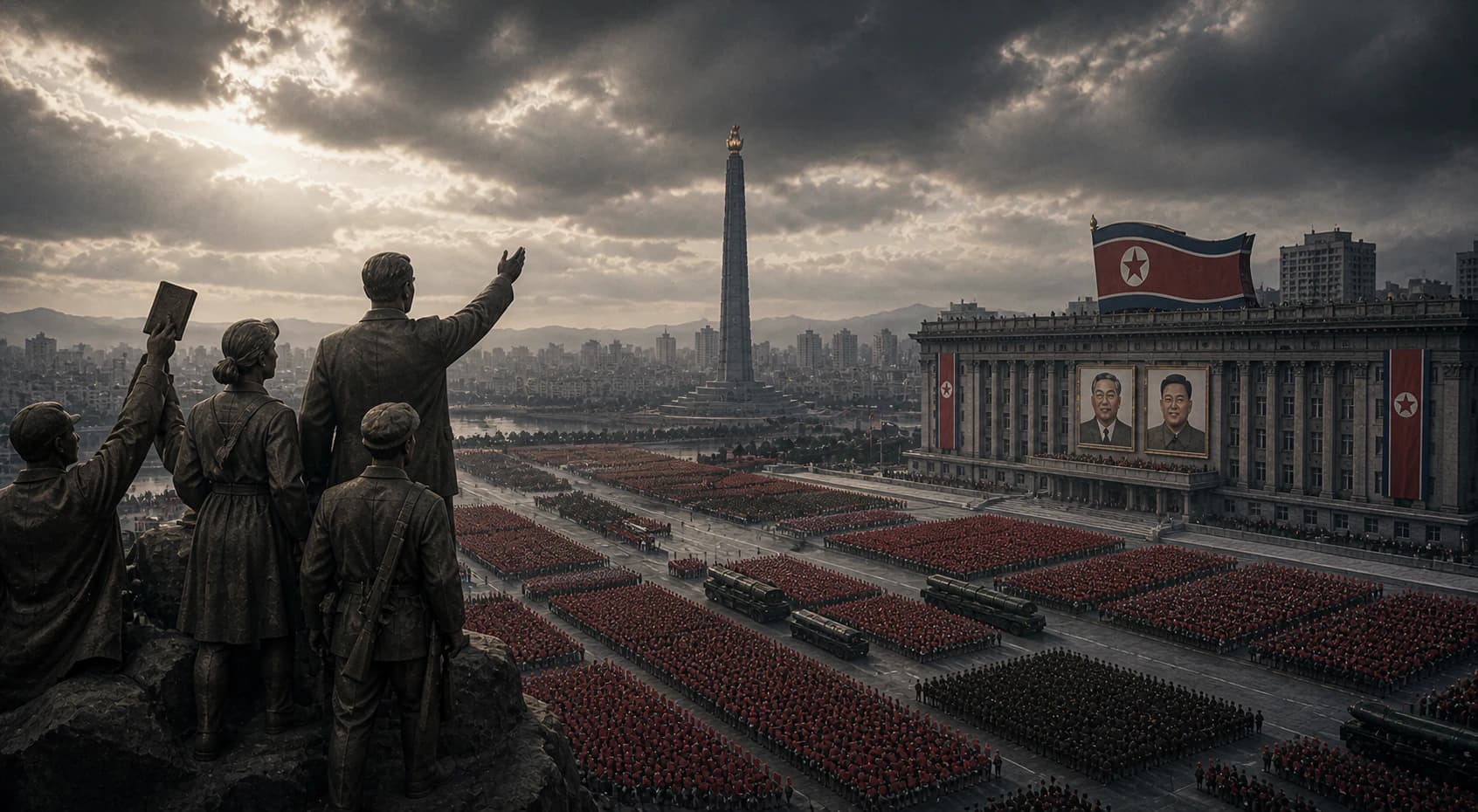
At the Sixth Congress of the Workers' Party of Korea in 1980, Kim Jong Il emerged openly as heir apparent. This was extraordinary in communist politics. Marxist-Leninist states claimed legitimacy through party ideology, revolutionary struggle, and collective leadership, not bloodline succession. North Korea solved the contradiction by presenting the Kim family as uniquely entrusted with the revolution. Through the 1980s, Kim Jong Il accumulated posts and influence while his father remained the supreme symbolic figure. The succession was gradual, deliberate, and heavily choreographed. It turned North Korea into the clearest example of dynastic communism in the modern world.
His rise made hereditary succession compatible with a state that still spoke the language of socialism.
1994-1998
Succession and famine
Kim Il-sung died in July 1994, leaving Kim Jong Il to inherit a state deprived of its founding leader just as its economic foundations were failing. The collapse of the Soviet Union had cut off crucial support, the command economy was brittle, and floods worsened existing shortages. The famine of the 1990s, known in North Korea as the Arduous March, killed large numbers of people, though exact figures remain disputed. Kim Jong Il survived politically by tightening control, relying on security institutions, accepting limited coping mechanisms outside the formal economy, and refusing reforms that might threaten the regime's monopoly on power.
His first great test was not conquest or reform but survival amid a humanitarian catastrophe.
1990s-2000s
Military-first rule
Kim Jong Il's rule became closely associated with Songun, or military-first politics. The Korean People's Army received ideological prominence and practical priority, helping secure elite loyalty during economic distress. Military-first rule did not mean the army simply governed the country; the leader remained the arbiter among party, army, and security institutions. But it signalled that North Korea would face scarcity, sanctions, and diplomatic pressure by presenting itself as a fortress state. The policy also linked domestic discipline to external threat. The more isolated North Korea became, the more the regime used danger from abroad to justify hardship at home.
Songun turned military pressure into both a foreign policy tool and an internal language of obedience.
2006-2011
Nuclear brinkmanship
North Korea's nuclear programme predated Kim Jong Il's sole rule, but under him it became the centre of international confrontation. The Agreed Framework of 1994, later disputes, missile tests, and Six-Party Talks all reflected the same underlying reality: Pyongyang used nuclear development to extract attention, security concessions, aid, and leverage. In October 2006, North Korea conducted its first nuclear test. A second followed in 2009. The tests brought sanctions and alarm, but they also made clear that North Korea would not be treated as a marginal failed state. Kim Jong Il had turned weakness into danger and danger into bargaining power.
His nuclear policy made North Korea poorer and more isolated, but harder to ignore or coerce.
2011
Death and succession
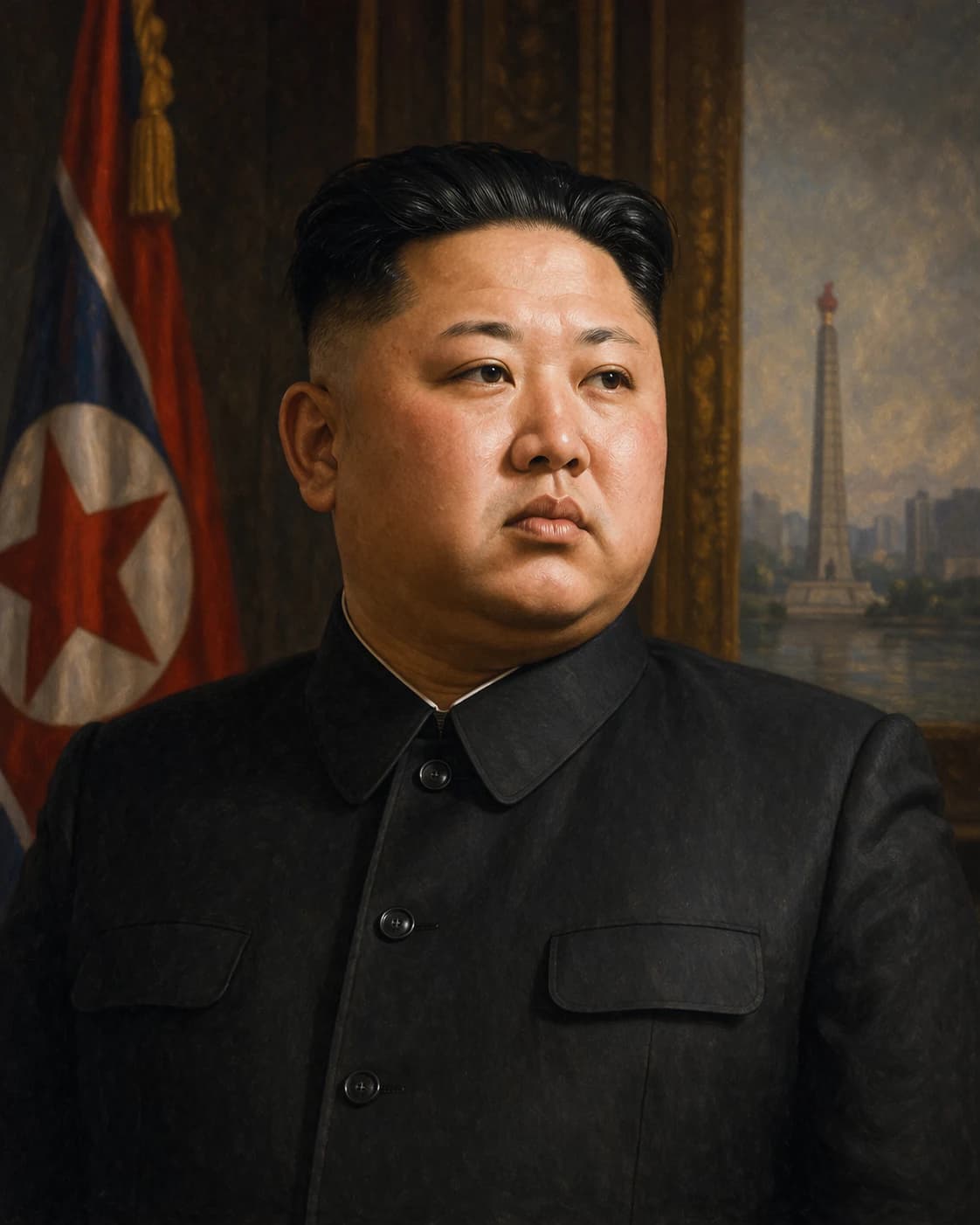
Kim Jong Il died on 17 December 2011. His designated successor, Kim Jong Un, was young and little known internationally, but the dynastic principle had already been prepared by decades of propaganda and elite management. Power passed within the Kim family for a second time, confirming that North Korea's political system rested on a fusion of party dictatorship, security coercion, military priority, and hereditary charisma. Kim Jong Il left behind a state marked by famine memory, prison camps, nuclear weapons, economic distortion, and total political control. He did not make North Korea strong in ordinary terms. He made it survivable for the ruling family.
His legacy is the transformation of North Korea from revolutionary state into nuclear-armed family regime.