Complete chronology
Full overview and deeper context for every journey step.
c. 26th century BC
Fourth Dynasty heir
Khafre belonged to the same Old Kingdom dynasty that produced Sneferu and Khufu, rulers whose pyramid projects reshaped the ambitions of Egyptian kingship. He was almost certainly a son of Khufu, though the precise order of royal sons, queens, and succession politics is difficult to reconstruct from the surviving evidence. That uncertainty matters. Khafre did not emerge from a simple family story preserved in full; he appears through monuments, inscriptions, titles, statues, and later king lists. What is secure is the world he inherited. Fourth Dynasty Egypt had a strong court, a capable scribal administration, skilled quarry teams, organized labor systems, and a religious imagination in which the pharaoh's afterlife was tied to cosmic order. Khafre's biography begins inside that machinery of sacred power.
In Old Kingdom Egypt, royal family and state administration were woven into the same system of power.
after Khufu
A contested succession
Khafre's path to kingship is less clear than the clean line of pyramid silhouettes might suggest. Khufu was followed by Djedefre, who built his pyramid at Abu Rawash rather than Giza. Khafre then restored the royal focus to Giza, but whether this reflects rivalry, practical choice, dynastic preference, or a sequence of legitimate reigns is still debated. Later tradition sometimes turned Fourth Dynasty rulers into characters in moral tales, but those stories were written long after the events and cannot be treated as court reporting. The safer conclusion is more interesting: Khafre inherited a powerful but politically active royal house, where sons of Khufu competed for memory, placement, and divine legitimacy. By choosing Giza, he made his reign speak beside Khufu's rather than away from it.
Succession can be settled legally while still being fought symbolically through monuments.
c. 2558 BC
Returning to Giza
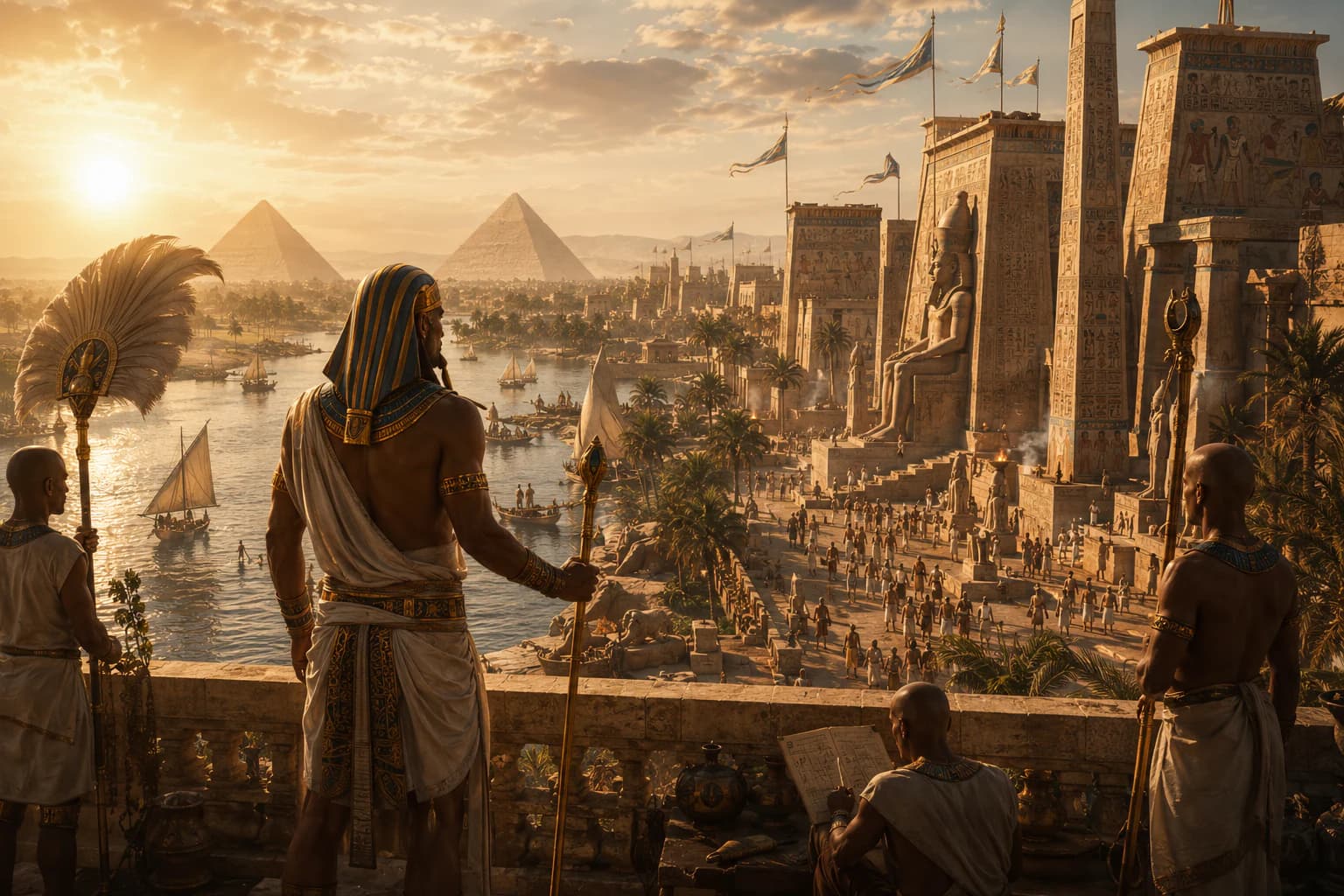
Khafre's decision to build at Giza was a statement of continuity and competition. His pyramid is smaller than Khufu's, but it stands on higher ground, so from many angles it appears almost equal in height. That visual intelligence was not accidental. The Old Kingdom court understood landscape, approach, scale, and visibility. A pyramid complex included far more than the pyramid itself: a valley temple near the cultivation, a causeway rising toward the desert, a mortuary temple for rituals, subsidiary structures, and cemeteries of elites tied to royal service. Khafre's Giza was not simply a burial place. It was a designed political environment where stone, horizon, temple ritual, and royal genealogy worked together to keep the king present after death.
Where a ruler builds can be as meaningful as what the ruler builds.
c. 2550 BC
The second pyramid
Khafre's pyramid was built with the same confidence that defined the Fourth Dynasty, though with its own architectural personality. Its core rose from the limestone plateau, and the surviving casing stones near the summit hint at how smooth and brilliant the monument once appeared. The building demanded quarrying, transport, surveying, labor management, food supply, and craft coordination across years. It is tempting to describe such work only as engineering, but for Khafre it was also theology. The pyramid was a royal resurrection machine, a permanent sign that the king had joined the divine order and that Egypt's earthly hierarchy reflected cosmic stability. The monument's success lies partly in its discipline: it does not need inscriptional drama to declare power. Its position and mass do the speaking.
Monumental architecture can turn religious belief into a public experience of authority.
c. 2550 BC
Temple and statue
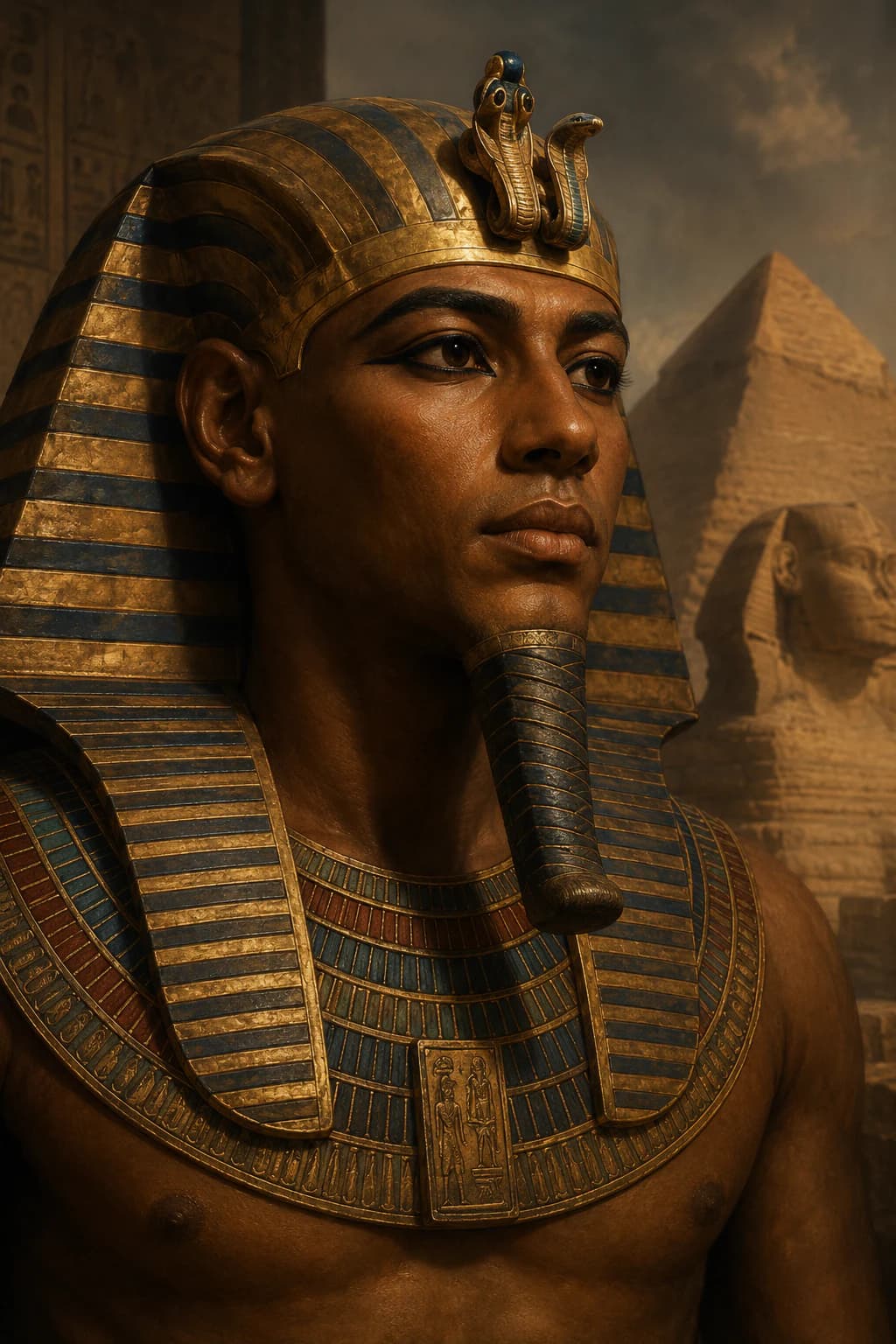
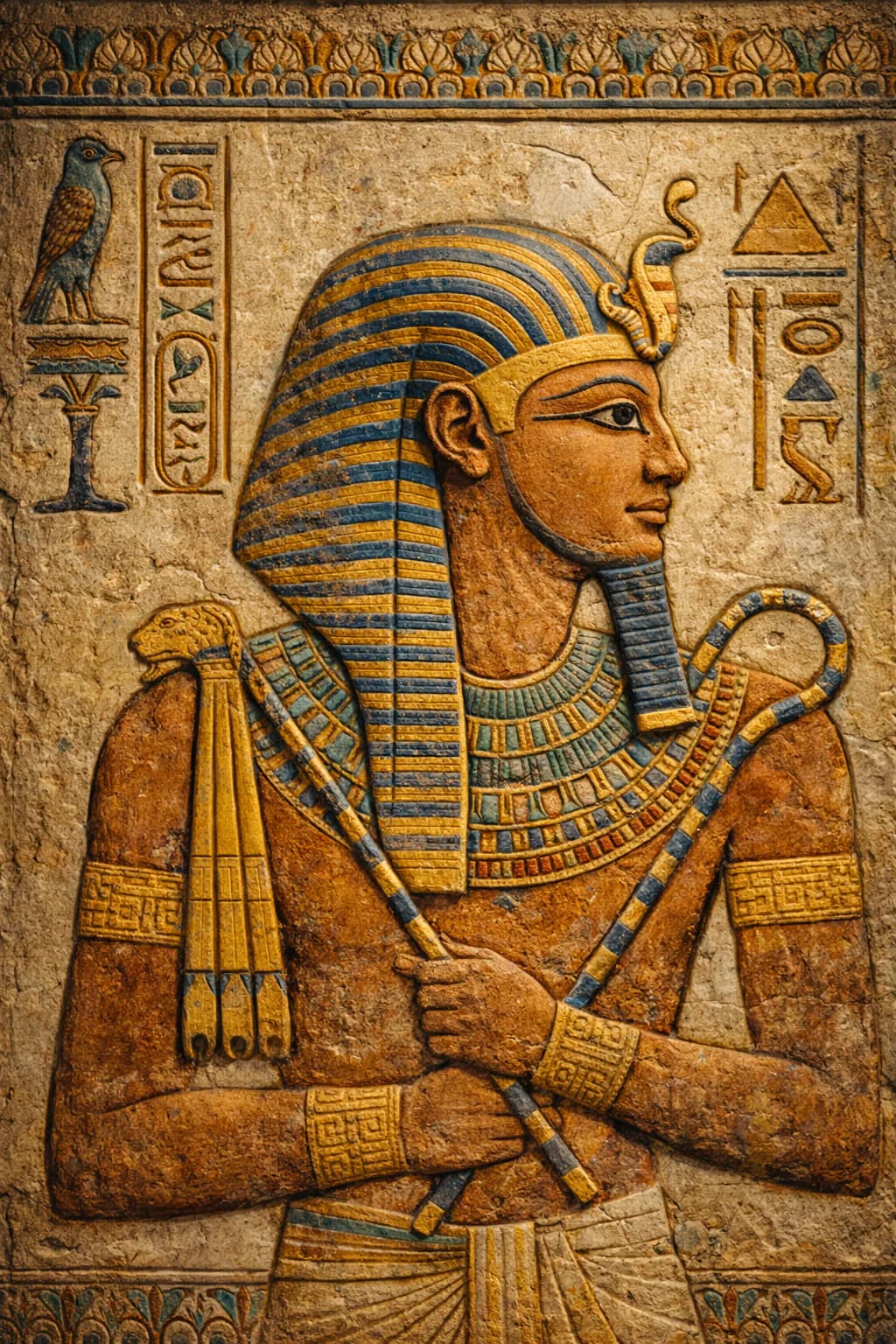
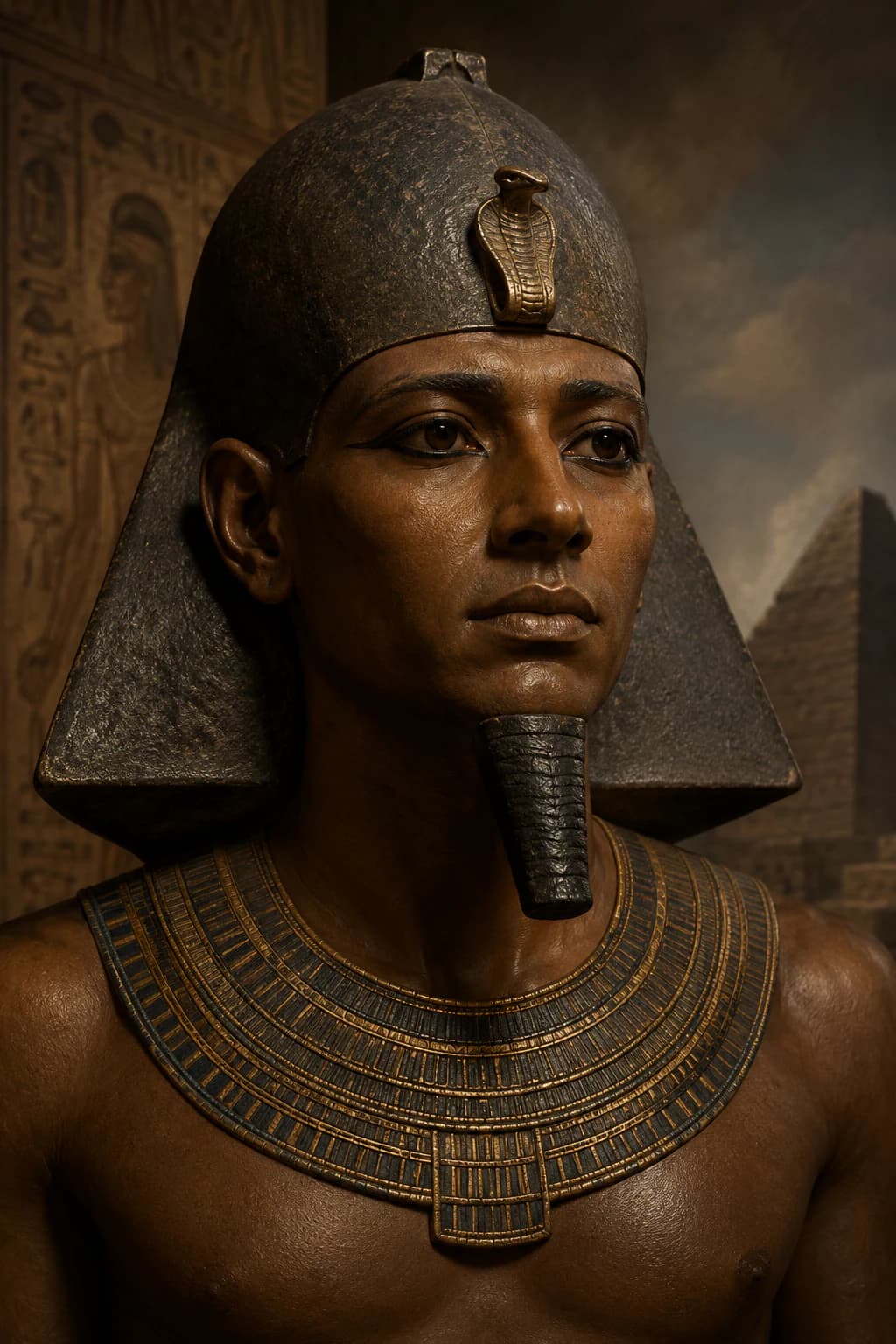
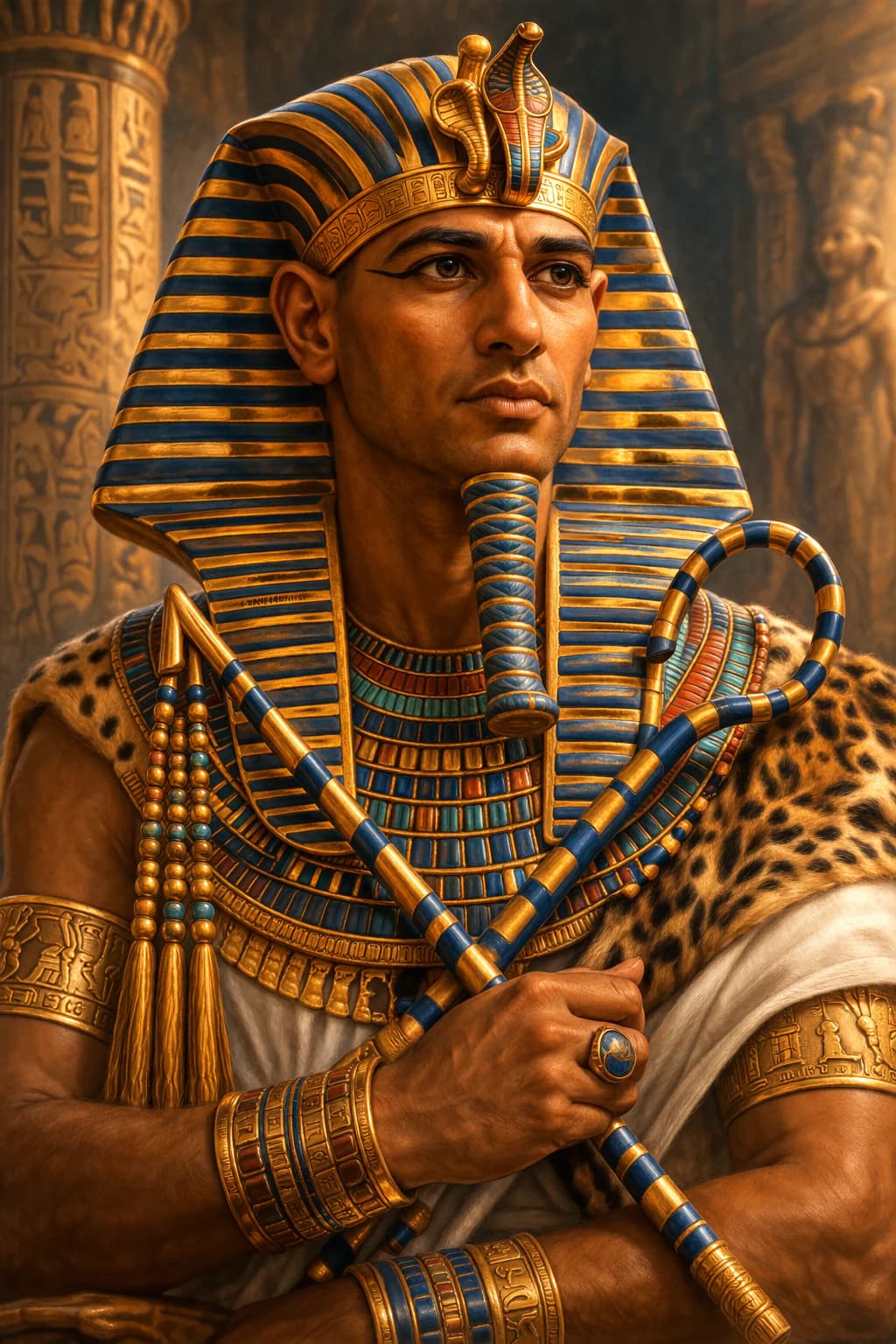
Khafre's valley temple is among the most powerful surviving spaces of Old Kingdom royal ritual. Built with massive blocks and lined with stone of striking strength and polish, it created an atmosphere of weight, order, and permanence. From this context come some of the most famous royal statues in Egyptian art, including images of Khafre enthroned with the falcon god Horus behind his head. These statues are not portraits in the modern psychological sense. They present a perfected king: calm, youthful, symmetrical, guarded by divinity, and merged with the institution of rule. That ideal is historically valuable. It shows how Khafre wanted kingship to be seen, not as personality, but as a stable force holding the human and divine worlds together.
Ancient royal images often reveal political theology more clearly than personal appearance.
c. 2550 BC
The Sphinx question
The Great Sphinx stands near Khafre's valley temple and causeway, which is why many scholars associate it with his pyramid complex. The monument's lion body and royal human head fit the language of kingship, solar power, and sacred guardianship. Yet the Sphinx does not come with a clear contemporary inscription naming Khafre as its builder, so the attribution must be phrased carefully. Some alternative theories connect it to Khufu, Djedefre, or a broader Giza programme. What can be said responsibly is that Khafre's reign is central to the Sphinx landscape as it survives: his complex frames the area, and later Egyptians connected the Sphinx with royal and solar meaning. Its fame has sometimes overshadowed the uncertainty. Good history keeps both in view.
A monument can be historically central to a ruler even when the exact attribution remains debated.
c. 2558-2532 BC
Rule and administration
The pyramid age was not built by monuments alone. Khafre's rule required a dense web of officials who managed land, labor, offerings, archives, craft workshops, food supplies, transport, and temple service. Around Giza, elite tombs tied the ambitions of high officials to the king's eternal presence. This made the royal necropolis a social system as well as a sacred one. Serving the king could secure status in life and proximity in death. The surviving record gives us far more about institutions than about Khafre's voice, feelings, or daily decisions. That silence should not be mistaken for emptiness. It tells us what Old Kingdom monarchy wanted to preserve: office, ritual, continuity, and the visible proof that the state could mobilize people across time.
The most visible monument often rests on an invisible world of administration.
c. 2532 BC onward
Death and legacy
Khafre's death left Egypt with another royal afterlife complex on a scale few societies have ever attempted. His successors continued the Fourth Dynasty tradition, but none escaped the gravitational pull of Giza. Khafre's legacy rests on more than the second pyramid. It includes the valley temple, statues that shaped the visual language of pharaoh, and the debated but powerful association with the Great Sphinx. He is a ruler we know through forms of permanence rather than narrative intimacy. That can frustrate biography, but it also reveals the nature of his importance. Khafre mattered because his reign helped transform Giza from the burial ground of a great king into a dynastic landscape, a place where Egyptian monarchy made its most durable argument: the king could die, but kingship could be made to look eternal.
Some rulers are remembered not through words they spoke, but through landscapes they made unavoidable.