Complete chronology
Full overview and deeper context for every journey step.
1878
Humble beginnings
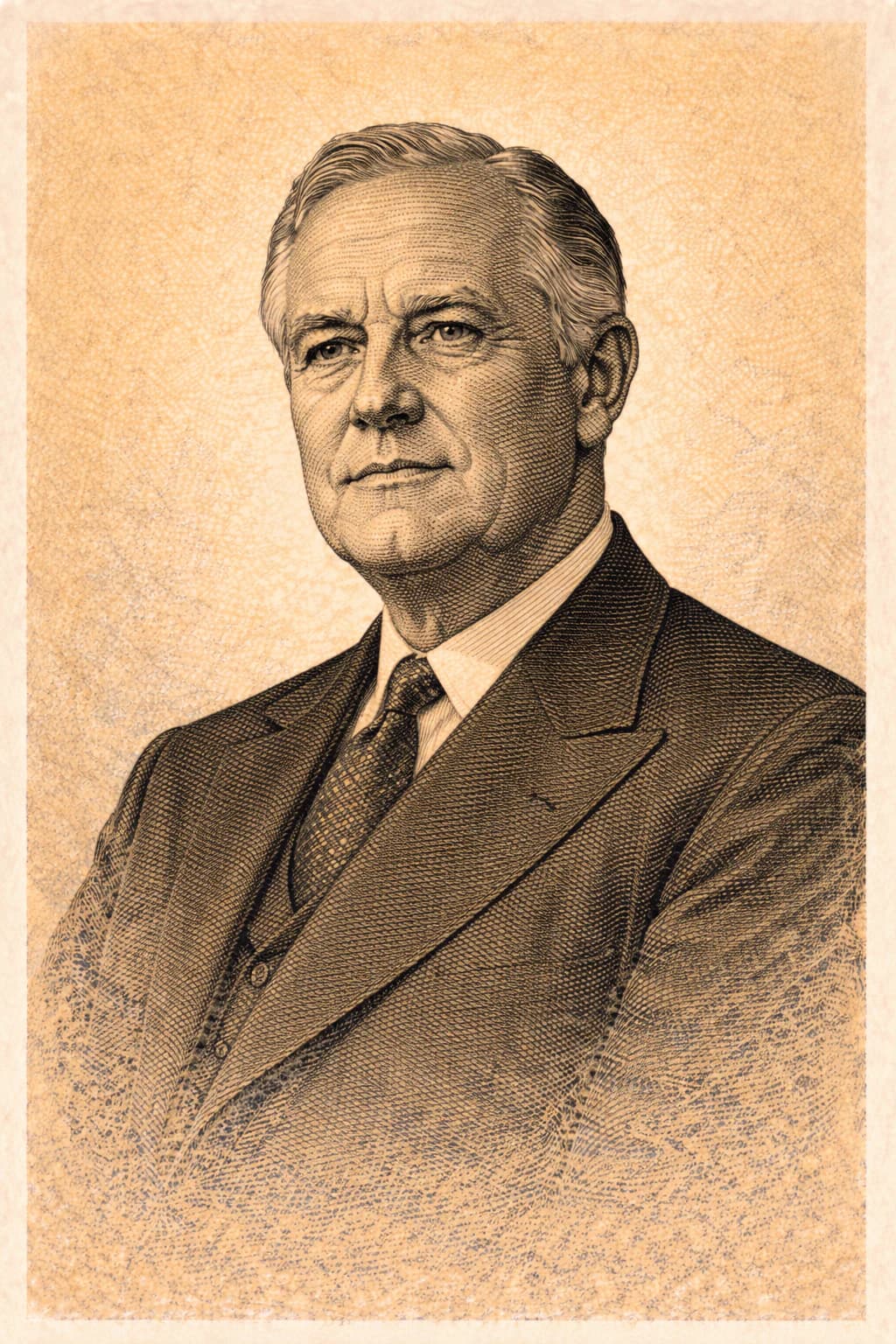
Joseph Stalin was born Ioseb Besarionis dze Jughashvili in Gori, Georgia, then part of the Russian Empire, in December 1878. His official Soviet biography later preferred 1879, but the earlier date is widely accepted by historians. His childhood was marked by poverty, illness, a harsh father and a devout mother who hoped he might become a priest. Georgia's place inside the empire mattered too. Stalin grew up outside the Russian center, speaking Georgian first and encountering imperial hierarchy from below. The boy who later ruled from Moscow began as a provincial outsider with a long memory, a talent for discipline and a capacity for resentment.
Early instability often forged his later preference for control and distrust of others.
1890s
Radical awakening
Stalin studied at the Orthodox seminary in Tiflis, an institution of strict discipline and surveillance. There he read banned Marxist literature and moved into revolutionary circles. He left the seminary without completing the path his mother had imagined, choosing conspiracy over priesthood. Underground politics taught him habits that never disappeared: aliases, secrecy, coded communication, loyalty tests, suspicion and violence. He became associated with the Bolshevik wing of Russian Social Democracy, less as a theorist than as an organizer. Lenin would later value him for precisely those qualities. Stalin was useful because he could operate in the shadows.
Exposure to forbidden ideas can redirect a life more powerfully than formal education.
1900–1917
Revolutionary operator
In the years before the Russian Revolution, Stalin lived as a professional revolutionary in the Caucasus and beyond. He organized workers, wrote propaganda, helped raise funds and was linked to violent expropriations, including the 1907 Tiflis bank robbery, though details of responsibility remain debated. Tsarist authorities arrested and exiled him repeatedly; he escaped more than once. He was not the movement's great speaker or philosopher. Trotsky outshone him intellectually, Lenin dominated him politically. But Stalin learned the party's practical machinery: appointments, messages, local networks, discipline and survival. Those skills would become decisive after the revolution.
Consistency behind the scenes can build power just as effectively as public leadership.
1917
Seizing opportunity
The revolutions of 1917 brought Stalin from underground politics into state power. He was not the central architect of the October seizure; Lenin and Trotsky mattered more in the decisive public drama. Stalin's importance lay in party work, nationality policy, editorial control and administrative reliability. During the civil war he served in brutal theaters where food requisitioning, coercion and military emergency blurred into habits of rule. The Bolsheviks won, but victory came with a party-state accustomed to violence, central command and treating opposition as existential threat. Stalin did not create all of that, but he absorbed and intensified it.
Moments of chaos often reward those who can act decisively without seeking attention.
1920s
Building control
Stalin became General Secretary of the Communist Party in 1922, a post that seemed bureaucratic but gave him control over appointments and information. Lenin, near death, warned against Stalin's rudeness and concentration of power, but the warning came too late and was politically contained. After Lenin died in 1924, Stalin presented himself as guardian of Leninism while isolating rivals one by one. He allied with Zinoviev and Kamenev against Trotsky, then with Bukharin against them, then destroyed Bukharin's position too. By the end of the 1920s, the man underestimated as a grey administrator had become the center of Soviet power.
Power often consolidates through patience and structure rather than dramatic confrontation.
1930s
Forced transformation
Stalin's first Five-Year Plans aimed to drag the Soviet Union into industrial power at breakneck speed. Factories, steel output, mines, dams and military industry expanded, but the methods were ruthless. Forced collectivisation attacked peasant property and village autonomy, branding better-off peasants as kulaks and deporting millions. Grain requisitioning and state violence contributed to catastrophic famine, especially in Ukraine, Kazakhstan and other regions in 1932-1933. The Holodomor in Ukraine remains central to debates over intent and genocide, but there is no serious doubt that Stalin's policies helped cause mass death and that the regime knowingly intensified suffering. Industrial achievement and human catastrophe were fused.
Rapid progress imposed from above can carry consequences that reshape society for generations.
1936–1938
Rule through fear
The Great Terror of 1936-1938 revealed Stalinism as a system of rule through fear. Old Bolsheviks confessed at staged trials to impossible conspiracies. Military commanders, officials, engineers, writers, national minorities and ordinary citizens were arrested, deported or shot. The NKVD fulfilled quotas; denunciation became a survival strategy; families disappeared into silence. Stalin personally approved lists and shaped the climate in which suspicion became policy. The terror eliminated possible rivals, but it also damaged the army and state he needed. Its deeper function was psychological: everyone learned that no rank, loyalty or past service made a person safe.
Fear can secure obedience, but it often erodes the strength of the system it protects.
1941–1953
War and aftermath
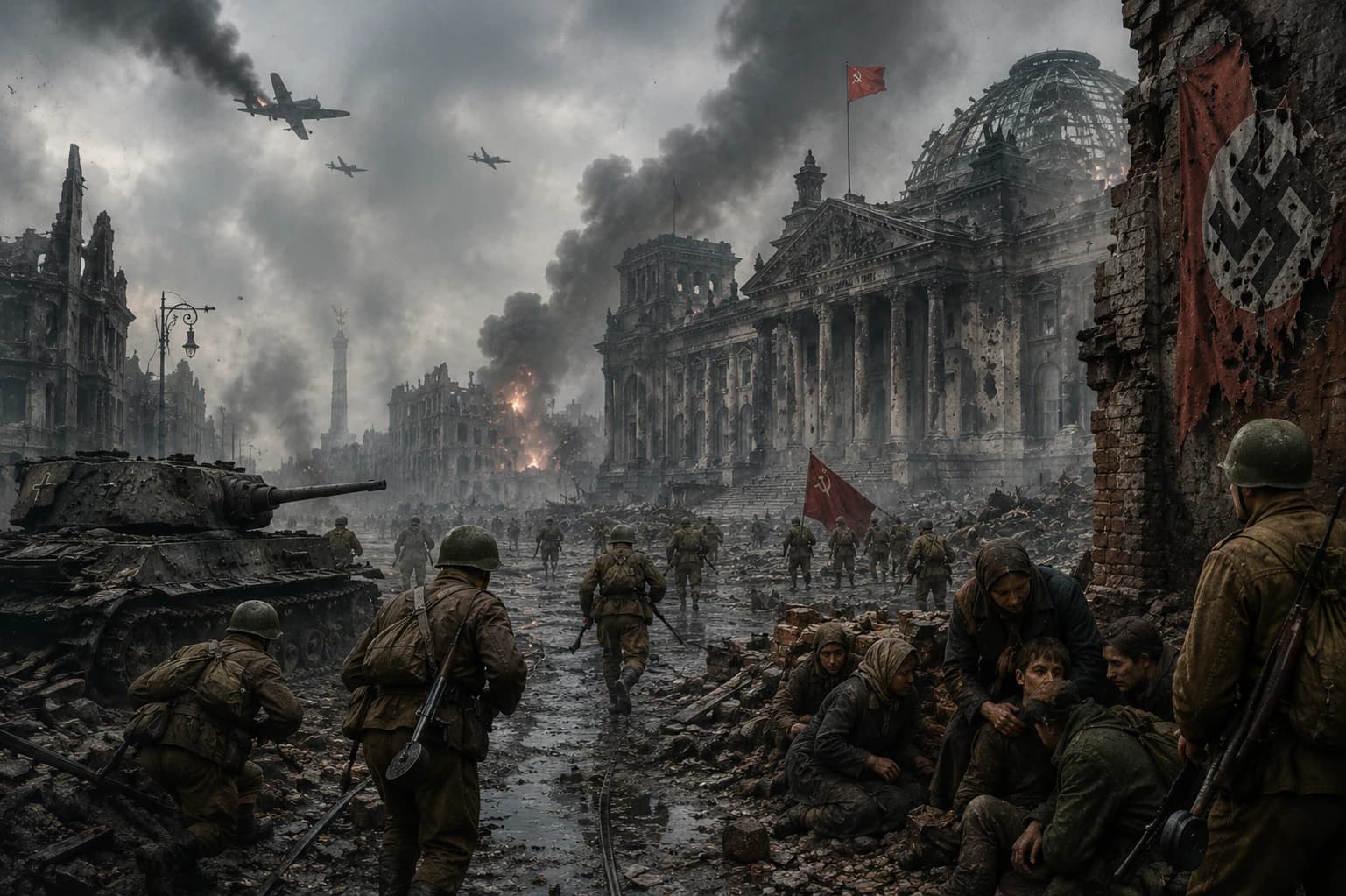
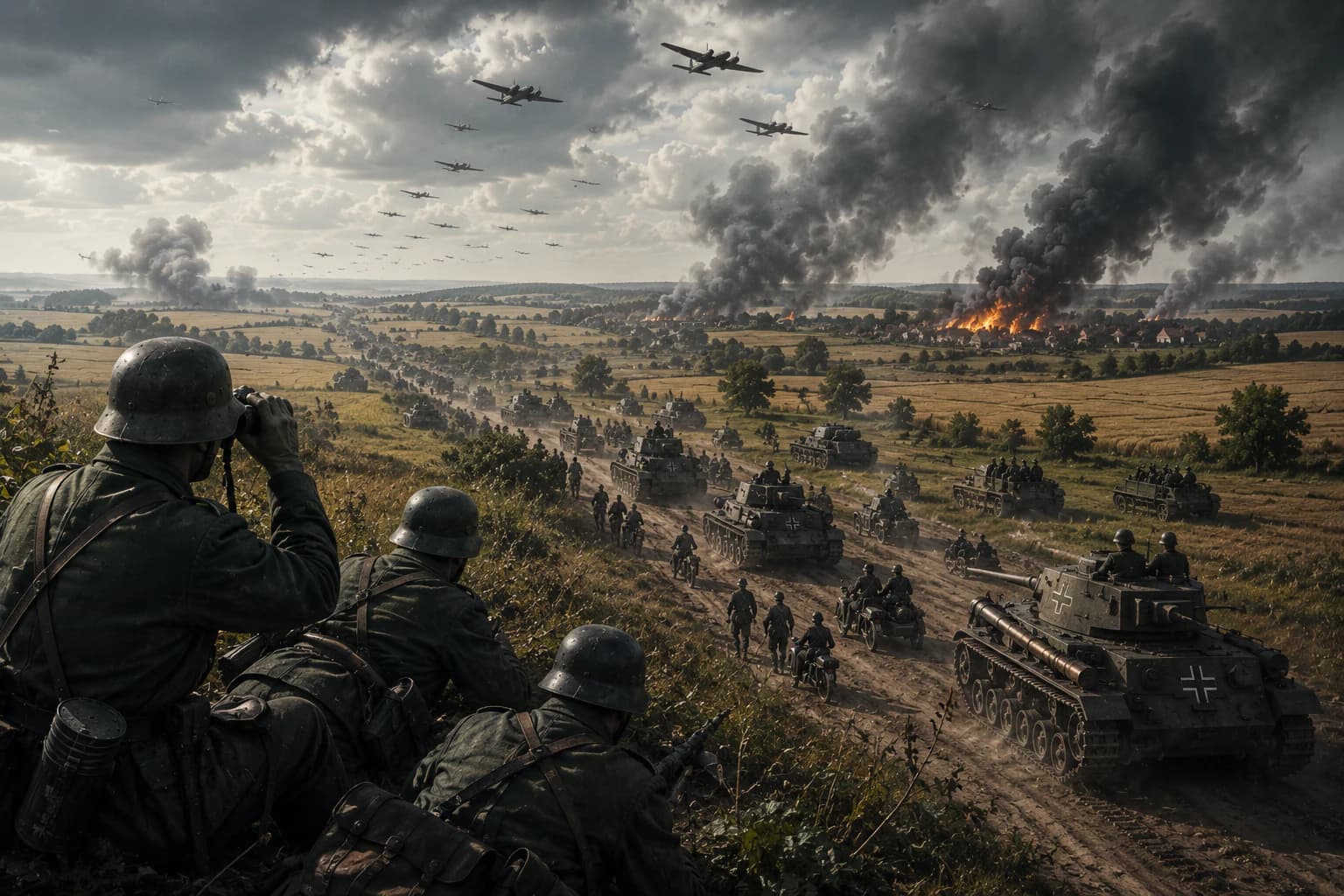
Stalin's pact with Hitler in 1939 bought time and divided Eastern Europe, but it also helped enable the destruction of Poland and left the Soviet Union morally compromised and strategically exposed. When Germany invaded in June 1941, Stalin was shaken by the scale of disaster. The Soviet people then endured one of the most terrible wars in history. Under Stalin's command, and through the sacrifice of millions, the USSR helped destroy Nazi Germany. Victory made Stalin a global power broker at Tehran, Yalta and Potsdam. It also brought Soviet domination to Eastern Europe, new deportations, renewed repression and the opening structure of the Cold War.
External victory can coexist with internal strain when authority remains tightly controlled.
1953 and beyond
Enduring legacy
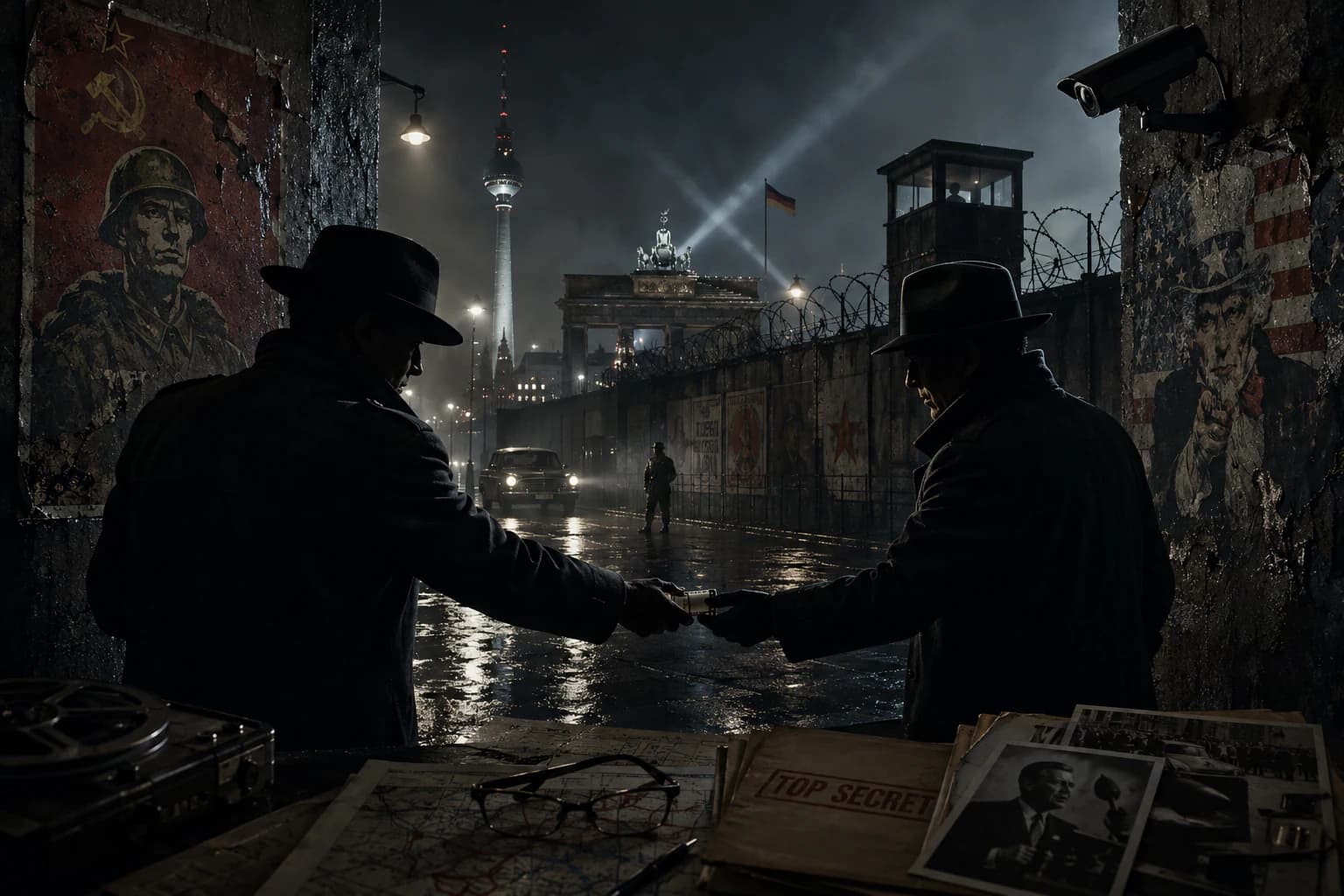
Stalin died on 5 March 1953 after a stroke, with those around him reportedly slow and fearful in responding. The system he left was powerful, paranoid and bloodstained. Nikita Khrushchev's Secret Speech in 1956 denounced Stalin's cult of personality and terror, beginning de-Stalinization, but the Soviet Union never fully escaped the structures he had strengthened: one-party rule, security-state power, censorship and empire. Stalin's defenders point to industrialization and victory over Hitler; that defense collapses if it treats millions of deaths as an accounting cost. To ask why Joseph Stalin was important is to confront one of the twentieth century's central facts: modernizing power can be joined to mass murder when a state makes human life subordinate to ideology and command.
A legacy can be both transformative and troubling, resisting simple judgment.