Complete chronology
Full overview and deeper context for every journey step.
1831–1848
Frontier childhood
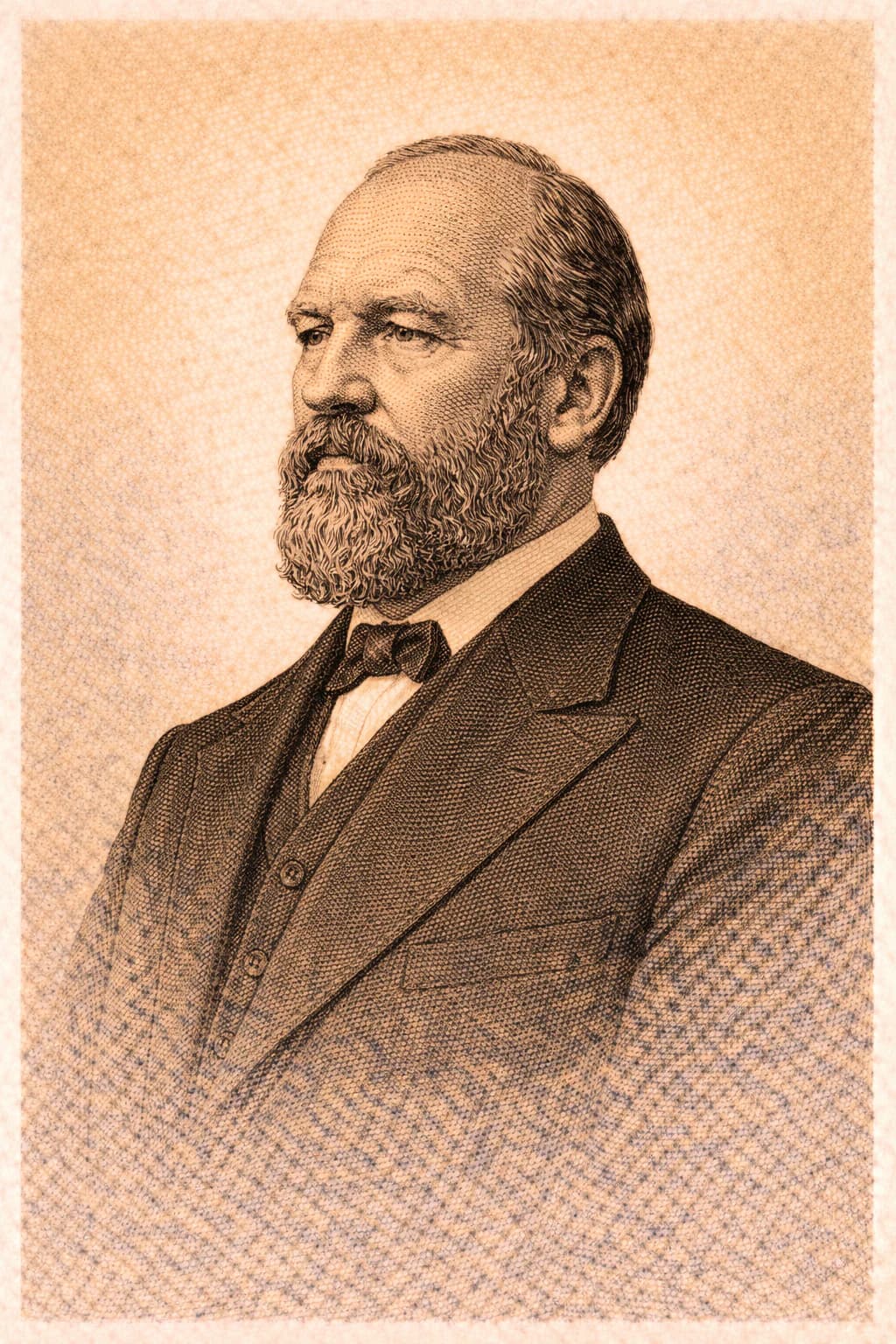
James Abram Garfield was born on 19 November 1831 in Orange Township, Ohio, into the hard world of the Western Reserve. His father died when Garfield was still an infant, leaving his mother, Eliza Ballou Garfield, to hold the family together with little money and a fierce commitment to self-improvement. Garfield worked as a farmhand, carpenter and canal boat laborer before education pulled him in another direction. That early life mattered because Garfield never had the polished ease of a born political insider. His biography carried the appeal of the self-made republic: a boy from a log cabin who learned that books could be as powerful as muscle.
Difficult beginnings can sharpen a person’s drive to seek opportunity through learning.
1848–1856
Pursuit of learning
Garfield's hunger for learning became the central engine of his rise. He attended the Western Reserve Eclectic Institute, later Hiram College, where he taught as well as studied, then completed his education at Williams College in Massachusetts. He was drawn to classical languages, mathematics, debate and religion, and became associated with the Disciples of Christ. By his mid-twenties he was no longer simply escaping poverty; he was turning education into authority. Teaching, preaching and public speaking trained him to explain complex ideas clearly, a gift that later made him one of the more intellectually respected figures in Congress.
Education can serve as a turning point when paired with persistence and clear purpose.
1856–1861
Teacher and leader
Garfield returned to Hiram and became president of the institution while still in his twenties. The title sounds grander than the small college could fully justify, but the responsibility was real: he taught, managed, recruited and represented a culture that linked moral seriousness with education. Politics entered naturally. The 1850s were the decade of Kansas-Nebraska, the breakdown of old party structures and the rise of the Republican Party. Garfield's antislavery convictions were shaped by faith, northern free-labor ideology and the crisis of the Union. In 1859 he won election to the Ohio Senate, already moving from classroom leadership into the national argument over slavery.
Leadership often begins in small settings where communication and trust are built over time.
1861–1863
Civil War service
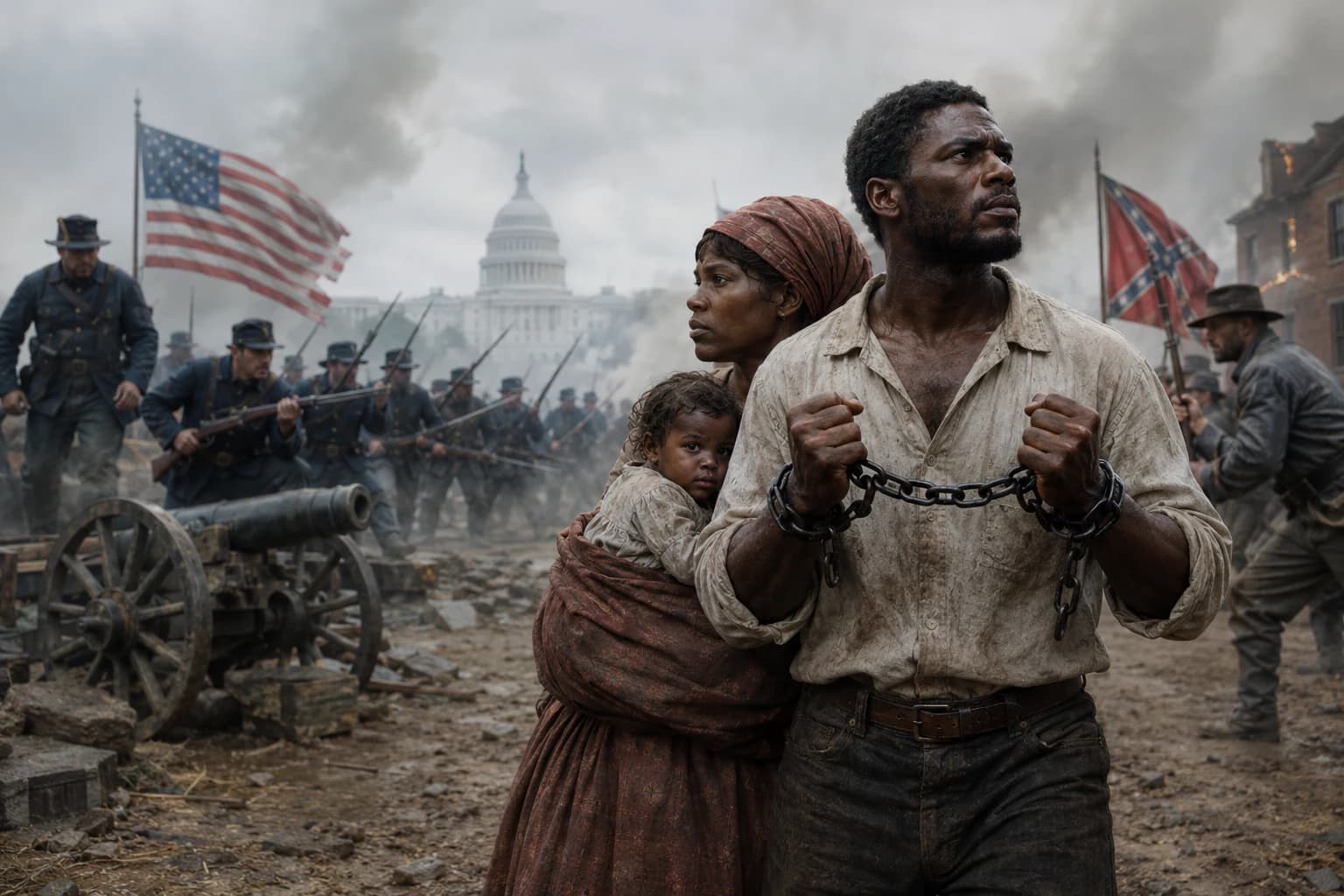
When the Civil War began in 1861, Garfield entered Union service with more intelligence than military experience. He learned quickly. His success at Middle Creek in Kentucky made him a northern hero, and his later work as chief of staff to General William Rosecrans placed him close to high command. At Chickamauga in 1863, a Union defeat, Garfield carried messages and helped organize retreat under dangerous conditions, strengthening his reputation for courage and competence. He was promoted to major general, but politics was already calling. His war record gave him patriotic credibility in a Republican Party that would be shaped for a generation by the memory of Union victory.
Moments of national crisis can elevate individuals who are prepared to lead under pressure.
1863–1880
Congressional career
Garfield entered the House of Representatives during the war and stayed for seventeen years. He was not a simple party machine politician. He could be ambitious, partisan and cautious, but he was also unusually serious about policy. He supported the Union cause, emancipation and the constitutional transformation that followed the war, while later navigating the messy politics of Reconstruction, currency debates and tariff policy. His record was not spotless: like many politicians of the Gilded Age, he was touched by scandal and accusation, including questions around Credit Mobilier, though he denied wrongdoing. What distinguished him was intellectual range. Colleagues saw a man able to move from constitutional theory to budget detail without losing the room.
Consistency and depth can build influence even without constant visibility.
1880
Unexpected nomination
Garfield went to the 1880 Republican convention supporting John Sherman, not himself. The party was split between Stalwarts, who favored Ulysses S. Grant and the patronage system, and Half-Breeds, who leaned toward civil service reform and James G. Blaine. Ballot after ballot failed to produce a nominee. Garfield's speech and reputation made him the acceptable escape route. His nomination was almost accidental, but not undeserved: he was a Union veteran, an experienced congressman, a skilled speaker and a man not wholly owned by either faction. In the general election he defeated Democrat Winfield Scott Hancock, another Civil War general, in a close popular vote but a clearer Electoral College result.
Opportunities can emerge unexpectedly when credibility and trust have already been established.
1881
Brief presidency
Garfield's presidency lasted too little time for a full programme, but its direction was visible. The key fight was over patronage: whether government offices should be rewards controlled by party bosses or appointments made with greater independence and merit. Garfield's confrontation with New York senator Roscoe Conkling over the collectorship of the Port of New York became a test of presidential authority. Conkling expected deference; Garfield refused to surrender the office to the Stalwart machine. The dispute was not merely personal. It exposed a central weakness of Gilded Age politics, in which public administration was entangled with party loyalty, factional bargaining and office-seeking.
Even a short period of leadership can reveal the direction a leader intends to take.
1881
Assassination
On 2 July 1881, Charles J. Guiteau shot Garfield at the Baltimore and Potomac Railroad Station in Washington, D.C. Guiteau was a disturbed office-seeker who believed, absurdly, that he had earned a diplomatic appointment by supporting Garfield's campaign. The bullet did not kill Garfield immediately. What followed was a long national vigil and a grim lesson in nineteenth-century medicine. Doctors repeatedly probed the wound with unsterilized fingers and instruments, likely worsening infection. Alexander Graham Bell tried unsuccessfully to locate the bullet with an early metal detector. Garfield suffered through the summer and died on 19 September 1881. The assassination was political violence, but the death was also a medical tragedy.
A single act of violence can abruptly redirect the course of national history.
1881–present
Enduring influence
Garfield is one of the great unfinished presidencies. It is risky to claim too much for what he might have done, but the evidence points to a president willing to confront patronage power and defend executive independence. His death made the costs of the spoils system harder to ignore. In 1883, under Chester A. Arthur, Congress passed the Pendleton Civil Service Reform Act, beginning the shift toward competitive examinations and professional public administration. Garfield's legacy therefore rests on three connected stories: the self-made intellectual of the post-frontier North, the Union Republican shaped by Civil War politics, and the assassinated president whose death helped push American government away from open office-bartering. To ask why James A Garfield was important is to see how a life of promise can matter both for what it achieved and for what its interruption forced others to confront.
Sometimes a leader’s greatest impact comes not from what they completed, but from what their loss compels others to change.