Complete chronology
Full overview and deeper context for every journey step.
1890
Rural beginnings
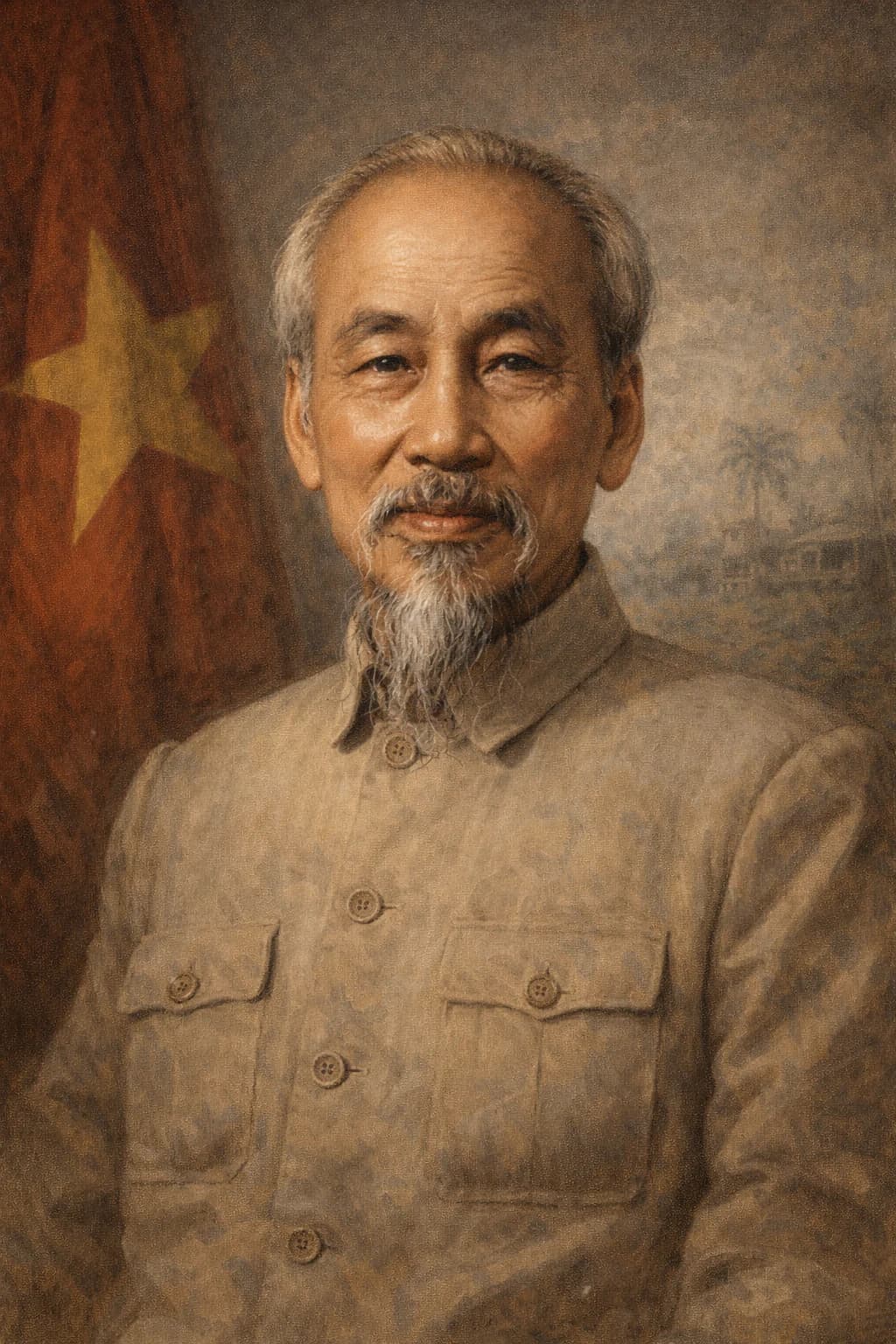
The man later known as Ho Chi Minh was born in Nghe An province, a region with strong traditions of scholarship and resistance. His father, Nguyen Sinh Sac, was educated in the Confucian system and served briefly within a colonial order that subordinated Vietnamese authority to French power. That tension shaped Ho's early world: old learning still mattered, but the future was being written by empire, schools, taxation, police power, and economic extraction. Ho grew up seeing that personal advancement under colonial rule could not solve the larger condition of national dependence. His later nationalism drew from this Vietnamese setting, even as he would search the world for the tools to express it.
His early life blended cultural tradition with political tension, planting the seeds for a lifelong resistance to foreign control.
1911
Departure abroad
Ho's departure from Vietnam was a political education without a classroom. Working on ships and in service jobs, he moved through Marseille, London, Paris, and other centres of empire. He saw Vietnamese subordination as part of a wider colonial structure linking Asia, Africa, Europe, and the Americas. This mattered because it gave his nationalism an international grammar. He was not simply asking why France ruled Vietnam; he was asking why empires claimed civilisation while sustaining inequality. Travel also taught disguise, patience, and adaptation. Ho would use many names across his life, each suited to a different stage of work, surveillance, and revolutionary necessity.
Travel transformed his outlook, turning a local grievance into a broader understanding of global inequality.
1919–1923
Political awakening
At the 1919 Paris Peace Conference, using the name Nguyen Ai Quoc, he submitted demands for civil rights and self-determination for the Vietnamese people. The great powers ignored him. That rejection was formative. Liberal rhetoric about national self-determination did not seem to apply to colonised peoples when imperial interests were at stake. Ho moved toward French socialism and then communism because it offered a theory that connected empire, class, and revolution. He helped found the French Communist Party in 1920 and wrote against colonial abuses. Paris turned him from a patriotic critic into an organised revolutionary with a global network.
His activism abroad gave him both ideological tools and a network that would shape his later leadership.
1920s
Revolutionary training
The 1920s made Ho a professional revolutionary. He worked with the Comintern, spent time in Moscow, operated in Guangzhou, and helped train Vietnamese activists in propaganda, organisation, secrecy, and political discipline. He learned to combine nationalist appeal with Marxist-Leninist structure, a pairing that would define Vietnamese communism. Colonial police watched him; factional disagreements divided activists; exile made communication difficult. Yet these years built the underground networks and habits of patient organisation that later mattered more than charisma alone. Ho was not simply a symbol waiting to be discovered. He helped build the apparatus that could turn anti-colonial feeling into durable movement.
Preparation and patience during this phase enabled him to later lead with both strategy and conviction.
1930
Founding movement
Vietnamese anti-colonial politics were fragmented among reformers, nationalists, monarchists, religious groups, and revolutionaries. Ho's role in founding the Indochinese Communist Party in 1930 helped give one current a disciplined structure and international connection. The movement faced brutal French repression, imprisonment, executions, and internal disputes, but it survived because it rooted national liberation in organisation at village, worker, student, and exile levels. Ho's genius lay in keeping the national question at the centre. Communism supplied the framework; independence supplied the emotional force. That combination allowed his movement to speak both to global revolution and to Vietnamese historical memory.
Unifying diverse groups into one movement gave the independence struggle lasting strength and coherence.
1941–1945
War and opportunity
World War II broke open the colonial order. Japan occupied Indochina while Vichy French administration continued under Japanese dominance, creating a layered system of foreign control. Ho returned after decades away and helped organise the Viet Minh as a broad front for independence. From bases near the Chinese border, the movement built guerrilla capacity, propaganda networks, and rural support. Famine in 1944-1945, caused by war conditions, colonial extraction, and Japanese demands, deepened the crisis of legitimacy. Ho's forces also cooperated tactically with the United States against Japan. By 1945, when imperial authority faltered, the Viet Minh was positioned to seize the language and machinery of national liberation.
He turned a moment of global instability into a decisive opportunity for national action.
1945–1954
Declaration and conflict
On 2 September 1945 in Hanoi, Ho declared independence and deliberately echoed the language of the American Declaration of Independence. The gesture sought international recognition, but geopolitics quickly narrowed the possibilities. France moved to restore colonial control; China, Britain, the Soviet Union, and the United States each viewed Vietnam through their own strategic concerns. Ho negotiated when he thought time could be gained and fought when compromise failed. The First Indochina War became a long struggle of guerrilla warfare, state-building, mobilisation, and sacrifice. The French defeat at Dien Bien Phu in 1954 was not Ho's work alone, but his leadership gave the movement its enduring political identity.
Victory required persistence through hardship as much as bold declarations of independence.
1954–1969
Divided nation
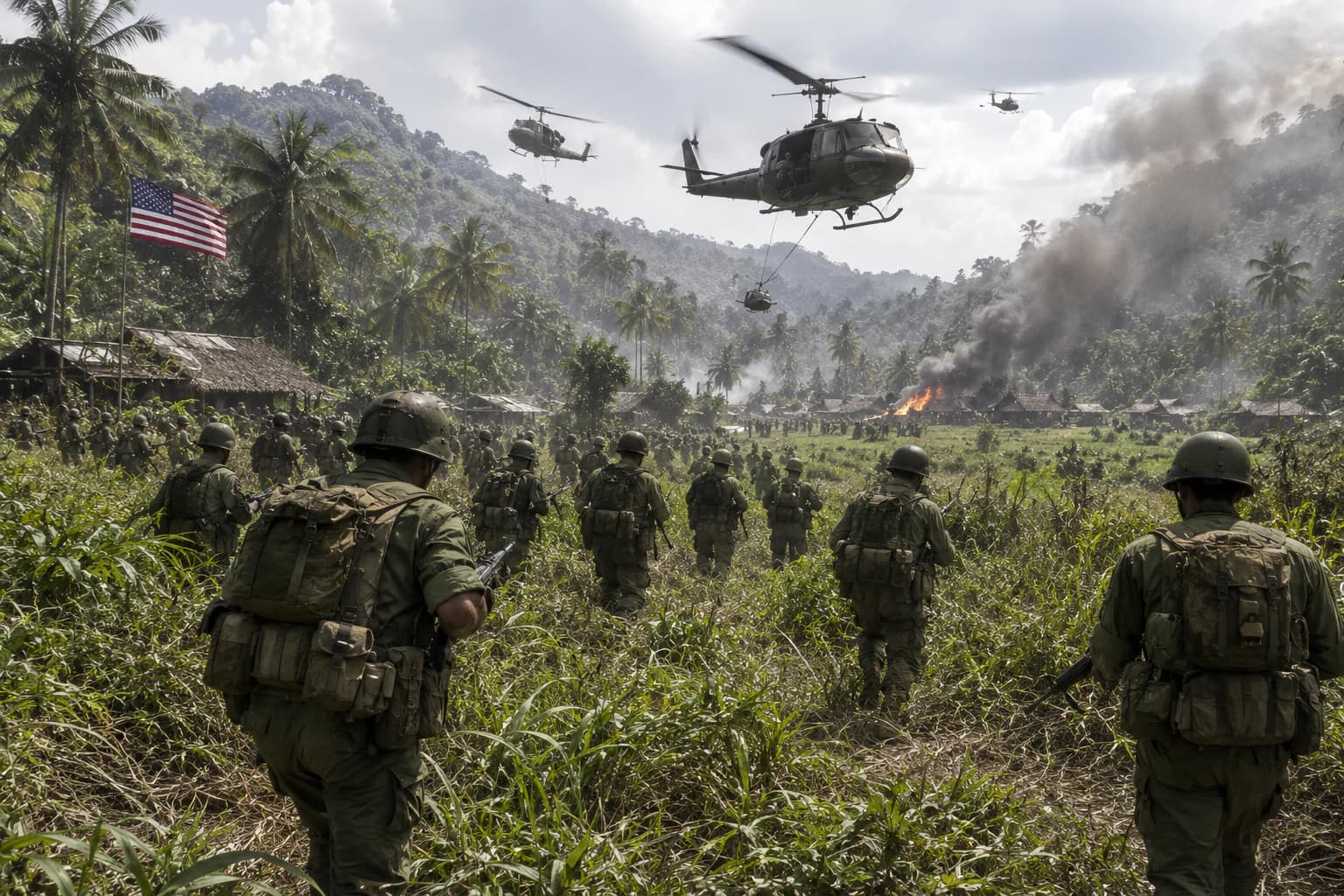
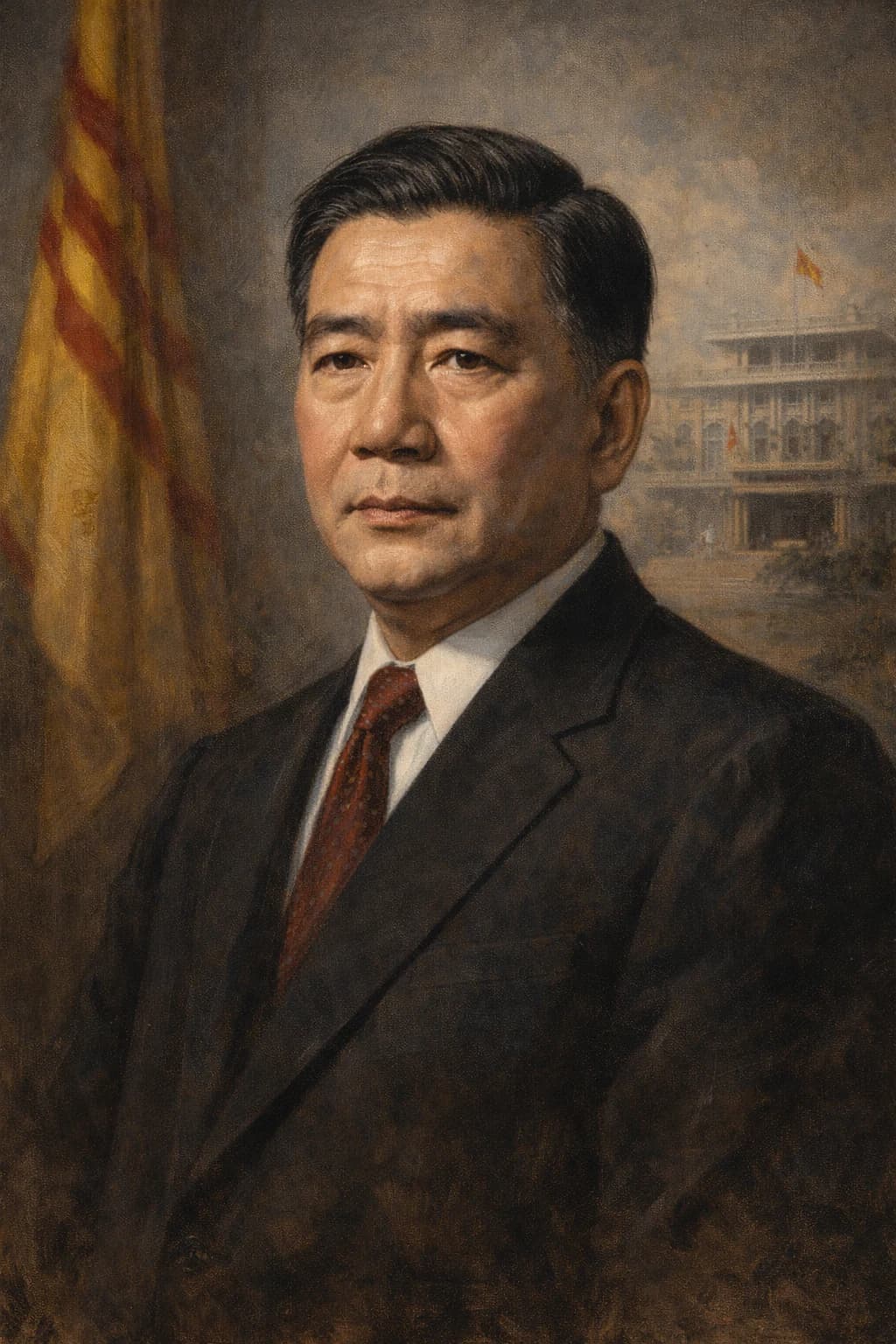
Geneva ended French colonial war but did not create a unified Vietnam. The country was temporarily divided at the 17th parallel, with elections promised but never held nationwide. In the North, Ho's government pursued socialist transformation, land reform, reconstruction, and party consolidation, including policies that brought both mobilisation and repression. In the South, Ngo Dinh Diem's anti-communist state, backed by the United States, became the central opponent. Ho's personal role gradually became more symbolic as Le Duan and other leaders drove war strategy, but his image remained essential: patient, austere, paternal, and identified with national unity. He died in 1969 before the war ended.
Leadership in peace proved as complex as leadership in war, especially within a divided nation.
1969–present
Enduring legacy
Ho did not live to see the fall of Saigon in 1975 or the reunification of Vietnam under communist rule. After his death, the state elevated him into a founding figure whose image could bridge revolution, nationalism, sacrifice, and legitimacy. Saigon was renamed Ho Chi Minh City, and his mausoleum in Hanoi became a site of political memory. His legacy remains complex. He was a genuine anti-colonial leader who helped defeat French empire and inspired generations seeking independence. He was also a communist ruler whose movement used censorship, coercion, and one-party control. His historical significance lies in that combination: he made Vietnamese independence a global cause and gave it a political form that still shapes the country.
His influence extended beyond his lifetime, becoming part of the narrative that defines a nation’s identity.