Complete chronology
Full overview and deeper context for every journey step.
1900
Structured upbringing
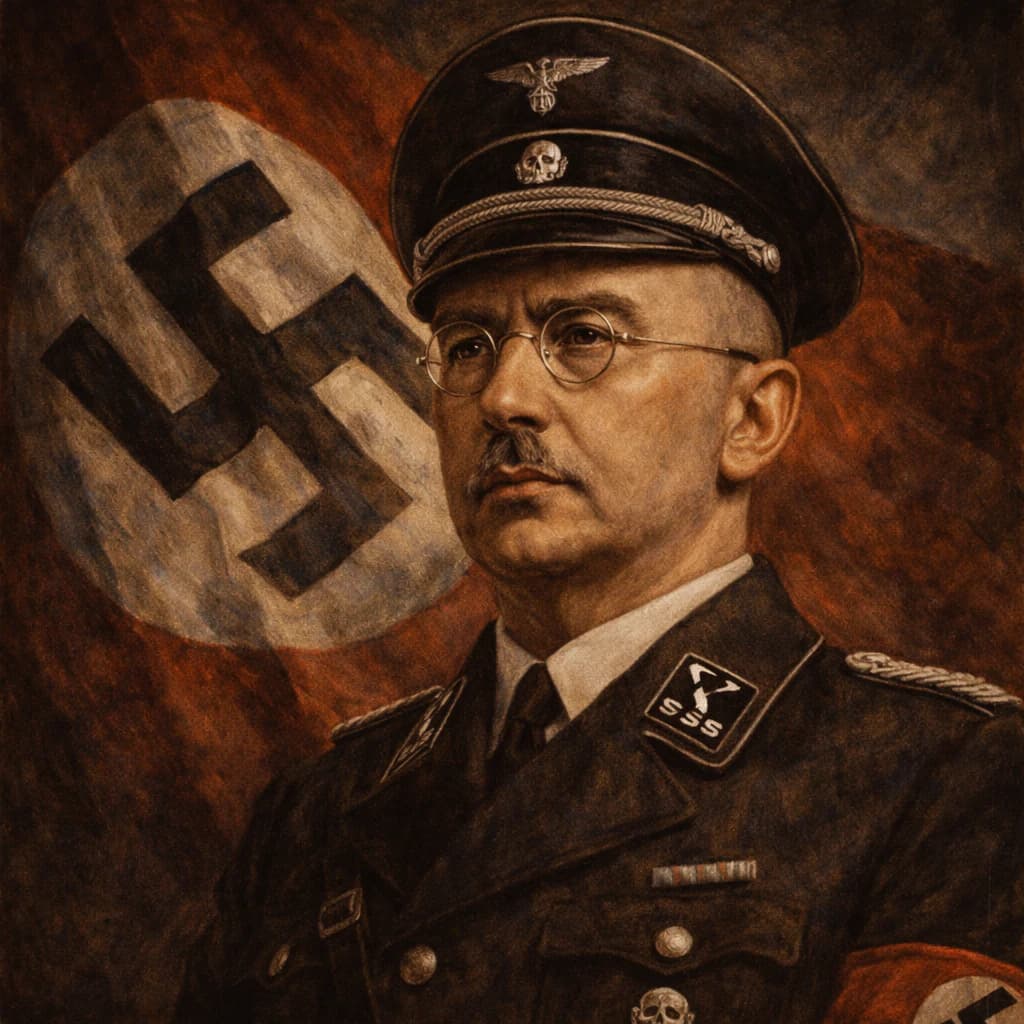
Himmler did not begin as an obvious strongman. His father was a schoolmaster, his family was respectable, and his early life was marked by order rather than violence. He grew up in Bavaria during the final years of the German Empire, absorbing nationalist, conservative, and religious influences common to his social world. Physically insecure and too young to fight meaningfully in the First World War, he nursed a longing for military status he had not earned on the battlefield. Those frustrations mattered not because they excuse anything, but because they show how ordinary ambitions could be redirected into extremist politics. Himmler's later power came through organisation, ideological obedience, and a chilling ability to turn prejudice into administrative practice.
A deep attachment to structure can evolve into a desire to control systems and people alike.
1918–1920s
Postwar frustration
The collapse of imperial Germany gave men like Himmler a language of grievance. Revolution, inflation, political violence, and the hated Treaty of Versailles created a climate in which extremist movements promised certainty and revenge. Himmler studied agriculture, joined nationalist circles, and absorbed racial theories that presented Germans as a threatened biological community. His brief attempt at poultry farming later became an almost grotesque contrast with the scale of power he would hold. What mattered was the worldview forming underneath: hierarchy, racial purity, anti-communism, antisemitism, and a belief that national rebirth required ruthless purification. These ideas were not private eccentricities. They were becoming organised politics.
Periods of instability can make rigid ideologies appear attractive to those seeking certainty.
1920s
Joining the movement
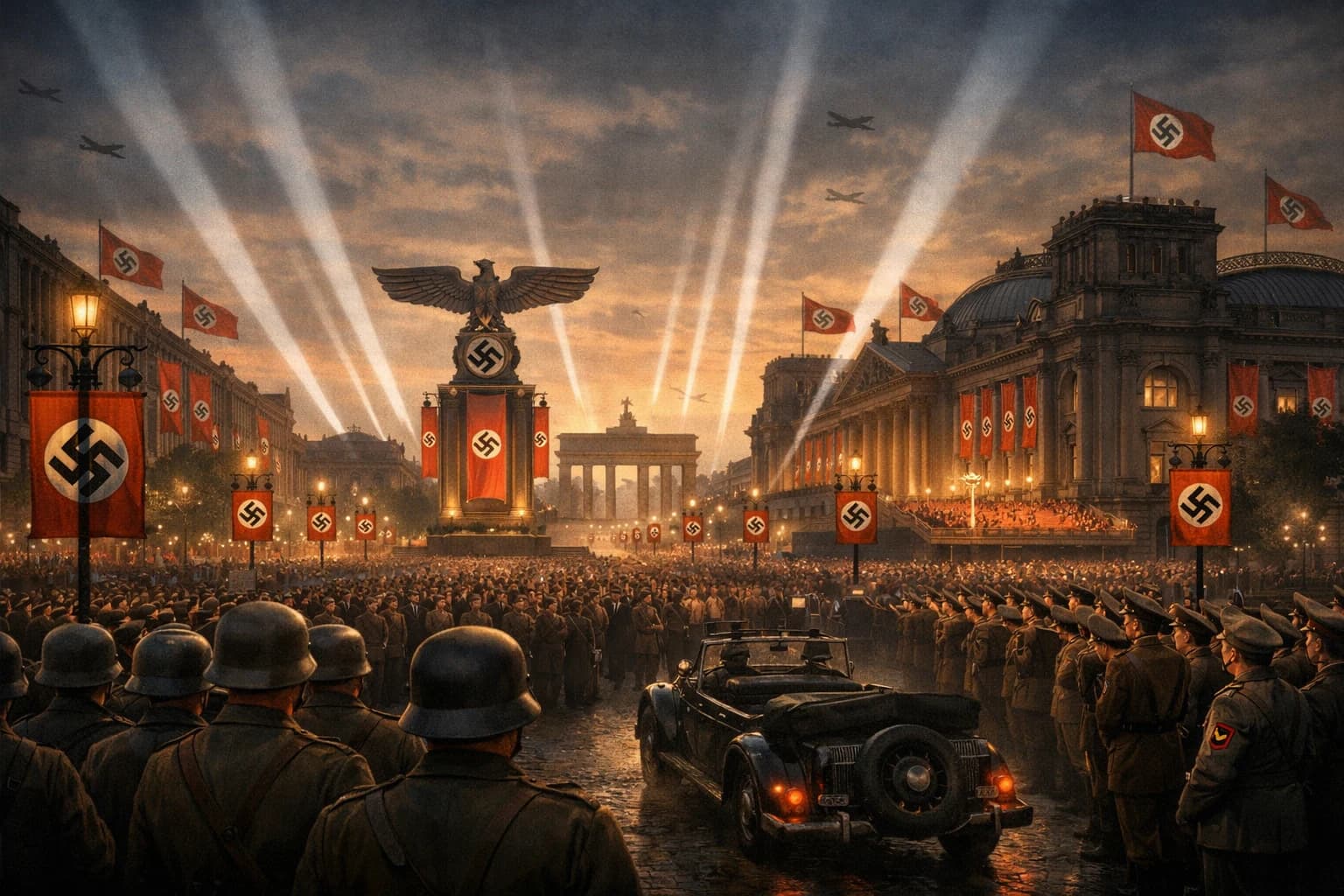
Himmler joined the Nazi Party after its early formation and took part in the world of rallies, propaganda, and paramilitary organising that surrounded Adolf Hitler. He was not a natural mass speaker like Joseph Goebbels or a flamboyant power broker like Hermann Goering. His route upward was quieter: files, membership, discipline, personnel, and the patient building of structures. That made him easy to underestimate. The Nazi movement needed organisers as much as demagogues, and Himmler supplied a rare combination of fanatic belief and bureaucratic stamina. He understood that control over appointments, records, and internal loyalty could become a form of power as real as a public office.
Influence can grow steadily through organizational skill rather than public prominence.
1929
Control of the SS
When Himmler took command, the SS was still subordinate to the larger SA and numbered only a few hundred men. He transformed it by making selection, discipline, and ideology central to membership. The SS was presented as a racial and political elite devoted personally to Hitler, but behind that myth stood a practical institution: files, ranks, training, marriage rules, security functions, and internal courts. Himmler cultivated ritual and pseudo-history to give the SS a sense of destiny, while also expanding its usefulness inside the Nazi movement. After Hitler came to power in 1933, the SS moved from party formation to state instrument. Himmler's private empire had found its opportunity.
Building tightly controlled institutions can amplify individual influence far beyond personal visibility.
1930s
Expanding authority
The Nazi dictatorship did not abolish bureaucracy; it radicalised and weaponised it. Himmler, working with figures such as Reinhard Heydrich, gained control over political policing, criminal policing, intelligence, and the concentration camp system. In 1936 he became Chief of German Police, placing police authority under SS leadership while still operating inside the formal state. This mattered enormously. Surveillance, detention, racial policy, and repression could now be coordinated through institutions that looked administrative but functioned as instruments of terror. Camps that began as sites for political opponents expanded into a system for forced labour, punishment, and later mass murder. Himmler's power lay in making persecution routine.
Centralizing control over security systems can create powerful tools for enforcing authority.
1939–1941
War and radicalization
War gave Himmler's institutions territory, victims, and licence. In Poland and later the Soviet Union, SS and police units carried out expulsions, shootings, ghettoisation, forced labour, and racial colonisation plans. Himmler was central to Generalplan Ost, the wider Nazi vision for remaking eastern Europe through conquest, enslavement, deportation, and murder. The invasion of the Soviet Union in 1941 marked a radical escalation, with Einsatzgruppen and police battalions murdering Jews, communists, Roma, and others behind the front. Himmler did not merely preside from a distance. He inspected, encouraged, demanded reports, and translated Hitler's ideological war into institutions capable of killing at scale.
Large-scale conflict can enable systems of control to expand in both scope and severity.
1941–1944
System of atrocities
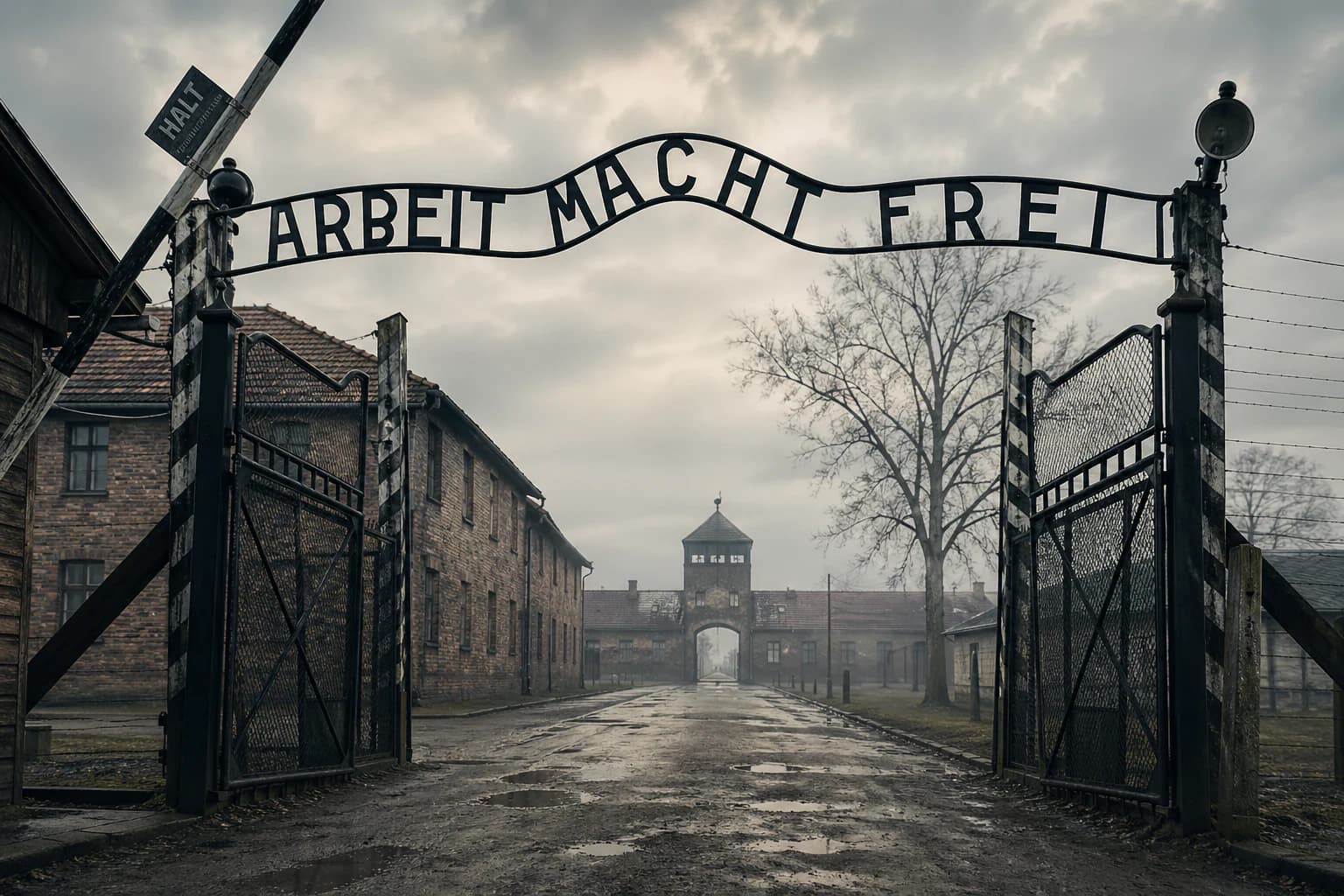
The Holocaust was not the work of one man alone, but Himmler was indispensable to its implementation. Under his authority, SS and police structures coordinated mass shootings, deportations to ghettos and killing centres, concentration camp expansion, and the exploitation of forced labour. Auschwitz, Treblinka, Sobibor, Belzec, Chelmno, and Majdanek belonged to a wider machinery of genocide in which administrative language concealed deliberate murder. Himmler's speeches to SS leaders made clear that he understood the killing of Europe's Jews as a central, secret duty of the regime. He combined ideological fanaticism with managerial attention, making him one of history's clearest examples of how paperwork, transport, personnel, and obedience can serve atrocity.
Administrative systems can be used to carry out immense harm when guided by destructive ideology.
1945
Collapse and capture
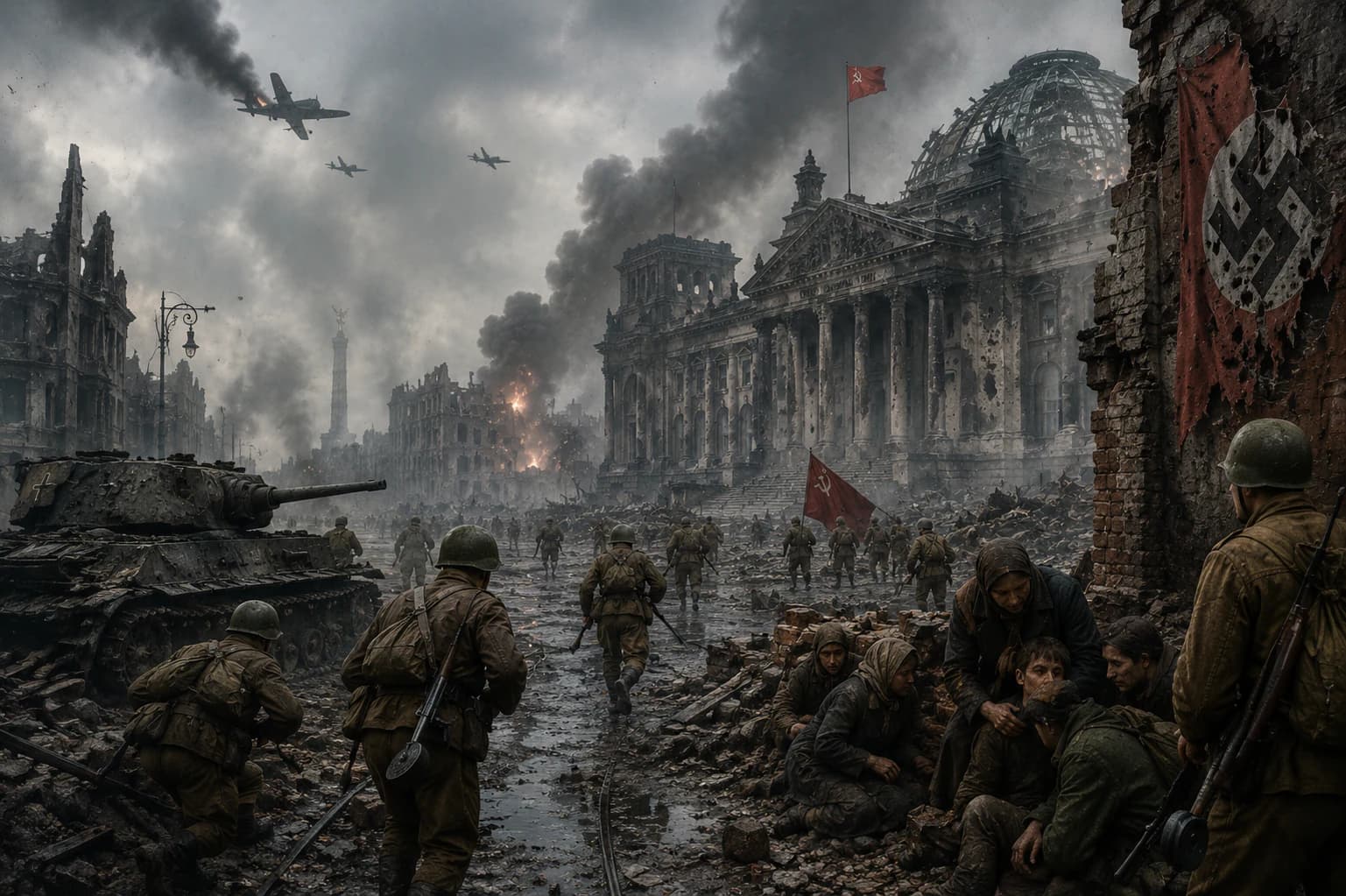
As Nazi Germany collapsed, Himmler tried to save himself by opening contacts with the western Allies through intermediaries, imagining he might be treated as a negotiator against the Soviet Union. The effort was delusional and self-serving. When Hitler learned of it, he expelled Himmler from the party and stripped him of office in his final testament. Himmler then attempted to disappear under a false identity, but British forces captured him in May 1945. During medical examination he bit a concealed cyanide capsule and died before he could stand trial. His suicide denied survivors and prosecutors the spectacle of his testimony, but it did not obscure the record. The institutions he built had left evidence everywhere.
Attempts to escape responsibility often fail when systems of power collapse completely.
After 1945
Historical reckoning
Himmler remains one of the most important figures for understanding Nazi criminality because he connected ideology to systems. Hitler supplied ultimate authority and genocidal vision; Himmler helped build the organisations that made terror continuous, scalable, and disciplined. His life resists the comforting idea that mass murder requires chaotic savagery alone. In his case, murder was organised through offices, charts, inspections, budgets, timetables, promotions, and euphemisms. That is why his biography is so disturbing. He was not a battlefield genius or a charismatic national leader. He was an administrator of dehumanisation. His historical significance lies in the terrible fact that he made institutions more efficient at persecution, and efficiency more obedient to evil.
The legacy of destructive leadership often serves as a warning about how systems can be shaped by the values that guide them.