Complete chronology
Full overview and deeper context for every journey step.
1894
Privileged beginnings
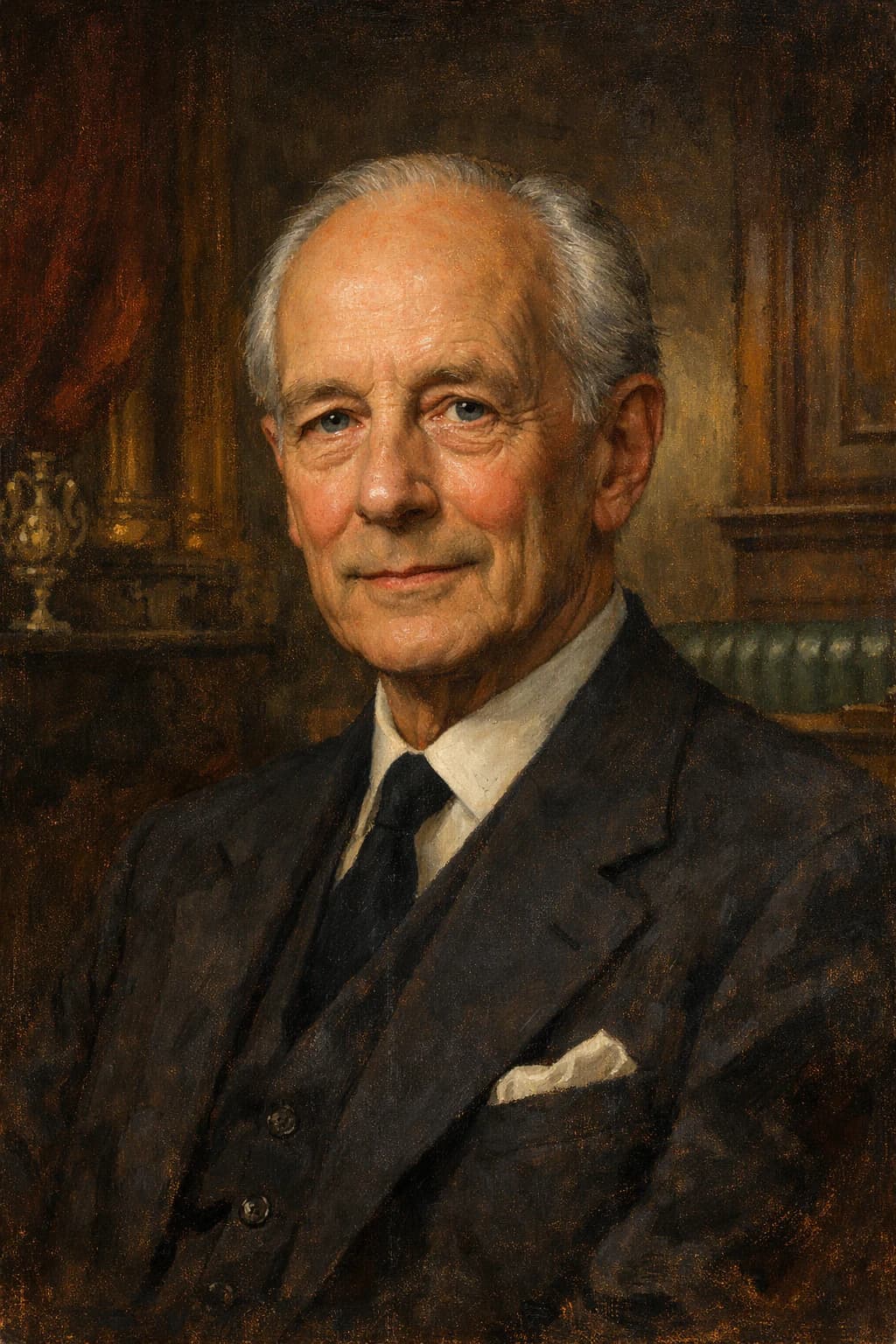
Maurice Harold Macmillan was born into comfort, culture, and expectation. His family firm, Macmillan Publishers, placed books, politics, and public argument close to everyday life, while his American-born mother brought another strand of elite confidence. Eton and Balliol College, Oxford, confirmed his place among Britain's governing class, but Macmillan was never only a smooth aristocratic figure. He absorbed a sense of obligation that later made him sympathetic to social reform within Conservatism. His background gave him access to networks that mattered, yet it also gave him a burden: he belonged to a class whose authority was being tested by democracy, war, labour politics, and imperial decline. Much of his career would be an attempt to make old governing habits survive inside a new Britain.
His confidence in leadership later on was rooted in a childhood where power and responsibility felt normal rather than intimidating.
1914–1918
Shattered by war
The First World War interrupted Macmillan's Oxford life and marked him permanently. Serving with the Grenadier Guards, he was wounded more than once, most seriously during the Battle of the Somme in 1916. He lay injured for hours, reading classical literature while waiting for rescue, a detail that later seemed almost too perfectly Macmillan: stoic, bookish, theatrical, and brave. The wounds affected him for life. More importantly, the war destroyed any easy belief in glory. Macmillan belonged to the generation of Conservative politicians who had seen industrial violence at close range and understood that national leadership could not be a game of gestures. His later caution in crisis, his interest in social stability, and his dislike of reckless military adventure all drew something from that experience.
His later calmness in crisis was forged not in comfort, but in surviving chaos at close range.
1924
Entering politics
Macmillan's early parliamentary life was not a smooth climb. Representing Stockton-on-Tees exposed him to unemployment, industrial insecurity, and the limits of old Conservative language in communities damaged by economic change. He lost and regained the seat, learning that political authority had to answer material hardship. In the 1930s he became associated with a more interventionist, reforming Conservatism, arguing that capitalism needed management if social order was to survive. He was also critical of appeasement, though not always from the centre of power. These years mattered because they created the Macmillan who later seemed both establishment and adaptable. He was not a socialist, but he understood that a governing party could not simply defend property and expect loyalty. It had to offer homes, wages, security, and national purpose.
Early failures forced him to become adaptable, a trait that later defined his leadership style.
1939–1945
Wartime responsibilities
The Second World War remade Macmillan's career. He served in supply and colonial roles before becoming minister resident at Allied headquarters in the Mediterranean. That post placed him among generals, diplomats, resistance movements, liberated governments, and the complicated politics of coalition warfare. He worked closely with figures such as Eisenhower and learned how British influence could operate through tact, persistence, and personal relationships even when American power was becoming dominant. The Mediterranean also taught him the messy reality of postwar settlement: military victory did not automatically produce political order. Macmillan's wartime performance strengthened his reputation as patient, civilised, and capable in intricate situations. It prepared him for later premiership because he learned to manage decline without saying the word too loudly.
War transformed him from a struggling politician into a trusted operator behind the scenes.
1950s
Post-war influence
Macmillan's postwar rise came through practical achievement as much as charm. As Minister of Housing under Churchill, he drove the programme that met the Conservative target of building 300,000 homes a year. The achievement owed much to local authorities, builders, officials, and postwar demand, but Macmillan understood the politics of delivery. Housing gave Conservatism a social answer to Labour's welfare-state reputation. He then moved through Defence, Foreign Office, and the Treasury, building experience across the central state. His tenure as Chancellor was short but important, placing him near the economic pressures that would later trouble his premiership. By the mid-1950s he was one of the few Conservatives with administrative range, public ease, and enough distance from disaster to appear as a credible successor.
His strength lay not in bold vision, but in making complex systems work without drama.
1957
Becoming prime minister
Macmillan entered Downing Street because Suez had broken the government. Britain, France, and Israel had attacked Egypt in 1956 after Gamal Abdel Nasser nationalised the Suez Canal, only to face American pressure, financial strain, and international condemnation. Macmillan had been Chancellor during the crisis, so he was not untouched by it, but he emerged as the figure best able to restore confidence. His skill lay in tone as much as policy. He projected calm, irony, and seniority: the famous 'Supermac' image. Yet beneath the reassurance was a hard recognition that Britain could no longer act as an imperial great power without American support. His premiership began with a national lesson in limitation. The task was to make that lesson feel like recovery rather than humiliation.
He succeeded not by exciting the public, but by convincing them things were under control again.
1957–1960
Years of confidence
Macmillan's domestic strength rested on the late-1950s mood of affluence. Real wages rose, home ownership expanded, consumer goods spread, and rationing had faded into memory. His 'never had it so good' speech in 1957 was not simply complacent propaganda; for many families, daily life really was more comfortable than before. The Conservatives won a convincing victory in 1959 partly because Macmillan seemed to embody prosperity without panic. But the surface brightness hid structural problems: weak productivity, balance-of-payments pressures, inflation worries, industrial tensions, and uncertainty about Britain's place between Europe, empire, and America. Macmillan's genius was emotional management. He made a country anxious about decline feel, for a while, that it was still safely governed and comfortably modern.
He embodied a moment when Britain felt comfortable, even as long-term pressures quietly built.
1960
End of empire
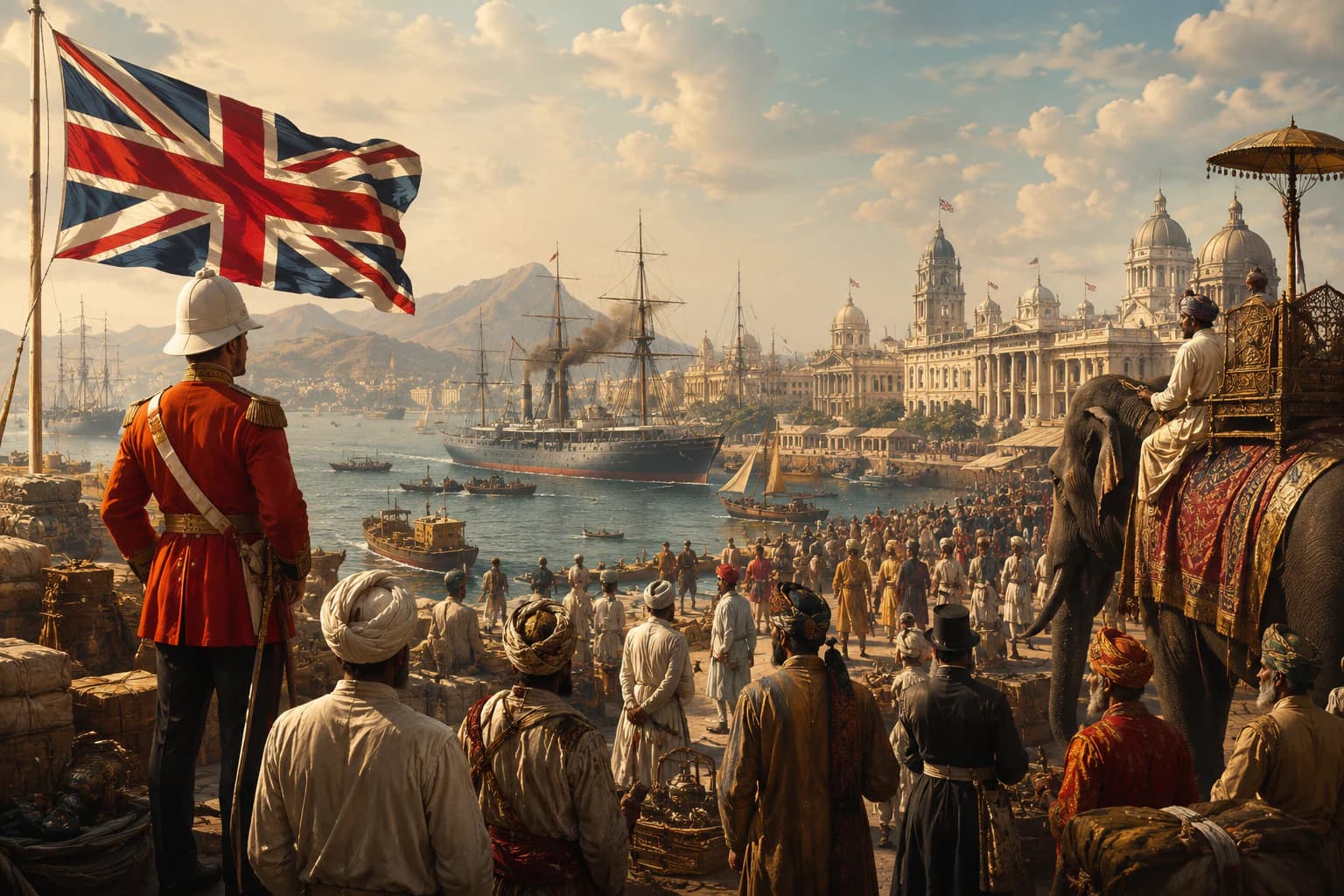
Decolonisation was one of Macmillan's defining historical roles. His 1960 speech to the South African Parliament, warning of the 'wind of change' blowing through Africa, was a striking acknowledgement from a Conservative prime minister that colonial rule could not simply continue by habit. Ghana had already become independent, and more African territories followed. Macmillan's policy was pragmatic rather than purely idealistic. He wanted orderly transfers of power, continued British influence, and avoidance of colonial wars Britain could not afford morally, financially, or strategically. This realism put him at odds with imperial diehards and exposed tensions over white minority rule in southern Africa. His legacy on empire is therefore mixed but significant. He did not end colonialism alone, and Britain often protected its interests sharply, but he accepted that resisting nationalism everywhere would weaken Britain further.
His realism about empire showed a leader willing to let go of the past to avoid greater loss.
1963–1986
Final years and legacy
Macmillan's final years in office were harder than the Supermac image suggested. Britain's application to join the European Economic Community was vetoed by Charles de Gaulle in 1963, a public blow to Macmillan's attempt to redefine Britain's future. The Profumo affair damaged the government's moral authority, while economic unease weakened the promise of effortless prosperity. Illness prompted his resignation in October 1963, though the succession process that followed also revealed the old-fashioned habits of Conservative leadership. In retirement he became a grand, sometimes mischievous elder figure, later Earl of Stockton, commenting on the party and country he had helped shape. Macmillan's importance lies in his management of transition: from empire to decolonisation, from austerity to consumer society, from independent great-power fantasy to Atlantic dependence and European uncertainty. He did not solve Britain's post-imperial problem. He made it survivable for a time.
His legacy is less about bold transformation and more about guiding a nation through change without panic.