People

Harold Godwinson

Harold Godwinson was the last crowned Anglo-Saxon king of England. Chosen king in January 1066, he defeated Harald Hardrada at Stamford Bridge and was killed fighting William of Normandy at Hastings.

Born
1022 CE
Died
1066 CE
Role
Last Anglo-Saxon king of England

Last Anglo-Saxon king of England (1022–1066)

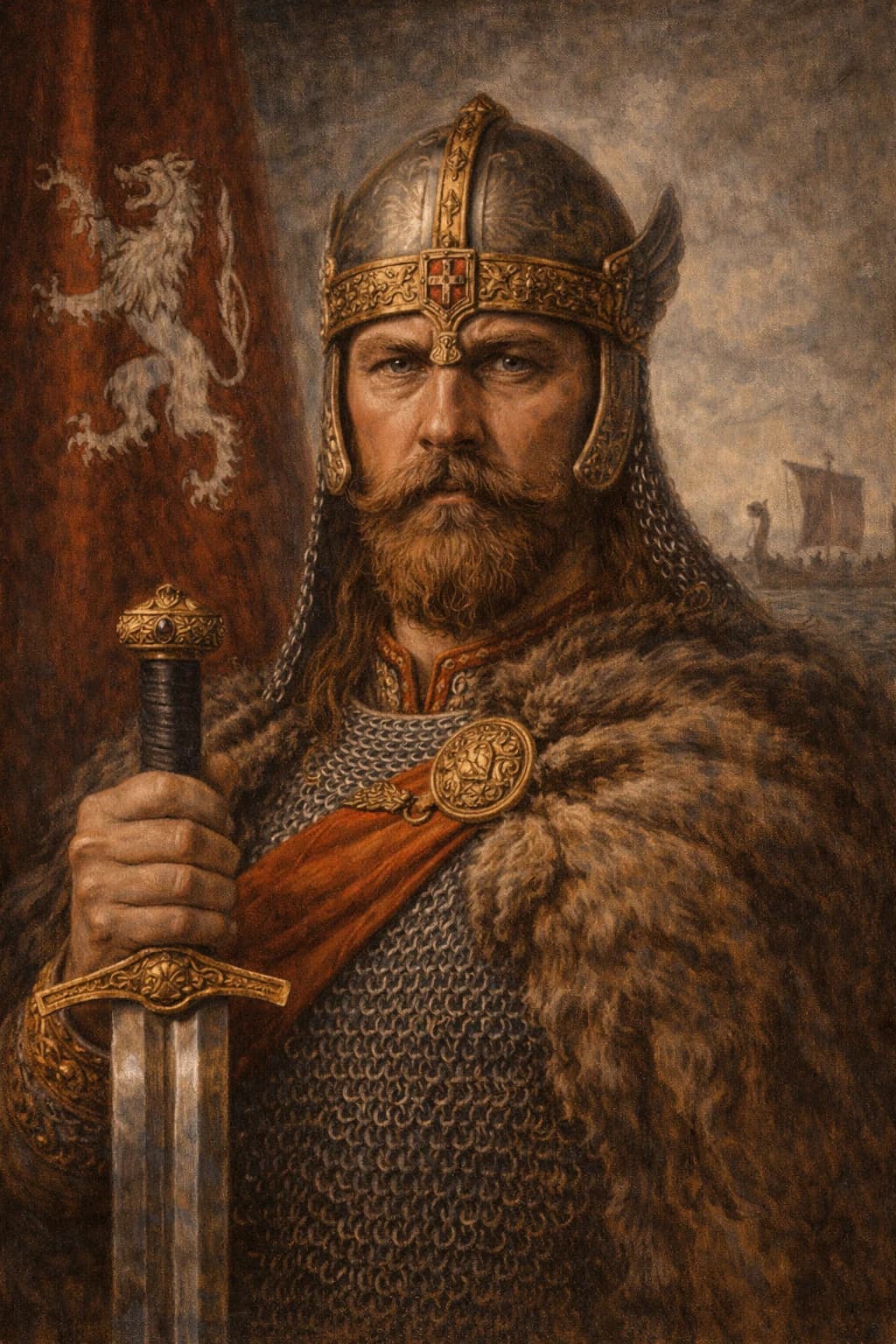
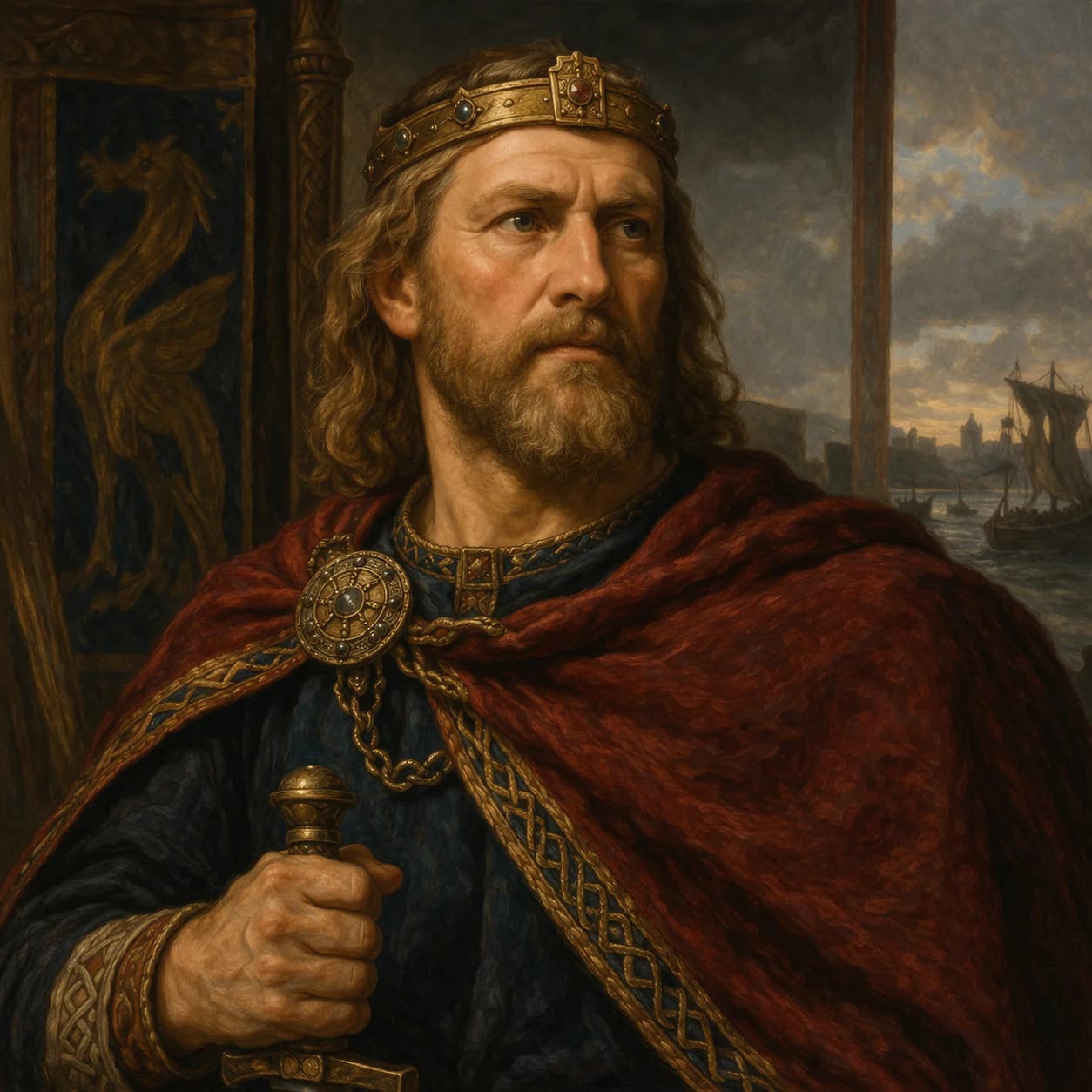
AI-generated portrait of Harold Godwinson in Anglo-Saxon warrior attire
AI-assisted historical reconstruction

An illustrative reconstruction based on historical context. It is not a photograph or documentary likeness. Image policy

Quick answer

Harold Godwinson was the last crowned Anglo-Saxon king of England. Chosen king in January 1066, he defeated Harald Hardrada at Stamford Bridge and was killed fighting William of Normandy at Hastings.

Born
1022 CE
Died
1066 CE
Role
Last Anglo-Saxon king of England
Years
1022-1066 CE
Facts

Harold Godwinson timeline facts

Selected specifics from this profile's life story.

1022
Noble Beginnings

Harold Godwinson was born into the most powerful noble family in late Anglo-Saxon England, a dynasty whose influence could support or threaten kings.

1064
Norman Contact

Harold's journey to Normandy, probably in 1064, became central to Norman propaganda because William claimed Harold swore to support his claim to England.

1066
Norman Landing

William of Normandy landed at Pevensey days after Stamford Bridge, forcing Harold to race south from Yorkshire toward a second invasion.

Post-1066
End of an Era

Harold's death ended the last crowned Anglo-Saxon kingship and opened the way for Norman conquest, land redistribution, castles, and a transformed English elite.

Life Journey

A race for power and a kingdom lost

Follow the story in a more continuous narrative, with a reading mode that matches how much depth you want.

Complete chronology

1022

Noble Beginnings

Harold was the son of Earl Godwin of Wessex and Gytha, whose family connections reached into the Scandinavian world. The Godwins were not royal, but by the mid-eleventh century they stood close enough to the throne to shape the fate of the kingdom. Their power came from land, office, marriage, military leadership, and the ability to act as brokers between king and political nation. Harold grew up in a household where politics was immediate and personal. His sister Edith married King Edward the Confessor, tying the family to the crown, while his brothers held important positions across England. This background gave Harold opportunity, but also danger. The Godwins were admired, feared, resented, and watched. His later career cannot be understood apart from that family machine.
1045–1053

Rise to Earldom

Harold's rise was shaped by both opportunity and recovery. In 1051 the Godwin family was forced into exile after a confrontation with Edward the Confessor, but they returned in strength the following year and regained their positions. When Earl Godwin died in 1053, Harold succeeded to Wessex, the richest and most politically important earldom in the kingdom. He was no longer simply the son of a great man. He became the figure Edward increasingly depended on for military command, regional management, and the handling of difficult politics. Wessex gave Harold wealth, ships, armed men, and a base in the old heartland of English kingship. It also made him the obvious person to defend the realm if Edward died without an heir.

1050s

Dominant Noble

Harold's authority grew because he solved problems the crown needed solved. His campaigns against Gruffudd ap Llywelyn of Wales in 1062-1063 helped break the power of a ruler who had threatened English interests along the western frontier. Harold worked with his brother Tostig in these operations, showing the reach of the Godwin family at its height. He also operated within a political system where the king's personal wishes had to be balanced with the consent of leading nobles and churchmen. Edward remained king, but Harold increasingly looked like the man who could make royal policy work. That practical authority mattered in 1066. When succession became urgent, Harold could present himself not merely as ambitious, but as the experienced defender of England's stability.

1064

Norman Contact

Harold's Norman episode is one of the most contested moments in his life. He crossed the Channel and ended up in the hands of Duke William of Normandy, possibly after shipwreck or capture by a local lord. William treated him with honour, took him on campaign, and later claimed that Harold swore an oath on sacred relics to support William's succession to the English throne. The Bayeux Tapestry makes this oath visually central to the Norman case. English perspectives are harder to recover, and historians remain cautious about what Harold understood, whether he acted under pressure, and how binding such an oath could be against the decision of England's leading men. What matters politically is that William gained a powerful story: Harold, in Norman eyes, was not just a rival but an oath-breaker.

1066

Crowned King

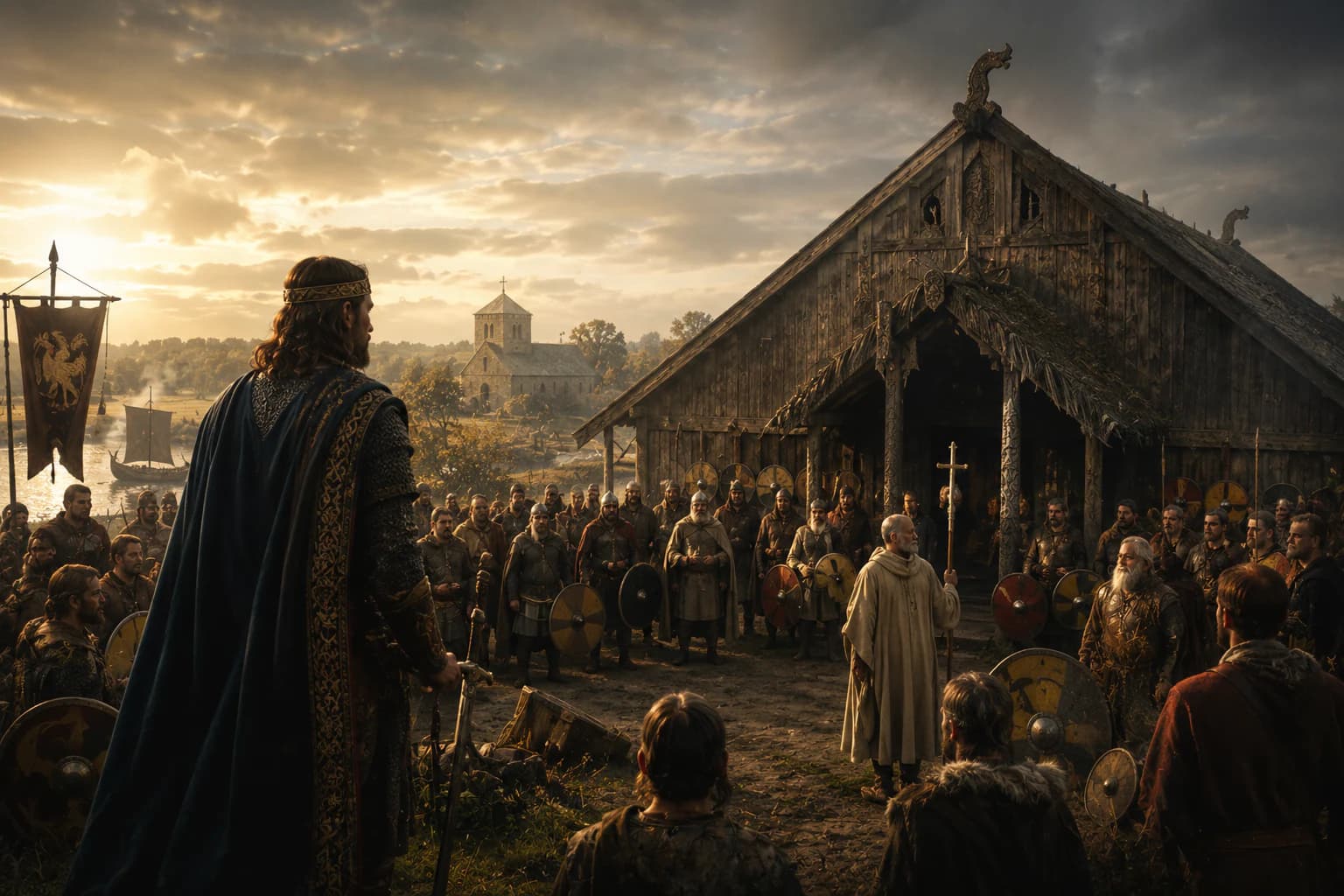
Edward the Confessor died childless, leaving a dangerous field of claims. Harold's case rested on election by the English elite, his power inside the kingdom, and the report that Edward had commended the realm to him on his deathbed. He was crowned on 6 January 1066, the same day Edward was buried at Westminster. The speed was deliberate. In a succession crisis, delay invited invasion. Harold had little direct royal blood compared with Edgar Aetheling, but Edgar was young and lacked power. William of Normandy claimed an earlier promise from Edward and Harold's alleged oath. Harald Hardrada of Norway drew on Scandinavian arguments. Harold's coronation was therefore both constitutional and strategic: it made him king before rivals could turn claim into occupation.

1066

Northern Invasion

For much of 1066 Harold watched the south coast for William's invasion, keeping men under arms until supplies and service obligations made that impossible. Then the first great blow came from the north. Harald Hardrada landed with Tostig, Harold's exiled brother, and defeated Earls Edwin and Morcar at Fulford near York. Harold responded with extraordinary speed, marching north and surprising the invaders at Stamford Bridge on 25 September. The battle was a crushing English victory. Hardrada and Tostig were killed, and the Norwegian army was broken. It was the kind of victory that should have secured a reign. Instead, it drained time, strength, and attention at exactly the moment William's fleet was about to land in Sussex.

1066

Norman Landing

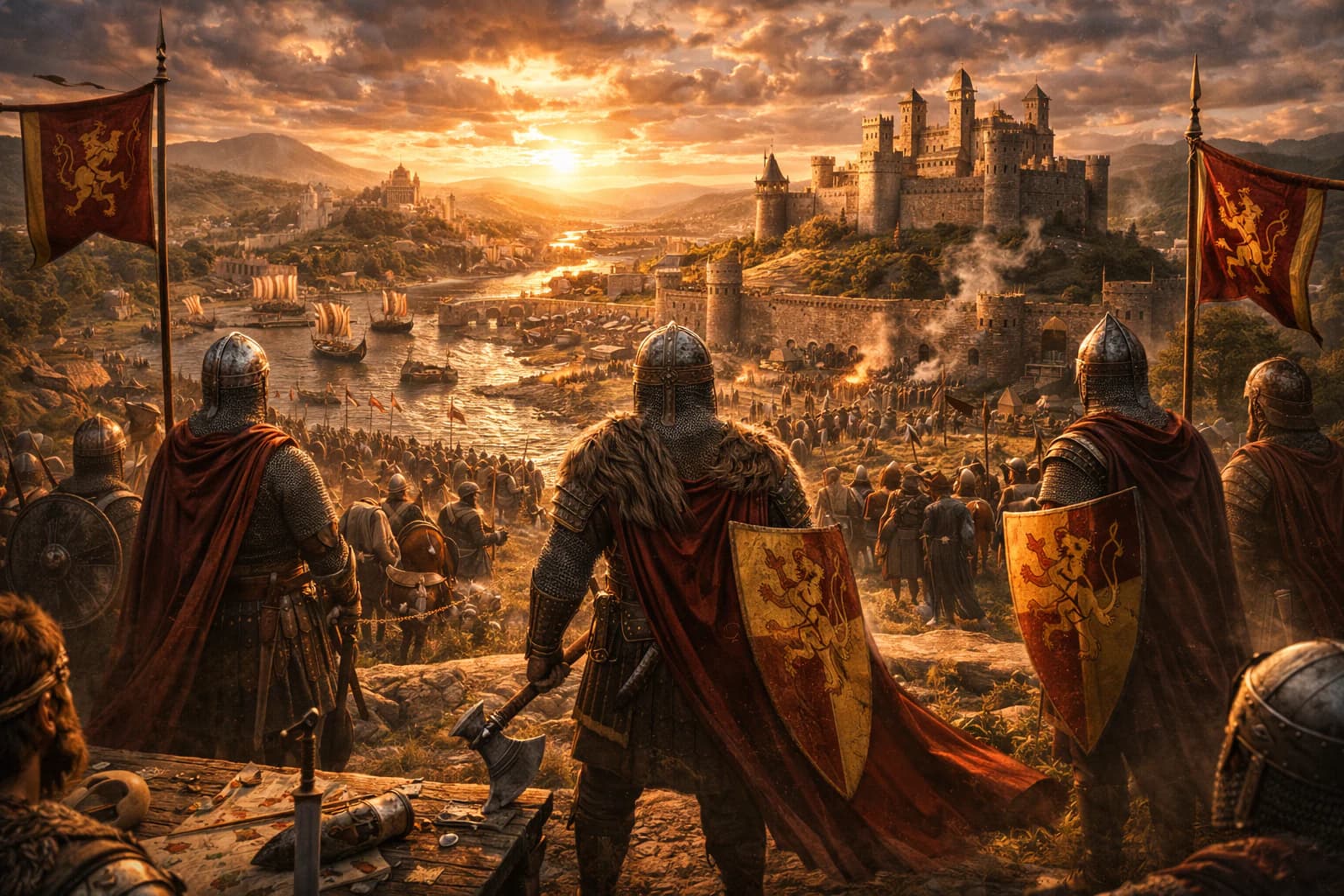
News of William's landing reached Harold after the northern victory. The timing was catastrophic. He had won at Stamford Bridge, but victory had not given him rest. William established a foothold on the south coast, built fortifications, and began ravaging the surrounding area, forcing Harold either to respond or watch royal authority be challenged in the heart of his own power base. Harold moved south rapidly, gathered forces in London, and advanced toward Sussex. Whether he should have waited longer for more troops has been debated for centuries. The decision must be judged under pressure. A new king could not appear passive while an invader burned his lands and claimed his crown.

1066

Battle of Hastings

The Battle of Hastings was long, close, and decisive. Harold's army formed a shield wall on high ground, probably near Senlac Hill, relying on the strength of English infantry and the defensive advantage of position. William's army combined infantry, archers, and cavalry, giving him tactical flexibility. Norman attacks struggled at first, but repeated pressure, possible feigned retreats, and the gradual thinning of English discipline weakened the line. Harold's death remains famous because of the Bayeux Tapestry image often interpreted as an arrow in the eye, though the exact manner of his death is uncertain. What is not uncertain is the result. Once Harold and his brothers were dead, organised English resistance on the field collapsed. A reign of nine months ended in a single afternoon.

Post-1066

End of an Era

Harold Godwinson is remembered less for policies than for the concentrated drama of 1066, but that should not make him a mere victim of fate. He was a capable commander and political operator who came closer than any English rival to holding the kingdom together after Edward's death. His defeat allowed William to claim the crown, but conquest still took years of campaigning, castle-building, confiscation, and suppression. The world Harold represented did not vanish instantly, yet its ruling class was broken. Norman French aristocrats replaced English landholders; castles changed the geography of power; the Domesday survey recorded a transformed kingdom. Harold's importance lies in being both the last defender of late Anglo-Saxon royal order and the hinge on which England turned toward a new aristocracy, language, and political future.

Continue in context

Connected stories

Move from the profile into the wider events and settings this figure belongs to.

Tertiary paths

Content note

This profile is written for educational use and connects to related Stories of History pages. The main portrait is an AI-assisted historical reconstruction, included as an illustrative aid rather than documentary evidence. Image policy

References

Sources & Further Reading

Reliable reference works, archives and reading paths connected to this profile.

Further reading

  1. Encyclopaedia Britannica, Search results for Harold Godwinson,” accessed June 2026.Open source
  2. WorldCat, Books and library holdings for Harold Godwinson,” accessed June 2026.Open source

Primary sources

  1. Library of Congress, Search results for Harold Godwinson,” accessed June 2026.Open source

Reviewed claim sources

Loading reviewed claim sources...

A weekly route through history

Find out first about the latest published stories, feature notes and occasional Premium offers in one weekly email.