People

Hamilcar Barca

Hamilcar Barca was the Carthaginian general who fought Rome in Sicily, helped save Carthage during the Mercenary War, and rebuilt Carthaginian strength in Iberia before the Second Punic War.

Born
c. 275 BCE
Died
228 BCE
Role
Carthaginian general

Carthaginian general (c. 275 BC-228 BC)

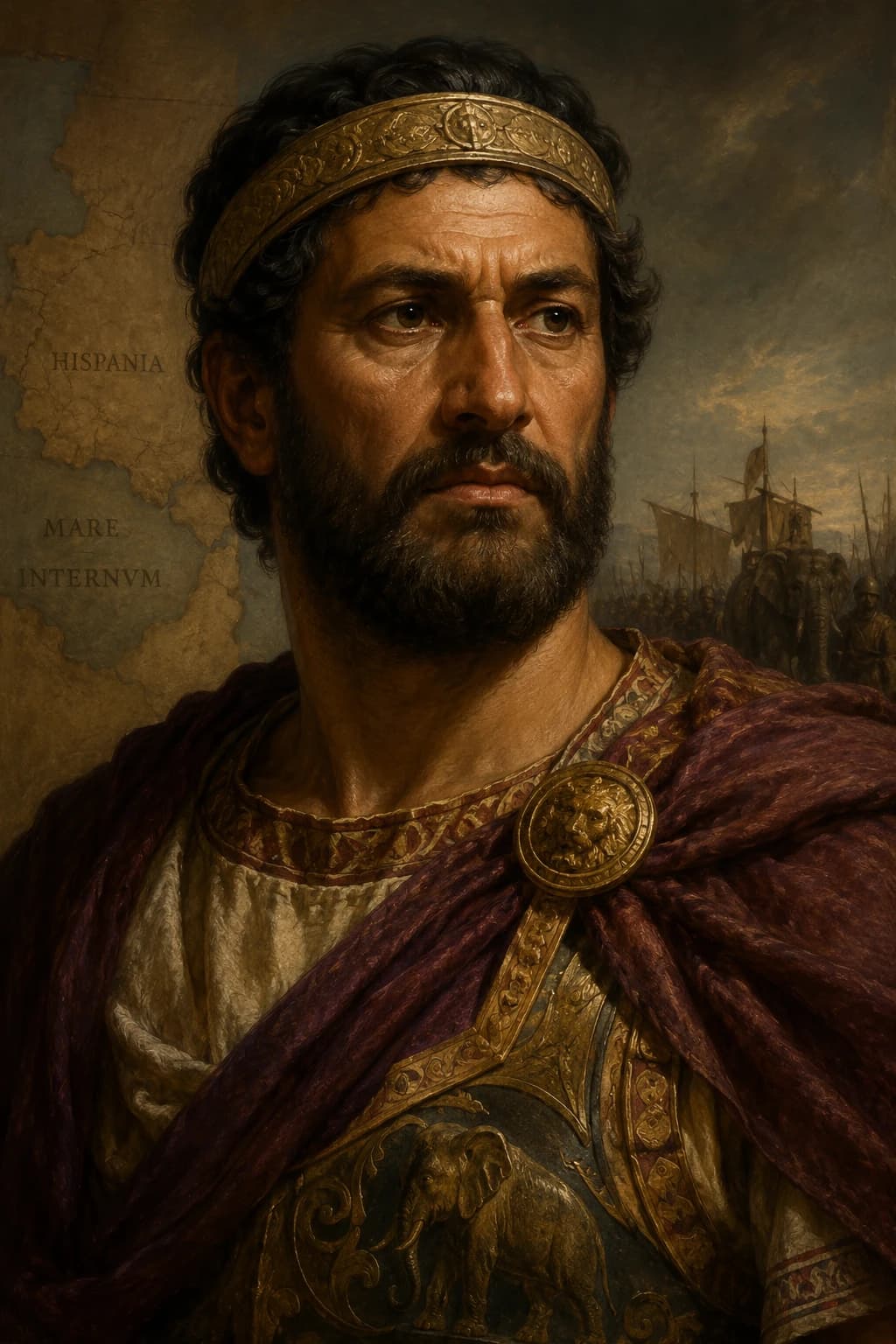
AI-generated portrait of Hamilcar Barca in Carthaginian military armour
AI-assisted historical reconstruction

An illustrative reconstruction based on historical context. It is not a photograph or documentary likeness. Image policy

Quick answer

Hamilcar Barca was the Carthaginian general who fought Rome in Sicily, helped save Carthage during the Mercenary War, and rebuilt Carthaginian strength in Iberia before the Second Punic War.

Born
c. 275 BCE
Died
228 BCE
Role
Carthaginian general
Years
c. 275-228 BCE
Facts

Hamilcar Barca timeline facts

Selected specifics from this profile's life story.

c. 275 BCE
A Carthaginian at war

Hamilcar Barca was born into Carthage's elite during a century when the city was one of the strongest powers in the western Mediterranean.

241-237 BCE
Saving Carthage from revolt

After the First Punic War, Hamilcar helped defeat the Mercenary War, a brutal revolt by unpaid soldiers and subject communities.

230s BCE
Father of Hannibal

Hamilcar's family became central to Carthage's renewed strength, and his son Hannibal grew up inside that atmosphere of ambition and hostility to Rome.

After 228 BCE
Barcid legacy

Hamilcar's legacy was the Barcid power base in Iberia, the family leadership that produced Hannibal, and the renewed rivalry that led to the Second Punic War.

Life Journey

From stubborn resistance to Barcid recovery

Follow the story in a more continuous narrative, with a reading mode that matches how much depth you want.

Complete chronology

c. 275 BCE

A Carthaginian at war

Hamilcar's early life is not well documented, but his career places him inside Carthage's ruling and military world at the moment Rome became its most dangerous rival. Carthage was wealthy, maritime, and commercially connected, but its armies often depended on allied, subject, and hired troops. A commander had to manage more than battlefield tactics. He needed money, discipline, diplomacy, and authority over mixed forces whose loyalty could not be assumed. Hamilcar's later career shows a man formed by that hard political-military environment.
247-241 BCE

Resistance in Sicily

Hamilcar became prominent near the end of the First Punic War, when Carthage's position in Sicily was under severe pressure. Operating from difficult strongholds in western Sicily, he raided, defended, negotiated local loyalties, and made Roman victory more costly. He did not reverse the course of the war, especially after Rome's final naval victory cut Carthage's options, but he preserved a reputation for energy and stubbornness. That reputation mattered after defeat. In a city wounded by indemnity and loss, Hamilcar became one of the commanders who could still embody resistance.

241-237 BCE

Saving Carthage from revolt

Carthage's defeat by Rome was followed almost immediately by internal crisis. Unpaid mercenaries and subject peoples rebelled in what ancient writers remembered as a savage and desperate war. Hamilcar was central to Carthage's recovery. The conflict was not a clean patriotic struggle but a grim fight for survival, marked by betrayal, hunger, and extreme violence on both sides. By helping Carthage win, Hamilcar preserved the state that had just lost Sicily. He also drew a lesson from the crisis: Carthage needed new resources, more reliable military foundations, and room to rebuild beyond Rome's immediate reach.

237 BCE

Turning to Iberia

Hamilcar's move to Iberia was one of the decisive choices in Carthaginian history. The peninsula offered mineral wealth, manpower, and political space. It also allowed Hamilcar to build influence through campaigning, diplomacy, settlement, and local alliances. Carthage remained the formal state, but the Barcid family gained an unusually strong position in the west. Iberia became a recovery project, a family power base, and a warning sign to Rome. Hamilcar was not simply running from defeat. He was relocating Carthage's future.

230s BCE

Father of Hannibal

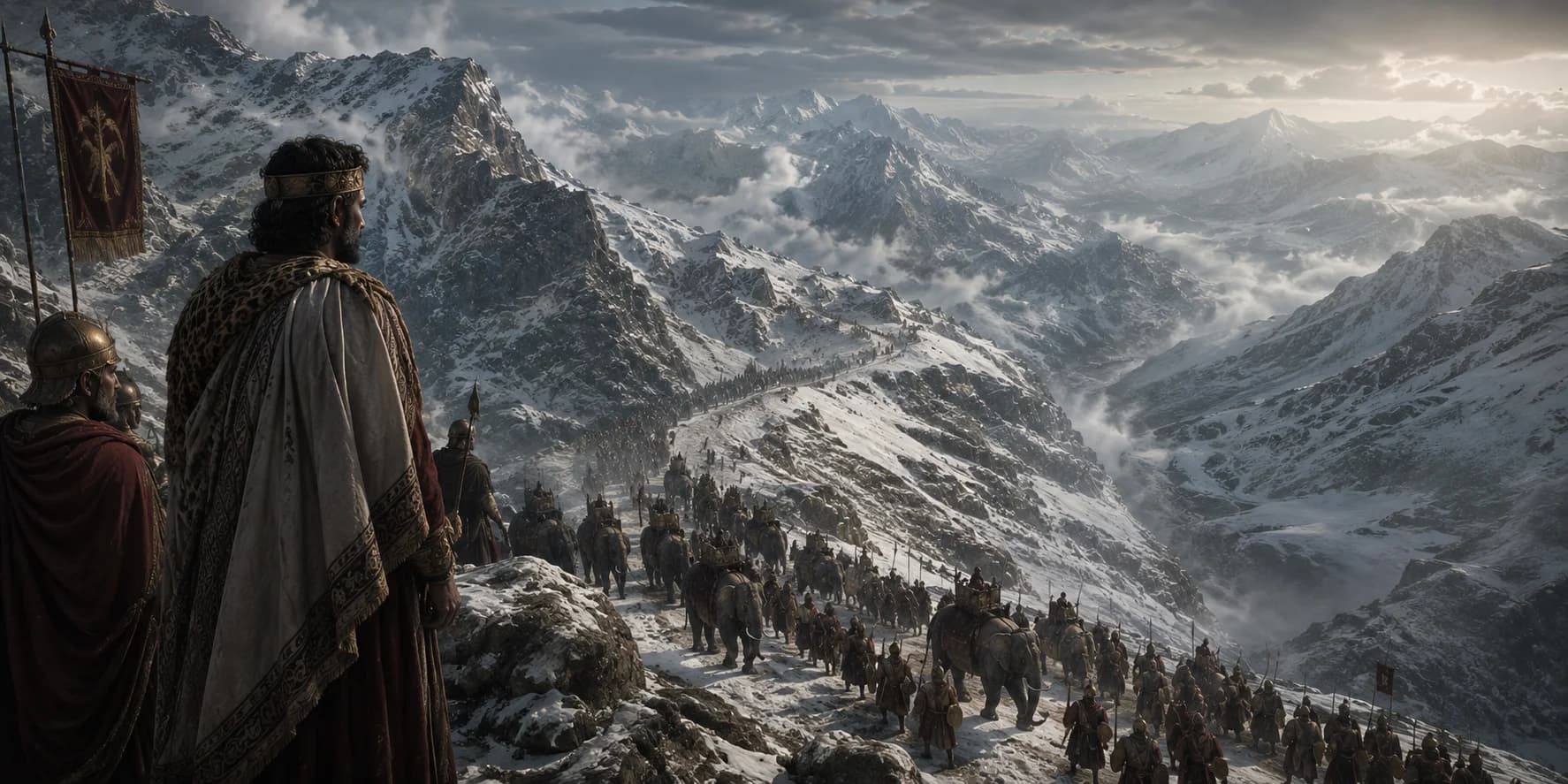
The Barcid project was political as well as military. Hamilcar's sons, including Hannibal, Hasdrubal, and Mago, were raised close to campaigns, alliances, bargaining, and resentment after Rome's victory. Ancient tradition says Hamilcar made Hannibal swear never to be a friend of Rome. Whether that scene happened exactly as told is less important than the larger truth it expressed: Hannibal inherited a family mission shaped by defeat and recovery. Hamilcar gave his children not only a name, but a strategic world.

228 BCE

Death in Iberia

Hamilcar died in Iberia before the second war with Rome began. Ancient accounts connect his death with campaigning against local opponents, though details vary. His immediate successor in the Iberian command was Hasdrubal the Fair, his son-in-law, whose diplomacy and foundation of New Carthage strengthened the system Hamilcar had begun. Hannibal later inherited that western base. Hamilcar therefore did not lead the Second Punic War himself, but his decisions made it possible. He transformed Carthage's humiliation into a new strategic engine.

After 228 BCE

Barcid legacy

Hamilcar Barca matters because he stands between Carthage's first defeat and Hannibal's later invasion of Italy. He did not destroy Rome, and he did not live to see the greatest Barcid gamble, but he changed the conditions under which Carthage operated. His Iberian expansion restored resources, trained officers, connected local allies, and gave his family the authority to act with unusual freedom. Rome's fear of that system was not paranoia. Hamilcar had helped turn a beaten maritime power into a recovered western force with reasons to resent, resist, and challenge Roman expansion again.

Continue in context

Connected stories

Move from the profile into the wider events and settings this figure belongs to.

Tertiary paths

Content note

This profile is written for educational use and connects to related Stories of History pages. The main portrait is an AI-assisted historical reconstruction, included as an illustrative aid rather than documentary evidence. Image policy

References

Sources & Further Reading

Reliable reference works, archives and reading paths connected to this profile.

Further reading

  1. Encyclopaedia Britannica, Search results for Hamilcar Barca,” accessed June 2026.Open source
  2. WorldCat, Books and library holdings for Hamilcar Barca,” accessed June 2026.Open source

Primary sources

  1. Library of Congress, Search results for Hamilcar Barca,” accessed June 2026.Open source

Reviewed claim sources

Loading reviewed claim sources...

A weekly route through history

Find out first about the latest published stories, feature notes and occasional Premium offers in one weekly email.