Complete chronology
Full overview and deeper context for every journey step.
1837–1850s
Modest upbringing
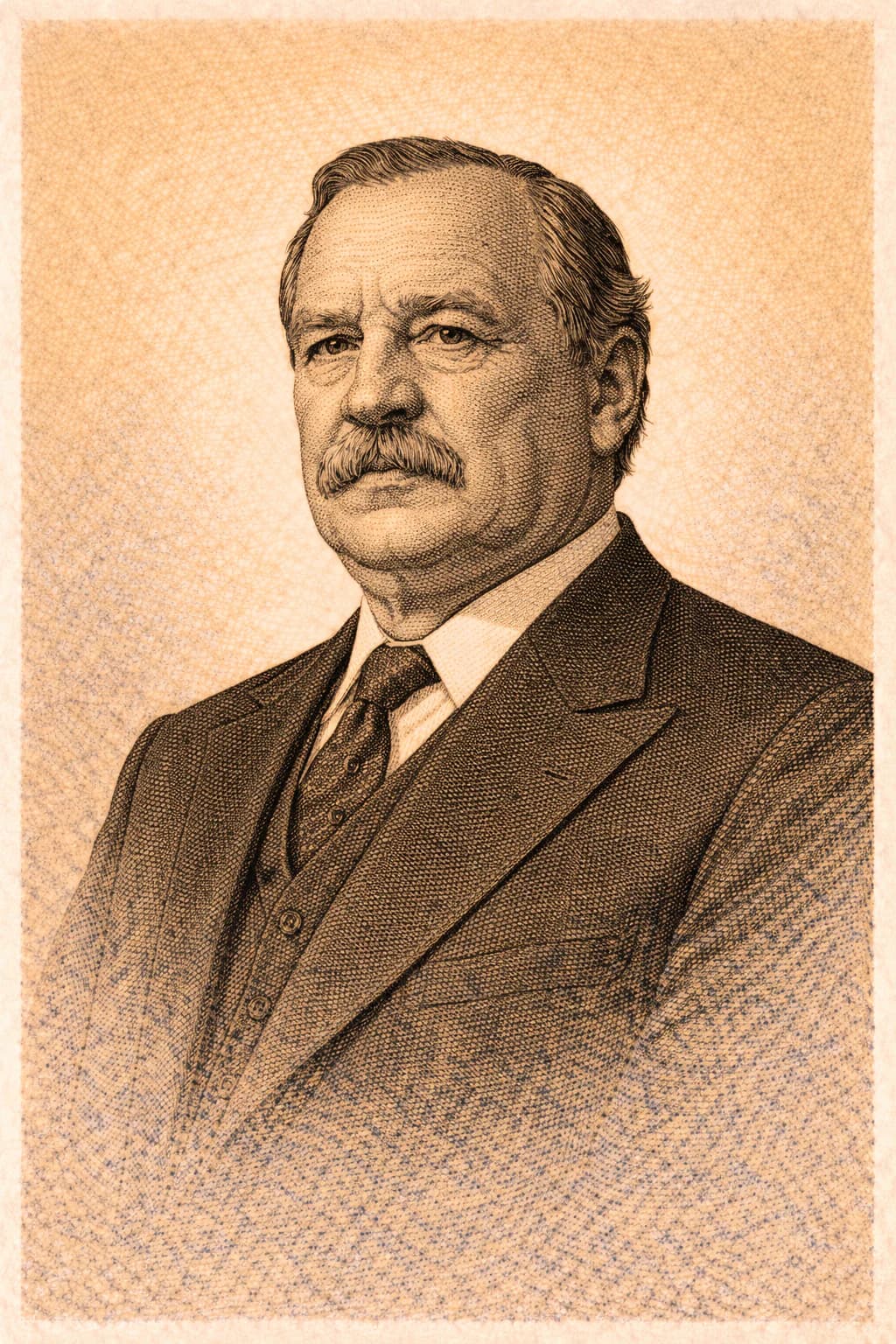
Stephen Grover Cleveland was born in Caldwell, New Jersey, in 1837, the son of a Presbyterian minister whose work moved the family across New York State. His childhood offered discipline but little financial security. When his father died, Cleveland had to abandon hopes of extended formal education and earn his way. That early pressure shaped a practical temperament: unsentimental, stubborn, and suspicious of waste. He would later make honesty and restraint the centre of his political identity, presenting himself as an antidote to the favour-trading and machine politics of the Gilded Age. His background did not make him radical. It made him austere, and that austerity became both his strength and his limitation.
Early hardship can shape a leader’s commitment to restraint and accountability.
1850s–1870s
Legal beginnings
Cleveland moved to Buffalo and learned law through apprenticeship, the route available to a young man without college wealth. He became a capable lawyer and a local Democratic figure, serving as assistant district attorney and later sheriff of Erie County. The sheriff's office gave him a reputation for grim duty because he personally carried out executions required by law, an episode that later campaign enemies used against him. Cleveland's appeal was never glamour. He looked and sounded like a man of paperwork, decisions, and refusal. In a political culture rich with patronage, that image mattered. It suggested a Democrat who could attract reform-minded voters tired of corruption across party lines.
Credibility built in smaller roles can become the foundation for national leadership.
1881
Mayor of Buffalo
Cleveland's mayoralty was short, but it made his name. He attacked what he saw as sweetheart contracts and careless spending, using the veto as a weapon against arrangements that transferred public money to private interests. The most famous cases were local, but the message travelled: here was a Democrat willing to offend party insiders in the name of public economy. That independence made him useful to reformers who wanted cleaner government without abandoning party politics. Cleveland's rise shows how Gilded Age reform could be intensely practical. It was not always a sweeping programme. Sometimes it was a mayor reading contracts closely and refusing to sign what smelled wrong.
Decisive action against corruption can rapidly elevate a leader’s profile.
1883–1885
Governor of New York
New York was a national political stage, and Cleveland used it to deepen the persona first formed in Buffalo. As governor, he scrutinised bills, vetoed measures he considered special-interest legislation, and resisted the assumption that elected office existed to reward friends. This put him at odds with parts of his own Democratic coalition, including Tammany Hall, but it also broadened his appeal. Republicans were divided by scandals and factionalism, while reform-minded independents, often called Mugwumps, were willing to cross party lines for a candidate they trusted. Cleveland's governorship made him credible as a national nominee because he seemed to offer something rare: a partisan politician with an anti-machine brand.
Consistency in principle can build trust even in a divided political environment.
1885–1889
First presidency
Cleveland entered the White House in 1885 as the first Democratic president since the Civil War. His first term was defined by restraint. He resisted patronage demands, supported civil service reform, vetoed hundreds of private pension bills he considered fraudulent or excessive, and argued that high protective tariffs created unfair surpluses and favoured manufacturers at consumers' expense. His approach pleased reformers who valued integrity, but it also exposed the cold edges of his philosophy. Cleveland could appear more comfortable stopping abuse than imagining active government support for people in distress. The question running through his presidency was whether honesty and economy were enough in a country being transformed by industrial capitalism.
Leadership grounded in principle can invite both respect and controversy.
1888
Electoral defeat
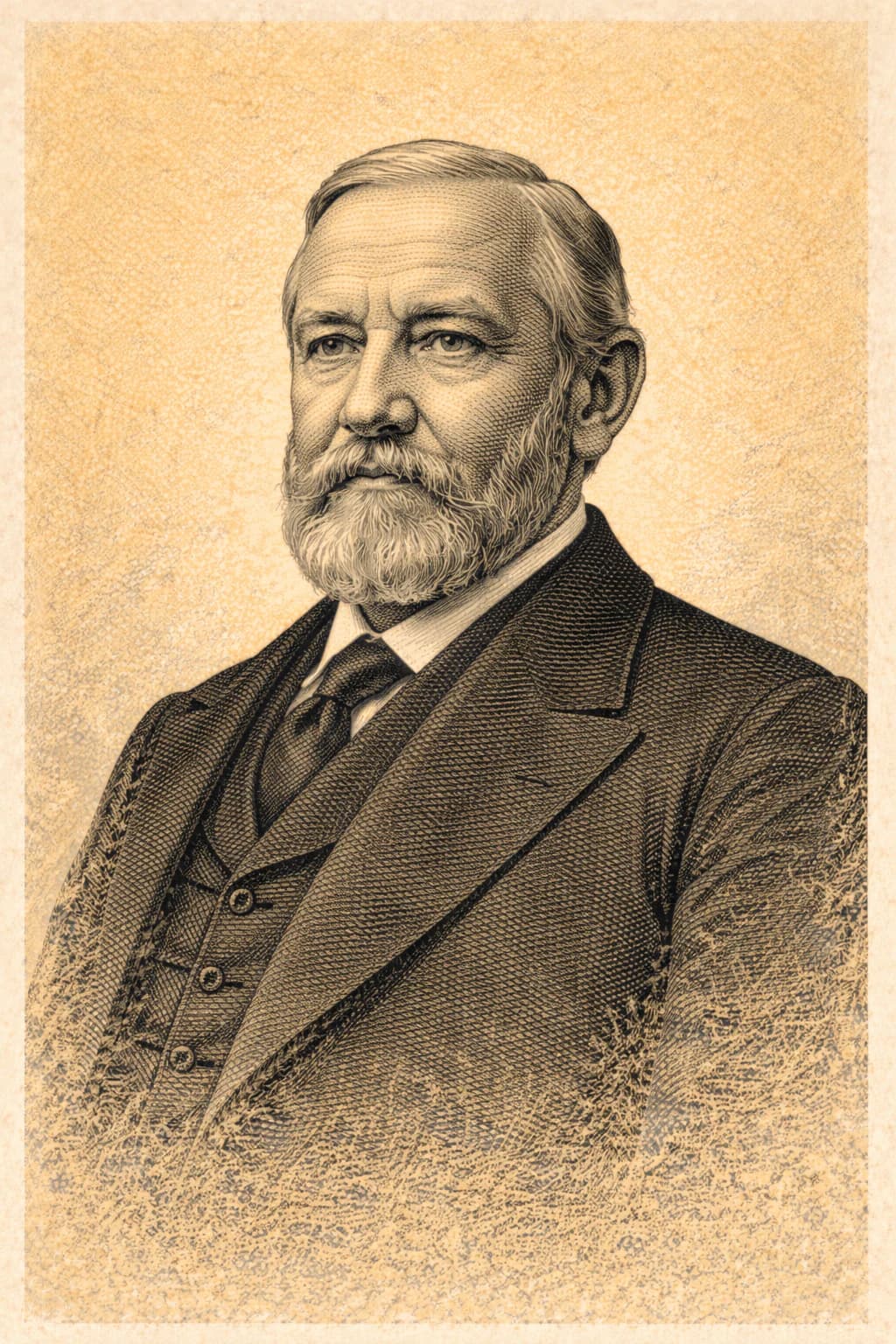
The 1888 election turned on the tariff, regional loyalties, and the Electoral College. Cleveland made tariff reform a central issue, arguing that excessive duties burdened consumers and generated an unhealthy federal surplus. Republicans, led by Benjamin Harrison, defended protection as support for American industry and wages. Cleveland won more votes nationally, but Harrison carried crucial states, including New York and Indiana, and therefore won the presidency. The result made Cleveland a defeated incumbent with unusual authority. He had not been repudiated by a popular majority, and he remained the Democratic Party's most recognisable national figure. His wife, Frances, is said to have told White House staff they would return. Politically, the idea was not absurd.
Setbacks in politics do not always reflect a loss of public support.
1892
Historic comeback
Cleveland's 1892 victory made him the 22nd and 24th president, a numbering oddity that captured a genuine political rarity. Harrison's administration had become associated with high tariffs and heavy spending, while Cleveland retained his reputation for sobriety and reform. His comeback showed the durability of personal trust in an age of party machines. Yet the triumph carried danger. Cleveland returned to office just as the economy was approaching disaster. The qualities that helped him win — discipline, suspicion of inflationary policy, devotion to limited government — would soon be tested by conditions more severe than those of his first term. The comeback was historic, but it delivered him into crisis.
A strong reputation can enable a return even after apparent defeat.
1893–1897
Economic turmoil
The Panic of 1893 produced bank failures, business collapse, unemployment, and deep public anger. Cleveland saw defence of the gold standard as essential to financial credibility and pushed for repeal of the Sherman Silver Purchase Act, alienating silver Democrats and agrarian critics who wanted easier money. His administration arranged a controversial bond deal with financiers including J. P. Morgan to replenish gold reserves, reinforcing the image of a president closer to creditors than workers. In 1894, during the Pullman Strike, Cleveland sent federal troops to keep mail and rail traffic moving, a decision supporters defended as protection of national order and critics condemned as government siding with corporations. His second term revealed the limits of nineteenth-century limited-government liberalism under industrial crisis.
Crises test whether principles can adapt to changing realities.
post-1897
Enduring reputation
Cleveland left office in 1897 with his party fractured and his popularity badly damaged by depression. Over time, his reputation recovered among historians who admired his honesty, independence, and resistance to patronage. Yet admiration has always been qualified. His hostility to many forms of federal intervention, his hard-money economics, and his handling of labour unrest make him a revealing figure rather than a simple model. Cleveland's importance lies in the tension he embodies: a president of real integrity whose principles did not always meet the needs of an industrialising society. As the first president to serve non-consecutive terms, he remains a landmark in electoral history; as a Gilded Age reformer, he remains a test case in the power and limits of clean government.
A legacy can endure not because it is simple, but because it invites ongoing debate.