Complete chronology
Full overview and deeper context for every journey step.
1926–1945
Rural Beginnings
Fidel Alejandro Castro Ruz was born near Biran in Oriente province, a region far from Havana's polished political circles and close to the realities of land, sugar, labor, and poverty. His father, Angel Castro, had become a prosperous landowner; many people around the estate lived with far fewer choices. That contrast mattered. Castro was not born poor, and his later revolutionary identity should not erase the privileges that helped educate him. But he grew up seeing a Cuba where land, race, class, and foreign business shaped opportunity unevenly. Jesuit schooling gave him discipline, competitiveness, and a taste for argument. By the time he left for Havana, he had developed the intense self-belief that would mark his entire life. His origins produced no automatic ideology, but they gave him the emotional geography of Cuban inequality.
His upbringing combined comfort and inequality, planting the seeds for both ambition and rebellion.
1945–1952
Student Activism
Havana in the 1940s was a political classroom with sharp edges. Student activism mixed idealism, gangsterism, party rivalry, and anger at corruption. Castro studied law, but he was drawn less to quiet legal practice than to public confrontation. He involved himself in nationalist causes, denounced crooked politics, and absorbed the language of Latin American anti-imperialism. At this stage, he was not yet publicly the Marxist-Leninist ruler he later became. His politics were more fluid: democratic rhetoric, social justice, national sovereignty, and a belief that action mattered more than polite procedure. The university years shaped his gifts as a speaker and organizer, but also his appetite for risk. Castro learned that politics could be theatrical, dangerous, and personal. He also learned that legality could be used as a platform for rebellion.
Exposure to unstable politics convinced him that dramatic action, not gradual reform, would be necessary.
1953
Failed Uprising
Batista's 1952 coup closed the electoral route Castro had hoped to use, and he answered with conspiracy. On 26 July 1953, Castro and his followers attacked the Moncada Barracks in Santiago de Cuba, hoping to spark a broader uprising. The plan failed badly. Many rebels were killed, others tortured or executed after capture, and Castro himself was put on trial. Yet failure became his first great act of political storytelling. His courtroom defense, later known by the phrase 'History will absolve me', framed the attack as patriotic necessity and laid out promises of constitutional rule, land reform, education, and national dignity. Prison did not end his movement; it gave it a name, a martyr narrative, and a leader with national recognition. Castro discovered that defeat could be made useful if it was turned into myth.
Defeat, rather than success, introduced him to the nation and gave his cause a powerful story.
1955–1956
Exile and Planning
Batista released Castro under an amnesty in 1955, expecting perhaps that exile would drain the danger from him. It did the opposite. In Mexico, Castro gathered veterans, recruits, and allies around the 26th of July Movement. There he met Ernesto 'Che' Guevara, whose Marxist internationalism and austere revolutionary temperament would become central to the movement's identity. The plan was bold to the point of recklessness: sail to Cuba on the yacht Granma, land in Oriente, and build a guerrilla war. Castro's exile years reveal his combination of improvisation and certainty. He was not commanding a mass army; he was organizing a small force around charisma, discipline, and the promise that Batista's regime was weaker than it looked. The movement survived because its leader could make improbable action feel historically inevitable.
Exile transformed his movement from a bold idea into a coordinated plan.
1956–1958
Guerrilla War
The Granma expedition landed late, exhausted, and exposed in December 1956. Batista's forces nearly wiped it out. A small group survived and retreated into the Sierra Maestra, where geography, local support, and government brutality gave the rebels room to recover. Castro's guerrilla war was militarily important, but its political impact was just as significant. Rebel Radio, interviews with foreign journalists, urban resistance networks, student activists, labor unrest, and Batista's own repression all helped turn the insurgency into a national symbol. Castro presented himself as a restorer of Cuban dignity rather than as the future head of a one-party socialist state. The ambiguity was powerful. Different groups could project hopes onto him: democracy, reform, nationalism, justice, revenge. By 1958, Batista's regime was losing legitimacy faster than it was losing territory. The revolution won because battlefield pressure, political collapse, and public imagination converged.
Persistence in difficult conditions allowed a small force to grow into a national movement.
1959
Seizing Power
The fall of Batista produced jubilation across Cuba. Many people wanted an end to dictatorship, corruption, torture, and foreign dominance. Castro arrived in Havana not as a conventional president but as the revolution's indispensable voice. That gave him flexibility and danger. Early revolutionary justice included trials and executions of Batista officials, which supporters saw as accountability and critics saw as political violence. Moderates who expected a quick return to pluralist democracy were gradually pushed aside. Land reform, nationalization, censorship, and the restructuring of institutions changed the revolution's direction. Castro did not seize power in one single motion; he accumulated it through popularity, crisis, ideological clarification, and the weakening of rivals. By the early 1960s, the Cuban Revolution had become inseparable from his personal command.
Victory brought opportunity, but also set the stage for concentrated power.
1960–1962
Aligning with Socialism
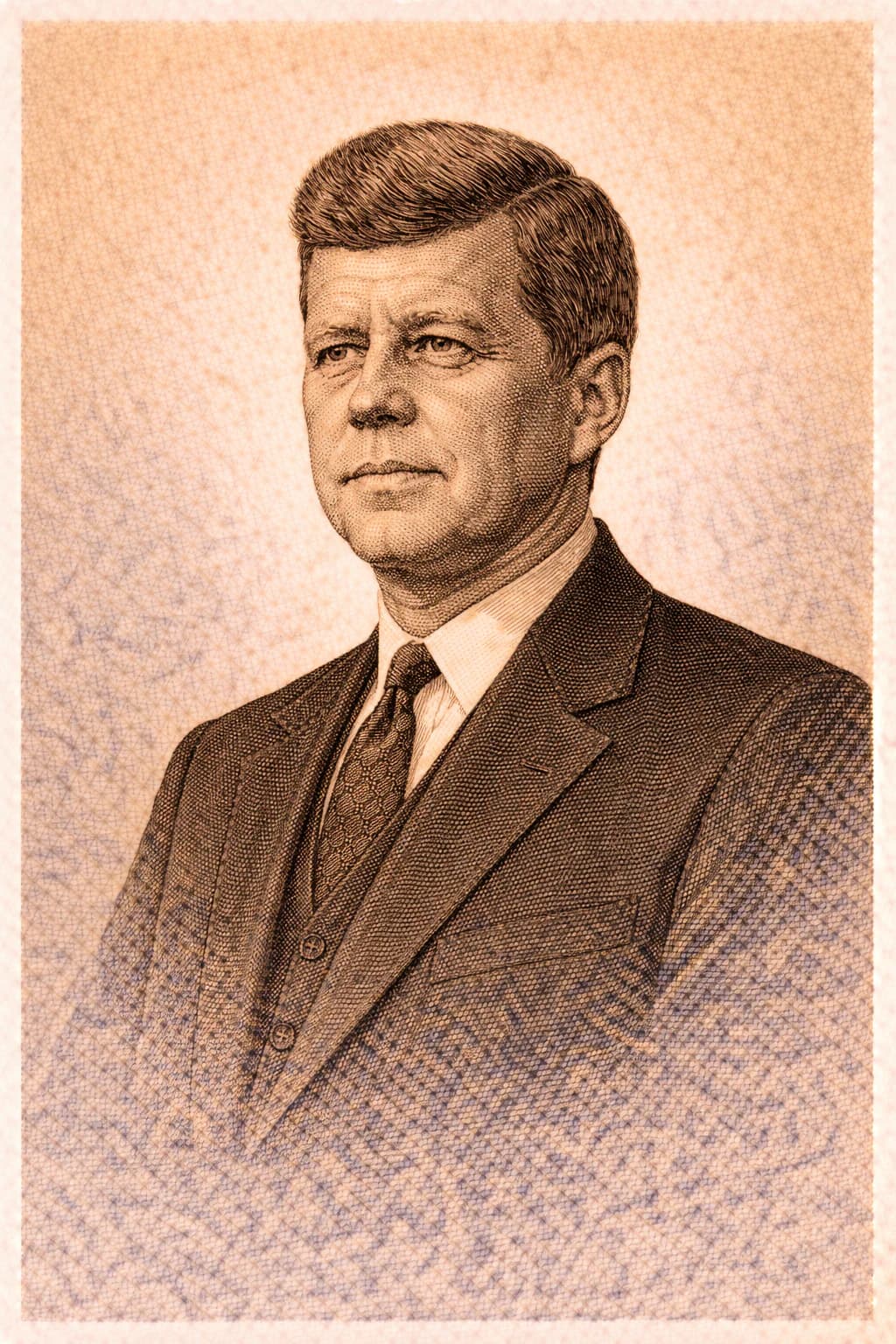
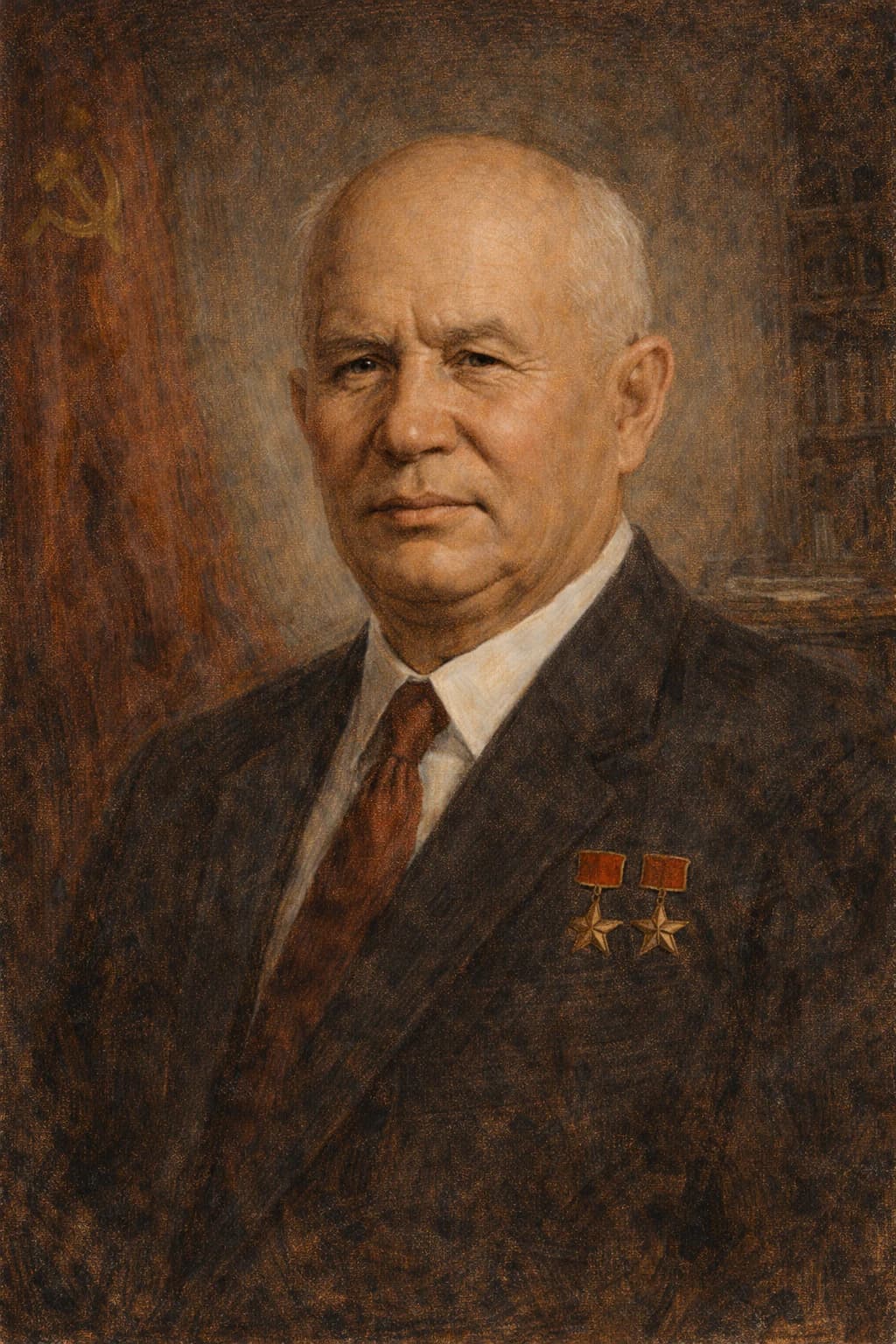
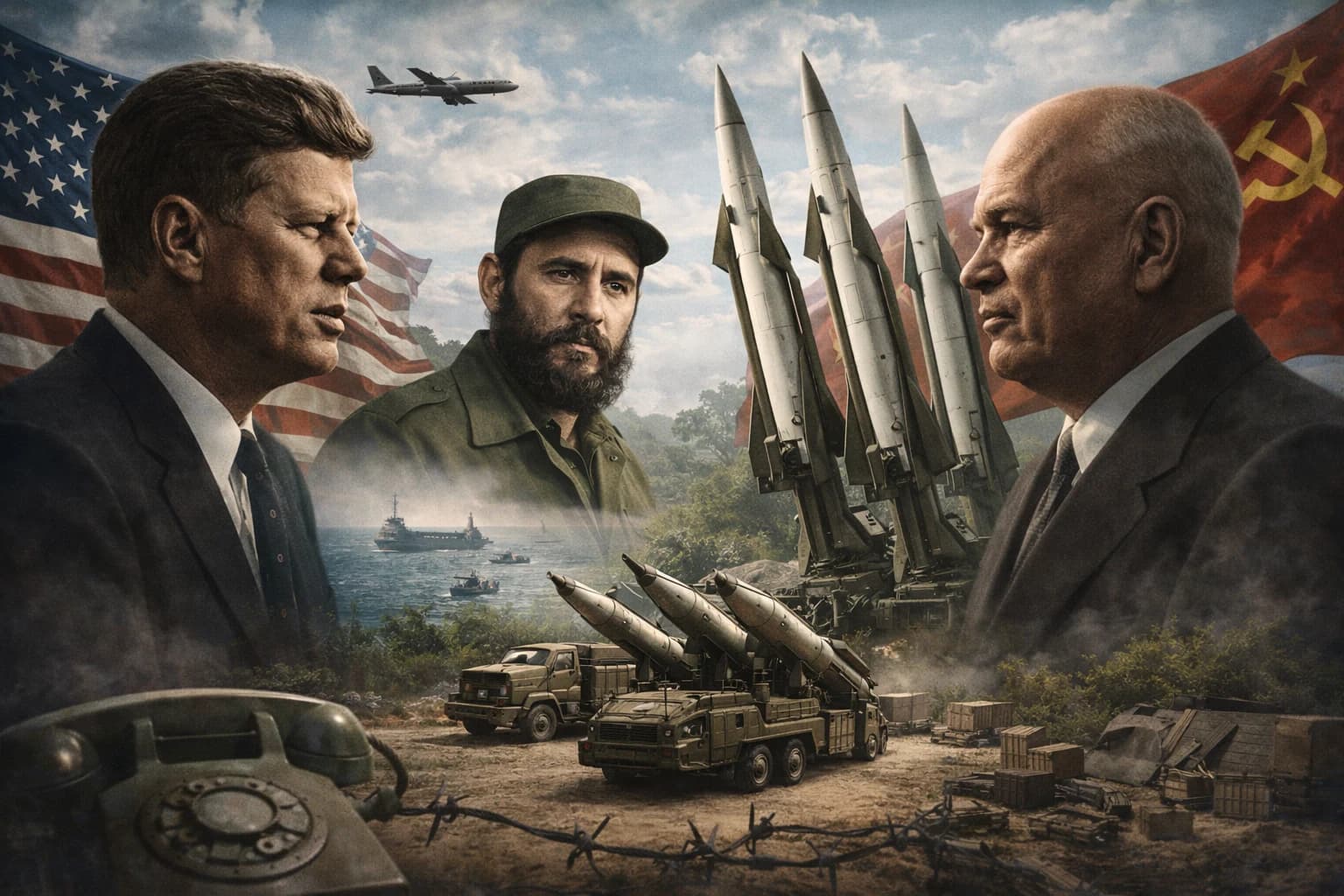
Relations with the United States deteriorated quickly as Castro nationalized American-owned property, accepted Soviet support, and moved toward a declared socialist system. Washington responded with economic pressure, covert operations, and in 1961 the failed Bay of Pigs invasion by Cuban exiles backed by the CIA. The invasion strengthened Castro at home and made Soviet protection more attractive. In 1962, the secret deployment of Soviet nuclear missiles to Cuba triggered the Cuban Missile Crisis, the most dangerous confrontation of the Cold War. Castro was not simply a puppet of Moscow; he had his own revolutionary priorities and felt acutely threatened by the United States. But Soviet backing tied Cuba's fate to global superpower rivalry. The island gained protection and resources while surrendering much room for independent economic choice. The revolution became both national and international, Cuban and Cold War.
International alliances strengthened his position while locking Cuba into global rivalry.
1960s–2000s
Long Rule
Castro's long rule cannot be reduced to a single moral sentence, though it demands moral clarity. His government built a one-party socialist state with strong security organs, censorship, imprisonment of opponents, restrictions on independent civil society, and no competitive national elections of the kind liberal democracies recognize. Many Cubans fled, creating a powerful exile community, especially in the United States. At the same time, the state invested heavily in literacy, public health, medical training, and education, producing social achievements that supporters still emphasize. Cuba also projected influence abroad, sending troops, doctors, teachers, and advisers into conflicts and postcolonial struggles in Africa and Latin America. The economy remained vulnerable, especially because of dependence on Soviet support and the U.S. embargo. After the Soviet collapse, the 'Special Period' brought severe hardship. Castro survived by mixing ideology, repression, improvisation, nationalism, and personal authority.
His rule blended social progress with strict control, creating a deeply divided legacy.
2006–2016
End and Impact
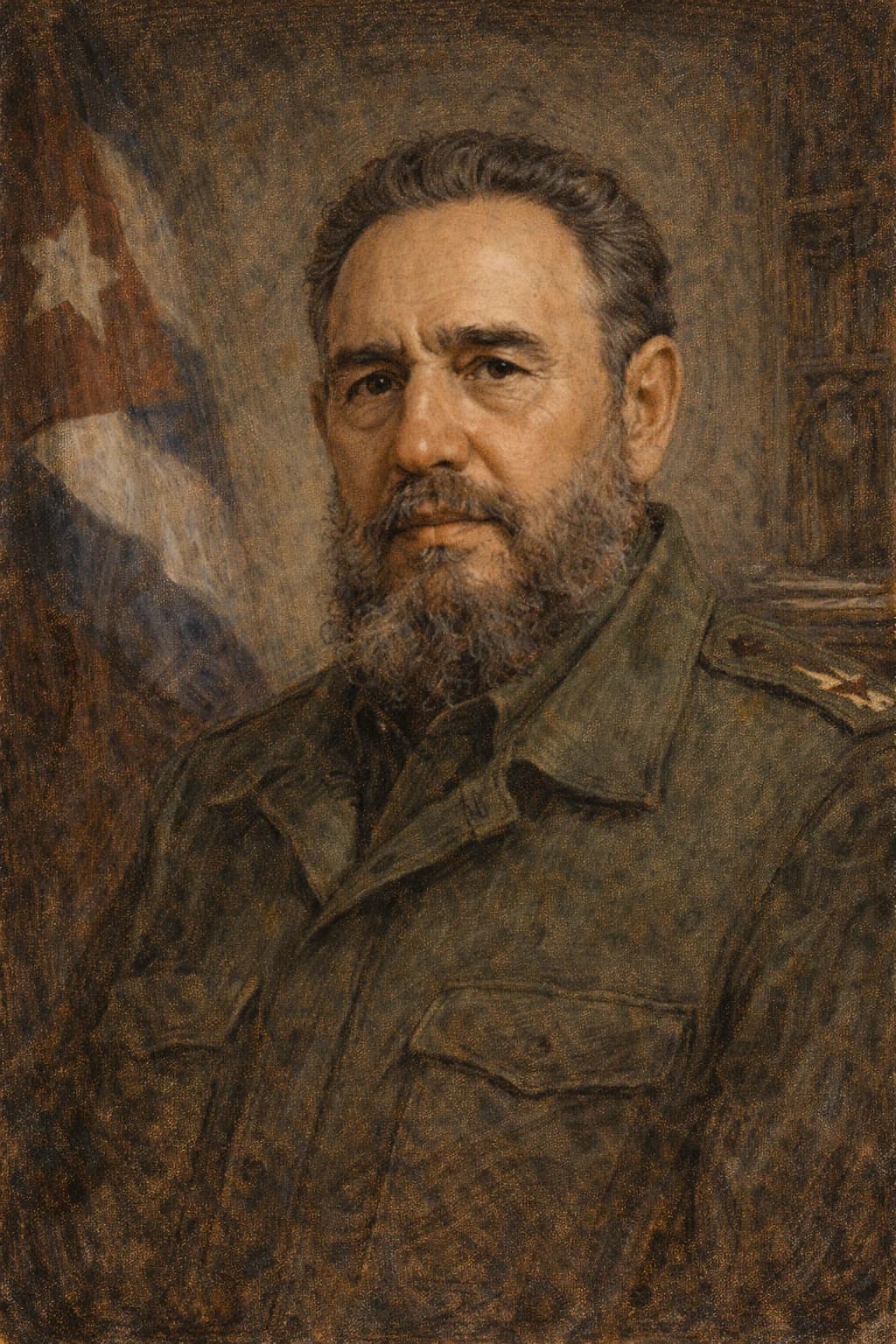
Health problems forced Castro to hand provisional power to his brother Raul in 2006, and he formally stepped away from the presidency soon after. He remained a symbolic presence, issuing reflections while Cuba cautiously adjusted under a system he had built. When he died in 2016, reactions revealed the split that had always surrounded him. To admirers, he was the leader who defied U.S. power, expanded social services, and gave a small Caribbean island global weight. To critics, he was an authoritarian ruler who crushed dissent, narrowed speech, imprisoned opponents, and made political loyalty a condition of public life. Both the achievements and the coercion are part of the historical record. Fidel Castro matters because he made Cuba one of the central stages of the Cold War and because his revolution still frames debates over sovereignty, equality, democracy, and the price of political certainty.
His legacy endures not as a single narrative, but as a lasting tension between progress and control.