Complete chronology
Full overview and deeper context for every journey step.
1799
Aristocratic beginnings
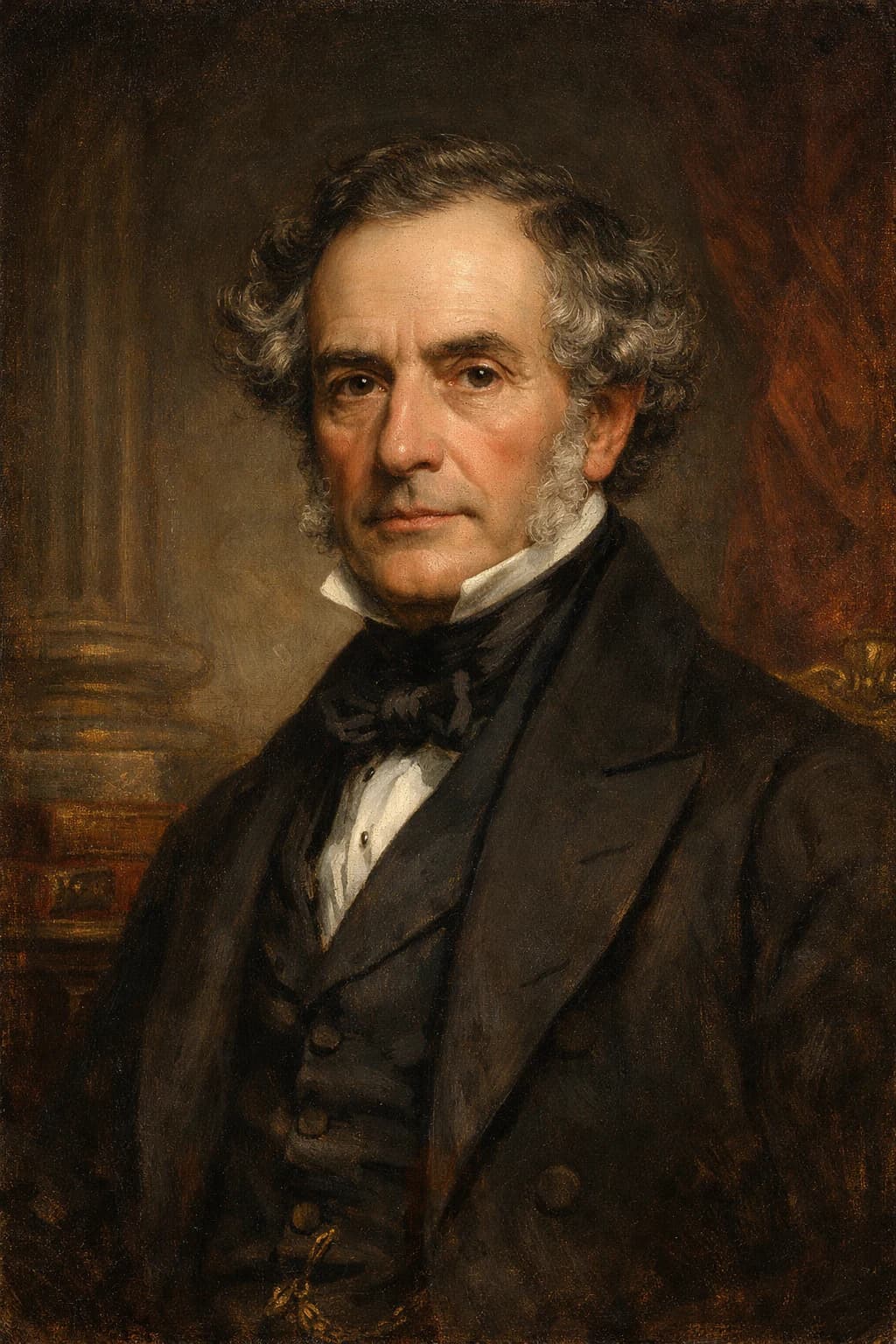
Edward Smith-Stanley was born on 29 March 1799, heir to a family whose power rested on land, title, local influence, and long parliamentary connection. The Stanleys were not outsiders trying to break into politics; they were part of the architecture of aristocratic Britain. That background shaped Derby's confidence and his limitations. He could move naturally among ministers, peers, landowners, and royal circles, but he also belonged to a political world being challenged by industrial cities, religious dissent, Irish grievances, and demands for parliamentary reform. His career would unfold across the long transition from Georgian aristocratic management to Victorian mass politics.
His rise was not accidental but rooted in a system where birth opened doors others could never reach.
1810s
Education and outlook
Derby's education followed the elite route of his age: Eton, then Christ Church, Oxford. It gave him command of classical reference, social ease, and the public speaking style that mattered in a Parliament still shaped by oratory as much as organisation. He was intelligent, quick, and formidable in debate, later earning a reputation for speeches that could be forceful, lucid, and aristocratically assured. Education also reinforced the assumptions of his class: that leadership was a duty, but also a birthright. Derby's later politics were not simply reactionary. He could accept reform when pressure became unavoidable. But he approached change from the perspective of a patrician trying to preserve order while steering a system that was no longer fully his class's to command.
Education gave him not just knowledge, but the confidence to command political debate.
1820
Entry into politics
Derby entered Parliament in 1820, sitting initially as a Whig rather than as the Conservative leader he would later become. This matters because early nineteenth-century party identity was still fluid, built from aristocratic connection, reform positions, religious questions, and personal allegiance. Derby made his name as a capable young politician with administrative promise. He was not a backbench ornament. His talent brought office, and office taught him that governing the United Kingdom meant confronting Ireland, empire, finance, church privilege, and parliamentary reform all at once. His early Whig career gave him reforming credentials, but it also placed him close to the breaking points that would eventually push him away from his old allies.
His early years taught him that influence depended as much on relationships as on ideas.
1820s–1830s
Rise to office
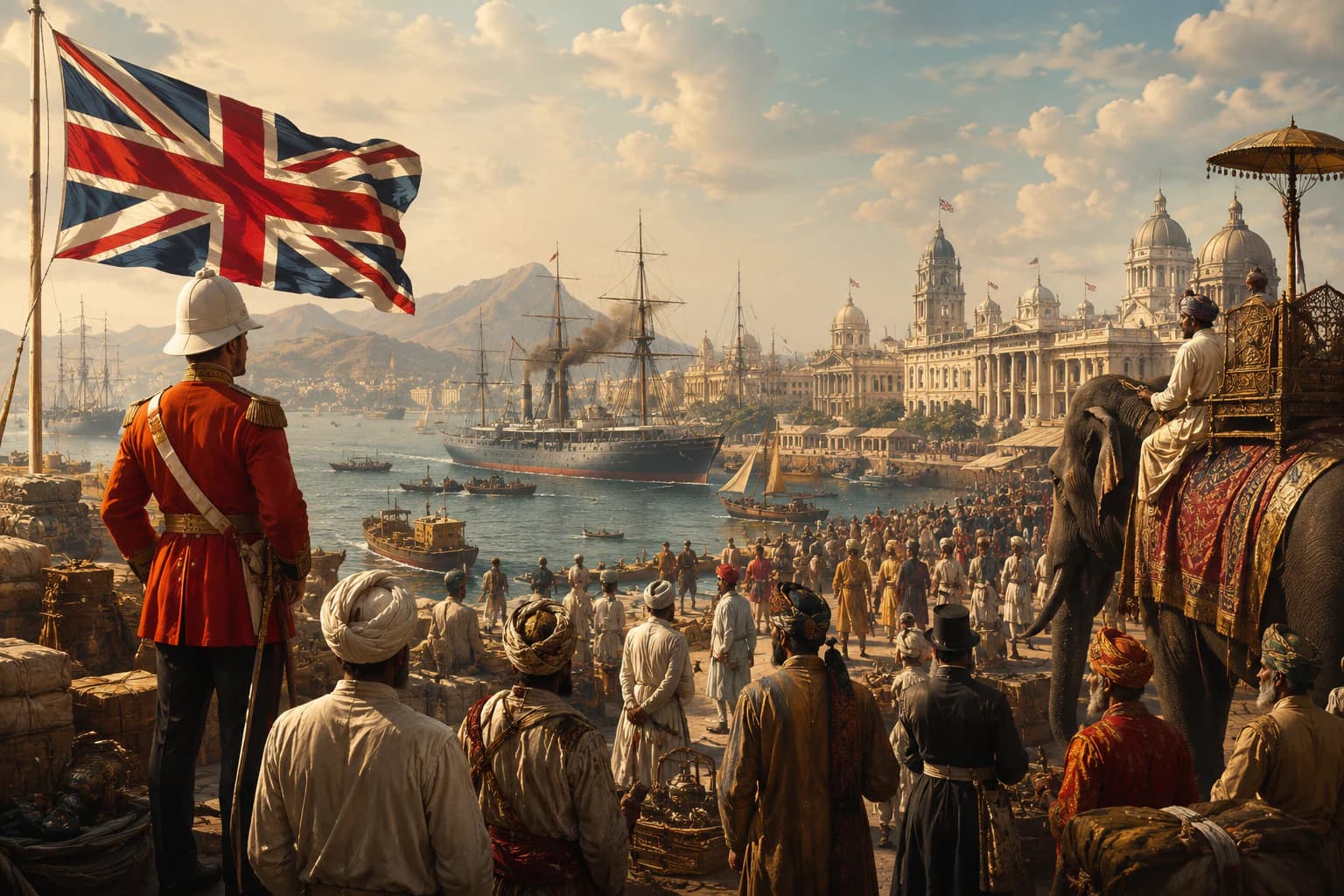
Derby's rise came through offices that exposed him to the hardest questions of British power. As Chief Secretary for Ireland, he worked in a country where land, religion, representation, and coercion could not be separated. As Colonial Secretary, he was involved in the politics of empire at a moment when abolition and compensation were reshaping Britain's relationship with slavery and colonial property. These roles gave him more than visibility. They forced him to navigate moral pressure, elite resistance, and practical administration. Derby's later Conservatism was therefore informed by firsthand experience of reform's consequences. He understood that change could be necessary, but also that each concession created new expectations.
Holding office revealed that governing required constant negotiation between ideals and practical limits.
1834
Political break
The decisive break came over Ireland and the question of whether surplus revenues from the Protestant Church of Ireland could be redirected for broader purposes. To Derby and others, this threatened property, establishment, and the constitutional balance they believed held the United Kingdom together. He resigned from the Whig government in 1834 and moved toward the Conservatives, joining the Derby Dilly group whose nickname suggested both motion and instability. The shift was more than personal ambition. It represented the sorting of British politics after the Reform Act of 1832, as older Whig and Tory identities hardened into more recognisable Liberal and Conservative traditions. Derby became one of the aristocratic figures who gave Conservatism intellectual weight and social authority during this transition.
His break showed that political identity can be forged through conflict as much as consensus.
1852
First premiership
Derby's first premiership came in difficult conditions. The Conservatives had been fractured by Sir Robert Peel's repeal of the Corn Laws in 1846, which divided protectionists from Peelites and left the party struggling to look credible as a governing force. Derby took office in 1852 with Benjamin Disraeli as Chancellor of the Exchequer but without a secure majority in the Commons. The government survived only months. Disraeli's budget was defeated, and Derby resigned. The episode showed both his stature and his problem: he was the natural aristocratic leader of the Conservatives, but he led a party still rebuilding after ideological trauma and still weaker in the Commons than it needed to be.
Reaching the top exposed how little control even a prime minister could truly guarantee.
1858–1868
Repeated returns
Derby's later premierships were exercises in survival, patience, and tactical opportunity. In 1858 he returned after Lord Palmerston's fall, but his ministry again lacked the numbers to dominate Parliament and was defeated the following year. His final government, formed in 1866, proved more consequential. Derby remained prime minister while Disraeli managed the Commons and drove through the Second Reform Act of 1867, extending the urban male electorate far beyond what many Conservatives had once considered safe. Derby famously described the measure as a leap in the dark. Whether he embraced it enthusiastically or accepted it as necessary strategy, the result changed British politics. His government helped move Conservatism toward adaptation rather than simple resistance.
His repeated returns showed that persistence could outweigh setbacks, but not eliminate structural weakness.
1868–1869
Final phase
By 1868 Derby's health was failing, and the political world around him had changed. The aristocratic leader who had entered Parliament before the railway age was now presiding over a party preparing to compete in a broadened electorate. He resigned in February 1868, and Disraeli succeeded him as prime minister. The transition mattered symbolically. Derby had given the Conservatives continuity, respectability, and a patrician centre of gravity after Peel. Disraeli would give them a sharper popular and imperial imagination. Derby did not disappear from significance by stepping down; rather, his resignation marked the point at which the party he had held together began to belong to a different political style.
Stepping aside revealed how quickly leadership passes, even for those once central to power.
Post-1869
Enduring impact
Derby died in October 1869 after a career that looks paradoxical at first glance: three times prime minister, yet never for long; deeply aristocratic, yet connected to one of the great democratic reforms of the century; cautious by instinct, yet central to political change. His importance lies less in a single programme than in party survival. He helped the Conservatives recover from the Corn Law split, gave them leadership in the Lords, provided a bridge between Peel's fractured inheritance and Disraeli's future, and accepted the realities of a changing electorate. His career also shows how Victorian government often worked: not through permanent majorities and clean mandates, but through fragile combinations, tactical concessions, and leaders who could hold a party together until history offered another opening.
His story endures as both a foundation for political identity and a warning about the limits of power.