Complete chronology
Full overview and deeper context for every journey step.
1966–1984
Privileged beginnings
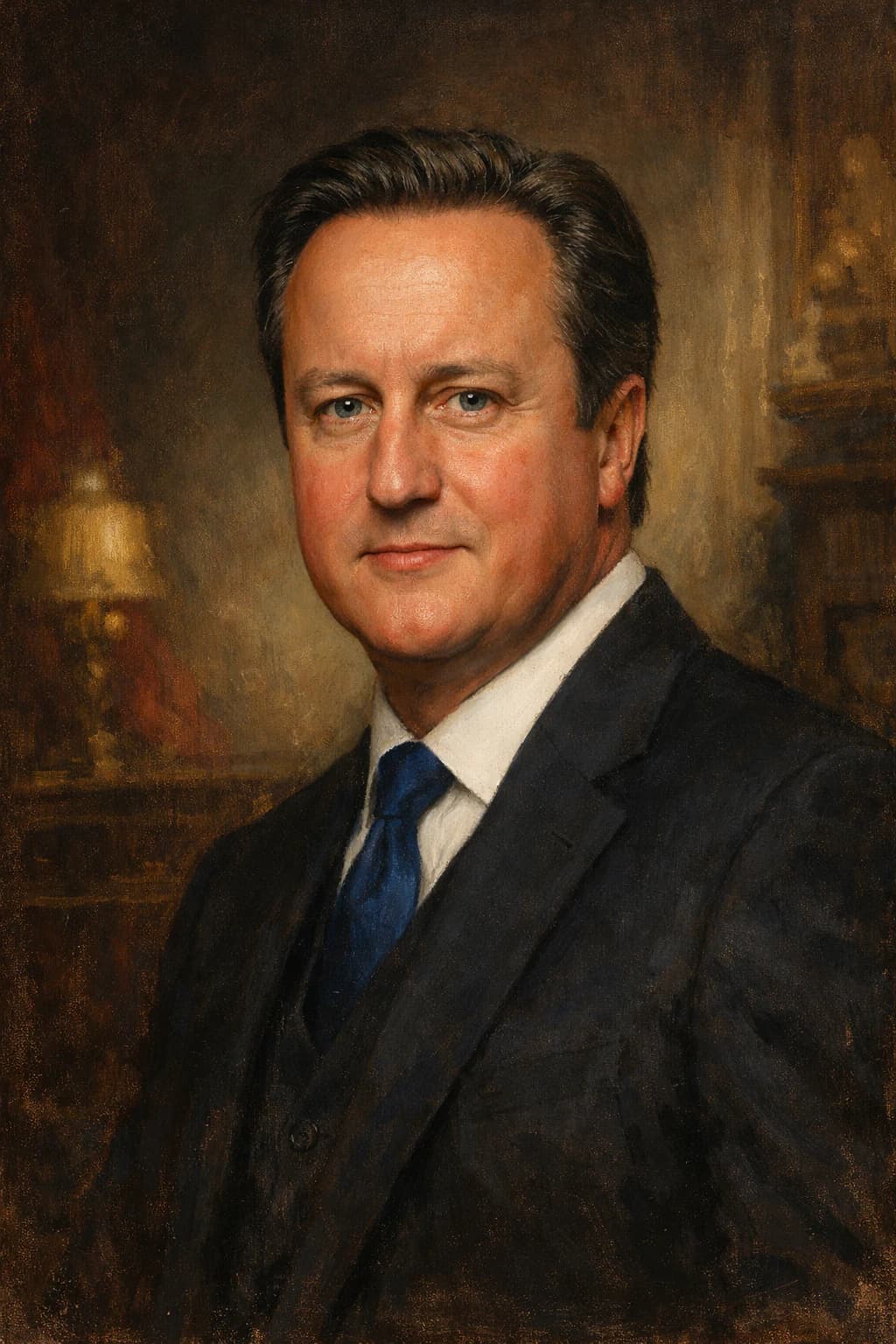
David William Donald Cameron was born in London in 1966 into a family with money, confidence, and strong connections to Britain’s professional and political establishment. Eton gave him more than an elite education; it gave him ease in rooms where power was assumed rather than explained. That background later became both an asset and a burden. It helped him project calm authority, speak the language of the governing class, and move through Conservative circles quickly. It also fed criticism that he belonged to a narrow social world insulated from the pressures facing many voters. Cameron’s early life matters because his later project was built on a contradiction: he wanted to make the Conservatives look modern, open, and compassionate while personally embodying an older pattern of British privilege.
His early environment didn’t just shape his confidence—it quietly removed many of the barriers others face before politics even begins.
1984–1988
Oxford and early direction
At Oxford, Cameron studied philosophy, politics, and economics, the classic training ground for modern British political ambition. He emerged with a first-class degree and a reputation for fluent argument rather than ideological originality. The Oxford years sharpened his instinct for presentation: how to sound reasonable, how to occupy the centre of a debate, how to make political choices appear pragmatic rather than doctrinaire. They also connected him to a generation of Conservatives who believed the party needed to recover from the moral and electoral exhaustion of the Thatcher and Major years. Cameron’s politics would later draw on that formation. He was less a system-builder than a political communicator, skilled at reading mood and turning it into brand.
University refined his voice more than his beliefs, giving him adaptability that later became a political advantage.
1988–2001
Political apprenticeship
Cameron’s apprenticeship took place inside the Conservative machine before he became a public figure. He worked in the Conservative Research Department, advised Norman Lamont and Michael Howard, and then spent years in corporate communications at Carlton. These roles taught him how governments collapse under pressure, how policy is translated into message, and how political language can either soften or sharpen a party’s image. He saw the Conservatives torn apart by Europe after Black Wednesday and the Major government’s decline. By the time he entered Parliament, he understood that the party’s problem was not only policy but trust. That lesson shaped his later modernisation strategy: change the tone, broaden the subjects Conservatives talked about, and stop sounding hostile to social change.
Learning politics from the background gave him control over image long before he needed to lead from the front.
2001
Entering Parliament
Cameron entered Parliament as MP for Witney in 2001, just as the Conservatives suffered another heavy defeat to Tony Blair’s Labour Party. The party was trapped between nostalgia for Thatcherism, hostility to Europe, and uncertainty over how to appeal to younger, urban, and socially liberal voters. Cameron’s rise was fast because he looked like an answer to that problem. He was polished, disciplined, and comfortable with media politics. He served on the front bench and became closely associated with a softer Conservative language around public services, family life, the environment, and social responsibility. The substance was debated, but the signal was clear. Cameron wanted voters to hear a different Conservative Party before they examined the details.
His early success came from tone rather than ideology, signalling a shift in how the party might present itself.
2005
Becoming party leader
Cameron won the Conservative leadership in 2005 after presenting himself as the candidate of generational change. He hugged huskies, spoke about climate change, defended the NHS, and urged Conservatives to stop sounding as if they disliked modern Britain. His phrase about sharing the proceeds of growth captured the mood: fiscal caution without the harshness voters associated with the old party. The modernisation project unsettled some on the right, especially over Europe and social liberalism, but it made the Conservatives electorally competitive again. Cameron’s leadership was not simply cosmetic. It repositioned the party toward the centre ground Blair had dominated, while leaving unresolved tensions with Eurosceptics, free-market Conservatives, and activists who wanted a sharper ideological break.
He understood that winning power required changing perceptions, even if it meant unsettling his own base.
2010
Becoming Prime Minister
The 2010 election produced a hung parliament, and Cameron became prime minister by forming Britain’s first peacetime coalition in decades with Nick Clegg’s Liberal Democrats. The arrangement gave the Conservatives office but not full freedom. It also gave Cameron a governing narrative: responsible repair after the financial crisis. George Osborne’s Treasury drove austerity, cutting public spending while arguing that deficit reduction was essential to credibility and recovery. Coalition also produced reforms that did not fit a simple right-wing story, including the 2013 Marriage Same Sex Couples Act, pupil premium funding, and a more liberal tone on some constitutional issues. Cameron’s premiership began as a balancing act between fiscal discipline, coalition compromise, and the need to prove Conservatives could govern without frightening the centre.
Governing in coalition forced him to trade certainty for stability, reshaping how he exercised power.
2010–2015
Austerity and control
Austerity became the defining domestic argument of Cameron’s government. Supporters saw it as necessary after the 2008 financial crisis; critics argued that the cuts weakened councils, welfare provision, public services, and poorer communities while slowing recovery. Cameron’s political style helped him defend difficult choices without appearing personally angry or ideological. Yet the social effects accumulated. The coalition also faced major constitutional and national questions: the 2011 Alternative Vote referendum, Scottish independence in 2014, military intervention in Libya, and growing pressure from UKIP and Conservative Eurosceptics. Cameron won the Scottish referendum by defending the Union, but the campaign showed how referendums could unleash forces that party management could not easily contain. That lesson would soon return with greater force.
His economic choices secured authority but deepened political divides that would outlast his leadership.
2016
The Brexit gamble
Cameron promised an in-out referendum on European Union membership to contain Conservative division, answer UKIP’s rise, and win back authority over an argument that had damaged every Conservative leader since Margaret Thatcher. The promise helped him hold his party together and, after his unexpected majority in 2015, became unavoidable. He renegotiated limited terms with the EU and campaigned for Remain, arguing that membership gave Britain prosperity and influence. The Leave campaign spoke more powerfully to sovereignty, immigration, distrust of elites, and anger at a political economy many voters felt had failed them. On 23 June 2016, Britain voted to leave. Cameron announced his resignation the next morning. His greatest political gamble had not settled the European question; it had detonated it.
The referendum transformed a calculated risk into a defining political misjudgment that ended his premiership.
2016–present
After power
After resigning, Cameron left Parliament and became a controversial former prime minister, especially after scrutiny of his lobbying for Greensill Capital. In November 2023, Rishi Sunak brought him back as Foreign Secretary and made him a life peer, an extraordinary return that lasted until Labour’s victory in July 2024. That coda did not erase the central fact of his legacy. Cameron modernised the Conservative Party, made it electable, and governed with a steadiness many voters once found reassuring. He also presided over austerity and called the Brexit referendum that reshaped Britain’s constitution, economy, diplomacy, party system, and national identity. His career is a study in controlled presentation undone by uncontrolled consequence. Few prime ministers have matched his political ascent; fewer have seen one decision so completely define how history remembers them.
His legacy remains unresolved, defined as much by what he achieved as by the consequences he could not control.