Complete chronology
Full overview and deeper context for every journey step.
1956–1977
Early life
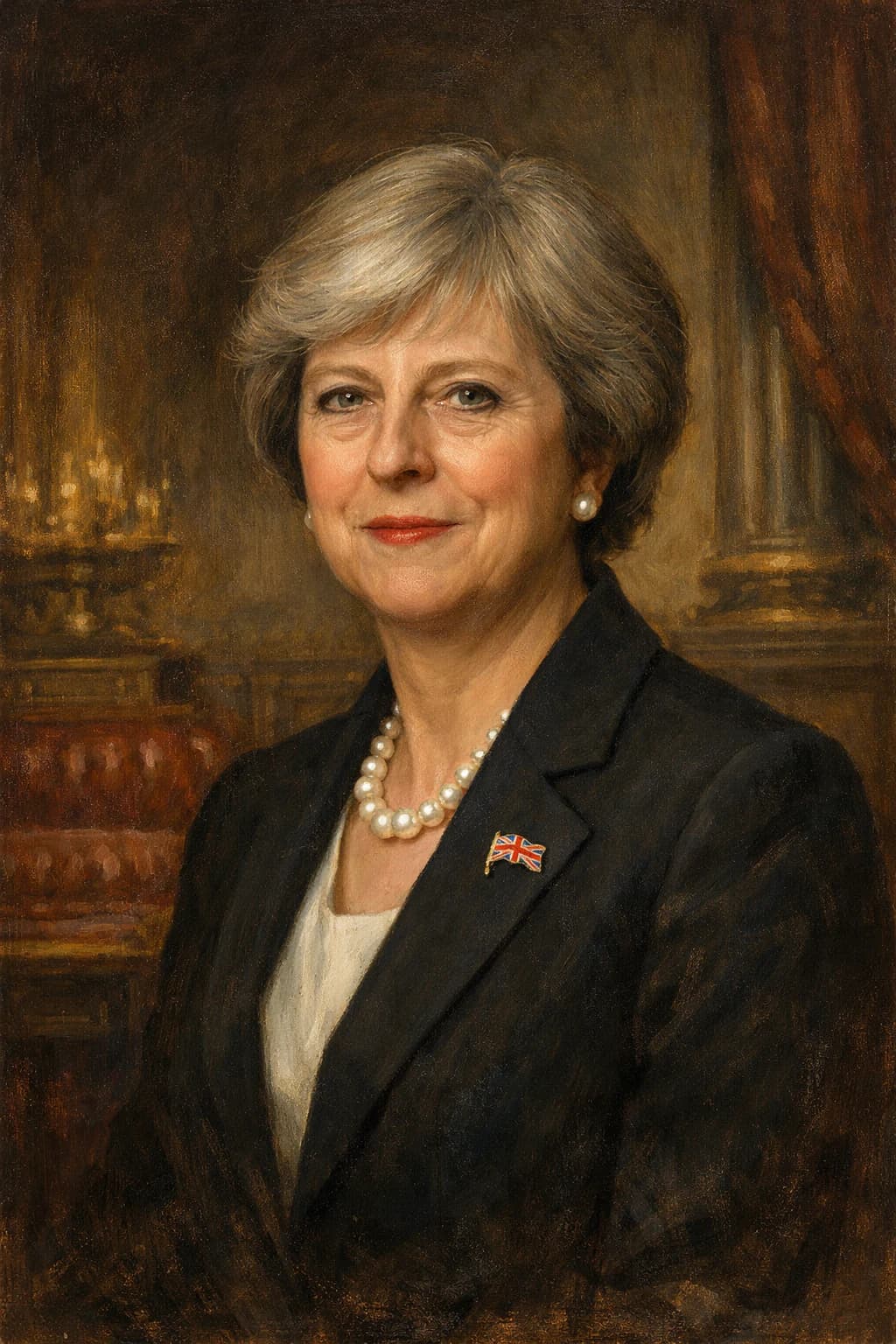
May's early life did not resemble the theatrical route often associated with modern political leadership. Born Theresa Brasier, she grew up in Oxfordshire in a household shaped by the Church of England and by the rhythms of parish life. Her father, Hubert Brasier, was a vicar, and that environment helped form her emphasis on duty, restraint and moral seriousness. She studied geography at St Hugh's College, Oxford, where she met Philip May, whom she married in 1980. Both of her parents died when she was still young, losses that reinforced an image of self-command. Her later politics would often sound managerial rather than visionary, but that steadiness was part of her appeal.
Her calm, controlled style was not learned in office but rooted in an early life shaped by restraint and personal loss.
1977–1986
Business beginnings
May's professional background was in finance and systems rather than public performance. She worked at the Bank of England and later in payments administration, roles that rewarded discipline, process and institutional trust. At the same time, she built her political career through local government, serving as a councillor in the London Borough of Merton. This gave her a practical route into Conservative politics after failed parliamentary attempts in the early 1990s. Her rise was gradual, not meteoric. She learned the work of committees, constituencies, party organisation and policy detail, developing the controlled style that later made her seem reassuring to some and inflexible to others.
Her early career trained her to manage systems, not inspire crowds—a strength and a limitation in equal measure.
1997
Entering Parliament
May arrived in Westminster at one of the Conservative Party's lowest moments. Tony Blair's Labour government dominated the Commons, while Conservatives argued over Europe, social change and how to regain public trust. May's early parliamentary career was built on seriousness rather than spectacle. She took on shadow roles, developed expertise and became known as a disciplined party figure. In 2002, as Conservative Party chair, she warned activists that many voters saw them as the 'nasty party' - a phrase that became famous because it named an uncomfortable truth. May's willingness to say it showed both political nerve and a modernising instinct, though her later career would not always escape the party image she diagnosed.
Entering politics at a low point forced her to develop resilience rather than rely on momentum.
2002–2010
Party rise
May survived repeated Conservative leadership changes because she was useful across factions. She was not a Cameron moderniser in the most socially liberal mould, nor a hard ideological insurgent. Her appeal lay in competence, loyalty and endurance. She held shadow briefs including work and pensions, transport, culture and women and equality, accumulating policy range while avoiding the personal scandals and factional feuds that damaged others. By 2010, when David Cameron entered government in coalition with the Liberal Democrats, May was a serious candidate for one of the hardest offices in Whitehall. Her career had been built slowly enough that few could dismiss her as untested.
She advanced by solving problems others avoided, not by seeking attention.
2010–2016
Home Secretary
The Home Office has destroyed many political careers, but May survived there for six years. She dealt with police reform, counterterrorism, extradition cases, extremism policy and the government's repeated failure to meet net migration targets. Her tenure included controversial measures such as the 'hostile environment' approach to illegal immigration, later heavily criticised after the Windrush scandal exposed the harm done to lawful residents. May projected firmness and control, and her long service gave her credibility after the 2016 referendum. Yet the Home Office also revealed the central tension of her style: a preference for hard lines and administrative command in policy areas where human complexity often resisted neat control.
Her long survival in a difficult role showed that endurance can be as powerful as boldness.
2016
Becoming Prime Minister
May had supported Remain, but quietly enough to be acceptable to many Conservatives after Leave won the referendum. When Boris Johnson and Michael Gove destroyed each other's leadership prospects, May emerged as the continuity candidate: serious, experienced and apparently stable. She inherited a task with no settled meaning. Brexit could mean single market membership, a clean institutional break, immigration control, regulatory divergence, or some uneasy mixture. May chose to interpret the vote as a mandate to leave the single market and end free movement, while preserving enough economic connection to avoid severe disruption. That balancing act would define and trap her premiership.
She took power at a moment when authority was available, but consensus was not.
2016–2019
Brexit struggle
May's position weakened dramatically after the 2017 general election, which she called to strengthen her hand but which cost the Conservatives their majority. Reliance on the Democratic Unionist Party made the Irish border problem even harder. The withdrawal agreement she negotiated with the EU included a financial settlement, citizens' rights provisions and the Northern Ireland backstop, designed to avoid a hard border on the island of Ireland. To Eurosceptics, it risked trapping the UK under EU rules. To many Remainers, it was worse than membership. To the DUP, the backstop threatened Northern Ireland's place in the Union. May kept returning to Parliament with variations of the same deal because the arithmetic offered no easy alternative.
Determination without alignment can turn persistence into a prolonged stalemate.
2019
Resignation
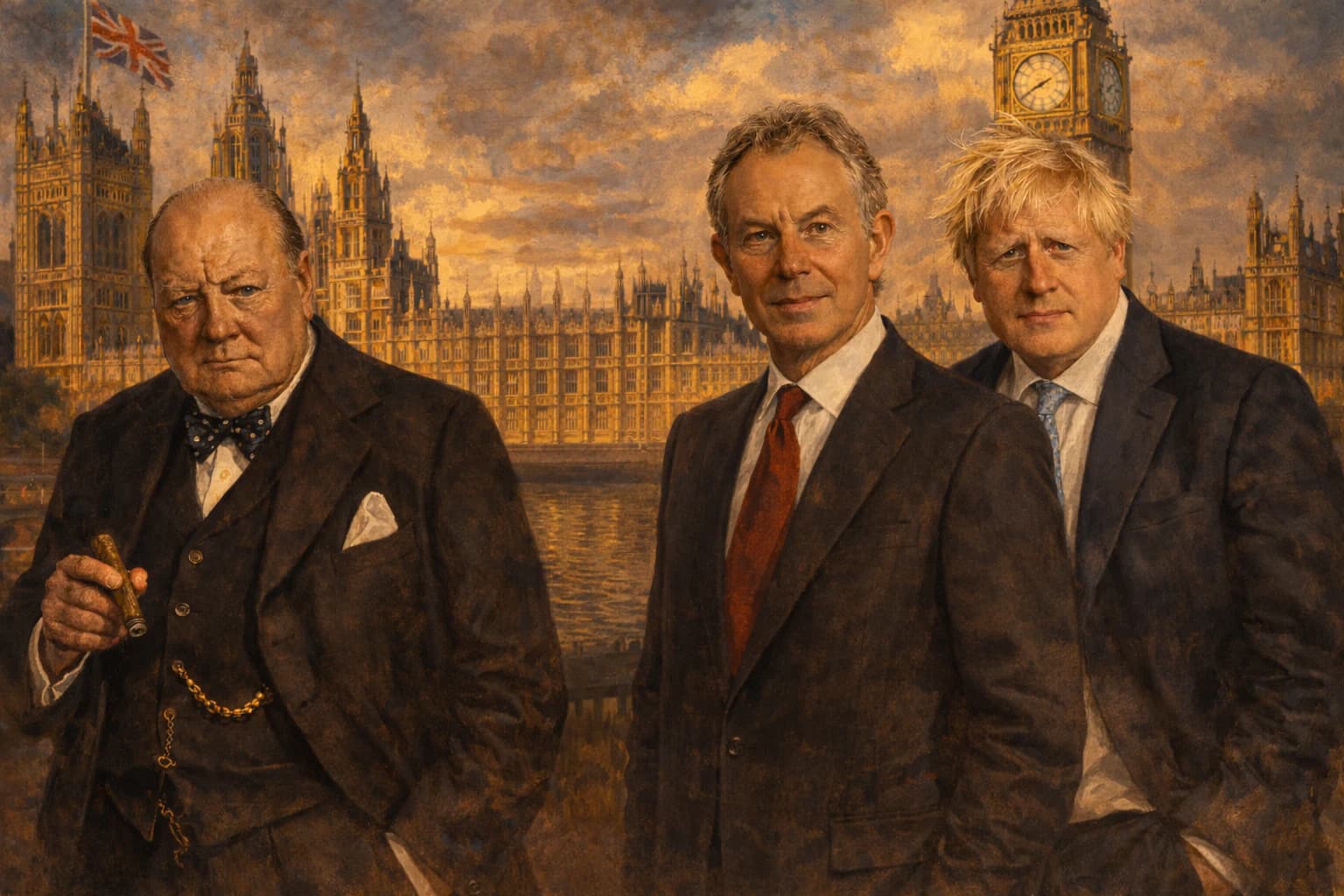
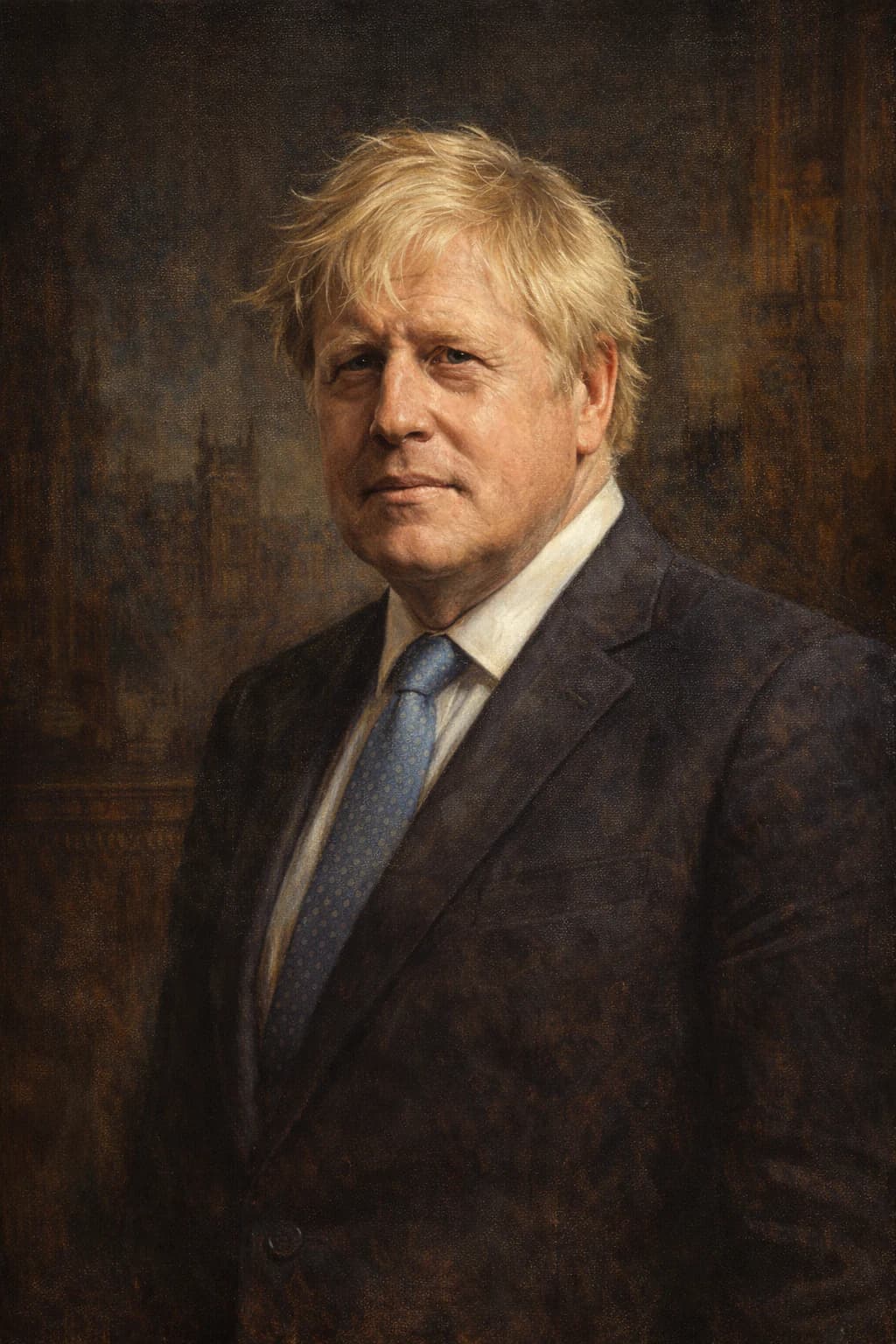
May's resignation followed months of parliamentary humiliation. Her withdrawal agreement suffered historically large defeats, and each concession alienated one group without winning enough support from another. She tried talks with Labour, offered a possible route to a confirmatory vote, and promised to leave if her deal passed, but trust had evaporated. Her statement outside Downing Street in May 2019 was emotional because the office had demanded everything and delivered no resolution. She left the central Brexit decision to her successor, Boris Johnson, whose strategy was more confrontational and electorally successful. May's fall showed that endurance, without political conversion, can become exhaustion.
Her exit showed that leadership can end not with failure of effort, but failure of agreement.
2019–present
Enduring legacy
Theresa May remains difficult to judge because the problem she inherited was almost designed to defeat conventional administration. She was diligent, resilient and serious, but she often treated a conflict over identity, sovereignty and party realignment as if it could be solved through controlled negotiation and repeated discipline. Her premiership produced important domestic promises on workers, mental health and social justice, but Brexit consumed the oxygen. The Windrush scandal also damaged her reputation for competence and fairness. After leaving office she remained in Parliament until 2024 and continued to intervene on issues such as modern slavery and public standards. Her historical significance is secure: she was the prime minister who discovered that leaving the EU was easier to mandate than to define.
Her legacy is tied less to what she changed than to the storm she tried to steer through.