Complete chronology
Full overview and deeper context for every journey step.
10 BCE-41 CE
An unlikely survivor
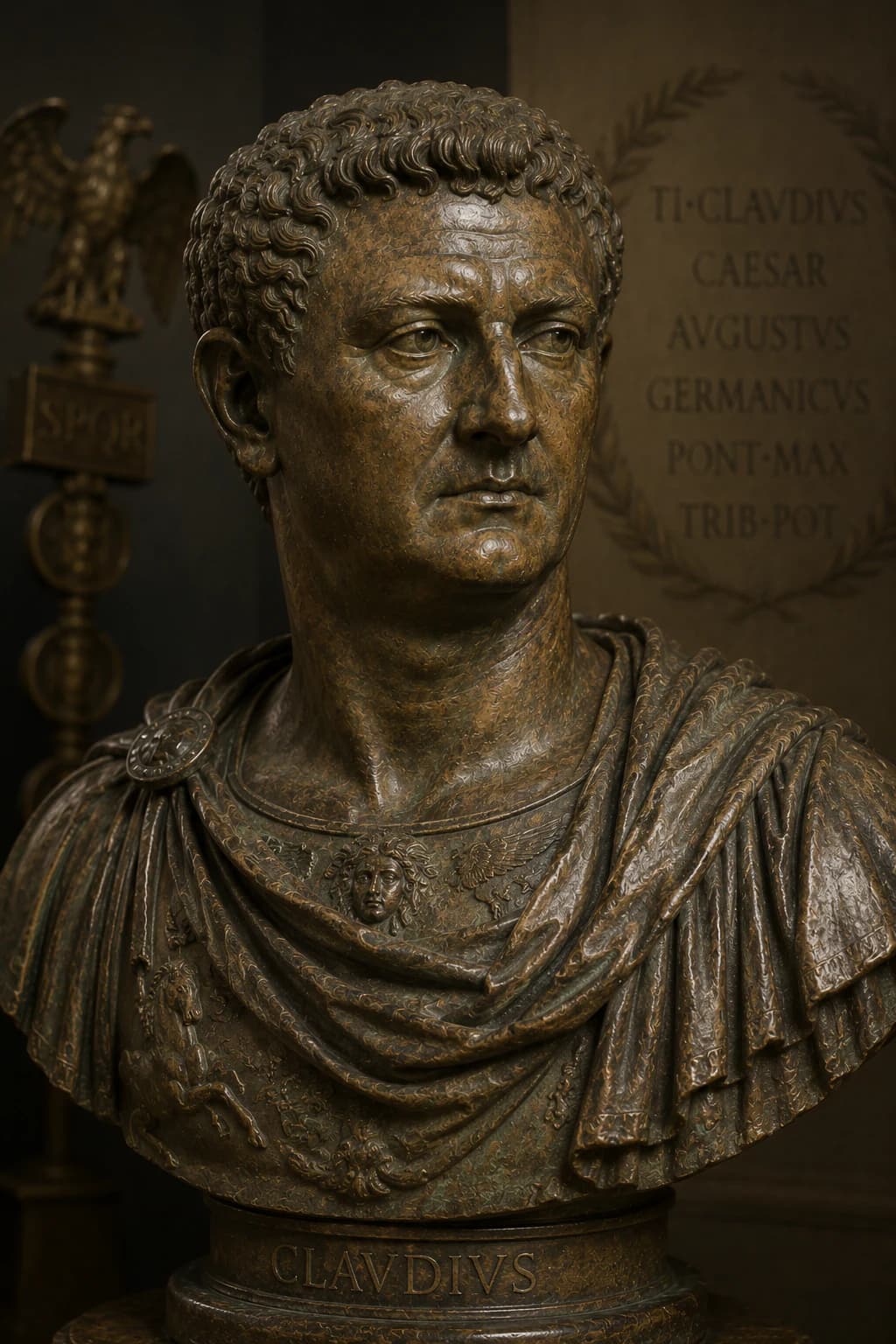
Claudius was born at Lugdunum in 10 BCE, the son of Drusus and Antonia Minor, and therefore deeply connected to Rome's ruling house. His brother Germanicus became a beloved military hero; Claudius became the awkward relative who did not fit the public image of imperial strength. Ancient writers describe physical disabilities, speech difficulty, and social clumsiness, though their tone often reveals aristocratic cruelty as much as medical fact. Augustus hesitated to expose him to public life, and later members of the family treated him with contempt. Yet this marginality had consequences no one expected. The Julio-Claudian house was dangerous precisely because it was close to power. Promising heirs died young, rivals were eliminated, and court politics could turn kinship into a death sentence. Claudius's apparent weakness made him seem politically unusable, and therefore less threatening. During the reigns of Augustus, Tiberius, and Caligula, he watched from the edge of authority, studying history and antiquarian scholarship while the dynasty consumed many of its more glamorous figures.
Being overlooked can sometimes become an unexpected form of protection.
41 CE
Raised by the Guard
Caligula's assassination in January 41 CE produced one of the most revealing accessions in Roman history. The murder removed an emperor but did not restore the Republic. Some senators considered using the crisis to reclaim authority, but the Praetorian Guard moved faster. Ancient accounts say Claudius was discovered in the palace, frightened and concealed, then hailed by the soldiers. The scene may have been shaped for drama, yet its political meaning is clear. Claudius had dynastic legitimacy as a member of the imperial family, but he became emperor because armed men in Rome accepted him. He rewarded the Guard, secured recognition, and began turning survival into authority. His first challenge was perception. Senators had spent years laughing at him; now they had to obey him. Claudius responded by emphasizing legality, work, and continuity, but the memory of his unusual rise never disappeared. His reign began by proving that the imperial office was no longer controlled by republican debate. It was made where dynasty, palace violence, and military support met.
Imperial legitimacy depended on armed support as well as family name.
43 CE
Conquest of Britain
In 43 CE, Claudius launched the conquest of Britain, a decision with both strategic and personal logic. Britain offered resources, prestige, and the chance to convert an island long associated with Roman ambition into a formal province. It also offered Claudius something he badly needed: military legitimacy. He had not risen as a commander like Julius Caesar, Germanicus, or later Trajan. He had been raised to power by palace crisis. The invasion was carried out by professional commanders, including Aulus Plautius, but Claudius crossed to Britain briefly to receive submission, associate himself with victory, and return to Rome for a triumph. This was not empty theatre. Roman imperial authority depended on performance, ceremony, and visible success. Britain became proof that Claudius could enlarge the empire, reward soldiers, and stand in the tradition of conquering rulers. The conquest was uneven and violent, and resistance continued for generations, but politically it transformed his reign. The mocked scholar-emperor had become the conqueror of a new province.
Military success could turn a fragile ruler into a credible emperor.
40s CE
An administrative emperor
Claudius's importance is not limited to Britain. He took the daily machinery of government seriously. He sat as judge, issued legal decisions, supported infrastructure, expanded aqueduct works, and developed harbor facilities at Ostia and Portus to improve Rome's grain supply. He also relied heavily on imperial freedmen such as Narcissus, Pallas, and Callistus. Senatorial writers resented this bitterly, partly because freedmen close to the emperor could exercise influence greater than aristocrats with ancient names. Yet the resentment should not obscure the structural change. The Roman Empire required correspondence, finance, petitions, appointments, records, and legal administration on a scale the old Republic had never faced. Claudius's household officials helped make the palace into a governing institution. He also extended opportunity to provincial elites, famously arguing for admitting leading men from Gaul into the Senate. That policy reflected a broader imperial reality: Rome's strength increasingly depended on incorporating conquered peoples into its ruling culture. Claudius could be pedantic, vulnerable to court factions, and politically clumsy, but he saw that empire required administration as much as conquest.
A vast empire required administrative skill, not just noble status.
50-54 CE
Nero adopted
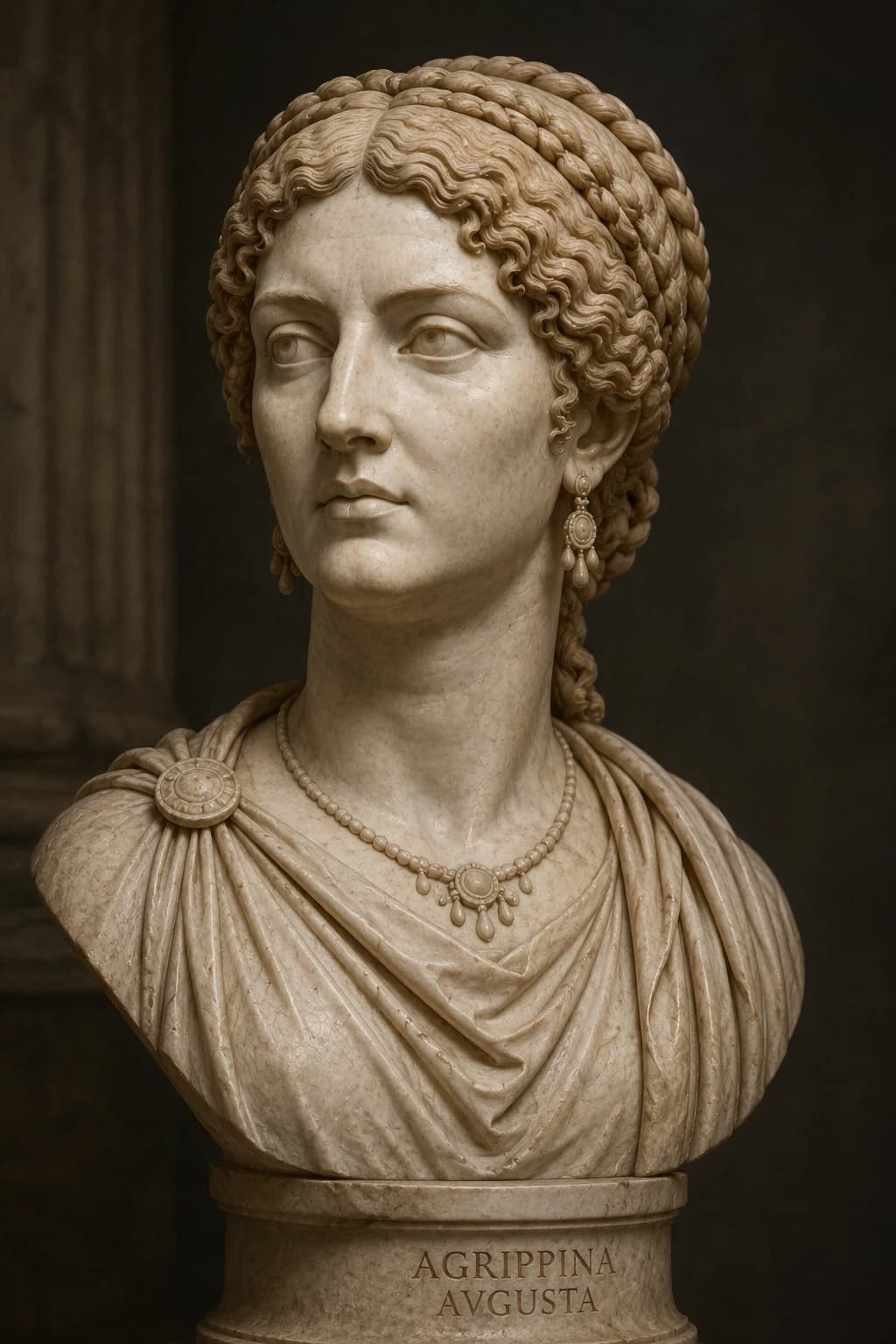
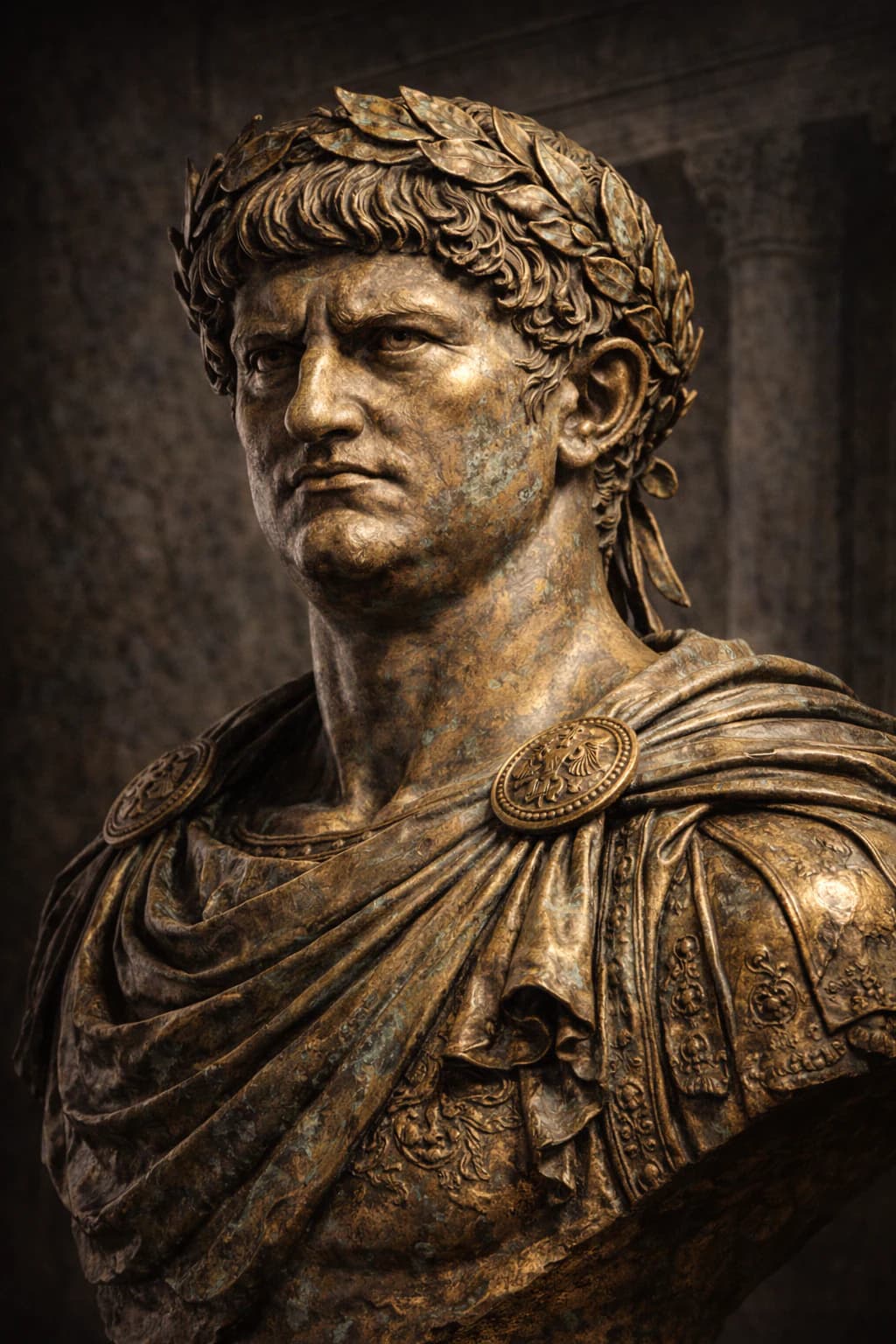
Claudius's domestic life became inseparable from imperial politics. His marriage to Messalina ended in scandal and execution in 48 CE after accusations that she had entered a dangerous political marriage with Gaius Silius. In 49 CE Claudius married Agrippina the Younger, his niece, requiring legal adjustment and provoking unease. Agrippina was not merely a wife inside the palace. She was a dynastic strategist with a son to advance. In 50 CE Claudius adopted that son, Lucius Domitius Ahenobarbus, who became Nero Claudius Caesar Drusus Germanicus. Nero was older than Britannicus, Claudius's biological son, and could be publicly prepared through honors, marriage to Octavia, education by Seneca, and support from key military figures. Claudius died in 54 CE. Ancient sources accuse Agrippina of poisoning him, but those accounts are hostile and cannot be treated as courtroom proof. What can be said securely is that the succession moved quickly and Nero benefited from arrangements already in place. Claudius's legacy is therefore double. He strengthened administration, conquered Britain, and widened the empire's governing class, but his own household left the succession exposed to manipulation. The underestimated emperor changed Rome, yet he could not free it from the lethal logic of dynasty.
Claudius's reign ended by revealing how dangerous palace succession could be.