Complete chronology
Full overview and deeper context for every journey step.
15 CE
Born into danger
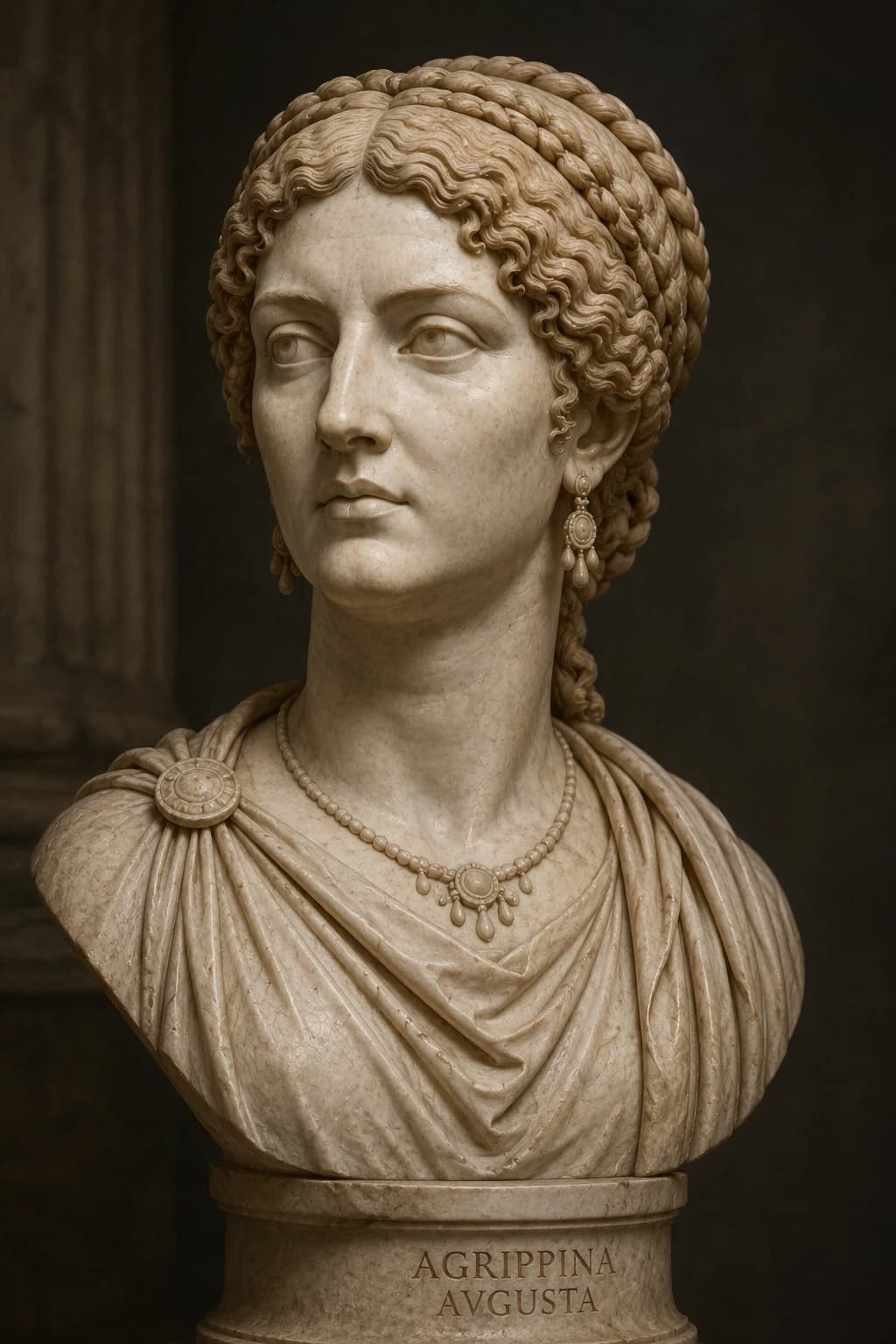
Agrippina the Younger was born at Oppidum Ubiorum, later Cologne, in 15 CE. Her birth alone made her politically charged. She was the daughter of Germanicus, the admired commander whose popularity haunted the Julio-Claudian dynasty, and Agrippina the Elder, a granddaughter of Augustus. She was the sister of Caligula, niece and later wife of Claudius, and mother of Nero. Few Roman women stood so close to so many emperors. That closeness was not safety. Germanicus died when she was a child, amid suspicions that poisoned Roman political memory. Her mother and brothers suffered under Tiberius. Agrippina grew up inside a dynasty that used marriage, adoption, public image, and accusation as instruments of rule. Ancient writers often frame her ambition as monstrous because elite Roman culture distrusted women who acted openly in politics. A more useful reading begins with the world she inhabited. In the Julio-Claudian house, passivity did not guarantee survival. Agrippina learned that lineage had to be defended, displayed, and turned into leverage before someone else used it against you.
In dynastic politics, family can be the source of both opportunity and danger.
39-49 CE
Exile and return
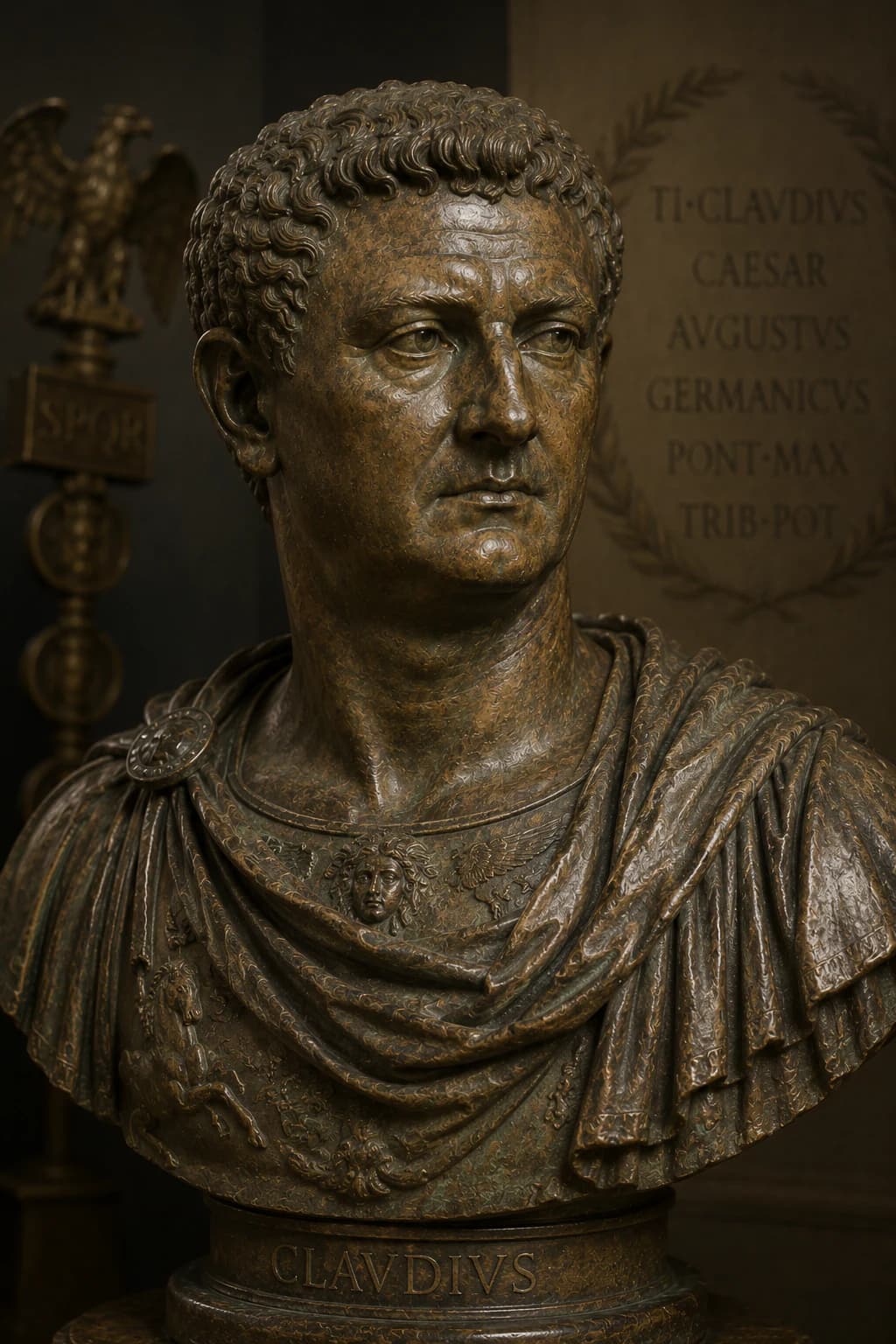
Agrippina's first great lesson in imperial volatility came under Caligula. At first, he elevated his sisters in public honors, using them as part of a dynastic image that advertised fertility, continuity, and divine favor. Then the relationship collapsed. In 39 CE Agrippina and her sister Livilla were exiled after accusations connected to conspiracy. Whether every charge was true matters less than the political fact: even an emperor's sister could be stripped of status when suspicion turned. Caligula's assassination in 41 CE allowed Claudius to recall her. Agrippina returned to Rome with a son, Lucius Domitius Ahenobarbus, and with a sharpened understanding of court danger. Her marriage to Claudius in 49 CE was extraordinary. Roman law had to be adjusted because she was his niece. Moral discomfort did not prevent political usefulness. Claudius needed dynastic consolidation after the disgrace and execution of Messalina; Agrippina needed direct access to imperial succession. Once married, she did not behave as a decorative consort. She worked through names, appearances, alliances, and the logic of legitimacy.
Recovery from political defeat can become the foundation for later power.
50 CE
Nero advanced
Agrippina's political genius lay in understanding that Roman succession was not decided by blood alone. It had to be staged until it looked natural. In 50 CE Claudius adopted her son, transforming Lucius Domitius Ahenobarbus into Nero Claudius Caesar Drusus Germanicus. Every element of the name mattered. It tied the boy to Claudius, to Caesar, and to the memory of Germanicus, whose popularity still carried emotional force. Agrippina then helped build the visible architecture of succession. Nero received honors, appeared in public, was educated by Seneca, and was supported by the Praetorian prefect Burrus. His marriage to Octavia bound him to Claudius's household. Britannicus remained alive and remained Claudius's biological son, but youth worked against him. Nero could be presented as older, trained, and ready. Agrippina did not seize the throne herself; Roman political culture made that impossible. Instead she moved the throne's shadow over her child. That strategy makes her historically important. She shows how women excluded from formal office could still shape imperial outcomes through kinship, ceremony, patronage, and relentless positioning.
Agrippina understood that legitimacy had to be made visible before it could be accepted.
54 CE
Near the machinery of rule
Claudius died in 54 CE. Ancient authors accuse Agrippina of poisoning him with mushrooms, but their accounts are hostile and written within traditions that enjoyed turning powerful women into palace villains. Certainty is impossible. What can be stated with confidence is that the succession moved quickly. Nero was taken to the Praetorian Guard, acclaimed emperor, and accepted by the Senate. Agrippina had achieved what few Roman women ever could: she had directly and successfully shaped imperial succession. Her status in the early reign was exceptional. Some coinage paired her with Nero in ways that advertised maternal legitimacy; access protocols and court politics suggest she expected influence. But victory changed the relationship. Agrippina's authority depended on being the maker of the emperor. Nero's authority depended on being emperor without needing a maker. Seneca and Burrus also had reason to manage or limit her influence. The early Neronian regime therefore rested on a tense triangle: a young ruler, experienced male advisers, and a mother whose dynastic claim was too powerful to ignore.
The power to make a ruler does not guarantee the power to control one.
59 CE
Killed by Nero
By 59 CE, the struggle between Nero and Agrippina had become deadly. The causes were personal, political, and symbolic. Nero wanted independence from the woman whose authority reminded everyone that he had been constructed as emperor. Agrippina could threaten him not by commanding armies directly, but by invoking dynastic memory, court relationships, and perhaps the alternative claim of Britannicus while he lived. Britannicus died in 55 CE, removing one possible rival, but Agrippina herself remained a problem. Ancient accounts tell a dramatic story of Nero arranging a collapsible boat to drown her near Baiae; when she survived, assassins were sent to finish the work. The mechanical details may be embellished, but the matricide is historically secure enough. Its meaning was enormous. Roman moral language valued pietas, the duty owed to family, gods, and state. Nero's murder of his mother shattered that ideal at the center of imperial power. Agrippina's legacy has often been filtered through male authors who feared and condemned female political agency. She could be ruthless, calculating, and dangerous; she was also operating in a system that rewarded ruthlessness in men and punished visibility in women. Her importance lies in that tension. She did not rule Rome, but she changed who did. She extended the Julio-Claudian dynasty and helped set Nero on the path that would end it.
Her triumph and death reveal the brutality at the heart of Julio-Claudian power.