1928
Rosario beginnings
Ernesto Guevara de la Serna was born in Rosario, Argentina, on June 14, 1928, into a middle-class family with left-leaning sympathies and a strong culture of reading and argument.
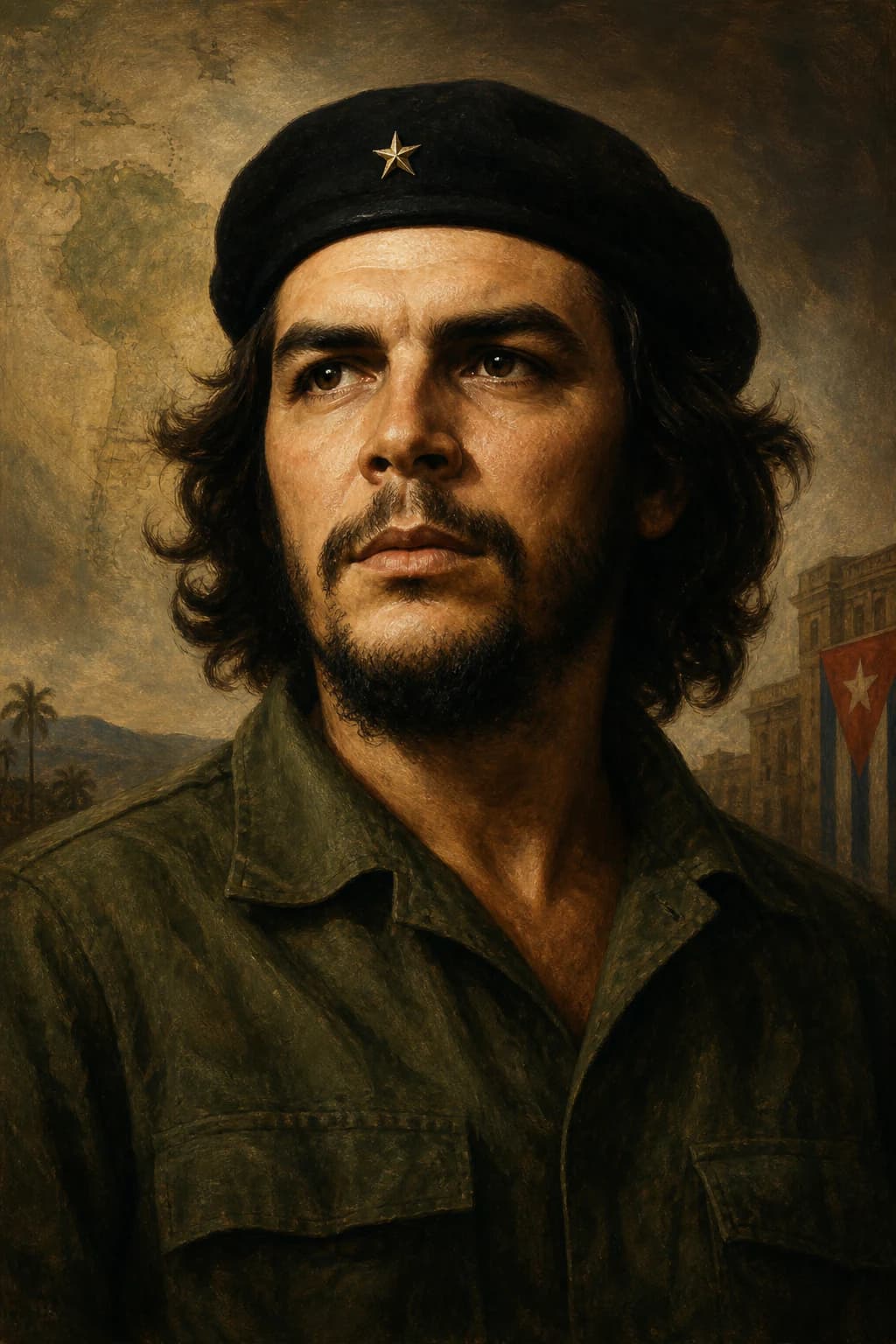
Che Guevara, born Ernesto Guevara de la Serna, was an Argentine-Cuban revolutionary, Marxist theorist and guerrilla commander. He helped Fidel Castro overthrow Fulgencio Batista in Cuba, served in the revolutionary government, promoted armed anti-imperialist struggle, and died in Bolivia in 1967 while trying to ignite another revolution.
Argentine-Cuban revolutionary and guerrilla theorist (1928-1967)
Additional identity and tagging details that are not already covered in the introduction.
Selected specifics from this profile's life story.
Ernesto Guevara de la Serna was born in Rosario, Argentina, on June 14, 1928, into a middle-class family with left-leaning sympathies and a strong culture of reading and argument.
In Guatemala, Guevara watched the elected government of Jacobo Arbenz fall after U.S.-backed pressure and a CIA-supported coup.
After Batista fled, Guevara held senior posts in revolutionary Cuba, including at the National Bank and Ministry of Industries, while representing Cuba abroad.
Che Guevara became one of the most recognisable political images of the twentieth century, admired as an anti-imperialist martyr and condemned as a dogmatic revolutionary.
Follow the story in a more continuous narrative, with a reading mode that matches how much depth you want.
Ernesto Guevara de la Serna was born in Rosario, Argentina, on June 14, 1928, into a middle-class family with left-leaning sympathies and a strong culture of reading and argument.
Journeys through Latin America exposed Guevara to mining camps, Indigenous poverty, leper colonies and the shared vulnerability of countries shaped by foreign capital and local inequality.
In Guatemala, Guevara watched the elected government of Jacobo Arbenz fall after U.S.-backed pressure and a CIA-supported coup.
In Mexico, Guevara met Fidel Castro and joined the 26th of July Movement, which was preparing to overthrow Fulgencio Batista in Cuba.
During the Cuban Revolution, Guevara became one of Castro's most important commanders, helping turn a small guerrilla force into a successful insurgency.
After Batista fled, Guevara held senior posts in revolutionary Cuba, including at the National Bank and Ministry of Industries, while representing Cuba abroad.
Guevara went to Bolivia in 1966 to build a guerrilla movement, but his force became isolated and was destroyed by the Bolivian army with U.S. intelligence assistance.
Che Guevara became one of the most recognisable political images of the twentieth century, admired as an anti-imperialist martyr and condemned as a dogmatic revolutionary.
Move from the profile into the wider events and settings this figure belongs to.
This profile is written for educational use and connects to related Stories of History pages. Illustrations are original artistic interpretations.
Find out first about the latest published stories, feature notes and occasional Premium offers in one weekly email.