People

Boris Yeltsin

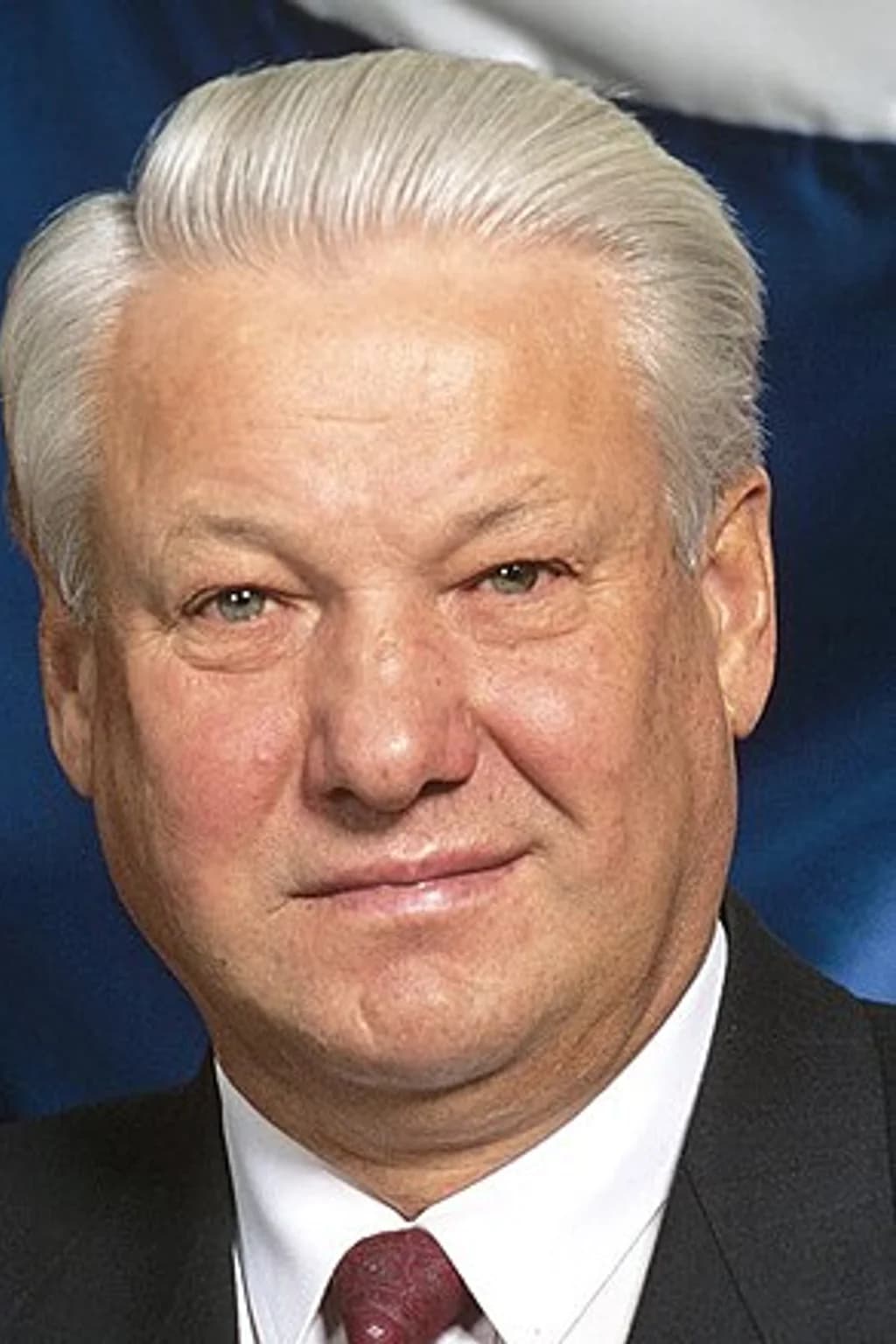
Boris Yeltsin was the first President of the Russian Federation. He opposed the 1991 Soviet coup, oversaw Russia's transition from communism, fought a constitutional crisis and Chechen war, and resigned in 1999.

Born
1931 CE
Died
2007 CE
Role
First President of the Russian Federation

First President of the Russian Federation (1931–2007)

Portrait photograph of Boris Yeltsin
Licensed archival image

A real historical or editorial image is used here. Source, licence and transformation details are publicly recorded. Image policy Attribution

Quick answer

Boris Yeltsin was the first President of the Russian Federation. He opposed the 1991 Soviet coup, oversaw Russia's transition from communism, fought a constitutional crisis and Chechen war, and resigned in 1999.

Born
1931 CE
Died
2007 CE
Role
First President of the Russian Federation
Years
1931-2007 CE
Facts

Boris Yeltsin timeline facts

Selected specifics from this profile's life story.

1931–1955
Rural beginnings

Boris Yeltsin was born in 1931 in the Urals, into a family scarred by collectivisation and Soviet repression.

1987–1989
Break with leadership

Removed from Moscow leadership, Yeltsin returned through the new electoral politics of glasnost.

1992–1993
Radical reforms

Yeltsin launched 'shock therapy' reforms in 1992: price liberalisation, privatisation and market transition.

1999–2007
A new Russia

On 31 December 1999 Yeltsin resigned and handed acting power to Vladimir Putin. He left behind a non-Soviet Russia, but also a damaged democracy, concentrated wealth, unresolved wars and a population hungry...

Life Journey

From party rebel to the fractured birth of post-Soviet Russia

Follow the story in a more continuous narrative, with a reading mode that matches how much depth you want.

Complete chronology

1931–1955

Rural beginnings

Yeltsin's early life belonged to the hard world of Stalin's Soviet Union, not to the polished setting of later Kremlin power. He was born in Butka in the Ural region, and his family experienced the upheavals of collectivisation; his father was imprisoned for a period during the 1930s. Yeltsin grew up amid scarcity, discipline and the official certainties of Soviet life. He trained as a construction engineer in Sverdlovsk, a practical field that rewarded command of schedules, materials and people. That background mattered. Yeltsin's later politics always carried the feel of the building site: impatient with delay, physically energetic, willing to smash through obstacles, sometimes careless about what the smashing damaged. Long before he became a reformer, he learned how Soviet systems worked from the inside.

1955–1985

Climbing the party

Yeltsin's rise was a Soviet career before it became an anti-Soviet drama. In Sverdlovsk, he joined the Communist Party, moved through construction management and became regional party boss. He supervised major building projects, enforced targets and projected the image of a leader who could get things done. He also participated in decisions that reveal his embeddedness in the system, including the 1977 demolition of the Ipatiev House, where Tsar Nicholas II and his family had been killed, on orders connected to the Soviet leadership's desire to prevent monarchist pilgrimage. By the early 1980s Yeltsin was known as energetic, demanding and direct. Mikhail Gorbachev, looking for reform-minded officials who could shake up stagnant institutions, saw in him both a weapon and a risk.

1985–1987

Moscow spotlight

Moscow made Yeltsin a national figure. As first secretary of the city party committee, he toured shops, criticised shortages, challenged official privilege and acted as if perestroika required confrontation rather than careful adjustment. His style contrasted sharply with the cautious language of late Soviet officialdom. Ordinary citizens saw a leader willing to name problems they lived with every day; senior figures saw recklessness, vanity and a threat to collective discipline. The break came in 1987, when Yeltsin criticised the slow pace of reform and the privileges surrounding Gorbachev's circle. He was humiliated, removed from top positions and pushed toward political exile. Yet in the new atmosphere of glasnost, punishment no longer guaranteed silence. It made him a symbol.

1987–1989

Break with leadership

Yeltsin's comeback exposed the paradox of Gorbachev's reforms. The Soviet leadership wanted openness controlled from above; voters used it to elevate someone the party had rejected. In the 1989 elections to the Congress of People's Deputies, Yeltsin won overwhelmingly in Moscow, becoming a tribune of anti-privilege anger and impatience with half-reform. Television brought parliamentary argument into Soviet homes, and Yeltsin understood the emotional power of direct appeal better than most officials. He resigned from the Communist Party in 1990 and was elected chairman of the Russian Supreme Soviet, then president of the Russian republic in 1991. His power now rested not on appointment but on votes, and that distinction transformed the struggle between Russia and the Soviet centre.

1990–1991

Elected leadership

By 1990 and 1991 the Soviet Union had become a battlefield of overlapping sovereignties. Gorbachev remained president of the USSR, but Yeltsin now claimed a democratic mandate in the Russian Federation, the union's largest and most important republic. This rivalry was personal, institutional and ideological at once. Yeltsin argued that Russia should control its own laws, budget and resources; Gorbachev tried to preserve a reformed union. Other republics watched closely, because Russia's assertion of sovereignty made the old structure harder to hold together. Yeltsin was not simply dismantling communism from outside. He was using the legal and political weight of Russia to hollow out the Soviet state from within.

1991

Defying the coup

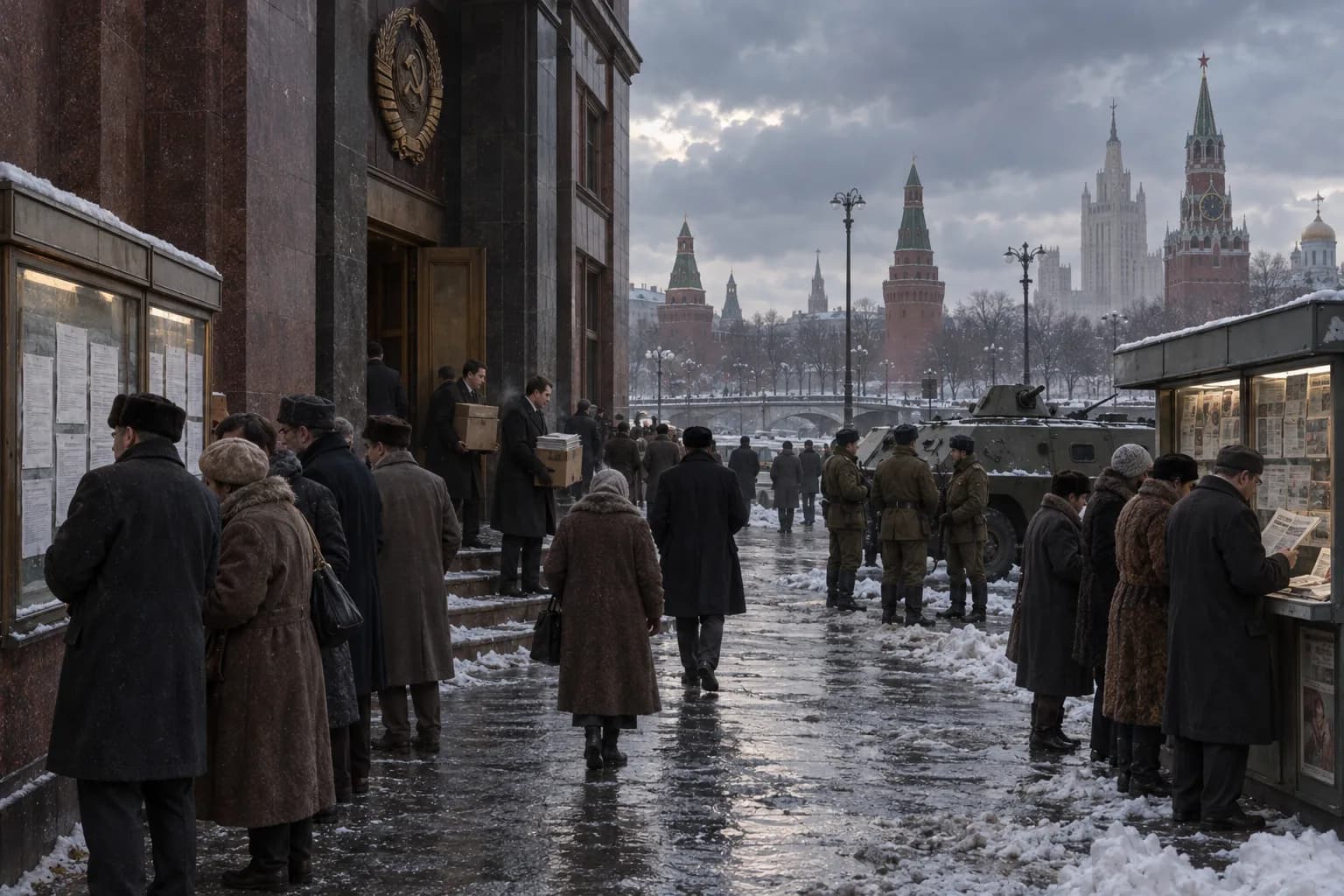
The August 1991 coup gave Yeltsin the defining image of his career. Hardline officials detained Gorbachev in Crimea and announced emergency rule, hoping to preserve the Soviet system by force. Yeltsin responded from the Russian parliament building in Moscow, standing on a tank and calling for civil resistance. The gesture was theatrical, brave and perfectly timed. It rallied crowds, split the security forces and exposed the coup plotters' uncertainty. When the coup failed, the Communist Party's authority collapsed with astonishing speed. Yeltsin banned party activity on Russian state property, seized political initiative and moved toward dissolving the union itself. By December, the Belovezha Accords declared the Soviet Union effectively finished. Gorbachev resigned on 25 December 1991; Yeltsin inherited a Russia that was sovereign, wounded and unready.

1992–1993

Radical reforms

The economic transition under Yeltsin remains one of the most contested transformations of the late twentieth century. His reformers, including Yegor Gaidar and Anatoly Chubais, believed Russia had to move quickly before old structures reasserted themselves. Prices were freed, subsidies cut and state assets moved toward private ownership. The result was a revolution in property and daily life. Some Russians gained opportunities unimaginable under Soviet rule; many more watched savings evaporate, wages go unpaid and security collapse. Privatisation, especially later loans-for-shares deals, helped create oligarchic fortunes and public suspicion that democracy had been sold alongside factories, oil and metals. Yeltsin chose speed because delay seemed dangerous. The cost was a society that associated reform with humiliation as much as liberation.

1994–1999

Struggles and decline

Yeltsin's presidency turned darker as reform collided with political resistance and state weakness. In 1993, his conflict with parliament ended with tanks firing on the Russian White House, after which a new constitution created a powerful presidency. In Chechnya, war exposed the brutality and incompetence of the Russian state, costing many lives and damaging Yeltsin's moral authority. His 1996 re-election defeated the Communist challenger Gennady Zyuganov, but it depended on oligarchic media support, Western anxiety about a communist return and questions about the fairness of the campaign environment. His health visibly deteriorated, while the 1998 default and rouble collapse shattered confidence in economic management. Yeltsin had helped destroy authoritarian communism, yet the institutions that emerged under him were fragile, personalised and vulnerable to capture.

1999–2007

A new Russia

Yeltsin's final act was as consequential as his first great rebellion. On New Year's Eve 1999, he resigned in a televised address and named Vladimir Putin acting president. The move was constitutional, but it was also managed from above, shaped by the priorities of Yeltsin's inner circle and the search for a successor who could protect stability and interests after his departure. Yeltsin apologised to Russians for hopes not fulfilled, a rare admission from a leader associated with defiance. His legacy is therefore double-edged. He opened space for elections, speech and private life after Soviet rule; he also presided over impoverishment, corruption, war and institutional weakness. Putin's later consolidation of power cannot be reduced to Yeltsin, but it grew in soil prepared during the 1990s: a strong presidency, weary society and longing for restored state capacity.

Continue in context

Connected stories

Move from the profile into the wider events and settings this figure belongs to.

Russian & Soviet Leaders lineage
Lineage11 leaders
Russian & Soviet Leaders
1917 CE–present

A curated succession from Soviet party-state leaders to Russian Federation presidents, spanning Lenin to Putin.

View lineage
Tertiary paths

Content note

This profile is written for educational use and connects to related Stories of History pages. The main portrait uses a real historical or editorial image, with source and licence details recorded for attribution review. Image policy Image attribution

References

Sources & Further Reading

Reliable reference works, archives and reading paths connected to this profile.

Further reading

  1. Encyclopaedia Britannica, Search results for Boris Yeltsin,” accessed June 2026.Open source
  2. WorldCat, Books and library holdings for Boris Yeltsin,” accessed June 2026.Open source

Primary sources

  1. Library of Congress, Search results for Boris Yeltsin,” accessed June 2026.Open source

Reviewed claim sources

Loading reviewed claim sources...

A weekly route through history

Find out first about the latest published stories, feature notes and occasional Premium offers in one weekly email.