People

Benjamin Harrison

Benjamin Harrison was the 23rd U.S. President, a Civil War veteran and Republican who admitted six new states, signed the Sherman Antitrust Act, backed tariffs, and lost reelection to Grover Cleveland.

Born
1833 CE
Died
1901 CE
Role
23rd President of the United States

23rd President of the United States (1833–1901)

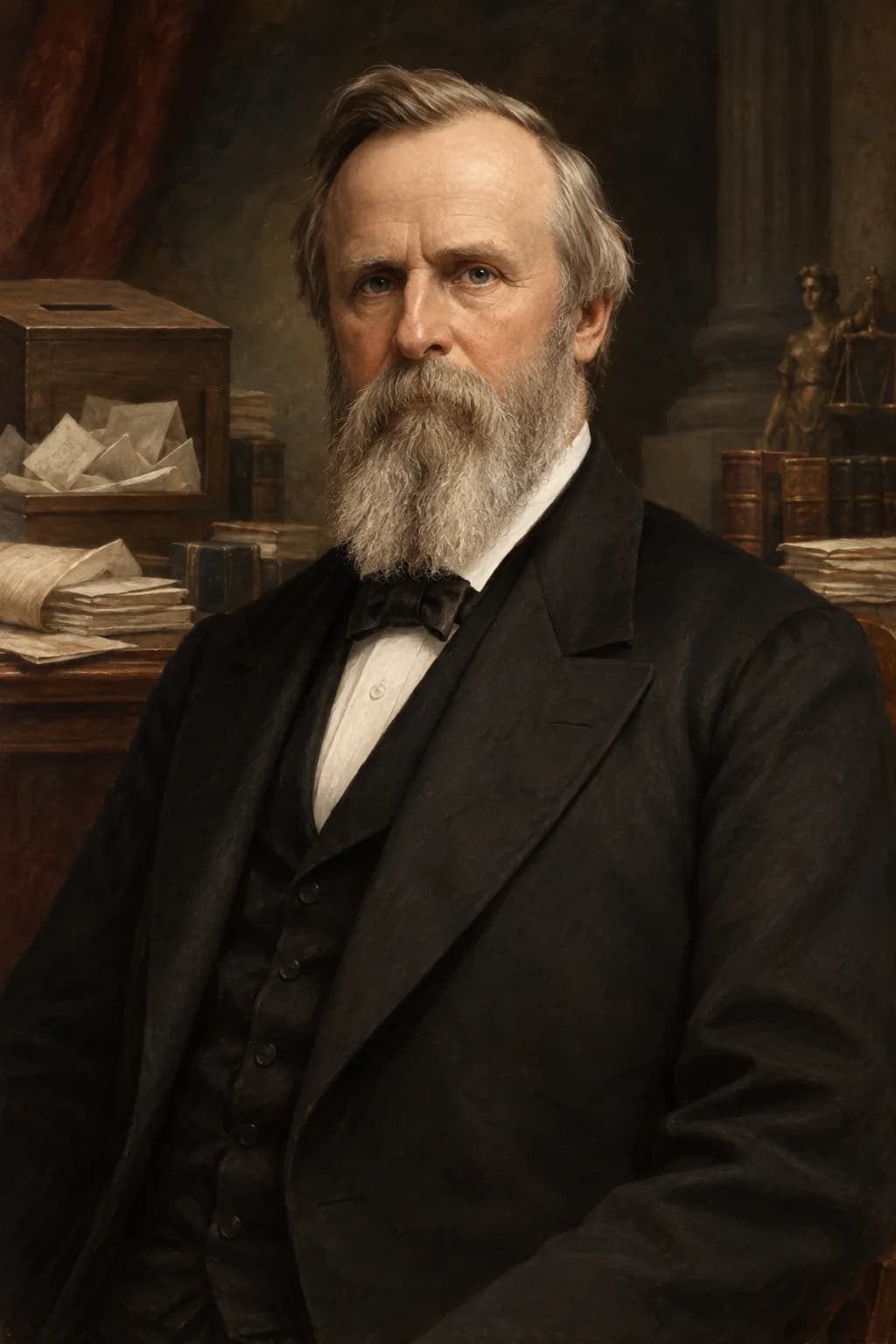
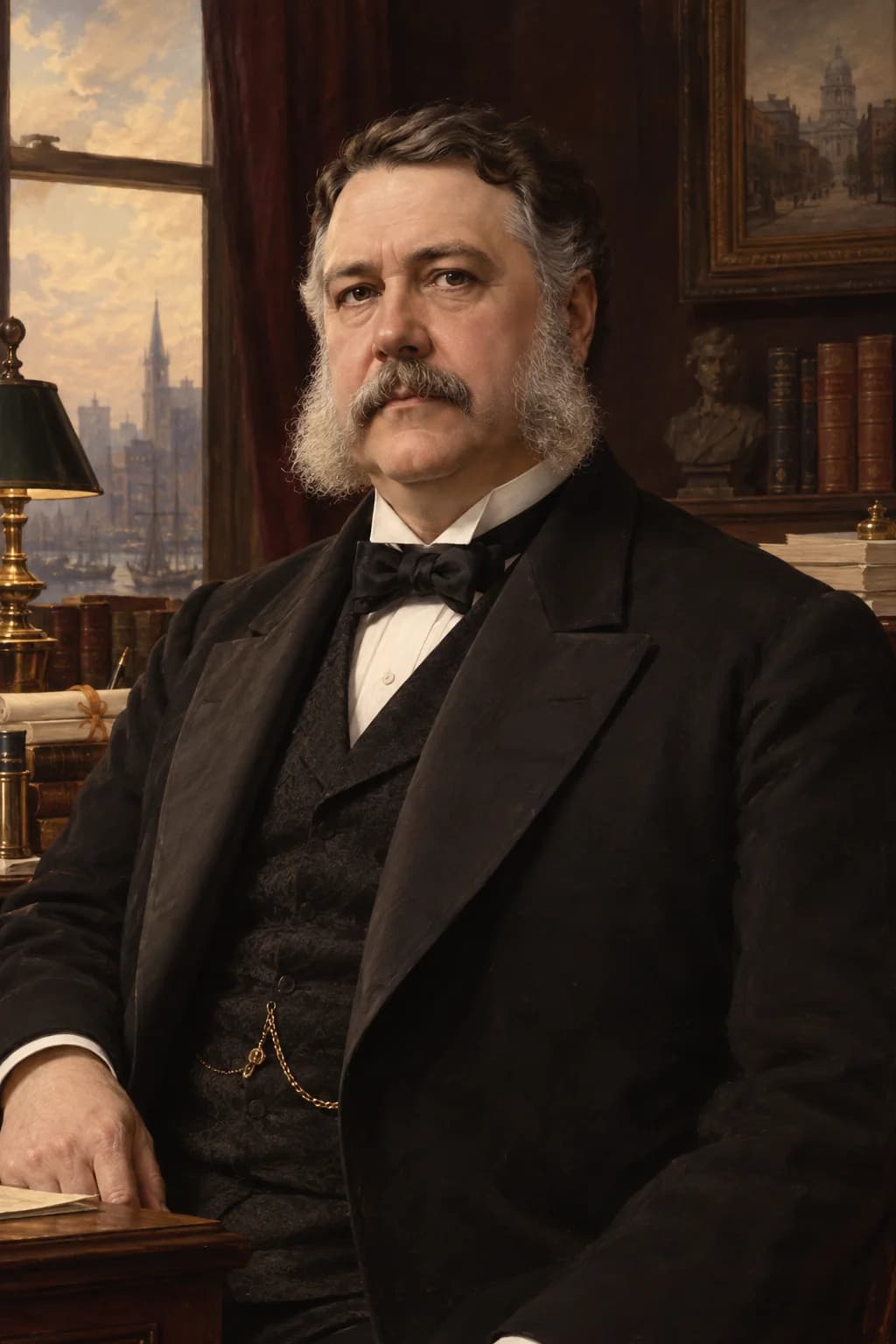
AI-generated portrait of Benjamin Harrison in formal presidential attire
AI-assisted historical reconstruction

An illustrative reconstruction based on historical context. It is not a photograph or documentary likeness. Image policy Attribution

Quick answer

Benjamin Harrison was the 23rd U.S. President, a Civil War veteran and Republican who admitted six new states, signed the Sherman Antitrust Act, backed tariffs, and lost reelection to Grover Cleveland.

Born
1833 CE
Died
1901 CE
Role
23rd President of the United States
Years
1833-1901 CE
Facts

Benjamin Harrison timeline facts

Selected specifics from this profile's life story.

1833
Political Lineage

Benjamin Harrison was born into a prominent political family, including a grandfather who had served as president of the United States.

1870s
Entering Politics

After the war, Harrison became active in Republican politics, building a reputation through public service and party involvement.

1889–1893
Active Presidency

As president, he supported economic legislation, strengthened federal authority, and admitted several new states to the Union.

1893–1901
Later Life and Legacy

After his presidency, Harrison remained active in public life, leaving a legacy tied to policy, expansion, and federal governance.

Life Journey

Law, leadership and a presidency of expansion

Follow the story in a more continuous narrative, with a reading mode that matches how much depth you want.

Complete chronology

1833

Political Lineage

Benjamin Harrison was born in 1833 in North Bend, Ohio, into one of America's most politically recognizable families. His grandfather, William Henry Harrison, became the 9th President of the United States, and his great-grandfather Benjamin Harrison V had signed the Declaration of Independence. That lineage gave him a name, but not an automatic career. The Harrison family had status without limitless wealth, and Benjamin's own path depended on work, education, law, military service, and party loyalty. Growing up in the old Northwest placed him inside a region shaped by expansion, antislavery politics, Protestant reform culture, and the rise of the Republican Party. His inheritance was therefore both personal and ideological: a belief in Union, public duty, economic development, and the moral seriousness of politics.
1850s

Legal Training

Harrison studied at Miami University in Ohio and then trained in law, moving to Indianapolis in 1854. Indiana became his political home. Legal practice in the nineteenth-century Midwest was closely tied to public life: lawyers argued cases, built reputations through speeches, joined civic networks, and often moved naturally into party politics. Harrison was serious, precise, and sometimes seen as reserved or cold, but he developed a reputation for integrity and careful argument. His marriage to Caroline Scott also anchored his domestic and social life. The law gave him more than a profession. It trained him to think institutionally, to respect procedure, and to frame political questions in constitutional and statutory terms. Those habits would later make him a diligent president, though not always an emotionally compelling one.

1862–1865

Civil War Service

During the Civil War, Harrison helped raise the 70th Indiana Infantry and entered Union service as an officer. He eventually rose to brigadier general. His military record included service in the Atlanta Campaign under William Tecumseh Sherman, placing him inside one of the decisive operations of the war. Harrison was not one of the conflict's great commanders, but his service mattered politically and personally. It connected him to the generation that preserved the Union, strengthened his Republican credentials, and gave him a claim to patriotic leadership in an era when veterans held enormous public authority. The war also shaped his views on federal power and citizenship. Like many postwar Republicans, he saw the Union victory as a national achievement that should carry consequences for rights, loyalty, and development.

1870s

Entering Politics

After the war, Harrison returned to law and Republican politics in Indiana, a competitive state where national elections could be won or lost by narrow margins. He ran for governor in 1876 and lost, but the campaign increased his visibility. He became known as a strong speaker on behalf of Republican causes: protective tariffs, veterans' interests, sound money, Union memory, and civil rights for Black Americans in the South. Harrison's style was earnest rather than magnetic. He did not possess the easy warmth of some politicians, but party leaders valued his discipline and respectability. In the Gilded Age, when machines, patronage, and money mattered heavily, Harrison represented a more formal kind of Republican leadership: principled, lawyerly, patriotic, and comfortable with federal activism when it served party goals.

1881–1887

U.S. Senator

Harrison served in the U.S. Senate from 1881 to 1887. These were years of rapid industrial growth, labor unrest, railroad expansion, immigration, western development, and continuing conflict over the meaning of Reconstruction's unfinished promises. Harrison supported protective tariffs, pensions for Union veterans, and a stronger national role in economic development. He also backed civil rights protections for Black voters, a position that later became central to one of his presidency's most important failed efforts. His Senate career did not make him a household name on the scale of James G. Blaine, but it made him credible to Republicans seeking a candidate who could unite factions and compete in Indiana. Harrison's national rise came from being acceptable, experienced, and strategically useful.

1888

Election Victory

The 1888 election pitted Harrison against incumbent Democrat Grover Cleveland. Tariffs dominated the campaign. Republicans defended high protective duties as support for American industry and wages; Cleveland argued for reform and lower rates. Harrison did relatively little public campaigning by modern standards, but he delivered carefully managed front-porch speeches from Indianapolis while Republican organizers worked intensely in key states. Cleveland won the national popular vote, but Harrison carried the Electoral College, including crucial northern states. The result made him one of the presidents elected without a popular-vote plurality. It also gave Republicans unified control of the presidency and Congress, opening the door to a burst of legislation. Harrison entered office with a quieter public image than his agenda would suggest.

1889–1893

Active Presidency

Harrison's presidency from 1889 to 1893 was unusually active. Six states entered the Union: North Dakota, South Dakota, Montana, Washington, Idaho, and Wyoming. The Sherman Antitrust Act of 1890 became the first major federal law aimed at restraining monopolistic business practices, though early enforcement was limited. The McKinley Tariff raised duties and became politically controversial. The Sherman Silver Purchase Act attempted to manage currency pressures but later contributed to financial instability. Harrison also supported the Federal Elections Bill, which aimed to protect Black voting rights in the South through federal oversight, but it failed in the Senate amid fierce opposition and waning northern commitment. His administration modernized the navy and engaged more actively in foreign affairs, including tensions involving Chile, Hawaii, and Samoa. Harrison was not flashy, but his presidency expanded federal ambition.

1892

Election Defeat

Harrison's bid for reelection in 1892 was shadowed by political and personal difficulty. The high tariff had become unpopular, farmers and workers were under pressure, and divisions over currency and spending weakened Republican appeal. Harrison's wife Caroline was gravely ill with tuberculosis during the campaign and died shortly before the election, draining energy and attention from an already difficult race. Grover Cleveland returned as the Democratic nominee and defeated him, creating the rare pattern of a president leaving office and then returning after a four-year interruption. Harrison's loss showed the limits of legislative productivity when voters associated that productivity with high prices, fiscal controversy, or indifference to distress. His presidency had been active, but activity did not translate into affection.

1893–1901

Later Life and Legacy

After leaving office, Harrison returned to Indianapolis, resumed legal work, wrote and spoke on public questions, and served as counsel for Venezuela in a boundary dispute with Britain. He remarried in 1896, a decision that strained some family relationships, and remained a respected Republican elder until his death in 1901. His historical reputation has often been muted because he sat between more vivid figures and lacked a dramatic crisis like civil war or depression. Yet his presidency deserves more attention than the phrase 'one quiet term' suggests. It admitted six states, began federal antitrust law, pursued voting-rights protection, expanded naval power, and exposed the tensions of a nation becoming industrial, continental, and imperial. Harrison's legacy is not charisma. It is the record of a serious, sometimes stiff president governing at the edge of modern federal power.

Continue in context

Connected stories

Move from the profile into the wider events and settings this figure belongs to.

American Presidents lineage
Lineage47 presidents
American Presidents
1789 CE–present

The succession of American presidents from George Washington to today.

View lineage
Tertiary paths

Content note

This profile is written for educational use and connects to related Stories of History pages. The main portrait is an AI-assisted historical reconstruction, included as an illustrative aid rather than documentary evidence. Image policy Image attribution

References

Sources & Further Reading

Reliable reference works, archives and reading paths connected to this profile.

Further reading

  1. Encyclopaedia Britannica, Search results for Benjamin Harrison,” accessed June 2026.Open source
  2. WorldCat, Books and library holdings for Benjamin Harrison,” accessed June 2026.Open source

Primary sources

  1. Library of Congress, Search results for Benjamin Harrison,” accessed June 2026.Open source

Reviewed claim sources

Loading reviewed claim sources...

A weekly route through history

Find out first about the latest published stories, feature notes and occasional Premium offers in one weekly email.