Complete chronology
Full overview and deeper context for every journey step.
1906
Ordinary beginnings
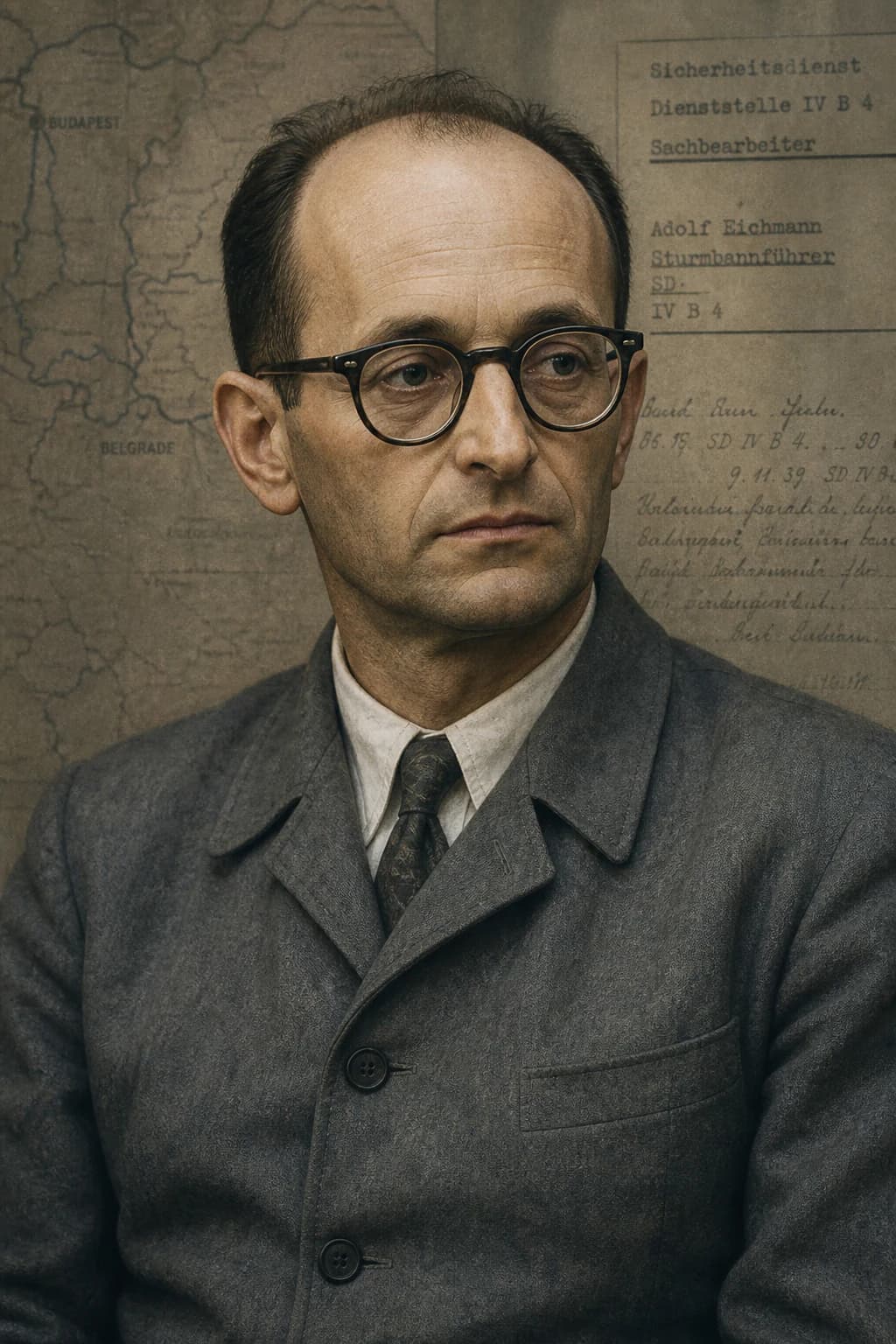
Otto Adolf Eichmann was born on 19 March 1906 in Solingen, Germany, and grew up largely in Linz, Austria. His early life was unremarkable: incomplete schooling, technical training that went nowhere, and work as a salesman before politics offered a clearer path. He joined the Austrian Nazi Party and the SS in 1932, entering a movement that rewarded obedience, ideological commitment, and bureaucratic usefulness. Eichmann was not a charismatic mass leader like Hitler or Goebbels, nor a grand power broker like Goering. His historical importance lies in a different and more disturbing category. He became a specialist inside a system of persecution, a man whose ambition found expression through files, offices, transports, and commands. His ordinariness later became central to debates about how genocide is administered.
Eichmann's life is chilling because it shows how catastrophic power can pass through ordinary career structures.
1930s
Jewish affairs
In the SS security apparatus, Eichmann developed expertise in what the regime called Jewish affairs. During the 1930s, Nazi policy focused heavily on exclusion, dispossession, and forced emigration. Eichmann studied Zionist organisations and Jewish communal structures not out of sympathy, but to make persecution more efficient. After the annexation of Austria in 1938, he helped run the Central Office for Jewish Emigration in Vienna, where intimidation, bureaucracy, and theft were combined to force Jews out while stripping them of assets. The model was later extended elsewhere. This period mattered because it trained Eichmann in the administrative management of human lives under coercion. He learned how to coordinate police power, documents, quotas, property seizure, and transport.
Eichmann's expertise was administrative persecution before it became administrative genocide.
1941-1944
Holocaust logistics
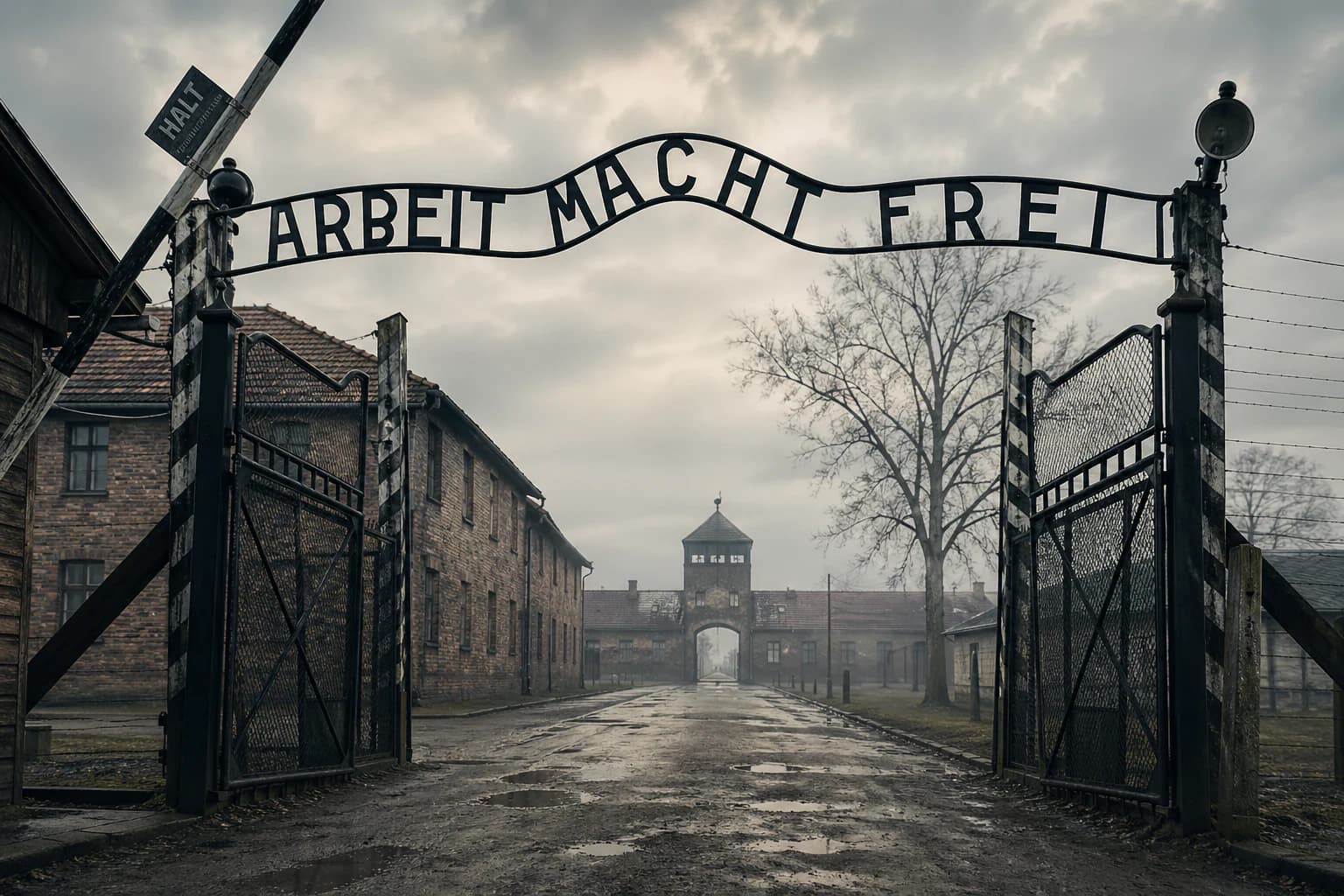
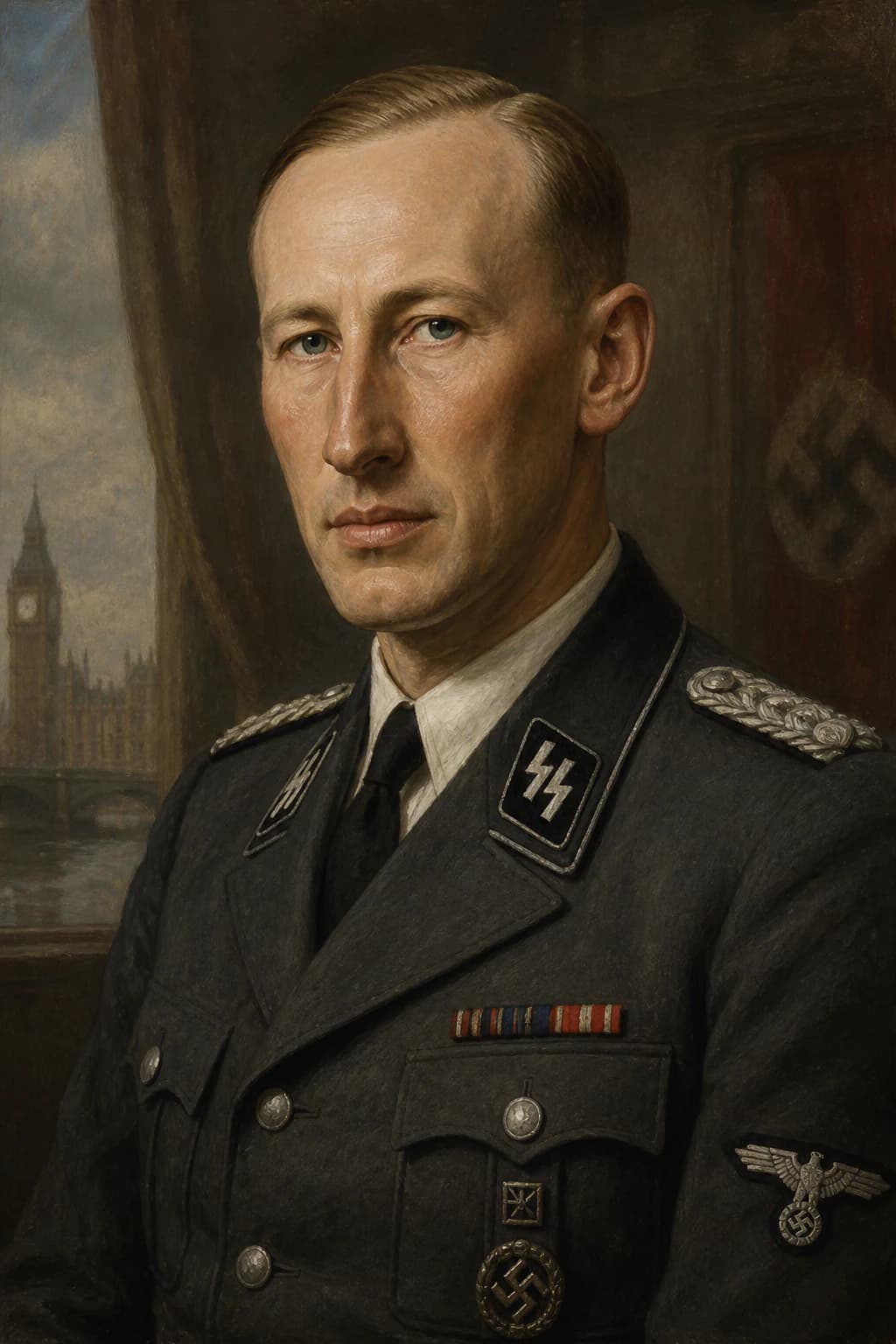
As Nazi policy radicalised during World War II, Eichmann's office, Section IV B4 of the Reich Security Main Office, became central to the deportation of Jews. He did not command every killing operation, but he helped coordinate the movement of victims into the machinery of genocide. He attended the Wannsee Conference on 20 January 1942, where Reinhard Heydrich gathered officials to coordinate the Final Solution. Eichmann prepared minutes and later translated policy into transport schedules, negotiations with allied and occupied governments, and pressure on local authorities. His role was especially visible in Hungary in 1944, when hundreds of thousands of Hungarian Jews were deported to Auschwitz-Birkenau in a matter of weeks. Eichmann's responsibility lies in making genocide operational.
Eichmann's crime was not distance from killing, but the efficient organisation that made killing possible at scale.
1945-1960
Argentina
After the war Eichmann was captured by American forces but escaped from detention. Using false identities and postwar escape networks, he eventually reached Argentina in 1950 under the name Ricardo Klement. He lived near Buenos Aires with his family, working modest jobs while hiding from justice. Survivors, investigators, and intelligence services continued searching for Nazi fugitives, and information from German Jewish refugee Lothar Hermann and others helped identify him. In May 1960 Israeli Mossad agents captured Eichmann near his home and secretly transported him to Israel. The operation caused diplomatic controversy with Argentina, but it also brought one of the Holocaust's central organisers into open court. His capture was a turning point in postwar memory: a hidden bureaucrat of genocide was made visible to the world.
Eichmann's capture connected survivor memory, intelligence work, and the global pursuit of Nazi accountability.
1961-1962
Jerusalem trial
Eichmann was tried in Jerusalem in 1961. The proceedings were historically significant not only because he was convicted, but because they placed survivor testimony before a global audience. Eichmann presented himself as a subordinate following orders, but the evidence showed initiative, expertise, and commitment to the deportation system. The court found him guilty of crimes against the Jewish people, crimes against humanity, war crimes, and related offences. He was hanged on 1 June 1962. Hannah Arendt's later phrase about the banality of evil made the trial part of a lasting debate about obedience, ideology, and bureaucracy. The phrase should not be mistaken for innocence or emptiness. Eichmann was not a mindless clerk. He was an ambitious SS officer who used administrative skill in the service of genocide.
Eichmann's legacy forces history to examine how paperwork, ambition, obedience, and ideology can converge in mass murder.