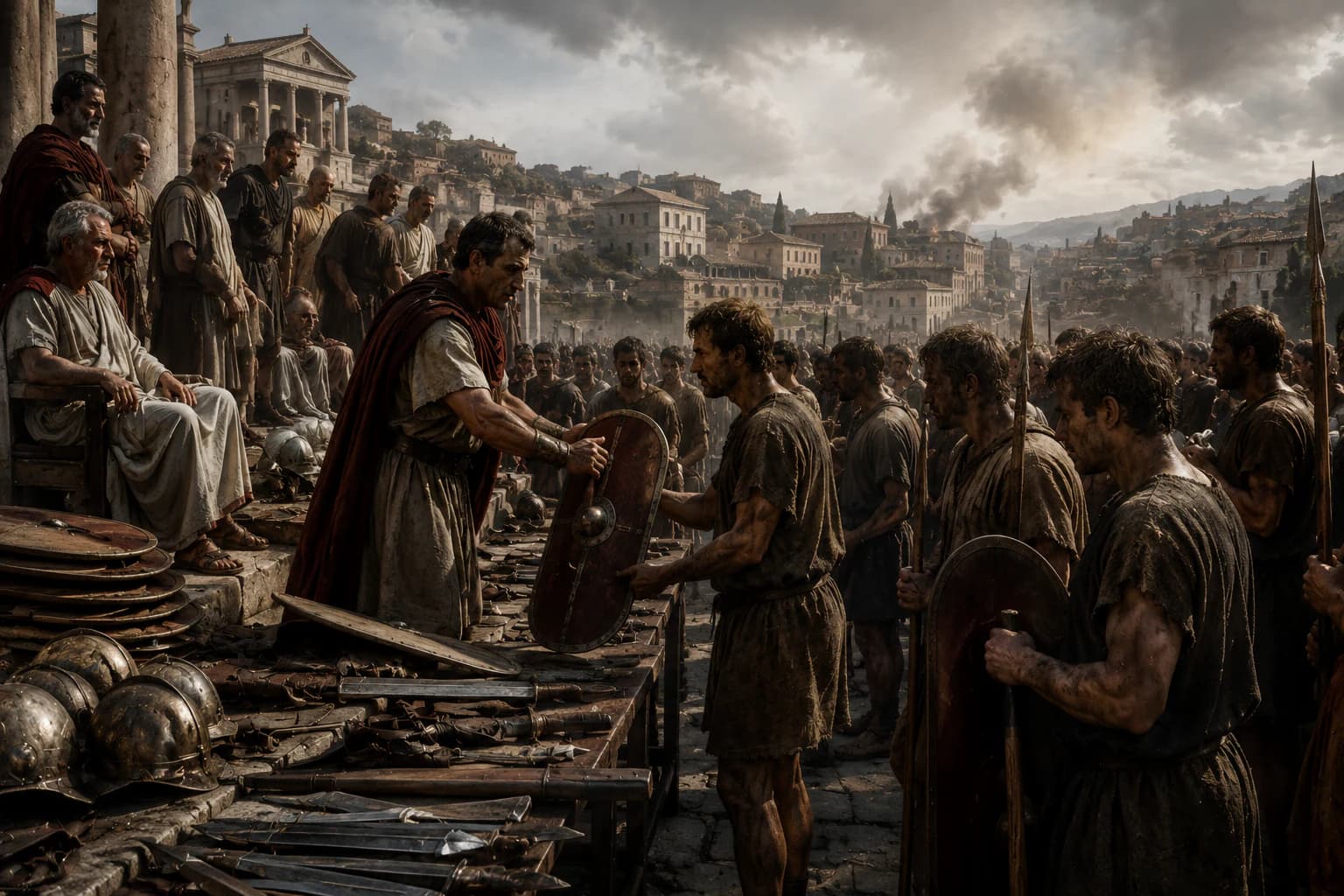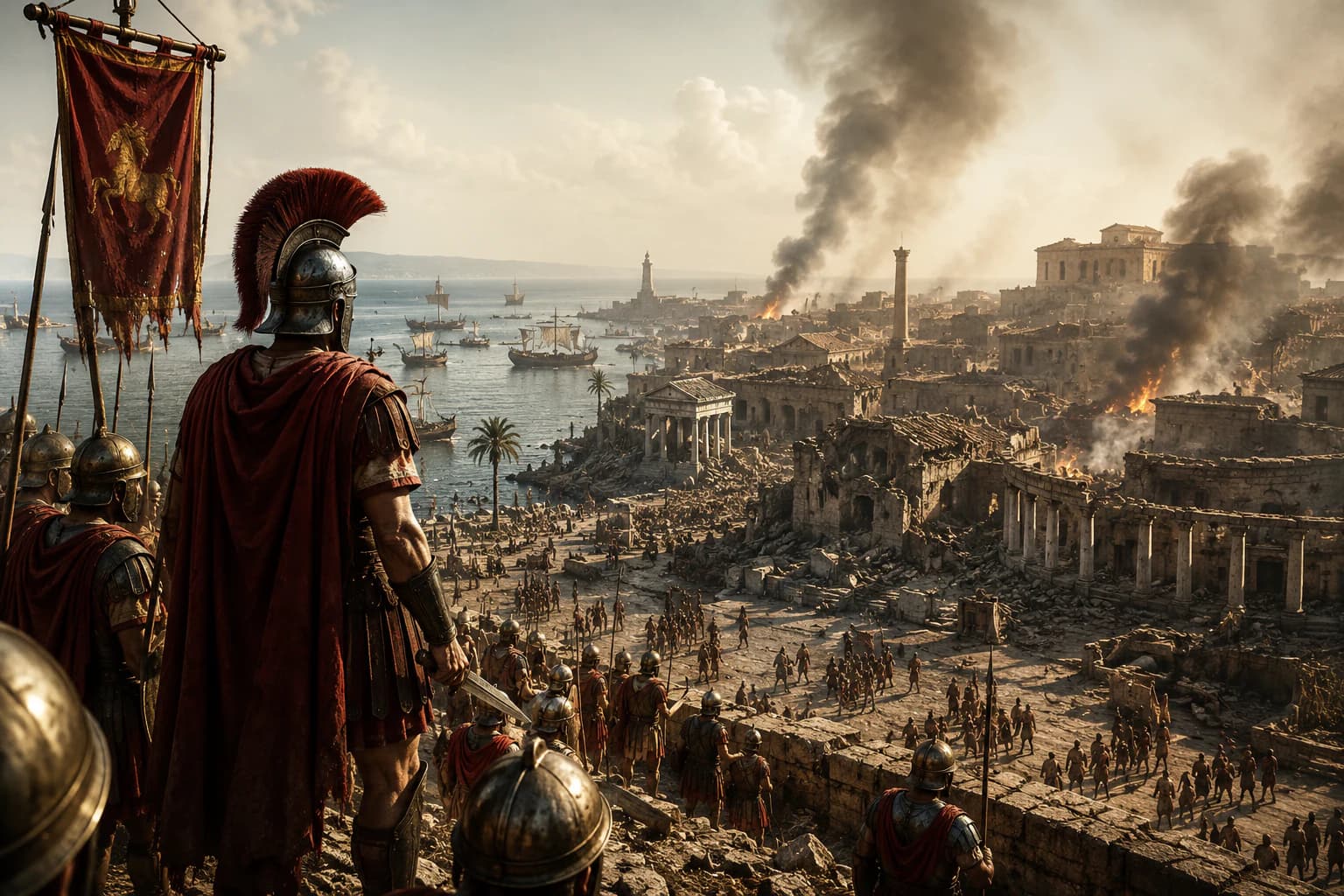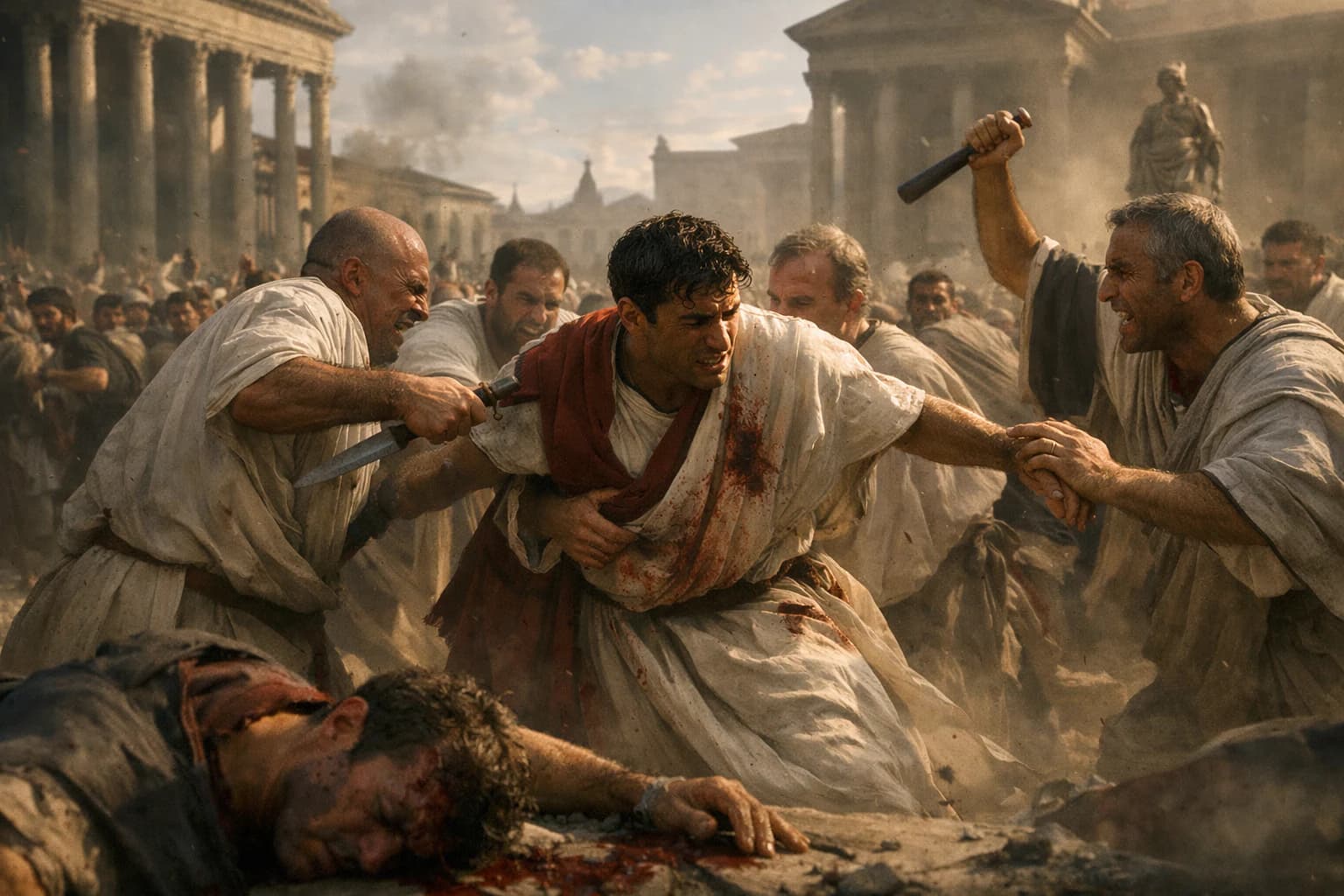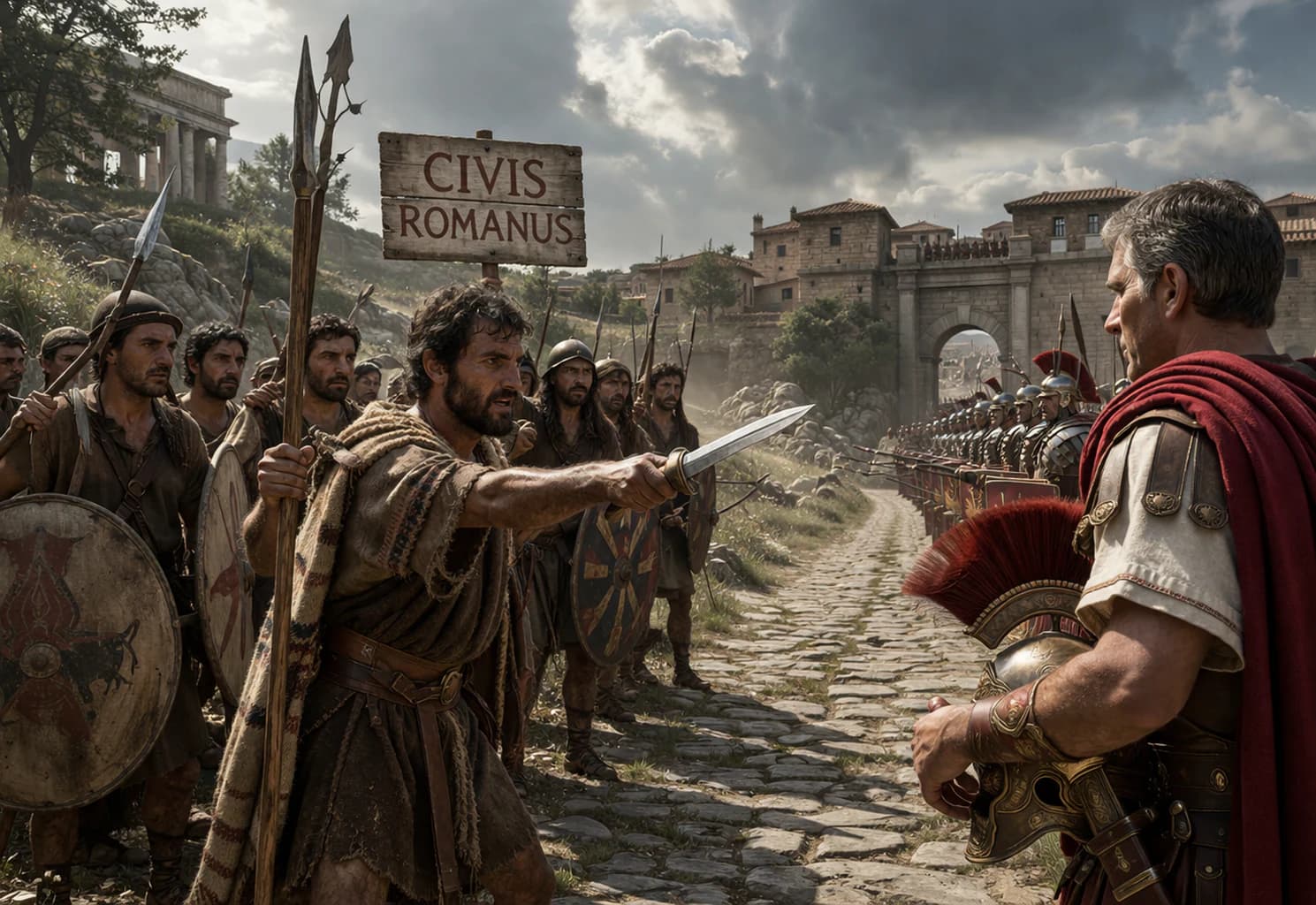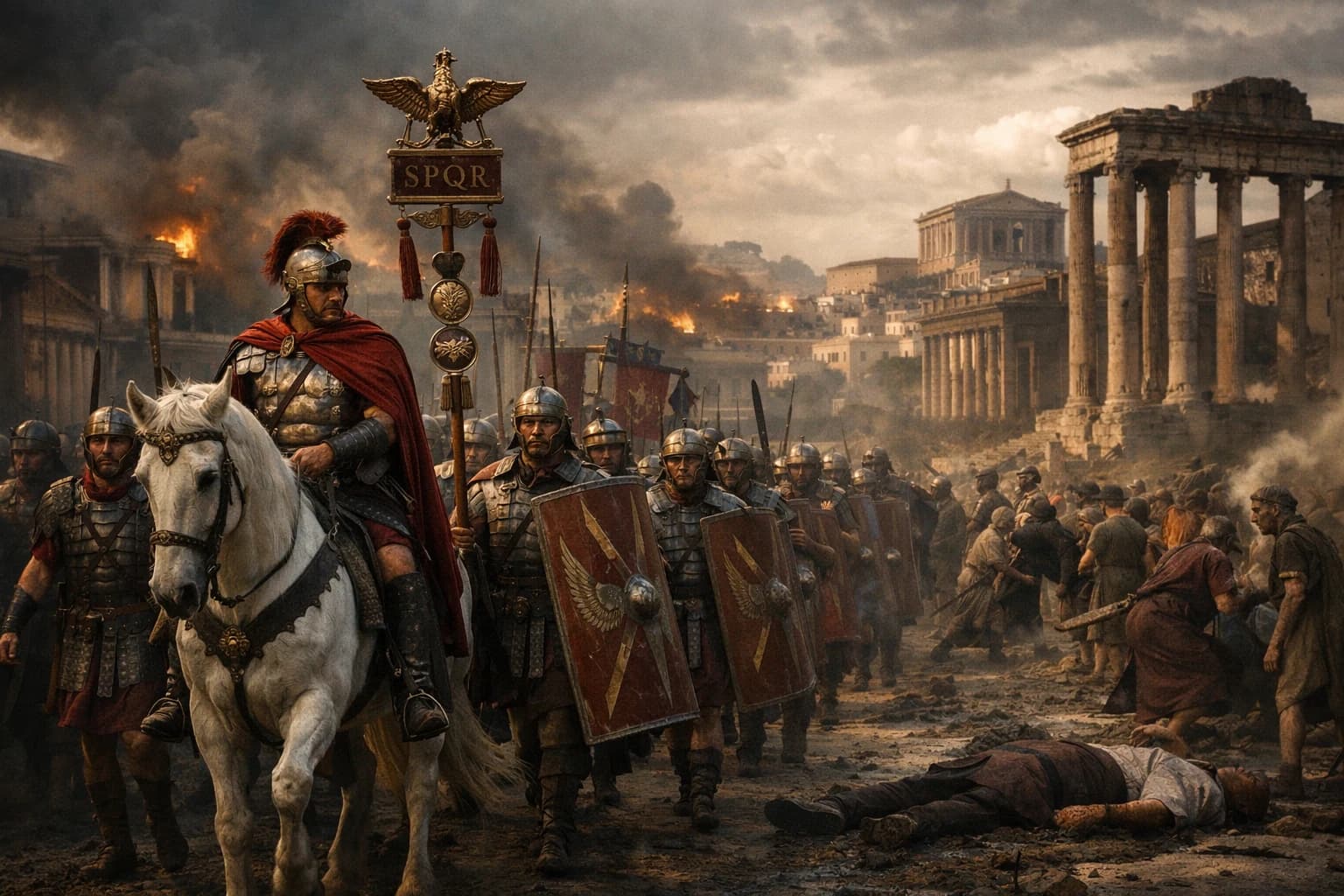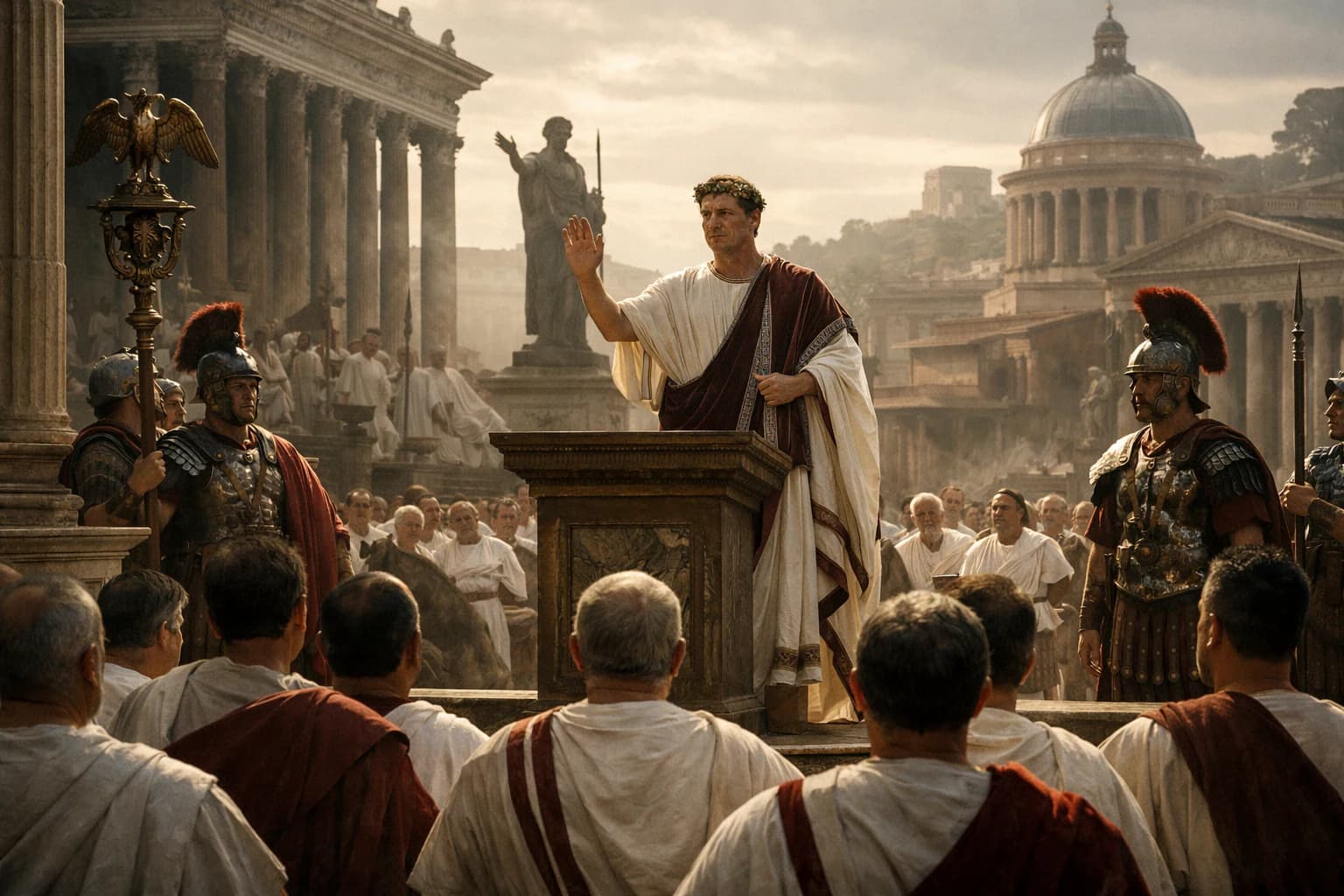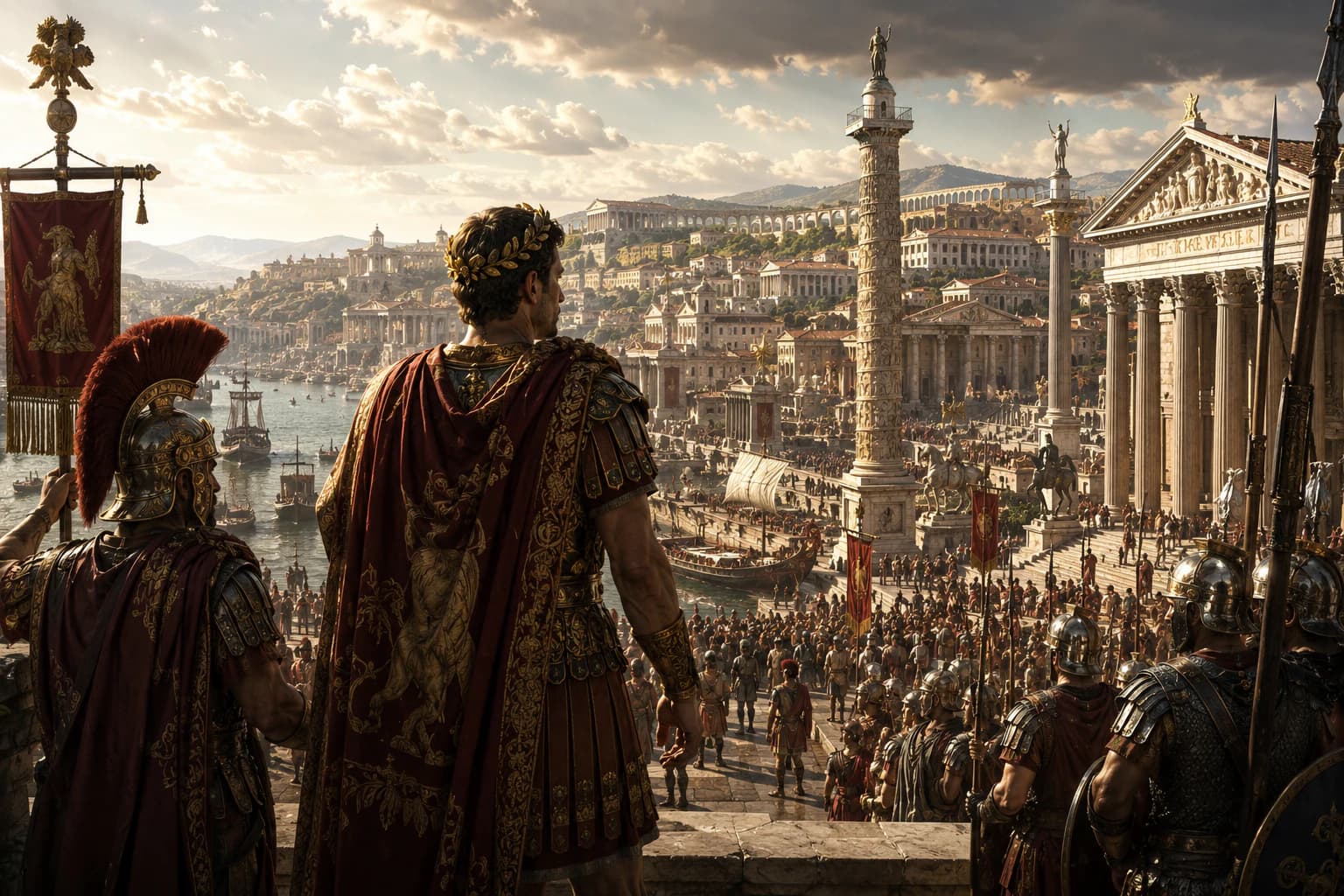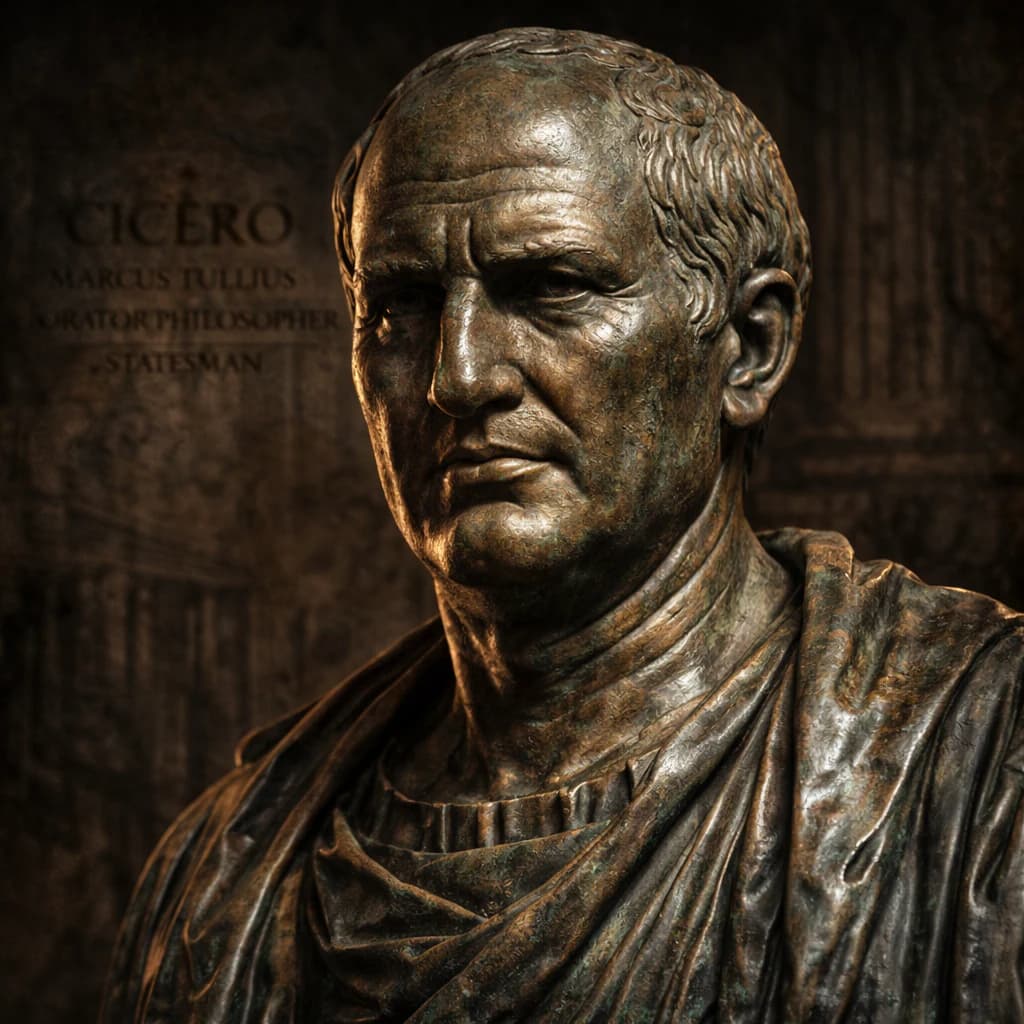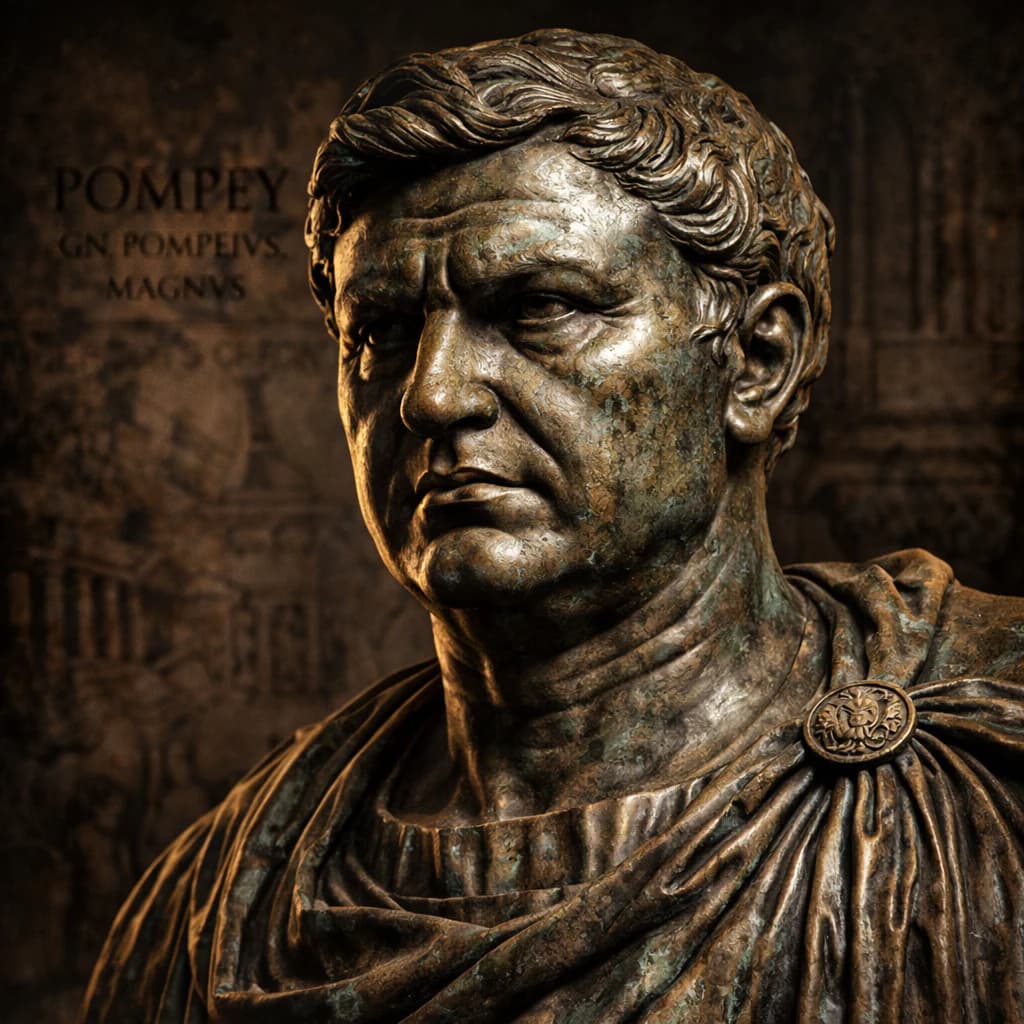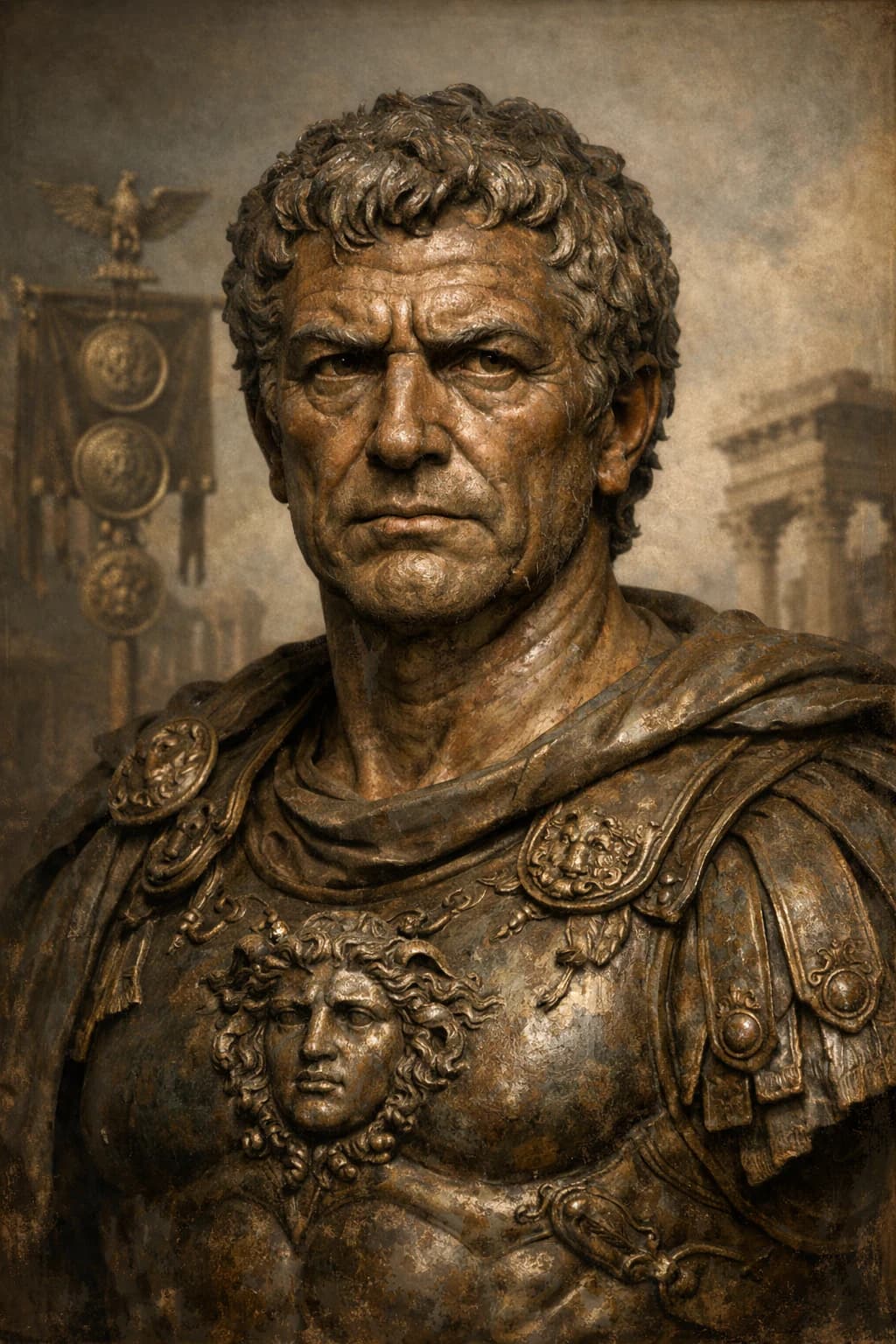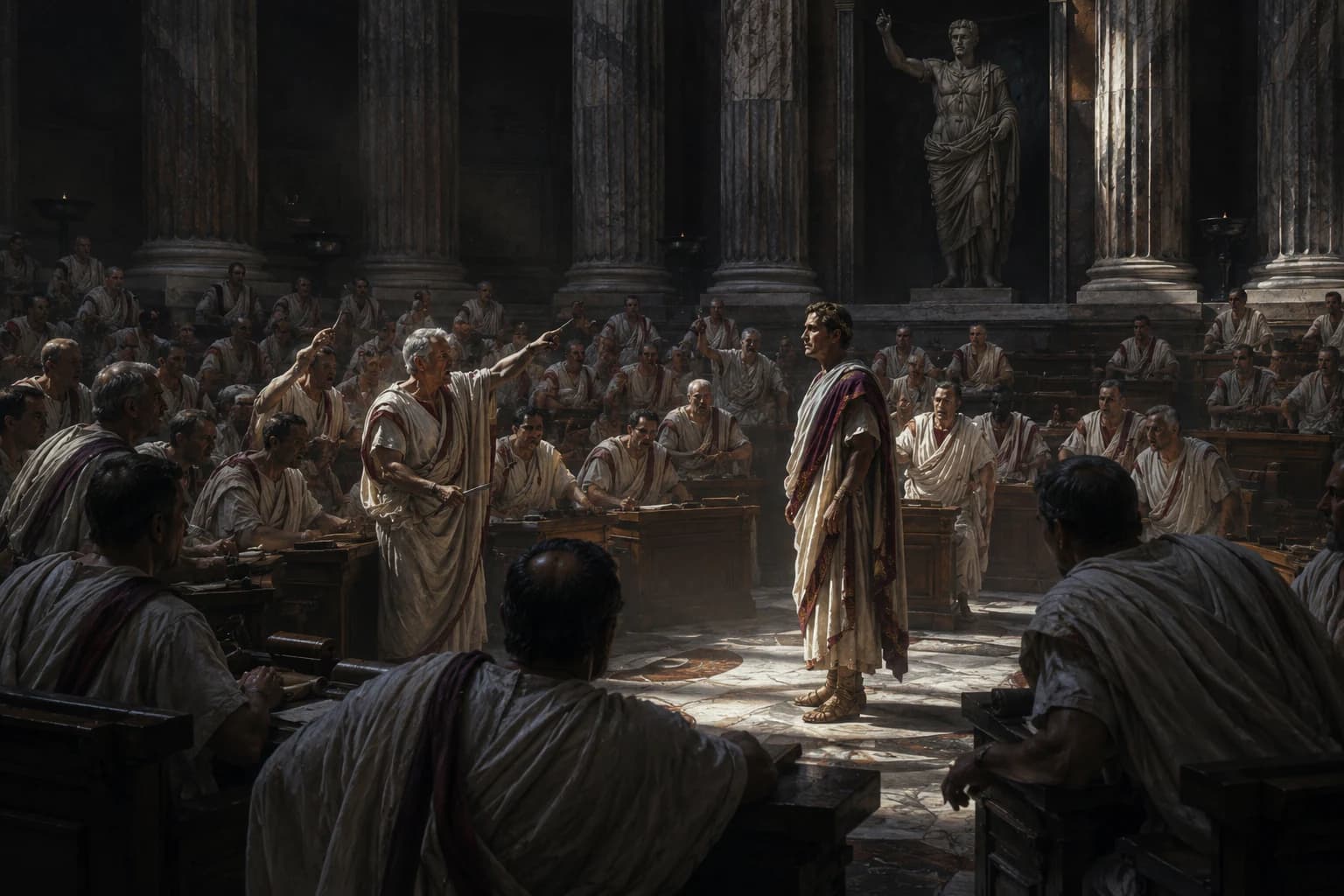
The Roman Republic with senators, citizens, soldiers and the growing city of Rome.
Premium Story

The Roman Republic

Enter the Roman Republic as citizen armies, conquest, political rivalry, and civil war open the road to empire.

11 chapters

Next
Context

Introduction

Overview

The Roman Republic was the political system that governed before the empire, built around elected magistrates, the Senate, citizen assemblies, law, and military expansion. From its legendary overthrow of kings to its conquest of Italy and the Mediterranean, the Republic became one of the ancient world's most powerful states. Its success also created pressures of inequality, ambition, and civil war that eventually destroyed republican government.

What you’ll learn: You’ll see how built power through republican government, war, and alliance, and why that same system eventually broke under the pressure of expansion, ambition, and civil conflict.

Key forces

The Republic Replaces the Kings
509 BCE
Step 1 of 10509 BCEAccessible mode

The Republic Replaces the Kings

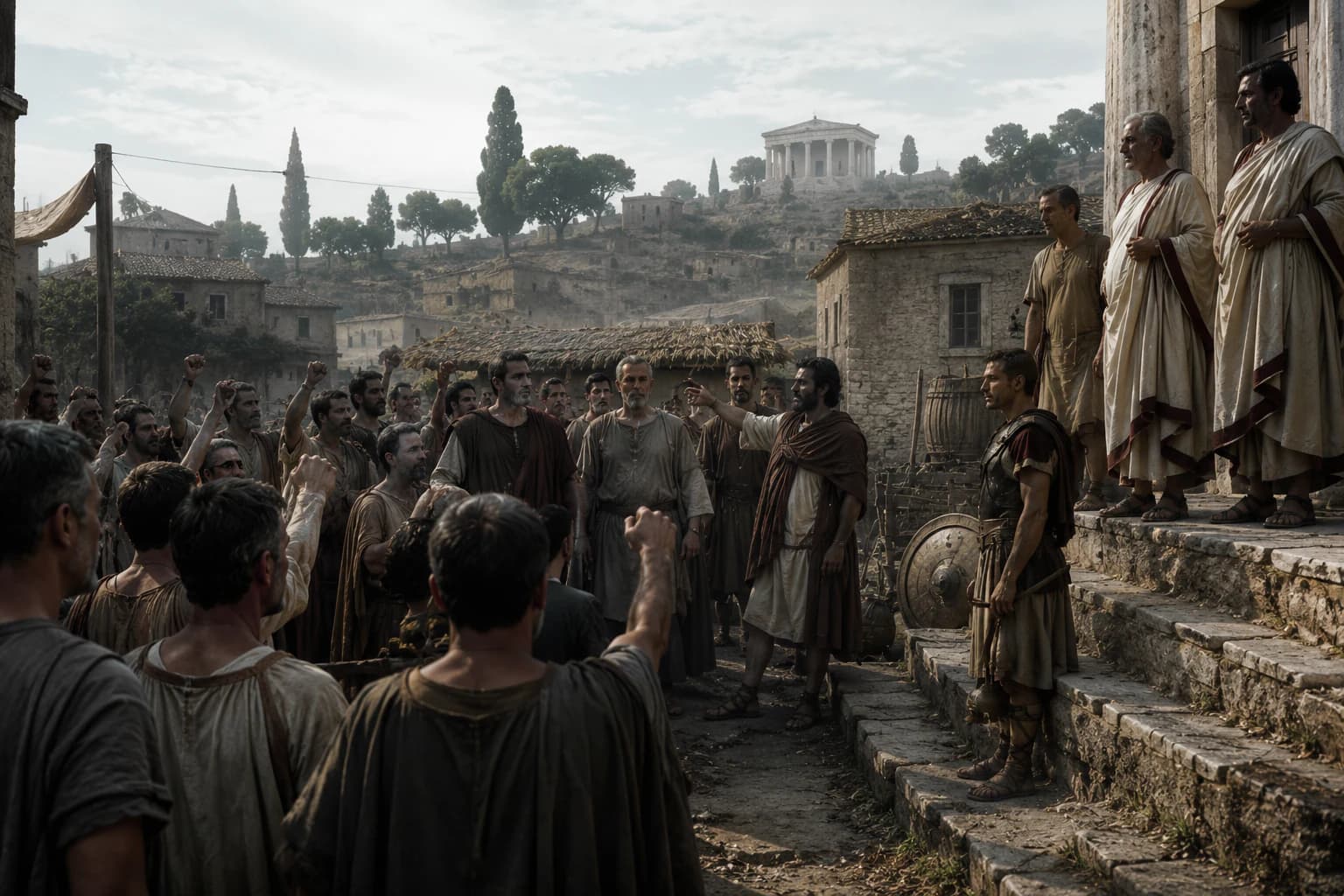
was once ruled by kings, but people grew tired of one man having all the power. A dramatic revolt changed everything.

Before 509 BCE, was a monarchy. The king controlled the army, laws, and religion. Powerful families advised him, but ordinary citizens had little say in decisions.

The final king, Tarquin the Proud, ruled harshly. Stories of abuse and unfair rule pushed leading Roman families to act. They wanted to prevent any single ruler from dominating again.

No more kings, power must be shared.

The monarchy was overthrown and replaced with a republic. Two consuls were elected each year to lead, while the Senate of elite families guided policy. Citizens gathered in assemblies to vote on laws and leaders.

This system limited power by dividing it. Leaders had to cooperate, and no one could rule alone for long. Still, wealthy families held most influence.

This idea of shared government still shapes politics today, especially the balance between leaders, advisors, and voters.

The Twelve Tables
451 BCE
Step 2 of 10451 BCEAccessible mode

The Twelve Tables

In early , the law was often whatever powerful people said it was. That became a serious problem once ordinary citizens started demanding fair treatment.

The Roman Republic was split between patricians, the old elite families, and plebeians, the larger group of common citizens. Plebeians fought in wars and worked the land, but they had less political power.

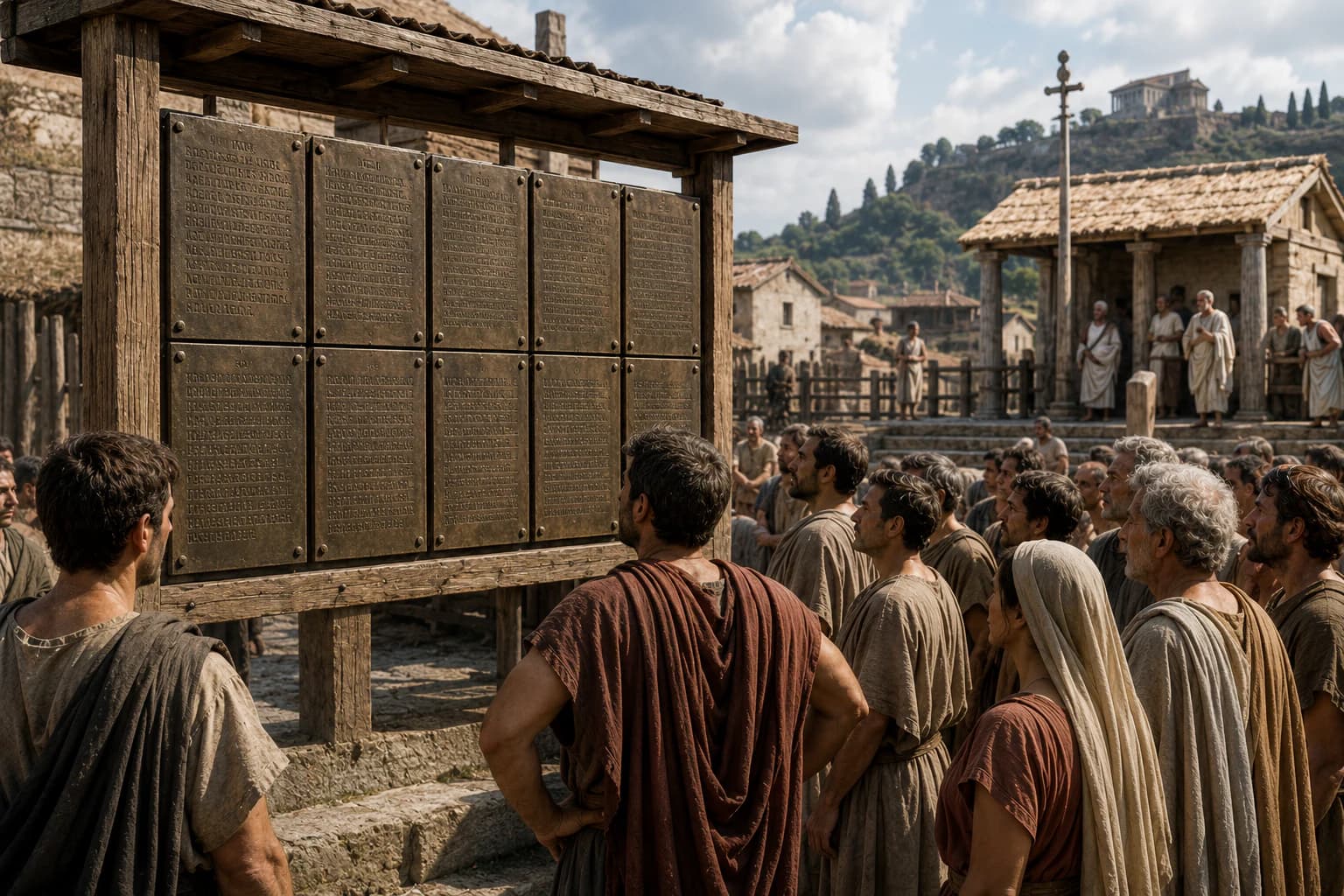
One big complaint was that laws were not written down. Judges from elite families could interpret customs however they liked, and ordinary people had little way to challenge them.

A law everyone can see is harder for the powerful to hide behind.

So created the Twelve Tables, a set of written laws displayed in public. They did not make society equal, but they made rules clearer and more consistent.

That helped reduce some tension between social groups and gave plebeians a stronger footing in public life.

Today, the idea that laws should be written, public, and applied openly still sits at the core of modern legal systems.

The Conflict of the Orders Ends
287 BCE
Step 3 of 10287 BCEAccessible mode

The Conflict of the Orders Ends

For years, ’s ordinary people fought for a voice in government. In 287 BCE, they finally secured a major victory.

Early was controlled by wealthy families called patricians. Most people, known as plebeians, had little power but still paid taxes and served in the army.

Plebeians pushed back by refusing to fight and leaving the city in protest. Over time, they won rights like electing their own leaders and passing laws.

Power widened, but it did not spread evenly.

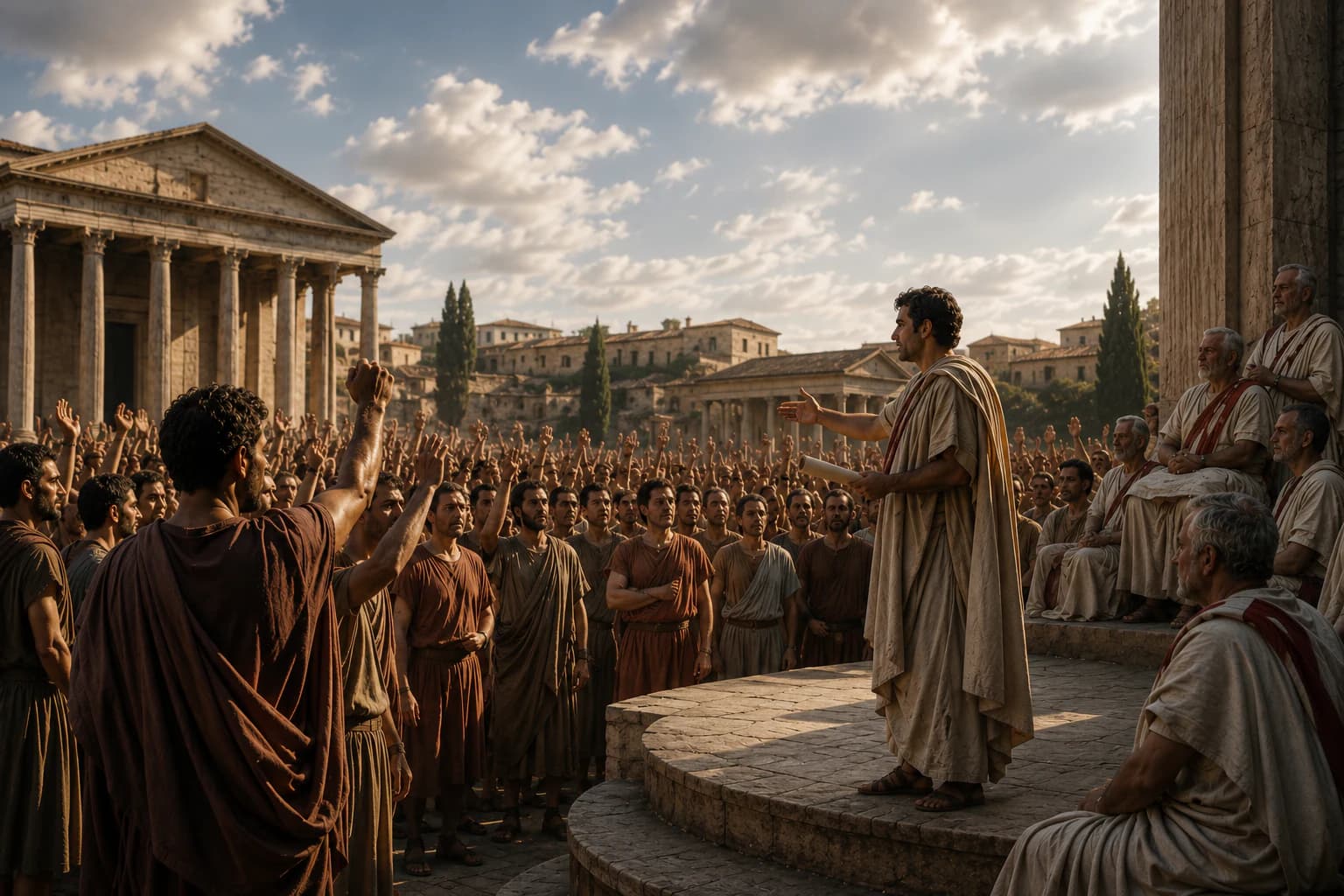
In 287 BCE, a law called the Lex Hortensia made decisions by the plebeian assembly binding for all Romans, without needing elite approval.

This gave ordinary citizens more influence and reduced open conflict between classes, making the system more stable.

Even so, wealthy families still dominated politics. became more inclusive, but inequality remained, a pattern seen in many systems today.

Premium

You've reached the turning point

The opening chapters show Rome learning to govern itself without kings. Premium follows the harder question: what happens when a republic built on shared power becomes too successful, too unequal and too militarized to hold itself together?

Continue into the reversals, crises and human stakes that make the story matter.

Unlock full story

What Premium unlocks next

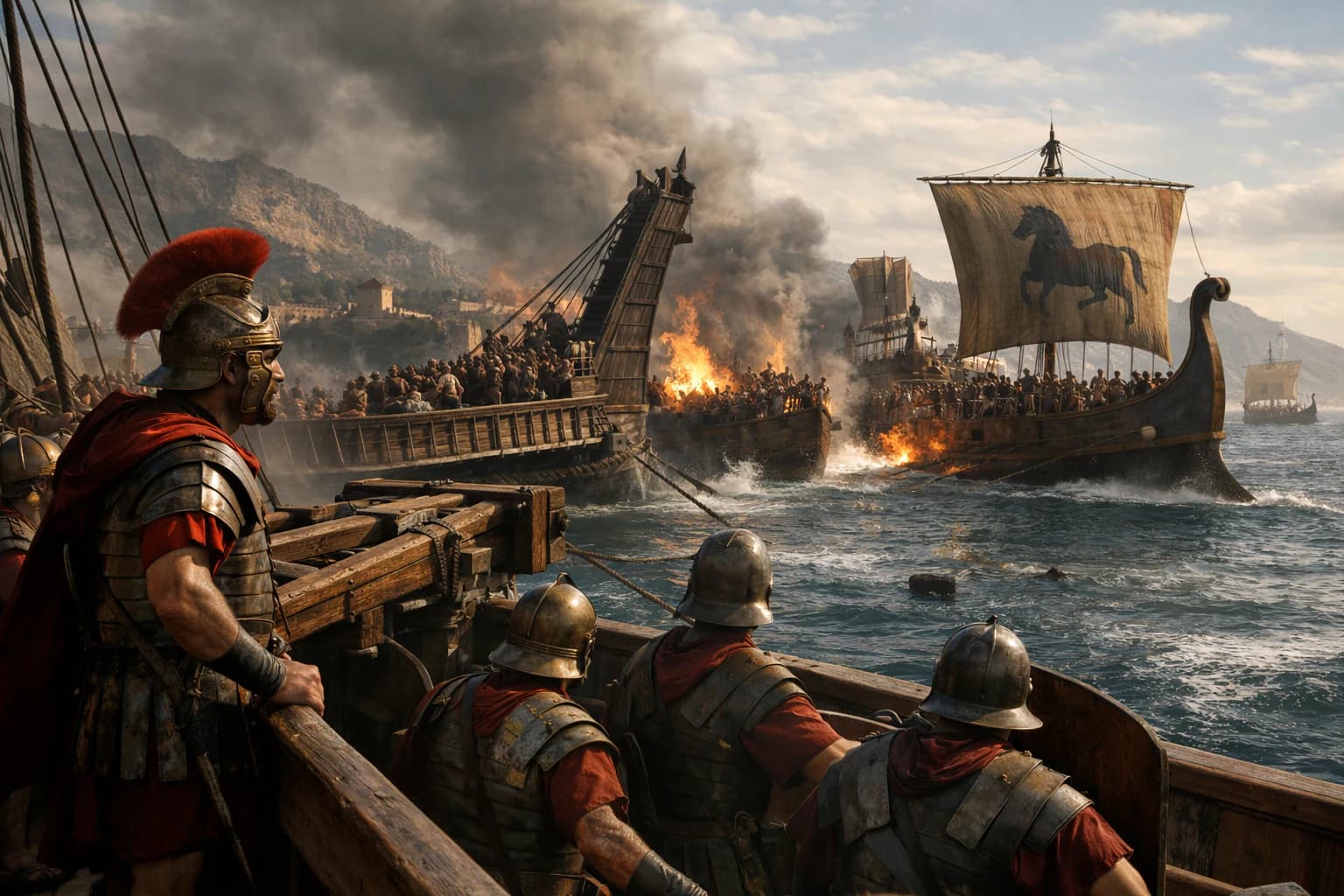
  1. 4The First Punic War
  2. 5Hannibal Invades Italy
  3. 6Rome Destroys Carthage
  4. 7Tiberius Gracchus Breaks the Order
  5. 8The Social War
  6. 9Sulla Marches on Rome
  7. 10Augustus Settles the State

Browse stories

Browse stories for free

Explore the people connected to this turning point or enjoy one of our free stories.

Unlock full storyBrowse stories

References

Sources & Further Reading

Reliable sources, primary-source collections and reading paths connected to this page.

Sources used

  1. Encyclopaedia Britannica, Roman Republic,” Open source
  2. The Metropolitan Museum of Art, The Roman Republic,” Open source

Further reading

  1. Harriet I. Flower, Roman Republics, Princeton University Press.

Primary sources

  1. University of Chicago, LacusCurtius: Roman history,” Open source

A weekly route through history

Find out first about the latest published stories, feature notes and occasional Premium offers in one weekly email.