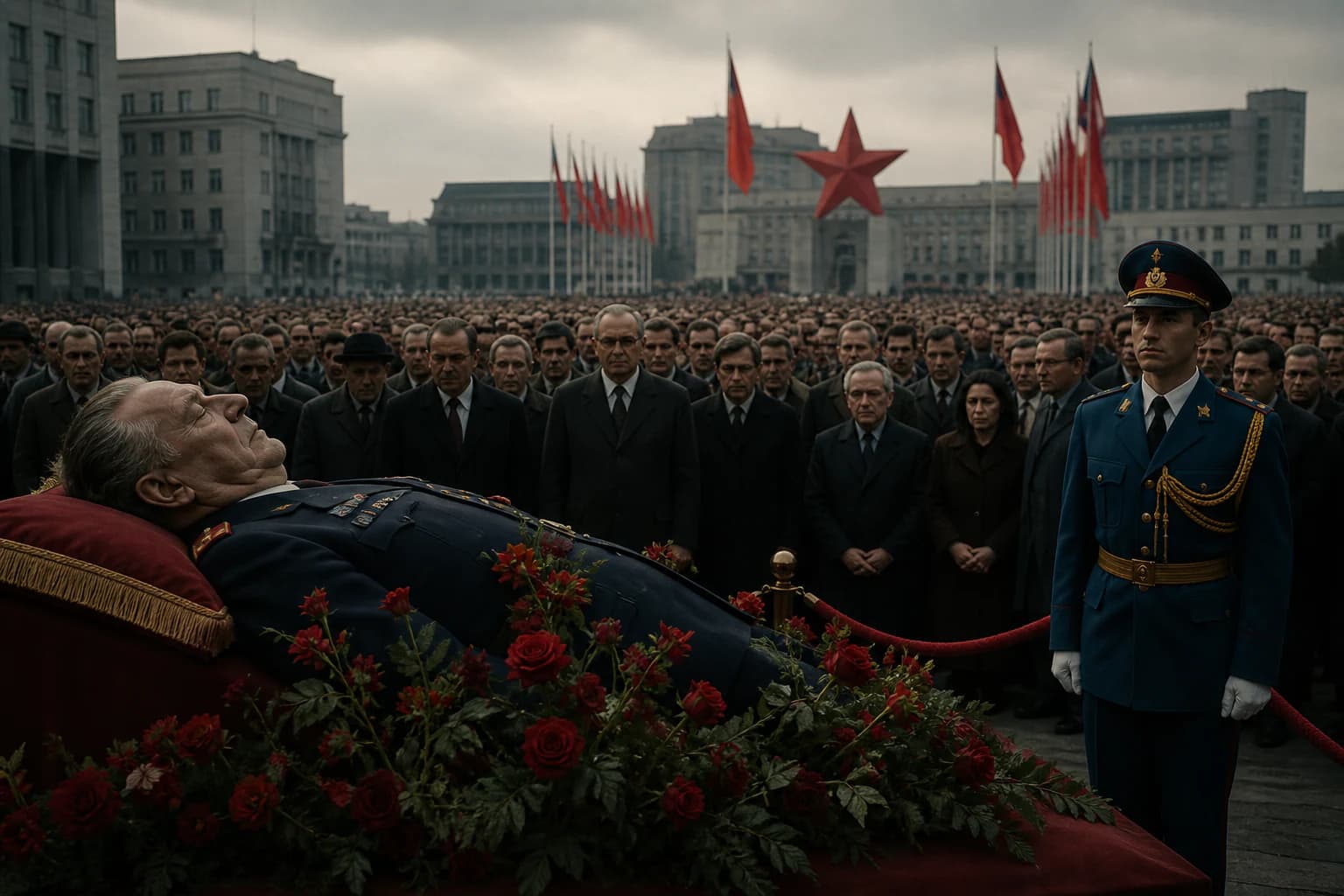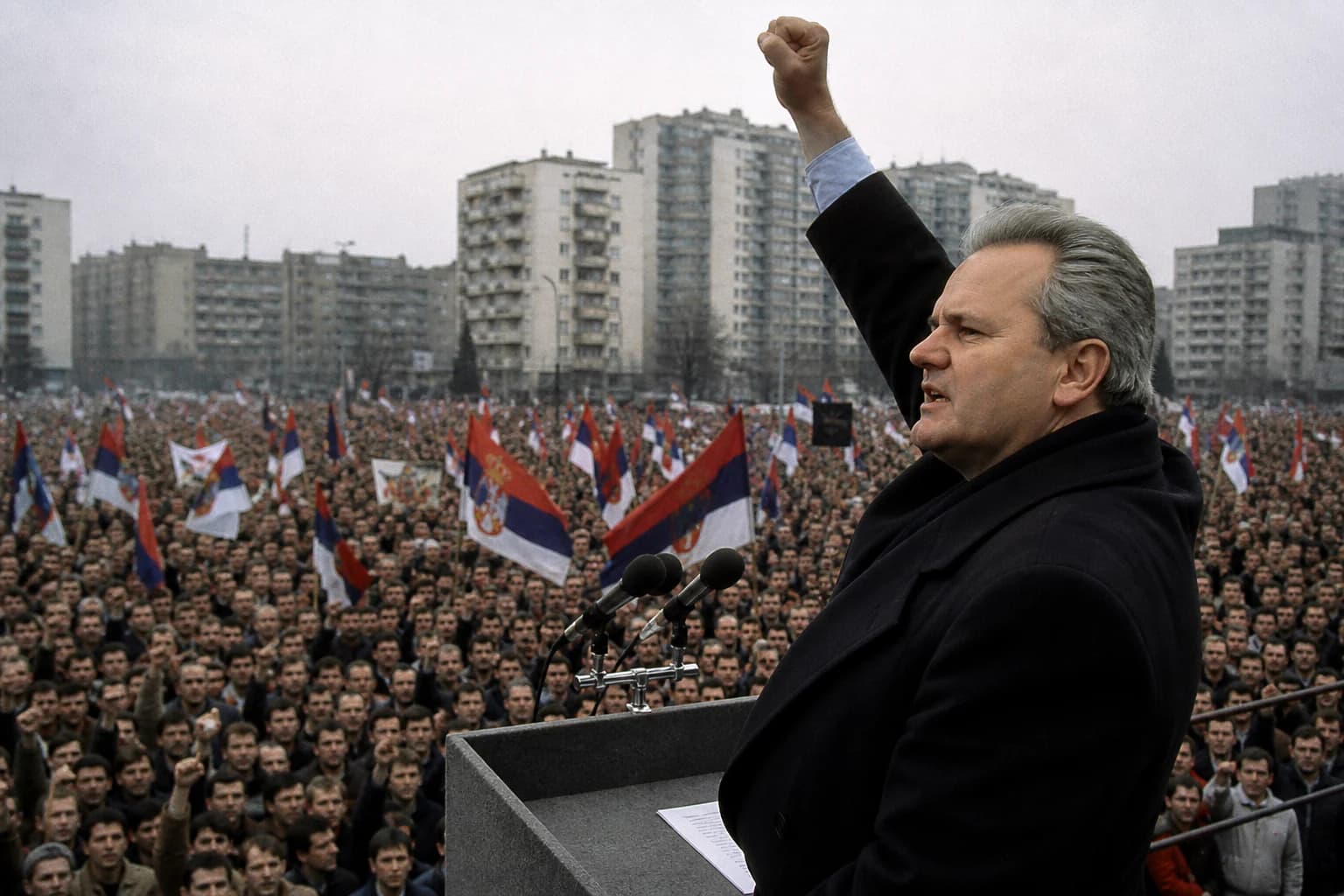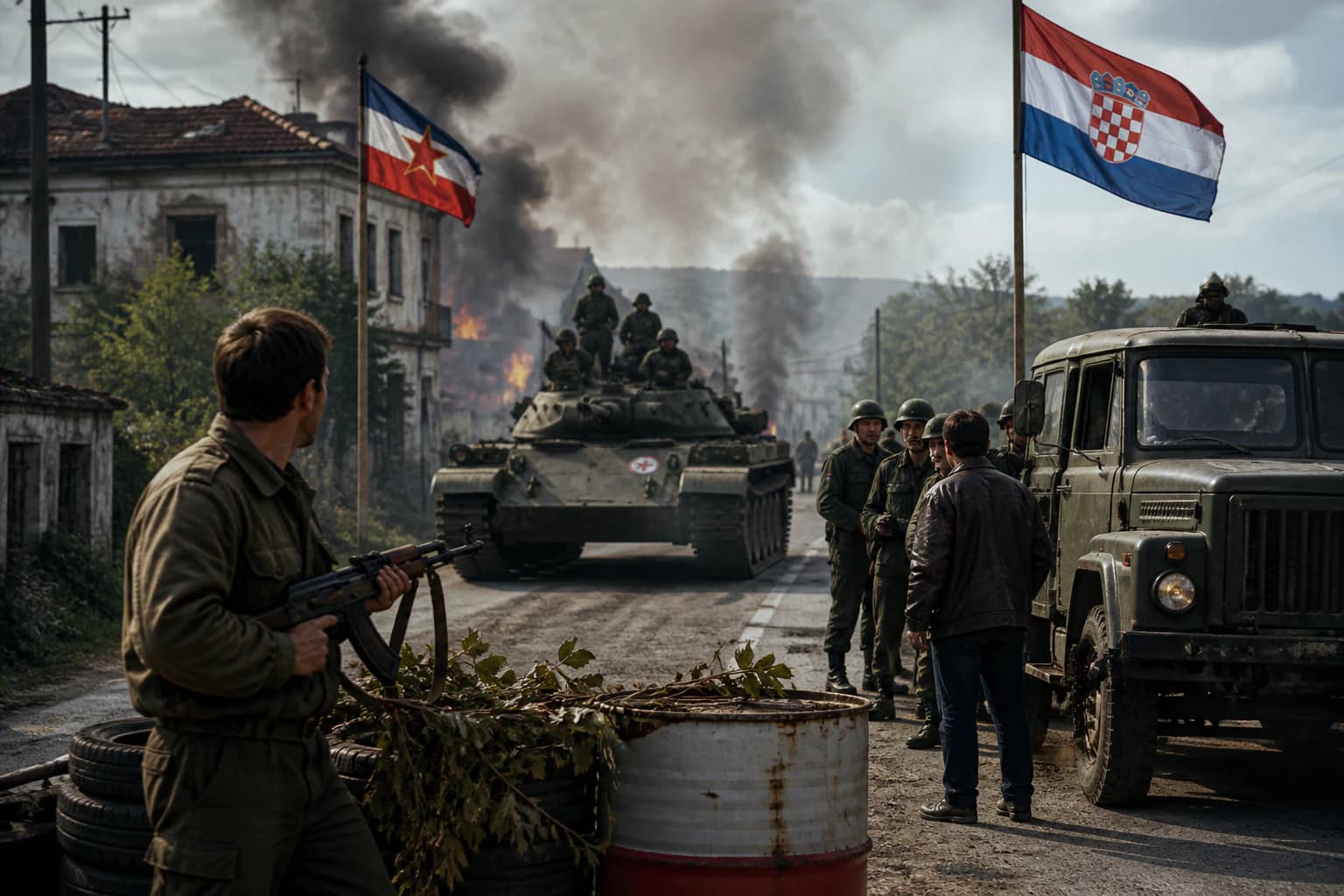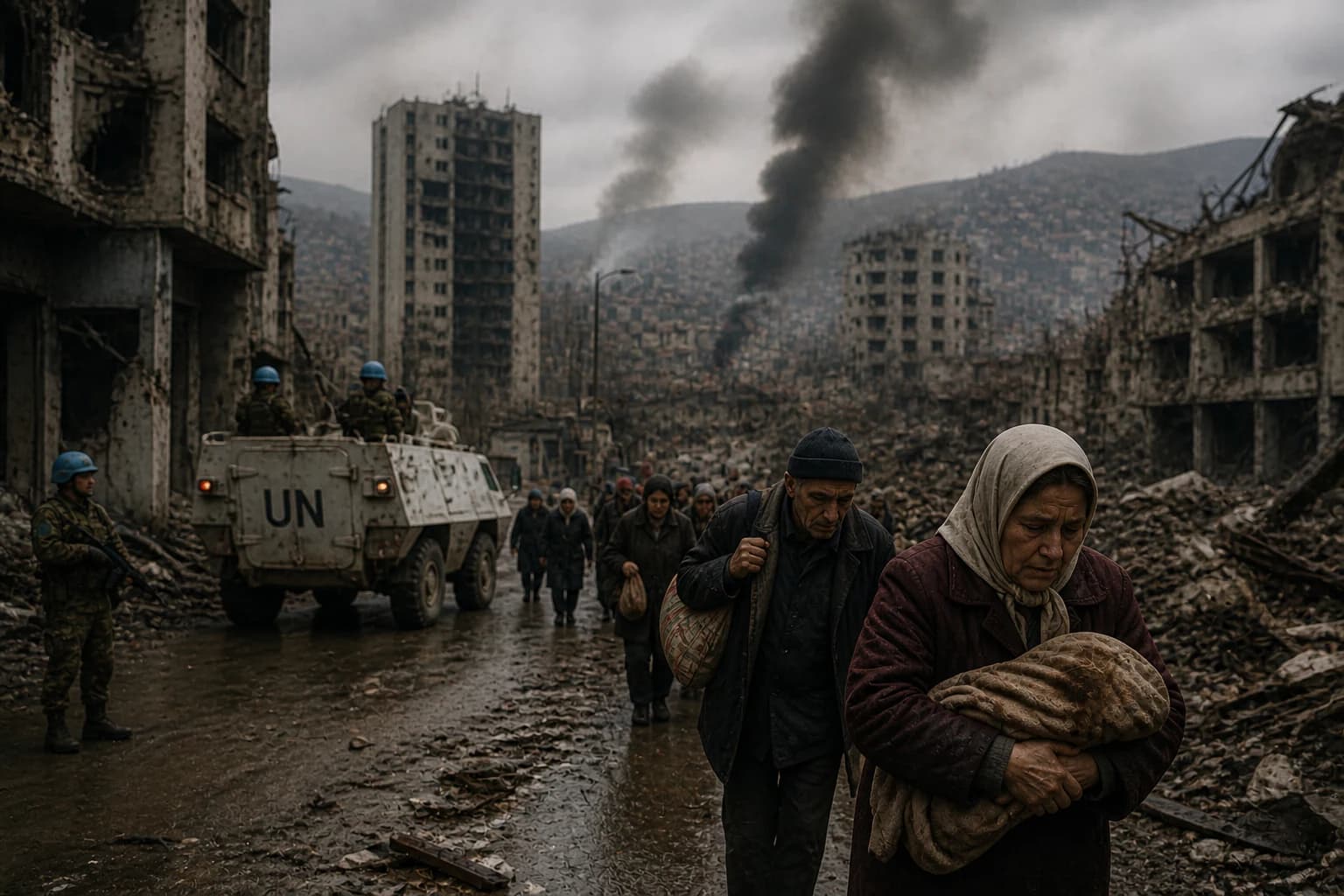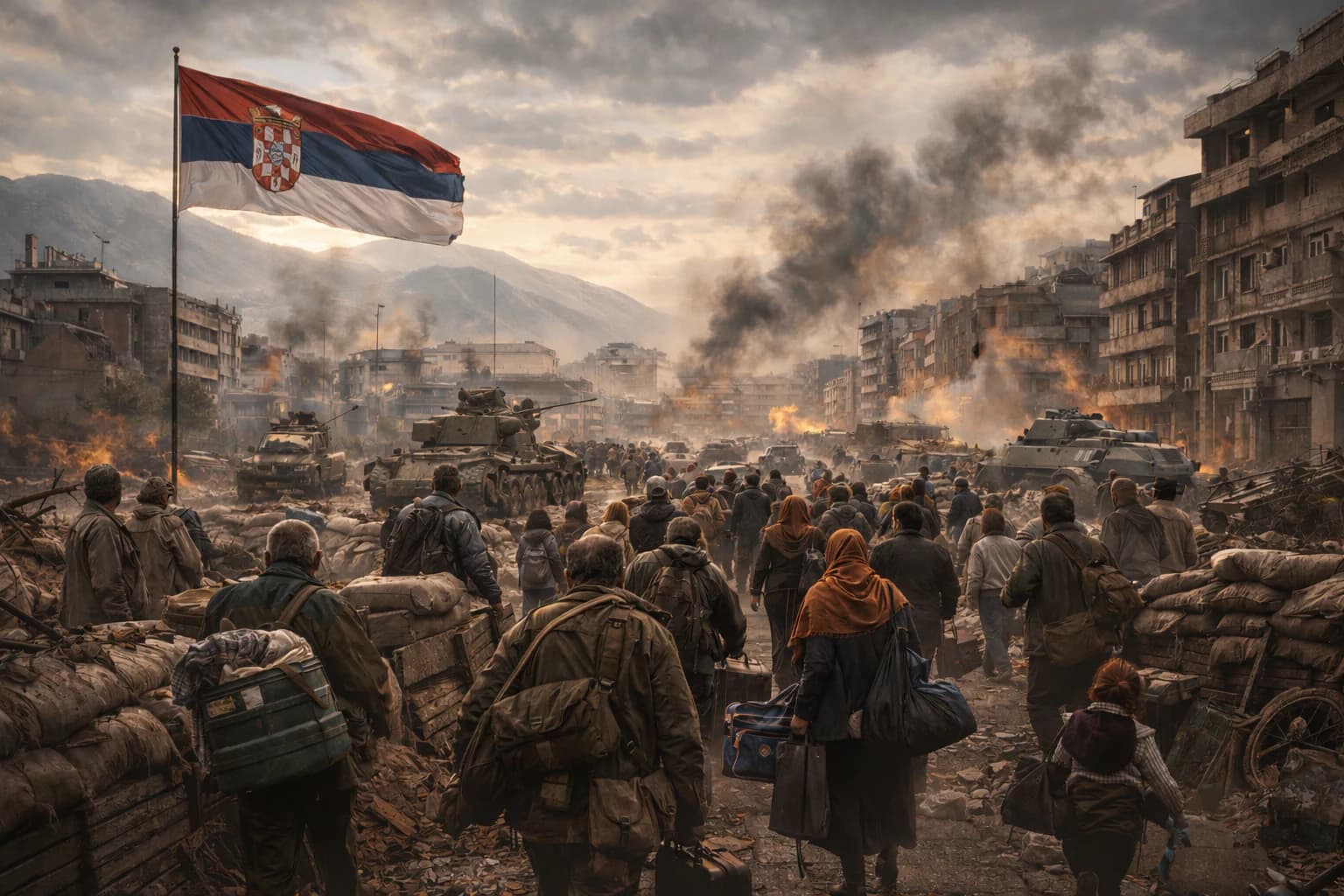
Civilians fleeing a war-torn Balkan city during the violent breakup of Yugoslavia.
Premium Story

The Rise and Fall of Yugoslavia

Trace Yugoslavia from royal union and Tito’s socialism to nationalism, war, and violent collapse.

11 chapters

Next

Content note

This story discusses war, persecution, genocide, violence, and mass death in an educational historical context. Some readers may find parts distressing.

Context

Introduction

What you'll learn: You will follow how a state built to unite South Slavs survived monarchy, occupation, socialism, and Cold War pressure before collapsing into nationalist war.

Key forces

The Kingdom Is Born
1918 CE
Step 1 of 101918 CEAccessible mode

The Kingdom Is Born

In 1918, after the First World War ended, a new country appeared on the map of Europe. It joined together peoples who shared similar languages but came from very different histories.

The Kingdom of Serbs, Croats, and Slovenes was formed from the ruins of the Austro-Hungarian Empire. South Slavic peoples who had lived under different rulers for centuries were suddenly part of one state.

The idea sounded hopeful. But the new kingdom had serious problems from the start. Serbia had just won the war and expected to lead. Croatia and Slovenia had been on the losing side as part of Austria-Hungary. That created resentment immediately.

Unity was declared, but agreement was never reached.

Different communities wanted different things. Croats wanted autonomy. Serbs wanted a strong central state. Slovenes wanted to protect their culture.

Nobody got exactly what they wanted, and nobody was willing to accept less.

This matters because the tensions built into the state in 1918 never fully went away. They stayed buried for decades, then resurfaced, and eventually helped tear the country apart.

Royal Dictatorship
1929 CE
Step 2 of 101929 CEAccessible mode

Royal Dictatorship

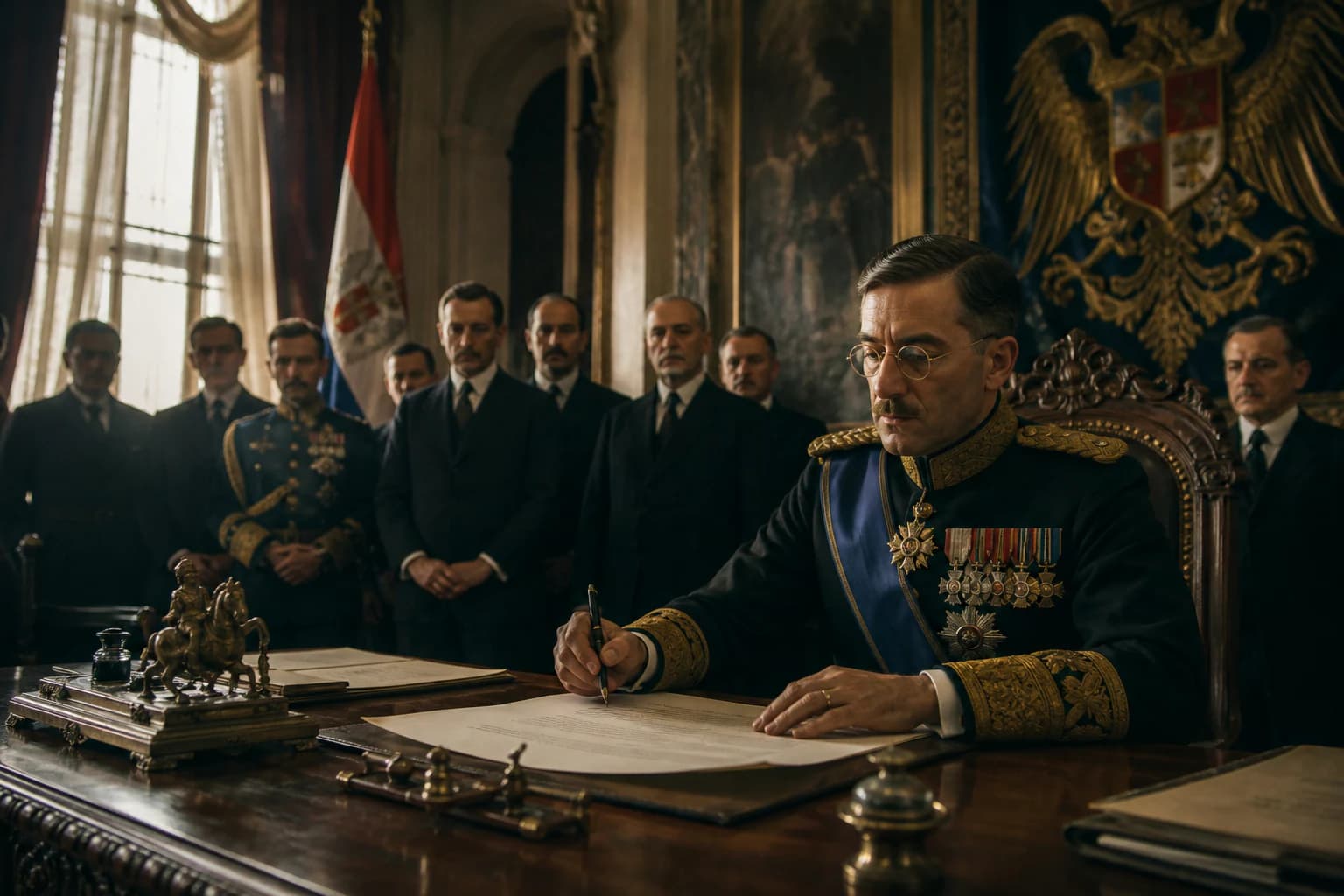
In 1929, King Alexander abolished parliament and declared a personal dictatorship. He renamed the country Yugoslavia, meaning Land of the South Slavs, and tried to force a single national identity onto all its people.

The kingdom had been paralyzed by political deadlock and ethnic rivalry. Parliamentary sessions had ended in violence. Alexander believed only strong central rule could save the state.

He banned political parties, divided the country into new regions that cut across old ethnic boundaries, and suppressed opposition. Critics were imprisoned or driven into exile.

Forcing unity through control did not create it.

Croats, Slovenes, and others felt governed from with no real voice. Nationalist movements went underground but grew angrier and more radical.

Alexander was assassinated in 1934 by Croatian and Macedonian nationalists. His dictatorship had not solved the problem of building a shared state. It had simply delayed the argument while making it harder to resolve.

This period showed that top-down control cannot replace political agreement. That lesson would prove relevant again and again in Yugoslavia's troubled history.

Occupation and Civil War
1941 CE
Step 3 of 101941 CEAccessible mode

Occupation and Civil War

In April 1941, Germany and its allies invaded Yugoslavia and destroyed it in less than two weeks. What followed was not just occupation. It was a collapse into multiple overlapping wars.

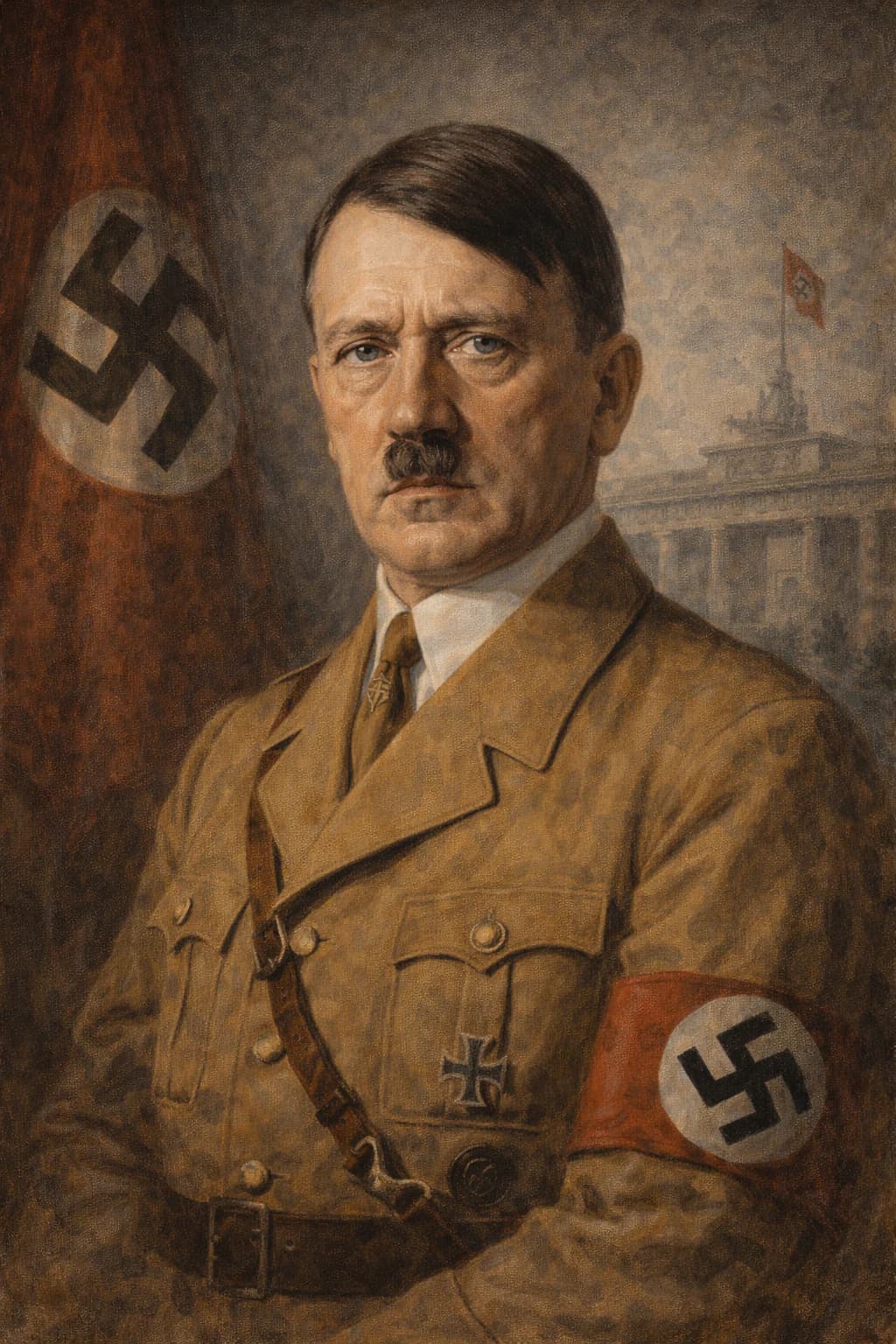
The Axis powers dismembered the country. A puppet Croatian state was created under a fascist movement called the Ustasha. It immediately began massacring Serbs, Jews, and Roma.

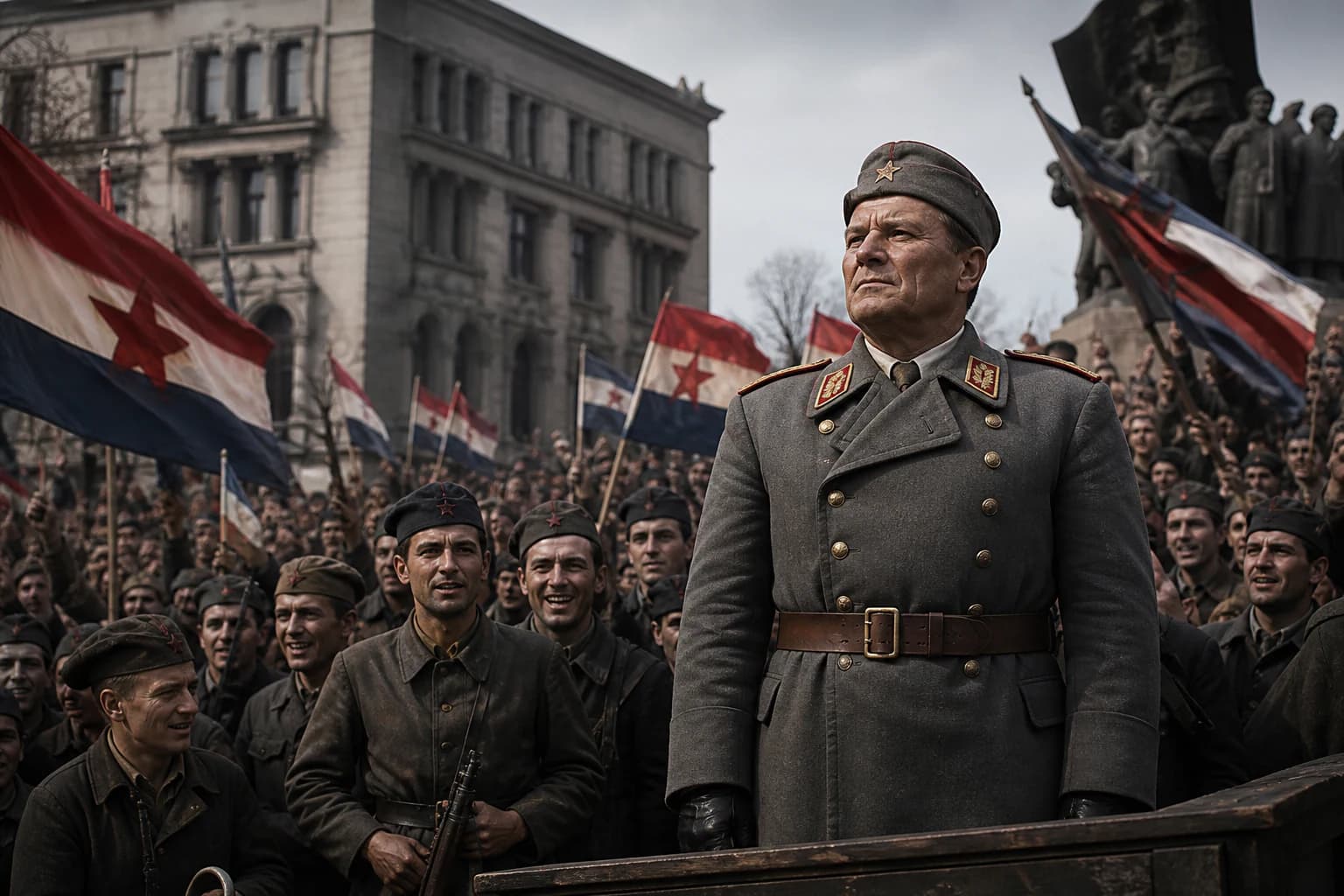
Meanwhile, two main resistance forces fought the occupiers, and each other. The Chetniks were royalist Serbian fighters. The Partisans were communist fighters led by Josip Broz Tito.

Yugoslavia was fighting its occupiers and itself at the same time.

Whole communities were targeted on ethnic or religious grounds. Villages were burned, civilians killed, and old hatreds weaponized by the occupation.

The Partisans eventually won broad support and Allied backing. But the wartime violence left wounds that were never fully acknowledged, let alone healed.

This period matters because the violence of 1941 to 1945 created memories of atrocity that resurfaced, powerfully and dangerously, when Yugoslavia began to break apart decades later.

Premium

You've reached the turning point

The opening chapters show Yugoslavia being imagined as a state that could hold different peoples together. Premium follows the fragile bargain after Tito: unity gives way to competing nationalisms, secession and war, and a shared country comes apart violently.

Continue into the reversals, crises and human stakes that make the story matter.

Unlock full story

What Premium unlocks next

  1. 4Tito Takes Power
  2. 5Break with Stalin
  3. 6The Federal Balance
  4. 7Tito Dies
  5. 8Nationalism Returns
  6. 9Secession and War
  7. 10Bosnia and the End of Yugoslavia

Browse stories

Browse stories for free

Explore the people connected to this turning point or enjoy one of our free stories.

Unlock full storyBrowse stories

References

Sources & Further Reading

Reliable sources, primary-source collections and reading paths connected to this page.

Sources used

  1. International Criminal Tribunal for the former Yugoslavia, The former Yugoslavia,” Open source
  2. Wilson Center Digital Archive, Yugoslavia,” Open source

Further reading

  1. Sabrina P. Ramet, Balkan Babel, Westview Press.

Primary sources

  1. International Criminal Tribunal for the former Yugoslavia, Cases,” Open source

A weekly route through history

Find out first about the latest published stories, feature notes and occasional Premium offers in one weekly email.