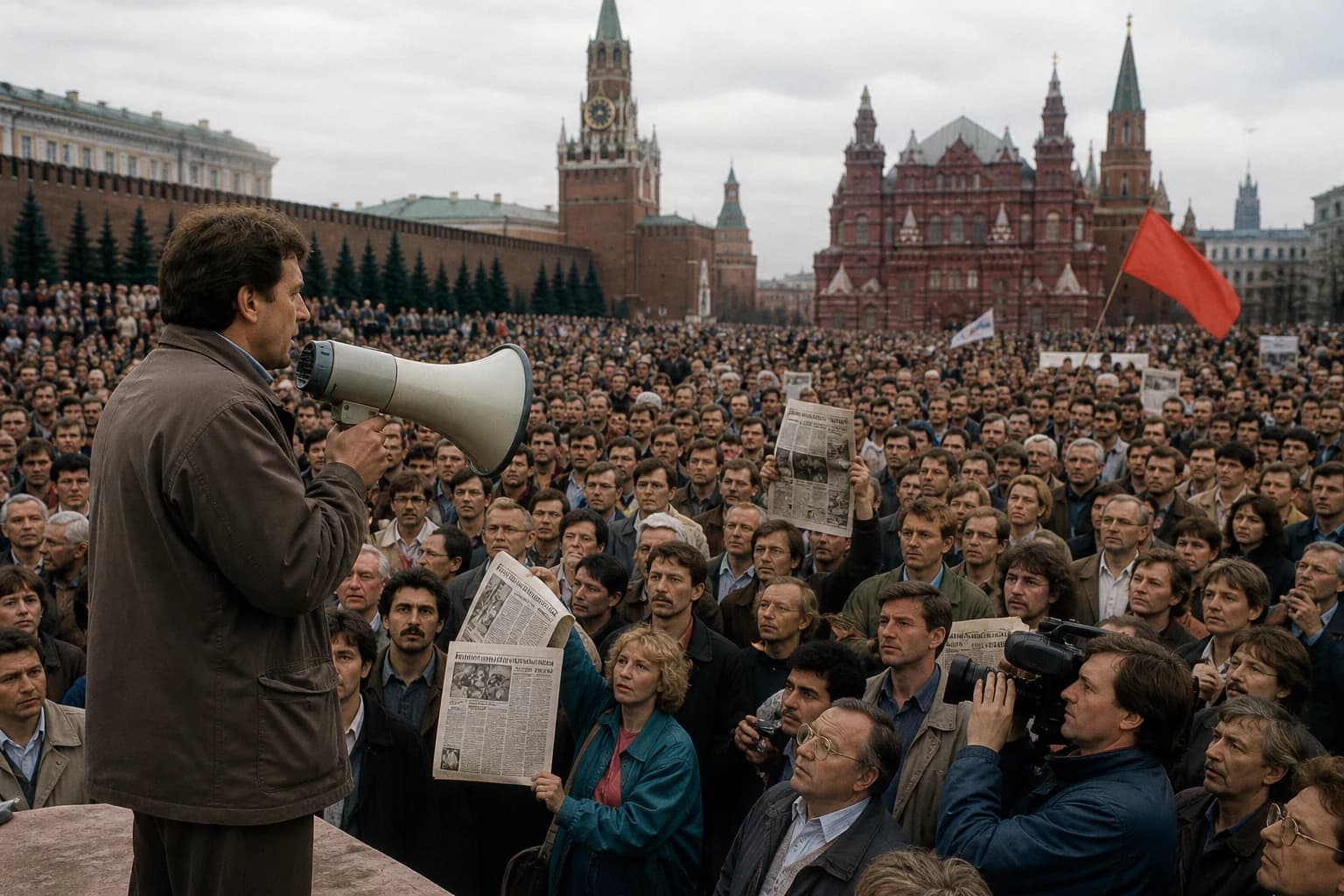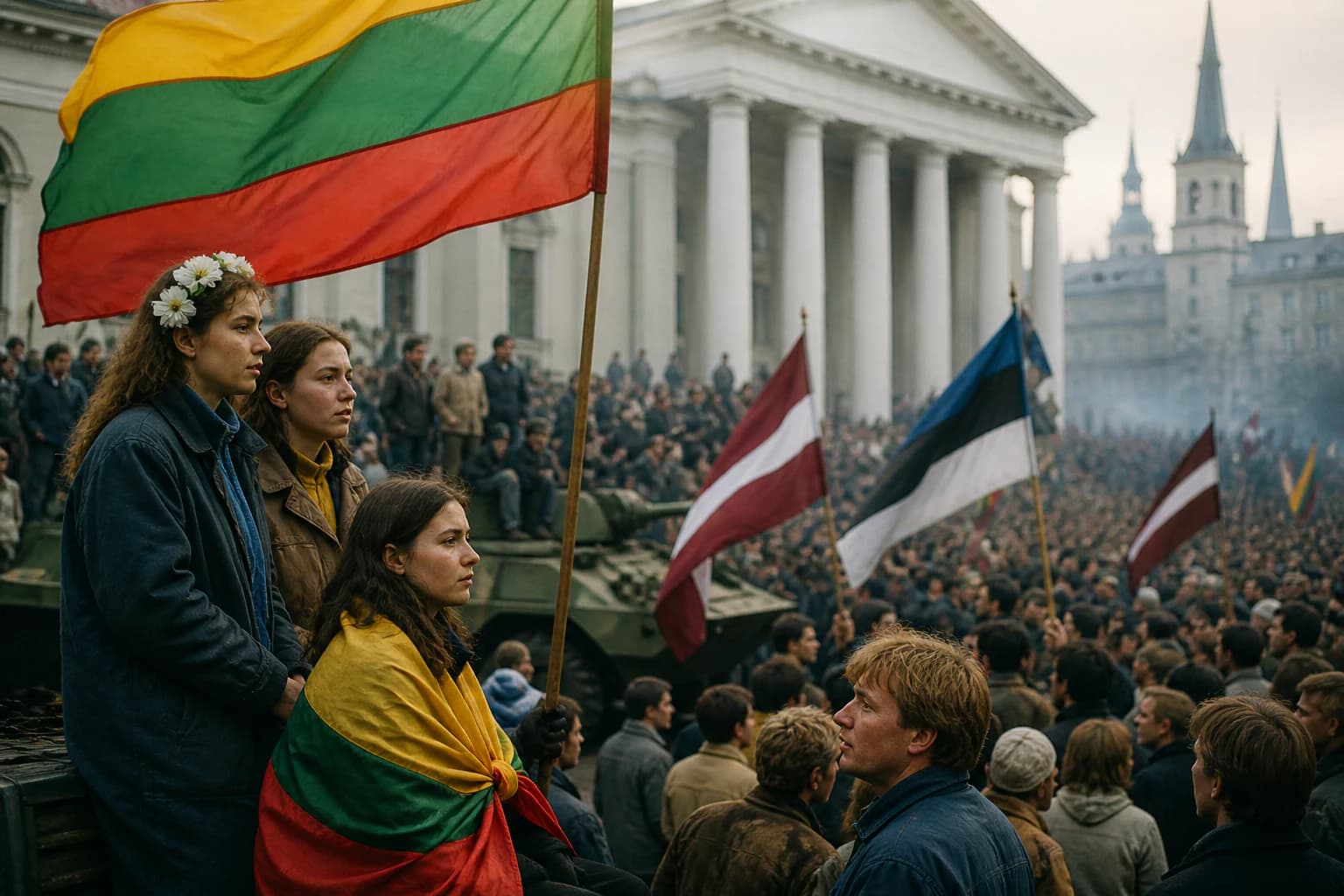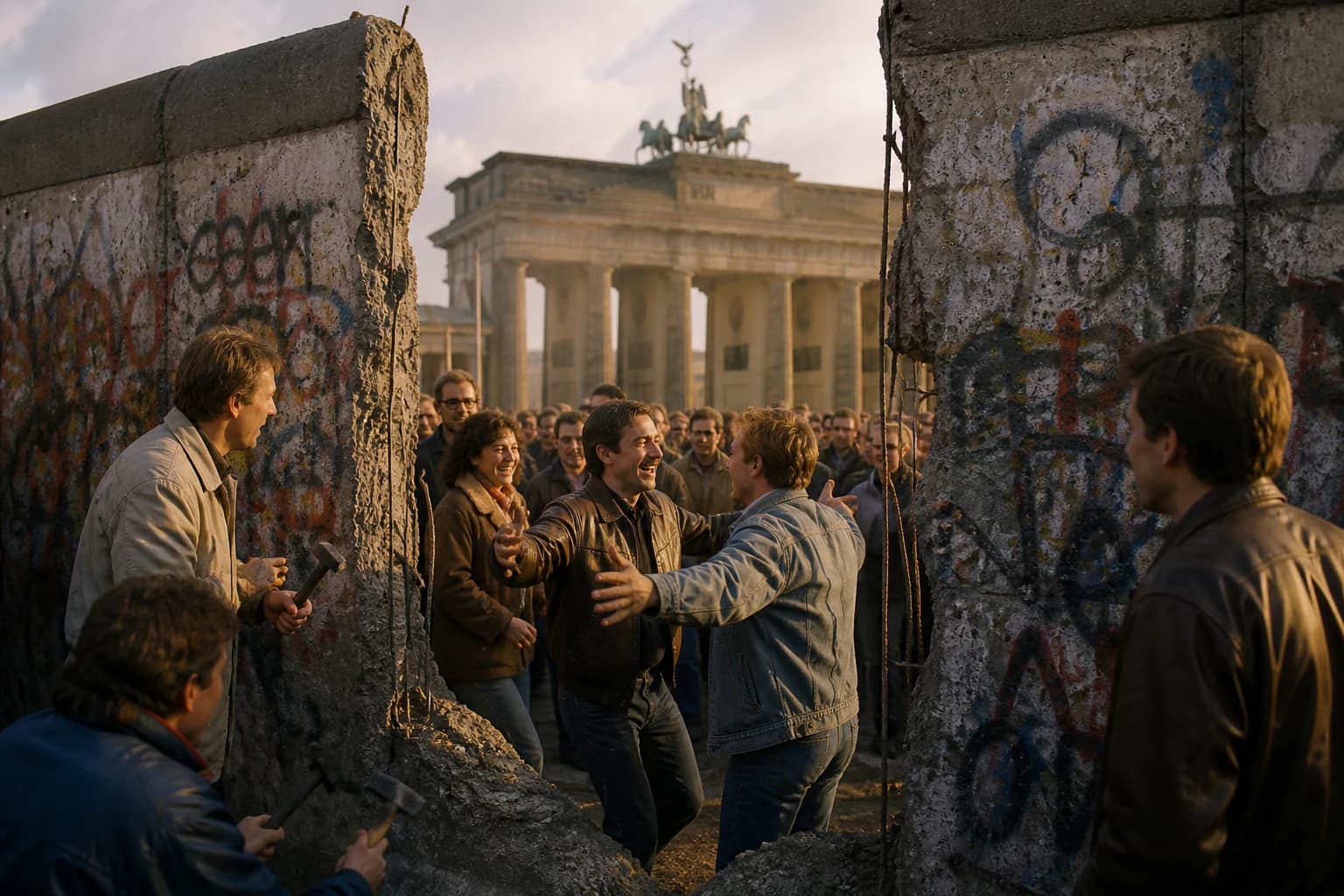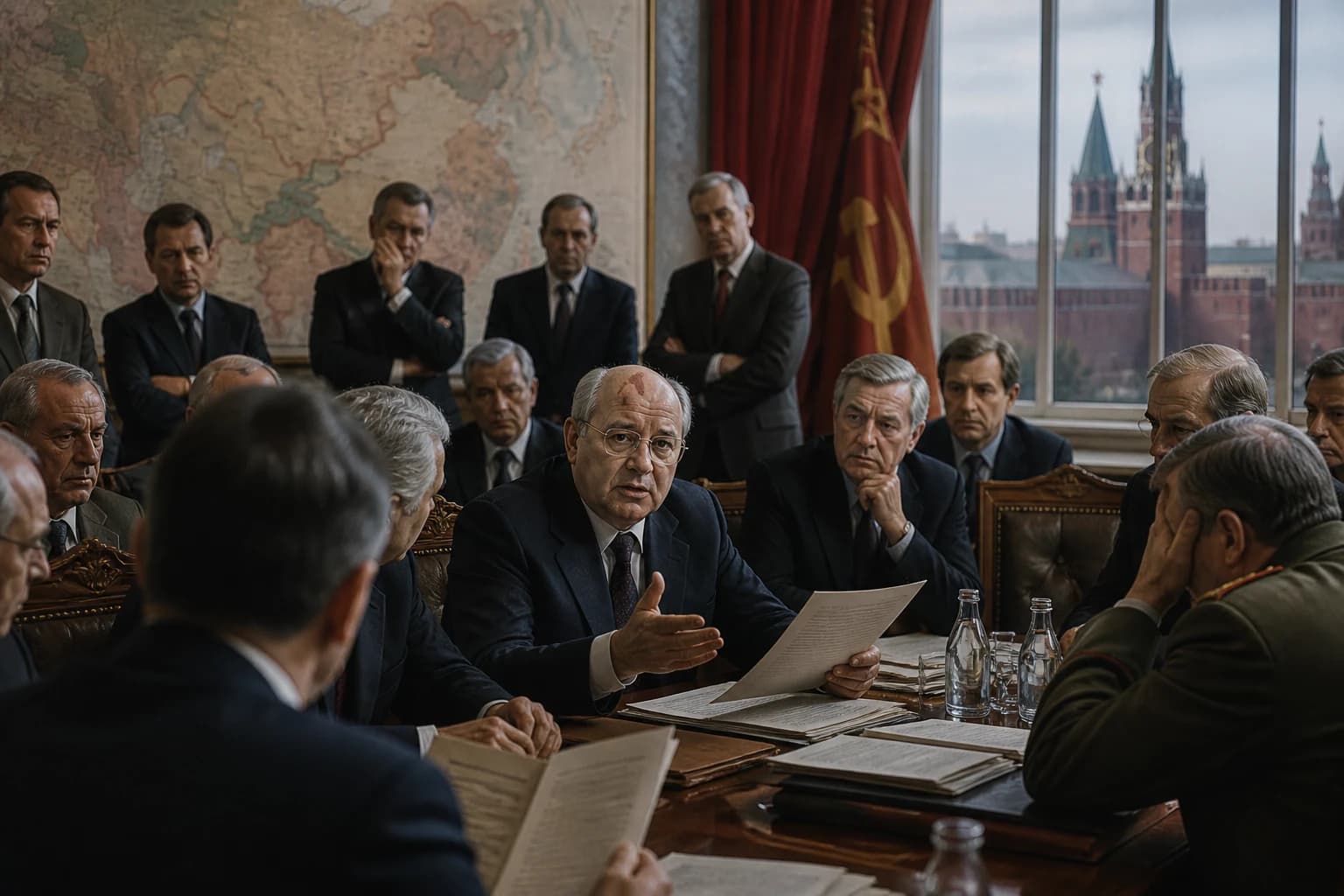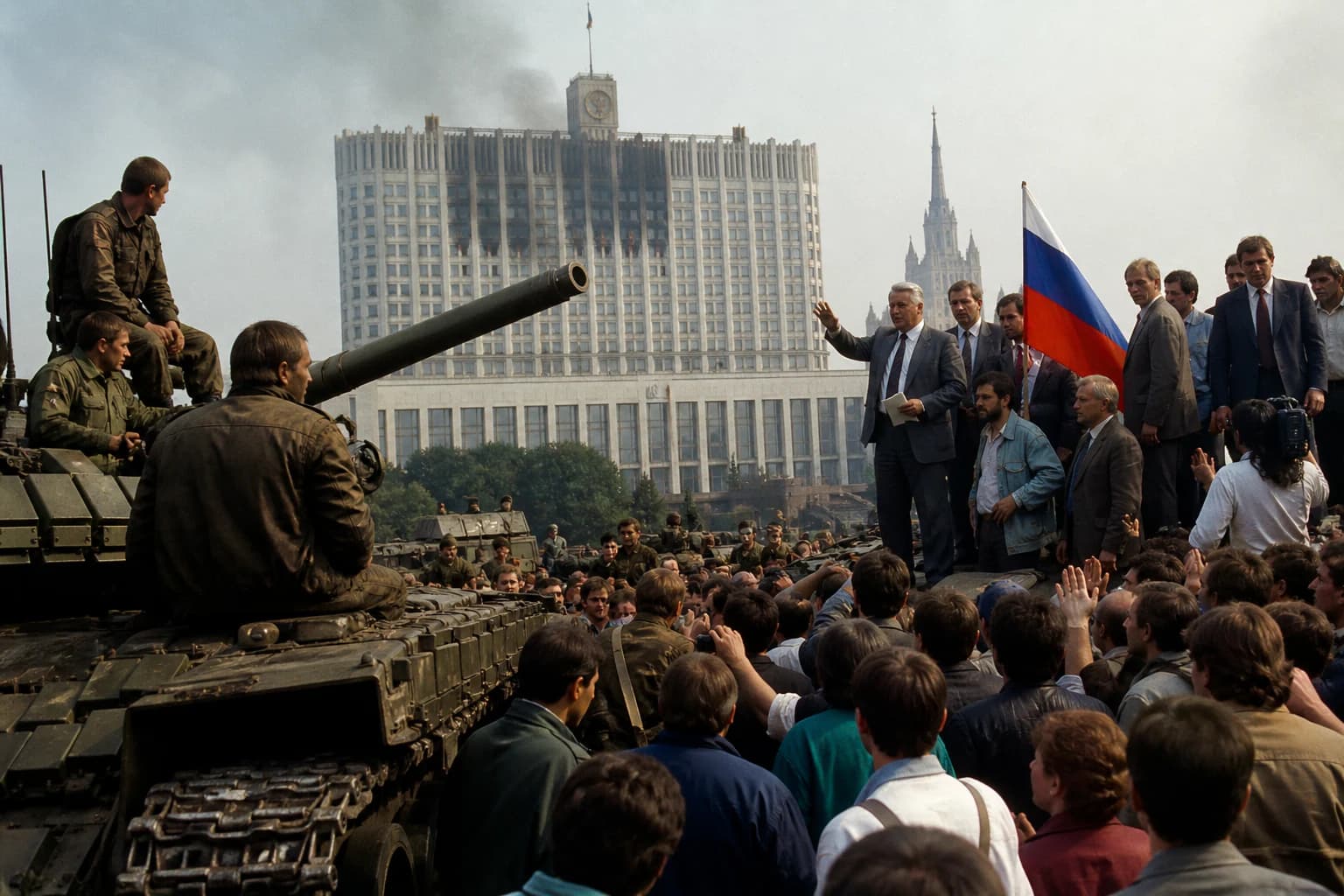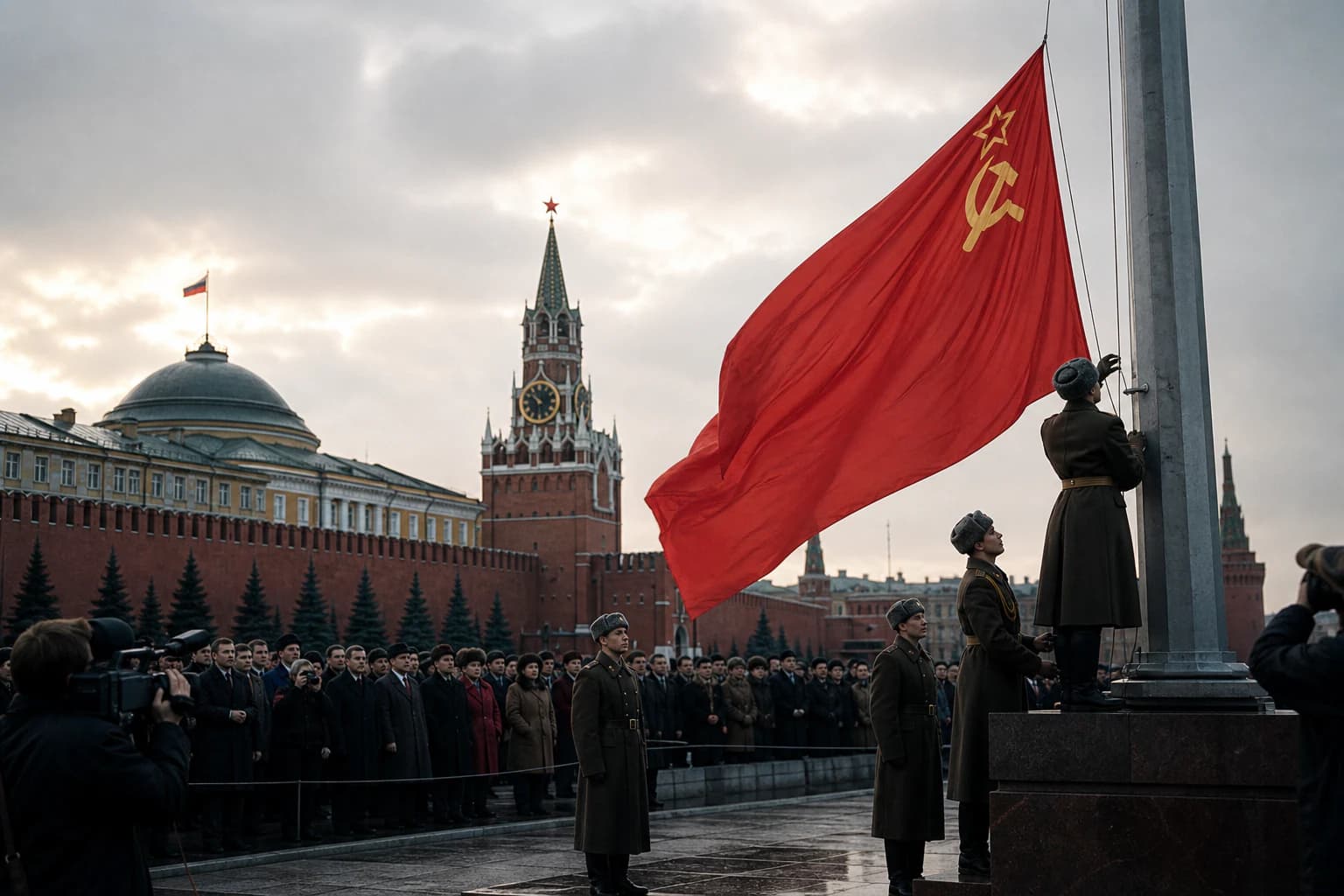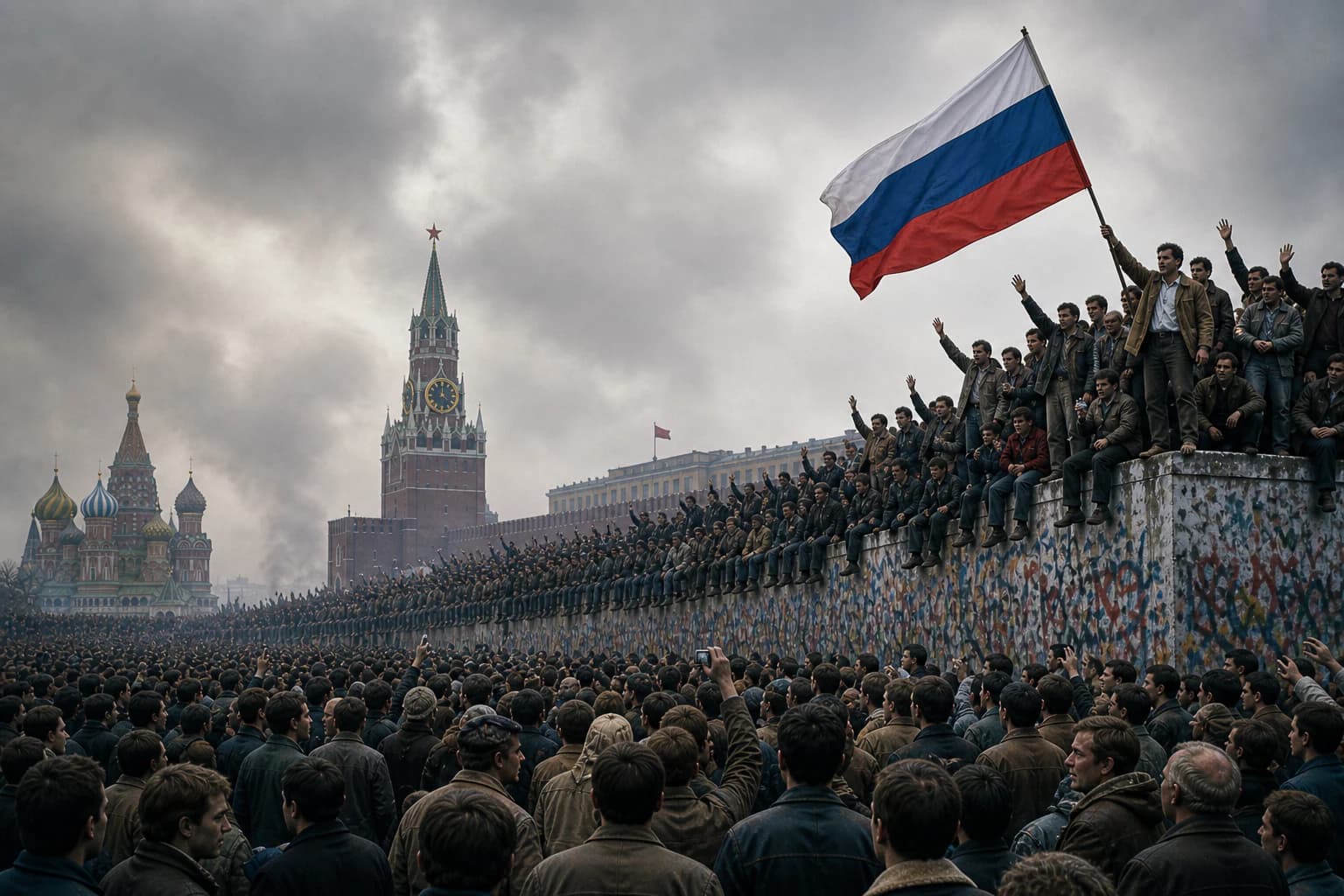
Crowds celebrating atop the Berlin Wall as it falls, with the Soviet hammer and sickle flag being lowered for the last time over the Kremlin
Premium Story

The Collapse of the Soviet Union

Witness the Soviet Union’s collapse as reform, nationalism, economic strain, and political failure bring down a superpower.

11 chapters

Next
Context

Introduction

What you'll learn: You'll understand why the Soviet system failed, what Gorbachev was trying to achieve, how events escaped his control, and what the dissolution of the USSR meant for the world.

Key forces

The Brezhnev Stagnation
1979 CE
Step 1 of 101979 CEAccessible mode

The Brezhnev Stagnation

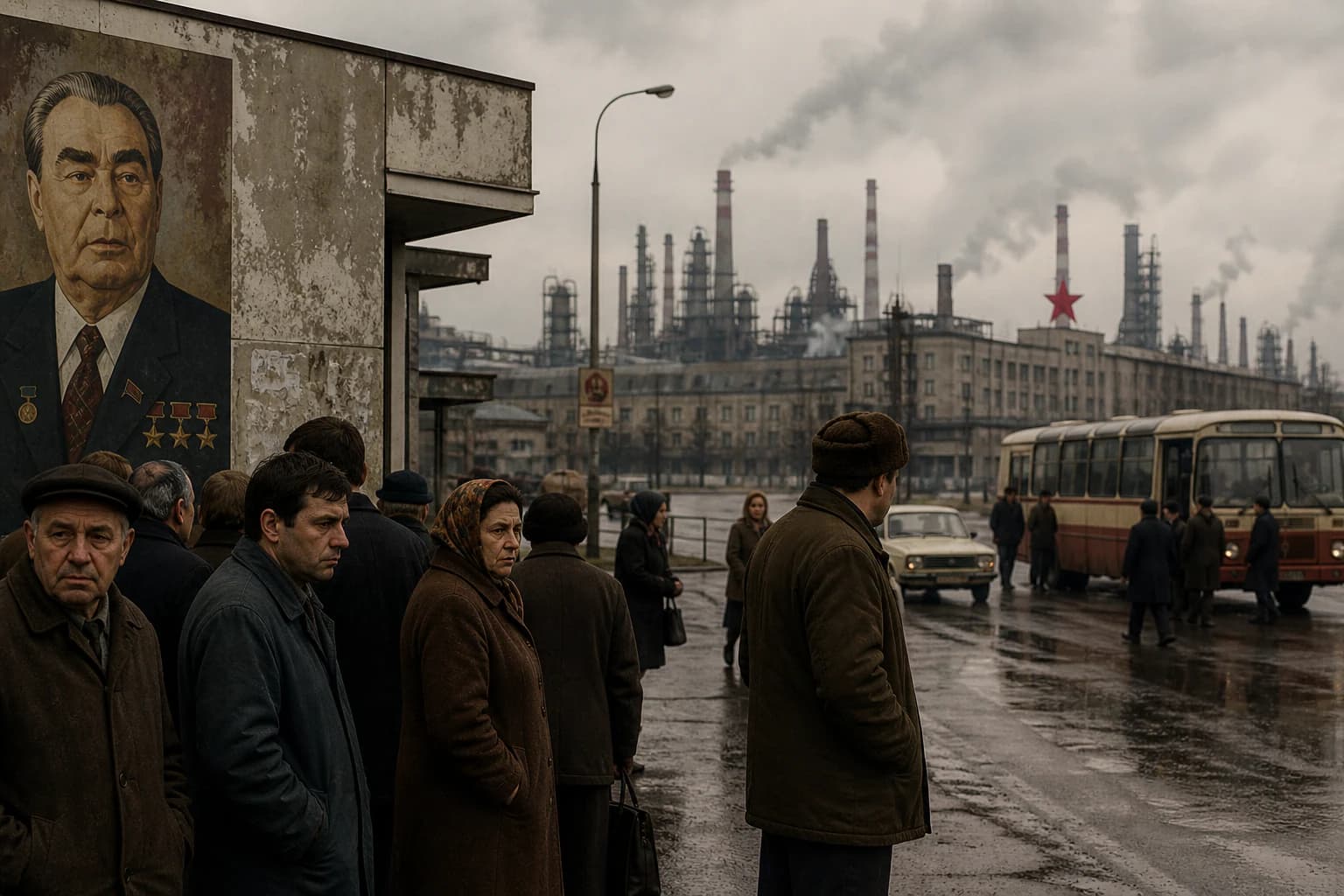
By the late 1970s, the Soviet Union looked powerful from the outside. Inside, the system was slowly breaking down.

Leonid Brezhnev had led the Soviet Union since 1964. Under his rule, the economy stopped growing. State factories kept running but produced goods nobody wanted. Food shortages were common. Real innovation barely existed.

The party had stopped governing. It had started merely surviving.

The military was enormous and expensive. It consumed a huge share of the national budget — resources that did not reach ordinary people's homes, shops, or hospitals.

Most Soviet citizens quietly knew the system was failing them. They had heard Western radio broadcasts and seen smuggled foreign goods. The gap between what the government claimed and what people actually experienced had grown too wide to deny.

Gorbachev Takes Power
1985 CE
Step 2 of 101985 CEAccessible mode

Gorbachev Takes Power

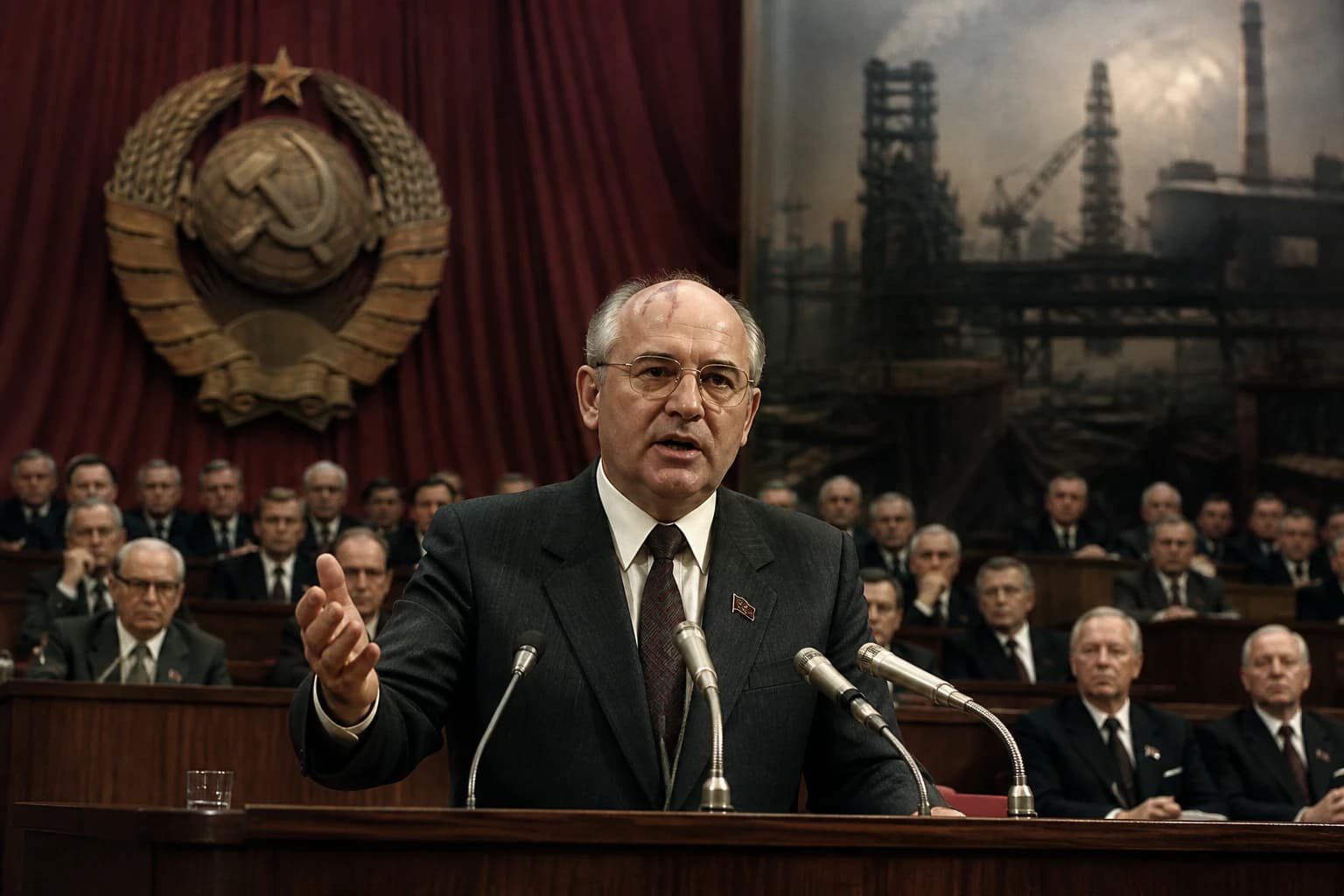
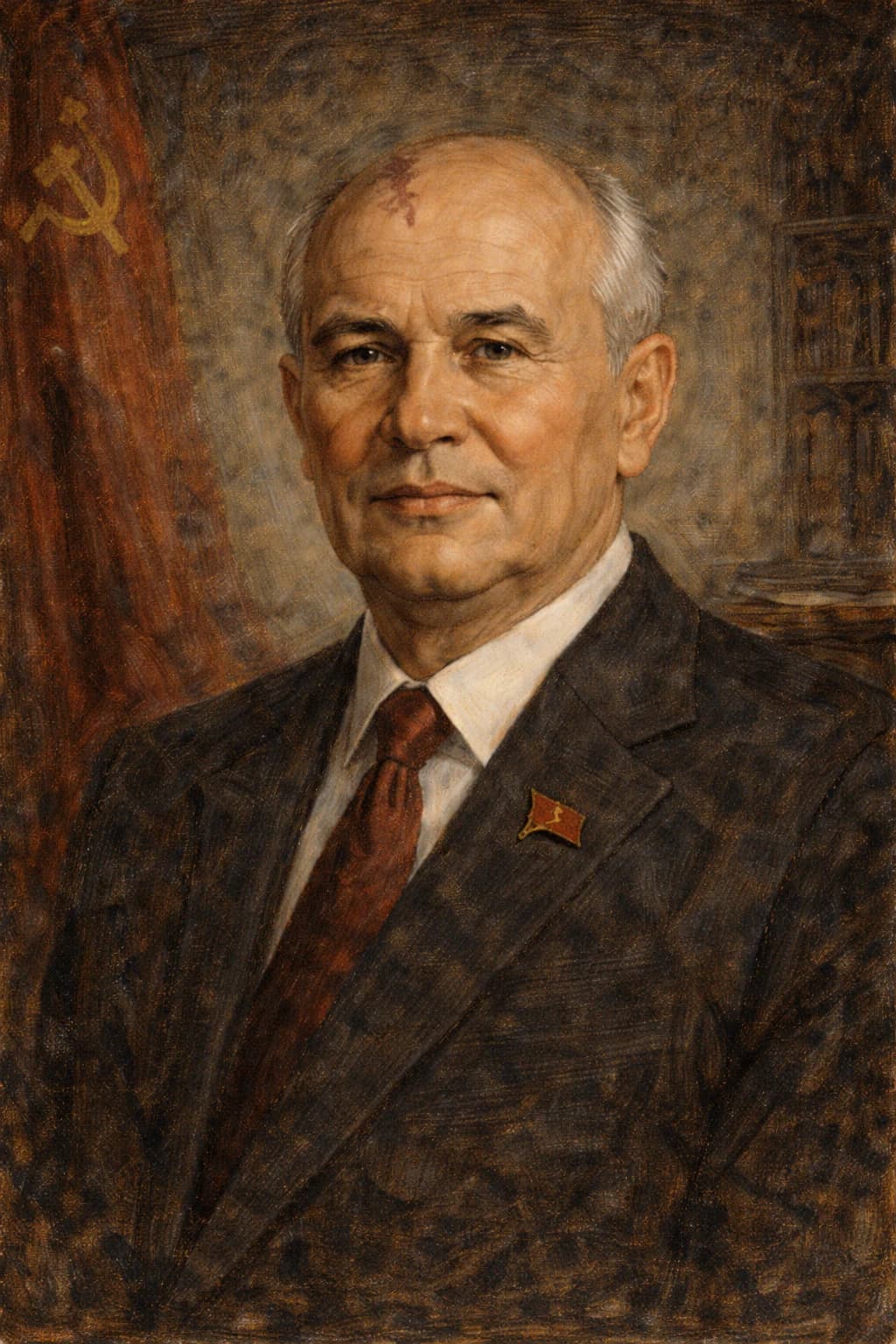
In March 1985, Mikhail Gorbachev became the Soviet leader. He was younger, sharper, and more willing to confront the system's failures than the men who came before him.

Three Soviet leaders had died in quick succession. Brezhnev, Andropov, and Chernenko had each been old and unwell. The party had been choosing its leaders by seniority rather than ability, and the results had been disastrous.

Gorbachev was not trying to end the Soviet Union. He was trying to save it.

Gorbachev understood the economic problems and the cost of the arms race. He believed the system could be made more honest, more efficient, and better run without being dismantled entirely. He wanted to reform communism, not replace it.

He would discover that the system was more fragile than he understood. Once he began loosening controls and encouraging openness, forces he had not anticipated started to move — and they would prove impossible to manage.

Perestroika Begins
1986 CE
Step 3 of 101986 CEAccessible mode

Perestroika Begins

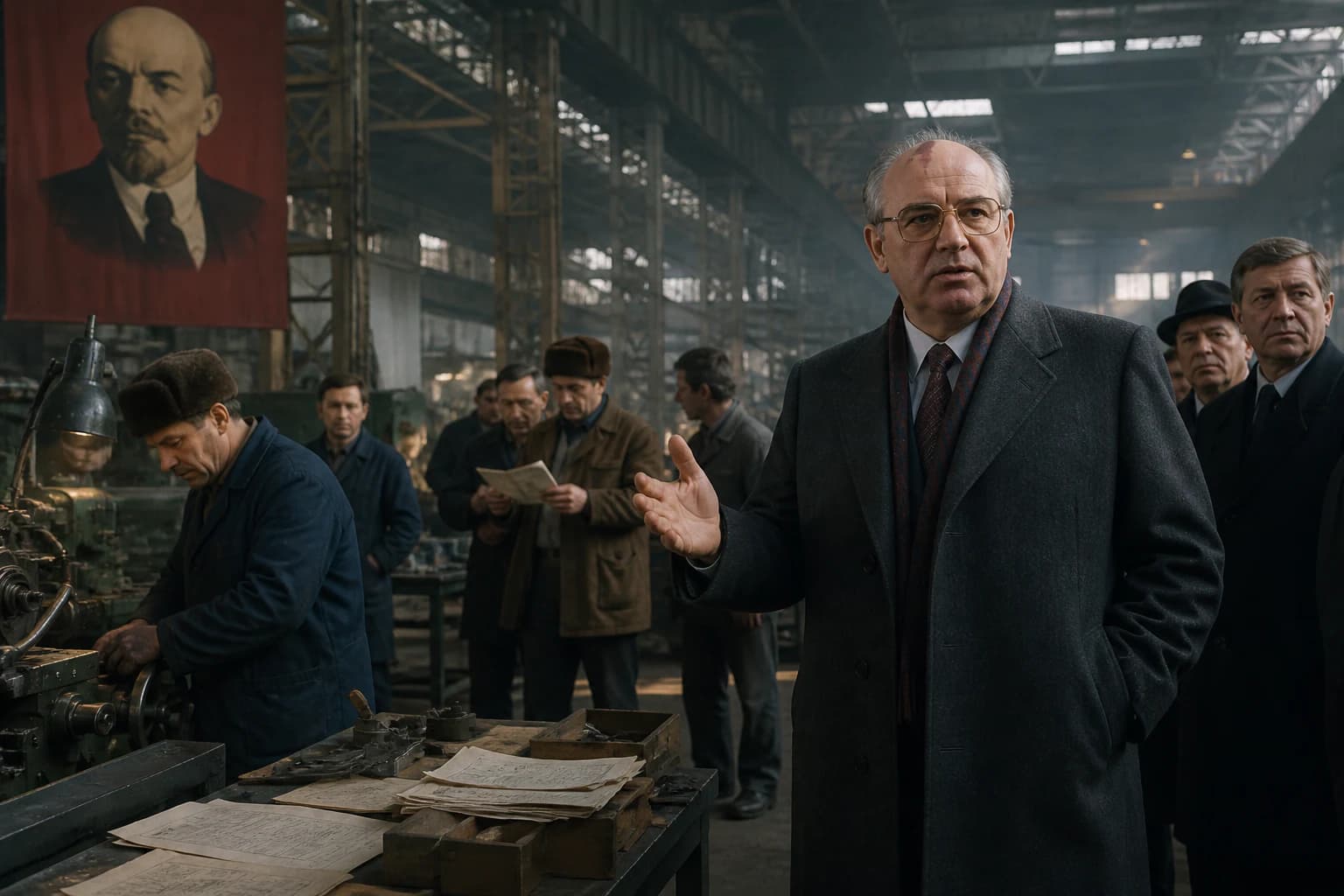
In 1986, Gorbachev launched perestroika — the Russian word for restructuring. It was meant to make the Soviet economy more efficient. Instead, it made things worse before they could get better.

The old system had the state controlling everything: what was produced, at what price, and in what quantities. Perestroika tried to loosen those controls, allowing enterprises limited freedoms and permitting small cooperatives to operate for the first time since the 1920s.

The plan was to fix the economy. The effect was to break the routines that had kept it running.

The partial reforms created chaos. Supply chains that had functioned under central direction began to break down. Managers did not know what the new rules required. Factories started raising wages rather than improving what they made.

Shops became emptier than before. The population grew frustrated. The visible failure of perestroika to improve living conditions made people doubt whether any reform of the Soviet system was actually possible.

Premium

You've reached the turning point

The opening chapters show a superpower trying to reform itself without losing control. Premium follows the unraveling: openness releases anger, national movements return, Eastern Europe breaks free and a failed coup exposes that the Soviet Union can no longer hold.

Continue into the reversals, crises and human stakes that make the story matter.

Unlock full story

What Premium unlocks next

  1. 4Glasnost Opens the System
  2. 5Nationalism Returns
  3. 6Eastern Europe Breaks Free
  4. 7The Party Loses Control
  5. 8The Union Treaty Crisis
  6. 9The August Coup Fails
  7. 10The Soviet Union Dissolves

Browse stories

Browse stories for free

Explore the people connected to this turning point or enjoy one of our free stories.

Unlock full storyBrowse stories

References

Sources & Further Reading

Reliable sources, primary-source collections and reading paths connected to this page.

Sources used

  1. Office of the Historian, U.S. Department of State, Collapse of the Soviet Union,” Open source
  2. Wilson Center Digital Archive, End of the Cold War,” Open source

Further reading

  1. Serhii Plokhy, The Last Empire: The Final Days of the Soviet Union, Basic Books.

Primary sources

  1. National Security Archive, The Soviet Coup of 1991,” Open source

A weekly route through history

Find out first about the latest published stories, feature notes and occasional Premium offers in one weekly email.